You might grab a nap. You might grab a shower. You might grab one of your top prospects and send him to the mound in front of the home folks to make his major league debut and watch him succeed. There are plenty of ways to feel refreshed. The Nolan McLean [1] version proved most effective Saturday. I watched that kid pitch and field and comport himself and, my goodness, did I have a new outlook on life. Five-and-a-third innings in which no runs were given up and potential trouble was wriggled from as if it was something to be brushed aside rather than crumble down upon you can do that for a fan.
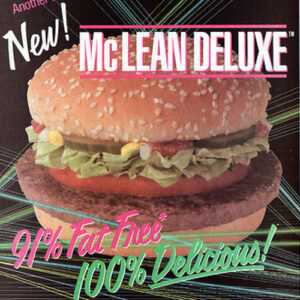 [2]
[2]Can’t wait for another juicy bite.
McLean didn’t overwhelm Cal Raleigh and the Seattle Mariners as much as he withstood whatever could have gotten the best of him while they batted. Inconsistent umpiring didn’t bother him — four walks weren’t great, but eight strikeouts made those seem less concerning. A liner up the middle with the bases loaded didn’t bother him — that’s where his fielding, via a behind-the-back grab of Julio Rodriguez’s scorcher that the rookie calmly transformed into a 1-4-3 double play, came in. Removal in the top of the sixth with one out, despite having allowed only two hits, didn’t quite sit right with him, per his postgame comments, but you could sense as he walked off the mound to robust applause that he knew he’d be back. Why wouldn’t he? Nolan’s incredibly encouraging effort, along with mighty contributions from Francisco Lindor at the bat, Brett Baty on the basepaths, Pete Alonso when his 100th RBI beckoned, and Gregory Soto and Edwin Diaz as they combined to effectively shut down Seattle the rest of the way, added up to a 3-1 Met triumph [3]. McLean may as well have unsealed a bottle of Mennen Skin Bracer [4] and splashed it on the faces of millions of Mets fans.
Thanks. We needed that.
Now and then through McLean’s maiden voyage, names would be dropped into the telecast, identifying predecessors in premiering prominently with whom Nolan had something in common. Dick Rusteck got a shoutout. Dick Rusteck [5], time has all but forgotten, is the only Met to begin his career by tossing a shutout, doing so versus the Reds in 1966. Soon after, he had arm problems, and you’ve never otherwise heard Dick Rusteck mentioned in any other context. But those nine innings are nine innings for the ages. Bill Denehy [6] struck out eight Phillies the first time he faced big leaguers, the same week Tom Seaver [7] did the same. Seaver is Seaver. Denehy, who passed away [8] in June, is known best as the guy who kept Tom company on their shared 1967 rookie card, unless he’s known better as the compensation the Mets sent the Washington Senators so they could hire Gil Hodges to manage. But those eight strikeouts, same total McLean accumulated versus the Mariners, live on as evidence of one of the most impressive first starts ever among Mets.
Rusteck, Denehy, and Seaver all did what they did to get things going at Shea Stadium. Steven Matz [9] had to wait until Citi Field was open to toe his first MLB rubber, starting the nightcap of a de facto doubleheader [10] in 2015. The first game completed the previous day’s suspended action and went seven looooooong innings on its own steam. The second game was all Matz, all the time: pitched until there were two out in the eighth, giving up only two runs, driving in four (because that’s how we rolled in the National League), briefly turning his cheering Grandpa Bert into a cult figure. Steven Matz’s record after that start was 1-0. No other Mets starting pitcher commencing his tenure at Citi Field could claim such a mark for another decade. Nolan McLean is the one.
Well, I don’t know if he’s the one the way we wish every rookie getting the ball for the very first time ahead of a game’s very first pitch becomes another Tom Seaver. There’s a reason we hold Tom Seaver as our ideal. There was only one of him. Still, it’s not bad when a pitcher becomes, say, a Steven Matz, who continues to ply his craft today, relieving for the Boston Red Sox. Matz came up in an era when starting pitchers made major league debuts for the New York Mets, and the event wasn’t just the start but the anticipation. Matt Harvey in 2012, donning his Dark Knight cape and striking out eleven in Phoenix; Zack Wheeler in 2013, grinding his way to a win in Atlanta (all the best to his right shoulder [11], irrespective of who he’s with now); Rafael Montero and Jacob deGrom on consecutive nights in New York in 2014, each dropping strong hints of what was possible; Noah Syndergaard in 2015, bringing to bear an apt nickname and an undeniable presence in Chicago; then Steven doing everything right that late afternoon in Flushing. Matz, Thor, Jake, and Matt each pitched in the World Series for the Mets in 2015. Wheeler and Montero worked in the 2022 Fall Classic, neither for the Mets, but narratives can’t have everything.
In August of 2025, we have a fresh new starting pitcher who appeared poised and capable and came along at a moment when the Mets had sagged beyond belief. Entering Saturday, the Mets had lost 14 of 16. Throughout 2025, when things got a little desperate in the starting pitching department, the Mets tried everything that wasn’t a fresh new starting pitcher appearing poised and capable. Other than Blade Tidwell — touted to a degree, but admittedly short of fully ready — we went with relievers and retreads. Lotta retreads. I sat in on one of David Stearns’s media sessions in early July, one that happened to coincide with one of those junctures when the Mets learned they’d developed a hole in their rotation and had to fill it quick; in this case, it was an injury to Paul Blackburn roiling best laid plans. Stearns, a master of saying nothing for public consumption when he doesn’t wish to speak his thinking aloud yet somehow sounding thoughtful while doing so, used a phrase that stuck with me: runway.
Here, courtesy of SNY’s online coverage [12], are the president of baseball operation’s two full quotes on the subject.
1) “I think from a developmental standpoint we prefer — again, it’s not always possible — but we prefer and I’ve seen over my career that it’s often beneficial for pitchers who you expect to pitch in your rotation for years to come to have a little bit of runway when they break into the major leagues. It’s not easy to come up here and perform right away. Sometimes it takes two, three, four, five starts to get your feet under yourself at the major league level, and I think allowing a pitcher, especially a top prospect pitcher, to have that runway can be helpful sometimes, both from a physical and a psychological standpoint. There’s also the reality of a baseball season that you have to get through, so you don’t always get to follow the perfect path.”
2) “The clear downside to giving someone the ball and having them not have a good outing, a short start, whatever it is, is you put your major league team in a hole. So step one is we’d like to avoid that outcome. For the individual player’s development, you never know. I’m certain there are pitching prospects and prospects in general who will handle that just fine, and there are others who it probably impacts a little bit more, and trying to figure out which is which can be difficult. It’s also perfectly possible that you call someone up, they give you five good innings, and then go back down and continue their development. I’m certainly aware of all of these outcomes, and we’re sorting through it.”
The Mets wound up using reliever Justin Hagenman as an opener to fill in for Blackburn, and Hagenman did a decent job en route to a stirring [13] victory. It was an intermediate answer, but not a solution. If it was a solution, Justin Hagenman would be starting every fifth day for the New York Mets. The Mets brain trust, no doubt having more data at their fingertips than we have within our entire bodies of knowledge, purposely avoided the possible solution that has sat under their collective nose all season. Not so much McLean, per se, but the pitchers they’ve been developing, pitchers who, presumably, are being developed to take on major league hitters and win major league games pretty soon. Until Saturday, Nolan McLean was just a name to those of us who don’t pore over the prospect lists daily. Brandon Sproat and Jonah Tong still are. Yet runways don’t have to be straight paths. Baseball isn’t LaGuardia.
Kudos for looking out for youngsters’ physical and psychological well-being as they climb the ladder toward the top of their profession. Phooey on treating actual major league games as disposable by rolling the dice on pitchers who you don’t necessarily believe can compete with the hitters they’re facing. So much of the Met approach leading up to this stretch that would have already sunk them had not so many playoff spots been made available has revolved around starting guys for whom there are few reasonable expectations of success and crossing fingers that they’d exceed them [14]. They got lucky once in a while. That luck (like their patience with experienced fringe starters) seems to have run out.
Luck as the residue of design needs a shot of confidence to activate it. The Mets looked confident Saturday. McLean looked confident. Baty rounding third looked confident that he’d score on Lindor’s third-inning double into the right field corner. Citi Field had been regional headquarters for tentativeness in tight situations. A team constructed to not have to question itself wasn’t computing and wasn’t competing. Suddenly it looked like it knew what it had to do in order to prevail. Just one game, but the season is comprised of 162 of those. Win enough just-one-games, and pretty soon you’ve won the ton you need to proceed further.
Nolan McLean didn’t come up with the (justified) hype of a Harvey, but there was definitely more excitement surrounding his debut than which was attached to Seth Lugo [15]’s. I bring up Lugo, who made nine mostly low-leverage relief appearances before getting a chance to start in the summer of 2016, because he intersected with opportunity. The Mets nine years ago were following a trajectory a bit like the one that’s emerged in 2025. On July 7, they stood nine games above .500. By August 19, they were two below, having gone 13-24 in the interim. It was good way to almost completely slip from playoff contention.
Short of starting pitching, Terry Collins turned to Lugo. Lugo, in his second start, won. This was two nights after Robert Gsellman, another Met minor leaguer on nobody’s savior scorecard, notched his first win. Soon both were in the rotation. Almost every Met starter on whom hopes had been hung was injured as that August turned to September. The Mets had almost no choice but to give two rookies who were showing a bit of promise the ball on a regular basis. The other choice was flail about with whoever they could pluck off the nearest scrap heap. They chose the two kids. The two kids were instrumental in boosting the Mets out of the doldrums. The club went 27-13 after bottoming out at 60-62 and won a Wild Card. By the day they clinched, they — and we — brimmed with confidence.
A lot of things have to coalesce to effect a genuine surge. One of them can be a pitcher you planned to use next year. Maybe another one or two can be as well.