The blog for Mets fans
who like to read
ABOUT US

Faith and Fear in Flushing made its debut on Feb. 16, 2005, the brainchild of two longtime friends and lifelong Met fans.
Greg Prince discovered the Mets when he was 6, during the magical summer of 1969. He is a Long Island-based writer, editor and communications consultant. Contact him here.
Jason Fry is a Brooklyn writer whose first memories include his mom leaping up and down cheering for Rusty Staub. Check out his other writing here.
Got something to say? Leave a comment, or email us at faithandfear@gmail.com. (Sorry, but we have no interest in ads, sponsored content or guest posts.)
Need our RSS feed? It's here.
Visit our Facebook page, or drop by the personal pages for Greg and Jason.
Or follow us on Twitter: Here's Greg, and here's Jason.
|
by Greg Prince on 24 August 2009 1:03 pm “Ain’t nothin’ horrible gonna happen today!”
—Nate Cox, shortly before he’s macheted to death by his brother Dewey in Walk Hard
I probably would have remembered being at Sunday’s game for the two three-run homers the opposing team blasted in the top of the first.
Or the way the home manager took out his starting pitcher after he ran a 3-0 count on the opposing pitcher, still in the top of the first.
Or the opposing pitcher being a first-time returning icon.
Or his giving up an inside-the-park home run to the first batter he faced.
Or the opposing centerfielder facilitating the four-bagger by apparently being too delicate to pick up a baseball that was by no means wedged between the fence and the ground.
Or the opposing pitcher/returning icon singling in a run despite being a terrible hitter.
Or the inside-the-park home run hitter also hitting an outside-the-park home run.
Or the opposing second baseman, with a batting average worse than even that of the offensively pathetic home catcher, collecting several hits while playing in place of perhaps the fiercest visiting player the host venue had ever known.
Or the way that the opposing second baseman — his average seemingly soaring with every plate appearance — was robbed of an additional base hit by the home rightfielder who was mimicking his franchise’s greatest right field play ever.
Or the way that spectacular catch was mistakenly ruled a trap, allowing the opposing second baseman to race unmolested to third.
Or the way the umpires conferred and ruled that trap call a mistake, thus foiling the opposing second baseman vis-à-vis the extraordinary effort of the home rightfielder.
I’ll probably remember all that, too, but I wouldn’t blame anybody if they forgot all of it and only remembered the now mythic ending of what shall forever be known by one sobriquet. All index entries regarding the events of August 23, 2009, whether they be “Pagan, Angel (leadoff inside-the-park home run)“; “Martinez, Pedro (relatively triumphant return)“; “Perez, Oliver (enormous waste of money and time)“; or “Umpires, Terrible (rare competent performance of tasks in series)”, will necessarily carry the notation see “Play, Game-Ending Unassisted Triple“.
The Game-Ending Unassisted Triple Play Game…or TGEUTPG for short. I’m pretty sure that’s the sound I made when Jeff Francoeur’s liner landed in Eric Bruntlett’s glove and Eric Bruntlett stepped on second to force a departed-for-third Luis Castillo in advance of tagging an onrushing Daniel Murphy.
“TGEUTPG!”
It’s pronounced exactly as it feels.
You could say lots else at a moment like that, and I’m sure we all did. I could hear it like I’ve heard little else this year. New Shea…I’ve been calling it Citi Field, but the impulse, given the lunacy of the bottom of the ninth is, as those ubiquitous t-shirts suggest, to go with the area’s indigenous name…was roaring like Old Shea in the bottom of the ninth. Visions of improbability befitting Saturday night’s celebration danced in the heads of everyone who stayed for the — if you’ll forgive the understatement — dramatic conclusion to Sunday’s affair. Could have I been the only Mets fan doing the math and refashioning Bob Murphy’s signature declaration? We had been down 6-0, now it was 9-6 going on 9-7 and, if we could go on a just a little longer, we could win this Damn Thing 10-9, just as we did in Philadelphia in 1990, (and would do there again in 2008). It wasn’t a perfect construct, with the cities, situations and teams trading roles, but it was in the air, even if I couldn’t bring myself to utter it for fear of ruining it.
I don’t know that I’ve thought in those terms since Old Shea stood tall and New Shea parked cars. Infrequent has been the occasion in 2009 when I was worried enouigh about the outcome of an individual game to fret jinxing it. These Mets have not seemed worth shielding from superstition nor have they much been in a position in which the slightest flap of a butterfly’s wings could tangibly alter the outcome of history. Had things unfolded differently Sunday, the Mets would have surged to within 13½ games of first with 38 to play. The bottom of the ninth wasn’t about a pennant race (if it had been, I’d be deep into the Xanax by now). It was about why you stay to the bottom of the ninth despite losing all day and all season. It was about why you don’t get up and leave after the top of the first when the mold for much of what you’re about to experience has clearly been cast. It was about imagining how you’re going to celebrate one of the greatest comebacks in Mets history and then fighting off the impulse to imagine such a happy ending because if you think like that, it’s never going to happen.
I thought like that. It never happened. But I’m not blaming myself, not when I have the 2009 Mets as accomplices.
There will be no UltiMET Classics from this season, except perhaps airing on other teams’ regional sports networks. You could argue, if you prefer taut to turbulent, that this exhibition of baseball shouldn’t be confused for classic. Even the climactic moment, one so swift and final it left absolutely no room for denouement, was forged by an error (at first), another error (at second) and a quasi-error (again at second). The Phillies were failing as much as the Mets were succeeding, but we never claimed the Mets didn’t need all the help they could get. It would enhance this game’s classic bona fides if indeed Eric Bruntlett had extended himself as heroically in the bottom of the ninth against Jeff Francoeur as Francoeur had against Bruntlett in right in the top of the ninth when he channeled Ron Swoboda. The Phillie second baseman, however, just happened to be in the right place while every Met who mattered found himself in the wrong place. The two runners in motion would have been better off standing still, while Francoeur’s mistake was suddenly developing a knack for making contact.
But who could have guessed? All day, I’d been muttering “no DP” whenever a Met got to first with less than two out. I guess I should have been more expansive in expressing my anxieties.
New Shea roared right to the instant Francoeur’s liner was caught and trebled. Then the roar was supplanted by an echo roar, that of the maybe 20% of the house that was satisfied with what had just transpired. The Phillies fans were maybe a fifth as loud as we would have been en masse had things worked out, but I’m sure they were just as ecstatic as we were on the verge of becoming. Why not? They had just seen their fragile closer not blow a three-run lead and their stonehanded fill-in second baseman compensate for all the damage he did in the preceding minutes, which itself was about to cancel out all the fine hitting he did while subbing for the chronically Meticidal Chase Utley.
You’re not expecting to hear any kind of widespread positive reaction at home, whichever home it is, when the Mets are thwarted. The only time that’s happened is when the opposing team is from another precinct of New York. At the end of Sunday, I suppose the only good I could divine besides the Mets battling, never saying die, yada yada yada, is this happened against the Phillies in a season when we’re long out of it and not against the Yankees at any time ever. It’s hard to believe, actually, that this wasn’t a Subway Series ninth inning, that there wasn’t a dropped popup or bases-loaded walk to a relief pitcher mixed in there to spice up the meatball, as it were.
I would say that would be too much, but wouldn’t you think we’d already exceeded our annual quota of too much? Isn’t a game that begins with two three-run homers too much? Isn’t it too much that the first three-run homer is hit on the twelfth pitch of an at-bat? Isn’t it too much that the second three-run homer is hit by a guy who had been 0-for-23 against the Mets this year? Isn’t three years and $36 million for Oliver Perez too much?
The whole day was a bit much, starting with my having woken up Sunday morning at three o’clock with the kind of headache one might contract had a surgeon taken the Manhattan Yellow Pages, dipped it in cement and inserted it into your brain through your ear. I somehow shook it off, though, and by eleven o’clock I was on the Long Island Rail Road with my friend Joe, heading where we hadn’t headed together since April. Our reception committee included:
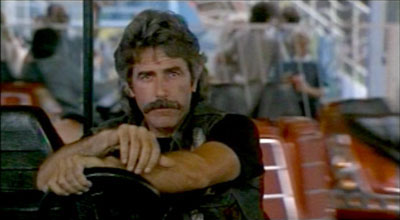
• A man on the 7, looking very much the Sam Elliott part in Mask, commenting approvingly on my DELGADO 21 t-shirt (“I bought his jersey because I like his politics”) and recommending Fred Wilpon sit Ollie down with Sandy Koufax thereby solving everybody’s problems;
• A Mickey Lolich-sized man in the row in front of us who told us (without our asking) that it was a mortal lock the Beach Boys would be singing the national anthem, but it wouldn’t be the “real” Beach Boys, therefore he planned to heckle these Mike Love-led latter-day impostors with cries of “WHERE’S BRIAN WILSON AND AL JARDINE?” (the Beach Boys, FYI, were nowhere in sight);
• Four teenagers next to him who spent most of the afternoon taking pictures of themselves — that is, holding the camera in front of their faces and laughing hysterically — when not being engaged by the Brian Wilson guy;
• A man behind us who informed his seatmates that the Mets have an option year remaining on Carlos Delgado (they don’t), that the Mets are not permitted to use Billy Wagner because he was put on waivers (they are); and that Billy Wagner wears No. 34 (he doesn’t);
• And my favorite, the woman I remember from a previous outing in this particular section, she who I dubbed Captain Obvious. Captain Obvious points out all that is readily apparent (except that Billy Wagner wears No. 13, because she asked the guy who was sure he wore 34 — and is not righthanded, since it was No. 64, righty Elmer Dessens, warming up that brought all this on), repeats it incessantly and complains about it. Captain Obvious is also a weathervane, as in Sean Green throws a strike, he’s very good/Sean Green throws a wild pitch, he’s very bad. My previous exposure to Captain Obvious informed me “Jerry has to use Sean Green to get him mentally well in the head.” Also, Captain Obvious enjoyed a trip to the air-conditioned Verizon Studio. Know how I know that? Because she mentioned it approximately every eight seconds for five consecutive innings.
But I would have forgotten all those fine people had Jeff Francoeur’s liner sailed past Eric Bruntlett’s glove, or at least would have downgraded them from irritating to colorful. I would have reveled in Angel Pagan’s longball versatility and gotten a far greater kick from Shane Victorino invoking his own secret ground rule in the first instead of simply picking up the ball Pagan hit to the wall. I would have remembered something, vaguely, about Ollie Perez giving up a couple of bombs to Jayson Werth then Carlos Ruiz, but would have chalked it up as another no-decision and given him credit for, in his fashion, displaying those innate winning ways that make him worth every penny he’s getting. I would have needed reminding, maybe, that August 23 was also Pedro Martinez’s homecoming, and that I did clap when I first saw him in the wrong uniform, but, as so often happens, the storyline I suspected would be primary wound up no more than tertiary. I would have delineated great foreshadowing from Francoeur’s catch on Bruntlett, particularly the shoe polished way the umpires caucused to overcome their tendency to make calls with their eyes closed all weekend. And, if we had won the Damn Thing the way it began to appear we were en route to doing, I would have recanted every nasty thing I thought of and yelled at Brian Schneider and his .176 uselessness. I would be invoking Eric Bruntlett for the rest of my days every time we didn’t think something could go right instead of the way I’ll probably be invoking him every time something goes inevitably wrong. I even had a scenario worked out in which the Phillies would be eliminated in the first round and a narrative would take hold that once Lidge and Bruntlett blew that game to the Mets, you just knew they weren’t repeating. It wasn’t an essential aspect of what I imagined, but it did cross my mind.
I’d say a lot crosses my mind in a game like this, but I’m fairly certain I’d never seen a game like this until Sunday.
Alas, Jeff Francoeur’s liner sailed into Eric Bruntlett’s glove. I stared at second base, counted the sudden surfeit of outs, absorbed the echo roar of what no longer felt like New Shea and trudged out of Citi Field with my friend Joe, each of us deconstructing what the hell just happened and how the hell it could have happened.
AMAZIN’ TUESDAY returns to Two Boots Tavern August 25 at 7:00 PM. Join Jason Fry, Dana Brand, Caryn Rose and me for a fun night of reading, eating, drinking and all things Mets baseball (Mets baseball optional). Full details here.
Faith and Fear in Flushing: An Intense Personal History of the New York Mets is available from Amazon, Barnes & Noble or a bookstore near you. Keep in touch and join the discussion on Facebook.
I’ve followed the crowd to Twitter. Follow me there, if you like.
by Jason Fry on 23 August 2009 8:14 pm I always said my hope was that sometime in a hopefully long lifetime of watching baseball, I’d get to see an unassisted triple play.
I suppose I might have qualified that a bit.
In other news, it’s not our year.
by Jason Fry on 23 August 2009 7:14 pm 
Angel Pagan, ’69 Topps style, with Seaver and Agee behind him. A nice touch from a very nice Citi Field ceremony.
by Jason Fry on 23 August 2009 6:47 pm Well, thanks Ollie. That was memorable.
What better time to rewind for a belated look at last night’s celebration? (Apologies for the “belated” part — your correspondent arrived exhausted and slept like a dead thing.)
The Mets did a nice job with the ceremony: There was Howie Rose behind his podium, scenes from ’69 on the big board, and other little touches — I particularly liked that the 2009 Mets appeared on the scoreboard in replica 1969 baseball cards, with images of Topps’ real cards for Tom Seaver and Tommie Agee behind them. I even liked the cream-colored jerseys — there’s something faintly off about old men in regulation uniform tops, so why not have them wear jerseys with a certain patina? The Mets fans applauded mightily — the biggest cheers were for Yogi Berra, Tom Seaver, Nolan Ryan and Ralph Kiner, though Joan Hodges and Joye Murphy got their due, as they should for every visit — and the Phillies fans (of whom there were far too many) watched respectfully. A rare bipartisan moment: The image of Tug McGraw, a World Series hero for both teams, was greeted with rapturous applause from all sections of Citi Field. (The game that followed can be summed up simply: Tim Redding — of all people — was great, but nobody else was.)
I’ve said before what the ’69 Mets taught me, but that post was about growing up with them as not-so-distant history, not seeing them in the flesh as men in their 60s and 70s. I was sitting in the Pepsi Porch with my friends Erin and Kent, and at one point I found myself trying to explain the ’69 Mets to Erin, who wanted to know why on earth the Mets were showing old footage of a cat wandering around on a baseball field. (Hey, if you’re not steeped in Mets lore it’s a perfectly good question.) I told her what I could, but no hasty conversation in a ballpark can ever sum up the ’69 Mets. They’d never been good, then it all came together, and somehow they beat the Orioles and were World Champions. And there was this cat, and these amazing catches by Agee and an even more amazing one by Swoboda, and then they went on the Ed Sullivan Show…. I did what I could, nudging Erin to watch the Agee catches and Swoboda diving and rolling over, but it was a feeble substitute for the glee and happy disbelief of a summer of faith rewarded. (And I only know it secondhand — what I know is just a shadow of what Greg remembers through a child’s eyes and Joe D. witnessed.)
But there they were — oft-heard names and rarely heard ones too, all of which I found myself greeting with a big, silly smile on my face. Bobby Pfeil was back! It’s Rod Gaspar, a.k.a. Bring on Rod Stupid, and ha ha on you Frank Robinson! Dr. Ron Taylor is here! Ron Swoboda pantomimed the beginnings of his catch as he crossed short right field, and Cleon Jones did a partial genuflection in echo of the final out. There was Ed Charles, looking gentle and sad behind his granny glasses, and Wayne Garrett still looking 25 somehow, and Jerry Grote looking thin and old but still tough, still nobody to mess with. I think I was happiest to see Gary Gentry, whom I hastily explained to Erin could have been a great one, except he had the bad luck to hurt his arm when hurting your arm was a one-way journey to oblivion.
And, yes, there was the return of Nolan Ryan, back in Mets garb for the first time since the Nixon administration. Ryan looked big and imperious, striding down the line of his former teammates. Tom Seaver — who has that Paul McCartney quality of always looking young even as he thickens and grays — has a certain imperial quality himself, but he’s a beneficient king, willing to hand out smiles and waves and blown kisses. Ryan? He was more stoic and despotic, clearly just visiting. It was interesting, as the ceremony wound down, to see which Mets and Phillies veered off from their pre-game work to greet Seaver and Ryan. (Billy Wagner, no fool, sought out fellow lefty Jerry Koosman.) I didn’t see a hitter approach the Ryan Express — perhaps it’s that pitchers are keener students of their game, or that hitters thought Ryan might give them the figurative brushback, if not the real thing.
The ceremony began with cheers for widows and children — Donn Clendenon and Cal Koonce and Don Cardwell and Tommie Agee and Tug McGraw are gone, a full 20% of the World Series roster. Thinking about that, I found myself imagining the future — the 50th and 60th celebrations. Sadly but inevitably, the part of the program reserved for the departed will grow, with fewer elder statesmen taking their bows before fans further removed from the events celebrated. The Amazin’s will wave with the hands not gripping canes, or lift a hand from golf carts, or be represented by children themselves grown startlingly old.
But we’ll still cheer, and tear up, and remember. The ageless highlights will still be shown, on CitiVision or its replacement or some hologram hovering over center field, and we’ll cheer and smile and point and try to explain it to uninitiated neighbors. There’s little Al Weis swiping one over the fence. There’s Glenn Beckert standing in the on-deck circle and sensing something walking across his path. There’s Gil walking slowly out to home plate with a baseball in one big hand. There’s Seaver and Garrett and Ryan and Agee, leaping up and down and covered with champagne, so impossibly joyous and impossibly young.
And we’ll look from the screen to the men who were there, however many there may be, and we’ll applaud, because they will be our proof of what amazin’, amazin’, amazin’ things can happen, and that will happen again, if we are faithful and if we are patient and if we remember and if we believe.
AMAZIN’ TUESDAY returns to Two Boots Tavern August 25 at 7:00 PM. Join Greg Prince, Dana Brand, Caryn Rose and me for a fun night of reading, eating, drinking and all things Mets baseball (Mets baseball optional). Full details here.
Faith and Fear in Flushing: An Intense Personal History of the New York Mets is available from Amazon, Barnes & Noble or a bookstore near you. Keep in touch and join the discussion on Facebook.
by Jason Fry on 22 August 2009 4:51 pm For the Mets, whatever happens between first pitch and final out has become secondary. There are injury woes, draft-pick signings, waiver claims, contract disputes and front-office assessments that are more important and usually more interesting than the outcome of the actual games. At this point, the Mets' 2009 W-L record is a measure of how much lipstick winds up on the pig.
And yet there's still baseball under all this mess, and last night the baseball was marvelous, full of tension and bad feeling and injustice and unlikely heroes (the Mets being stripped of all likely ones) and, at last, victory. It's a shame that last night's game will be (and in fact mostly has been) already forgotten, lost amid the musings of charming old huckster Pedro Martinez, the possibility of Billy Wagner departing (I'm not sure he isn't more valuable as an arbitration case and a compensatory draft pick) and Omar and Sheffield trying to get their stories straight. Because it was a classic — the Phillies against Cora's Irregulars, now minus Cora.
Yes, even the sarge is gone — he was last seen somewhere amid the hedgerows with two busted thumbs, trying to figure out how to fire his sidearm with his teeth as the Germans closed in. Now it's down to Murph, Frenchy, Big Pelf, Fat Little Luis, Angry Gary, Kid Santos and the rest of the grown-up-too-fast platoon, lost in occupied territory, bereft of training, low on ammunition and surrounded by enemies.
But last night they made it.
There was Fernando Tatis hustling out a triple and later scoring on a sacrifice fly to the first baseman. (Yes really. Remember you saw that.) There was Mike Pelfrey — even crankier and weirder than usual — looking like he'd take a piece out of Cole Hamels if not for the fact that it was way too hot to fight. There was the injustice of an amazingly terrible call on Jimmy Rollins' neighborhood tag on Jeff Francoeur at second. (Whatever doesn't kill you makes for a spicier storyline.) There was Pelfrey watching his defense self-destruct behind him in the sixth, with Anderson Hernandez seemingly mistiming his stab at a potential inning-ending double-play grounder and Luis Castillo leaving first uncovered, giving the Phillies the bases loaded with one out and an invitation to turn the game into another farce. There was Pelfrey responding to that by then popping up Ben Francisco and Rollins, a good sign for him in a season that's been light on good signs. There was Pedro Feliciano defanging the Phils' deadly lefties yet again, the instant first-guess of Sandy Alomar opting for Brian Stokes to get Jayson Werth as the tying run, and Stokes striking out Werth on a high inside fastball. (Wanna run your mouth about that, Mr. Wagner?) And then Frankie Rodriguez stumbling through another potential disaster, only to find redemption by striking out Chase Utley and Ryan Howard.
In a better season that would have been one for the season-in-review DVD — a terrific opener to a crucial weekend showdown. In this season there's no such thing — I believe the 2009 DVD will opt for a gauzy fade-out shortly after Omir's homer off Papelbon. But last night's game was still a wildly entertaining, thoroughly satisfying way to spend three hours. Think of it as a reminder of what was, and a down payment on what will be again.
AMAZIN' TUESDAY returns to Two Boots Tavern August 25 at 7:00 PM. Join Greg Prince, Dana Brand, Caryn Rose and me for a fun night of reading, eating, drinking and all things Mets baseball (Mets baseball optional). Full details here.
Faith and Fear in Flushing: An Intense Personal History of the New York Mets is available from Amazon, Barnes & Noble or a bookstore near you. Keep in touch and join the discussion on Facebook.
by Greg Prince on 22 August 2009 7:15 am With apologies to Steve Phillips (the last time I’ll ever say that), the Phillies are a 24 + 1 team this weekend. There are the 24 Phillies the ground beneath Citi Field can open up and swallow — opening up and swallowing Shane Victorino 24 times and spitting him back 23 times before reluctantly sucking him down would also suffice — and then there is Pedro Martinez.
Pedro shouldn’t be wearing a jersey that says Phillies across his chest. It should just say Pedro. Now that he is back in the game, he is once more baseball’s most singular personality. He transcends the team from whom he is collecting a paycheck. That’s not to say he’s not a good teammate. It’s just that I’d prefer he be on a more innocuous roster, and that I’m not going to let his unfortunate temporary condition detract from the bottomless reservoir of goodwill I’ve kept stashed away since last September for the next time I would see him.
Don’t take that to mean I wish his uniform top still said Mets on it. I wouldn’t go quite that far. It said Mets about as long as it could, and I really appreciated that it did. I appreciated the man inside it for four years, even the last couple when we didn’t see all that much of the pitcher we thought would fill it. Pedro Martinez made a nice living as a Met and I believe he did his best to earn it. His Met trajectory would suggest his contract should have been front-loaded, that he didn’t do much to merit getting paid as much as he did after the middle of 2006. He was either injured, rehabbing from injury or pitching at less than optimal levels because of injuries for the longest time. The Pedro who signed for four years and $53 million would have been awfully handy to have had around in October 2006 and the balance of 2007 and 2008. That Pedro wasn’t generally available.
The Pedro of 2005 and the first two months of 2006 was the Pedro we signed, and he was a sight to behold. Yet it’s not the pitching from more than three years ago that stays with me. It’s the presence — on the mound, off the mound, wherever he went.
I loved listening to him, whatever it was he was talking about. Too often it was a conversation about why he couldn’t quite throw the way he wanted or how his velocity or location wasn’t where it needed to be. But it was always substantive and it was always soulful. Pedro Martinez may have been the deepest-thinking, most genuine voice to ever grace the Mets clubhouse, at least as it was transmitted back our way. He had a sense of occasion second to none. He understood who we the fans were and he cared that we cared. He may have been kidding himself on occasion, such as when he decided the only way he’d come back to the Mets in ’09 would be if they offered him a deal befitting his past more than his present (forgetting, apparently, that much of what he was paid between ’05 and ’08 was for the reputation he forged circa ’99), but Pedro, as ever, was being Pedro.
Friday, before the Mets beat the Phillies, Pedro met the New York media at Citi Field. As ever, he was graceful, he was thoughtful, he was Pedro. He evinced no hard feelings toward Met management for foregoing his services while implying sharply that he believes they made the wrong decision. He looked forward to “mutual respect and fun” when he takes the mound Sunday (though given his current uniform and the surfeit of criminally short memories in our ranks, I wouldn’t necessarily count on either). He kept his pronouns in order when he regretted that “we” lost in bad way last year. And he entered my personal Hall of Fame when he referred to “this place,” realized it wasn’t where he pitched previously and, sporting the warmest of smiles, corrected himself with “not this one — Shea…Shea Stadium…my beloved Shea.”
“My beloved Shea…” Somebody put that on a commemorative coin or something.
Last September 28, in quintessential Met fashion, the Mets managed to get themselves eliminated from playoff contention on the final day of the season for the second year in a row to the same team, one that was ostensibly not as good as them. And they did it on the final day their stadium would ever host baseball, casting a most sour pall over the closing ceremonies, which took on an air of funereality. I don’t know what the plan was had the Mets won and perhaps clinched a playoff spot. I would assume some if not all of the 2008 Mets would have joined in the Shea Goodbye festivities. Instead, none appeared, except in highlight form on DiamondVision. Each time the image of a frontline Met flickered by, even from 2006, it was booed.
It was a small regret in a day crammed full of them that no then-current Met took part in the official farewell. As with so many aspects of our dyspeptic existence, it was understandable, but it was still regrettable. To watch the 43 Mets take their places around the Shea infield was to think Mets history ended in 2005 with the departure of Mike Piazza. Even if you convinced a couple of them to emerge from what must have been a very morose clubhouse, the atmosphere in the stadium was way too toxic to send a Wright or a Reyes or a Beltran out to represent the last years of Shea. Too many Mets fans hated the Mets too much at that instant to take a step back and appreciate all that made them so passionate about their team from ’06 on.
Three Mets could have done it, I thought.
• Johan Santana could have stepped outside and he would have been cheered. Johan hadn’t blown a second straight postseason berth. Johan very nearly made us collapse-proof just just one day before.
• Endy Chavez could have stepped outside and he would have been cheered. Endy had immunity from October 19, 2006 into eternity, I’m pretty sure.
• And Pedro Martinez could have stepped outside and he would have been…well, he wouldn’t have been booed, even by this crowd. Pedro threw a gutty game three nights earlier and, though he left it with go-ahead runs on first and second, he exited to a standing ovation. The shortfalls of September 2007 and 2008 were never deposited at Pedro’s doorstep. He transcended the Mets’ failures even if, in the end, he couldn’t do all that much to halt them from transpiring.
We said goodbye to Pedro’s beloved Shea without Pedro. We now find ourselves unexpectedly saying hello again to Pedro at “this place”. Ex-Met homecomings can be funny things. Sometimes, as with Piazza the Padre, they can be magical. Usually, however, erstwhile Mets lose their flavor on the bedpost overnight. I’ve stood and cheered truly amazing Mets of yore long after they changed colors and wound up sticking out like the inevitable French fry in an order of onion rings. They don’t have to be John Olerud or Edgardo Alfonzo to receive some variation on the returning hero treatment from me. For example, I gave a sitting but hearty round of applause to Xavier Nady (whom I never much cared about) in his first post-Met appearance. My companion that evening was mystified as to why I’d want to do that. He’s a Pirate now — screw him.
Pedro Martinez is a Phillie now. Screw them, I’ll say, but Pedro…not so fast there. In his press conference Friday, he said of us, “I think it’s going to be great to see them and exchange with them.” That’s one of those Pedroisms he used when he was here: exchange, as in exchange with the fans. When he takes to the mound Sunday, I’ll be exchanging my usual greeting for Phillie starting pitchers for one more suitable toward someone so singular. I’ll look past that unfortunate red writing on the gray uniform and I will stand and cheer for Pedro Martinez.
After that, he’s the enemy and the Mets are advised to hit him at will. But for a moment before, he will be the Pedro with whom I exchanged so much mutual respect and fun at our beloved Shea.
AMAZIN’ TUESDAY returns to Two Boots Tavern August 25 at 7:00 PM. Join Jason Fry, Dana Brand, Caryn Rose and me for a fun night of reading, eating, drinking and all things Mets baseball (Mets baseball optional). Full details here.
Faith and Fear in Flushing: An Intense Personal History of the New York Mets is available from Amazon, Barnes & Noble or a bookstore near you. Keep in touch and join the discussion on Facebook.
Follow me on Twitter and see what I can do in 140 characters or less.
by Greg Prince on 21 August 2009 3:00 pm Welcome to Flashback Friday: I Saw The Decade End, a milestone-anniversary salute to the New York Mets of 1969, 1979, 1989 and 1999. Each week, we immerse ourselves in or at least touch upon something that transpired within the Metsian realm 40, 30, 20 or 10 years ago. Amazin’ or not, here it comes.
CitiVision (or DiamondVision, if you’re civilized) repeatedly aired promotional spots for the ’69 Reunion the other night. To lure Mets fans to show up Saturday, Alex Anthony read off a partial guest list. As I listened to it for the third, fourth, fifth time, I smiled a little.
First name: Seaver. No explanation needed anywhere baseball is taken seriously.
Second name: Ryan. I doubt that would have been the pecking order forty years ago, but you can’t argue with the placement today. Nolan Ryan, based on what he did after leaving the Mets, is the most famous of the ’69 Mets, even more famous than Tom Seaver.
Third name: Koosman. This is where I began to smile.
Sure, you and I know Jerry Koosman. In 1969, a lot of people knew Jerry Koosman. Jerry Koosman was the lefty complement to Seaver. In 1968, he put up better numbers. In the ’69 World Series, he was more effective. To this day he’s the greatest postseason pitcher in Mets history. Outside Citi Field and wherever Mets fans call home, however, Jerry Koosman is probably not instantly recognizable.
As the other last names were rattled off — Jones, Kranepool, Harrelson, Grote — my smile widened. The so-called casual fan; certainly the under-40 fan of any team that isn’t the Mets; the youngish Mets fan who doesn’t pay a whole lot of attention to what came before his or her first game…they would likely have little to no idea who these men were or how they, in the company of eighteen other last names that may or may not ring a bell in other circles, changed the world.
Changed our world, at any rate.
I didn’t smile because I approve of the ignorance of others. The feats of the ’69 Mets should be taught in schools. They were exemplars of math (how 9½ out on August 14 became 8 ahead at season’s end), science (how shoe polish seemed to magically appear on a baseball that might not have hit a shoe); English (as taught by Prof. Karl Ehrhardt); and social studies (uniting as one a city otherwise divided by war and societal upheaval). The ’69 Mets are history, too, but they’re our history. They’re the fundamental building block of Metsopotamia. I wouldn’t expect those who don’t live among us to ever quite get it, no matter how universally symbolic the 1969 Mets have become for entities that overcame long odds, upset established orders and succeeded in ways few would have guessed.
I don’t smile at the idea that Mets fans who came along a full generation or more after the ’69ers retired might not feel this championship is quite theirs. I can understand it to a point, as it takes some commitment to relate fully to what you didn’t experience first-hand, which for me covers the first seven seasons of Metsdom. As much as I’ve read up on the Mets who preceded the ’69 team and as attentively as I’ve listened to the stories surrounding them, I’ll always fall a little short in suitably appreciating their contributions toward establishing the Mets as a one-of-a-kind baseball enterprise.
But the 1962 to 1968 Mets didn’t win the most improbable championship in the history of the sport. The 1969 Mets did. That’s ours, meaning it’s yours, even if you weren’t there. You buy into a team, you buy into the whole package. You buy into 40-120 and you buy into the recurring downs, but you also get, free of charge, the highest of ups. You automatically get the ’69 Mets. They’re worth knowing. It goes without saying they deserve embracing.
Despite my misgivings that every person on Earth let alone in Queens doesn’t automatically know how to spell Pfeil, the smiling I did Monday night was rooted in realizing just how much this team belongs to us, the Mets fans. That’s a fairly self-evident conclusion, I suppose, but think about those last names and their limited range of resonance. Pick another championship team, whether indisputably famous or relatively obscure. Some names are inevitably going to be recognizable to one and all, some will be known just by their diehards, but there will be a pretty wide swath in between that are familiar enough to the baseball populace at large to elicit, at the very least, an “oh yeah, I remember him…”
Fans of all ages are going to know, I think, Roberto Clemente and Willie Stargell from the ’71 Pirates, to use a random example. But you don’t have to be from Pittsburgh to recall Al Oliver or Manny Sanguillen or Dock Ellis. The ’93 Blue Jays were packing Robbie Alomar and Paul Molitor and Joe Carter and Dave Stewart, but also Devon White and Tony Fernandez and John Olerud — not household names, but sturdy major league mainstays. I’ll bet our own ’86 Mets follow a similar pattern away from Flushing.
But the ’69 Mets? Even taking into account the individual successes of Jones (third in that year’s batting race), Kranepool (eventually one of the game’s top pinch-hitters), Harrelson (starting All-Star shortstop and Gold Glove winner in ’71) and Grote (acknowledged in his time as a defensive maestro), who else besides we who experienced them in all their glory would be impressed by an advertisement to come see them gather decades beyond their collective signature accomplishment? The only thing that would have made it more impressive to us is if Anthony had extended the roll call to include Swoboda and Charles and Martin and everybody else scheduled to return Saturday.
If we’re not going to get excited on our own behalf, who will? When I would watch one of those Old Timers gatherings Equitable used to sponsor in conjunction with the All-Star Game, I noticed how few former Mets seemed to be on hand. There were retired stars from other teams, but not us. There never seem to be ex-Mets when ESPN shows those celebrity softball games that have taken their place. If we’re not in the midst of one of our occasional outstanding seasons, it’s like we barely exist on the baseball map at large.
And maybe on some level we don’t. Maybe you have to be a Seaver or a Ryan to have that kind of staying power on the outside. They’re Hall of Famers to the rest of the world. But they’re Mets to us. They’re ’69 Mets first and foremost — they and their lesser known peers. It takes nothing away from their Cooperstown credentials to say Seaver and Ryan exist on the same plane for us as Dyer the third catcher, Gaspar the fifth outfielder and DiLauro the last man out of the bullpen in 1969. They’re all immortal to us. To borrow a phrase 1997 Florida Marlins bench coach Jerry Manuel used in expressing his appreciation for the just-released Liván Hernandez, they put a World Series ring on our finger. Only two groups of men did that for us. This was the first.
The enormity of that accomplishment should not for a second be underestimated. It will never diminish for me, not from time, not from distance, not from anything. Collectively and individually, the mere thought of the 1969 New York Mets will always make me smile like nothing else.
I hear their names and of course I smile. I absolutely light up.
AMAZIN’ TUESDAY returns to Two Boots Tavern August 25 at 7:00 PM. Join Jason Fry, Dana Brand, Caryn Rose and me for a fun night of reading, eating, drinking and all things Mets baseball (Mets baseball optional). Full details here.
Faith and Fear in Flushing: An Intense Personal History of the New York Mets is available from Amazon, Barnes & Noble or a bookstore near you. Keep in touch and join the discussion on Facebook.
by Jason Fry on 21 August 2009 3:53 am In some parallel universe, Billy Wagner also jogged in from the bullpen for the 8th inning and retired the side in order. But in that parallel universe, the other eight defensive position were occupied by something other than surplus Buffalo Bisons, and we were thinking about October instead of about April.
I'd like to live in that universe. But I don't, and so I can't escape the unhappy truth that for all that I was thrilled to see Billy return, that return is merely a footnote in a dismal season. And tonight was a microcosm of that: a sticky, vile evening in which Johan Santana looked merely competent, the bats weren't even that, and the Mets' lackluster play on the field was overshadowed by yet another kerfuffle off of it.
Gary Sheffield has played far better defense than anybody could have expected (which is to say he's been slightly below average), generated more fear at the plate than anyone could have expected (which is to say he's been just fine), and been a model citizen in the clubhouse. I understand why he's angry to be serving out the rest of his sentence on this zombie team, and truth be told, I'm kind of on his side — not because I enjoy the bellyaching of self-absorbed millionaires, but because Sheffield's continuing presence is another reason to wonder if the Mets' baseball-operations people spend their days doing Whip-Its and defacing pictures of Adam Rubin.
With the season beyond repair, why on earth would you pull Sheffield back from waivers instead of working out a deal with the Giants? (Update: see below.) Now that it's too late to get something back for him, why not release him? Either way, put Nick Evans in left for an audition, while keeping Greg's warning about September mirages firmly in mind. (As for a contract extension, ha ha ha. Sorry, Gary. Though honestly, I'm surprised Sheffield didn't get one, given Omar Minaya's love of giving 41-year-olds multiyear deals.)
Yes, Billy Wagner came back, adding another chapter to a story that's a testament to his character and toughness. That's to be saluted and celebrated. But the Mets lost, as they will continue to do with numbing regularity for the next five weeks before the merciful end. In some parallel universe, Billy is the missing piece of the juggernaut, arriving just in time to join a celebratory crushing of the faint hopes of the hated Phillies. In this universe, the best reward we can think of is that Billy might get to go somewhere else while we finish going nowhere.
Update: Next-day story (via Metsblog) claims Sheffield never asked for a contract extension, Omar didn't make a deal because he wouldn't get enough back, and the Giants were blocking a trade, not trying to make one.
AMAZIN' TUESDAY returns to Two Boots Tavern August 25 at 7:00 PM. Join Greg Prince, Dana Brand, Caryn Rose and me for a fun night of reading, eating, drinking and all things Mets baseball (Mets baseball optional). Full details here.
Faith and Fear in Flushing: An Intense Personal History of the New York Mets is available from Amazon, Barnes & Noble or a bookstore near you. Keep in touch and join the discussion on Facebook.
by Greg Prince on 20 August 2009 4:00 pm I'm all for the myths and carrots that keep us going as fans in discouraging years. We deserve ideals and distractions after giving our all to a team that has given us far less than planned, projected or promised. We're the ones who invest our hopes and dreams and keep investing despite no sight of tangible payoff. Give us at least the spare change of change, right?
When the Mets have a 2009, and it's overstocked with Everyone Must Go veterans, the inclination is to approach September by calling for kids. Bring up who isn't here, bring 'em up so we can have something to anticipate. Let's at least give them a look so we can see what they can do!
Sure, why not? I'm as tired as anybody of seeing everybody we've already seen, almost none of whom has accomplished anything but get run over by stiffer, healthier competition in other uniforms. As evidenced by my five-pitch love affair with Andy Green, I'm all for testing the untested.
But let's not kid ourselves about kids. We're almost assuredly not going to see or learn anything that indicates anything about the future. It's a myth to believe someone's gonna come up here and give a clear indication about a potential role for 2010, that someone will distinguish himself and help management make clearheaded decisions about the roster realignment that lies ahead.
Nothing of a sort has happened here in ages.
Two current Mets put this reality into perspective for me, one by way of a sizzling Diamondback. When the Mets visited Arizona, we were dazzled by Trent Oeltjen, the Aussie who lashed every pitch he saw from Phoenix to Sydney. On the night he went 4-for-4 and landed on first next to a sullen, slumping Daniel Murphy, Gary and Ron noted the difference in their demeanors. Here was a kid who couldn't stop hitting or smiling standing next to a kid who could do neither.
One year earlier, I realized, that was Daniel Murphy standing on first, barely containing his glee. Jerry Manuel stuck him in the lineup and he hit. Then he hit some more. He was a sensation along the lines of Michael Phelps, except Daniel Murphy was going to win a gold medal every day for the rest of his life. After thirty big league at-bats, he was hitting .467, and we could pencil him into play…what was his position again? Didn't matter. He was Daniel Murphy. He had arrived.
Some modestly encouraging momentary sightings notwithstanding, he's been pretty much lost ever since.
We can't blame Daniel Murphy for not maintaining that .467 average (even golden boy Phelps has slumped in 2009), but Murph looms primarily as a cautionary tale against taking seriously what you see from youngsters who debut and impress in August and September. He wasn't the first, he won't be the last. The Mets, however, tend to put a lot of stock into what little good news they get out of callups this time of year. They saw a few dozen great at-bats out of Daniel Murphy, a few dozen more pretty good ones and he was on his way to being their regular leftfielder. How did that work out?
The Grand Central Parkway's jammed with broken heroes on a first-chance power drive: Mike Vail, Gregg Jefferies, Victor Diaz. They showed up late one season and they were penciled in as sure things early for next season. How did those work out? This is not to pick on phenoms for picking on phenoms' sake. If baseball were so easy, you could just dump a satchel of rookie cards on the field and watch them increase in value (if they did that anymore). But that's the point: It's not that easy. We saw spectacular things out of Vail in 1975 and Jefferies in 1988 and Diaz in 2004 and, for that matter, Murphy in 2008. Their respective 1976s, 1989s, 2005s and 2009s reminds us this time of year can be a mirage.
One of Murphy's current teammates, meanwhile, reminds us that the youngsters we're dying to see weren't being hidden away in Triple-A just to deprive us of their talents. Four Septembers ago, this blog was hankering for a sneak preview of Anderson Hernandez. Second base was a particularly black hole in 2005 — Kaz Matsui to Miguel Cairo to Marlon Anderson with a dash of Jose Offerman. What would be the harm of bringing up the kid Hernandez?
None. None at all. He came up. He flashed some leather. He didn't hit until his very last at-bat, the last hit the Mets collected as a team in 2005. Their second-to-last hit was recorded by Mike Jacobs, the Mets' late-season installation at first base, which had long since gone abandoned by the likes of Doug Mientkiewicz. I recall getting a little tingle in mid-September when we sent out our first all-1980s-born infield: Jacobs, Hernandez, Reyes, Wright. We were seeing the future develop right before our eyes.
Then we weren't. For better or worse (I'd say better), Mike Jacobs was traded for Carlos Delgado. Anderson Hernandez inherited second base in 2006 when Kaz made himself characteristically unavailable, but then Anderson — still fielding beautifully, still barely hitting — went out with a bad back and his starting days were over. Jose Valentin, the last great good surprise to happen to the Mets, took over second and Hernandez's best days were behind him. He was yo-yo'd a bit between New York and New Orleans in '07, he became a National in '08 and now he's a stopgap Met.
Could we know that in September 2005? No. Should we have worried about that? Not really. But can we suspect that every time we holler that we need to see fresh meat on the Shea/Citi grill that it's probably not going to come out well done? We can, but why ruin the surprise?
Who was the last Met to come up this time of year, make a positive impression and follow it up with a quality full first year and contribute to the Met cause over a tangible stretch of time? Maybe it's Murphy, though you could debate how much quality can be inferred from an OPS under .700 and seven homers at a so-called power position.
If we don't say it's Murphy, then we're at a loss. In the last few seasons there haven't been many opportunities for youngsters to break through on a contending team, but there's been no hint of help besides Murphy, Jacobs and Hernandez, at least among position players.
Pitchingwise, we got a taste of Jon Niese and Bobby Parnell last September, but not enough to definitively whet many appetites, though you have to credit Parnell for being a survivor to this point. In 2007, there were Willie Collazo and Carlos Muñiz, whom I still confuse for Carlos Muñiz and Willie Collazo. In 2006, there was Philip Humber, before he was thrown to the wolves (or at least the Nationals). In 2005, there was Tim Hamulack, not really a youngster, but not much of a pitcher either, as it would turn out.
Joe Hietpas had one legendary half-inning at the tailest end of 2004 (if you're not picky about what becomes a semi-legend most). Craig Brazell had his moment in the sun, finishing what Victor Diaz started in spoiling the Cubs' Wild Card run, but nothing more. Jeff Keppinger got an injury-assisted audition but had to go elsewhere to become a successful journeyman. And Heath Bell had yet to pitch his way into anybody's heart.
Earlier in this decade, there were Prentice Redman and Jason Anderson and Danny Garcia and Orber Moreno and Matt Watson, all of whom failed to last into later this decade. There was Mike Glavine, too, but not really. If the Class of August/September 2003 didn't do it for you, it wasn't because their predecessors from latter 2002 set the bar impossibly high: Raul Gonzalez, Esix Snead (his Brazellian moment as a walkoff wonder notwithstanding), Jason Middlebrook, Pat Strange and the first incarnation of Pedro Feliciano failed to change the paradigm. A whisper of Jason Phillips in 2001 was notable mostly for the Shea scoreboard operator celebrating his first major league hit by crediting it to Vance Wilson. Phillips would keep it on the down low for a while from there.
The last September Met to make an impression and stick for something resembling the long term before Murphy was Timo Perez. Perez had his stops and starts in the fall of 2000 (ahem) but he revved up long enough not only to star in two postseason series but to more or less secure an unassailable roster spot in 2001 — through mid-July anyway. It's more than could be said for Jerrod Riggan or Jorge Velandia.
No, the 2000s haven't been distinguished by their late-season callups. I don't know how different that makes these past ten years from any other period in Mets history. Occasionally you see something and it's not a mirage. Hubie Brooks hit .309 in September 1980 and, despite Joe Torre's recalcitrance, won the third base job in 1981 and registered a .307 average. Mookie Wilson struggled a bit alongside Hubie (.248), but he showed enough to stick from the day he came up. Dave Magadan's heroic cameo in 1986 (.444 in ten games, most notably three hits in the division clincher) earned him face time in 1987 — .318 behind Keith Hernandez and Howard Johnson. So there are some success stories where calling up young Mets late in the year is concerned.
It's just that they're very old.
Should that stop us from clamoring for new blood? Not at all. Clamor away. Scan the Buffalo and Binghamton rosters and choose your cause. Declare the Mets are not making the most of September unless they give some kid you've never seen but have heard good things about a shot. It's not like he can let you down any more than anybody who's already here has.
AMAZIN' TUESDAY returns to Two Boots Tavern August 25 at 7:00 PM. Join Jason Fry, Dana Brand, Caryn Rose and me for a fun night of reading, eating, drinking and all things Mets baseball (Mets baseball optional). Full details here.
Faith and Fear in Flushing: An Intense Personal History of the New York Mets is available from Amazon, Barnes & Noble or a bookstore near you. Keep in touch and join the discussion on Facebook.
by Jason Fry on 20 August 2009 4:24 am Last night Emily and I were out with friends and after dinner we all stopped into a bar somewhere in the West Village, picking our watering hole based on the fact that we could see a little lighted square of Mets game up there above the heads of the bartender and the patrons.
On the way to our table I peered at the TV and registered that there was a 4 next to the ATL, it was the fifth inning, and the Mets' score was an ominous-looking round number. Goddamn it, I muttered, then looked more closely, thinking something was off about that 0. Why, it wasn't a zero at all — it was a big, beautiful 8. The Mets had scored eight runs in the fourth and were on their way. Woo-hoo!
Tonight Emily and Joshua and I were out in Dumbo celebrating Joshua's last week of camp and the fact that after eating three years of my life, Star Wars: The Essential Atlas is finally in stores. (Yes, I am a dork of all trades.) We got home around eight and I flipped on the TV in our bedroom. There was a sweat-soaked Bobby Parnell, looking like he'd been hit by a truck. I registered that there was a 9 next to the ATL, it was the third inning, and the Mets' score was an ominous-looking round number. Fool me once, I thought, then looked more closely, hoping something was off about that 0.
Why, it certainly was a zero. The Braves had scored eight runs in the third and boy, were they ever on their way.
Perhaps the lumps taken by Parnell will add up to a learning experience: With garbage time come early, he ought to get as long a look as possible in the rotation, even though that will mean some more poundings like tonight's. And speaking of garbage time, let me ask again: Where the hell is Nick Evans? What is the possible use of getting a longer look at Gary Sheffield, Jeremy Reed and Cory Sullivan?
Perhaps Luis Castillo's latest gaffe will convince the Mets that he should be sent packing, prompting them to look for a team dumb enough to be impressed by .310 worth of little slap hits and whatever veteran experience Luis offers when he can be bothered to cover second base. (Excuse me, some other team dumb enough to be impressed by slap hits and the quality of being fucking old.) Only $14.1 million and 769 days left to go — give yourself a hand, Omar!
Perhaps there will be more games from the circling-the-bowl phase of 2009 that leave you noting some poetry of the box score. For instance, after Parnell crawled away from the wreckage, Tim Redding, Nelson Figueroa and Sean Green combined for an elegant proof of the Pythagorean Theorem of Suck: 2 IP and 2 ER for Figueroa, 3 IP and 3 ER for Redding, 1 IP and 1 ER for Green. Way to go, fellas!
Perhaps … you know what, I can't grasp for any more straws. Perhaps this season will hurry up and end. It's horrible to want that, but then tonight was pretty horrible, too.
AMAZIN' TUESDAY returns to Two Boots Tavern August 25 at 7:00 PM. Join the two of us, Dana Brand and Caryn Rose for a fun night of reading, eating, drinking and all things Mets baseball (Mets baseball optional). Full details here.
Faith and Fear in Flushing: An Intense Personal History of the New York Mets is available from Amazon, Barnes & Noble or a bookstore near you. Keep in touch and join the discussion on Facebook.
|
|