

The Mets through Monday had me so giddy of late, I was contemplating them in terms of borrowed memes.
My closer’s Senga
My ace Manaea
The offense is leavened
Mets in Twenty-Seven
Then, on Tuesday in Atlanta, the bats fell flat and the Mets got shut out (or, as it’s articulated in Wagstaff, “shutouted”). When they’re not raising hopes, they’re also not scoring runs. The Mets’ last three losses have been by shutouts, as have four of their past six. Intriguing strategy, preserving their runs for when they can do something uplifting with them.
I’m not sure that was the plan, but I don’t think I planned to feel the need to put a 4-0 mid-August loss in perspective this season. This entire season was the spiritual equivalent of a 4-0 mid-August loss until very recently. You know your sub-.500, non-contending team is making progress when an intermittent defeat gets your attention.
The Braves pitched very well. Let’s go with that as cause of setback. It carries the whiff of truth, with the very capable Martin Perez going largely undisturbed for six innings, the one legitimate threat he faced thwarted, in the sixth, when he elicited a see-ya-later one-out double play grounder from Carson Benge, and Carson Benge confirmed the rally was over by slamming his helmet to the ground. Atlanta’s bullpen and its capabilities were on full display as well. Didier Fuentes, Dylan Lee, and Raisel Iglesias each set the Mets down in order, and unless every Met pitcher had been doing the same since the first inning, a loss was guaranteed.
Nolan McLean almost matched Perez for six innings. He gave up just one hit. Nolan picked the wrong night for it to be a home run, struck by Ozzie Albies and last seen rocketing toward Alpha Centauri. Nolan’s successors, Jefry Yan and Chayce McDermott, weren’t quite so stingy, though you could say that once the Mets opted out of scoring, everything else was just details.
McLean effectively completed his first trip around the baseball sun on Tuesday night. His maiden major league start was a year ago this weekend. He’s been in the Met rotation ever since, making 32 starts during his two discrete rookie seasons, which amounts to a turn every five days within a standard 162-game flight. If his ledger could be transplanted into a single season, it would soar as Rookie of the Year caliber: 13-9, 3.07 ERA, 216 strikeouts in 184.2 innings. Nolan’s trajectory commenced at a high point last August and has never dipped precipitously. Downs were to be expected, and for a few assorted innings, they materialized. He’s always recovered. It’s been a helluva launch, and through all the Met mishegas that flummoxed this franchise until the trade deadline mysteriously compelled them to discover their best selves, he’s remained — alongside the likes of Scott, Benge, and Ewing — the best reason to retain an optimistic outlook when we peer over the horizon.
Mets in ’27? Or ’28, for those of you who can’t help yourself from squawking “LOCKOUT!” whenever next year is invoked? It’s not just the six-of-seven success that preceded Tuesday that has me believing, “sure, why not?” where a return to contention next year is concerned. It’s not so much that I am convinced that the team being run out there since August 4 is the one that will coalesce into a lean, mean fighting machine for the foreseeable future. I am willing to think that however bad they were before shaking up the contents of their bag a bit, they do have the makings of a perfectly viable big league unit. Take the bulk of this bunch (especially its younger components), tinker as necessary, add a healthy Soto back in, cross fingers, start fresh, and they’ll be at least on the level of what passes for a playoff contender in this day and surfeit of playoff berths age. Linger around .500 with 40 games to go, and, presto, you’re a contender. Just don’t be so resolutely crummy at the outset of whichever season is next season, and you can be minimally middling, maybe better.
In some of those seasons when the Mets burned off their lost-cause miasma by concluding their appointed rounds on something approximating a tear, if not in a race — seasons like 1983 (staggering about at 37-65; revving up to 31-29) and 1995 (35-57; 34-18) and maybe 2014 (62-72; 17-11) — I’d get very excited by what I saw last and begin humming the theme from The Jeffersons. We finished strong? We’re movin’ on up! What those medium sample sizes had in common was they each occurred not just at the ends of seasons when a losing record was guaranteed, but toward the ends of eras when losing records were the stubborn Met norm. It was reasonable to infer that light flickered at the end of the tunnel now that it was glinting off our foreheads if not shining in our eyes. After 1983, we’d enjoy seven seasons of plenty. After 1995, there’d be one step back, then five rousing seasons in a row. On the heels of 2014 arrived the verve and panache of 2015.
The difference in 2026 is what’s an era, anyway? If we’re disappointed the Mets haven’t strung together as many as three consecutive winning seasons since 2005-2008, we can be relieved and they haven’t gotten stuck in the losing-year doldrums for more than two campaigns straight since the icky six that constituted 2009-2014. Things change and change again. It doesn’t feel like they change swiftly enough when we measure morasses like the one that encompassed 38-55 in the last 93 games to destroy 2025 and then oozed into the first 113 games at 47-66 to kill, bury, and drive a stake through the heart of 2026, yet we had a team with a winning record last year and the year before, which allowed us to be labeled modern contenders. Neither 2025 (83-79) nor 2024 (89-73) was so long ago.
Leading up to the unexpected rewards of 2024, we had a team that lost a dozen more games than it won in 2023; a team that won 40 more than it lost in 2022; a team that stumbled ahead of the stretch and fell eight games beneath the break-even point to close down 2021; a team that never found its 60-game footing in 2020; a team that rose from the dead (40-51) and roared into overdrive (46-25) to win a robust 86 games, albeit a little too late to wholly matter in 2019; a team whose miserable middle (27-54) overwhelmed its blazing start (17-9) and therefore rendered its respectable finish (33-22) immaterial in 2018; a team that was crushed to 92-loss pieces by injuries and ineptitude in 2017; a miniature You Gotta Believe reincarnation in 2016 (from 60-62 to 27-13 and an ill-fated date with Madison Bumgarner); and an emotional surge to the pennant in 2015, which we could have been forgiven for mistaking as heralding of a fantastic new era of perennial winning certain to blot out the depressing old era of perennial losing from which we’d finally emerged, because the Mets had always replaced long or long-ish eras of losing with long or long-ish eras of winning, and vice-versa. These were the primal forces of Met nature. They have been meddled with.
Just as Arthur Jensen admonished Howard Beale as an old man who thinks in terms of nations and peoples…
“There are no nations. There are no peoples. There are no Russians. There are no Arabs. There are no third worlds. There is no West.”
…we might as well plop ourselves down in the MLB boardroom and brace ourselves for an ecumenical fire-and-brimstone sermon, delivered by Rob Manfred, averring that there is only one holistic system of systems, one vast and immane, interwoven, interacting, multivariate, multinational dominion of potential Wild Card entrants, each of them flirting with a record a few games above .500 with only a few dozen games remaining on their schedule, all of them vaguely confident that this can be their year, none of them truly certain that they are not more than one solid week from fashioning a grip on one of those golden tickets to October’s promised land. And if yours is one of the unfortunate handful of teams consigned to the outside looking in this year, you may, should there be a next season, make a bold move here, a small move there, demonstrate a pittance of patience with some of what you have, and you, too, will join the sanctioned scramble Major League Baseball refers to with propagandistic overtones as the drama of playoff contention.
Unless you’re the Dodgers, dummy. Then you’re automatically in every year.
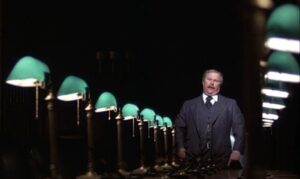
There are no good Met eras. There are no bad Met eras. There is only this year, and next year, and staying close to .500.
We used to know as if by second nature if we were living inside a Met era that entitled us to scoff at finishing as low as second place, or a Met era akin to serving out a mandatory minimum second-division sentence from which we repeatedly petitioned for parole, inevitably to no avail. Now a Met era is the stuff of one of those bromides regarding the weather in Chicago or whichever locale where nobody’s sure whether they should bother bringing a sweater on a given day. Don’t like the era you’re in? Just wait a season.






Wait a season here, wait a season there — before you know it, it’s been 40 years. I’m starting to think I don’t have that kind of time.
All the more motivation to hang in there.
I’d like to believe for 2027. But I think it’ll take more than a year to put Humpty together again. In particular the bullpen but we’ll have another year of Semien and I don’t know what we’re doing at first. Is Jared the answer? Polanco should not be this bad forever but who knows? Out of our starters I only trust McLean – what version of Manaea do we get? Is Thornton a real quality starter? I’m sure I’ll go into next season with hope but I had hope in April before we lost 12 in a row. Anyway, I’m thinking 2028.
Enough here to build the kind of contender described above, I think so. Enough to be what we want them to be, the foundation may be there, but it’s not a finished product. Right now, they’re more fun than they’ve been and that’s plenty…for now.
Maybe. It does look like the AL may finally give us a sub-.500 playoff team this season. I know I’m cheering for it.
Of all the no name relievers that comprise the bulk of the bullpen, the one I’m least impressed with is Jefry Yan. He’s way too erratic for me.
Three appearances, each differing in its effectiveness. I guess that can be construed as erratic.