The blog for Mets fans
who like to read
ABOUT US

Faith and Fear in Flushing made its debut on Feb. 16, 2005, the brainchild of two longtime friends and lifelong Met fans.
Greg Prince discovered the Mets when he was 6, during the magical summer of 1969. He is a Long Island-based writer, editor and communications consultant. Contact him here.
Jason Fry is a Brooklyn writer whose first memories include his mom leaping up and down cheering for Rusty Staub. Check out his other writing here.
Got something to say? Leave a comment, or email us at faithandfear@gmail.com. (Sorry, but we have no interest in ads, sponsored content or guest posts.)
Need our RSS feed? It's here.
Visit our Facebook page, or drop by the personal pages for Greg and Jason.
Or follow us on Twitter: Here's Greg, and here's Jason.
|
by Greg Prince on 27 January 2010 8:36 am 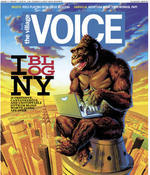
Many were the days in a previous life when I’d seek escape from a job whose novelty had long worn off with a visit to Forgotten New York, a site that took me on virtual tours of the shadows cast throughout the Five Boroughs by a stubborn past. Why were street signs that were no longer up to code still standing? How is it that urban renewal had whitewashed so much of Manhattan, yet some random ad for a company that hadn’t done business in decades was still visible on the side of a building? What’s with that footbridge on the Queens-Nassau border? I could explore Forgotten New York for hours and sometimes did…and still do.
I mention this because Faith and Fear in Flushing has the great honor of being featured in this week’s Village Voice cover story as one of “Gotham’s Best” blogs, and we happen to be listed right after Forgotten New York. Just coincidence, I imagine, but that makes the notice by Roy Edroso of the Voice that much more special for me, having been a fan of FNY’s Kevin Walsh’s work all these years.
In any event, this, if not necessarily John Smoltz, is a nice almost-fifth anniversary present for us. Thank you to all of you who seek and hopefully find a little escape in your days by exploring the Mets’ sometimes shadowy past, present and future with Jason and me — and thanks to all the Mets bloggers who provide a most welcome detour for us, too.
By the way, if you’ve never taken FNY’s grand tour through the life and times of Shea Stadium, your General Admission ticket is right here.
by Greg Prince on 26 January 2010 8:27 pm Ben Sheets won’t be a Met. Didn’t think he would be, and I wasn’t thinking he should be except for a song. Instead, the dude got himself an entire $10 million opera (albeit an opera whose running time is just one year). I’m not crushed. Think of the last time the Mets counted on somebody who missed an entire season with an injury, somebody who looked real good showing off his stuff in a controlled winter’s workout during which he was judged to appear sound. Why yes, that was Mo Vaughn, immediately inserted as starting first baseman and cleanup hitter for 2002 despite not playing in 2001. Sheets isn’t Vaughn, but the circumstances strike me as too close to imagine no elbow discomfort in 2010.
Jon Garland won’t be a Met. He was looking like a possible post-Sheets option for about five hours today, but the Padres took care of that.
John Smoltz might be a Met. When I read he was going to be a free agent, I had hoped the Mets would sign him. I’m referring, however, to when he was going to be a free agent following his awesome 1996 Cy Young campaign. Yes, that would have been quite the ticket. As for doing it now, I don’t know that I can muster any firm Orel Hershiser 1999 wise head/still useful/him a Met? rationalizations on Smoltz’s behalf.
I’ll try, though.
Unlike Sheets, Smoltz pitched in 2009. Not all that well, but two contenders did see something in his 42-year-old right arm. His Red Sox stay indicated his career was forked, as in what you stick in a piece of meat that’s done. Then Smoltz was off to St. Louis, where, while never exceeding six innings in any of his seven Cardinal starts, he did strike out 40 batters in 38 innings (two numbers lower than his current age, but who’s counting?). His WHIP, in an admittedly way different context from the heart of his lengthy Atlanta heyday, was 1.184, just a shade over where it was in 2007, his last full season as a starter.
That’s not an overwhelming endorsement of Omar’s latest loopy get-better-quick scheme, but I have to confess I’m slightly intrigued and not altogether repelled at the notion of this particular Brave in a Met uniform. Penciling in old John Smoltz as a starter would be a white flag, but I wonder if there’s enough there to merit an incentive-laden invite to St. Lucie. Maybe Smoltz has a few good middle relief/setup innings left in him. Maybe he knows something about pitching that he could communicate to Pelfrey or Perez or Niese or Nieve before he packs his clubs and hits the links for good.
Or maybe all it shows, even on a day when Johan Santana was, thankfully, feeling “pretty good” on a minicamp mound, is that when it comes to pitching, we’re going to be grasping at uncertain straws for a while to come.
by Greg Prince on 25 January 2010 10:07 pm Recovering quickly from the disappointment of the Jets not making the Super Bowl, I turned, per usual, to HBO at 9 o’clock Sunday night for Big Love, the hourlong drama that follows the trials and tribulations of a Polygamist family in Utah. If you haven’t seen it, you’re missing a lot (literally — huge cast, multiple storylines, enormous dining room table). If you didn’t see it Sunday night, clear through to the credits, you missed the name of someone who ought to be our favorite actor:
Mets Suber.
That’s right: His first name is Mets. So never mind the Jets. This guy’s the one with something super.
Or Suber.
I’ve been reading that possible (though unlikely) Met reclamation project Ben Sheets has a son named Seaver. That’s impressive. But a man named Mets? That’s literally Amazin’.
Alas, it was not a large role for our man Mets. He played a caricature artist, one of those guys you encounter at fairs or, as on this episode of Big Love, on the street in a tourist-trafficked area. We meet Mets in Washington, D.C., where the protagonist of the show, Messiah-complexed Bill Henrickson, is visiting with one of his wives, loose cannon Nicki, and her middle school age daughter, from a previous relationship, Cara Lynn (it gets complicated on Big Love). To cheer up the morose child, they sit her down for a sketch like it will be fun. It’s not. Mets has, I think, one line, asking her if she has any hobbies so he can draw something familiar to her in the sketch. Cara Lynn says no.
The last time I sat for such a souvenir, at a trade show in 1996, I told a similarly inquiring sketch artist that my big interest was the Mets. The artist was a Red Sox fan who was still miffed about 1986, and he drew me as an outfielder in sweatpants. I didn’t look like much of a ballplayer in the sketch. And the man was no Botticelli.
But never mind that. There’s a man named Mets out there in the world! On his IMDb page, Mets Suber has a few other credits listed, including two appearances on Homicide: Life On The Street, a show I only watched once. No picture is posted. I also found an appreciative reference to a “supporting performance” of his from a 1995 article rounding up the best of that season’s Philadelphia stage productions. Hey, it’s not often you see somebody praising Mets in Philly.
You go through life with a name like Mets, you probably hear about it enough. The good children of my first grade school bus were kind enough to let me know, on the off chance I would ever forget, that Wednesday was Prince Spaghetti Day. So maybe I shouldn’t be making such a big deal out of someone’s name. But how can I not when it’s this name? How many Mets (Metses?) have you met? Mr. Mets Suber, we appreciate you carrying our banner, no matter how incidentally you have…and thanks, too, for not changing your last name to Suck.
by Greg Prince on 24 January 2010 7:29 pm  Many thanks to the Jets for four very fun weeks, dating back to the postgame press conference after the Atlanta game when Rex Ryan sighed that the team had fallen from playoff contention. As we’d learn, his math was premature and his charges were off on a strange and wonderful journey that found them beating one division winner after another until time ran out on them. We won’t soon forget the bizarre circumstances that may (or may not) have given them an opening against a Colts team that rested its starters and a Bengals team that packed it in early, but we’ll also recall with fondness their march through Cincinnati and, especially, San Diego. Many thanks to the Jets for four very fun weeks, dating back to the postgame press conference after the Atlanta game when Rex Ryan sighed that the team had fallen from playoff contention. As we’d learn, his math was premature and his charges were off on a strange and wonderful journey that found them beating one division winner after another until time ran out on them. We won’t soon forget the bizarre circumstances that may (or may not) have given them an opening against a Colts team that rested its starters and a Bengals team that packed it in early, but we’ll also recall with fondness their march through Cincinnati and, especially, San Diego.
Am I what you’d call a diehard Jets fan? I’m a Mets fan who roots for both New York football teams to do well. Because I’m a Mets fan, I take all my rooting pretty personally, so despite baseball being the only sport I care about every day of the year and every hour of the day, I can recite chapter and verse all manner of Jet heartbreak dating back to 1978, the autumn they first legitimately caught my fancy as my “other” gridiron favorite. I’m still upset they didn’t make the playoffs then. I’m still beside myself with frustration that the ’81 team came up a few yards short at Shea against Buffalo, that Don Shula didn’t cover the Orange Bowl field in a monsoon a year later, that Gastineau roughed Bernie Kosar with a ten-point lead and four minutes to go…and so on. I’m a Mets fan whose first football love was the Giants, but I absorb these Jets blows like a sponge, and my sports psyche has the bruises to prove it.
Am I severely bruised by this loss to the Colts? Not so much. Maybe it’s because the Mets are the Mets and everything else is everything else, but more because I’ve so enjoyed the brief ride Rex Ryan gave us. After years of deciding the only way to anticipate a big game was to tamp down my expectations, Rex raised mine for the Jets. That whole bit wherein he was issuing practice schedules clear to the Super Bowl, with reporting time for the ticker-tape parade inked in, first seemed absurd to me. But the Jets bought into it and delivered as much as they could. A semi-accidental 9-7 Wild Card team took a lead into the second half of the conference championship game against a much more qualified opponent. I was never quite sure I believed they could seal the deal, but I didn’t find myself swatting away my confident impulses. It was nice to root that way.
I’m still haunted by how the 2006 Mets didn’t win the World Series. There was a night that September when I was sure they would, the night Reyes circled the bases on an inside-the-park homer — calling himself safe in the process — and we were beating the Dodgers with such ease that Chris Cotter congratulated T#m Gl@v!ne for earning the win after he left the game, before the game was over. What a slap in the face of protocol! The cameras went back to the field and there was Jose not handling a simple pop fly. He shrugged and smiled and the crowd gave him a playful round of applause. The Mets were going to win the game no matter what. The Mets were 35 games over .500, 16½ games in first. This is it, I decided. We are immune to the superstitions I’ve been honing for decades. The 2006 Mets are that good.
The Mets went mortal after that game, slogging through September, encountering two serious injuries to their starting rotation and appearing more human than they had in months. Then the NLDS and a sloppy sweep of the Dodgers. Who cared if it was sloppy? It was a sweep. We were 3-0. We played the first game of the NLCS and, though Albert Pujols wasn’t impressed with Gl@v!ne’s stuff, we won 2-0. We were 4-0 in the postseason. Walking between the Shea LIRR station and the stadium itself the next night, I allowed myself to think we were going to be the first 11-0 team in postseason history. Those thoughts met a cold, bracing reality hours later and the Mets never really recovered.
I’m not medieval enough to believe my thoughts control the action, but I’ve never forgiven myself for allowing myself to get so far ahead of where the Mets were. Shame on me, I’ve often thought. I wasn’t humble enough. I disturbed the gods with my presumptuousness. I should have waited for the Mets to win the World Series before reveling in the theoretical concept of the Mets winning the World Series.
The next time a team in whom I had some emotion invested was on the verge of doing great things, it was January 2008, the Giants in the NFC championship game. The Giants beat the Packers that night in a great, great game, one I refused to believe would go the Giants’ way until it actually did. I was quite stunned they were going to the Super Bowl against the undefeated Patriots. I proceeded to refuse to believe they could beat the Patriots either. But they did, in an equally great, great game, yet I allowed myself to enjoy very little of the buildup for either round. In a way it wasn’t bad because the feeling of them winning was so fresh afterwards that it gave me more satisfaction than I imagined an NFL result could at this stage of my life. But in another way, I’ve been mad at myself for two years for not enjoying the ride.
This time, while making no internal or external pronouncements about the Jets being a sure thing, I enjoyed the ride. I allowed myself to see the Jets winning. I could see them losing, too, but I didn’t look too hard at that possibility. The Jets had lost big games before. I had seen that. No need to jump the gun. I bought into Rex Ryan’s confidence, optimism and whatever else he was selling and his players were buying.
It was a great deal of fun this way. I’ll never be mistaken for a master of chalk talk, but I was into this game all week, into the Jets in a big way. They lifted my spirits in the midst of an otherwise grim winter. I don’t know how much I’ll care when their training camp rolls back around. I’ll probably barely notice since it will be the middle of baseball season, but I’m going to make a point of appreciating these Jets when they return and, in general, enjoying rather than dreading what’s coming next the way Rex would.
Thanks for that, Coach.
(Oh, and for the sake of my co-blogger, Geaux Saints, at least until Big Love comes on at nine.)
by Greg Prince on 24 January 2010 12:07 pm Go Jets!
Not much more needs to be said.
by Greg Prince on 22 January 2010 4:49 pm Omar Minaya heard it was Fred Wilpon’s thirtieth anniversary as a Met owner. For a gift, he thought about what the chairman and CEO had; didn’t have; and once had but had no longer. Omar was intrigued by the last category. Surely, he thought, there was something Fred once held in his collection, regretted not holding onto, yet might like again.
So Omar went on eBay, scanned the many offerings and clicked “Buy It Now” when he got to Gary Matthews, Jr.
Fred’s gonna love this, Omar thought.
That’s as good a theory as any to explain why Matthews is again a Met. And if you’re stumbling over the use of the word “again,” don’t feel bad. You might have gotten up to go the restroom during the only three pitches Gary Matthews saw as a Met batter, when he pinch-hit and flied out for the final out of the sixth inning on Opening Day 2002. You might have taken an important phone call while Bobby Valentine was inserting Gary as a pinch-runner for Mo Vaughn in the bottom of the eighth two days later. While you were chatting, Matthews was going first to third on a Mike Piazza single. Edgardo Alfonzo, however, would strand him one pitch later…strand him forever, in a Met manner of speaking
If you didn’t get off the phone until the top of the ninth, you missed Gary Matthews, Jr.’s big moment as a Met. After the game, he was traded to the Orioles for minor league pitcher John Bale. The next day, McKay Christensen was here in his place, going on to play in twice as many Met games (4) as Gary ever did (2) before his own designation for assignment.
Gary Matthews, Jr., meanwhile, went on and played in a lot more games for the Orioles, the Padres and the Rangers between 2002 and 2005. He fell into that category of useful if undistinguished (as if any of us wouldn’t trade in whatever distinction we had in any other field to become a useful big league ballplayer). In 2006, his free agent walk year, Gary Matthews, Jr., suddenly became a star. He made hellacious SportsCenter catches for Texas, batted. 313 and scored 102 runs. Then he scored an unbelievable contract based on his brilliant timing, signing with the Angels for five years and $50 million.
Three of those years are over with. None of the first three much resembled his 2006. Then again, not much of our last three have resembled our 2006. And now we get his next two years.
Hmmm…maybe that’s what attracted Omar to Gary Matthews, Jr. They both peaked four seasons ago.
If you like outfielders named Gary who have been associated with unnatural enhancements in their game, and you don’t want the Mets to pay for all that much of them, then Matthews may be for you. That was the deal with Gary Sheffield. Gary Sheffield was worth a shot (ahem), it was reasoned, since his disenchanted American League team was paying most of his freight upon his landing with the Mets. The Sheffield experiment, wherein the Tigers picked up the bulk of his tab, kind of worked there for a while. Then it didn’t. In the end, Gary Sheffield was hardly the Mets’ biggest problem in 2009.
Then again, Gary Matthews, Jr. has never been as good a player as Gary Sheffield was at their respective peaks — which Sheffield, incidentally, was still astride at Matthews’ age. Matthews is 35 and had his only notable season when he was 31. We got Sheffield when he was 40 and Sheffield had been putting up very good numbers as recently as when he was 36.
Either way, lots of past-their-prime action at Citi Field in its infancy.
We likely wouldn’t be seeing the second coming of Gary Matthews, Jr. at all were it not for the projected absence of Carlos Beltran. This is the second week of the twelve weeks during which Carlos is abstaining from baseball activity. Generally speaking, we’re better off when Omar Minaya is abstaining from baseball activity. Matthews for the periodically useful Brian Stokes and a big stack of Angelbucks is clearly a contingency move. He’s here because Carlos Beltran isn’t and because there is strong reason to suspect Angel Pagan won’t be anything close to Carlos Beltran in the interim. Is Matthews in center for (hopefully) the short term preferable to Pagan? It’s like choosing between store-brand soda that’s not so bad once you get used to the aftertaste and an out-of-code nationally known cola that, if you ignore its clearly expired sweetener, might get the job done on your thirst. That you’re getting by without your favorite soft drink is what you can’t help but be aware of.
Baseball players aren’t necessarily analogous to beverages — Met center field candidates, in particular, seem to lack pop. Juice, allegedly, is a different story, but never mind that right now.
Even as we move the pieces around the middle of the Mets’ absurdly expansive green chess board, let’s not overlook Gary Matthews, Jr.’s prodigal proclivities. Should he play for the Mets in 2010, he will become the 35th Met to: leave; play for another big league club; and, at last, return home. We call that subtribe of Amazin’s the Recidivist Mets, a group whose most notable members include Rusty Staub, Lee Mazzilli and Tom Seaver. The Recidivist Mets don’t encompass the Lost Boys like Endy Chavez, Nelson Figueroa and Pagan (and, pending his making it to the starting line, Jason Bay), Met minor leaguers who made the majors elsewhere before following the trail of blue and orange breadcrumbs back home to fulfill their destinies and perform as Mets in full. It also doesn’t count Pedro Feliciano, who left the organization after debuting as a Met but didn’t play anywhere else in the bigs before returning to his natural habitat. Nor does this encompass someone like Jesse Orosco, traded back to the Mets after 1999 but traded from the Mets before 2000. (In case you were wondering if it did…which I’m sure you weren’t.)
Between 2005 and 2009, the ever sentimental Omar Minaya has brought back two Mets who had been long gone — Kelly Stinnett and Brady Clark — as well as three he himself discarded not much earlier — Roberto Hernandez, Marlon Anderson and Anderson Hernandez. I suppose that once he went to the well for second helpings of an Anderson and a Hernandez, the reacquisition of Anderson Hernandez was a fait accompli.
None of Omar’s Recidivist Mets particularly outdid their earlier incarnations, which is not uncommon. Almost no Recidivist Met shines brighter the second time around. Gary Matthews, Jr., however, would have to conk himself on the head while standing in the on-deck circle to not outdo his 2002 Met résumé of one unsuccessful pinch-hitting appearance and one inconsequential pinch-running appearance.
And if he can’t outdo that much, Omar can always send him packing again. McKay Christensen is still out there somewhere.
by Greg Prince on 21 January 2010 6:19 pm In the three decades since Fred Wilpon entered our consciousness, oftentimes the best thing about the ownership group he’s played a major part in running was who he was and who they weren’t.
First, it was outstanding that Doubleday & Company, Inc. — 95% majority owners of the New York Mets as of January 24, 1980 — wasn’t a remnant of the original Payson operation. Joan Payson may remain a beloved figure in team history, but the mess she left behind after she died in 1975 decayed quickly. Her chairman, M. Donald Grant, ran the organization into the ground before running himself out of town. Her daughter, Lorinda de Roulet, took over and all but threw a shroud over the ground into which the Mets had been run. Charles Shipman Payson, Joan’s Red Sox fan husband, showed no interested in upkeep and parted with not a dime in that direction.
By appearing competent and willing to invest, the Doubleday group, which included 5% stakeholder Wilpon, couldn’t help but win goodwill if not a whole lot of ballgames at first. Nelson Doubleday was installed as chairman, Wilpon became president and they left the prospective empire-building to Frank Cashen. They bought a ballclub, but they also bought time.
In doing so, Doubleday and Wilpon were not George Steinbrenner. That was also outstanding to consider in the early and middle 1980s. Back then, being a Steinbrenner had almost no redeeming features. The principal owner of the New York Yankees spent and blustered and fired but he hadn’t won anything for a while. He kept blustering nonetheless, and while it was entertaining, it didn’t win him or his club kudos or titles. The Mets way, the Doubleday/Wilpon way, was the way to go. You saw them hold a press conference when they bought the club and, after that, you basically never heard from them again. Nobody minded. It seemed classy and professional and appropriate in contrast to the hyper hands-on Steinbrenner, whose approval ratings had been heading steadily downhill since the day he took out a newspaper ad apologizing to New Yorkers for not winning the 1981 World Series.
Doubleday didn’t seek publicity — he was not to be found in either the clubhouse celebration that followed the 1986 championship or the parade up Lower Broadway the next day. Wilpon’s profile wasn’t all that high either. He may have accepted the Commissioner’s Trophy from Peter Ueberroth on October 27, but he wasn’t writing any columns in the New York Post that month. George Steinbrenner, however, was. (What the hell, he had nothing else to do.)
Less than three weeks after the Mets defeated the Red Sox, the composition of ownership changed. Corporate machinations dictated Doubleday & Co.’s publishing interests be sold to a German concern. They weren’t buying the Mets. Nelson Doubleday and Fred Wilpon, who were not associated in any meaningful way until 1980 (Wilpon wanted to purchase the Mets but couldn’t meet Charles Payson’s price without Doubleday coming aboard), became 50-50 partners. The transition appeared seamless to the outside world. Doubleday and Wilpon were the names with which Mets fans were familiar, so when Sterling Doubleday Enterprises was formed on November 14, 1986 in an $80 million deal, it didn’t seem to represent a sea change à la the sale of January 24, 1980.
“Fred and I have had a good partnership for seven years,” Doubleday said in the Mets’ 1987 media guide, “and I know we will continue to have a good partnership. “There will be no revolutionary changes in the control of the Mets,” Wilpon agreed in the same introductory article. “Operations will continue just as they have since 1980.”
It didn’t play out that way. We still didn’t see or hear much of Doubleday and Wilpon for the next few years, but behind the scenes, as documented in Andrew Rice’s thorough 2000 New York Observer examination of their relationship, things were changing. By then it was common knowledge that Wilpon and Doubleday were partners in name but not in spirit. When they showed up in the clubhouse to jointly receive the Warren C. Giles National League Championship trophy, it was the first time in a while they had been seen together in public.
As Rice explained a decade ago, Doubleday wasn’t happy that Wilpon became his equal partner in the first place. Wilpon, according to Murray Chass, writing in the Times in 2001, took advantage of a first-refusal clause in 1986, one that “Doubleday apparently had been unaware of”. More friction developed with the more authority Wilpon gained/usurped. A turning point in the relationship, wrote Rice, came as the wreckage of 1993 piled up in Flushing. Cashen was gone, the Mets were in disarray and Wilpon stepped up to publicly accept responsibility for a team that was dismal on the field and hopeless off it. That summer — Bobby Bonilla threatening Bob Klapisch; Vince Coleman tossing lit firecrackers at children; Bret Saberhagen spraying bleach on beat reporters — was the Met equivalent of August 1974 in the Nixon White House. There existed a perception no one was in charge of the asylum. Fred Wilpon said, in essence, “I am.”
Whether it was a role he took on with reluctance or relish (and he’s been described as possessing an inner Steinbrenner), Wilpon emerged bit by bit as the man in charge. There was no unquestioned baseball authority figure on the premises — Joe McIlvaine had succeeded Al Harazin who had succeeded Frank Cashen, but neither Harazin nor Joe Mac was vested with the degree of autonomy Cashen held. And Doubleday? The mid-’90s not a great period for him, as Rice recounted in 2000.
[I]n the spring of 1994, a book about the ouster of baseball commissioner Fay Vincent by a group of owners led by Bud Selig and Jerry Reinsdorf quoted Mr. Doubleday, a Vincent ally, telling league presidents Bobby Brown and Bill White: “It looks like the Jewboys finally got you.” A former employee told Newsday that Mr. Doubleday had said similar things in his presence, but only “when he was drinking.” Mr. Wilpon, who is Jewish, stood up for Mr. Doubleday, saying: “It’s not like Nelson to talk that way.”
After that, one person familiar with the team said, Mr. Doubleday disappeared from the scene and Mr. Wilpon took charge, with a more hands-on approach. He has installed loyal subordinates who have frequently come into conflict with executives loyal to Mr. Doubleday.
It was Fred Wilpon, not Wilpon and Doubleday, who held the notorious 1997 press conference in which McIlvaine was dismissed (while the Mets were enjoying their first winning season in seven years) and assistant GM Steve Phillips was elevated. It was, however, Nelson Doubleday who was seen as coming out of hibernation to push Phillips toward trading for Mike Piazza in 1998. Doubleday promised he’d involve himself more in Met matters from there, but was generally unseen around Shea after Piazza was re-signed that October. Wilpon, meanwhile, had begun planning for a replacement to Shea Stadium, a goal not shared by Doubleday. On the road to the 2000 World Series, while real estate wizard Wilpon was working on making what would become Citi Field a reality, Doubleday came out in favor of renovating Shea.
Not communicating and not agreeing on fundamental matters like “where are we gonna play?” was no way to run a ballclub. Despite the Mets winning a pennant in this apparently dysfunctional atmosphere, something had to give. After a rumored sale to Cablevision fell through, it was Doubleday who gave in, selling his half of the Mets to Wilpon for approximately $135 million on August 23, 2002.
Was the best part of Wilpon owning the majority of the Mets that he wasn’t Doubleday? Or did concentrating all power in one man and, eventually, his son, send the Mets once more on the road to what feels like ruin?
It can’t help but be a hypothetical question. There’s no definitively answering whether we as Mets fans would have been better off with a continuation of the evolving Wilpon-Doubleday synergy, no matter how weird it must have been to work around. There’s no telling whether we would have been better off if it was Doubleday who bought out Wilpon, even if Piazza is often credited to his side of the ledger. Nelson did not present the steadiest persona in his later years as co-owner. Based on its record with the Knicks and Rangers, I think we’re all glad Cablevision never bought Doubleday’s piece of the Mets; if he’d have sold to Charles Dolan, how can we imagine the best out of anything else Nelson Doubleday might have done to/for the Mets? But what if somebody or some other entity had bought the team?
If any of these alternate realities had come to pass, and the Mets weren’t primarily the Wilpons’, would the Mets be in better shape at this moment?
The truth is the Mets were in yet another of their periodic humiliating death spirals when Wilpon bought out Doubleday. A month hadn’t gone by when the underachieving 2002 Mets went from bad to stupid amidst allegations of marijuana use and Bobby Valentine’s weird reaction to them — affecting a stoner pose during a press conference addressing the pot revelations. The stupidity only deepened when Fred Wilpon, with nobody holding him back, fired Valentine as manager and hired Art Howe, alleging Art Howe “lights up a room”. Valentine may have pretended to light up a joint, but the other guy lit up absolutely nothing. Outside of Howe’s immediate family, nobody ever saw in Howe what Wilpon somehow detected.
The Art Howe decision, the lowballing of the very available Vladimir Guerrero, the infamous “meaningful games in September” soundbite and the trade of Scott Kazmir (whoever’s call that was) all fed the perception that the Mets were, by 2004, back where they were when Fred Wilpon injected himself into public view in 1993. They were a mess.
Then they weren’t. Omar Minaya became the general manager, was given “authority and autonomy” and the Mets improved. Fred was the owner, but Omar served as the man in charge, at least until last summer when Minaya, in the middle of a desultory campaign, put his foot in his mouth when turning the Tony Bernazard story into the Adam Rubin story. Omar stopped appearing regularly in front of cameras and microphones. The owner was taking a more active role, but by now it was Jeff Wilpon, Fred’s son, acting in that capacity. Fred’s dream was opening the Ebbets Field lookalike in what had been Shea’s parking lot. It got done. Once the Mets were playing inside it, it would be Jeff who would absorb the criticism when the organization would inevitably do strange things like call out Carlos Beltran for getting his knee fixed. Now it’s Jeff who’s more than ever the man in charge. Fred didn’t want the franchise being sold to Cablevision or anybody because he wanted that. He wanted the Mets to stay in his family.
It has. Fred is still chairman, but it is increasingly Jeff’s show. We’ve lived and rooted under Wilponian influence for thirty years and, unless there’s a momentous change of heart or turn in financial fortunes, we’ll have countless more years of it. Jeff Wilpon is the chief operating officer of the New York Mets. He’s not going anywhere.
Which means what for us, exactly? In recent months, and for much of the last year, really, I don’t think a day has gone by when I haven’t read or heard somewhere the suggestion or demand by a Mets fan that the Wilpons sell the team. The catalogue of grievances is varied as it is long. The bottom line seems to be that the Wilpons, personified mostly by Jeff these days, are a long-term impediment to our happiness. They are not enabling our enjoyment of our favorite team; they are, instead, exacerbating our aggravation from it by their accumulated actions and nonactions.
I wouldn’t necessarily disagree with that assessment, but I have to ask, in all sincerity, what do you want from the owners of your ballclub? I mean that literally: what do you want from them?
When things are going well, we don’t toast the merits of our club owners. We just accept that things are finally going the way we want and, perhaps, we hope nobody screws things up down the line. Three years ago, even with the 2002-2004 track record a matter of public record, the Wilpons were not a continual object of our collective scorn. I doubt any of us gave them much thought at all, save for special occasions. The man they put in charge had transformed a fourth-place finisher into a division winner and projected perennial contender in just two years. They gave Omar Minaya the resources and Minaya produced instant results.
The other night, SNY reran the 2006 division clincher. I watched the ninth inning and clubhouse celebration yet again. It was the last massive joygasm Shea Stadium ever experienced. We won something big, something we hadn’t won since 1988. Nobody who wore a Mets uniform or made a Mets decision was considered suspect then. Everybody was part of the team that night. If Minaya was awesome, so, by implication, were the guys who employed him.
(Eerie shot by SNY’s cameras while the Mets indulged in their group hug: the despondent opposing manager soaking in the celebratory scene, wondering when he’d get a chance to lead his clearly irrelevant team to this kind of revelry. The manager was Joe Girardi. And, come to think of it, the clinched-against club was the Marlins.)
That September 18, 2006 was, to date, the high point of the Minaya Mets underscores that things haven’t gone to plan since. We won the NLDS, lost the NLCS painfully and then failed to return to postseason play. Three years ago today you could not have convinced most Mets fans — and certainly not me — that this would be our three-year fate. If you had solicited opinions on Fred Wilpon or Jeff Wilpon in the winter of 2007, you might not have won an unqualified endorsement of their savvy, but you likely would have given them a benign or at least begrudging tip of the cap for getting us as far as we had come.
Ain’t nobody doing that now.
Is everything since the promise of 2006 evaporated the Wilpons’ fault? On one level, no more so than it was all their doing that the Mets gave us 97 wins, a division title and a playoff series triumph over the Dodgers. On another level, if we follow the Fred Wilpon 1993 model wherein he stepped up to take tacit responsibility for the behavior of his club and the image of his organization, then blame away. I don’t know if that’s fair, but the buck has to stop somewhere.
Which doesn’t tell us what it is we want from these Wilpons if a sale isn’t imminent or from their hypothetical buyers.
We want our team to win, naturally, but when they’re not doing that, we want to believe we’re not far from doing so.
We don’t want to be teased.
We don’t want to be let down.
We don’t want to be condescended to, I think.
We want to be listened to.
We want to be heard.
We want honesty.
We want hope until we can have results — but surely we want results.
We want value.
We want smarts.
We want good players.
We want likable players.
We want fun.
We want our collective interests taken to heart.
We want a lot.
We want what we want. We’re fans. We have an endless agenda when we’re not getting enough (or much) of what we want. We have no way of obtaining it for ourselves. That’s ultimately up to ownership. Ownership puts the baseball people in place. Ownership frames the business operations. Ownership is where the buck stops. We occasionally take out our firing frustrations on managers, general managers and club executives, but it is our owners who we expect to make things right as soon as possible and keep them right for as long as possible…with as few interruptions in service as possible.
That’s what we ask of the Wilpons as they begin their fourth decade running the Mets. Can we ever expect it?
by Greg Prince on 20 January 2010 9:52 am When acknowledging assumptions as mistaken, Bob Murphy philosophized, “That’s why they put erasers on pencils.” You can use the same device to erase all the 6-4-3’s you’d already scratched into your scorebooks for all the double plays Bengie Molina was going to hit into as the Met catcher this season. Scratch ’em out — Molina’s staying a Giant for less money than the Mets were offering.
Gosh, what a shame.
I’m sure I was missing the upside of Bengie Molina the whole time he was deemed a done deal for this and possibly next season. I know he produced 20 home runs in 2009 and 95 RBI in 2008. I understand he’s renowned for his defensive prowess and that he caught a pretty good staff the last two years in San Francisco, including the reigning two-time Cy Young winner Tim Lincecum. I know at the moment we’re improvising with an extra-large pillow strapped to a barrel instead of a catcher, but I’m not upset that Molina joins Yorvit Torrealba in a Never Met platoon at the backstop position.
I kept seeing the highlight package SNY kept showing in giving Molina updates and all I could think was, “This guy’s gonna kill one rally after another.” That’s a big assumption. It assumes the Mets were going to have rallies in progress, but I’m willing to go as far as to project a baserunner or two in 2010. What I couldn’t project was a 35-year-old (36 in July), plus-sized, righthanded hitting catcher slower than everybody on the field (and many in the stands) not grounding to shortstop with one on and one out. 6-4-3…6-4-3…I was already seeing it in my nightmares.
In a more optimistic would-be world, Bengie was going to whisper just the right calming advice to Mike Pelfrey, bark the perfect focusing command to Oliver Perez, figure out exactly how to keep Frankie Rodriguez from not giving up grand slams in ninth innings. We might miss all that. We might have to settle for the intermittently inspiring if mostly mediocre Omir Santos, wait impatiently for the development of young Josh Thole and spend more of a summer than we ever desired with Henry Blanco. Or maybe Chris Coste will earn his way onto the roster just so he can have a chance to chat with his beloved ex-Phillies teammates when they come to bat. Who will emerge as our regular starting catcher? Perhaps we’ll have to pretend to pay extra close attention to Spring Training to find out. Perhaps we won’t know for a while after that. Look at this way: Mike Piazza didn’t become our regular starting catcher until the 1998 season was almost a third over.
Now that’s looking at things with rose-colored glasses from behind a catcher’s mask. Until roster lightning strikes, however, the future’s so murky behind the plate, it’s gotta wear a chest protector.
by Greg Prince on 19 January 2010 2:52 pm Four for four: the Mets went 4-for-4 today. They resumed baseball activities with a bang.
The long-rumored, long-postponed, long-hidden Mets Hall of Fame announced its class for 2010, its first class in eight years, and it’s a doozy. It’s so good I have this feeling I’m writing one of those “wouldn’t it be nice?” fictional blog posts, except it really happened.
They’re inducting four Mets icons into the Hall come August 1…August 1, not April 1. No foolin’. To be enshrined are:
• Dwight Gooden
• Darryl Strawberry
• Davey Johnson
• Frank Cashen
I told ya 4-for-4. These are the four I would have put on my ballot had anybody asked me. These were the four I was planning on suggesting in the next righteous-fan piece that I’m happy to report I do not have to write. The Mets actually convened their Hall of Fame committee as promised and the committee did the exact right thing. They tabbed their two most overdue players and two most overdue guiding lights. They burnished the legend of 1986 perfectly.
The pitcher and the rightfielder who symbolized the journey from last place to first place. The manager who steered the ship in the right direction. The general manager who rebuilt the ship. Eight years since the Mets last paid proper attention to their past, they get back in the game with a bang.
There was no need to wait. I don’t mean they shouldn’t have put the Hall of Fame aside after 2002 (even though they shouldn’t have); I mean they shouldn’t have schlepped out induction for these four Mets one year longer. It’s a wonderfully crafted quartet, these men’s Mets accomplishments intertwined as they were. You can’t imagine the ’84, ’85 or ’86 Mets without Darryl and Doc. You can’t imagine them having come together without Davey or Cashen. Each of them is among the best the Mets have ever had at their particular jobs. Gooden was as great as any Met has ever been for a significant period of time. Strawberry was as spectacular as any Met has ever been for the length of a Met career. No conversation of Met managers can go more than two paragraphs before Johnson is mentioned. And go find me someone who put an organization together from ruins the way Cashen did.
This is exciting. This is genuinely exciting for a Mets fan who’s been waiting for the team to recognize itself. We recognize them far too often for the train wreck they’ve become in the moment. I love this chance to recognize them for the glory they achieved and the idea that they might achieve more of it.
Let’s Go Mets!
by Jason Fry on 18 January 2010 9:12 am Shortly before the Mets’ crack baseball folks heard about Carlos Beltran’s surgery and carefully aimed the rifle at the blasted remnants of their own feet, I spent a good chunk of time contemplating this post by Amazin’ Avenue’s Sam Page. Based on WAR, it showed the pre-Steadmanized Mets as an 83-win team. Page then offered some ways the Mets could add some more wins, through a combination of new moves and better luck in-house. A Joel Piniero signing would net 2 more. A trade of Luis Castillo/prospects for Brandon Phillips and Bronson Arroyo would be worth an eye-popping 5. The addition of any catcher (something even the Mets should be capable of) would be worth 1. In-house, better years from Wright, Reyes, Oliver, Pelfrey (far from impossible with a real infield), Maine and a breakout from Niese would add 7.
You can play with the possibilities yourself over at AA. Add them up, and the Mets are in the 90s, and quite possibly in the postseason. Yes, these same Mets who won 70 games last year and have since decayed in memory to Cleveland Spiders territory. None of the ways of ascending from 83 wins is from the WFAN crackpipe school (“Why doan we, uhhhh, trade Daniel Murphy and dat kid F-Mart to da Cardinals for Albert Pujols?”), as Piniero and the other pitchers discussed by Page are presumably within the Mets’ grasp, and the potential trade with the Reds is at least a possibility.
Maybe it was just the usual effect of changing the calendar and being able to think about spring training, but I was feeling surprisingly optimistic. And while the early-season loss of Beltran knocks a win off of that total, if the Mets make the right moves, they should still be better than OK.
Ah, but there’s that “if” — and that gets us back to Beltran.
The real problem with the Beltran news isn’t the loss of our center fielder until sometime around Memorial Day, though that’s obviously bad enough. It isn’t the risible he-said, he-said mess that’s been all over the papers of late, though that’s embarrassing. It’s that there’s no scenario you can reconstruct in which the Mets don’t look like bumbling fools. (For the record, I suspect Andee had it right the other day: The team doctors and Omar agreed with Steadman’s diagnosis and told him to proceed, only to have Jeff Wilpon freak out and order up a self-defeating media dumb show to assuage his anger.) Whatever the case, the Mets amply demonstrated their own mistrust in Omar, drove a wedge between themselves and one of their best players, and gave the universe of reporters, agents, baseball executives and fans still more evidence for suspecting they’d screw up a one-car funeral. Way to go, gang!
And that’s where all that WAR threatens to fall to pieces. If the Mets can’t manage an unfortunate but apparently straightforward situation in which Carlos Beltran needs knee surgery, can you trust them to swing a potential deal with the Reds that would greatly improve the club? Can you trust them to fill the rest of the off-season’s holes capably? (I was feeling better in this regard before. Now that’s gone.) Can you trust them to make the right moves come June? At the break? At the trading deadline?
For more and more of us, the answer is no. We don’t trust this team. We don’t trust that it’s being run effectively, and so we don’t expect it to win. And so, consciously or not, we harden our hearts and close our wallets.
Ultimately, that’s much more damaging — and harder to fix — than anything in Carlos Beltran’s knee.
|
|