St. Mark’s Square is under there somewhere. It occurred to me, back in Venice showing our colors, that since I first came here in late September 2007 the Mets have been struggling to stay above water….
 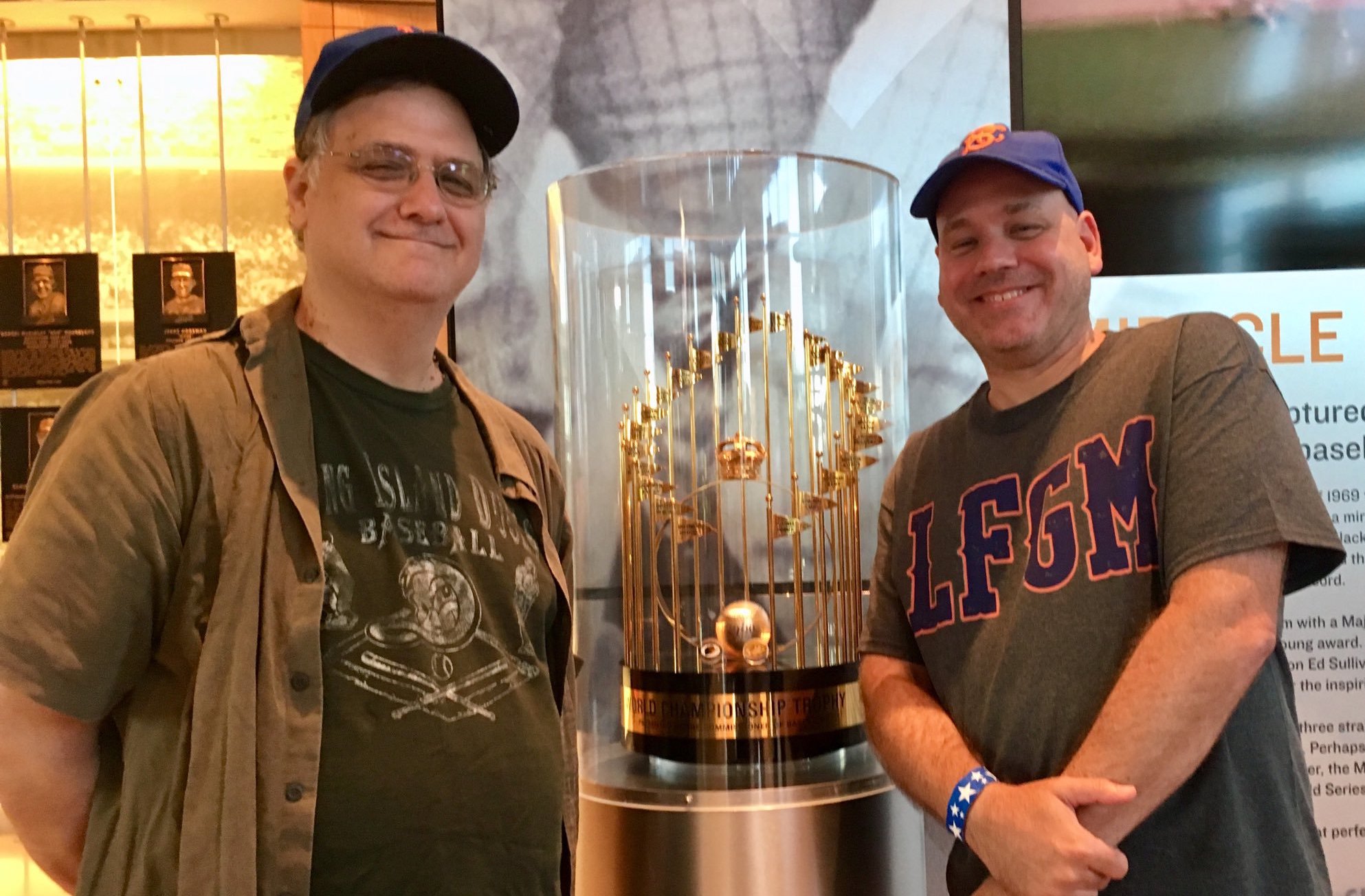
Faith and Fear in Flushing made its debut on Feb. 16, 2005, the brainchild of two longtime friends and lifelong Met fans. Greg Prince discovered the Mets when he was 6, during the magical summer of 1969. He is a Long Island-based writer, editor and communications consultant. Contact him here. Jason Fry is a Brooklyn writer whose first memories include his mom leaping up and down cheering for Rusty Staub. Check out his other writing here. Got something to say? Leave a comment, or email us at faithandfear@gmail.com. (Sorry, but we have no interest in ads, sponsored content or guest posts.) Need our RSS feed? It's here. Visit our Facebook page, or drop by the personal pages for Greg and Jason. Or follow us on Twitter: Here's Greg, and here's Jason. |
St. Mark’s Square is under there somewhere. It occurred to me, back in Venice showing our colors, that since I first came here in late September 2007 the Mets have been struggling to stay above water…. I've been waiting to announce this because like every no-hitter in Mets history, I won't quite believe it until I see it in front of me, but it's listed on Amazon, so…well, there it is. Barnes & Noble, too: here. I think this is where I say pre-order yours today. More details as they become available.
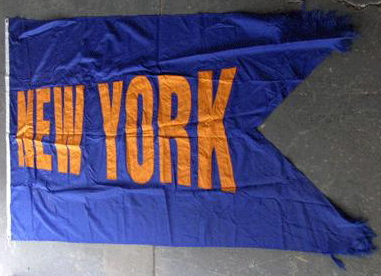
Remember those innocent times when the league standings flags flew around the perimeter of Shea Stadium? Here’s our flag. It’s up for auction in the latest batch of treasures and trivia trafficked by MeiGray. And the Mets didn’t want to hold on to this authentic swatch of their history and fly it or at least display it at their new ballpark…why? Sell the men’s room sign. Sell the ashtray. Sell the excruciatingly rare onion and relish holder. But for the love of all that should be at least a little bit sacred and kind of holy, keep our flag where everybody can see it and salute it. Runner-up for least appropriate item to sell instead of keeping and showing off in the current lot? I’d say this picture commemorating the official naming of the franchise. That seems vaguely important in the scheme of things. Even if M. Donald Satan is in the photo, why wouldn’t this be worth showing off somewhere on Met grounds? And this thing is way too cool to be letting out of the family. If I were a Knight of Pythias, I’d be rather insulted. Some “fine civic attitude” selling it demonstrates. For Halloween this year, I'm dressing up as a Yankee Stadium sentimentalist. Eeeeeek!!! Relax. It's just a mask. Many thanks to Alex Belth of Bronx Banter (newly moved to the SNY family of blogs and richly deserving of whatever additional attention results) for the invitation to take part in the seriously wonderful series of Lasting Yankee Stadium Memories and recall a trip or two to the other local venue that will be haunting the gruesome graveyard of ballparks soon enough. More ghoulishness here. For the ones who aren't jerks; for the ones who didn't just find out about baseball; for the ones who honestly understand what a gift this is; for the ones like the men in their fifties I ran into outside of Shea after the last Sunday game between us in September 2007 who were too beset with anxieties over potentially blowing the Wild Card to even suggest they had a shot at winning the East despite having just swept the team in first place; for the real fans who have earned it over 28 years by being true and without being jerks…to them I say congratulations. For the rest of us, there's A. Bartlett Giamatti in cardboard concerto. For the rest of us, there's farewell to the old and welcome to the new…designed to be the greatest ever built for baseball. For the rest of us, there's the lingering hypothetical we can always imagine went our way. For the rest of us, it's Let's Go Next Year. It can't get here fast enough. As we wait for the World Series to continue or conclude or do something other than start late and generate low ratings, consider that if it were the Mets representing the National League under similar circumstances, last night would have been the final game in the history of Shea Stadium (and remember it was Billy Wagner not holding an eighth-inning All-Star lead that facilitated the middle three games being played in the N.L. park). Seeing as how Philly's weather edged our way not long after the tarp covered the Citizens Bank Park infield, can you imagine the final game ever at Shea Stadium being suspended? Can you imagine Shea being given a little extra life by sixth-inning tie, ungodly precipitation and/or commissioner's fiat? Can you imagine Wright driving the ball with Murphy on third and nobody out? So much for that flight of fancy. How evenly matched are the Rays and Phils? Let’s take a closer Faith and Fear in Flushing look. Ray Daviault 1) Made Met and major league debut April 13, 1962 at the Polo Grounds, first home game in the history of the franchise. Gave up a walk, a wild pitch, a fielder’s choice and another wild pitch to allow the Pirates a tack-on run. Mets lost 4-3. 2) Said Casey Stengel afterward, according to Jerry Mitchell’s The Amazing Mets, “Maybe he should be a starter instead of a reliever, although he is 29 years old an’ has been a reliever an’ it is hard to change a man’s life for him.” Ray would make three starts in 1962. An’ he was 27 on the occasion of the Home Opener. You could look it up. 3) First Canadian-born Met, beating Ken MacKenzie to the punch by two days. 4) Entire big league career took place as a 1962 Met: 36 appearances, 5 losses, 1 win. Gave up go-ahead homer to Curt Flood in the top of the ninth in the opener of the July 7 twinbill vs. St. Louis. Struck out Julian Javier, Bobby Gene Smith and Ken Boyer. In the bottom of the inning, Joe Christopher reached safely and Marv Throneberry hit a come-from-behind walkoff homer to make the Montreal native a winner for the first and last time. 5) Select Ultimate Mets Database Memories: • “His nickname was Frenchy.” • “I was very lucky to be coached by Ray Daviault in a Junior league in Montreal. I never had a coach like him. He taught me all as I know now in baseball. His brother Dave played in the Pittsburgh farm system. I know them very well and they are two very nice gentlemen.” • “Other than Tim Harkness, the only Met from Quebec.” Phil Linz 1) Made Met debut July 13, 1967 as a defensive replacement for Buddy Harrelson in the second game of a doubleheader at Cincinnati’s Crosley Field. Struck out by Ted Abernathy in his first Met at-bat as Mets lost nightcap 6-3 and split twinighter. 2) Played 24 games as utilityman in ’67 and 78 games in ’68, mostly as a second baseman. Batted .209 in Met career under four managers: Wes Westrum, Salty Parker, Gil Hodges and Rube Walker, who ran the club in Hodges’ absence after Gil suffered a heart attack last week of the season. Linz’ last Met game was his last game as a big leaguer. 3) Best known as the Yankee backup infielder who raised skipper Yogi Berra’s hackles by blowing “Mary Had a Little Lamb” into a harmonica on the team bus after a tough loss in 1964. Goaded by Mickey Mantle to “play it louder” (Linz didn’t hear Yog’ order him to knock it off and asked Mantle what Berra said), Phil incited his manager to knock the instrument from his hands. The confrontation is cited as both what sparked the Yankees to their epic dynasty’s final pennant and the episode that demonstrated to ownership that Berra had lost control of the team. After Berra was fired, the Mets brought him on board and he stayed at Shea for more than a decade. 4) One of several Mets/Yanks the Village Voice surveyed for memories of Shea and Yankee Stadium in September. Of the ballpark in the Bronx, Linz described the walk from the tunnel to the field as “the gates of heaven opened up to me.” Asked if there was anything he liked better about Shea, Phil laughed and said, “No.” 5) Select Ultimate Mets Database Memories: • “I worked with Phil in the mid-’90’s. He’s a great guy. He had something nice to say about everyone in baseball. He liked everyone. He told me Jerry Koosman was a particularly good guy.” • “My son broke his collarbone in 2001 when he was 12. He was diving for a ground ball at Firemen’s Field in Valley Stream on the first day of summer vacation, and was completely unable to do anything until September. One of the parents of a kid on the team knew Phil Linz and asked if a call from former Met and Yankee Phil Linz would cheer my son up. I knew who Linz was, my son didn’t, but he was a major leaguer, so I said sure. Well, Linz called my house, spent 20 minutes on the phone with my son, telling him stories about his playing days.” • “Wasn’t Mr. Laffs (Linz’ bar) a big money-maker in the Upper East Side heyday of the late ’60s early ’70s?” Ray Sadecki 1) Made Met debut April 10, 1970, relieving Jim McAndrew in the midst of a third-inning beatdown. Allowed two inherited runners and two of his own to score as Cardinals defeat Mets 7-3 at Busch Stadium. 2) Best record as a Met was 1970, despite that inauspicious debut. As a long reliever and spot starter, Ray went 8-4. His won-lost ratio combined with his cool name made him an instant favorite of at least one seven-year-old fan who was experiencing his first full season of rooting. 3) Won 20 games for the 1964 World Champion Cardinals, which came as a shock to at least one seven-year-old fan when he found out that some Mets used to be other things, especially 20-game winners. Despite surrendering a leadoff double to Phil Linz in Game Four of the ’64 World Series and being knocked out in the first inning, St. Louis came back to defeat the Yankees 4-3 as Roger Craig and Ron Taylor held the American League champs scoreless after Sadecki left. That’s three Met pitchers in the World Series in 1964, albeit none of them as Mets at that moment. 4) Threw the last pitch of the Mets’ first home World Series win of 1973, closing out Game Four for Jon Matlack and tying the Series at two. Just under one year later, Sadecki and Tommy Joe Moore was traded back to St. Louis for Joe Torre. He returned to the Mets for the first month of 1977, released four weeks before Torre became player-manager. 5) Select Ultimate Mets Database Memories: • “Yogi Berra called Sadecki a staff saver.” • “He was kinda the ‘whatever you need, Skip’ type of player. Think about any present-day player having that type of attitude. That is a reason sports have gone down. The world needs more Ray Sadeckis!” • “I feel that the trade the Mets made to get Ray Sadecki never gets the recognition it deserves as one of the team’s best. I mean all they gave up off a world championship team to get him was Bob Heise and Jim Gosger. They also received Dave Marshall. What Sadecki did for the Mets from 1970 to 1974, is not even done by today’s modern day pitchers.” Phil Hennigan 1) Made Met debut April 11, 1973, rescuing Tug McGraw in the bottom of the ninth with two out and two out, inducing a flyout from Bernie Carbo to earn a save at St. Louis as the Mets beat the Cardinals 5-4. He saved a win for Tom Seaver the next day with one-and-a-third shutout innings. 2) Phil’s Met career slid rapidly downhill from there. The Mets lost 25 of his remaining 28 appears in 1973, leading to his release in early July. His final Met numbers were 0-4, 50 hits in 43.1 innings, a 6.23 ERA. 3) A friend tells me his father always responded to Phil Hennigan entering a game by noting (I’m paraphrasing) that both the bases and he would be loaded in no time at all. 4) Perhaps it’s just a coincidence, but the Scotch Kramer favored on Seinfeld was called Hennigans: “Say you got a big job interview, and you’re a little nervous. Well throw back a couple shots of Hennigans and you’ll be as loose as a goose and ready to roll in no time. And because it’s odorless, why, it will be our little secret.” That made it, according to Jerry’s nosy neighbor, the “no smell, no tell brand Scotch”. 5) Select Ultimate Mets Database Memories: • “When I was a kid I cut Tom Seaver’s head off of his baseball card and taped it onto Phil Hennigan’s body. Dumb move but I still have the card.” • “I still remember Bob Murphy calling him ‘frisky Phil Hennigan’ each time he was brought in.” • “I knew Phil when he played for the Indians. His wife Carolyn and their sons were wonderful people. When the Mets got Phil, my sister and I decided to go to Shea Stadium when we visited New York. Phil left tickets for us every time we visited. He was one of the wonderful former Indians who we got to know in the 1970s. As a player, he certainly tried hard, but the years on the Indians’ roster were rough and it seems it didn’t get any better in New York.” Ray Burris 1) Made Met debut August 24, 1979, throwing seven two-hit innings but left the game at 0-0. Neil Allen gave up a run-scoring double to Davey Concepcion in the eighth and the Mets lost 1-0. 2) His second start for the Mets was the first game I ever attended with my oldest Met friend in the world Joel Lugo. Burris took the 5-4 loss in that quintessential 1979 affair. 3) Burris’ most famous appearance on the Shea mound was as the Cub starter on July 13, 1977, throwing to Lenny Randle as the great blackout of ’77 struck. Ray won a complete game victory, even though the last 3-2/3 innings of were picked up and played September 16, 1977. 4) The Mets lost Ray’s last eight starts in 1980, Ray taking the L in six of those games, though his ERA rose only a half-run during that stretch. After finishing 7-13, Burris left as a free agent and signed with Montreal, starting the final postseason game in Expo history. His eight five-hit innings at Olympic Stadium went for naught as Fernando Valenzuela matched him and Steve Rogers, normally a starter, surrendered a two-out ninth-inning homer to Rick Monday on what came to be known in Quebec as Blue Monday. It was Burris’ last postseason appearance despite pitching until 1987. 5) Select Ultimate Mets Database Memories: • “Only Murph could get away with saying ‘Oh how that man perspires!'” • “I live in Texas and he is one of my coaches and has helped me become a better player and pitcher. He has a big heart and I owe him a lot.” • “I had the opportunity to catch for Ray in American Legion Baseball during the late ’60s. I was not his regular catcher…what I remember most about Ray was the fact that I was the worst catcher he ever had and not once did he blame anything on me although I was the goat.” Phil Mankowski 1) Made Met debut April 11, 1980 as a pinch-hitter, working a walk off of Bill Caudill. He didn’t score and the Mets lost to the Cubs 7-5 at Shea in front of 4,460. 2) In his first start at third four days later, he made two first-inning errors against the Expos, leading to five Montreal runs and a 7-3 loss before a Shea crowd of 3,207. In his only other start, at the Astrodome on April 25, 1980, Mankowski made another error, but it didn’t lead to a run in that Mets loss. His fielding percentage during his brief third base tenure in 1980 was .571. Phil played third like I played third in Pee Wee League, except I didn’t get a second start. 3) Nevertheless, Phil Mankowski was a Halloween treat when he was traded to the Mets from the Tigers on October 31, 1979. Going to Detroit in exchange for him and Jerry Morales was all-time bane Richie Hebner. Leaving a flaming bag of Richie Hebner at the corner of Michigan and Trumbull was a serious treat. 4) Disappeared to Tidewater for the balance of 1980 and all of 1981, before he was recalled for a few weeks in 1982. Was riding a four-game hitting streak when the Mets dropped him. Seems to me the Mets could have used all the four-game hitting streaks they could get in 1982. 5) Select Ultimate Mets Database Memories: • “I just remember Phil’s picture in the back of the old Wometco Home Theater (WHT) program guide (they had about five Mets/Yanks games a month fed from SportsChannel).” • “Phil Mankowski was on third base when Roy Hobbs (Robert Redford) hit the game-winning home run in the movie, The Natural.” • “Just saw Phil the other day, and sure enough he is now in the foodservice industry in the Western New York region. Still doing very well and still in pretty good shape.” Ray Searage 1) Made Met and major league debut June 11, 1981 with two scoreless innings behind Pat Zachry. Threw the final Met pitch before the players’ strike…to Tom Seaver, who went back out for the bottom of the ninth and retired Rusty Staub, Mike Cubbage and Alex Treviño to defeat the Mets at Shea 5-2. 2) His next appearance would come just under two months later, the very next game the Mets played — after the strike. Ray allowed a single to Leon Durham in the midst of a three-run Cub rally at Wrigley, one that tied the game at four in the eleventh thanks to Bobby Bonds’ two-run double; in the top half of the inning, Dave Kingman had put the Mets out in front 4-1 on a three-run homer off Rawly Eastwick. The game was in extras because Bill Buckner homered off Mike Scott to knot the game at one. The Mets and Cubs would each score in the twelfth before the Mets put two on the board in the thirteenth and Greg Harris saved it for Dyar Miller. It was the very first game anybody played after the 50-day strike, thus the Mets, in the split-season format instituted for the remainder of 1981, were the best team in baseball at 1-0. (Given that it was Reopening Day, this game is quite possibly the greatest Memory Hole Special in Mets history. Will ya look at those names? And that action?) 3) Ray’s next appearance the next day included his first win and first hit (off future Met Dick Tidrow). He’d never have another of either as a Met. 4) He’s from Freeport, Long Island, a Dave Kingman blast from where I sit. 5) Select Ultimate Mets Database Memories: • “Man, this guy had a 1.000 winning percentage as a pitcher and a 1.000 BA. Why did we let him go?” • “If I recall, the 1980 yearbook says that the Mets acquired Ray Searage from the Cubs in a minor league deal for catcher Jody Davis. Here’s a trade I wish the Mets had never made. On the other hand, had they kept Jody Davis, we in all likelihood would have never enjoyed having Gary Carter on our team.” • “The poor guy pitched for the Mets when they stank, so he was shipped to the Cleveland Indians, when they stank — in Municipal Stadium. Naturally we called him ‘Raw Sewage,’ and so did the Cleveland fans — I mean fan (at the time).” Phil Lombardi 1) Made Met debut June 27, 1989, inserted at first base as part of a double-switch by Davey Johnson in the twelfth inning of a fourteen-inning loss to the Expos at the Big O. Went 0-for-1. 2) On that very same night, I was at Comiskey Park watching Bobby Valentine’s Texas Rangers defeat Jeff Torborg’s Chicago White Sox. 3) I was home in time the next night to see Lombardi hit his only Met homer as starting catcher. He went 3-for-4 but the Mets lost again. 4) The key player in the trade that made Lombardi a Met on December 11, 1987 was Rafael Santana, sent packing to create a spot for Kevin Elster. It was a very big deal that the Mets and Yankees made a trade involving a major league player. An illustration of Rafael with his bindle flung over his shoulder and preparing to cross the Triborough appeared on the back page of the Daily News. Lombardi and Linz made it two Phils to have played for the Mets and Yankees; Burris is the only Ray to have been both Good and Evil. 5) Select Ultimate Mets Database Memories: • “Met him the summer of ’89 at Bill Robinson baseball camp in Staten Island. Nice guy.” • “I knew Lombardi in 1985 when he was the number one catcher for the Albany-Colonie Yankees in the Eastern League. Phil was a very friendly guy who showed flashes of major league potential.” • “Absolutely, positively could not throw. Not even back to the mound. I remember a game at Shea where Bobby Ojeda was visibly upset at having to jump and bend for each throw back from Lombardi. It was painful to watch.” Ray Knight 1) Ray Knight made his Met debut August 29, 1984, starting at third and going 1-for-3 in a 3-2 win over the Dodgers at Shea. Ray was either obtained for the stretch run in ’84 or to play third long enough to showcase Hubie Brooks at short and facilitate the eventual trade for Gary Carter. Ray didn’t contribute a whole helluva lot otherwise as the Cubs pulled away. For that matter, Keith Moreland’s infield hit to third which Knight couldn’t quite handle on September 7, 1984, should have been ruled an error and Doc Gooden should have rolled from there to the first no-hitter in Mets history. 2) The last Met I booed as a matter of course was Ray Knight in 1985 for batting .218 and being generally lousy. Ray was Comeback Player of the Year in 1986 and World Series MVP, too. Perhaps I need to get on these guys more. 3) Ray Knight was the last Mets World Series Most Valuable Player. Mike Hampton was the last Mets National League Most Valuable Player. Neither was invited back to the Mets the following season, seasons in which the Mets themselves were not invited back to those respective postseason rounds. You know, there might be a connection. 4) After midnight on October 26, 1986, in a game that began on October 25, Ray Knight scored the winning run of a World Series game. You might remember it. Exactly 22 years later, in another World Series game that began on a Saturday night and technically ended on a Sunday morning, Eric Bruntlett scored the winning run. It was a pretty exciting ending, I suppose, but I don’t think it will be remembered nearly as well as Knight’s winning run in 2030. Just a guess. 5) Select Ultimate Mets Database Memories: • “I remember going to a game at Shea in ’86. Mets vs. Dodgers. George Foster hit a grand slam against Tom Neidenfuer. He also took about five minutes to circle to bases. Neidenfuer was fuming. Ray Knight was the next batter, and the first pitch was right at his head. The funny thing about it was seeing Knight go straight down to avoid the pitch. He hit the dirt, then about 1/100th of a second later shot straight up and charged the mound. It was hysterical seeing it. That team sure had attitude!!!” • “His homer off Calvin Schiraldi in Game Seven gave the Mets the lead they never relinquished. I met him when he worked for ESPN, a truly gracious and nice person.” • “This is an odd memory but every time I hear ‘Blister in the Sun’ by the Violent Femmes I think of Ray. I was in college and a bunch of us had gotten a beach house over the summer and were partying pretty hard. That song came on just as Eric Davis slid into third (the TV sound was down) and Ray Ray decked him. It seemed to have been choreographed perfectly. I was toasted and the whole thing seemed so cool. I don’t remember a hell of a lot from that night but the fight stands out.” Phil Humber 1) Phil Humber made his Met and major league debut September 24, 2006, mopping up the ninth inning of a 5-1 loss to the Nationals at Shea during the indifferent stretch that followed the clinching of the Eastern Division. 2) The Mets lost all five games in which Humber appeared, but the only one that will perpetually haunt us is Phil’s first and (to date) only big league start, September 26, 2007 against Washington at Shea Stadium. He was staked to a 5-0 lead entering the fourth when it, like the 2007 Mets, all came apart. The Mets went on to lose the game, the division and whatever halo they’d held onto from 2006. It’s not back yet. 3) Phil’s baseball coach at Rice University was Wayne Graham, a Met in 1964 and one of five Waynes in Met history, joined by Wayne Garrett, Wayne Twitchell, Wayne Housie and Wayne Kirby. 4) Phil Humber was packaged with three other prospects and shipped to Minnesota on February 2, 2008 for Johan Santana. There is only one Johan. 5) Select Ultimate Mets Database Memories (each posted on UMDB late in the 2006 season): • “Looked good coming out of the pen last night. Hope he has overcome his injury and has a long and healthy career with the Mets (successful too!).” • “I was at Shea when he made his ML debut against the Nationals. I was shocked he pitched considering it had been almost a month since he was in a game and the arm problem.” • “After he went down with arm problems, I never expected to hear from him again. He had a really good year in the minors and two nice innings at Shea. Maybe he’ll be a future starter after all, or a chip in a deal for someone else.” Rays vs. Phils Conclusions 1) Knight gives a big edge to the Rays, though in the long run perhaps nobody in this particular competition will have inscribed a bigger contribution in Met lore than Humber. Sure felt that way the final Saturday of September 2008. 2) Honestly, I’d have to take at least four of the Rays before I’d consider a single Phil. Maybe Lombardi over Daviault, but Searage and his 1-0/1.000 over Lombardi. 3) Rey Ordoñez was not eligible to participate. 4) Nor were Mike, Tony, Jason and Andy Phillips. 5) The three most essential Web sites for anybody doing what we do here (not counting this one) are, year after year, Baseball-Reference, Retrosheet and, especially for us, Ultimate Mets Database, with a special nod toward those fans who leave their incomparable memories of all Mets great and fleeting on UMDB. We depend on the lot of these sites almost every time we blog and they deserve more shoutouts than we remember to give them. Visit them, support them, spread the word about them. They make baseball a better place.  1 comment - (Comments closed) | | 1 comment - (Comments closed) | |  Print This Post | Print This Post |  Names, Phil Hennigan, Phil Humber, Phil Linz, Phil Lombardi, Phil Mankowski, Ray Burris, Ray Daviault, Ray Knight, Ray Sadecki, Ray Searage Names, Phil Hennigan, Phil Humber, Phil Linz, Phil Lombardi, Phil Mankowski, Ray Burris, Ray Daviault, Ray Knight, Ray Sadecki, Ray Searage Early this morning, in a month when baseball is still being played fairly close to this latitude, there was frost that required scraping from my windshield. That’s the first sign that winter’s creepin’ in and I’m tired of this town again. I’m already tired of winter and it’s October. It was enough to make me calculate, for the fourth consecutive offseason, the coming of the Baseball Equinox, that precise moment when we are as close to the last pitch of the last season as we are to the first pitch of the next season. Everything from that point forward means there is hope for us yet, that next year is almost here, that you can make out, ever so fuzzily, baseball over the horizon. That’s when you can start counting down in earnest to pitchers and catchers. You can start doing it now if you must, but my ballological clock is still set to 2008 time. I remain stuck on how we sprung back to second and I’m not nearly ready to consider how we might fall ahead to first. Anyway, on to the big number… The 2008 season ended for Met intents and purposes on September 28 at 5:05 PM. The 2009 season will begin at approximately 2:15 PM on April 6. That places our Baseball Equinox at 3:40 AM, January 2. That’s a Friday, if you’re scoring at home (or even if you’re by yourself). Stay warm. Keep the faith. Go Rays. No doubt I'm rooting for the Rays in the World Series for every obvious reason. They're not the Phillies. They've got Steve Henderson. They've got Cliff Floyd. They're the closest thing we'll ever see again to the '69 Mets. The '69 Mets are into them. They play up the road from Al Lang. I went to college in Tampa. They're not the Phillies. But a word on behalf of the Phillies. No, not these Phillies. Not the Phillies of ancient dubious history (Ben Chapman, et al), but of my flirtation with the Phillies for one season and my heartbreak in empathy for the Phillies on one October night, in Florida. This was 1993, the year the Mets sucked as I had never seen them suck before and I adopted as my second team the first-place Phillies. Not against the Mets, mind you, but we were in seventh (the only year the National League East had a seventh) and they were roguishly charming. They had Lenny Dykstra and a bunch of fellows who seemed Dykstraish. We didn't play them 'til June that year and by then we were literally 20 games out. It didn't seem a conflict of interest to pull for the Phillies in a non-Mets vacuum. It didn't even seem bizarre to have bought at Shea, when you could buy this sort of thing there, a Phillies cap. Sounds a lot worse now than it felt then (though it wasn't the worst cap I ever tried on for size). It made perfect sense to me in '93. I needed an outlet for my competitive rooting. The Mets I rooted on institutionally. The Phillies I hoped would go all the way. One night in August when the Mets were rained out, I tuned in the Phillies station and listened surprisingly intently. Man, I thought, if the Mets ever ceased to exist, is this what I'd be doing on summer nights? I was excited when they held off a late charge by the Expos to win the East. I was thrilled when they upset the Braves in the NLCS (back when I also thought well of the Western Division Braves…how fucking bad was 1993 anyway?). I was psyched for them to take on the Blue Jays. They were down three games to two in a slam-bang Series when I found myself in Fort Lauderdale on business. An old friend from college was living in Miami, so I gave him a call after having fallen out of touch with him for a while. He was never much of a baseball fan but in the mid-'80s when we were close he was highly supportive of me and the Mets. It felt like kismet that the Phillies were in the World Series that week and I was in the area because he was originally from Philadelphia. When we goofed around playing Wiffle Ball back in the day, I wore my mesh Mets cap from Cap Night 1981 and he wore an old-school Phillies cap, the pre-Schmidt model on which the new retro Phillies caps were based. If he could get behind the Mets for my sake in '85 and '86, it was the right thing to do in '93 to return the favor. We hooked up on the Saturday afternoon before Game Six was to be played at SkyDome. We went mini-golfing and to a batting cage like we used to in Tampa. After a nice meal at an Italian joint I knew from when my parents had a place in Hallandale, we headed back up to Lauderdale to my hotel to join the game in progress. We had trouble finding it on the radio because the station that had been airing the World Series bumped it in favor of the Miami-Syracuse football game (reminding me how glad I was to be living in New York where priorities weren't askew). We turned on the TV in the seventh. Dykstra was up with the Jays leading by four. He was traded to the Phillies from the Mets the day after my buddy got married. I had flown down to Miami for the wedding on short notice to be the best man and got word when I arrived in New York that night: Dykstra and McDowell for Juan Samuel. (Samuel…he's pretty good, I instantly decided.) Four years later, two on, nobody out, Dave Stewart pitching. Lenny swings and makes it 5-4. It’s his fourth homer of the Series. By the end of the inning, Al Leiter is pitching for Toronto and gives up the sac fly to make it 6-5 Phillies. My friend and I are high-fiving and yelling and looking forward to a seventh game. I’ll be flying home in the morning, but this will be great. I’ll call him tomorrow night after the Phillies beat the Blue Jays, having been down three games to one. There's going to be a seventh game. Lenny and the Phillies still have a chance! In the bottom of the ninth, Joe Carter goes Bill Mazeroski on Mitch Williams. Wild Thing, he made our hearts sink. My old friend and I sat on opposite sides of the bed, saying nothing for the longest time as the Blue Jays celebrated. He was from Philadelphia but not the biggest Phillies fan by any means. I was from New York and every other year of their existence except that one hated the Phillies. But for a few minutes in Florida we were both crushed by this turn of events. The Phillies reverted to anathema to me the next spring. I eventually discarded their cap. I haven't heard from my friend since 1996. He lives in Tampa now. I wonder if he even knows who's in the World Series this year. Alright, I’m lost, Jim said aloud although a bit begrudgingly You may have noticed that as many as three games of the World Series will be taking place in the National League East ballpark closest to Shea Stadium that isn’t Shea Stadium — and we’re not talking Citi Field, wise guy. So relatively close yet really, so far. The Mets finished three games behind the eventual National League champion Phillies in 2008. Were there really only three games separating the two teams? One of the outs I gave the Mets in case they didn’t win their division throughout the season was I never honestly thought they were as good as the Phillies, a team that seemed far more loaded in just about every department. Conversely, if the Phillies were that good, I wondered why they didn’t have at least a seven-game lead most of the season. You’d like to think if your team can get close to winning something — lest I remind you the Mets led the Phillies by as many as 3½ in the second week of September — they can pull it off. Having had more time than I wished to observe the Phillies this month, I revert to my default stance that the team that should have won did win (even if one bleeping fly ball could have changed the course of the final week, but never mind that Wright now). However little you think of their followers and however much Ray blue you bleed starting Wednesday, the 2008 Phillies are very good, they deserved to win the East, they are the best team in the N.L. So how’d they do it? In one of Omar Minaya’s traditional no-time-to-think explanations right after the Mets eliminated themselves from playoff contention — with so much experience in offering concession statements, you think he’d have this stuff down pat — I heard him say something curious. Paraphrasing here, he said the difference between the Mets and Phils was the Phillies’ core had a little more experience, specifically that they’d been contending longer. “What a crock” was my first reaction. Where was this experience differential in 2006 when we were new to first place but had no problem holding it? The Mets had adequate enough service time then. If anything, two years should have made the Mets wise beyond their years and our dynasty should be in its heyday as we speak. Owing the Mets’ failure to the Phillies’ longevity seemed as strange as insisting the Mets who failed in historic fashion down the stretch in 2007, despite defending a division title, were done in by not having enough pennant race experience (which is what our general manager suggested in the aftermath of Collapse I). But let’s look at the Phillie side of things, particularly how their roster’s been constructed. If we can’t stand the Phillies (and we can’t) I think it has something to do with their familiarity. They have put together a team over time that has grown together. Grown on our nerve endings, sure, but grown to win, too. Every year since 2000, one of the key members of these Phillies has established himself as a Major Leaguer: Burrell in 2000, Rollins in ’01, Myers in ’02, Utley in ’03, Madson in ’04, Howard in ’05 and Hamels in ’06. Every one of them was drafted by the Phillies. Not all of them were immediate successes and most of them experienced setbacks along the way, but here they are, a unit, a core. It’s as if somebody somewhere had a plan. Baseball doesn’t work the way it did forty years ago, but these guys coming and staying together reminds me of “the boys from Syracuse,” the future Tigers who played together in the minors in the mid-’60s and coalesced into the world champions of 1968. There was no free agentry then and there was generally less inclination to trade young talent for quick fixes; there was no Wild Card to tempt a GM into quick fixes. It’s not the same in 2008, but it’s a close enough echo of what worked for a long time in this game. Complementing the core are a slew of smart, inexpensive pickups. The dreaded Shane Victorino was a Rule 5 selection on whom the Dodgers gave up. The nearly as dreaded Greg Dobbs was plucked off waivers after Seattle let him go. Carlos Ruiz worked his way up the minors after signing out of Panama. Chris Coste is a legendary scrap heap reclamation success story. Jayson Werth was a bargain basement free agent. Brad Lidge came in an almost no-risk trade and brought along Eric Bruntlett. Jamie Moyer was a quiet deadline deal that keeps paying dividends. Pedro Feliz was an under-the-radar signing. Matt Stairs, the quintessential September pickup, proved his value with one swing in Game Four of the NLCS (and boy does he enjoy the company of his teammates). All their ancillary setup men seem to have come in on little cat’s feet but unlike our setup men, they don’t do unspeakable things in their litter box. I don’t watch the Phillies every day so I’m probably missing the slumps and the godawful outings. Because all I know about them is this year’s version made up 3½ games in a blink and last year’s version made up twice as much ground just as fast, it is my impression that they’ve been gellin’ like a felon when it’s counted. I see role players fulfilling their responsibilities, stars living up to their billing and strikes being thrown and outs being secured in late innings. What I don’t see is a big-name free agent in the lot. What I don’t see is a humongous contract assumed and extended. What I don’t see is overpaying for underperformance. Geoff Jenkins didn’t seem to do much for them and So Taguchi was a bust (thank heaven for small favors), but it apparently didn’t drag them down. They’ve been right way more often than they’ve been wrong. The Phillies were building in the early 2000s. They competed for Wild Cards from 2003 through 2006, never winning one. It took The Greatest Collapse In Baseball History™ to push them across the line in 2007 and two ill-timed, king-sized letdowns in Flushing and Milwaukee to ensure their good fortune in 2008. But they’ve won their division, our division, two years running. They got there with a clutch of extraordinarily talented players and a gaggle of mighty useful contributors. They may not have won then, but they do win now. No need to compare all their moves to the Mets. We know who we’ve got, how we got them, what they’ve done for us lately. We know it hasn’t been quite enough these last two seasons. We sense that something has to change. I wonder if it’s this assumption, as expressed from Omar Minaya to Matt Cerrone in Metsblog’s recent Q&A with the GM: “We are a market with a ‘win-now’ mentality.” To be fair to Omar, he was responding to a question that used that phrase. But he agreed with Matt’s assessment, and it’s not exactly out-of-the-box thinking to identify New York as an impatient place. I think we can all agree we’d rather win now than not win now. But we’re not winning now, not in the winning enough to keep playing in October sense. We’re not losing more than we win, which is an upgrade from where we were pre-Minaya — and at some level we’ll always be grateful for that — but where exactly has yielding to the pressure of “win now” gotten this franchise? Has anything been put in place to not just “win now” but to win later? To keep winning? To win against the Phillies who are not just an admirable case study in baseball management if you examine them in a vacuum but your most serious divisional rival? The Phillies have that core as catalogued above. Rollins, Utley and Howard aren’t going anywhere. Hamels is entrenched. Victorino is clearly a virus that won’t be eradicated anytime soon. Guys will come and go from their roster like anybody’s, but will enough of them leave to make a difference for the Mets? Will they be replaced by ever more efficient cogs? How will the Mets make up a gap that reveals itself, the closer you look, as wider than three games? Minaya had some good luck with a few reclamation projects of his own in 2008 and we saw a couple of rookies make a promising mark along the way…will there be more of that? Or will “win now” automatically mean another flurry of commitments negotiated beyond anybody’s concept of the limits of practicality? Is another class of two-bit relievers and no-account infielders lining up to sign on the dotted line for three, four, who knows how many years? Is it perhaps possible that we’ll someday look back on 2007 and 2008 as the most stressful chapters of a building process whose ultimate outcome more than makes up for the body blows we’ve absorbed in these saddest of Septembers? I have no idea. Does anybody? If you’re not overly cheerful yet, check out Dan from Mets Refugees‘ expertly taken shots of the Shea scoreboard in ruins. It’s not like the Mets needed a scoreboard anyway the last time we looked anyway. |
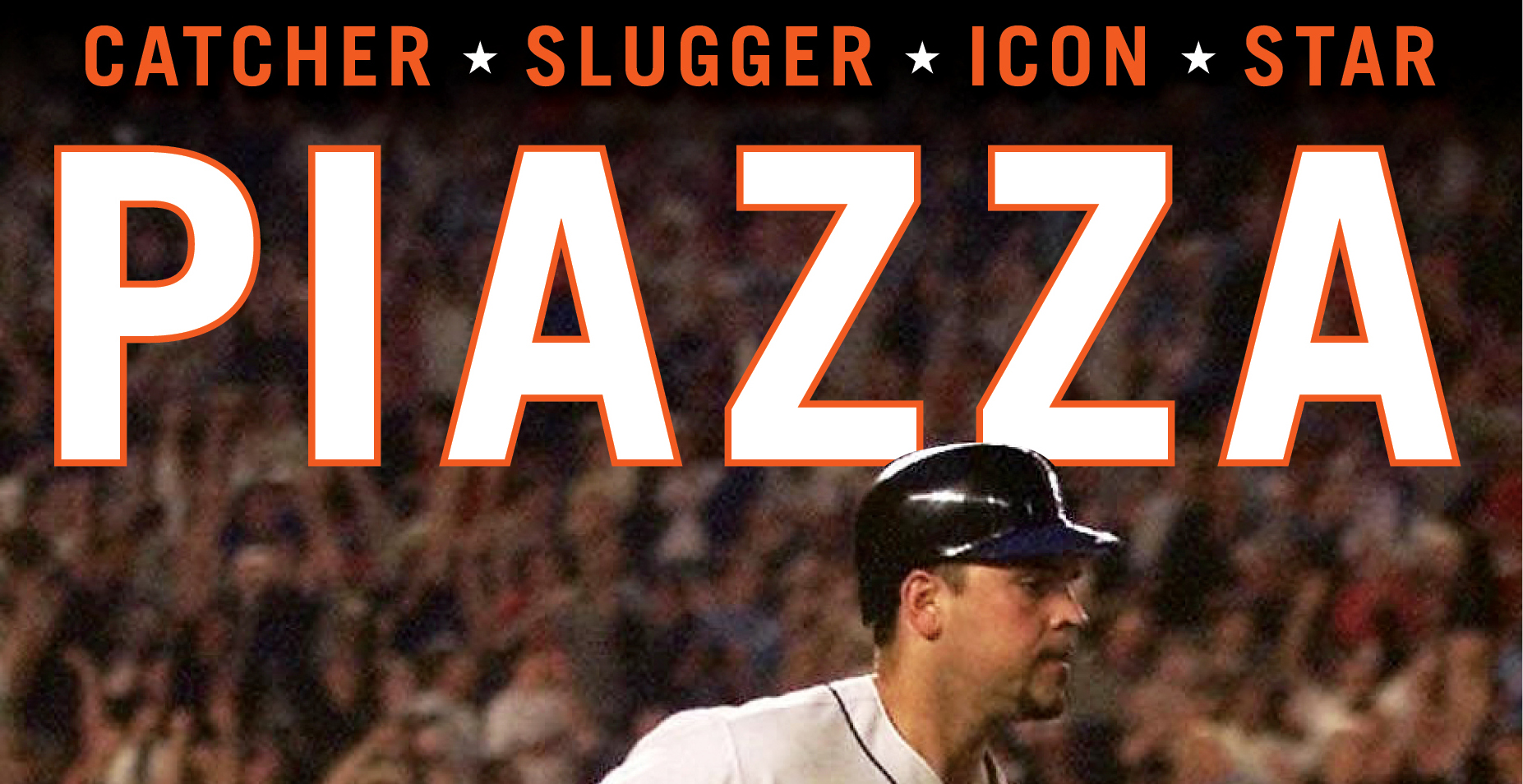
Piazza: Catcher, Slugger, Icon, Star by Greg Prince is available from Amazon, Barnes & Noble and other online booksellers. 
Amazin' Again: How the 2015 New York Mets Brought the Magic Back to Queens by Greg Prince is available from Amazon, Barnes & Noble and other online booksellers. 
Volume I of The Happiest Recap: 50+ Years of the New York Mets As Told in 500+ Amazin' Wins by Greg Prince is available in print and for Kindle on Amazon. 
Faith and Fear in Flushing: An Intense Personal History by Greg Prince (foreword by Jason Fry), is available from Amazon, Barnes & Noble and other online booksellers. |
|
Copyright © 2025 Faith and Fear in Flushing - All Rights Reserved |
||