People ask me what I do in winter when there's no baseball. I'll tell you what I do. I stare out the window and wait for spring.
— Rogers Hornsby
 
Faith and Fear in Flushing made its debut on Feb. 16, 2005, the brainchild of two longtime friends and lifelong Met fans. Greg Prince discovered the Mets when he was 6, during the magical summer of 1969. He is a Long Island-based writer, editor and communications consultant. Contact him here. Jason Fry is a Brooklyn writer whose first memories include his mom leaping up and down cheering for Rusty Staub. Check out his other writing here. Got something to say? Leave a comment, or email us at faithandfear@gmail.com. (Sorry, but we have no interest in ads, sponsored content or guest posts.) Need our RSS feed? It's here. Visit our Facebook page, or drop by the personal pages for Greg and Jason. Or follow us on Twitter: Here's Greg, and here's Jason. |
People ask me what I do in winter when there's no baseball. I'll tell you what I do. I stare out the window and wait for spring. — Rogers Hornsby You don't have to be a graduate of one of Colorado's prestigious school systems to know the Rockies are in trouble. They've lost a blowout, a squeaker and a moderately competitive slugfest. Even education-conscious Mike Hampton could have calculated his former team's current odds of survival as prohibitive long before his celebrated cameos at Denver County's highly regarded parent-teacher conferences. Yet I envy the Rockies. They've made it this far. They'll probably be dismissed as hopeless lightweights when (when, not if) they lose this World Series, but I hope their fans have enjoyed the unanticipated ride. No, they're likely not enjoying much right now, as evidenced by Fox's continual closeups of thousands of them between pitches — the home team's behind, the faces will be mopey, just shoot the action — yet the luckiest among them got to sit and shiver at Coors Field Saturday night. They were at the first game in the National League park. This marked seven consecutive years for certain that we could only imagine that the first game in the National League park was taking place at Shea Stadium. I caught the slightest and most accidental snippet of the last World Series game played at Shea as I flipped by a regional sports network that shall remain nameless. It aired Friday, October 26, which happened to be the seventh anniversary of the Mets' most recent Fall Classic appearance (and, it dawned on me, their crosstown rivals' most recent Fall Classic triumph). Putting 26 + 1 together, even though I'm no Mike Hampton, I realized Saturday would be October 27, or the anniversary of the last Mets World Series title won. So I popped Game Seven, the only Game Seven truly worth identifying as such, into the DVD player. Didn't watch all of it, just the good stuff: El Sid turning the tide in long relief; Mazz starting the rally in the sixth; Teuf drawing the walk that loaded the bases; Keith securing his postcareer broadcasting sinecure by driving in the first two runs; Keith furious at the lousily lazy call by Dale Ford that cost him second base when Dwight Evans couldn't handle Kid's right field fly which tied it; Knight's MVP laser of a homer in the seventh, the run that gave us the lead we never relinquished; shaky McDowell giving way to steady Orosco; Darryl's moon shot and subsequent trot around the solar system; Jesse swinging away to drive home the eighth and final run; then Romero, then Boggs, then Barrett going out, out and out; and then Jesse and Gary and everybody else dogpiling on the mound. It happened. It really happened. The Mets won a World Series. The Mets have won two World Series, but this was the one that happened least long ago. That it's been 21 years (soon to be referred to as 22 years) and counting…well, that's too long, but at least it happened. I have evidence. I have hard digital evidence that the Mets did what the Rockies won't, which is beat the Red Sox in the final baseball games on the calendar. October 2007 has been a month for anger and healing for most of us. Our emotions weren't at their prettiest on September 30 for obvious reasons and they've needed time to mend. Of course I envy the Rockies, even down 0-3. Of course I wish we had held on for one more day and then some. Of course losing twelve of the final seventeen was lethal when losing merely ten of the final seventeen would have satisfied all constituencies — the Mets still would have sucked as they were so determined to do, but at least we would have been sucked into the playoffs along with them. And from there, who knows? I'd be way happier if we were in, let alone succeeding at the 2007 World Series, just as I would have been way happier last October had we engaged in baseball beyond our last Game Seven. Unlike Tom Glavine, I was devastated when he and we came up short on September 30. But it neither made nor broke my allegiance to my team. I've given a lot of thought to Dan Shanoff's post on fandom by way of Jason's piece from the other day. I suppose I'm one of the undiscerning masses from whom Dan distances himself. My route to becoming and remaining a Mets fan was neither clever nor circuitous nor unorthodox. I imagine it's a pretty typical tale for Mets fans of my vintage. With atypical brevity, here is the essence of my story: • I was little • They were local • It was 1969 After winning that first world championship, the Mets went a long time thereafter without winning a second. They paused to attain the aforementioned belt from '86, but have continued their unabated nonwinning ways otherwise. With me rooting like hell for them regardless. Probably the most telling characteristic you could infer about me and my Mets fandom is I'm stubbornly loyal and possibly loyally stubborn. I chose my favorite team when I was 6, I chose my political party when I was 7, I chose my favorite song when I was 9. I've remained faithful to “American Pie,” the Democrats and the Mets without hesitation, even if none of them has spent much time at the top of its respective chart since 1972, 1970 or 1969. But in the long Met run, the paucity of Commissioner's Trophies on display in the Diamond Club lobby doesn't quite matter. I caught that smidgen of Game Five from 2000 and I was bummed. I treated myself to those highlights of Game Seven from 1986 and I was conflicted — Yay! for winning, Damn! for winning almost half my lifetime ago and not following up for more than two decades. Yet so what? I didn't stop being a Mets fan because we didn't qualify for more World Series and lost the one World Series in which we did participate. I'm apparently deriving some benefit from being a Mets fan, even if success by association isn't it. Let me let you in on a little secret: I didn't hate being a Mets fan in September 2007. Don't misunderstand me. I didn't enjoy the squadrons of Phillies, Nationals, Marlins and Cardinals clomping repeatedly on the home plate of my heart for half a month. I didn't enjoy the Mets' myriad pop-ups, errors, blown holds and seven-run tops of firsts surrendered. I didn't enjoy earning our way into infamy. All of that and so much more created utterly hateful circumstances in September 2007. But I enjoyed that I was doing what I do. I was being a Mets fan. It wasn't working as desired, but I was watching Mets games and listening to Mets games and attending Mets games and talking about Mets games and writing about Mets games and reading about Mets games and thinking about Mets games. I was doing that while hoping there would be Mets games to attend at Shea Stadium in 2007 as late as October 27 and 28 and 29 — if necessary — but I would have been doing it had that hope not existed at all. The level of frequency and activity has varied from year to year, but there hasn't been a season since before I was 6 when I wasn't watching, listening, talking, writing, reading and thinking Mets. (I'd include attending, but I had to wait 'til I was 10 for my first on-site visit to Shea.) Here, I think, is the deal, historic chokes aside: they're pretty good at being my team; I'm awesome at being their fan. This has been going on all my life. It will be going on all the rest of my life if I have my way. It will include several to many Mets World Series appearances if I have more of my way, but that part of my way is way out of my control. I can also declare, four weeks removed from The Worst Collapse Ever, that it's surprisingly irrelevant. My stubborn loyalty and loyal stubbornness is not win-dependent. The joy my Mets fandom has brought me for going on 40 seasons has little to do with winning and everything to do with being. I love being a Mets fan. Not that I would reject out of hand a few more Mets games to watch, listen to, attend, talk about, write about, read about and think about tacked on to the end of every year, this one included.
On October 25, our friend and blolleague Dana Brand noted babies born the night of the Mookie-Buckner play for the ages were turning 21, old enough to order themselves a drink. In that beer, wine or spirit, Saturday the 27th marked the 21st birthday of the 1986 world championship. I would have thought its parents would have given it a younger sibling in one of the years that followed, but I guess 1986 remains an only — or should we say exceptional — child of the ’80s. Here’s to you, October 27, 1986. A better last Monday in October we will never know.
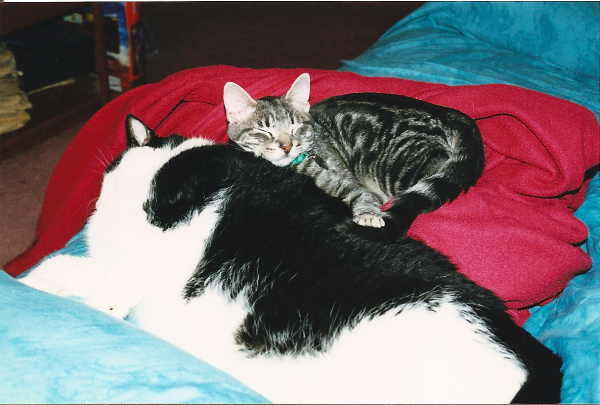
From the top of the Top 500: 10. There isn’t a Spinners’ radio hit from their halcyon and gorgeous period between 1972 and 1976 that doesn’t flat out make me happy. None makes me happier than One Of A Kind (Love Affair). 9. As I approach Merrick Road, make the next song Baby Baby by Amy Grant. Nothing ever sounded better in my life than that song did at that moment on that spring morning 15 years ago. 8. Rosanna was my soundtrack. It was the music bed for the chase scene, the one where I put hundreds of ragged, uncertain miles behind me. Come to think of it, “Rosanna” wasn’t driving music. It was flying music. Because I swear my Toyota had wings for those five or so minutes Toto played. 7. Others can dismiss Ice Ice Baby for any reason they like. For me not to acknowledge how much I love that record, how much it got under my skin and never left, how much I still hum it about once a week…it’s like the man said: anything less than the best is a felony. For me circa September and October 1990, “Ice Ice Baby” was practically the best song I ever heard. So sue me for questionable taste. 6. Stephanie microwaved popcorn and I poured Barq’s Diet French Vanilla Creme and we spun Ariel over and over and over again on June 19, 1990. Those were the first times I had heard it since 1977. If I close my eyes I can smell the popcorn and taste the soda and feel the grief dissipating just a little. About a week later, I’d adopt “Hold On” by Wilson Phillips, as my on-the-nose, get-through-this anthem of the summer of ’90, but really the emotional perseverance really began to take hold way on the other side of the Hudson. If I listen to “Ariel,” there’s no way I won’t hold on for one more day. 5. I’ve yet to come into contact with a sole fellow aficionado of Get Used To It. Voudouris was not only the embodiment of that most misunderstood pop music creature, the one-hit wonder, his hit wasn’t terribly pervasive. 4. A big part of the 90% or so of Come On Eileen I literally didn’t understand was Rowland confessing to Eileen that his thoughts “verge on dirty”. You know when I figured that out? When I Googled the lyrics last week to write about how much I loved “Come On Eileen”. 3. My feel for the pop scene, or at least the pop charts, was fraying by the time I was 32, but it was the right time for Roll To Me, a song that doesn’t require me to lean even a little on period context to enjoy it. 2. When I hear The Night Chicago Died, it turns me back into an eleven-year-old…not from a reminds-me-what-I-was-doing-that-summer standpoint, but by appealing to my preteen values of what’s exciting and thrilling and suspenseful. Namely a song with sirens and stage whispers and martial drums and gruesome body counts and sound effects intended to replicate a clock and a round of indefatigable na-na-na’s and rhymes so obvious that you couldn’t believe every song on the radio hadn’t seen the genius in pairing night with fight, all with wall, said with dead. Seriously, I’m 11 when I hear this. This is, like, the coolest song…EVER! 1. By the time American Pie was finished, I had begun. I had begun to love pop music. I had begun to understand what pop music was. I had begun to identify with pop music. I had begun to follow pop music. I had begun a lifetime love affair with pop music. If it’s the final Friday of the month, then it’s the tenth installment of the special Top 10 Songs of All-Time edition of Flashback Friday at Faith and Fear in Flushing. There would be baseball games on that radio, but not just yet. Not on this particular Friday, not with the players on strike. It was the end of a very turbulent week if you were a baseball fan, especially if you were a Mets fan. Gil Hodges died of a heart attack. Yogi Berra was named to succeed him. Rusty Staub was acquired from the Expos for Singleton, Foli and Jorgensen. What was supposed to have been Opening Night, the night before in Pittsburgh, was cancelled due to work stoppage. Friday morning, however, would herald something even more momentous than the 1972 baseball season. On Friday morning, April 7, 1972, on a Panasonic AM-FM portable radio that my mother gave my father for their 21st wedding anniversary — a radio I would inherit in a few years after he upgraded — I first heard “American Pie” by Don McLean. It was Opening Day, all right. The world of popular music opened up all around me. That season is still in full swing. It was, for all intents and purposes, the day the music was born. I don’t remember a lot of sitting around the weekday breakfast table as a family when I was a kid. In fact, I remember it almost never happening. I would say “never,” except it seems to have taken place that Friday, April 7. My parents’ anniversary was the reason. They were, for the first time, leaving me, 9, and my responsible sister, 15, alone for a couple of days as they decided to celebrate their wedded bliss at the Host Farm Resort in the Pennsylvania Dutch Country. They would be driving out early, so we needed to acknowledge their anniversary that morning. That’s why the radio was presented before school. That may be why I remember what it was playing. My sister had tuned it to WNBC, home of the “Imus in the Morning” program which was a big sensation in the spring of 1972. Mr. Imus had just come to New York from Cleveland the previous December and got lots of laughs with his Reverend Billy Sol Hargis character and his proclamation that “Rambling with Gambling days are over/It’s raining, it’s pouring/It’s Imus in the Morning!” Yes, Don Imus was once fresh and was once funny. And he was once required to play records on 660 AM. Sometime on Friday morning, April 7, 1972, he played one that began: A long, long time ago He wouldn’t be done playing it for a long, long time. For more than eight minutes, I would eventually learn. By the time “American Pie” was finished, I had begun. I had begun to love pop music. I had begun to understand what pop music was. I had begun to identify with pop music. I had begun to follow pop music. I had begun a lifetime love affair with pop music. That was quite a radio. And this is quite a song. I didn’t realize that “American Pie,” by Top 40 standards, had already been on the air and on the charts a long, long time. To the rest of the world, it was old news. “American Pie” had debuted at No. 69 in Billboard‘s Hot 100 for the week ending November 27, 1971. It reached No. 1 on January 15, 1972 and remained at the top of the chart for four consecutive weeks. By the time I discovered it, “American Pie” was falling off the national chart. It had left WABC’s local list in the middle of March. But to me, it was brand new. It entered my life at No. 1 on April 7, 1972 and it has remained lodged there ever since. It is my favorite song ever. It always will be. And April 7, 1972 will always be the date from which all pop music flows. Everything that was released after that Friday has been, at some point, authentically new to me, authentically potentially part of the soundtrack to my personal narrative. Everything before it is forever an oldie. Every song from before the spring of 1972 is like every Mets game from before late in the 1969 season. I know it existed — I just can’t swear to it for sure. That’s how powerful “American Pie” was when I first heard it. That’s how meaningful April 7, 1972 is to me. I’d heard other songs in my first nine years, three months and one week on the planet, but once I heard “American Pie” by Don McLean, I was determined to hear more songs. I listened and I heard. In the wake of April 7, 1972, I heard “Horse With No Name” by America; and “Heart Of Gold” by Neil Young; and “The Lion Sleeps Tonight” by Robert John; and “Mother and Child Reunion” by Paul Simon; and “Without You” by Nilsson. Some of it I liked. Some of it I loved. All of it I heard in a way I’d never heard it before, in a way that allowed me to link it to a time: a month, a week, a day, a moment. I heard music that connected itself to me by its very existence. I heard music in a context that made sense to me. And I could hear more of it if I just stay tuned. I’ve stayed tuned for 35 years. I’m not as tuned in as I used to be, but I still keep an ear open, knowing that something else will come along. I still listen to the radio, if not quite as much as I once did. The stations have changed. The singers have changed. The sounds have changed over and over again. But what became a part of me on April 7, 1972 has stayed a part of me: the wonder, the excitement, the anticipation, the deeply personal nature of music. To no song do those feelings apply the way they do to Don McLean’s “American Pie”. “Like no other song of its era,” declares Eric Lefcowitz in The Rhino History of Rock ‘n’ Roll: The ’70s, “‘American Pie’ managed to capture the mood and tone of that fascinating and slightly odd transitional period between the 1960s and the 1970s when people were attempting to recapture their lost innocence and, at the same time, move forward.” I may recall in intense detail having “American Pie” revealed unto me, when it happened and what I was doing, but I don’t know that I recall what was revealed to me about rock ‘n’ roll or my mortal soul. “American Pie” carried an intense air of mystery to it, yet I’ve never been much of a stickler for trying to penetrate it. For that, there are loads of theses circulating out there. Opinions on exactly what Don McLean was trying to tell us every step of the way are as common as rear entries: everybody has one. But McLean himself blessedly skirted the subject in 2000 by confessing, “I’ve never analyzed the lyrics to the song. They’re beyond analysis. They’re poetry.” Works for me; he wrote it, he would know. It is established that “the day the music died” equals Buddy Holly, Richie Valens and the Big Bopper going down over Clear Lake, Iowa on February 3, 1959 and that Don was painting on a pretty breathtaking canvas — “my attempt at an epic song about America” — from there. Everything else is conjecture and interpretation. When I was 9, I didn’t know from Buddy Holly or epic. It was the poetry I dug. The awesome wordplay. I assumed my new favorite song was about something deep, something off the beaten path, something you didn’t come across every day, probably a little hippieish. It was the most dramatic thing I’d ever heard. It started slow, it sped up, it became manic, it wound down to a point where “the music wouldn’t play”. It painted pictures I could barely literally comprehend. I was content to listen to them and imagine them — the pink carnation and the pickup truck; the dancin’ in the gym and the kickin’ off of shoes; the quartet that practiced in the park and the dirges that were sung in the dark — as I wished without having them explained to me. At 9, you think I had any idea what “Helter Skelter in a summer swelter” meant? Or what a levee was? That rye was a drink, not just a bread baked by Levy’s (as opposed to levee’s)? That “the Father, Son and the Holy Ghost” wasn’t something Don McLean made up on the spot to go with “caught the last train for the coast”? That I could differentiate between “the birds” and the Byrds in the reference to “Eight Miles High”? Or nod “oh yeah, Mick Jagger” when I heard “Jack be nimble, Jack be quick, Jack Flash sat on a candlestick”? Or be almost certain that “the sergeants” who “played a marching tune” were the Beatles? The fully woven tapestry of what McLean probably means is massively impressive in retrospect. It truly is. But I’m with Lester Bangs, who called the lyrics “just a bunch of words that could have as much meaning as you wanted.” When I was 9, I was too old for nursery rhymes. But when I was 9, “American Pie” was like the greatest nursery rhyme ever written. It caught on in my demo, which makes sense now that I’ve read “it is around the age of ten or eleven that most children take on music as a real interest” in Daniel Levitin’s This Is Your Brain On Music. Indeed, I can remember other kids in third grade humming it and referring to it as “Miss American Pie” (thus raising my fact-checking ire regarding the accurate citation of song titles and such for the first time). By sixth grade, we were singing it at graduation as part of our Bicentennial-themed ceremony (“Philadelphia Freedom,” too). Every now and again I’d come across an article confirming that “American Pie” hadn’t just been a No. 1 hit, but that it was Important, that maybe it was the most Important record made after the Beatles broke up. I felt good that I’d landed on something so significant without knowing it. But it also didn’t matter. I couldn’t like it any more than I did when I didn’t know anything about it. By the time I was in college, I learned many of my peers held it in the same kind of esteem I did. I distinctly recall some friend of a friend tacking the sheet music to her wall. “It’s my favorite song,” she said. The mutual friend in this case said he didn’t like “American Pie”. “How can you not like ‘American Pie’?” I asked. “Because,” he said with defiance, “everybody always says it’s their favorite song.” Maybe not everybody (I have an amusing book called The Worst Rock ‘n’ Roll Records of All Time that ranks it No. 9 in dubiousness), but yes, it’s nice to know that for once I’m in eternal harmony with a large group of listeners. After telling you of my unabashed fondness for the cheesy and the obscure since the end of last December, I take some satisfaction in reporting that my No. 1 Song of All-Time is practically my generation’s No. 1. It’s the only one of my leading favorites that shows up regularly in actual sanctioned commercial countdowns, not just my heartfelt, homemade Top 500. But that kind of widespread popularity shouldn’t surprise me. It transcended age range in my family. My father, who rues the turning of the musical calendar from 1950, liked “American Pie”; my sister, with little musical interest at all, liked “American Pie”; even my mother, whose only comment to me about the music of my youth was that Bonnie Tyler and Rod Stewart sure sounded alike and rather ridiculous at that, liked “American Pie”. My god, I really am related to those people. I remember Chevrolet using the “drove my Chevy” line in a commercial, but I don’t remember if it was Chevrolet or another advertiser that portrayed a guy not wanting to get out of his car until “American Pie” was over. That’s been me for 35 years. Every new stereo we buy, I insist on christening the turntable with eight minutes and thirty-two seconds of Don McLean, from the same LP I bought at TSS in 1973 (just before I realized I could buy singles). Long song. So long that its 45 was sold as Parts I and II on sides A and B. So long that American Top 40 generally didn’t play the entire version. But that’s like exhibiting only half of Vincent Van Gogh’s Starry Night. “The song was too powerful to be abbreviated, and a majority of radio stations played only the complete version,” according to Fred Bronson in The Billboard Book of Number One Hits. The Clearasil ads would just have to wait. At 8:32, you could be happy for a while and then some. Don McLean wrote something much longer than the norm in his field and the length was embraced because the work was great enough to merit such a reception. The lesson wasn’t lost on me. If you were to ask me to name my favorite recording artists, I’d tick off probably dozens of groups, duos and solo acts before remembering to mention Don McLean. It’s not that I don’t celebrate the guy’s entire catalogue, it’s just that I’ve demonstrated very little curiosity about everything that isn’t “American Pie”. For the record, Don McLean is a local boy, from New Rochelle. Went to Iona. Had a pretty big hit right after “American Pie” called “Vincent” (so hauntingly beautiful in its own right that it might have been written about the Van Gogh of first basemen) and a lesser hit the following winter with “Dreidel,” which is No. 72 on my list (it came out not long after Chanukah). Don disappeared from the charts for most of the rest of the ’70s, re-emerging in 1981 with a touching Roy Orbison cover (“Crying”) and then a re-release of the sincere if badly dated “Castles in the Air”. If he’s received any kind of contemporary/non-oldies airplay in the last quarter-century, I’ve missed it. If he’s come out with an album of new material, I’ve gone unaware. I’ve never seen him play live. I’ve only caught him on television by accident. He gave me “American Pie”. What else could I ask from him? As the song of songs, it is best left alone. Use it in another commercial? I wouldn’t begrudge Don the royalties, but I’d hope it doesn’t get mixed up with some shady pie company. Cover it? Madonna did that in 2000 on the soundtrack for The Next Best Thing. Turned out the next best thing to Don McLean’s original is never hearing Madonna cover it (though it somehow reached No. 29 in Billboard). Illustrate it? There was a syndicated show in 1986 with the clever title Deja View. Its aim was to produce music videos for classic songs that predated MTV. They did one for “American Pie”. It looked exactly like something that somebody who had 15 years too long to think about it would have created. “American Pie” doesn’t need latter-day ubiquity, doesn’t need updating, doesn’t need a literal visual treatment, certainly doesn’t need another wacky teen sex romp named after it (though I thought the first one was pretty good) or another Weird Al Yankovic Star Wars parody of it (he’s done better). It doesn’t need anything except to be heard in its entirety on the radio or television or Internet every once in a while, maybe even by some 9-year-old who’s never heard it before. Otherwise, leave it be. It’s been perfect since April 7, 1972. *** Credit where credit’s due: To underscore the absurdity of segregation in 1962 Baltimore, John Waters made the last Thursday of every month on The Corny Collins Show Negro Day in Hairspray, thus providing the twisted inspiration for making the final Friday of each month here Music Day. Here’s to you, Mr. Waters. (And here’s to you, gentle reader, if you picked up on the homage.) *** The No. 2 Song of All-Time was heard at the end of September. Join us in this space on January 4, 2008 for the debut of Flashback Friday: Tales From The Log. In the meantime, if you want to relive all of this year’s reliving all over again, go right ahead to go right back. There's an interesting discussion today over at Dan Shanoff's site about fandom. Dan is a pal of mine — he was on the same bill as Greg and me at Varsity Letters last winter — and besides being salt of the earth, he's one of the most knowledgeable, enthusiastic sports fans you'll meet. That said, there's one very odd thing about him, which I've never known another sports fan to let go unremarked: He never had a boyhood team. No hometown team. No team to which he gave his undying, unconditional love, come hell or high water or heaven. Dan's only allegiance is to the Florida Gators — but he didn't go to Florida. His wife grew up in Gainesville; the Gators are her team, and he adopted them. I know, I know. To born-and-bred crazies like us that sounds contrived at best and faintly sinister at worst. But Dan's completely genuine, and unapologetic about the oddity of both his rooting interest and the way it developed. Which he addresses here. It's an interesting tale, told well and told honestly, and it's generated a lot of reaction — most of it very thoughtful, some of it pretty visceral. (For example: “huge hypocrite” and “BS bandwagon fairweather fandom,” and those aren't even some of the nastiest ones.) Here's the part that set Dan's critics off. It also happens to be the crux of the argument: …I argue that making an active choice about my fandom — even pushing 30, in what some would describe as a “mid-fan-life-crisis” — wasn't just acceptable, but arguably superior to the more traditional, passive roots of sports allegiance: Biology: Let me guess -– you root for your favorite team because it's the team your father rooted for, and he “passed it on” to you. While I agree that's a nice way for parent and child to bond, it smacks of inheritance rather than fandom earned through independent, thoughtful decision. Geography: Another accident of circumstance. Your fandom is less about the team itself and more about having a sense of civic pride. Besides a question of tone (“arguably superior” waves a red flag at a lot of bulls), I think the disconnect is that Dan is trying to be rational about what for most fans is a product of irrationality — and in my experience people will do most anything to avoid having to admit to themselves or to others that they behave irrationally. I'm not one of them. I can tell you why I'm a Met fan: One of my earliest memories is being about four and seeing my mom leaping up and down cheering for Rusty Staub. When you're a toddler and your mother is behaving bizarrely in response to something, you focus on that something and desperately need to classify it and understand why it's important, usually either by being frightened of it or by embracing it wholeheartedly so you're not left outside of it. I chose the latter. (Big surprise: Rusty Staub was my first favorite player.) I won't say that story is 100% accurate (what family tale passed down from the time you're four is?), but in every way that matters it's true. And I'm aware it's utterly ridiculous. I've spent the better part of 34 years agonizing over a ever-changing cast of young men playing a game in goofy outfits because I was taken aback by something I saw my mom doing in 1973? Well, yeah. More or less. Instead of that story, I could rattle on for about the millionth time in these pages about pitching and defense and miracles and taking your best shot even if it's at your own feet and believing and the difference between believing and expecting — about Faith and Fear, in other words. And all that stuff is true — but it's also the pearl that's formed around the bit of sand that got caught in the works. Did I choose to be a Met fan? No — just as I suspect most Met fans (or Dolphin fans or Jazz fans or whatever) didn't. And I think it's this having not chosen that makes “traditional” fans so suspicious of — and often hostile to — any fan who does seem to have made a choice. It doesn't really matter if it's a “good” choice (got swept up in a team after moving to a new city, fell in love with a girl) or a “bad” choice (Team X is in first place, Team X is the Yankees). Either is at least slightly suspect to those of us who never chose. I embrace (or perhaps have thoroughly internalized) the irrationality of fandom — the world is comparatively rational, and it's also frequently dull or depressing (though also frequently beautiful and wonderful), and constantly demands you engage and strategize and figure out how to get between arbitrary points A and B. Which is fine — I deal with the world perfectly well, thanks — but sometimes a respite is welcome. In fandom I'm swept up in a cause whose outcome I can't possibly control, and part of something larger — a community of people also living and dying on the outcome of something they can't affect any more than I can. Fandom is a form of surrender no rational person would find wise — what idiot gives his or her heart to a bunch of rich kids to do with as they will? But in that surrender, in those three hours a night, I'm free. (And if that talk of surrender and being part of something bigger sounds a bit like religion — let go and let Gotay — well, that's no accident. This is my religion. I don't begrudge anyone theirs and I don't apologize for mine.) I wonder if Dan feels transported by sports the way Greg and Emily and Charlie and Laurie and all the rest of us do. Can he, without the wellsprings of childhood and place and memory, without having been washed in grief and hope and wonder before his emotions were fully formed? Without irrationality, in other words? I can't know and he can't know — which, again, is not unlike religion. In the end we are all of us — not just childhood fans and newly minted ones — mysteries to each other. (Whoa. So heavy. Let the record also show that baseball is beautiful, rewards intensive scrutiny and casual attention alike, and an excellent excuse for drinking beer, eating hot dogs and sitting in the sunshine.) Somebody wake the Rockies. The World Series has started. Well, that wasn’t pretty, National League fans. It didn’t feel like a World Series. It felt like a Super Bowl blowout from the era of Cowboys-Bills and 49ers-Chargers. In football, it’s just one game. In baseball, you have to keep reminding yourself it’s just one game. (Hey, somebody call George Carlin!) Just one game, but what a bad game for Colorado, a franchise which seemed more and more hypothetical as the innings snowed it under. We know who the Red Sox are, but from whence did these Rockies come? With their Mercury Mets homage uniforms and their stubbornly clinging anonymity, this could have been a goodwill exhibition between the excellent American team and a band of strangers who just took up the sport; a Canadian starter, a Japanese second baseman, a Dominican centerfielder, a Venezuelan catcher — maybe they were World Baseball Classic refugees. Are we sure the Colorado Rockies are licensed and bonded by MLB? That they weren’t fashioned for the sake of a historical novel? Dan Jenkins could have invented a name like Troy Tulowitzki. The whole bunch of them wasn’t even semi-tough against Josh Beckett. But again, just one game. The Rockies are very real. The Rockies are 21-2 since September 16. The Rockies got hot so long ago that the Mets were clear favorites to win the N.L. East when they were just warming up. The Rockies maybe need to play games on consecutive nights to remember how good they are. The Red Sox just needed to show up, and that they did. Beckett made me glad the Marlins dealt him out of our division (until I remembered Florida received Hanley Ramirez in return). Their lineup broke or matched offensive records dating to the 1920s, from when Fenway Park — does any park look better on TV as long as we’re not being swept in it? — wasn’t all that venerable. Game One was a perfect expression of baseball’s timelessness. Fenway has been around almost as long as the Red Sox, and the Red Sox batted for almost a century in the fifth. Man, was that not pretty. That was Rick Ankiel circa 2000 minus the wild pitches and nervous breakdowns. If you had Francisco Morales and a World Series ERA under 94.50…you lose! Ryan Speier’s three consecutive bases-loaded walks to score three inherited runners (his World Series earned run average is 0.00) brought to mind an eight-run eighth inning five Rockies pitchers, including future Mets Steve Reed and Mike DeJean, combined to surrender at Shea on May 18, 1997. • Baerga singled • Olerud walked • Hundley walked • Ordoñez walked • Alexander walked • Everett walked • Alfonzo singled • Gilkey singled • Huskey singled • Baerga doubled And in the Mets’ dugout, presumably enjoying it because it was happening to somebody else, was pitching coach Bob Apodaca. The scene ten years later in Boston was a lot different for our old pal Dack, who has worked miracles — humidor or no humidor — in turning a Colorado pitching staff into an actual asset. It pained me to watch a guy whose alleged firing offense in 1999 was incommunicativeness (or perhaps perceived closeness to Bobby Valentine) and a guy whose own pitching career was cut short by ligament injury at age 28 make all those helpless trips to the mound where nothing he could say to Morales or Speier or Jeff Francis before them was going to be of any practical use. I’d forgotten that Bob Apodaca spent a staggering 29 consecutive seasons affiliated with the Mets as a major and minor leaguer, as a pitcher and pitching coach, as a Mets lifer. Did you know Bob Apodaca trails only Jeff Innis in games pitched as a Met among retired pitchers whose entire career was spent with only the Mets? Though he threw just 11 starts and 173 relief appearances (walking two Pirates on eight pitches in his September 18, 1973 ninth-inning debut, a critical pennant race game rescued by Buzz Capra), Dack is one of those Mets who will never not look like a Met to me, regardless of his present laundry. But it could have been worse for him. If Apodaca continued to coach Mets pitchers, he might have had to have relied on Tom Glavine in a big game. Here’s something to cheer us up ever so slightly: The Mets have never suffered a postseason loss anywhere near as lopsided as 13-1. If you think about it, we’re a very tough postseason opponent when we’re not too complacent to qualify. In 74 LDS, LCS and World Series games, we’re 43-31, and in only six of our 31 losses have we been beaten by more than three runs. Our worst defeats, four of them, were by a civilized six runs — and three of those were in series we eventually won. Also, in the five postseason series we’ve lost, three times we took the eventual victors to the seven-game limit, while in the two other sets, none of our eight defeats came by more than two runs. In other words, we’ve been much better losers than the Rockies. One night short of the World Series, I was so desperate for baseball programming that I zeroed in on Real Sports With Bryant Gumbel on HBO for Bob Costas' interview with ex-Mets manager Joe Torre. They didn't discuss why Torre wanted to give the third base job to Joel Youngblood in 1981 when a) Youngblood obviously couldn't play third; b) Youngblood didn't want to play third; c) Hubie Brooks, who batted .309 the previous September, was standing by with the same third baseman's glove that he used more than adequately in his 1980 callup. Now that was a story I would have liked to have heard explored. But no. Costas and Torre talked about Torre's last, not first managerial assignment for some reason. Though it's a topic that hasn't lacked for coverage in recent days, I derived a few interesting nuggets from their chat. 1) Everybody is eventually nobody. Torre described his experience in Tampa last week as thus: He walked into a room full of Steinbrenners and other such life forms; he made his case that he'd been very successful over a dozen years, meriting a better deal than that which he was offered; he was stared at silently. At that moment, Joe Torre wasn't a revered leader of men, packing four World Series titles in his back pocket. He was a disgruntled employee going up against human resources. And human resources stares at you silently if that's what human resources intended to do in the first place. Torre could have slipped his Torreography into the nearest laptop and it wouldn't have done him any good. Management — whether represented by apparatchiks in windowless offices adhering to guidelines carefully designed to avoid lawsuits, or megalomaniac shipping heirs in the blithering, blathering flesh — is very good at staring silently. 2) Only win if they make it worth your while. Torre's strongest point to Costas as regards the infamous “insult” he took at the deal he was offered was, in so many words, why would you think I need an “incentive” clause to try and win a World Series? He was a professional baseball player for nearly two decades. He's been a manager for four different teams in 26 different seasons. Virtually all of Joe Torre's life has been devoted to trying to win something. That's what athletes and coaches do. It's what dedicated people do in whatever context their careers provide. Of course it's nice to be offered a performance bonus, but in baseball, it's all about performance. Joe Torre didn't know that? As he told Costas, it wasn't like telling him a million bucks awaited him for making the playoffs again was going to change this or that in-game decision. It's another example of whoever's running Torre's former team demonstrating a slippery grip on the reality of their business. 3) The best team is the team that plays best. Torre lost me by repeating the conventional wisdom canard that a best-of-five playoff series is by definition a crapshoot. It was a way to take himself off the hook for his team losing its last three division series. Hey, whaddaya want from me? Anything can happen in five games! Nowhere in the discussion between him and Costas did he say his team was lucky in the years when it won its LDS. It was implied that his team was always better but sometimes unlucky, never simply losers like half the teams in a League Division Series are going to be. How about acknowledging that everybody who makes it through 162 games to reach the playoffs is probably on a par with each other and there are no legitimately unfathomable upsets by October? The LDS round pits a division winner against a division winner, or a division winner against a team that probably came pretty close, a team that, if geography had been reinterpreted, might have won a division itself. If it's wrong of Steinbrenner to demand All Or Nothing results, then it's off base for Torre to act as if piloting a few division series losers was somehow a freak of nature. P.S. Between 1969 and 1984, pennants were decided in best-of-five series and I don't remember the crapshoot argument being invoked. If you lost, it was because somebody beat you, not because life wasn't fair. 4) PR isn't a stat, but perhaps it should be. Maybe Joe Torre was just being efficient in holding a big-ass press conference last week since he was presumably besieged for interviews. Maybe he was just being considerate of every reporter who covered him. Maybe he was doing Costas a favor by giving him his first one-on-one since leaving his post. Or maybe Joe Torre gives lie to the ol' “I never read the papers [or Internet]” dictum so many sports people insist we believe. It's pretty obvious Joe Torre cares what is said about him. He doesn't have to. He can probably do whatever he wants or, as that jingle for the Nevele put it, he doesn't have to do a thing (people do that, too). Yet Torre has a storyline and he has talking points: he wasn't treated with respect; he deserved a longer contract; he was plenty motivated. If he didn't say a word, most observers would come to those conclusions independently. Discount the outlying cranks who like to come off as iconoclasts, and everybody who's covered Torre regularly has generally burnished his image for him for years. Maybe now that he doesn't have batting orders and pitching rotations to worry about, maybe he's right to worry about perceptions. Maybe, to paraphrase the line about rich folks who are careful with their nickels, that's how people who enjoy positive perceptions continue to be perceived positively. 5) Drama must linger. Why are intelligent people pretending it matters that Torre won't say if he will eventually go to his former place of business and throw out a first ball or tip his cap? Of course he doesn't want to right now. Who the hell wants to go back to the company he or she just left acrimoniously? He just finished a dozen years doing what he considers a great job and was met with stony silence when tried to express that view. No, he wouldn't be anxious to return. Nor might his former employers be anxious to have him back. But eventually they will. For someone who obviously appreciated the enhancement his image received from his success in that job, Torre will someday, sooner than later, want to own that part of his history. Everybody eventually goes back for at least ceremonial purposes. Casey Stengel took another job after being fired in 1960 but went back in 1970 for the retirement of his uniform number. Yogi Berra famously huffed he would never go back after being fired in 1985, but he returned in 1999 because he decided life is too long to hold an endless grudge. Billy Martin…he always returned. He'd return right now if he could. Of course Joe Torre will return there to wave if not manage. He'll look good doing so and his former employers won't lose anything in the process. But don't expect it to be tomorrow. Put aside the $5 million and put yourself in Joe's shoes: you wouldn't return tomorrow either. 6) Bob Costas can come off as an elitist twit. After watching Joe Torre sport an insignia I reflexively froth at for a dozen years, you'd think he'd be the person in this HBO interview I'd be most annoyed by when it was over. But no, it was Costas. And it wasn't anything he said or did in the interview that annoyed me, it was the afterchat with Bryant Gumbel when the host asked the interviewer what the chances were of Torre managing again. Fifty-fifty, Costas guessed, an informed way of saying “I don't know.” Costas ventured that Joe would require an ideal situation, that Torre obviously isn't going to manage the Cincinnati Reds (FYI, they just hired Dusty Baker) or the Milwaukee Brewers. OK, maybe I'm being too literal-minded here, but the way he gave off this vibe of condescension when he dismissed the Brewers in particular peeved me no end. Why couldn't Joe Torre manage the Milwaukee Brewers? What's so dadburned extraordinary about a specific baseball manager that he's incapable of managing a specific baseball team? If Costas' point was the Brewers probably couldn't pay him all he would want, I'll buy that. But that didn't seem to be his implication. It was more the Brewers aren't good enough for Torre. That's absurd. The Brewers nearly won the National League Central last season. They have an outstanding young nucleus, not altogether different from what Torre walked into in 1996. Maybe a more patient, more experienced manager than Ned Yost (whom we last saw tussling with Johnny Estrada in the runway to the home dugout at Miller Park) is just what they need to become a champion. They have relatively new ownership that isn't afraid to spend a few bucks, they have a very nice facility with healthy attendance and Milwaukee — where Torre began his major league career in 1960, not incidentally — appears to be a wonderfully livable town. A couple of pennants and, before you know it, snobs like Costas would be falling all over themselves calling Milwaukee an adorable baseball hotbed, the Brewers a summertime version of the Packers and their fans — not the Cardinals' — the best in the game, tailgating inheritors of the sacred and homey traditions established for the Braves of '57 and the Brew Crew of '82. Why not? A year ago, maybe two months ago, Costas (like a lot of us) could have similarly patronized the Colorado Rockies and seemed urbane and knowing in the process. Today, there's no success story quite like Clint Hurdle and the heretofore obscure, small-market, instantly dismissable Rockies. Today, in his heart of competitive hearts, I'd bet Joe Torre would happily trade his last twelve years for Clint Hurdle's next four to seven games. I don’t wander down to the playground or the Little League fields. I don’t drop what I’m doing for high school or college ball. Even the occasional minor league game that flickers across the screen doesn’t do much for me. Though any baseball beats no baseball, baseball without a strong and informed rooting interest doesn’t do all that much for me. October baseball, the theoretical pinnacle of the sport, still needs to hatch a rooting interest to have me completely engaged. At this late date, I’m not entirely sure I have one between the Rockies and the Red Sox. One will probably make itself known to me by Wednesday night. Put the Mets in the playoffs (give them an 8-game lead with 16 to go to ensure it) and I’ve got my rooting interest. Burden us with another New York team and I have, at the very least, a spiteful rooting-against interest. The rest of the time, I make it up as I go along. Sometimes it’s fleeting, sometimes it’s grounded, sometimes it’s capricious. One October not so long ago, it was cherubic…and a little feline. Some of you might recall the tale of Casey the Cat, whose biography I shared with you on a Friday in June. Casey was the incredibly affectionate tabby who touched and tongued all whom he encountered. The story I told you, involving the departure of a beloved pet, couldn’t help but be a sad one. Today, on the eve of what will be a very good week for a very lucky set of fans, I’d like to offer a postscript to Casey’s story. It’s the part where life went on and eventually felt good again. Casey the Cat was irreplaceable. But Stephanie and I knew he would be succeeded. He had to be. Casey had made us a two-cat household and his big little brother Bernie required company. It felt wrong to deny him a companion (or at least an obstacle to his eating all the cat food in sight). But we required time and then closure. The loss of Casey on June 28, 2002 stayed very fresh all summer. July passed. So did August. We’ll look for a new cat in September, we said. First, though, a task. We had Casey’s cremated remains — cremains, they’re called — which is an odd thing to have. It’s your cat, but it’s not, y’know? It felt right to have what there was to have of him, but these were ashes. And aren’t you supposed to scatter ashes? You don’t have to, but it sounded lovely in its way. Closure, remember? We decided to keep some and scatter some. But where? Casey was an indoor cat. The carpet would have been most appropriate, I suppose. Instead, we chose to leave a little around the tree in our front yard (which he stared at when birds would alight) and take some more to our nearby park. There was a bay there. That was it; we’d scatter Casey’s cremains into the water. Cats didn’t like water, but this wasn’t for him. This was for us. It was going to be all solemn, as you can imagine. We waited for the Tuesday after Labor Day when I assumed everybody would be back at school and work and we’d have the park to ourselves. But everybody apparently decided to extend their vacations an extra day. There were Frisbees flying and barbecues blazing and swimmers and fishermen and, gosh, everybody under the sun. There weren’t five unoccupied feet of shoreline to scatter Casey. So we did it in broad daylight in front of whomever might have been watching. Casey always did like people. We took the rest of him home and set him up in a Native American-made receptacle we bought at Foxwoods in August when I helped Stephanie lead her senior center members on a daytrip. Placed him on top of the television so he’d always be in our direct line of sight. Casey was an indoor cat, we were indoor people. The Casey Era ended in June. The mourning period wound down the day after Labor Day. Thoughts of him would remain constant for a year or more. The Remo Era began on September 22, 2002. It ended on September 25, 2002. It’s three days I’d prefer to forget completely. A lady at Stephanie’s center heard we might be looking for a cat (as had everybody we knew that summer who wanted to place a deserving kitten — when the Princes have a cat opening, word of it spreads among cat people like news of a Vatican vacancy does among Roman Catholics). The twist was this lady lived in Queens. In Flushing, no less. How can you overlook a sign like that? What wasn’t completely comprehended by us was this cat, who we drove out to see on a Sunday when the Mets were in Montreal, was an outdoor cat. He wasn’t domesticated. But he was so friendly! That was the word. And we fell for it. We showed up, the cat came scurrying toward us and right into our carrier. Satisfied that he seemed nice enough, we snapped him up and took him home. “The adventure begins,” I announced to Stephanie as we walked our unnamed adoptee back to the car. That line was from an ’80s movie I had never actually seen but whose title (and Tommy Shaw theme) stuck with me: Remo Williams: The Adventure Begins. Right then and there we called the cat Remo. Should have called him a cab instead. It was a poor, poor fit, beginning the second he realized he wasn’t going to be able to roam the streets of Flushing any longer. Don’t know if it was the dizzying experience of being whisked to Long Island or he just had a taste for kimchi, but Remo didn’t want any part of us or wherever we were taking him. That much was apparent when he ruined the carrier on the way home. When Remo wasn’t hiding in the apartment, he was destroying something. When he wasn’t destroying something, he was attacking Stephanie. Swiping at her. Not playfully, but feral-like. We had ushered Bernie into the bedroom for the duration of the planned transition period, but nothing was taking. Bernie was miserable alone, Remo was miserable with us and, in a sentiment familiar to every Mets fan that September, we wanted to undo the enormous mistake of 2002. Trust me. This was worse than trading for Alomar. Stephanie, unflappable Stephanie, was near tears trying to cope with Remo’s hostility by Tuesday the 24th. Our plan was to lasso him, stuff him back in the carrier, get him to our vet for a checkup and appropriate procedures and get him the bleep out of our house forever. The strategy could best be described as Rescue and Godspeed, Remo. Go be somebody else’s problem (our vet gave her blessing to the plan, acknowledging that some cats aren’t meant to be housecats). So I come home that Tuesday night. Remo has finally been captured. He’s in his carrier in the kitchen, not to be let out until his appointment the next morning. Bernie is sulking in the bedroom, wondering what he did to deserve quarantine. And though I know she’s not in there, I find Stephanie has closed the bathroom door. Strange, I think, she never closes the door when it’s vacant. What could be in here? Another cat, that’s what. One over our legal limit. At wit’s end with Remo, Stephanie visited our local pet store in search of answers or maybe a stun gun. What she found was a tiny kitten too awesome to pass up. Thus, she didn’t. She adopted this legitimately friendly, legitimately loving tabby — a tabby! like Casey! — on the spot. It was the Best Available Athlete theory of drafting. We didn’t really need another cat, but when there’s that much talent left on the board, you grab it. I open the bathroom door and there’s the tabby, a gray and brown and…oh, all kinds of markings. He’s sitting on top of the toilet (the lid was down — he wasn’t that amazing) and staring at me. Stephanie has left on the lights and the radio (tuned to classical WQXR) to help him adjust to his new surroundings. I reach out for him. He doesn’t flinch. I pick him up. He doesn’t mind. I play with him. He plays with me. This was our cat. Stephanie took two cats to the vet the next day. They were both fixed…up and checked out and given clean bills of health. Then, with only a trace element of reluctance, she opened Remo’s carrier outside the house and he ran out. She ran inside and slammed the front door behind her. What would become of our three-day cat? As it turned out, nothing bad, to the best of our knowledge. Remo enjoyed being a neighborhood cat. We put out food for him, but we needn’t have bothered. A lot of people put out food for him. Remo was a survivor. He just wanted nothing to do with us. The other cat she brought inside, he’s the one who stayed. I named him Hosmer, for Hosmer Mountain Bottling, a tribute to a very small soft drink company in Connecticut. He went from Hosmer to Hozzie in about a minute. We set him up in the bathroom for further acclimation (changing the station on my watch to jazzy WBGO) but were so enthused by his progress that we sped up our schedule of cat interaction. We opened the bathroom door and let Hozzie wander the apartment. We introduced him to Bernie and Bernie to Hozzie. I had read all kinds of horror stories of what happened when older, set-in-their-ways cats were exposed to interloping kittens. It wasn’t pretty. But this was. Hozzie instantly adored Bernie (all Princes did). Played a spirited round of Hop On Pop with him. Bernie, then ten years old, instantly tolerated Hozzie. Occasionally brushed him off when he was too enthusiastic (think Garfield and Nermal) and indulged his Big Cat prerogative of eating while the newbie watched and waited, but welcomed him into the family. I swear I began to think that when Stephanie and I left the house, it was OK, because Bernie would babysit Hozzie. It was early October by now. October the Fifth, Game Four of the only LDS that had captured my imagination, the American League Division Series between the dreaded Yankees and the unfamiliar Anaheim Angels. The Yankees won the first game at Yankee Stadium, which is what everybody said they’d do. Then they lost the second game, which wasn’t expected at all. The Angels, despite their deceptive name, murdered Andy Pettitte, the deep, brooding face of all those awful American League Octobers since 1995. Even the damaging presence of ex-Met Kevin Appier on their side of the mound couldn’t hurt my Anaheim amigos. The Angels, who were supposed to shrivel at the thought of Lou Gehrig (let alone the sight of his monument), pounded the Yankee bullpen into submission. They…or as I was coming to think of them, we won 8-6. When Fox posted the starting lineups for Game Three, Stephanie riddled me this: “Wanna know another reason I hate the Yankees?” “You had me at ‘I hate the Yankees,’” I should’ve said. But her explanation was just as good: “Because I recognize all their names.” Damn October familiarity. Boy was I hoping my new favorite American League team could turn the Yankees into strangers lightning-quick. Game Three was in Anaheim. No preapproved postseason cachet there. Not before October 2002. But now, yes. It was probably a bad example to set, but Angels management — Disney, they were called — handed out a pair of long, red plastic tubes to every fan as he or she entered. They were called ThunderStix. They made ThunderNoise. It was kinda ThunderBush, but it wasn’t illegal. It may have been intimidating. Poor Yankees didn’t know what hit them. To be honest, the slamming of the Stix must not have bothered them too much at first because they did hang a 6-1 lead on the board by the second. But Mike Mussina surely heard the thunder. Mike Mussina had signed with the Yankees to win a ring. And for a vast amount of money. They always say it’s the first thing, but it’s probably more about the second. Mike Mussina wasn’t the first free agent to go the route of the ring, but he was the first, it would turn out, who didn’t always get what he wanted, jewelrywise. Perhaps that was because Mike Mussina — paving the presumptuous ringless way for Giambi, Matsui, Sheffield, Rodriguez, Pavano, Damon, Clemens II — was a creature of habit and demanded extra concentration. I know this because the Yankees play a lot of big games and even if I don’t want to know what their players are up to, I wind up hearing about it. As the third game progressed, Mussina could hear the ThunderStix loud and clear. They indeed worked lightning-quick. They were not part of his plan. What had been a five-run lead for Mussina was Thundered into oblivion by those Angelic warclubs — the bats and maybe the Stix. Mussina was gone after four. He was followed by Weaver, Stanton and Karsay, all of whom surrendered runs, lots of runs, juicy, mouthwatering runs. Final score of Game Three: Angels 9 Yankees 6. Angles led the series two games to one. The Angels were one game from clinching. This was the danger zone. I was so, so, SO excited. But I’d been here with Oakland, the bastards. They led 2-0 the year before, but it was a little too easy. It was eerie. It was a setup. That was when the Yankees flew to Oakland and executed that play where their shortstop, whose name escapes me at the moment, flipped a ball to their catcher from the first base line and Jeremy Giambi stood still for his tagging at home and everything went down the crapper after that. But gosh, the Angels felt different. This wasn’t the A’s where their best player, Jeremy Giambi’s brother, was biding his time so he could get in on some of that Steinbrenner ring & money action. The Angels were pure of heart. I could sense it. I didn’t know shinola about these Angels, but I was learning and I was loving. Darin Erstad was intense. Scott Spiezio played in a band. Alex Ochoa, our five-tool failure? Their defensive replacement. Brad Fullmer was a reformed Expo. Adam Kennedy, a Cardinal for about 10 minutes, was scrappy, though not as scrappy as David Eckstein who appeared to be the love child of Lenny Dykstra and Freddie Patek. Garret Anderson looked every inch the MVP candidate they said he was. Troy Glaus was monstrous. Tim Salmon was Rookie of the Year in that league the same year as Piazza but seemed older. Their starters left something to be desired, but their bullpen was gutsy and this kid K-Rod, Frankie Rodriguez, well, he wouldn’t look bad in a Mets uniform. But he was serving his country in a more important capacity right then. Maybe they could do it. Maybe the Angels could beat the Yankees in the Division Series. Maybe Angels. Hey, didn’t Sheryl Crow have a song by that name? I dug out her second album and found it: I swear they’re out there, I swear, I swear they’re out there, I swear, I swear they’re out there, I swear, maybe angels, maybe angels I played it a couple of times, then I stopped. Nice way to put the ke nignehore — “tempt the evil eye” in Yiddish — on your team. That brought us to Saturday afternoon, Game Four, when Hozzie left the bathroom behind and the Angels left the Yankees in the dust. There was no evil eye this October. There was no Evil Empire anymore. The Yankees had been dethroned the previous November by the heroic Arizona Diamondbacks, but that was the World Series and it went seven games and there was a variety of excuses made on their behalf and if you come across their home games from that 2001 championship round on YES, you’d think they won the damn thing. They didn’t then and now, in October of 2002, there would be no mistaking the outcome, no revising the history in the making. Where aura and mystique were concerned, Anaheim represented the Angel of dynasty death. Our new kitten, of course, represented spiritual rebirth. It was quite the yin and yang. Hozzie entered a world in which our better Angels prevailed. What a welcome! David Wells, notoriously clutch October pitcher (notorious tends to be misused, but I mean notorious from my perspective), nursed a 2-1 Yankees lead into the fifth. Then the Angels earned their wings. They scored eight runs in that inning. Eight runs off Wells, Mendoza and Hernandez, the one they called El Duque, but I preferred the less cuddly Hernandez. They scored on a homer. They scored on singles. They scored on a double. They scored and scored and scored until it was 9-2. The Yankees dribbled a couple more runs home and did make me slightly nervous in the ninth with some baserunners, but this was over in the fifth. And when Nick Johnson popped to David Eckstein, it was done. The Yankees were defeated. The Yankees were dead. The Angels were our avenging saviors. No longer Maybe Angels, but Definitely Angels. They were The Team That Saved October (I wonder if Disney thought about developing that for a summer release). The Yankees were history, and not the kind they brag on. October was alive. Now there would be a true October. In the National League, the Giants would face the Cardinals for the pennant. The Twins beat the A’s (chokers) and were the next opponent for Anaheim — Anaheim, City of Heroes as one e-mail I received right after Game Four called it. My residual loyalty to the wonderful ex-met Rick Reed notwithstanding, there was really no choice to be made for me between his Twins and Hozzie’s Angels. I rooted for Rick his one start, but as soon as he was knocked out (in the sixth), I had no conflict. And as the Halos threw down with the Twinkies, I could sit back and appreciate the Angels as kind of a West Coast kindred spirit of the Mets. They were born in the same expansion litter. They battled second-sister perceptions vis-à-vis insufferable neighbors. They were star-crossed, the Angels more so. At least we had won a couple of times. The Angels had bad luck of all sorts, on the field and off. They’d had guys die (Lyman Bostock) and kill themselves (Donnie Moore). Gene Autry, an owner who sang cowboy tunes and signed free agents, was always disappointed. His wife Jackie carried on in the dismayed tradition even after Disney bought the team. Their 1986 came close to colliding with ours but was stopped cold. It was after that post-season flop — an out away from a flag only to have the Red Sox, of all people, spook them — that Roger Angell (no relation) inducted them into the corps: “It’s about time we old-franchise inheritors admitted the Angelvolk to the ranks of the true sufferers — the flagellants, the hay-in-the-hair believers, the sungazers, the Indians-worshippers, the Cubs coo-coos, the Twins-keepers, the Red Sox Calvinists: the fans.” And 1986 was a high point, relatively speaking. Little was heard from the Angels after Dave Henderson did them in. The next time they pricked the seamhead consciousness was 1995 when they built an impressive lead in the American League West and commenced to blow it to the Seattle Mariners. The Mariners refused to lose. The Angels had no problem with the concept. This was a team whose uniform restyled frequently, whose caps switched shades and fonts every couple of years, whose actual name didn’t (and still doesn’t) hold steady. They once aspired to represent all of California. Now they were Anaheim’s team, giving them corporate synergy, one supposed, with hockey’s Mighty Ducks. If you could still be an Angels fan after all that, you deserved a trophy. The Twins didn’t make it too hard on the Angels in the pennant tier. After losing the first game in the wacky Metrodome, Anaheim swept four. The fifth and final game was 13-5. Eighteen hits for the Halos. Adam Kennedy, the No. 9 hitter, smacked three home runs. We were looking at an all-California series, the Angels and the Giants. Not My Giants. My Giants moved away after 1957. I didn’t have even the pretense of a hard choice here, National League affiliation notwithstanding. I was in the minority of fans who truly admired Barry Bonds’ skills despite his pungent personality (pre-revelations, mind you) and he was on a postseason roll. I felt some vindication for him — like he needed it — in the way he was obliterating his October ghosts. But he wasn’t my cause. The Angels were. In late June, when the Mets held all my baseball attention and the Angels were just another team whose game last night ended too late for its score to be included in this edition, I was mostly thinking about Casey. Everything was about Casey. Every third song I heard was about Casey. The first one I adopted in tribute to him was Norman Greenbaum’s 1970 kitschy smash “Spirit In The Sky”. That was Casey. Casey was my spirit in the sky all summer long. Come Game One of the 2002 World Series at Edison International Field of Anaheim (they also keep changing the name of where they play), the home team trotted out to their foul line to a loop of the opening strains of a 32-year-old pop hit. It was “Spirit In The Sky”. They did it for Gene Autry and to tie in to that whole Angels thing. But that was Casey’s song! Casey…MY spirit in the sky! Casey…MY angel! Now it all made sense to me. I had latched onto the Angels not just because they beat the Yankees. They were the only team that could have been en route to that year’s World Championship. It was the year I said goodbye to Casey, hello to Hozzie and How About My Angels? The Giants never stood a chance. Yes, it went seven games, and yes, the Giants were ahead by five runs in the sixth game and were eight outs from their first world championship since moving to San Francisco, but they never stood a chance. Not with my cats past and present aligning against them. Not with the powers of that silly Anaheim Rally Monkey being reinforced 3,000 miles to the east by an array of unofficial rally monkeys that Stephanie rounded up from Pathmark. She found five different stuffed monkeys and placed them strategically around the TV. Hozzie grabbed one and made it his first pet. The Angels, if you’ve forgotten (that Series got terrible ratings), stormed back from down 5-0 in the seventh inning to win 6-5 in Game Six. One night later, John Lackey, Brendan Donnelly, Frankie Rodriguez and Troy Percival pitched them to the finish line in Game Seven. Funny thing about Percival. Back in the spring after we had acquired Mo Vaughn from these very Angels (for Appier), there was a tabloid tussle between Mo and the reliever. I think Percival, who was a perennial leader among A.L. savers, had said something to the effect of we’re better off without Vaughn. It wasn’t really that harsh. Mo lashed out like a madman, going on about how he had “hardware” — the ’95 MVP award — and playoff appearances under his belt (among other weighty things). Out of loyalty to our new first baseman, I decided I disliked Troy Percival. Now, on October 27, I was rooting like crazy for him and all those Angels Vaughn left behind. When Percival induced Kenny Lofton to fly to Darin Erstad for the Angels’ first world championship in the 41-year history of the franchise, I was as thrilled as anyone who’d barely given them a second thought a month earlier could be. But that’s what October’s for. I’m not sure who Hozzie’s rooting for in this World Series. I’m sure he’ll let me know.
|

Piazza: Catcher, Slugger, Icon, Star by Greg Prince is available from Amazon, Barnes & Noble and other online booksellers. 
Amazin' Again: How the 2015 New York Mets Brought the Magic Back to Queens by Greg Prince is available from Amazon, Barnes & Noble and other online booksellers. 
Volume I of The Happiest Recap: 50+ Years of the New York Mets As Told in 500+ Amazin' Wins by Greg Prince is available in print and for Kindle on Amazon. 
Faith and Fear in Flushing: An Intense Personal History by Greg Prince (foreword by Jason Fry), is available from Amazon, Barnes & Noble and other online booksellers. |
|||||
|
Copyright © 2026 Faith and Fear in Flushing - All Rights Reserved |
|||||||