Nothing whatsoever of note happened in Port St. Lucie this afternoon. And it was the best kind of nothing there can be.
Pitchers pitched. Hitters hit. Or didn't. There was running. Lots of running. Tons of running. Get your running in.
Buncha guys got dressed up in their Wednesday afternoon finery, every gosh darn one of them. They looked fantastic. Whoever they were.
There was a score. It was inconsequential. It's not so much that I've forgotten it. I shouldn't have bothered to learn it in the first place.
Nothing happened. It was televised. They'll repeat it tonight. Definitely tune in. It's nothing worth watching all over again.
 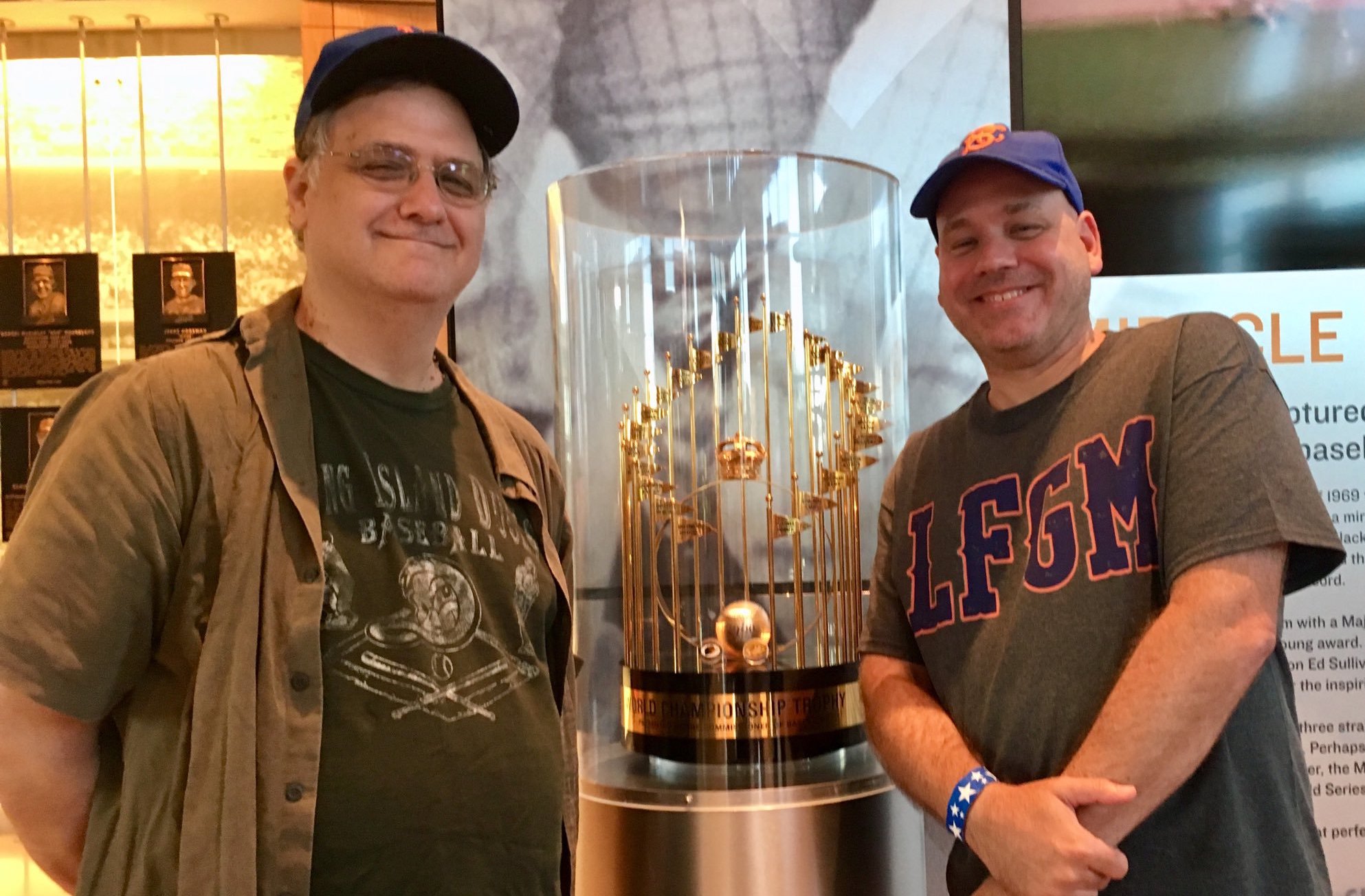
Faith and Fear in Flushing made its debut on Feb. 16, 2005, the brainchild of two longtime friends and lifelong Met fans. Greg Prince discovered the Mets when he was 6, during the magical summer of 1969. He is a Long Island-based writer, editor and communications consultant. Contact him here. Jason Fry is a Brooklyn writer whose first memories include his mom leaping up and down cheering for Rusty Staub. Check out his other writing here. Got something to say? Leave a comment, or email us at faithandfear@gmail.com. (Sorry, but we have no interest in ads, sponsored content or guest posts.) Need our RSS feed? It's here. Visit our Facebook page, or drop by the personal pages for Greg and Jason. Or follow us on Twitter: Here's Greg, and here's Jason. |
Oliver Perez is taking the ball against Detroit Wednesday, starting in consecutive games or going on 132 days’ rest, depending on how you choose to view this terribly overdue Mets-Tigers matchup. Either way, our boys will be lacing up spikes that are not — no matter how much elbow grease the clubhouse staff has put into it — 100% clean. Gum chewed more than four months ago is stuck to the bottom of our collective sole. It’s from Game Seven. I don’t think it will be easily scraped off. Did you think it was gone? Just because the calendar turned from 2006 to 2007? Just because almost everybody said the usual things about moving on and putting it behind us? It doesn’t work that way, not in baseball, not with losing a humongous baseball game. Now, that doesn’t mean the result from Game Seven is particularly foreboding where near-term success is concerned. In fact, as previously suggested, it could serve as motivation or inspiration for a team rocking the unfinished agenda angle. Or maybe it will be a drag on things. Mostly, I imagine, it won’t matter one way or the other once this season gets underway, not in a tangible 2007 sense. But it will always be with us on some level. Losses don’t loom any larger than those that delete you from the postseason. We’ve experienced five. Within that universe there is a subset: the winner-take-all/loser-go-home affair. We’ve lost three. Those are the toughest. But then you whittle down within the seventh-game defeats, the most exclusive club in all of sporting disappointments, and you find there is an even more elite group: the seventh game you lose at the very end. That was the 2006 National League Championship Series, Game Seven. That’s the gum. That’s the legend. The Legend of Game Seven. We don’t want it. But it won’t come clean. We saw that as Spring Training got going and the indelible events of October 19 re-emerged with reflections and recriminations pinging all over the continent like a severely botched rundown. In a perverse way (a very perverse way), I get a kick out of there being a legend growing from the ninth inning…or should we say The Ninth Inning? I’d prefer the legend be one that involves an additional base hit, but it’s more than just a rally come up short now. It’s baseball lore. Was Willie Randolph really confused? Did Jerry Manuel pull the strings? Is Cliff Floyd remembering things the way he wants, facts be damned? Last week, Cliff and Willie and Jerry and David Wright all weighed in on what wasn’t even the decisive at-bat of the ninth inning, Cliff’s time up. He was only the first out. Two outs remained, yet three days of reporting was devoted to several sides of its story. That’s how big Game Seven was. Carlos Beltran barely puts down his bags at Tradition Field and he is asked by the Met media to relive the out that didn’t require all that much interpretation. “It was a nasty pitch. I saw it, but I couldn’t do anything with it.” On the other side of the boxscore, the happier side, Adam Wainwright quite justifiably revels in the memories, even the part where Valentin and Chavez reach him for base hits to start the ninth. “Every fan at Shea Stadium was crushing me. All year I never heard the crowd. But I could hear them this time, and they were letting me have it.” Then the kid decided he was going to get Beltran, no doubts about it, at least not in hindsight. “I knew I was going to get the job done. I said to myself, ‘I am going to throw this curveball like it’s the best curveball I ever threw in my life.'” So he did. And that was that. No it wasn’t. It’s not the end of the story. The story never ends. It’s in Limahl territory. Everything surrounding Game Seven will linger, will flare, will recede and then reappear when we’re not looking for it. Don’t be fooled by the enticement of a new season. This old business has been cobbled into our codicil. We’re passing this baby on for generations. And even though it is we who are stuck with it, it’s not just ours either. It’s baseball history, the kind that doesn’t carry an expiration date. It will be brought to our attention on and off for as long as anyone who remembers it first-, second- or third-hand sees something that’s remotely reminiscent of it. It will be an inconvenient truth, shallow shorthand for those who need a quick and dirty precedent on the fly. • The notoriously undependable pitcher who unearths a gem at the least likely moment? Just like Oliver Perez in Game Seven! Just like Game Seven in the 2006 National League Championship Series, the one that hinged on any number of moves, actions, successes and failures, but stopped when Adam Wainwright froze Carlos Beltran on oh-and-two. Quick aside: I was wheeling a shopping cart through my Pathmark’s cereal aisle several weeks ago, and suddenly staring out at me from the General Mills shelf was a Wheaties box. Not just any Wheaties box, but a Wheaties box with Chris Carpenter’s picture on the front. I did what any sensible Mets fan would do. I turned around every box of Wheaties so nobody within the sound of my angst would have to look at a 2006 World Champion St. Louis Cardinal selling cereal on the South Shore of Long Island. Chris Carpenter didn’t even pitch in Game Seven. But that’s beside the point. Game Seven is everywhere we don’t want it to be. It’s the cupcake topped with a limitless layer of frosting if you’re a Cardinals fan. It’s a bottomless bowl of kale and lima bean stew if you’re us. It’s a contest with different meanings for different players. Oliver Perez has immediate prospects thanks to his six innings of one-run ball. Endy Chavez will bask in the terminally bittersweet glow of what he grabbed for as long as he can. Aaron Heilman, the reliever who made Molina famous, is either terminally hung up on it or getting over it as we speak. Jose Reyes may or may not be haunted by what he says the Mets suggested the Cardinals could do with their chances directly after Endy gave Willie Mays a run for his immortal money: “Take your bags and go home.” Jose’s too swift to be caught by a ghost, but it’s obvious the spirit of Game Seven hangs over Metsopotamia. Maybe not as a going concern — Carlos Beltran will live to swing another day — but it’s in the atmosphere. If may not get in the way of the manager, his coaches and their players as they pursue a second consecutive division title (and it certainly doesn’t have to), but we, the fans, will live with it from here to kingdom come. How can I be so sure? Can I see the future? Don’t have to. I’ve been around the past. More than five years ago I sat in a room of New York Giants fans who were commemorating The Shot Heard Round The World and communing with their hero of heroes, Bobby Thomson. They were thrilled, grateful, ecstatic all over again. “Thank you, Bobby,” one of them said, “for allowing us to break those Brooks’ balls 50 years ago.” Almost five years later, I sat in another room, this one dotted by more Dodgers than Giants fans. Guess who spoke louder, representatives of the contented ball-breaking contingent or those who were still trying to restitch the tender horsehide of their swollen memories 55 years after the fact? When Joshua Prager appeared with Bobby Thomson and Ralph Branca last September to discuss The Echoing Green, his remarkable history of The Shot and everything after, it was the Dodgers fans who made themselves heard. The Lincoln Center Barnes & Noble had morphed into the Chuck Dressen Complaint Department. These people had waited five-and-a-half decades to register their official protests regarding what went wrong on October 3, 1951 (though I’m fairly certain this wasn’t the first time any of them had mentioned it lately). My Giants friends may still be satisfied, but not nearly as much as their Dodger counterparts are pissed. Fifty-five years. Going on 56. That very same week, HBO premiered Wait ’til Next Year, a touching documentary charting the downs and further downs of everybody’s favorite futile franchise, the Chicago Cubs. The heart of the story was 1969, a year remembered in these parts as the best of times, reviled in those parts as something far less. HBO dug up fantastic footage we never saw during Channel 9 rain delays, none better from our provincial perspective than the exclamation point — a local lady reporter filing a report from a desolate, rainy Wrigley Field on the second Saturday of that October. We should be in Baltimore playing the Orioles right now, she said. Instead, nothing doing. “It’s a lousy day in Chicago.” I laughed my head off of course. Their pain is the foundation of my lifetime obsession not to mention the crux of my happiest childhood experience. I don’t remember many details from August and September of 1969, but watching the Cubs implode and the Mets rush by them, even in grainy film clips, brought back every wonderful new emotion I experienced as a six-year-old. It was a lousy day in Chicago? Who cared? It was a great year to become a Mets fan! It’s awfully nice to be on the right side of these baseball cataclysms as I consider myself to have been by proxy for 1951 and was for sure, albeit on training wheels, during 1969. Oh, and 1986…Buckner. Beautiful. Always will be. SNY can try to reduce that World Series to wallpaper, but it never, ever, ever gets old to see that ball roll through those legs and trickle onto the outfield grass before nestling forever inside a puffy, cumulus cloud of heaven. Twenty-plus years that image has looped through my mind now and I’d challenge whoever said losing hurts more than winning feels good to a smirkoff. Make all the misguided movies you want about somebody else coming up short in Game Six. I’ll always have a better one flickering in my head. But now I am on the other side of the fault line, more than I’ve ever been before. I’ve got Game Seven and it’s presented in Sensurround. This isn’t the unfriendly confines of a 1979 or a 1993, horrible in a thousand dreadful ways, but at least they’re private hell. This isn’t some obscure Luis Aguayo moment or even the relative anonymity of a five-game losing streak that prevents you from entering October. The whole world wasn’t watching in 1987 and 1998. It’s not even the one-two punch of Brian Jordan and Brian Jordan again from 2001, the worst I ever felt watching essentially the same two ballgames six wretched days apart. It killed us, but you still have to explain it to an outsider. This, Game Seven, was the Mets when they were supposed to win. When they had their fate and the bat in their hands. That, I think, is what separates the 2006 version of Game Seven from the other slammed doors in Mets postseason history. We lost in searing fashion in 1999 to the Braves and 2000 to the Yankees, but those didn’t go to seventh games. Felt like they did, but they didn’t. People still debate Yogi Berra’s decision to bypass George Stone in favor of short-rested Seaver and Matlack with a 3-2 lead over Oakland in 1973 (I actually heard a caller to WFAN bring it up last night). Really, they don’t debate it at all. Nobody except Tom Seaver has ever defended it with any kind of vigor. But those were those A’s and we were all probably kind of shocked to have crashed their dynastic party as deeply as we did. The cumulative effect of losing that World Series may have stung like mad, but neither of the final two losses against them, though both were close, was a 2006-style heartbreaker. We weren’t supposed to beat the A’s in ’73. We were supposed to beat the Dodgers in ’88, but that seventh game got out of hand early. The turning point then was three games earlier, Scioscia versus Gooden. But planting the blame on a pitch or pitching decision from the ninth inning of the fourth game when… a) the lead should have been more than 4-2 entering the ninth ….smacks of revisionist history. It’s been said the Scioscia home run destroyed the era, that it tumbled a dynasty that never was. I lived through it. I don’t buy it. The Mets would have two years after ’88 of coming close and not winning. I simply remember the home run, in real time, as an unfortunate blow delivered by an opposition batter. Our not scoring earlier that evening or later that morning (and the next afternoon) is what struck me as the killing blows of that NLCS. And we still could have won back in Los Angeles. As engraved in after-the-fact consciousness as it became, I don’t recall Mike Scioscia’s dastardly deed being rewound and featured ad nauseum in the winter of 1988-89 or the spring that followed it on whatever media existed in those semi-dark ages. We lost that NLCS in seven games. Game Four was pivotal, but it was the fourth game. Everything about Game Seven, our Game Seven like we’ve never had one before — the one we won, in ’86, was superswell, but is it the Game you think of immediately when you think of ’86? — is different from everything that preceded it. There’s been no Met loss like it. Whatever you think of Heilman’s Thursday pitch to Molina (Mota and Wagner each had a pretty lousy series against St. Louis, so maybe it was just a matter of time before someone in red got to Aaron), it’s the last licks you remember, the last lick in particular. This wasn’t Jon Matlack instead of Tom Seaver and Tom Seaver instead of George Stone; or Doc Gooden instead of Randy Myers; or Kenny Rogers instead of Octavio Dotel; or Al Leiter instead of John Franco. This was Carlos Beltran. This was the Mets on offense, our most powerful weapon cocked and loaded, a trigger man left fingering what could have or should have been pulled. This was the crossroads of dominance (14 wins better, home field advantage) and doggedness (we get knocked down, but we get up again, you’re never going to keep us down). This was where our mythical, miraculous mettle would be proven to all. To the Cardinals. To the country. To us. Too perfect. Whether last October 19 represents the worst loss in Mets history is subjective stuff to begin with, but it’s absolutely unknowable on this February 27. There’s no record you can pin down to make the case, no Rennie Stennett or Sunny Jim Bottomley numerical explosion for your pinpointing pleasure. There is no PECOTA test that will reveal which is our worst episode ever of Lost. You can tell your statistics to shut up. It’s gloom plus gut multiplied by time and future circumstance, a formula impossible to convert to reliable equation at this hour. If this was our one shot at the big time in this generation, then it’s perhaps as bad as anything between 1962 and forever. We remember Scioscia because after 1988 everything went downhill. Yet if the Mets played a little more competently in a series at Wrigley in the summer of ’89, maybe they beat out the Cubs for the division and who knows what we do that October? (Not that beating us out in ’89 and ’84 and ’98 has done a damn thing to salve Cubbie fans’ psychic wounds from 38 years ago.) Likewise, a couple of hits here and saves there down the stretch in 1990 might have made 1988 a footnote bracketed by two championships. I doubt Aaron Boone remains quite as horrendous for Red Sox rooters as Dent and Buckner did because it was avenged in a timely manner…if the accomplishments of one season can be said to truly compensate for the shortcomings of another. Those Dodgers fans at the Barnes & Noble in 2006 didn’t seem particularly sated by the four pennants their Bums won in 1952, 1953, 1955 and 1956 to say nothing of Brooklyn’s world championship in ’55. Getting beat in 1951 apparently beats all. Preseason predictions are uniformly useless, but on the eve of our first exhibition, I’ll proffer one anyhow: If we go five wins further in October 2007 than we did in October 2006, we’ll probably still gnash our teeth over Game Seven at a later date, but it won’t sting the same. In fact, it likely becomes character-building fodder for the greater narrative, a new and uplifting chapter in a franchise history that already alternates between life-affirming and clinically depressing with skip-stop service unpredictability. That championship train we’ve been waiting on is bound to show up eventually. One of these nights, the doors will open exactly where we’re standing and we’ll ride it express all the way home. Maybe that night is no more than one month of practice and seven months of achievement away. And if we don’t exceed the bottom line that was smudged beyond creative accounting by last year’s stunning conclusion? Then the third rail, like that third strike, is something we’ll find ourselves looking at for a little too long.  26 comments - (Comments closed) | | 26 comments - (Comments closed) | |  Print This Post | Print This Post |  2006 Mets, 2006 NLCS, Adam Wainwright, Carlos Beltran, Disappointment, Jeff Suppan, Oliver Perez, Yadier Molina 2006 Mets, 2006 NLCS, Adam Wainwright, Carlos Beltran, Disappointment, Jeff Suppan, Oliver Perez, Yadier Molina INT. — AN APARTMENT IN BROOKLYN — AROUND 6 PM ON OCT. 19, 2006. JASON, an extraordinarily tired-looking man in his late 30s, enters stage left. He is dressed entirely in Met gear. He plops down on a worn couch in front of a coffee table, then quickly gets back up again.
JASON (muttering and pacing) Ohmygod, it all comes down to Oliver Perez. The whole season. Oliver Perez. Against Suppan. Ohmygod. He sits back down on the couch, gets up, repeats this, puts a gray Mets cap with a stars-and-stripes NY on his head, plucks it off, and finally exhales deeply. He's obviously agitated. Haunted, even. JASON There's only one thing to do. He looks around furtively, then walks quickly to a bookcase and removes a round object covered with a silk hankerchief. The hankerchief is adorned with baseballs and question marks. He takes this mysterious object, still shrouded by the handkerchief, and places it carefully on the coffee table. JASON Here goes nothin'. He sweeps the hankerchief off the table, revealing a crystal ball, and stares into it. The ball begins to glow faintly. JASON Tell me, oh baseball gods, what's going to happen tonight. I need to know. CRYSTAL BALL (eerie voiceover) Patience! All will be revealed within hours. JASON Uh-uh. I'm going crazy. Tell me! CRYSTAL BALL Heed my warning — prophecies are an uncertain business. JASON Yeah, whatever. So's getting a sac fly with the bases loaded and one out. I need to know! CRYSTAL BALL Very well. If you must ask … ask. JASON Oh baseball gods, tell me — who's going to win tonight? An eerie wind sweeps through the room. The crystal ball pulses blue, orange, red, black and orange. CRYSTAL BALL The next game the New York Mets play after tonight … will be against … JASON leans forward, mouth agape. CRYSTAL BALL … the Detroit Tigers. JASON Woo-hoo! YES! YESSSS! World Series, baby! YEAH! He begans dancing around the room, hands raised in joy. CRYSTAL BALL Remember … the answer you receive may not always match the question you ask. JASON (distracted) You say something? CRYSTAL BALL Oh, nothing important. Just when I thought I was out, they pull me back in. MapQuest pegs the distance from 3 Court House Drive in Central Islip to 123-01 Roosevelt Avenue in Flushing at approximately 40 miles, depending on your route of preference. Too close for my tastes. And way too far. If one of your all-time favorite baseball players flashes through your mind hitting like a Met, fielding like a Met, running like a Met and forever looking like a Met, finding out he has become a Duck is pure quackery. Former New York Met and recent Norfolk Tide Edgardo Alfonzo has indeed been bewebbed, signing with every ex-local Major Leaguer’s favorite halfway house, the Long Island Ducks. It had to happen sooner or later. It’s where old Mets, almost-Mets and Mets-tinged lunatics go to feather their nests for at least one more season in the sun: Kevin Baez, Bill Pulsipher, Carlos Baerga, Juan Gonzalez, John Rocker, Pat Mahomes…in fact, the Ducks traded Mahomes to the Bridgeport Bluefish for Atlantic League rights to Alfonzo. The sharp-eyed among us will recall Fonzie spent about a minute in Connecticut last summer between his release from the Toronto Blue Jays and his hookup with the Tides. Ah, there’s the rub. It was a great moment of hope here when word came down that Fonzie was going to Norfolk. He’d play himself into shape, he’d get recalled before rosters were set, he’d reinvent himself as Lee Mazzilli did in 1986 and an old Met would spray a few singles as the new Mets marched to their third world title. Nothing ever works out the way you want it to. Edgardo lingered as a Tide. He batted .241 at Triple-A in July and August, which — all sentimentality aside — is not the best case one can make for himself for elevation to The Show. Still, the Mets did not have the deepest bench going into the postseason, and I didn’t see any reason not to bring him up and give him a few at-bats with a 12-game lead. At worst, I figured, we could give Fonzie the group hug he earned from 1995 to 2002, he could tip his cap and he could go coach with his brother somewhere in the Met system. But that didn’t happen. Trying to retrace the steps, I seem to recall the 40-man roster, which sounds so huge in theory, came into play, especially after Ramon Castro went down with a knee injury. Suddenly another 1995 Met, Kelly Stinnett, had to be added to the big club, inciting a chain reaction of other machinations that left no room at the inn for sentimentally favored .241-hitting utility infielders. Well, there might have been, but I kept reading that if the Mets tried to add Fonzie by September 1, they’d have to risk losing Ruben Gotay or Steve Schmoll. I can’t tell you how little I cared about Ruben Gotay or Steve Schmoll, but I tried to curb my instinct to scoff. Baseball seasons are built on the backs of guys I’ve never heard of, and maybe Gotay, the infielder acquired from Kansas City for Jeff Keppinger, or Schmoll, the sidearmer packaged with Duaner Sanchez in the Jae Seo swap, were too important to risk letting go. I’d probably have muttered about each when they went and came, except I’d been feeling chastened after moaning last September about the failure to recall Alfonzo and saw myself teetering on the edge of ridiculousness if I continued to harp on it. Though I will always believe it was somewhere between a mistake and an insult not to have worked something out in December 2002 to keep him here, I had to admit to myself that based on his long-term performance from 2003 on, that I might have been, as the other Fonzie would have said, wr…wr…wr…you know. I might not have been completely correct in my estimation of his value. The four-year deal he signed with the Giants expired at the end of 2006. Alfonzo reportedly put his big-ass house in Little Neck on the market. The Mets never effectively replaced him at second, but they seem set at third and I have no reason to doubt as of yet the short-term efficacy of Damion Easley and David Newhan. As a result, Edgardo seemed safely ensconced in the past. Even with the agate-type transactions regarding Gotay and Schmoll, I was willing to let him go once and for all. Then this minor league outfit comes along and brings Edgardo Alfonzo back to the neighborhood. MapQuest says I’m about 26 miles west of Central Islip as the Duck flies. I suppose that’s pleasant, that if Fonzie wants to continue his career that badly (he’s only officially 33, or younger than all but maybe five Mets), it’s nice that he’s nearby, certainly within reasonable stalking distance, that it’s a lot closer than Bridgeport, let alone San Francisco. But it’s not that great a thing. Watching Edgardo Alfonzo stride to the plate at Citibank Park in green and orange and standing in against some Somerset Patriot and ripping one up the middle is not the simmering desire I’ve harbored these past four-plus years. He was a Met. He was supposed to come home last year and be a Met one more time. To tease me by putting him one county away in the wrong direction…to make me think that if he regains his stroke that maybe, just maybe, Omar Minaya will take note and ink him again, this time for real…that with the score tied in the ninth and the winning run on third and the pitcher’s spot due up that Willie Randolph will confer with Jerry Manuel and decide, with no confusion whatsoever, to send up No. 13 (Billy Wagner having graciously given up his digits in deference to his numerical predecessor)…that the pitch will be high in the zone and Fonzie will swing… Enough. The Academy would like to take a moment to remember those Mets who have left us in the past year… Bartolome Fortunato, 2004; 2006 Kelly Stinnett, 1994-1995; 2006 Henry Owens, 2006 Eli Marrero, 2006 Ricky Ledee, 2006 Royce Ring, 2005-2006 Michael Tucker, 2006 Heath Bell, 2004-2006 Jorge Julio, 2006 Brian Bannister, 2006 Jose Lima, 2006 Victor Diaz, 2004-2006 Kaz Matsui, 2004-2006 Xavier Nady, 2006 Darren Oliver, 2006 Chad Bradford, 2006 Roberto Hernandez, 2005; 2006 Victor Zambrano, 2004-2006 Chris Woodward, 2005-2006 Steve Trachsel, 2001-2006 Cliff Floyd, 2003-2006 This is the last weekend without a Mets game for a long, long time. If it’s the final Friday of the month, then it’s the second installment of the special Top 10 Songs of All-Time edition of Flashback Friday at Faith and Fear in Flushing. Why? ‘Cause everything sounds better in spring. Give me a May morning. Make it warm so I don’t need a jacket. Sunny, too. Put me behind the wheel of my old orange Corolla. Have me drop off my fiancée at the Long Island Rail Road station. Roll my window down. Send me home to get ready for work. Direct me across Sunrise Highway while I fiddle with the Realistic FM converter. Make sure Howard Stern is in commercial so I land on WKJY — K-Joy 98.3. As I approach Merrick Road, make the next song “Baby Baby” by Amy Grant. Nothing ever sounded better in my life than that song did at that moment on that spring morning 16 years ago. Maybe if I’d heard it in February it would have been grating. Maybe if I’d heard it in September it would have seemed sappy. But in early May, it was perfect. No wonder it’s the No. 9 Song of All-Time. “Baby Baby” remains perfect to my ears. No matter when I hear it now, it’s the most endearing love song I’ve ever experienced and the highest-ranking pure love song on the Top 500. It’s not deep, it doesn’t probe, it’s only as original as it has to be. But Amy Grant nailed it. As the spring of 1991 continued, I couldn’t get enough of “Baby Baby”. When it pops up nowadays, it’s that May morning all over again. I guess “love song” describes “Baby Baby,” though when you think of “love song,” you might think of something slower, something sexier, something breathy or emotional. By these standards, “Baby Baby” is a trifle. But it works. It works on its own merits. I love “Baby Baby” in the context of hearing “Baby Baby” when I did. There’s not a lot more to it than that. Even though Stephanie and I were six months from marriage, it’s not “our song” by any means (see No. 18 on the Top 500 for what we chose as our first dance at our wedding). She liked it OK and we certainly derived some goodness from it as it topped the pop and adult contemporary charts that spring for two and three weeks, respectively. Mostly, though, we cringed at the video, in which Amy and some hunky guy rolled an orange back and forth. Of course the dude in the clip was an actor. The song wasn’t about him. It wasn’t about The Dude Upstairs either despite Amy’s fame as a spiritual vocalist. I’d first heard of her in 1985, my final semester in college. One of my journalism classmates, Carolyn, gave me a ride and had an Amy Grant tape in her cassette deck. This is Christian music, she said, which surprised me (people I knew actually listened to this stuff?). I saw my first Amy Grant video that summer on VH-1: “Love Will Find A Way”. Didn’t mention hellfire. It was OK. Wasn’t giving much thought to Amy Grant when she reappeared all secularlike in the spring of ’91. I didn’t know she was crossing over from the Christian section of the record store nor did I know she had a baby girl she named Millie. Millie, inspiring her mom at six weeks old, is literally the baby in “Baby Baby,” which is amusing in that some variation on “baby baby” is the granddaddy of rock ‘n’ roll clichés, especially when adults want to make fun of that music the kids like (à la Jet Screamer from The Jetsons). Dedicating “Baby Baby” to her infant certainly turned that criticism on its head. And the byplay with the hunk in the video — framing Amy as just a touch less innocent to a not necessarily righteous audience — probably helped it go to No. 1. The musical reference running through Keith Thomas’s melody for “Baby Baby” is a light-synth approximation of a calliope. I was never much for merry-go-rounds, but this is one ride I never want to STOP…for a minute, not even a second. I’m still going round and round when she gets to her penultimate proclamation of affection, “I’m so glad you’re mine”. The rhymes sync perfectly to the hooks. They’re not brilliant — notion to devotion to ocean, leading eventually to the day you put my heart in motion — but they are effective. Amy is just so damn loving and optimistic that I’m convinced it’s never going to cease being a morning in May. If there’s a love object for me in “Baby Baby,” explicit or otherwise, it’s not Amy’s baby or my sweetie or even my notion of Stephanie’s ocean of devotion for me (one I liked to imagine was expressed via female vocal in the No. 192 song of all-time, at least until I realized Melissa Etheridge probably had somebody named Sheila in mind). The love I take from “Baby Baby” is spring. Spring at its best kicks ass. Spring annihilates winter. Spring promises summer. Spring is a baseball season before the standings go awry. Spring is 1991 before the 1991 Mets fall apart. Spring, at the height of its unclammy powers, can be so warm and so sunny that I don’t mind being dragged out of bed in the middle of it to provide the love of my life a ride to the station. Spring is also the ride back home with the radio on. The No. 10 Song of All-Time was heard at the end of January. The No. 8 record will be played at the end of March. Next Friday: Gettin’ one’s Topps on. So Jimmy Rollins says the Phillies are the team to beat in the National League East. As he should. He’s on the Phillies. He should exude confidence in February. If Fred Wilpon took grief three years ago for setting “meaningful games in September” as a goal (a reasonable one, I thought, coming off a most dreadful 95-loss campaign), then we should applaud Rollins for aiming high on behalf of a team that looked good late and probably improved over the winter. Then we should boo his loudmouth ass every time he shows his face, starting with the Home Opener (or boo his loudmouth face every time he shows his ass — your choice). You talk like that in the earshot of Mets and Mets fans, expect feedback, hopefully the kind that comes bundled with a Reyes hit, a Reyes steal, a Lo Duca shot through the middle, a Beltran blast and so forth. That’s for April 9. Don’t worry too much about what Jimmy Rollins says now. We don’t know if he’s delusional or on the money yet. Until we do, keep in mind that players named Jimmy have been known to offer some unorthodox utterances. Even Mets named Jimmy. Jimmy Piersall, for example. He’s best remembered in his 1963 Met incarnation for circling the bases backwards when he whacked his hundredth career homer — not third-to-first backwards, but back-to-the-bases backwards. Whatever it was, it was enough to get him released almost immediately. As Ol’ Case put it, there was only room enough for one clown on his Mets, and it wasn’t gonna be Jimmy Piersall. More than a decade after Piersall was hung out and several years after he hung ’em up, Jimmy resurfaced as a goodwill ambassador of sorts for the Texas Rangers. To understand what sorts, it’s instructive to read one of the flat-out funniest baseball books that’s ever been written, Seasons In Hell by Mike Shropshire, a Fort Worth beat writer like they don’t make anymore who covered a franchise that its hard to believe ever made it at all. Shropshire’s Rangers are the Whitey Herzog/Billy Martin 1973-75 model, or as it says on the cover, “The Worst Baseball Team in History.” Technically they were only godawful his first year on the beat, but it’s best not to get caught up in numbers here because mere American League West standings don’t do those Texans justice. I first read Seasons upon its publication in 1996 and laughed hysterically. Then I loaned it to I don’t remember who and never got it back. I found it rereleased last year, scooped it up and recently began reading and laughing all over again. I was on a train the other day when I read something involving Piersall that made me chortle hard enough to drown out a dozen cell phone conversations. The author describes an offseason event at old Arlington Stadium to welcome a new sponsor, Schlitz, to the Ranger family. The party was up to local standards, Shropshire writes, the refreshments “the same as what you’d find in the bedroom of the average Texan — a washtub full of ice and beer cans and a bowl of potato chips.” On hand were several advertising executives attached to Schlitz. With no real baseball to discuss, Shropshire tried to make small talk with one of the account guys, noting that it struck him odd that in all those Schlitz ads that ran in the ’70s there were nothing but men keeping company with other men. They’re all filmed on big sailboats and you see a bunch of guys rigging the sails and diving off the deck and drinking Schlitz and having a great time and all, but you never see any women on the boat…and you don’t see any women after the boat is parked on the beach and the guys are having a clambake and they’re singing and throwing Frisbees and still drinking all that Schlitz. So I was watching some of those commercials on a football game and got to wondering if maybe Schlitz is going after the gay market with these TV commercials. Shropshire swears he was just trying to make a little friendly chat, maybe inject a bit of levity “into what was shaping up as a colorless gathering…it never occurred to me to notice that, like the Schlitz sailboat, there weren’t any women at the press party.” But this was Texas in 1974 and the account executive wasn’t too pleased at what he inferred from the writer’s remarks. Things grew tense. Into the breach stepped a late-arriving Piersall, Ranger ambassador of goodwill. Shropshire was relieved to have a distraction. The account exec did a 180 and greeted Jimmy like a long-lost relative. “Jimmy! Have a Schlitz!” What he wasn’t aware of was Piersall was strictly on the wagon, so much so that when the inspiration for Fear Strikes Out responded, “I don’t drink that goddamn goat piss,” it was nothing personal. Seeing as how “the poor ad guy didn’t know that,” it’s no wonder “his mouth fell open.” It certainly took the wind out of the sails of the immediate anger the Schlitz representative felt toward the baseball writer, and for that, Shropshire was extremely grateful. I felt like rushing over to Jimmy Piersall and giving him a warm embrace, then decided against that, lest I wind up on a Schlitz commercial. There are two topics with which I try not to overly concern myself in the course of a baseball season: many damn things written about the Mets by what we’ll call the non-fan media and every damn thing I hear about the Yankees whether I want to or not. But it is Spring Training, the time of the season when we’re more at the mercy of those factors than at any other point on the baseball calendar. Once there are Mets games and such, we’ll have those to revolve around. Right now, it’s hard to ignore the noise and occasional stupidity that spring can bring. Sunday was one of those days. Sunday is always one of those days. It’s the Sunday papers, my deepest-rooted source for trusted baseball perspective (well them and Metstradamus). The Sunday papers in February validate our imaginations. The Mets suddenly no longer exist only online or in the past. There’s stuff going on in Florida. There must be. Somebody’s paying somebody to cover it in a way we logistically can’t. Sadly, some writers are just e-mailing it in. Take Mark Herrmann of Newsday, a columnist without a Sunshine State dateline on Sunday but obviously with space to fill. He had a half-baked idea for a piece that he stuck in the oven for maybe a quarter of the necessary baking time before grabbing his mitts and pulling it out. It wasn’t even warm on arrival. It was one of those columns in which the writer’s initial concept comes up against facts that don’t support it, so he kind of bobs and weaves through his inconsistencies until he’s got 800 words in the bank. At least that’s what it reads like (which is all that matters in the end). Herrmann’s topic was something about the Mets having a chance for a big followup year to 2006, specifically an opportunity to take a big step in New York. They’ve come so far. But they’re not the Yankees. But they are good. Or not good enough. And they’ve done the right things. But not enough of them. Except they didn’t do dumb things either. Something like that. Plus an inane and cheap shot at Moises Alou’s uncles. See for yourself. When I read it Sunday, I was instinctively offended by the stale anti-Met conventional wisdom Herrmann was selling and the strange evidence with which he was supporting it. For example, the Mets don’t own New York because various Yankees apparently got heartier rounds of applause at the winter baseball writers’ dinner. I have no idea who all goes to the baseball writers’ dinner, an event that requires a pretty penny for admission. Not to resort to the hoary chestnut that the Mets are the team of the people and the Yankees appeal to the swells, but let’s assume that the baseball writers dinner demographic has a pinstriped tilt. For this particular function, more Yankees fans bought tickets than Mets fans. We concede the black-tie vote and pledge to start saving now for next January. More mystifying was Herrmann’s claim that when Carlos Beltran went down on called strike three last October 19, if we’re honest, we’ll admit we “said it was hard to imagine Derek Jeter letting that happen.” We didn’t. Honest. Technically, I can only rightly speak for myself, but I sure as hell didn’t. I’d bet whatever stray Mets Money I have floating around the house that not a single Mets fan of any value did. I’ll go out on a limb and add that any Yankees fans looking in, whether they were being the atypical good New Yorkers for a week, relishing our demise or simply licking their Tiger-inflicted wounds, didn’t either. Who the hell thinks like that? This isn’t a gratuitous bash of Captain Fantastic and his mythic ability to hit five-run homers with the bases empty. Jeter does what Jeter does, but when you or I or anybody is watching the Mets play the Cardinals, nobody’s staring at his wrist and wondering What Would Jeter Do? Except Mark Herrmann, apparently. Herrmann insists the Mets still have to use the Yankees as a “measuring stick” even though the Mets went further in last year’s playoffs and are defending division champions and have returned reasonably intact the cast that brought them to this level. After years of not altogether unreasonable media-harping that every Met person needs to stop worrying about the Yankees…after achieving practical parity in the marketplace and putting a more recently successful product on the field…here was a credentialed baseball writer of significant New York tenure instructing Fred Wilpon and all us orange-and-blue schnooks that we still haven’t made it anywhere because we haven’t, by his measuring stick, made it here. His proof? Beltran didn’t dive into the stands and tag Jeremy Giambi when he faced Adam Wainwright; somebody clapped loudly for Joe Torre in a tux; and we signed Jesus Alou’s nephew. Like I said, my Met antennae were up and detecting an attack. So that — along with the generally dim quality of the logic — pissed me off. But given an extra day to dwell on it, I don’t feel that way anymore. I’m pissed off because it’s an insult to be compared to the Yankees. An insult to the Mets. An insult to good taste. Alex Rodriguez reported to Spring Training and turned his first media session into Mean Girls II. Except Lindsay Lohan comes off as more dignified in the tabloids. Derek and I don’t have sleepovers anymore! Derek and I don’t eat together like we used to! Derek and I don’t talk anymore! For the first time since he came to the big leagues, I actually felt bad for Derek Jeter. He’s gotta work with this guy? A guy who can’t just say, “we’re professionals and everything else stays in the clubhouse.” Or, better yet, “I gotta work the count more with two strikes.” Sooner or later the BS questions about who’s sleeping on whose couch will fade if you do your job. I have no idea who’s sleeping on David Wright’s couch and I’m cool with that. Alex Rodriguez has Derek Jeter abandonment issues? I don’t want to know about any of this stuff, yet it leaks through all the Met barriers I erect. Why is this still happening? Don’t give me the Bronx Zoo theory. 1977 was a long time ago. This isn’t the Bronx Zoo anymore. That was at least novel for its time and those were relatively admirable characters who fed off each other and won. Now A-Rod’s worrying about who’s the straw that stirs the Cosmo? Geez. If this is the byproduct of winning all those Mark Herrmann Popularity & Prestige Awards, then I don’t want it. I’ll take our very good chances for the coming year, our share of back pages for winning games, our network, our rising stadium, our falling stadium, our 3.5 million gate, our Alou, our Beltran, our team, our Spring Training that proceeds on a quiet baseball path. For decorum’s sake, certain Yankees and columnists might be wise to look to St. Lucie for their measuring stick. Good story in the Daily News today about David Wright and HoJo, but what struck me wasn't the friendship between the two, though that was nice to hear about. It was the weave of Mets history: “HoJo took an instant liking to the 19-year-old Wright, even before Wright's agent and ex-Met Keith Miller — also a close friend of HoJo's — checked in on their budding relationship.” There you have it: a future Met and two ex-Mets bound together in one sentence. The only way you could pack more into that one would be if HoJo had text-messaged Wright while young David was raking the leaves at Wayne Garrett's house. (And elsewhere in the Daily News, I read that Rick Peterson's kid pitches for a college half an hour a way. His pitching coach? David West.) |
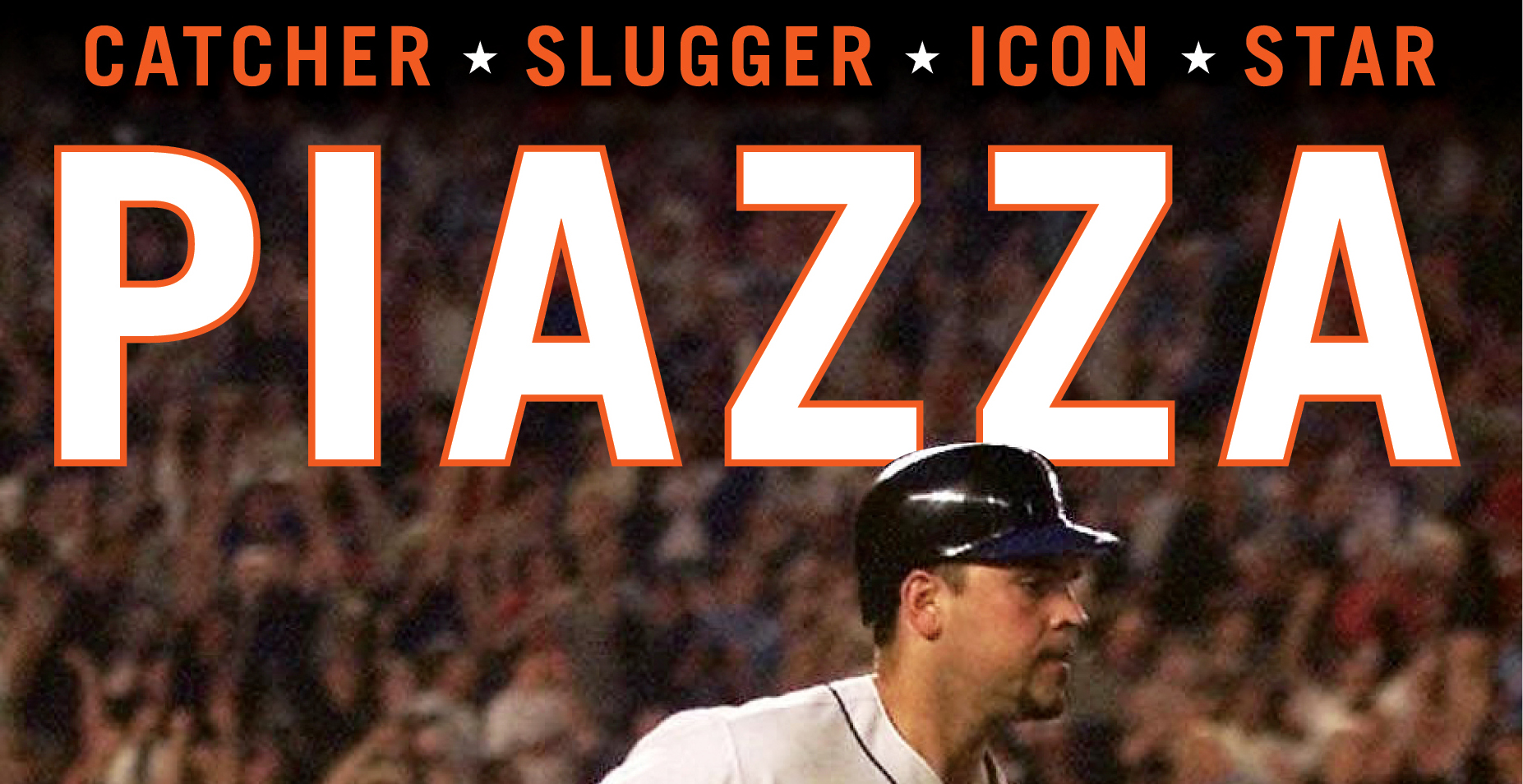
Piazza: Catcher, Slugger, Icon, Star by Greg Prince is available from Amazon, Barnes & Noble and other online booksellers. 
Amazin' Again: How the 2015 New York Mets Brought the Magic Back to Queens by Greg Prince is available from Amazon, Barnes & Noble and other online booksellers. 
Volume I of The Happiest Recap: 50+ Years of the New York Mets As Told in 500+ Amazin' Wins by Greg Prince is available in print and for Kindle on Amazon. 
Faith and Fear in Flushing: An Intense Personal History by Greg Prince (foreword by Jason Fry), is available from Amazon, Barnes & Noble and other online booksellers. |
|
Copyright © 2026 Faith and Fear in Flushing - All Rights Reserved |
||