The blog for Mets fans
who like to read
ABOUT US

Faith and Fear in Flushing made its debut on Feb. 16, 2005, the brainchild of two longtime friends and lifelong Met fans.
Greg Prince discovered the Mets when he was 6, during the magical summer of 1969. He is a Long Island-based writer, editor and communications consultant. Contact him here.
Jason Fry is a Brooklyn writer whose first memories include his mom leaping up and down cheering for Rusty Staub. Check out his other writing here.
Got something to say? Leave a comment, or email us at faithandfear@gmail.com. (Sorry, but we have no interest in ads, sponsored content or guest posts.)
Need our RSS feed? It's here.
Visit our Facebook page, or drop by the personal pages for Greg and Jason.
Or follow us on Twitter: Here's Greg, and here's Jason.
|
by Greg Prince on 6 December 2012 12:27 pm Some Sunday at the end of August — with no hurricane in sight and no hurricane having recently hit — is the time to spend an afternoon in my hometown. The birth certificate says different, but I’m a native of Long Beach, Long Island, New York. Got myself born in Brooklyn because my Long Beach-resident parents seemed to revere every doctor they ever knew on Flatbush Avenue, but after a few days, I was bundled up and whisked east. That’s where I’m from in every way that counts.
Long Beach is where I started life, where I crawled for a spell, where I learned to walk, to talk, to root for the Mets and whatever else one does from there. I moved away from Long Beach eventually, never living all that far from it but mostly, for the past two decades, in a state of benign obliviousness to it. No family remained there. It wasn’t on my way to or from anything. It took a good reason to lure me be back. It felt fine on my sporadic returns, but then it felt distant once it was in my rearview mirror. It wasn’t who I’d been for a long time. It was a third-person city: they, them, their.
Yet in my 50th summer, I grew determined to go home again. My nominal excuse was Cablevision’s blackout of Channel 11, which deprived me of the sights of the last National League game ever scheduled between the New York Mets and the Houston Astros — saying it that way lends it an air of importance it doesn’t deserve, but it’s a long season. Granted, even I didn’t consider it all that important, but no weekend goes by when I fully shed myself of awareness of what the Mets are up to (even the crappy August 2012 Mets). Thanks to Cablevision, I had no Mets sights to supplement my observations, but there are always sounds, thanks to the radio. It’s one of those objects you can take with you anywhere.
Mets games, every darn one of ’em, are still broadcast over the same radios we’ve been listening to all our lives. Scattered around my current residence are probably half the radios I’ve ever owned. They’re practically piled in clumps. Some run on batteries. Some you can plug in even though they were manufactured in veritable prehistoric times. I have a radio from, I’m guessing, the 1940s that I last listened to in 2004. It crackled when I turned it on and it took a minute to clear its throat, but it did its job. It gave me the Mets game that day (Mike Cameron made a three-run error that came in crystal clear). Old radios will do that for you. Any radio will.
Thus, the smallest radio I own went in my shirt pocket with me to Long Beach and came out as soon as I found a place to park, which is no easy task on a Sunday like the Sunday I returned home. Sundays in summer bring the outlanders to my hometown. That’s what my dad called them as he mock-fretted over their weekly invasions of our beaches and, consequently, our space every summer. We lived not on the beach but close enough to it so the curb that fronted our house was up for grabs if I didn’t make a point of parking in it on Saturday night. Otherwise, it was the driveway for me, which always seemed like admitting defeat.
My instinct in August brought me to my old house to park. I obviously couldn’t use the driveway. Alas, that space in front was taken by somebody else, maybe whoever lived there now. The whole block was taken. Every spot south of Park Street, the double-wide avenue that divides the beach side from the bay side of town, was taken. Good afternoon Long Beach, I asked rhetorically in my best Arlo Guthrie, don’t you know me? I’m your native son…
The City of Long Beach was unmoved by a native son gone outlander. I was just some schmuck who didn’t live around here but expected to pull in wherever I felt like it. I’d seen people like myself as a matter of course growing up and I resented them. Now I was one of them. I parked on relatively deserted Park and hiked the hike of the deservedly thwarted outlander.
That was OK. The more Long Beach I could ogle by foot, the better. The more Long Beach I could cram into the space of the Mets and Astros, the better, too. The Mets and Astros famously played 16 innings for a pennant in 1986 and notoriously dragged on for 24 innings in 1968. The Mets and Astros had made good theater if not always great baseball in their time together, which happened to start in 1962 — same year as me — and was about to end whenever this game, on August 26, 2012, would. Houston was about to move to the American League. They’d be outlanders as well, soon enough. The Mets and I today were ensconced as Long Beach’s home team.
I crossed Park at Roosevelt Blvd. and paid my respects to the site of Congregation Beth Sholom, which itself was no more. That’s where I was Bar Mitzvahed. I didn’t stick around, raise a family and join the temple. Nor did enough other former Bar Mitzvahs. I already knew the building had been sold a couple of years earlier and the land had been cleared for new housing. I’d been staring at a stadium that no longer existed in Flushing since 2009. This was sort of like that.
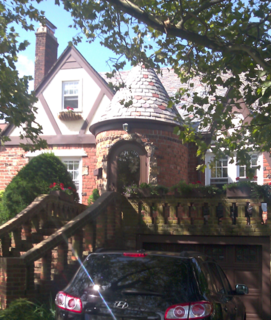
Then it was a few short blocks down to my old block, the one that I’m told is half of my porn name and maybe the answer to one of those devious-behavior prevention questions, so I’d be a certain kind of nut to mention it, but there it was, more or less as I’d left it in 1991 when my father sold our house. Some homes looked exactly as they did when I delivered Newsday to them in the summer of 1977 or sold Passover candy door-to-door, per Beth Sholom Hebrew School fundraising requirements, in the spring of 1974. Others had been noticeably renovated but were as recognizable to me at age 49 as they had been when I was 4 or 9. A couple had been torn down and built back up. The one I grew up in and began to grow stale in when I hung around too long after college was in the recognizable-plus group. It looked like whoever moved in after Dad — and whoever’s moved in since, as I assume it was flipped a couple of times after Long Beach real estate boomed — got whimsical with it. Flowers along the railing. Flowers planted beneath what we called the “sloped room” window on the third floor. Lots of flowers, but not overwhelmingly floral.
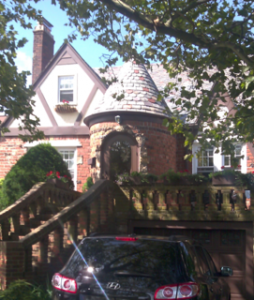 Where I learned to root. The house had morphed into a friendlier English Tudor than the one I knew. I always liked our bricks and what was behind them, but there was an intimidation factor to the place. I don’t think any of us among my parents, my older sister and I really knew what to do with it. Once I finally got my act together and moved out to become something approaching a full-fledged adult, my mom having died not long after, I didn’t blame my father for wanting to sell. It was big and lonely inside, too much house for one man. It’s best not to think what it would have been worth had he held on a little while longer. Sometimes there’s value in getting going while the getting’s good.
I walked west on my block and then turned left at Neptune. After a couple more short blocks, I arrived at the boardwalk. The beach is in Long Beach’s name, but the boardwalk is its identity. I was never a huge beach fan, especially once we got central AC. I always loved the boardwalk, though. Everybody loved the boardwalk, Neptune Blvd. to New York Ave., 14 long blocks in all. The beach attracted the summer swarm of outlanders. The boardwalk was there for the natives 12 months a year. I rode my bike up there rather than sit through a biology regents brushup toward the end of ninth grade. Some would call that cutting class. I’d call it a wise decision. Thirty-four years after barely eking out a passing grade in biology, I remembered the illicit freedom my bike on that boardwalk brought me. I don’t remember a damn thing about the frog I had to cut up and probably wouldn’t even with the extra hour of instruction.
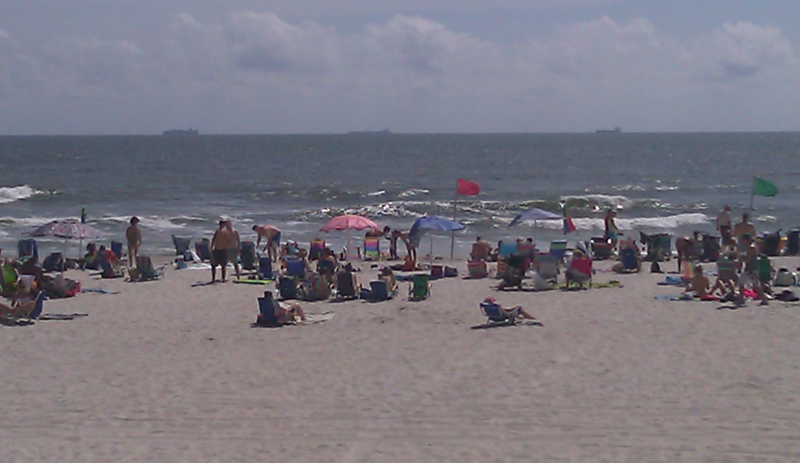
Thick boardwalk crowd this Sunday. It’s hot, it’s bright, it’s probably loud, except I’m still listening to the Mets, leading the Astros, 1-0, on the strength of the home run Ike Davis hit when I was driving through Island Park in the fourth inning. There are people biking and skating and jogging and strolling and generally lollygagging. I amble, at best. What’s the rush? Jeremy Hefner’s shutting down Houston in my earbuds and Long Beach isn’t going anywhere. Now and again, Howie and Josh nab my attention as they try to inject some Mets-Astros lore into the conversation, but I’m at about 20% Mets/80% Long Beach on my amble west. I take a crappy picture now and then to remind myself the boardwalk is eternally fine and the beach…it ain’t so bad, either.
My ostensible destination is an art fair I researched in advance. I stumbled into one a dozen years earlier on a post-Gino’s amble with my high school buddy Larry on a Sunday when I needed a distraction from the Mets. The Mets weren’t playing that afternoon. They were going to play that night, against the Yankees, 24 hours after the unarrested criminal Roger Clemens beaned Mike Piazza. I was fuming all day. Larry called. He was visiting his mother in Long Beach and wanted to know if I wanted to go to Gino’s before he went back to his place in Manhattan. Of course I did. Everybody wants to go to Gino’s if you’re from Long Beach. And I just had to get away from my fume lest it eat me alive in the runup to ESPN permitting resumption of Subway Series hostilities.
In August 2012, I remembered that July 2000 art fair, where I bought a t-shirt and a few old-timey postcards while attempting to take my mind off how much I hated Roger Clemens. The postcards were the key in the here and now. I wanted to find some more for Stephanie, who had recently joined something called Postcrossing, either an affable club or a captivating cult in which members from all over the world send each other postcards, provided they adhere to strict guidelines regarding how many and to whom. Since signing up in spring, Stephanie’s relationship to postcards had become akin to one of those hungry cartoon characters who looks at other cartoon characters but really sees a walking turkey leg, except in my wife’s case, everybody is a postcard waiting to be addressed, stamped and mailed…and we receive more correspondence from the Netherlands than anyone this side of Heineken USA. (The Dutch really love their postcards, I’ve learned.) Finding her some Long Beach postcards became a subsidiary mission of my grand day out.
The art fair emerged around Long Beach Blvd., four blocks west of where the boardwalk began. The bikes and the skates have to quit wheeling around and the ambling and strolling slow to a trudge. It’s gridlock at the art fair. One block or so devoted to carny-like refreshments, then the arts, the crafts, the doodads that don’t seem to fit either description. My ad hoc plan develops: use the rest of the westbound walk to make mental notes of who might have postcards, then stop to browse and potentially buy when I turn around to head east.
Upon my 180, Howie and Josh get my full attention with something unrelated to Mets 1 Astros 0. They’re about to wish all the best to a Mets employee and dear friend who is leaving the team early this season. I wonder if I’ll recognize the name. I do: Shannon Forde, from Mets PR, about as innately a nice person as I’ve ever met. I don’t know her well, but Howie’s cryptic if heartfelt shoutout has me concerned over what’s wrong. The Mets are winning, the boardwalk is bustling and I’m about to find my wife some postcards. Nothing should be wrong.
The “postie” pickings are initially slim. The Long Beach Historical Society, the folks who sold me my hardy “GREETINGS FROM…” shirt in 2000 (still in rotation), continue to sell the vintage look via reproduction — stuff like the LIRR station as it stood in the early 20th century — but they seem cheap, not classic. I buy a couple just to make sure I have something with which to surprise Stephanie, who doesn’t know where I went off to today, just that I was going out because Cablevision had screwed me out of my Mets. I find a shirt for myself at another table. That’s not my goal, but I can’t resist a good tee. This one is purple with the City of Long Beach seal, a logo I can’t say I’d ever pledged allegiance to, but it’s authentic, it’s popularly priced and it will fit.
While I pay for it, I am stunned to find myself in conversation over my brand new baseball cap, a gift from a friend on the other side of the world. It’s blue and at its center is an angry sock. It’s for the Blue Sox — the Sydney Blue Sox of the Australian Baseball League. It’s not stunning that someone would ask, “What cap is that?” It’s stunning that the guy who asked nudged his tablemate to have a gander. That guy’s girlfriend, whom he’s in the midst of texting, is Australian. She’s in Australia right now. He asks if he can take a picture of me. Sure, I say. My head winds up on some Aussie lass’s phone in an instant.
From small world to motherlode: a table selling Long Beach postcards. Beautiful Long Beach postcards, made from photographs taken by the seller, who apparently put together a coffee-table book of the prints. I am suitably impressed by her work: it’s all beach and boardwalk, Long Beach as it likes to be known. There are other things to take pictures of in town, but why would you? Nobody else has this beach or this boardwalk. I take two books of postcards, one for Stephanie to send to Postcrossing members across the globe, one kind of just to have.
My purchasing has been successful. I trudge through the gridlock for another block and, satisfied with myself for having chosen this day to go home again, plant myself on one of the benches that faces the mighty Atlantic. My picture-taking will suck again, but I don’t care. I’m content to watch the mellow waves lap at the wettest sand. Off on the horizon are freighters of some sort. That’s a real ocean out there. Real seafaring’s going on. I have no idea how close their action is to this shoreline. Is it international waters that far out? How could that be, when directly south of Long Beach is more of America?
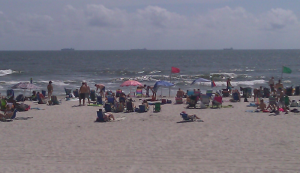 Long Beach: See it like a native. On the beach at my feet are the sun-absorbers and the volleyballers and those who run in circles and those who want to be left alone. They all came to Long Beach today. Some, probably most, are outlanders, sure, but some moved here so they could do this all the time. Some may have come out of the buildings behind me, the ones that border the boardwalk. That sounds like an ideal setup, but the idea never appealed to me fully. Live right here? I thought. Are you kidding? After Irene?
It wasn’t a new thought. In Long Beach, there was always the specter of The Big One and what it might do to anybody who lived too close to that mighty Atlantic. And you didn’t even have to be that close. Now and again you’d hear about Hurricane Donna in 1960 — or was it the hurricane from 1938 from when people-names weren’t applied to savage storms? — when “the bay met the ocean”. That sounds so collegial, like two bodies of water shaking hands after whipping the Axis powers in World War II. In fact, it would be catastrophic. The bay is about a mile from the ocean. You don’t want them to meet. You wouldn’t want to see Park Street if they did.
I abandoned my bench and resumed my amble, about to run out of boardwalk. It was time to go back to my car. The most direct route would be straight up Neptune to Park, but I knew I wouldn’t take it. Had to hang a right onto my old block again. Had to stalk my old house a little more. Had to see if maybe whoever lived there now was hanging out on its porch, maybe puttering in its front yard, maybe even pulling out of its garage. If I had an opening, maybe I could do what a couple of former owners did during my years there and introduce myself.
Hi, I’d say, this may sound strange, but I lived here from the early 1960s to the dawn of the 1990s. I haven’t been inside since May 8, 1991, just two days before my father made the sale official. I came over to retrieve his old office chair that I asked him to save me because the one in my office in Great Neck was falling apart and I didn’t trust the publishing company I worked for to order me a good one. The house was so empty that Wednesday morning, the day after Darryl Strawberry returned to Shea with the Dodgers. He was booed and he was cheered and he was pelted with strawberries and he homered off Viola and he struck out against Franco and the Mets held on to win, 6-5. We needed a Phillips screwdriver to take the chair apart so it would fit in a car, but the house was so empty that all the tools had been packed up and moved out or discarded or maybe went in the tag sale. So my dad and I went around the corner to O’Rourke’s to buy a new one. I hardly ever went in there, but it fills my nostrils just at the thought of the word “hardware”. Then we stopped for breakfast at Belle’s — it wasn’t called Belle’s anymore by then. I think it was called Sandy’s, which was my mother’s name. We had two perfectly good luncheonettes on that block between Roosevelt and Neptune: Belle’s and the Cozy Nook, yet after I was 7 or 8, we never ate in either of those places. It was where we went to buy newspapers or I’d pick up Baseball Digest or season preview magazines or pack after pack of cards every March and April. But we had breakfast that day when I was 28 and Dad was, what by then…62, I guess. We had our eggs and walked back and took apart the chair. I took one last look around throughout the house, but it wasn’t a long last look. I was at a stage in life where looking back seemed passé and looking ahead seemed overdue. Still, it was just weird how empty my room was. It wasn’t my room anymore by then. None of the rooms were ours. They were all in escrow. My room had this shade of carpet. “Popcorn blue,” I once heard my mother, who suffered from delusions of interior decorating, among other delusions, call it. The room was so small once nothing was left in it, hence all I noticed was the carpet. No chance that carpet’s still there 21 years later, I suppose. Across from the doorway to my room was a dent in the wall I hope didn’t cause a problem to whoever moved in next. It was put there by me with a shoe on September 11, 1987. Terry Pendleton hit a home run that night for the Cardinals. I really should’ve brought an old report card or something to prove I lived here so you’re not afraid I’m some crazy person trying to take you hostage or rob you blind. I wouldn’t blame you if you don’t let me in. I’m not even sure why I want to come in. The house looks like my house in my mind. It won’t look anything like it today. Still, I’m here, and the people who lived here before us dropped by unannounced and we let them visit, so it seems like the thing to do. You know, those people remembered something about every room in the house except mine.
Except I didn’t see anybody, so I just kept walking. Turned the corner at Roosevelt and walked up toward Park again. At this stage of my trip, the Mets and Astros regained my attention. Jeremy Hefner had really hung tough all day, clinging to that 1-0 lead Ike gave him in the fourth. It was the ninth and Terry Collins was letting him go for the complete game. He might’ve gotten it, too, except Hefner pitched for the Mets, who had just let Lucas Duda back into the outfield at his pitching staff’s own risk. After Jeremy gave up a single and a stolen base to Jose Altuve, Marwin Gonzalez lined a ball a left fielder might have caught, but Duda couldn’t, and the game was tied. Two relievers, one redemptive throw from Duda and one tight block of home plate by Kelly Shoppach later, Gonzalez was out (because the Astros were the Astros like the Mets were the Mets). Houston’s rally flickered out imminently but the score was tied.
I should’ve been pissed, but I was actually pleased. The Mets and Astros were knotted in the ninth. Clearly the Mets wouldn’t score in their half and this game would go on like the sixth game of the 1986 NLCS or the 1968 marathon in the Astrodome or maybe break all records. It would be perfect, our lousy team versus their dreadful team just going at it inning after mind-numbing inning, never ending their expansion-brethren rivalry. The three of us were now in this together, each of us at or near 50. The Mets and Astros could keep playing ball and I’d keep walking until it was decided. I’d be the living embodiment of what Ellen DeGeneres once said of her grandmother:
“My grandmother started to walk five miles a day when she was seventy years old — she is ninety-seven today, but we don’t know where the hell she is.”
This was gonna be great! But it lasted only as long as it took for me to get across Park, over to Neptune and a couple of short blocks to East School, which is where I attended third grade (we were bused all over town, so it was basically one year and out at any given building, even the one within walking distance of my house). It was there, a few steps shy of the playground where I honed my miserable stickball skills in the late ’70s, that I heard Ike Davis take Wilton Lopez as deep as he had to. Ike hit one of those shortened-fences Citi Field home runs, barely clearing the wall in right. But it counted. The game was over. The Mets had won, 2-1.
I’d be lying if I said I wasn’t disappointed for a minute or two. The sentimental journey had to end now. There was no point to its continuation. I took it only as far as the Mets would let me. Deprived of my imagined 97-inning game, I drifted briefly to the playground gate, where I hoped the granite dolphin we used as a ground rule was still there. If you poked a ball under its tail, you had a single. Line a ball over its snout, you were out. But the playground was being renovated and the gate was locked. No dolphin in sight.
Oh well. At least the Mets won. Jeremy Hefner didn’t, technically, but you couldn’t tell from the interview with Ed Coleman. His daughter, Jaylee, was just born that week and this was a perfect topper for him. Someday pretty soon, I thought, Jaylee Hefner will go to an elementary school like this one, except probably a nicer one since she’s the offspring of a major league baseball player…though there wasn’t a damn thing wrong with East School by my reckoning. East School was where I took a biography of Mel Ott out of the library, which sparked a lifelong fascination with the New York Giants. It was where I submitted for a class project a poster on which I essentially reprinted, in pencil, the 1972 Mets roster (including heights, weights and anything else of which Baseball Digest cared to inform me); it was already hanging on Mrs. Katz’s classroom wall when I stood on a chair to revise it with data pertaining to the newly acquired Willie Mays. East School was where, several years after third grade, I stroked a few singles under the dolphin and whacked a couple of tennis balls that bounced onto the street and into the yard across Neptune for doubles. And many years after that, I listened to my baseball siblings from 1962 finish playing each other for the last time as a matter of course.
East School did all right by me. So had the good old Lido Deli back on Park, where I stopped in to grab a hot dog with sauerkraut and mustard, the kind of youthful indulgence I’d lately avoided but, unlike that dolphin, I’m not made of granite. You don’t go home and not have a little nosh. After making quick work of it, I returned to my car, pulled out, circled back to my old block once more — nope, still nobody at the house — and then drove to the center of town to bring a few slices from Gino’s home with those postcards so Stephanie could share a taste of Long Beach, too. Gino’s, in keeping with the afternoon’s theme, also happened to have opened for business in 1962. Fifty years later, it may have been going stronger than the Mets (59-69), the Astros (40-88) or me (record pending), but the important thing was we were all still going.
***
Some Wednesday at the end of November — in the surprisingly fresh aftermath of an October hurricane so strong that it had to be labeled a “superstorm” just to delineate how much more powerful it was relative to its comparatively weak sisters — is not the time to spend an afternoon in my hometown.
But as of November 28, 2012, it’s the only choice you have.
I would’ve liked to have let Gino’s and the Lido Deli and East School and the boardwalk and my old house linger on as my contemporary sun-kissed images of Long Beach. I would’ve liked my last journey for a while to have remained the sentimental one I took in August. It felt so good that day. I came home with the pizza and the postcards (both of which were big hits), just babbling in that way I have when I’m excited and satisfied with what I’ve been doing. The feeling lasted in a way none of the other trips I’d taken into Long Beach through the ’90s and the ’00s had. This was a time and place of my choosing. I had no obligations on August 26, just the one to myself.
It was different three months later. I was obligated to return. I had to see up close what the superstorm did to my hometown.
The impetus to make me take a look at what I’d been putting off for weeks was, to my surprise, the Mets. A media advisory arrived in my e-mail the Monday after Thanksgiving:
Mets pitcher Jonathon Niese will hand out cleaning supplies, including mops, buckets with wringer pressure, bleach and rubber gloves, work with volunteers and greet residents affected by Hurricane Sandy on Wednesday, November 28 at 12:30 p.m. at the Ice Arena in Long Beach, NY. The Ice Arena is serving as one of FEMA’s donation centers.
It was the Mets doing the right thing or at least the thing that sounds right. They do community-minded stuff frequently, usually in the five boroughs. As a blogger on whatever list they keep, I get media advisories about those, too. They tend to take place in some exotic precinct of Brooklyn or Queens on some weekday morning and I pass. But here they were coming to Long Beach of all places. How could I not go?
Superstorm Sandy, whose name vis-à-vis its spot-on match with my late mother’s seemed like a cosmic jab from the great beyond, had raised Long Beach’s profile in the local media. When I grew up, you never heard about us unless there was a hurricane, and when the hurricanes didn’t turn out to be much, we receded from view. It’s a terrible reason for a town to be in the news — what isn’t, really? — but on some level, Long Beach was almost fortunate that it wasn’t completely ignored. Every day as October became November and LIPA failed to reconnect so much of its catchment area, Stephanie and I watched News 12 Long Island do some version of the same report over and over again. They’d send a reporter to a village or town that was still largely dark and find some poor soul who complained bitterly that they’d been “forgotten”. News 12 never ran out of those towns. So much damage, so many places around here, not nearly enough being done in anything approaching a timely fashion, even if you could understand why, given how much needed to be done and the superstorm’s status as something nobody had ever seen the likes of. Towns I traveled through regularly got it. Towns I’d been to once got it. Towns that loitered in my subconscious got it.
And my hometown was at the head of that pack of misery, except it wasn’t exactly among the totally forgotten, because Long Beach was Nassau County’s first defense against storm surges. It was, as we learned in seventh grade, a barrier beach island. It would have to be covered during a storm and it would have to be covered right after. It probably didn’t hurt that it made for great optics. It had a boardwalk that looked good on TV in a storm. No, Long Beach wasn’t, at the extended moment when the news was nothing but Sandy, the forgotten city of the South Shore of Long Island.
But that didn’t mean it was getting anywhere sooner than Island Park or Oceanside or Baldwin or East Rockaway or you name where. Everything’s been a mess in these parts since Sandy hit. Some messes were smaller than others. My mess was basically nothing. One day and change without lights, then they were on again. We threw out some food. Trees and signs fell around us but not on us. We were good to go. My sister and her husband, who live in the same unincorporated village as us but closer to water, were not so lucky. They rode out the storm with us only to go home the next morning and discover flooding they never dreamed of and electricity that didn’t function for nearly two weeks. And they don’t live that close to water. They experienced severe damage…and it wasn’t quite on a par with what their neighbors absorbed…and what their neighbors got hit with wasn’t close to as bad as it was a few blocks over. And when we dared venture a little farther south, we saw it got even worse, whether it was from branches or water or wind or wires or fire or you name it.
The day I took the Mets up on their invitation to watch Jon Niese hand out buckets with wringer pressure, I saw the worst yet. I saw Long Beach.
Usually I dread any kind of lengthy drive, even 10 or 15 minutes, because I dread driving in general. Stephanie, who joined me as my photographer, has to calm me down, tell me I’m doing fine as other cars pass me. But the dread this time came from what Oceanside looked like and then what Island Park looked like. A month had passed since Sandy but you wouldn’t have known it wasn’t days. You strained to understand that a storm talked up as unprecedented in strength would require an indefinite recovery period, but still. Lights were working again but it still felt like the heart of darkness in broad daylight.
And that was just Oceanside and Island Park. I took a deep breath, crossed the bridge into Long Beach, turned right onto Park and…
Didja ever see Red Dawn? The original one? That scene where Patrick Swayze and his Wolverines come down from their hiding spot in the mountains to seek supplies in town? Everything looks the same from the beginning of the movie, from before the godless communists moved in, but you and the Wolverines know something has gone terribly awry in the interim.
That was Long Beach as I turned onto Park. It was still standing, but it wasn’t the same. It had been through nature’s version of hell. You could’ve missed News 12 for the last month and you would’ve inferred that much in about five seconds. Some stores were open. Some weren’t. Some were boarded up. Traffic wasn’t jammed but it was slow. An inordinate number of pickup trucks dotted Park. License plates from Georgia and Michigan and not New York. These were the contractors who either came out of humanitarian impulse or because this was where the work was going to be for quite a while. A light coating of sand speckled Park Street here and there. Park Street is, within the parameters of Long Beach geography, nowhere near the beach. But the beach found its way to Park Street during the storm and wasn’t easily swept away. The bay had indeed met the ocean.
Stephanie asked me a question about some building or another, and I immediately explained what we have here in Long Beach. Not had, but “have”; not they, but “we”. I hadn’t lived here since 1990, but today I wasn’t the outlander any longer. I was the native son in full, even if my skin in the game was nothing more than the spiritual kind. I was in Long Beach when Long Beach was in no shape to greet visitors who didn’t have a good reason to drop by. First-person plural came out to play so fast that it made my head spin.
Niese and the Mets and the buckets were at the ice rink. I knew the ice rink from the inside out, literally. I was a Long Beach Recreation Pee Wee League tee-ball player when they were building the rink. When my team, the Aces, was at bat, our best player would take me into the shell of the rink construction site and have a catch with me. The idea was to turn me into a better fielder. I never got much beyond the Lucas Duda level, but it was a solid team-captain kind of thing to do on his part (when I next encountered him, in junior high, I’m pretty sure he was calling me a “faggot” and demanding my lunch money). The rink went up adjacent to the Rec League fields. Once it was completed, the Rangers practiced there until they decided Long Island was best left for the Islanders. We took a field trip there in sixth grade. It was just a few blocks from Lindell School. The Rangers staged a fight for our amusement.
The Mets sent directions to the ice rink, which I didn’t need, yet once we parked, I didn’t know exactly where the Mets were. At first glance, they’d been swallowed up by need. Thirty days after the storm, the ice rink was still doing a massive business as a relief center. You walked in and there was a table for FEMA, another table for New York State Employment, other tables for other things I didn’t quite catch before somebody asked us what we needed help with. I mumbled something about being media, here for the Mets, which all at once sounded more superfluous than I’d initially suspected.
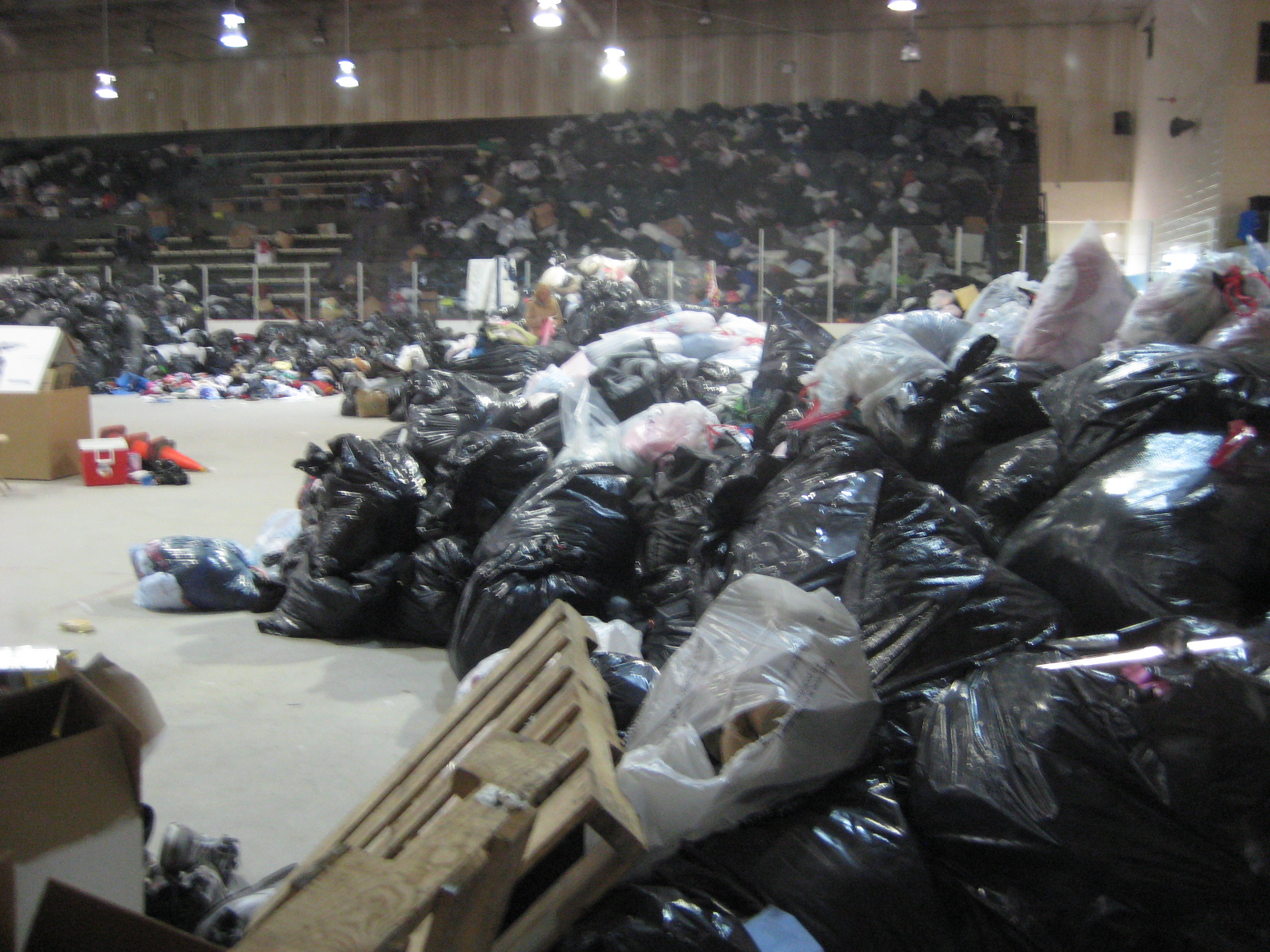
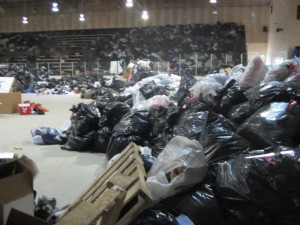 Good intentions line the bleachers. The guy directed us to an unobtrusive corner of the rink’s lobby. In better times, it was where you’d rent your skates (which I never knew how to lace…or stand in) or buy your fries. It had been transformed into what looked like a permanent rummage sale, except everything being offered was free because everybody who came in needed something. They didn’t need clothes in nearly the proportion they were donated — tons of Hefty bags of clothes lined the rink’s bleachers as if they were unpaid extras in a hockey movie — but people were going through the racks. They definitely needed the kinds of cleaning supplies the Mets came bearing as gifts. House after house had been flooded. Basement after basement had been ruined. It was all water and mildew. The streets that weren’t coated in sand felt like they could use a good wringing.
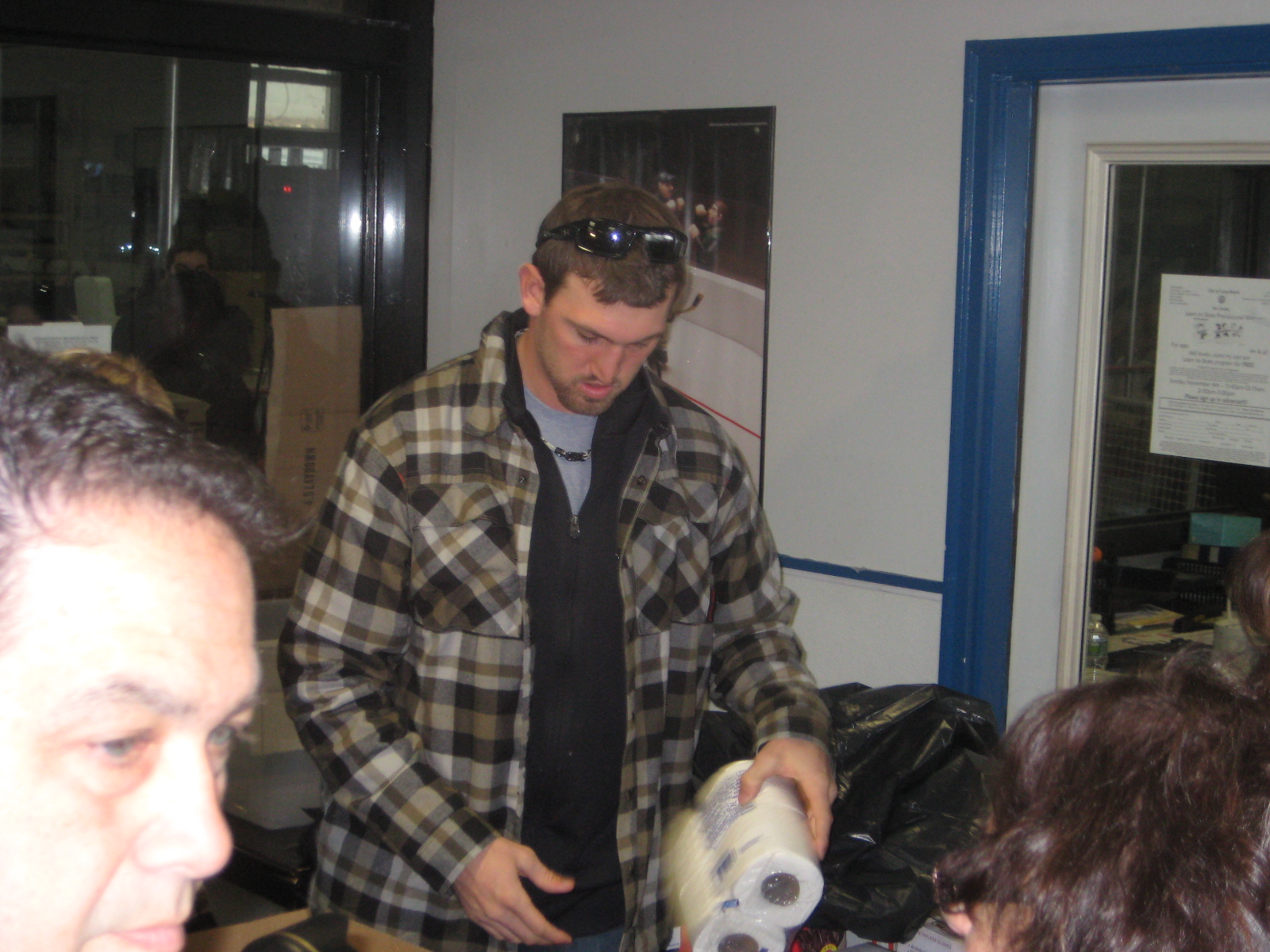
The Mets brought the right stuff with them, for sure. Jon Niese and his fiancée, Leah Eckman, stood behind a card table and sheepishly dispensed the goods, trying not to create too much fuss or obstacle amid the recovery efforts that buzzed relentlessly around them. Jon, despite his 13 wins, wasn’t much of a celebrity in here. He was asked for a pair of autographs and to pose for a single picture. Otherwise he was the guy handing out paper towels by the case, which I’m pretty sure he preferred to budding star lefty. I heard one random “Let’s Go Mets!” emanate from the milling crowd, but I heard “more paper towels!” called out in a louder voice. If there weren’t a half-dozen camera crews recording their participation — let alone the presence of four Mets beat reporters I recognized in proximity to the hardest-working man in public relations, Jay Horwitz — you wouldn’t have distinguished plaid-clad Jon and Leah from anybody else. They were helping people who needed help, but so were dozens of volunteers who will never pitch in the big leagues.
When Jon Niese, practically anonymous cleaning-supply distributor, passed over the paper towels to a Long Beacher who needed them more than he needed an autograph or a strikeout, the recipient shook the pitcher’s hand and told him, “Good man.”
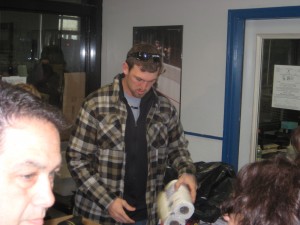 Jon, helping out in the background. All of Niese’s outings should be so effective.
The Mets left behind their largesse and announced we were taking this show on the road, one block east and a couple of short blocks south to a church. To get there, we exited through the back of the rink and down an alleyway I hadn’t spent quality time along since July of 1971. I had just been assigned to the Aces and told our manager I was a third baseman. I’m not sure where I got that idea, but he stuck me at third. A ball came my way…and out into the alley it went, amid the light industry that was transpiring during our game. I chased the ball while the batter (this was tee-ball, mind you) circled the bases. I had turned a grounder into an unearned run, probably four unearned runs, and myself from a starting third baseman into that lowest form of Pee Wee League life, a sub…a substitute catcher who played every other day…in tee ball, where catching carries with it rather limited responsibilities.
It all came back to me in a block’s walk, but it didn’t bother me. It wasn’t even a disappointment to notice my Elysian Fields had now been converted into a series of soccer pitches. Just as the temple where I was Bar Mitzvahed was no longer a demographic staple of Long Beach, I took it that there wasn’t enough interest among the kids of our city today to maintain municipal baseball facilities.
You know why it didn’t bother me? Because a frigging hurricane hit town a month earlier and people had to keep coming to a relief center and be grateful that there was plenty of bleach to go around. Because as much as I assumed “our Katrina” was politicians’ hyperbole in the immediate aftermath of Sandy (we didn’t have citizens stranded on roofs, I reasoned), when I looked around the ice rink — where the people of my hometown had to pick through donations as part of an endless process of getting their storm-battered lives back together — I had one thought: this might as well be Katrina.
The Mets’ subpar performance at baseball didn’t bother me at this moment. My subpar performance at baseball didn’t bother me at this moment. I think the last time I was this mature about not letting baseball bother me was the week that followed 9/11.
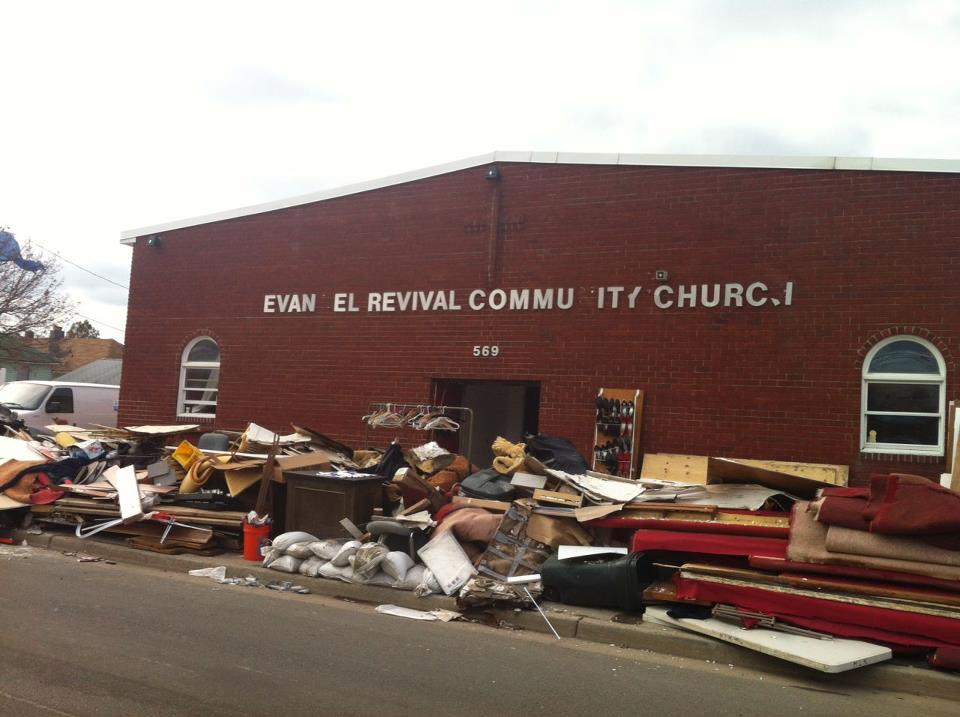
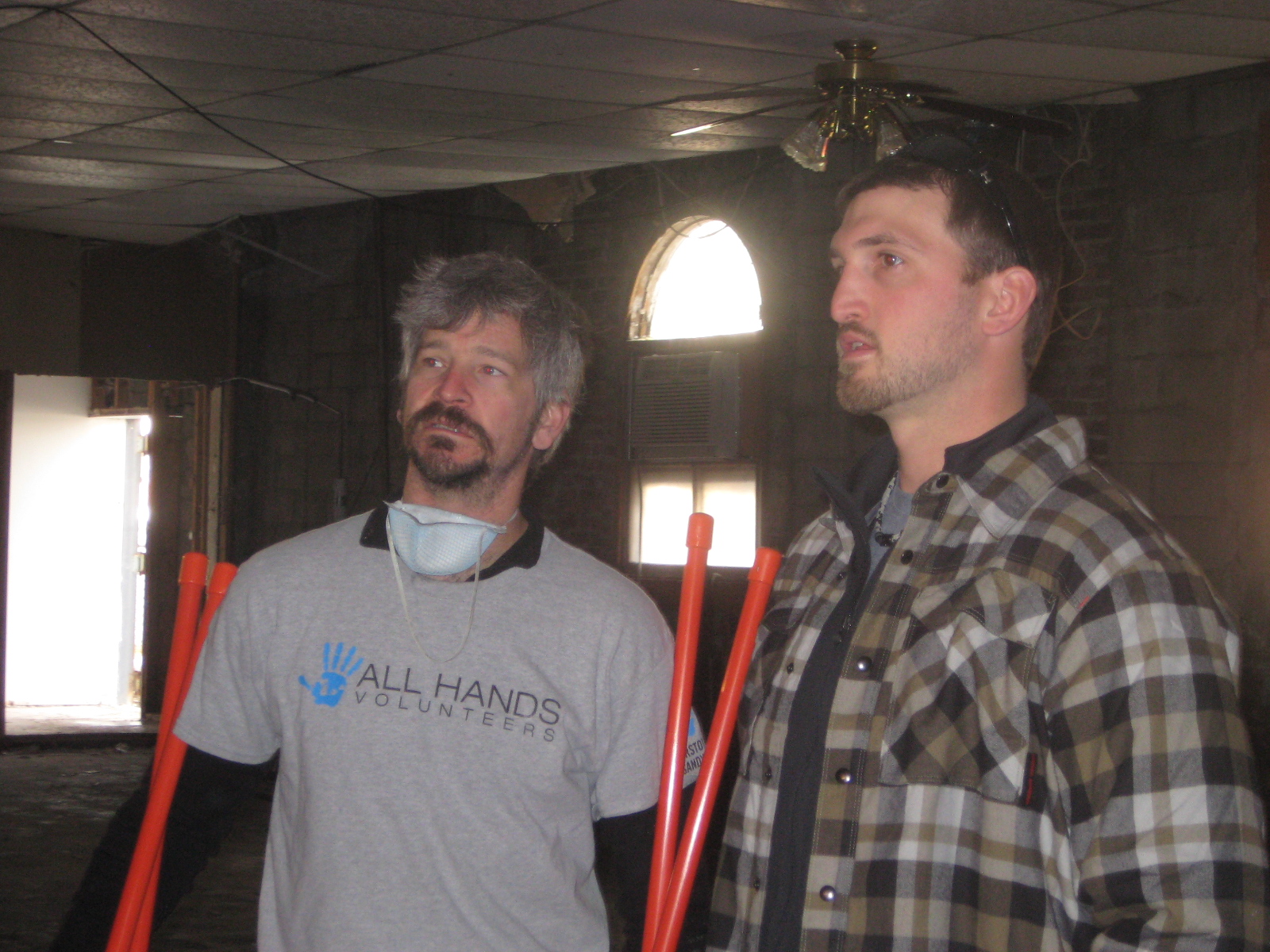
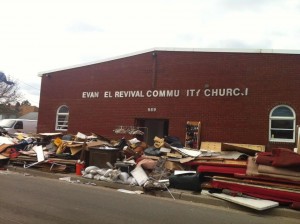 Letters weren’t all that went missing. The church was the Evangel Revival Community Church, which I puzzled out despite a few letters missing from its exterior signage. That wasn’t all that was missing. The inside had been gutted, the whole place was dark and a crew of Good Samaritans known as All Hands Volunteers were rescuing it from oblivion. I wished I had thought to bring the surgical masks we wore when we helped clear out my sister’s crawl space. Everybody working was wearing them and with good reason. I’m not sure what shape the church was in before Sandy. All Hands wanted to make it better than ever. They had a long way to go. The Mets rolled in more supplies and Niese offered some handshakes to men and women I’m convinced had little idea who he was but seemed to appreciate it anyway. “I wish I could stay and help,” Jon told the on-site coordinator. I believed he did, too.
There was a brief media availability outside the church. The beat reporters asked one question about the day and then moved on to the Mets’ ongoing negotiations with David Wright and R.A. Dickey. Niese said he was all for them coming back, or words to that effect. Honestly, who cared? We were in the middle of Long Beach, so stubbornly damp that paper toweling was an extraordinarily valued commodity. Wright would get his money. Dickey would get his money. Jon and Leah would attend “Murphy’s wedding” over the weekend and find a nice place to live near Jon’s work after they got hitched in January and started the season in April (Leah mentioned to Stephanie and me some personal anxiety given that she and Jon are really small-town types…and she didn’t seem comforted by my suggestion that hurricane-ravaged Long Island is filled with otherwise nice small towns not terribly far from Citi Field). I was, technically, the only Mets fan covering this Mets event, yet I didn’t care what the Mets’ Niese had to say about being ready for Spring Training.
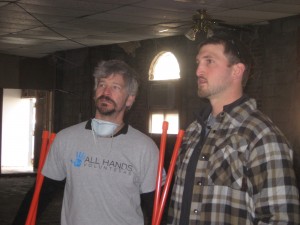 Niese seems to prefer pitching in to talking pitching. That was only baseball. This was my hometown.
I got the last question of the day in, something about what it means to be a ballplayer at a time like this when maybe you can make the slightest difference in the outlook of people who are having an awful time just by showing up and being a ballplayer. Niese is no Dickey when it comes to filling notebooks, but I thought his answer was a decent one:
“It means a lot. Coming from a small town in Ohio, you appreciate what you have. Especially when a disaster like this happens, it kind of makes everybody step back and makes them appreciate what they have, and how valuable and important their lives are and their valuables are. It’s just great to be here to help support them in a troubled time. I’m just glad to be here.”
R.A. would have had a more apt set of words, but nobody was keeping score on vocabulary and usage. I got what he meant. Good on him for doing this.
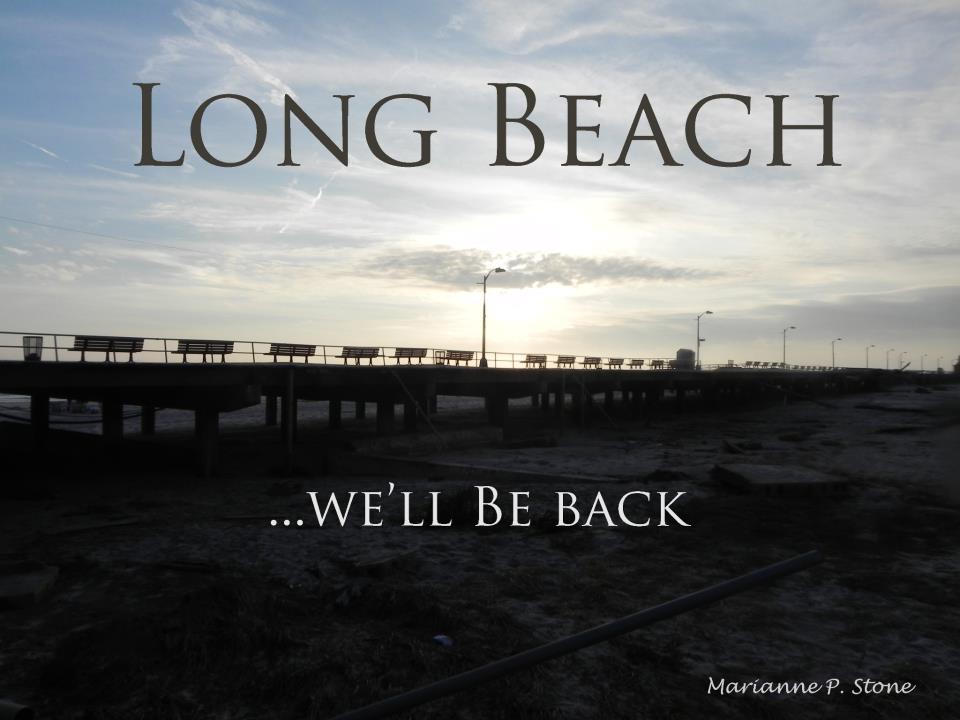
I thanked Jon and Leah for their time and Jay — who told me Shannon Forde was doing “great” on the eve of her fundraising dinner, which I sincerely hoped he meant — for extending us the courtesy of the invite. Stephanie and I then walked back to our car by the rink. We got in and drove around some, observing more evidence of why everybody needed those cleaning supplies. Wreckage was still piled up on curbs: lifetime of memories after lifetime of memories — and major electrical appliances — that couldn’t sustain Sandy’s surge. Automobiles not used since at least October 29 awaited rescue. Contractor signs had been pounded into lawns. My old house had apparently needed a new boiler but didn’t look worse for wear from the outside; its signature tree hadn’t budged. The boardwalk’s 14 blocks were no longer contiguous. The entrance on Lincoln Blvd., for example, had been absolutely crushed. There were no dunes under what was left of the boardwalk to block your view of the ocean…or the ocean itself. That sand had not stood still during Sandy. We didn’t inspect every nook and cranny of Long Beach, but we saw plenty. We saw enough.
Others would need a stiff drink after seeing what their hometown was enduring and scuffling back from. Me, I turned to a bowl of kreplach soup at the blessedly open Lido Deli and half of a daunting sandwich that I ordered without fully digesting its details when I picked it off the menu. My mind was back at the rink, at the church, strewn all over Park Street, splintered all over the boardwalk. I asked that the uneaten half be wrapped up so I could take it home.
Home to where I live now, that is. The self-appointed native son had to get going.
by Greg Prince on 4 December 2012 6:07 am “Sandy, everybody’s on. Go ahead.”
“Thanks Paul. Devil, you there?”
“Here, Sandy.”
“Great. Angel?”
“Here.”
“Good. Thanks for coming on the call, guys. As Paul told you, we’re exploring all our options where R.A. Dickey is concerned, and as part of our due diligence, we want to get your input. I think the best way to go about it is to give you each a chance to weigh in and we’ll follow up as necessary. Everybody good with that?”
“Sounds good, Sandy.”
“Yeah, no problem.”
“OK, Devil, I know you have to get back to a meeting with Scott Boras soon, so why don’t you start?”
“Sure, Sandy. You totally have to trade R.A. Dickey. Trade him right now. Trade him before the Cy Young Award ever sees the inside of Citi Field. Don’t let a single one of your fans enjoy the afterglow of his historic season. Get him out of here at once!”
“Thanks, Devil. Angel?”
“Sandy, you can’t trade R.A. Dickey. You just can’t.”
“All right, thanks Angel. If you guys wouldn’t mind, Paul and I would like to hear a little more of your respective cases. Angel, we’ll start with you this time.”
“Sure, Sandy. R.A. Dickey was your best player last year and has been your most consistent pitcher for three years. Furthermore, he’s your most popular player. Never mind that tired line about ‘face of the franchise’. R.A.’s the Met who goes to everybody’s heads and hearts immediately. There’s nobody like him in the big leagues, he’s under team control for 2013, his age is practically irrelevant given his knuckleball and you can probably sign him to a very reasonable deal for a couple more years.”
“Those are interesting points, Angel. Now I’d like to hear a little more from you, Devil.”
“Well, Sandy, you’ve finished fourth every year you’ve had R.A. Dickey and, based on the track record, I’d say you can finish fourth without him. But your goal isn’t to finish fourth, is it? He’s never going to be better than he was last year. He can’t be. Knuckleball or not, he’s 38. If you can get other teams to be confident he can keep up his level of performance, then you should be able to turn him into a package of prospects for when you’re ready to contend.”
“Those are good points, too, Devil. Based on your assessment of our organization, when do you project us as contenders?”
“Oh, never. Remember, I’m the Devil. I see nothing but pain and suffering for you and your fans. But it’s my nature to want you to believe that whatever good thing you have right now can’t possibly be as good as what you might attain via trade or other acquisition. So go ahead, trade your best and most beloved player and get some minor leaguers. I’m sure Paul has glowing reports on all of them.”
“That’s true, Sandy. There are some pretty good deals on the table right now.”
“Yeah, thanks Paul. But I want to hear from Angel why we shouldn’t seriously consider one of those deals.”
“Look all you want, but do so knowing that trading R.A. is telling your fans that 2013 doesn’t matter and that you’re kicking the can down the road for yet another season. How are you asking people to pay $63 for a Promenade ticket for Opening Day…”
“I just want to interject, Angel, that that’s not our department.”
“Nevertheless, Paul, your business operations side isn’t promising that subtracting your best player will mean lower prices. And who’s to say R.A. can’t be part of a much-improved team right away? The outfield is uncertain, sure, and you have, at most, half a catching platoon, but your infield is pretty solid and only going to get better. Hairston’s still out there. Harvey’s coming along fast and before you know it, Wheeler will be ready.”
“See?”
“See what, Devil?”
“Wheeler, Sandy. You wouldn’t have Zack Wheeler if you just clung to your stars.”
“Excuse me, Sandy, but I have to interject.”
“Go ahead, Angel.”
“All due respect to my colleague on the other line, but the Devil is comparing apples to oranges on this one. Carlos Beltran was a great Met and a fan favorite…”
“Fan favorite? Ever listen to the FAN between 2005 and 2011?”
“Granted, he wasn’t universally loved, but Beltran was a terrific player…”
“Terrific at taking strike three.”
“It was one pitch! Gimme a break with that already, Devil!”
“Fellas, we’re getting off track here. I think we can agree that not all trades of stars for prospects are the same. But Angel, I have to ask if you really think we’ll suffer in the short term if we were to trade R.A.”
“I’m all about avoiding suffering, yet let’s face it, for all my prospective optimism — the Marlins are in the tank, the Phillies are falling apart and there is that second wild card — your team hasn’t proven itself truly viable for next season. Thus, by trading R.A. Dickey, you’d be sacrificing the only true enjoyment Mets fans have, both from a pitching standpoint and a branding standpoint.”
“Ooh, fourth-place Mets with a chance to win every fifth day! That’s quite a brand you’re advocating there, Angel.”
“Yet all you want to promise is tomorrow, tomorrow, tomorrow, Devil.”
“Hey, it has to get better in Flushing, right? I mean it can’t get a whole lot worse than it’s been. Nobody showed up in 2012, whatever the ticket prices. Sure, everybody loves Dickey in the abstract, but go check on the attendance figures. They weren’t exactly selling out his starts, not even for his 20th win. Pitching for the lousy Mets in September brings the same gate most nights whether your starter’s name is R.A. Dickey or Jeremy Hefner.”
“Dickey gives Mets fans pride. A sense of purpose. A role model. Those things are important.”
“Wins are what’s important. Dickey had 20 and the team had 74. He had the season of his life but the needle didn’t budge at all for the team.”
“You’re gonna blame R.A. for that?”
“It’s not a matter of blame, Angel, and it’s not always a question of what’s moral or feels right. It’s a matter of using what you’ve got to generate hope for the future. We all know that no matter what Tejada or Ike do next year that this isn’t a contender in 2013. Why kid yourself that it is? Get a couple of outfielders. Get somebody to replace Thole sooner than later. Find more relievers, ’cause you know the current infatuation with Parnell and Edgin and Carson will only lead to heartache.”
“How can you be so sure?”
“I’m the Devil. I know.”
“Devil, Angel, this has been a most constructive dialogue, and Paul and I appreciate you letting us avail ourselves of your consulting services.”
“Anytime, Sandy. Happy to help.”
“Thanks Angel.”
“No problem, Sandy. Say, is that 1-800-Flowers gift certificate still good?”
“Like Paul said, Devil, not our department. But we’ll get back to you.”
by Jason Fry on 30 November 2012 4:08 pm The Germans have their specialties: awesome board games, unhealthy food that repeats on you, whistle-worthy luxury cars, the occasional bid to cover the world in darkness.
They’re also known for long, really useful compound words describing hard-to-summarize emotional states.
The most famous one of these is Schadenfreude, best translated into English as HA HA THE YANKEES LOST. I’ve always thought the Germans should engineer more of these. An ideal candidate would be one that captures that bizarre feeling of euphoria you get when things work in the uneventful way they’re supposed to but rarely do.
Don’t know what I mean? Try one of these:
Wow, I went to the DMV and I had all the paperwork I needed and someone help make sure I’d done the forms right and nobody closed their line for a two-hour lunch. I am filled with [LONG GERMAN WORD]!
Gosh, there were no wrecks on the way to the airport, nothing beeped in my pocket at security, the plane was on time, I was in 41B and they didn’t run out of pretzels, the bags arrived undamaged and unpilfered by TSA thieves, and the hotel room was ready when we checked in. Pure [LONG GERMAN WORD], baby!
Or this:
The Mets’ franchise player, a decent young man who grew up a fan and doesn’t want to play anywhere else, had his contract up for renewal … and the Mets re-signed him.
Long German words all around.
It’s good news, make no mistake about it. It strikes me a reasonable deal — enough to keep Wright mega-rich without becoming some guaranteed A-Rod/Pujols millstone all too soon. (Says the guy who’s neither writing nor cashing the checks.) It keeps the one player casual fans associate with the Mets in the right uniform for a baseball generation, which is not a small thing. It promises eight years of cheering for a player who’s been somewhere between a star and a superstar stats-wise while being a Hall of Famer with fans, the media and the city. David Wright is both very good at baseball and, from everything we can tell, very good at being an admirable human being.
Sure, even if things go perfectly, somewhere around 2017 or 2018 you’ll be holographically interacting with Faith and Fear experiential narratives crabbing about Wright being creaky or needing to move over to first or how Citi Field’s dimensions have never quite suited him. But that’s the nature of long contracts, and why ideally they’re handed out to very few players, with non-quantitative arguments attached that require careful scrutiny. Wright is, in my mind, such a player — much as I loved him and still mourn his residence in Miami and now Toronto, Jose Reyes was a bit shy of that.
But still — this is less great news than it is the absence of horrible news. Trading Wright or letting him walk would have been an admission that the Mets were finally and completely moribund, reduced to trying to fill Citi Field by touting that mass suicides had freed up plenty of good seats for indifferent tourists. The team still has iffy prospects of competing, a dark cloud of near- and medium-term financial peril, owners who can’t be trusted to tell the truth about anything, and no help coming from a useless commissioner whose sense of responsibility extends no farther than his clubhouse of cronies. Let’s not overindulge at the parade.
Instead, let’s move on to Item B. The Mets employ a marvelous pitcher who just won 20 games and a Cy Young award. He’s a thoughtful, intriguing interview and, from everything we can tell, a decent human being. He’s loyal to a club that gave him his last shot, likes New York and wants to stick around. He throws a knuckleball, which ought to mean that he has a lot more years in his arm than being born in 1974 would indicate. His contract is up for renewal at the end of 2013.
It’s fairly obvious the Mets ought to re-sign a pitcher like that, right? If they didn’t, wouldn’t you wonder what on earth was wrong with the franchise and be very upset about what it might mean?
Here’s hoping for more long German words.
Sirius/XM subscribers: Listen tonight to Mad Dog Radio at 9 pm as Greg joins Dino Costa to discuss The Happiest Recap and other Met matters.
If you’re on the Upper West Side Sunday night, drop by the 92nd St Y at 7:30 pm for a conversation with WFAN stalwart Steve Somers, hosted by NY1 stalwart Budd Mishkin. Details here.
by Greg Prince on 30 November 2012 9:57 am Prince (no relation) once referred to an electric word, life — “it means forever, and that’s a mighty long time,” he said. True enough. In my nearly half-century life, just the last fifth of it, I’ve seen four-year (Bay) and six-year (Santana) and seven-year (Beltran and, come to think of it, Piazza) deals all careen toward their conclusion looking undeniably too long for anyone’s comfort, including the superstars on their respective receiving ends. Life goes on and, with it, uncertainty gathers. You start out thinking one thing, yet through the magic of ever-changing circumstances, you wind up thinking all sorts of things, not that many of them necessarily good.
But today, with definitive word that David Wright has agreed to a mighty long and mighty lucrative contract extension that projects to enshrine him as that rarest of breeds, a Met for life, it’s all good.
The Mets haven’t gotten better by maintaining Wright’s services at third base and within the middle of their lineup through 2020 for a total of approximately $138 million over the next eight seasons, but they’ve kept from tumbling ever further into their bottomless abyss, and that, brothers and sisters, is a victory unto itself. In a world in which musts must be doled out judiciously, this was something that just about had to be done.
I’ve been constructing rationalizations in my head for two years in case things went the other way, seeking the Wright-expunging deal that would have made sense in the long term and limited the post-apocalyptic damage in the short term. We could’ve moved Murph to third and imported a package of young stud outfielders and another big-time arm to grow alongside Harvey’s and Wheeler’s…but it never went anywhere, even in my theories. Because you couldn’t, at this stage of his career or this franchise’s development, separate David Wright from the New York Mets.
We needed a Met for life. We needed this Met for life. We need something to count on, something to rely on, somebody to believe in. We need to wake up day after day knowing one-ninth of what we’re about in practice and a whole lot more in spirit is solid. We needed David Wright to stay a Met, to keep being the first Met we think of when we think of our Mets, to be the Met who didn’t go away, who wasn’t sent away, who stayed and stayed until we can say he stayed his entire career.
We need a whole lot more than that, too, but one miracle at a time. A franchise that couldn’t have retained David Wright was the last franchise we could have trusted to have gathered the pieces to build a team after David Wright left. Franchises are in business, from their fans’ perspective, to win ballgames and compete for championships. The Mets haven’t done enough of either in the current era. The next level of their obligation is to give us somebody to root for. Not re-signing David Wright would have been the opposite. They would have been taking away somebody we rooted for — the Met we’ve rooted for longer than anybody still here, the Met we’ve rooted hardest for among all current Mets, someone who’s never given us cause to regret getting behind him.
Sans David Wright, the Mets would’ve been a four-letter word with a fancy plot of land. With him, at the very least, they are something approximating real. They are still very much capable of meandering in mediocrity in 2013 and 2014, but they didn’t challenge oblivion to another arm-wrestling match, at least. They will feature the same best player they’ve promoted since 2004, the same best player who has all too often personally prevented them from taking up permanent residence in the abyss. It’s been bad. It could have gotten a whole lot worse.
There’s more to do. There’s always more to do. But this has been taken care of. David Wright’s as Met for life as one can be a few week shy of thirty years old. Sometime between the celebratory sigh of relief that this news elicits and the final tip of his cap we all envision when this contract expires, not a few of us will mutter about this deal’s length and the burden it represents against the Mets’ ability to make other vital deals. That’s how these things go. But let’s not pretend we can control those circumstances. Let’s not pretend we know the details of the future, either. We can’t say for certain that the veteran Wright will be rewarded for his steadfast Metness by eventual success or whether we’ll all wonder what his career would have been like had he left Flushing for more competitive pastures that never blossomed around him in New York.
We don’t know. But we do know David, and we do like David, and we do have David. It’s a lot of money and it’s a lot of years, but it’s a lot of win.
Go crazy, Mets — punch a higher floor.
Sirius/XM subscribers: Listen tonight to Mad Dog Radio, 9 PM, as I join Dino Costa to discuss The Happiest Recap and other Met matters.
by Greg Prince on 28 November 2012 10:46 am I don’t see much point in getting hackles raised over what’s said while a lucrative contract extension is up for grabs, because negotiations are an ends to a means, and the means are what’s meaningful in the end. Thus, when David Wright’s future as a Met went from glide path to word jumble in a matter of hours Tuesday, I shrugged it off as the fog of money, the kind of money none of us will ever see (unless we had Marvin Miller advocating on behalf of our profession at some point in our lives).
Mets reportedly make big offer! Mets reportedly make bigger offer! Wright calls reports inaccurate! When Adam Rubin’s telling me white smoke is emerging from the Acela Club one way or the other, then I’ll take it deathly seriously. Until then, it’s all numbers and rumors and November. It’s not news.
But I did like this on-the-record comment from David himself, cited in an e-mail requested to “clarify” matters, as relayed by mlb.com’s Anthony DiComo:
“It was important to me from the very beginning that these negotiations remain confidential and private. I plan on sticking to that.”
Loud leaks may be a fun way to kill time between the last pitch of the World Series and the first catch of Spring Training, but the Wright way strikes me as the right way to conduct these things. Why am I not surprised that’s David’s process?
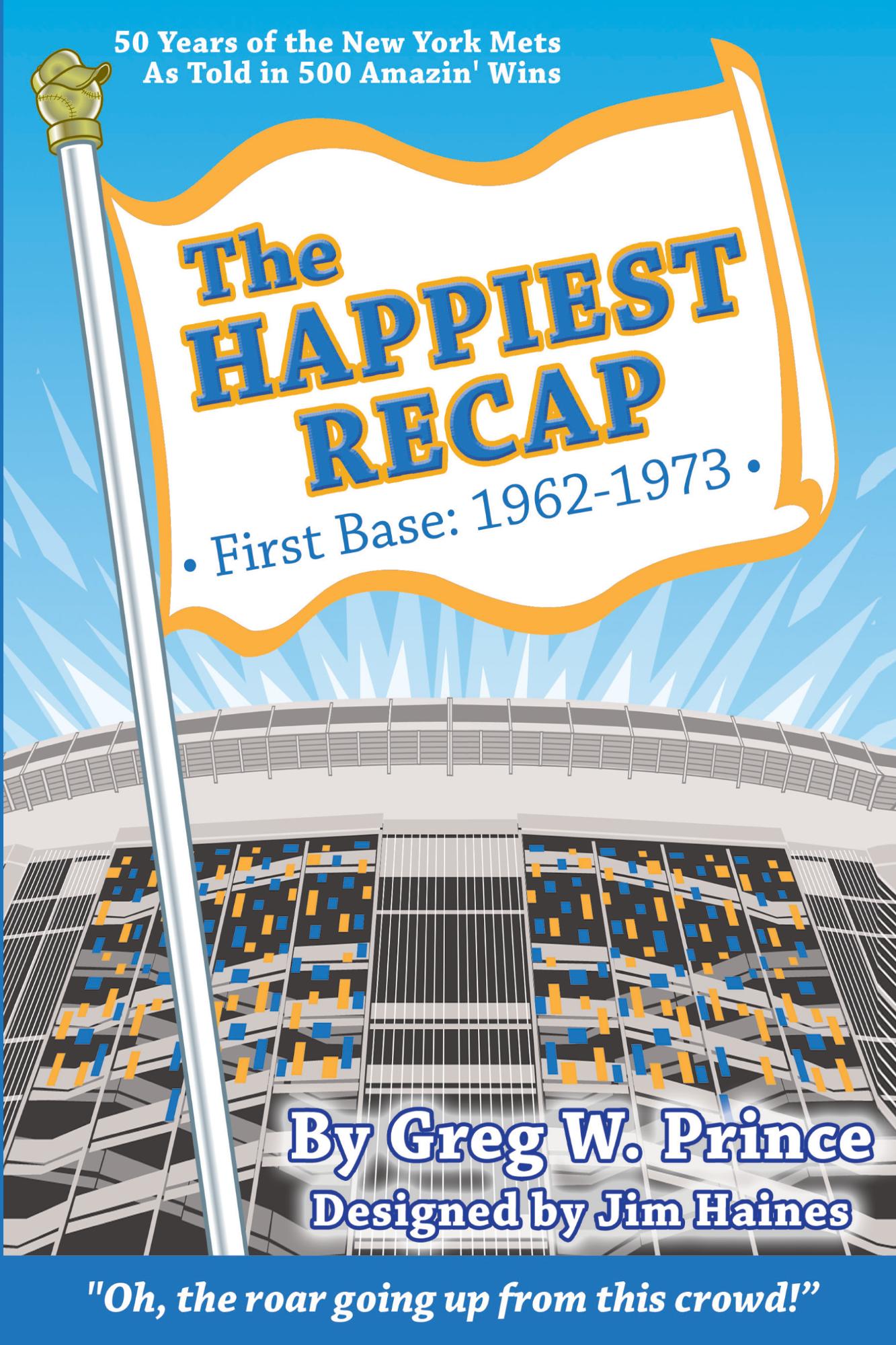
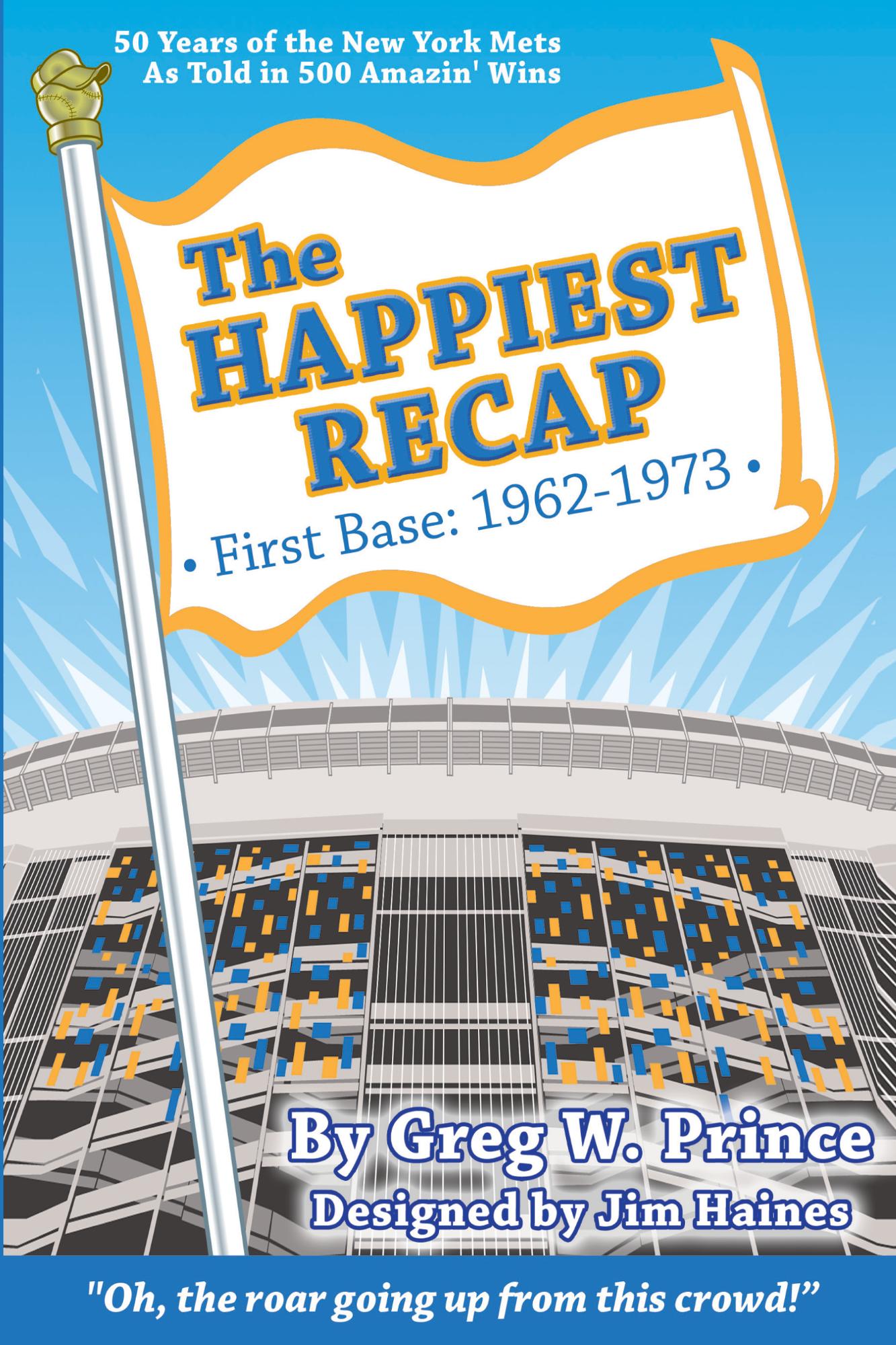
by Greg Prince on 26 November 2012 6:25 pm Doing a little holiday shopping for the Mets fan in your life? For yourself? Happiness is only one click away when it leads you to The Happiest Recap (First Base: 1962-1973). It’s the Mets as they keep getting better, and even when they don’t, they always win.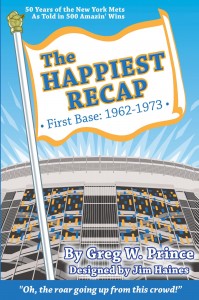
And the book’s not even fiction!
A few Happiest notes to pass on besides, once you calm down from the euphoria attached to the Brandon Hicks deal:
• Kindle version coming soon — but the print edition, available right now, surely belongs in your baseball library.
• Appreciation to Amazin’ Avenue, 2 Guys Talking Mets Baseball, Mets Police and the Pedro Beato Fan Club for making mention of this first volume in the Happiest Recap series on their respective and wonderful blogs.
• Keep an ear open to MetsBlog radio Wednesday night as I discuss The Happiest Recap and other Met matters with Vinny Cartiglia.
• If you’re a Sirius/XM subscriber, I’ll be joining Dino Costa on Mad Dog Radio, Channel 86, Friday night at 9 for more Happiest and Mets chat.
• Saturday, December 15, NOON TO 2 PM (that’s a time change), Sharon Chapman and I will be hosting a little Baseball in December get-together at Foley’s in Manhattan to celebrate the launch of The Happiest Recap (and, grudgingly on my part, my impending 50th birthday). We’ll have copies of the book available and the author will be happy to sign or leave them pristine even. Come on down, get your Mets on and help us get closer to Opening Day while I inevitably get older. Some more details here.
• People “Like” all kinds of crazy things on Facebook, so why not The Happiest Recap? Like it here — and like Faith and Fear here while you’re at it.
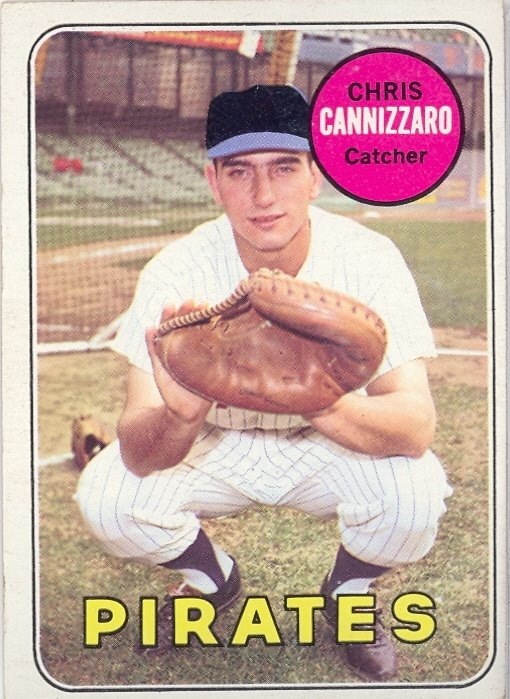
by Greg Prince on 25 November 2012 4:40 pm 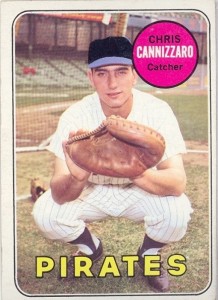 What’s wrong with this picture? Let’s instead go with what’s right about it. This card was brought to my attention a couple of months ago and I can’t get it out of my head. It’s a veritable diner placemat that urges you to find all the things that are wrong with it while you tear open another package of melba toast and wait for your cup of chicken consomme with matzoh ball and/or noodles to arrive.
Never mind that the two-toned black and vaguely lavender cap seems to be missing a Colorado Rockies logo from the distant future. Never mind that the next time the Pittsburgh Pirates sport light blue pinstripes will be the first time. Never mind your instinct to inform the photo’s subject that, “YO! HOME PLATE’S OVER THERE!” These reality-warping techniques were pretty standard stuff for Topps in its monopolistic heyday, which 1969 — the year of issue for this card — was smack-dab in the heart of.
What blows my mind, to invoke 1969 patois, is that the catcher in the middle of the card, Original Met Chris Cannizzaro, is squatting in the Polo Grounds. To squat in the Polo Grounds in 1969, you’d have to take the measure of the New York City Housing Authority Police Department, because they would probably have thrown you out, much the way Chris Cannizzaro once threw out thieving baserunners on the same plot of land.
As I don’t think I have to tell you, the Polo Grounds, home of the first two Mets teams, was the domicile of non-baseball players by 1969. The Mets vacated their temporary digs at the end of the 1963 season and moved to Queens. The city, as it had planned to do before Bill Shea and Branch Rickey conspired to invent a new National League ballclub that needed an old National League ballfield, finished tearing down the stadium that sat on Eighth Avenue between 155th and 157th Streets on April 10, 1964, one week before Shea Stadium opened. A housing project went up in the Polo Grounds’ place. It retained the Polo Grounds name, perhaps for reasons related to sentiment or familiarity, perhaps so when New York Giants romanticists like myself would trek uptown to find it, we wouldn’t get too lost.
The Polo Grounds Towers opened as public housing on June 30, 1968. The Mets didn’t live there anymore. Cannizzaro didn’t get his mail there anymore, either. According to Baseball-Reference, Chris was spending most of his 1968 as a Columbus Jet, grooming the Triple-A pitching staff of the Pittsburgh Pirates. After rediscovering his mojo in Ohio, the catcher who hadn’t been a major leaguer since late 1965 (he caught part of the Rob Gardner/Chris Short 18-inning 0-0 tie on October 2 and the Closing Day doubleheader nightcap that game’s curfew necessitated on October 3) was reportedly happy to be recalled to the Bucs in August. On September 14 and 15, Chris donned the so-called tools of ignorance, got behind the plate and caught a pair of games in New York…at Shea Stadium, not the Polo Grounds. To do so at the Polo Grounds would have been bad form, as throwing the ball back to the mound might have entailed hitting some lady bringing home her groceries.
Brooklyn-based Topps seemed to shoot most of its in-season National League photos in those days at Shea. Chris Cannizzaro was available for framing as a 1969 Pirate in September of 1968. Otherwise, it would use pictures captured during Spring Training. Chris, I’m pretty sure, attended the rites of spring every year he was bouncing among different organizations and trying to make a big league club. Topps occasionally dipped into its archives and plucked out a photo that had clearly been taken a couple of years earlier. For example, you can’t miss the NEW YORK WORLD’S FAIR patch on Al Jackson’s 1969 card. The World’s Fair closed in 1965 (a season when Chris played 57 games at Shea), but at least we know the stadium it was built next to was still standing in 1969.
The Polo Grounds wasn’t. Yet there is Mr. Cannizzaro, on Card No. 131, quite clearly ready to put down fingers in a stadium that was no more. He’s dressed as a Met. He’s identified as a Pirate. He’s airbrushed as a proto-Blake Street Bomber. And he’s in a place where there’s been NO GAME TODAY for more than five years.
Some call it spooky. If I stumbled upon this card at a tender age, it probably would have frightened me. Anything that wasn’t incredibly up-to-date seemed askew to me when I was a kid. But now, knowing the Polo Grounds lived on an Original Met’s card deep into the Shea Stadium era strikes me as nothing short of Amazin’. It could be construed as good luck, too, as Chris caught a significant break toward the end of 1969’s Spring Training. Just as kids were opening their wax packs and being convinced Cannizzaro was, contrary to almost all graphic evidence, a Pirate, Pittsburgh traded him to that new team in San Diego. As a retread Pirate pushing 31, he wasn’t likely to see much action behind budding star Manny Sanguillen even if he did make the Bucs out of Bradenton. But as an Original Padre, Chris Cannizzaro saw the most playing time (134 games) of his long and heretofore, shall we say, underdistinguished career.
In 1969, Chris Cannizzaro was named to the National League All-Star team. Granted, it was one of those “we gotta pick a Padre” choices, with Chris batting .245 and collecting 2 home runs and 23 runs batted in by the All-Star break, but it was a long-in-coming response to those who doubted his credentials as a Met, including his first manager. As David Bagdade recounted in A Year In Mudville, Casey Stengel referred to Cannizzaro — a name he unfailingly pronounced as “Canzoneri” — as “the only defensive catcher in baseball that can’t catch”. And Casey was just getting started in his appraisal:
“The pitcher throws. Wild pitch. Throws again. Passed ball. Throws again. The ball drops out of the glove. And all the time I am dizzy on account of these runners running around in circles on me and so forth.”
This particular scouting report, whatever its accuracy (Chris could throw — he nailed 20 of 36 runners who tried to steal on him in 1962), was no doubt historic. Casey ranted on until he found himself wondering aloud, “Can’t anybody play this here game?” Jimmy Breslin came along directly and twisted the Stengelese ever so slightly and invented the signature question that has stayed with the Original Mets ever since: Can’t Anybody Here Play This Game?
On the 1969 Padres, relative to teammates who were building a 52-110 record that looked good only when compared to the Mets’ 40-120 of seven years earlier, Chris could. He was the All-Star. He was third among all N.L. receivers in Caught Stealing, halting 41 runners who had ideas about taking bases that didn’t belong to them (Jerry Grote was fourth, with 40). True, he was also third in most bases stolen against, with 58, and he wound up the season batting .220, but on a 52-110 enterprise, Cannizzaro could squat proudly as someone who wasn’t necessarily one of the primary culprits.
Chris hung on as a Padre, a Cub, a Dodger and a Padre again through 1974, lasting as long among Original Mets as anyone. His final MLB game came on September 28, 1974, more than two months after Jim Hickman was released by the Cardinals and the same day Bob L. Miller threw his last pitch as a Recidivist Met. It was their (and, though he wasn’t Original, Ed Kranepool’s) longevity that helped reduce my personal fright factor where “ancient” Mets history was concerned. When I discovered the Mets in 1969, I couldn’t grasp the idea that they existed in such a dismal state, standings-wise, in those years when I was too young to have witnessed them. Yet with Cannizzaro, Hickman and righty Bob Miller still on the scene, even as opponents, Bob Murphy, Lindsey Nelson and Ralph Kiner were compelled to explore each player’s backstory. Still couldn’t quite reckon that players from way back then, just before I was born, could have been members of my team at its very beginning and still be active, but it began to sink in bit by bit. Nowadays I write books that in part celebrate that portion of my team’s history.
Before a very nice guy named Paul posted anachronistic Cannizzaro from 1969 on Crane Pool Forum in September and got me thinking about him, there was another reason the man who caught in the company of Choo Choo Coleman, Sammy Taylor, Joe Pignatano, Hobie Landrith, Harry Chiti and the recently deceased Joe Ginsberg in 1962 had been rattling around in my head. It came via a story from two Mays ago, just after the killing of Osama bin Laden. As Spencer Fordin reported for mlb.com, a Staten Island boy who wasn’t yet a year old when he lost his firefighter dad on 9/11 threw out the first pitch of the Mets-Dodgers game at Citi Field on May 6, 2011. He was ten by then and a completely rabid Mets fan. His name?
Christopher Cannizzaro. No relation by blood or marriage to the catcher who will turn 75 in 2013. It was more visceral than that. Both his parents, Brian and Jackie, were huge Mets fans and if their last name was Cannizzaro, then what else were they going to name their kid, especially one who was born during the 2000 Subway Series? Brian went so far as to place a Chris Cannizzaro card in his son’s incubator when he was born. Christopher’s route to fandom was just a matter of time and destiny from there.
The card that accompanied the infant in his first days probably wasn’t the 1969 Topps with the illogically lingering image of the Polo Grounds, given that the Original Met was labeled a Pirate in that edition and one would guess Brian preferred to introduce Christopher to Chris in non-airbrushed Met form. But that’s OK. Spirits live on in all sorts of ways.
Image courtesy of Wrigley Wax.
by Greg Prince on 21 November 2012 10:52 am These days SNY’s broadcasts are a showcase for not only horrific baseball but also acres and acres of unoccupied green seats. The Mets are touting increasingly desperate ticket plans — you can get into Citi Field for a steep discount by bringing a child, a Pepsi can, enthusiasm for R.A. Dickey or, quite possibly, a white flag. None of this matters, because StubHub is cheaper if you actually want to go.
—Jason Fry, “Death Spiral,” September 13, 2012
The innovative $63 Promenade ticket the Mets proudly introduced for Opening Day — when the traditional time-honored raising of the NATIONAL LEAGUE EAST FOURTH PLACE FINISHERS banner is sure to unleash a surge of Mets Pride that will resonate from the $63 seats atop Section 501 clear around to the $63 seats in the last row of Section 538 — makes perfect sense to the visionary organization that launched it into the marketplace Monday. Why, who couldn’t read a clear and cogent explanation like this…
“We made a limited number available that are not in packs. So if people want a cheaper price for Opening Day, they can buy it as part of a package. Obviously, there are other games in that mix as well. But some people may think that’s a better value. That’s why that’s an option.”
…and not be impressed by the cutting-edge salesmanship and marketing that went into the decision? And who among the Mets-consuming populace wouldn’t be motivated to act immediately on such a decent proposal? You can either purchase distant seating to this one game for an unusually large amount of money, or you can wait a bit and purchase the same seating for perhaps less money but you’ll also need some more money to buy tickets for other games you didn’t realize you wanted to go to.
Plus service charges.
So even though the Mets are visionaries with the pricing and the packaging and the explaining, and you can’t blame a Mets fan for thinking about laying out $63 per pop (plus service charges) to attend Opening Day 2013 — or perhaps snapping up sets of tickets, one of which is for this annually attractive affair while the others are not, it’s a shame the Mets won’t eventually sell you a far less expensive, more available ticket for some other game during which the Mets will also play baseball and pursue fourth place.
Oh, but they will. According to a reliable source, multiple transactional opportunities (or “Mets games”) will exist in 2013 after Opening Day. They won’t be Opening Day, but they can be if you make it so. Here’s what ya do: don’t go to Opening Day; pick one of the 80 home games that isn’t Opening Day; and make it your Opening Day. Sit in the Promenade for less than $63. Squint until you’re pretty sure you see festive bunting. Or just wait for a Mets runner to reach first when the home team trails late and you’re sure to see plenty of bunting. Experience as much Mets Pride as you like.
It might not be April 1, but given the savings and self-respect, you’ll feel a bit less the fool.
by Greg Prince on 20 November 2012 8:34 pm If I learned anything from the contestants who vied for the Fifty Sheas of Krane grand prize of the New York Mets 50th Anniversary Collector’s Edition DVD Set from A+E Networks Home Entertainment/MLB Productions is that if they devoted themselves to designing a similar contest for me to take, I’d be hard-pressed to match the performance they put forth in taking mine. They’re that good.
Proving themselves worthiest — so worthy that I had to declare the contest a virtual tie and award each of them the DVD set that is available for purchase here — were Gabriel Panek of New York and Peter from somewhere down the East Coast (Peter prefers to remain a Metropolitan man of mystery for the time being). They each filed 47 of 50 correct answers on November 14, and since, as you will see, I did a less than perfect job in asking a few of the questions, I’m not comfortable saying one of them didn’t win. So they both win.
Also very worthy, with 47 of 50 right sent on November 15, was Chris Valentino of New York. He earned the terrific A+E Networks Home Entertainment/MLB Productions release, New York Mets 50 Greatest Players, plus a copy of the sensational new book, The Happiest Recap by…oh, will ya look at that…by Greg Prince. And coming in with 46 of 50 right just under the deadline — and with the most entertaining footnotes imaginable attached to just about every answer — was the talented Studious Metsimus author Ed Leyro. Somebody with his encyclopedic mind deserves the new and data-packed team encyclopedia Total Mets, written by David Ferry, with foreword by…no kidding, Ed Kranepool.
Those are our winners and runners-up. Thanks to all who gave it a shot, whether you hung in to the end of the test or spent a few hours on it before cursing me and Ed Kranepool out.
On to the answers…
***
1. Who was the first player to pinch-run for Ed Kranepool?
Rick Herrscher, September 23, 1962, after the kid’s very first base hit, an eighth-inning double off Don Elston.
2. How many future Met coaches played in the last Polo Grounds game in which Ed Kranepool collected a base hit — and who were they?
Two: Bobby Wine (1993-1996) and Cookie Rojas (1997-2000) played for the Phillies on September 17, 1963.
3. What was Ed Kranepool’s postseason batting average against future Hall of Fame pitchers?
.100 — Ed went 1-for-10 vs. Phil Niekro (1969 NLCS), Jim Palmer (1969 World Series) and Rollie Fingers (1973 (World Series); the lone hit against these immortals-to-be was a fourth-inning single in Game One of the ’69 playoffs off Niekro. Kranepool homered in the game Palmer started in that year’s World Series, but against Baltimore reliever Dave Leonhard.
4. What future Detroit Tigers pitcher attended the same high school as Ed Kranepool?
Izzy Goldstein (who pitched for the 1932 Tigers; he was not, incidentally, a teammate of Hank Greenberg, who appeared briefly with Detroit in 1930 and came up to stay in 1933).
5. In which year’s Mets highlight film — as featured on SNY’s Mets Yearbook — does Ed Kranepool discuss his second-place finish in the team bubble gum-blowing contest?
1978. (Ed was runner-up to winking Bobby Valentine, who gleefully revealed how he endeared himself to the lady judges.)
6. How many hits did Mets wearing No. 7 collect before Ed Kranepool wore it?
149, as collected by Elio Chacon (87), Chico Fernandez (29) and Amado “Sammy” Samuel (33).
7. How many home runs did Ed Kranepool have to hit to set the all-time career Mets home run record (which he held for more than a decade) and whose mark did he surpass?
This was a messy question that lacked thorough due diligence on my part. As a result, any of the following were accepted: 61 and Jim Hickman; 70 and Ron Swoboda; or Cleon Jones and 94. Ed rose and dipped at the top of the Mets’ all-time home run chart several times between 1969 and 1976, when he secured the franchise lead for the rest of his career and then some.
8. Chronologically, what future Met was born closest to Ed Kranepool without being born after Ed Kranepool?
1981 Pitcher Dave Roberts, who was born on September 11, 1944. (The Met born closest to Kranepool, albeit afterwards, was Tom Seaver, on November 17, 1944 — belated Happy 68th to the Franchise!)
9. How many players who played in Ed Kranepool’s final big league game had already been part of losing American League World Series teams and who were they?
Two: Bernie Carbo (1975 Red Sox) and Elliott Maddox (1976 Yankees). A couple of other players in that game would go on to play for American League World Series teams afterwards, but we were looking only for those who “had already been”.
10. The Eddie Kranepool Society, unofficially the longest-running blog in all of Metsdom, regularly refers to the current chairman and chief executive officer of the Mets by what nickname?
EKS proprietor Steve Keane has been consistent in referring to Fred Wilpon as Skill Sets or some variation thereof in tribute to Wilpon’s vague excuse for firing GM Joe McIlvaine in 1997, during the Mets’ first contending season in approximately an eon.
11. What percentage of his major league hit total did Ed Kranepool accumulate before the first presidential election in which he was eligible to vote?
44.36%. That’s based on the 629 base hits Ed accumulated — out of his lifetime total of 1,418 — through the 1968 season. The minimum voting age in the United States was 21 until the passage of the 26th Amendment in 1971, thus Kranepool couldn’t vote for president until November 5, 1968, when he was a few days shy of 24. (For what it’s worth, Richard Nixon won the 1968 election with 43.42% of the popular vote, or a lower percentage than Kranepool registered in the answer to this question.)
12. Ed Kranepool once shared a Topps baseball card with his manager. Who was the manager and what was the headline over the image on the card?
Casey Stengel — CASEY TEACHES. It was a 1964 card and Ed didn’t appear to be the world’s most attentive pupil.
13. Who were the two future Hall of Fame pitchers against whom Ed Kranepool hit three home runs apiece?
Ferguson Jenkins and Gaylord Perry.
14. How many Mets played their final game as Mets before Ed Kranepool played his first game as a Met?
Sixteen. There was no requirement that they all be named, though most of our contestants were happy to list them. One, it bears noting, was Joe Ginsberg, who recently passed away at the age of 86. Joe was the longest-surviving former Met, his final game having come April 15, 1962, which was the franchise’s fourth-ever game. His passing whittles the number of living members of the Mets’ first team to 28.
The other fifteen who were done as Mets before Ed’s debut on September 22, 1962: Hobie Landrith, Gus Bell, Don Zimmer, Ed Bouchee, Herb Moford, Clem Labine, Jim Marshall, Sherman “Roadblock” Jones, John DeMerit, Bobby Gene Smith (who now holds the record as the longest-surviving former Met, having played his final Mets game on April 24, 1962), Dave Hillman (the oldest-living 1962 Mets and second-oldest living Met overall, behind Yogi Berra), Harry Chiti, Wilmer “Vinegar Bend” Mizell, Gene Woodling and Bob G. Miller.
15. How many Ed Kranepool teammates managed the Mets and who were they?
Seven: Gil Hodges, Yogi Berra, Roy McMillan, Joe Torre, Bud Harrelson, Dallas Green and Bobby Valentine.
16. The last time the Mets sent Ed Kranepool to the minors, what prospect did they bring up to take his spot on the roster?
Ken Singleton, in June of 1970. Ed had been a Met mainstay since May of 1964, when he returned from Buffalo in time to play in the infamous 32-inning Memorial Day doubleheader, which the Mets infamously (naturally) dropped to the Giants. Six years later, he spent the bulk of the summer at Tidewater after his average dipped to .118. He came back to New York in August and revived his career the following season.
17. In which year’s Mets highlight film — as featured on SNY’s Mets Yearbook — does Ed Kranepool visit his old high school?
1977. This was the same film that had Joe Torre holding court at a dude ranch of some sort, insisting that someday the Tom Seaver trade would be known as the Steve Henderson trade.
18. How many hits did future teammates of Ed Kranepool get against the Mets in the first full big league game Ed Kranepool played — and who got them?
Five: George Altman (4) and Ken Boyer (1), members of the Cardinals on Opening Day 1963, when Ed went the full nine for the first time. Both men joined the Mets in 1964.
19. What is the “first” that connects 1938 Reds pitcher Johnny Vander Meer to 1964 Mets center fielder Ed Kranepool?
Inaugural night games in New York. Vander Meer’s famous second consecutive no-hitter came during the first night game at Ebbets Field, June 15, 1938. The only time Ed Kranepool was a center fielder was May 6, 1964, which was the first night game at Shea Stadium.
20. What Met made the first pinch-hitting appearance wearing No. 21 after Ed Kranepool stopped wearing it?
Warren Spahn, the all-time great pitcher and pretty decent hitter (35 career home runs) for whom Kranepool was compelled to surrender his first set of major league numerals. Spahnie pinch-hit unsuccessfully in the ninth inning at Candlestick Park on April 24, 1965, a game the Mets would go on to win on Danny “Vive La France!” Napoleon’s pinch-triple.
21. Ed Kranepool collected 1,252 hits while wearing No. 7, including 85 as a pinch-hitter. It took more than a quarter-century, but eventually the sum total of Mets who wore No. 7 after Ed Kranepool exceeded that total of 1,252. In the game in which the 1,253rd hit collected by the sum total off all Mets who wore No. 7 after Ed Kranepool was recorded, what extraordinary feat did a Mets pinch-hitter (a lefty batter like Kranepool, but not someone who wore No. 7 as a Met) accomplish that no Mets pinch-hitter had done before? And what was the date of the game in question?
Marlon Anderson produced the first pinch-hit inside-the-park home run in Mets history on June 11, 2005, the same night Jose Reyes garnered the 1,253rd hit by a post-Kranepool No. 7 Met player. (And I fully admit this question was the work of a madman.)
22. How many men were inducted into the Mets Hall of Fame before Ed Kranepool?
Twelve, the twist being there were thirteen members — including Joan Payson — named before Ed made it in 1990.
23. How many hits did future teammates of Ed Kranepool get against the Mets in the first big league game in which Ed Kranepool collected a pinch-hit — and who got them?
Five: Donn Clendenon (4) and Bob Friend (1), Pirates when Ed singled hitting for Galen Cisco on June 1, 1963. Friend became a Met in 1966; Clendenon, of course, in 1969.
24. For what political candidate did Ed Kranepool appear in a television commercial wearing his old Mets jersey after he was retired as a player?
U.S. Senator Al D’Amato, running for re-election in 1986, when the Mets were so popular that everybody wanted to be associated with their brand. The Mets asked the commercial, in which Ed wore what appeared to be his last uniform top (it had the collar and cuffs trim the Mets introduced in 1978), be pulled as they didn’t want to be seen endorsing a political candidate of any stripe. D’Amato won re-election over Mark Green that November, eight days after the Mets won their second World Series.
25. When he made his major league debut, Ed Kranepool became the 45th player in Mets history. Who was the 44th?
Larry Foss, whose first Mets game occurred September 10, 1962, a dozen days before Kranepool’s.
26. Ed Kranepool pinch-ran three times in his 18-season big league career. Who were the three Mets for whom he pinch-ran?
Frank Thomas (1963), Ron Swoboda (1966) and George Theodore (1973). Nobody guessed “Mo Lasses,” probably because Ed Kranepool wasn’t any faster than molasses.
27. What part of the baseball field inspired the name of the Amityville restaurant co-owned by Ed Kranepool and Ron Swoboda in the early 1970s?
The Dugout.
28. What unlucky distinction do Ricky Romero, Edinson Volquez and Kent Tekulve share when it comes to a Met hitting milestone Ed Kranepool was the first to reach?
Only pitchers to give up an unlucky Mets-career 1,300th hit to a Mets batter. Kent Tekulve gave up Ed’s 1,300th hit in 1977; Edinson Volquez gave up Jose Reyes’s semi-controversial 1,300 hit — his last in a Mets uniform — on the final day of the 2011 season; and future Reyes teammate Ricky Romero gave up David Wright’s 1,300th hit in Toronto this past May.
29. What Met stranded Ed Kranepool on base after Ed’s first pinch-hit?
Jimmy Piersall, who lined to center fielder Bill Virdon with two out at the Polo Grounds in the sixth inning on June 1, 1963.
30. In what feature film, released after he played his final Mets game, did Ed Kranepool appear as himself?
It’s My Turn, the 1980 Jill Clayburgh vehicle that produced Diana Ross’s Top 10 single of the same name. Ed and Bud Harrelson were among the retired major leaguers to line up and tip a cap at Yankee Stadium during Old Timers Day. (Ed was also the Mets’ first baseman in the triple play scene in 1968’s The Odd Couple.)
31. Who was the last Ed Kranepool teammate to play for the Mets?
Alex Treviño, who made a brief return to his original team in 1990; Alex and Ed were teammates in 1978 and 1979. Jesse Orosco was the last Kranepool teammate to play in the majors, but wasn’t a Met after 1987 (he was reacquired following the 1999 season, but his presence in a thousand more longevity-themed trivia questions was thwarted in 2000 when he was traded to St. Louis for Super Joe McEwing during Spring Training).
32. Ed Kranepool appeared on one National Baseball Hall of Fame ballot, alongside five former Met teammates. Who were those teammates?
Jesus Alou, Ken Boyer, Dock Ellis, Mickey Lolich and Joe Torre were, like Ed, on the Baseball Writers’ ballot in 1985 and, like Ed (who collected zero votes), weren’t elected. None is in the Hall of Fame as of this writing, though Torre, reportedly, became a genius many years later.
33. Who is the only Met to have shared a birthday with Ed Kranepool?
There were two correct answers to this question despite the wording: Jose Offerman and Shane Halter. My database mysteriously had Offerman listed with a different birthday (some Latin American players have had their official birth dates changed for the record over time), which is why I thought Shane was Ed’s sole fellow November 8 Met baby. But Offerman is listed at Baseball-Reference and other sources as having been born on November 8, so he’s as correct an answer as Halter. (We also reluctantly accepted Edgardo Alfonzo, whose birthday for years was listed as “11/8/73,” and interpreted in the U.S. as November 8, but which was eventually clarified as “8/11/73,” or August 11 — Fonzie’s actual birthday.)
34. Who gave up the home run that knocked Ed Kranepool from the all-time career Mets home run lead?
Rick Rhoden gave up Dave Kingman’s 119th Mets home run on June 9, 1982, definitively erasing Ed’s 118 home runs as the most in Mets history.
35. In the last game he played in the big leagues as a 17-year-old, who did Ed Kranepool replace on defense?
Marv Throneberry, though on September 30, 1962, the Mets’ signature blunder wasn’t any of Marvelous Marv’s doing. A half-inning after Ed entered the last game of the Mets’ first season, Joe Pignatano hit into a triple play.
36. Who else scored on the same Jim Hickman two-run single that produced Ed Kranepool’s first Shea Stadium run?
Larry Elliot, who crossed the plate behind Ed in the seventh inning on April 18, 1964, the second game ever played at Shea.
37. What future major league manager attended the same high school as Ed Kranepool?
Charlie Fox, who managed the 1971 San Francisco Giants to the N.L. West crown.
38. For what brand of shaving cream did Ed Kranepool appear in a television commercial late in his career?
Gillette Foamy. (We accepted “Gillette” or “Foamy” as correct, too; we’re not heartless here.)
39. In which year’s Mets highlight film — as featured on SNY’s Mets Yearbook — does Ed Kranepool sit down and reflect on his Mets career?
1976. The excuse for the sedentary trip down memory lane was the Mets had just completed their fifteenth season. The larger excuse was there were usually never enough actual highlights to fill up these films.
40. What future Met gave up a hit to Ed Kranepool in an official game that ended in a tie?
Nick Willhite, in the second game of a doubleheader at Shea, June 7, 1964. Willhite, then a Dodger, would join the Mets for four games in 1967.
41. How many future Hall of Famers played in the first big league game in which Ed Kranepool played two defensive positions — and who were they?
Four: Duke Snider, Willie Mays, Willie McCovey and Orlando Cepeda. Snider and the Mets beat those star-studded Giants at Candlestick on May 18, 1963, in a game that saw starting right fielder Ed Kranepool shift to first base after Hot Rod Kanehl pinch-ran for that day’s starting first sacker, Tim Harkness.
42. Who scored the winning run in the first game Ed Kranepool started?
Choo Choo Coleman, bub, on Frank Thomas’s walkoff single, September 23, 1962. It was the day of Ed’s first start (though he was out of the game by the time the Mets won it, 2-1) and it was supposed to be the last-ever baseball game at the Polo Grounds…except Shea Stadium wasn’t ready in time for the 1963 season, so the Mets played on in Upper Manhattan.
43. Ed Kranepool once shared a Topps baseball card with a teammate. Who was the teammate and how were they described on the front of that card?
Ron Swoboda; METS MAULERS. In the year they were featured as such, 1967, Ed and Ron combined to maul National League pitchers for 23 homers and 107 RBIs.
44. How many other Mets played their final game as Mets in Ed Kranepool’s last game and who were they?
Three: Richie Hebner, Gil Flores and Bruce Boisclair.
45. In the book, Bad Stuff ’Bout The Mets, what does author Chico Escuela claim Ed Kranepool borrowed “and never give back”?
Chico’s soap. For those of you who can’t find Escuela on Baseball-Reference, he wore No. 5, was a longtime Met infielder, baseball was “berry, berry good to him”…and he was a character portrayed on Saturday Night Live toward the end of the non-fictional Kranepool’s career by Garrett Morris.
46. In his very first big league game, Ed Kranepool was a defensive replacement for who?
Gil Hodges, in the top of the seventh on September 22, 1962. Ed handled his very first chance, a grounder from the Cubs’ Billy Williams, which he flipped to pitcher Larry Foss to record the first out of the inning.
47. Rufus King was the last Federalist Party nominee for president. What does this have to do with Ed Kranepool?
King lost the 1816 election to James Monroe, who went on to inspire the naming of James Monroe High School in the Bronx, eventual alma mater of Edward Emil Kranepool, breaker of records previously set by Hank Greenberg. (No major leaguer has ever come out of Rufus King International High School in Milwaukee, but it, unlike Monroe, remains in operation; Ed’s alma mater closed its doors in 1994.)
48. Who is the only Met to have played as a Met with a teammate of Eddie Kranepool and a teammate of Eddie Kunz?
Turns out there were two. The one I was sure about was John Franco, who played with Krane ’mate Alex Treviño in 1990 and Kunz ’mates David Wright, Jose Reyes, Aaron Heilman and Pedro Feliciano at various junctures of 2003 and 2004. The other was David Cone, who played with Jesse Orosco (1979 Met) in 1987 and overlapped for a few days with Feliciano in 2003 (I thought Cone was gone before Pedro returned that year; silly me).
49. How many players who played in Ed Kranepool’s final big league game had already been part of winning National League World Series teams and who were they?
This question was both overinterpreted and underinterpreted by most of our contestants. The overinterpeting won’t count against anybody since I didn’t word it as specifically as I had intended. I had wanted to know about players who played in the World Series their teams had won before the game in question, but I wasn’t crystal clear on that point. Thus, submissions that included names like Doug Flynn, Joel Youngblood and Frank Taveras weren’t necessarily wrong, but they weren’t exactly right. Those guys were members of Reds or Pirates teams that went on to win World Series, but they didn’t actually play in those World Series. No harm, no foul. The number I was looking for was three and the players who HAD to be included, because they played in those winning World Series efforts, were Richie Hebner (1971 Pirates), Lou Brock (1964 and 1967 Cardinals) AND…and this was key…ED KRANEPOOL (1969 Mets). The “three” part I have to throw out, as I asked it inexactly, but I can’t accept as correct any answer that doesn’t include the subject of this test as someone who was part of a winning National League World Series team prior to the very same test subject’s final big league game.
50. Who pinch-ran for Ed Kranepool following Ed’s final big league hit?
Gil Flores effectively ended Ed Kranepool’s 18-season Mets career when he pinch-ran for Kranepool in the seventh inning at Busch Stadium on September 30, 1979. Krane had just pinch-hit for John Pacella and doubled off Bob Forsch of the Cardinals. Ed’s first hit was a double and his last hit was a double.
by Greg Prince on 19 November 2012 7:38 am Have I got a book for you. Four of them, actually — one now, three later. And make no mistake: they’re all for you, my fellow Mets fan who likes to read. They’re for us.
I’m proud to introduce to you the Banner Day Press book series The Happiest Recap: 50 Years of the New York Mets as Told in 500 Amazin’ Wins, written by Greg Prince (that’s me), beautifully designed by Jim Haines and informed by the spirit of Bob Murphy, whose signature phrase and inextricable optimism we celebrate in the title and concept. The books are based on the string of blog posts I offered here in 2011 under the same name. The project has evolved since then, but my underlying goal of exploring Mets history through the prism of the greatest games the franchise has ever won remains its heart.
 The initial volume of The Happiest Recap — First Base (1962-1973) — is available on Amazon right now in paperback; it covers 127 Mets wins, runs 224 pages and sells for $16.95. We’ll have information regarding Kindle and other eBook availability shortly. The three succeeding volumes — Second Base (1974-1986); Third Base (1987-1999) and Home (2000 & Beyond) — are planned to follow in 2013. The initial volume of The Happiest Recap — First Base (1962-1973) — is available on Amazon right now in paperback; it covers 127 Mets wins, runs 224 pages and sells for $16.95. We’ll have information regarding Kindle and other eBook availability shortly. The three succeeding volumes — Second Base (1974-1986); Third Base (1987-1999) and Home (2000 & Beyond) — are planned to follow in 2013.
I’m preternaturally reluctant to promote myself personally, but I have no such compunction against promoting my work if I believe in it, so I’ll tell you right now, at the risk of unnecessary self-aggrandizement, that you’ll never enjoy reading about your favorite baseball team’s first half-century more than you will when you read The Happiest Recap. I’ve never seen a team’s history captured quite this way. I’ve certainly never read the Mets’ history in this type of format. Taken one at a time, the games I’ve chosen to chronicle serve almost as 500 bedtime stories for Mets fans. Taken across the sweep of four volumes and five decades, it coalesces into nothing less than an American sporting saga.
(OK, so maybe I’m not that reluctant to self-promote.)
We usually get our histories presented to us via familiar narratives or consensus storylines or through the “Great Man” theory. Yet when it comes to baseball, we have this rich source material known as baseball games that tend to be utterly underappreciated in the long view. But The Game’s the thing…y’know? The Game’s what we look forward to all day and that game’s what we talk about the next day while waiting for the next game. While it’s still fresh, The Game is the biggest thing to which we fans devote our conscious thoughts.
We love our games when they’re good. We love our games when they’re bad but something good happens in them. Statistics can be fascinating, trade speculation can be intriguing (if occasionally unnerving) and biography can be compelling, but when you get right down to it, we want to watch or listen to or go to The Game, and we inevitably dwell on The Game — until we have to make an unconscious decision that we can only keep so many games where we dwell.
The problem, if we can call it that, is that when baseball is in season, games come at us in a relentless bounty: more or less one a day, six or seven per week, approximately 27 every month, 162 every year, a couple of handfuls more in October if we’re really fortunate. Call it a blessing overload. As a result, some games we frame as classics and hang prominently above the fireplace forever, but too many games we loved in the moment can’t help but slip behind the dressers and between the sofa cushions of our minds.
The Happiest Recap aims to reach deep into those shadowy spaces, dust off the heretofore “neato!” stuff you’d all but forgotten about, or perhaps never knew was back there, and arrange it not just chronologically but contextually in the family album. To what end? When The Happiest Recap concludes, you will have the richest, most textured accounting available of what it was like to live as a Mets fan during the first fifty years there were Mets — what those 500 wins were about: not just what happened in them, but what they represented; who came to light; who faded away; what was transpiring around them. If I’m doing my job as Mets fan and Mets author, then you will be living games you haven’t seen in years, hopefully feeling games you never knew existed.
And let me reiterate: Every game lovingly lingered over in The Happiest Recap, even when extracted from years when the team loss total reached triple-digits, is a WIN. Where else ya gonna get the Mets to go 500-0 for ya?
I’m sure I’ll be coming back to this subject plenty as I find my self-promotion comfort zone, but for now, I’ll remind you the first volume of the Happiest Recap series is available on Amazon, it makes a seriously great gift for the Mets fan in your life and an equally great read for you. If you’re on Facebook, please swing by The Happiest Recap page and give us a Like if you like.
Also, if you’re in the New York Metropolitan Area on Saturday afternoon, December 15, there’ll be a graciously organized (by Friend of FAFIF Sharon Chapman) Happiest Recap launch party at Foley’s, 18 W. 33rd St., between Fifth and Sixth Avenues — two blocks east of Penn Station — from 1 to 4 PM. Copies will be for sale that day, a drink special will be in effect and the author will be happy to sign books and talk about anything Mets-related, which doesn’t sound like a bad way to spend a few hours in the middle of December. Hope you can join us.
Thanks to all who entered the Fifty Sheas of Krane contest. The winning entry, along with the answers, will be announced Tuesday.
|
|