|
||
Faith and Fear in Flushing made its debut on Feb. 16, 2005, the brainchild of two longtime friends and lifelong Met fans. Greg Prince discovered the Mets when he was 6, during the magical summer of 1969. He is a Long Island-based writer, editor and communications consultant. Contact him here. Jason Fry is a Brooklyn writer whose first memories include his mom leaping up and down cheering for Rusty Staub. Check out his other writing here. Got something to say? Leave a comment, or email us at faithandfear@gmail.com. (Sorry, but we have no interest in ads, sponsored content or guest posts.) Need our RSS feed? It's here. Visit our Facebook page, or drop by the personal pages for Greg and Jason. Or follow us on Twitter: Here's Greg, and here's Jason. |
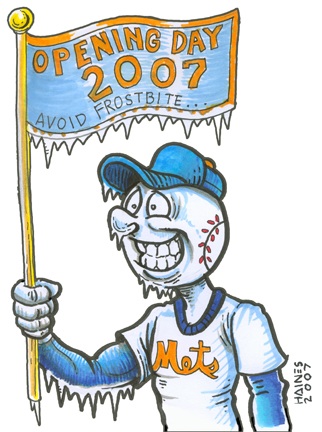
The wind chill was punishing. The men’s room line was eternal. The reconfigured commutation hub was a headscratcher. The manager’s decision to allow his shakiest reliever to face the opponent’s most dangerous slugger with an open base and two out was curious. But all that goes in the “never mind that right now” file thanks to seven rousing runs and one raucous chant. And what, pray tell, did we chant? Let’s just say that if Jimmy Rollins played in New York, they’d name a lollipop after him. Jimmy Rollins sucks. Or hadn’t you heard? His eighth-inning error was pivotal, both to the delightful final score — it tied the game, kept the bases loaded and applied untold pressure on Geoff Geary — and to the pro-Lion, anti-Christian (metaphorically speaking) majority whose taste for blood would not go unsated. Go on, we said. Give us an excuse. You dared express confidence in your team which, by our mob mentality, meant you dissed us. You, therefore, suck. We just needed a little ballast for our claim. And you gave it to us. Rollins misses Reyes’s grounder and…ka-BOOM! We explode. First positively for the thrill of the run. But then vengefully on he who would doubt us. Jim Mee Rahl Ins! Not enough. Jim Mee Rahl Ins! YOU SUCK! That’s the ticket. He’s no longer Jimmy Rollins at Shea Stadium or, one senses, Citi Field. He’s Jimmy Rollins You Suck. He does more than suck. He sucks in the second person. He owns it. On a team that “boasts” the evil Pat Burrell, the horrifying Chase Utley and the blood-curdling Ryan Howard (who sliced Burgos into paper-thin cold cuts), we have chosen you, Jimmy Rollins, to suck out loud in 2007, 2008, 2009, into the next decade — wake up the echoes razzing your name! As my host and companion for the day put it, he’ll be back here in 2015 and he’ll continue to suck. Indeed, his failure to grab a grounder gurantees he’ll be forever reminded in these parts of his loose-lipped comment that the Phillies (1-6 at this writing) shaped up as the team to beat in the National League East this year. Tsk Tsk. You could have written that check as cashed it with your bat. Or your glove. But no. You didn’t. You couldn’t suck the way Chipper Jones and Pete Rose have here, by sucking on principle. You spoke up and then let down. Big mistake. Big. Huge. I have to go booing now. Bless you Jimmy Rollins. You are a part of us now. Jim Mee Rahl Ins! YOU SUCK! Rollins’ error opened the proverbial floodgates. Wild pitches and walks and sac flies and a couple of legitimate hits rained down and what had been a frustrating Met afternoon morphed into a New York laugher. Oh, the 11-5 final was amusing but the chant was fucking hilarious! Seriously, I’ve never laughed that hard at anything the crowd came up with probably because I never heard anything like that go on as long as this one did. It was coarse, it was base — you wouldn’t trot it out at the Algonquin — but it wasn’t vicious. If tens of thousands could have fun at one poor soul’s expense and morally get away with it, then this was the exception that proves all the rules of good sportsmanship. You shouldn’t taunt a guy when he’s down. Unless it’s too much fun not to. Jim Mee Rahl Ins! YOU SUCK! The rest of the game is less a blur than a brrr. Jesus it was cold in the left field shadows. The presence of sunshine and the absence of snow permits teams to play in these conditions, as opposed to the perpetual cancellation that has become the Cleveland franchise, but it was awfully Jakey in the mezz. I’m told it was warmer in the sun. It couldn’t have been any colder. Shea couldn’t have been any dumber, as is Home Opener tradition. They shifted some turnstiles around by the subway kiosk. It didn’t seem to help matters upon exit (though Mets 11 Phillies 5 forgives a lot of poor planning), especially when one of the two Roosevelt Avenue staircases was closed for…I have no idea why it was closed, but I’m sure somebody was following orders. The pizza (authentic Sbarro!) has gotten worse, the puddles have seeped faster (the concourse behind mezzanine section 6 briefly turned into Flushing’s version of the lower ninth ward) and most of those whose jobs it is to hand you a thing you specifically ask for were befuddled no matter how decisively you pointed at said item. So it was Shea for the course, but ya know, if you wanted to be warm, use a bathroom and eat what you desired at bargain prices, you’d stay home. Screw that. Shea is always gorgeous from the outside in on Home Opening Day. The Shea family’s floral horseshoe, Mex with the first pitch, the navy flyover (actually, with a major airport steps away, I have to wonder why that’s special) — this is the stuff I primp and preen for all morning. That and baseball, featuring not just their shortstop (who still sucks) but our shortstop (who’s still great). Jose! times four was back in force. The Copiague High School marching band played it in pregame, so you know it’s a standard. Every Endy sighting unleashed a two-syllable call that seemed to celebrate No Decisions (ND! ND!). And to all those who whined last October that “Sweet Caroline” was thieved from Fenway, it’s ours now. Deal with it. Citi Field, maybe 15% (?) of it, loomed in the near distance. It’s a stunner to look at. Not that you can really connect the construction to the CGI we’ve been fed, but just realizing it’s becoming real…it’s daunting. Shea is stupid, but it’s the only ballpark we have. The Citi site is practically back-to-back with its older, condemned brother. Workmen were up on its planks doing something during the early innings. Perhaps building a better tomorrow. Perhaps looking busy while they tried to sneak a peek in our direction. Wouldn’t you? When I’m sitting in the new joint swapping stories about what used to be in that parking lot behind us, I’ll remember today, certainly the wind that froze and the shortstop who sucked and the result that didn’t, but more than all that, I’ll remember the thoughtful gesture of a very kind reader who decided to offer an extra ticket to a total stranger because she liked the way he wrote about their favorite team. My heartfelt thanks to Jodie, Adam and Zack for making today possible…or as Yogi put it so correctly in this case, necessary. And Jimmy Rollins? You do suck.  25 comments - (Comments closed) | | 25 comments - (Comments closed) | |  Print This Post | Print This Post |  2007 Mets, Jimmy Rollins, Mets Home Opener, Shea Stadium 2007 Mets, Jimmy Rollins, Mets Home Opener, Shea Stadium
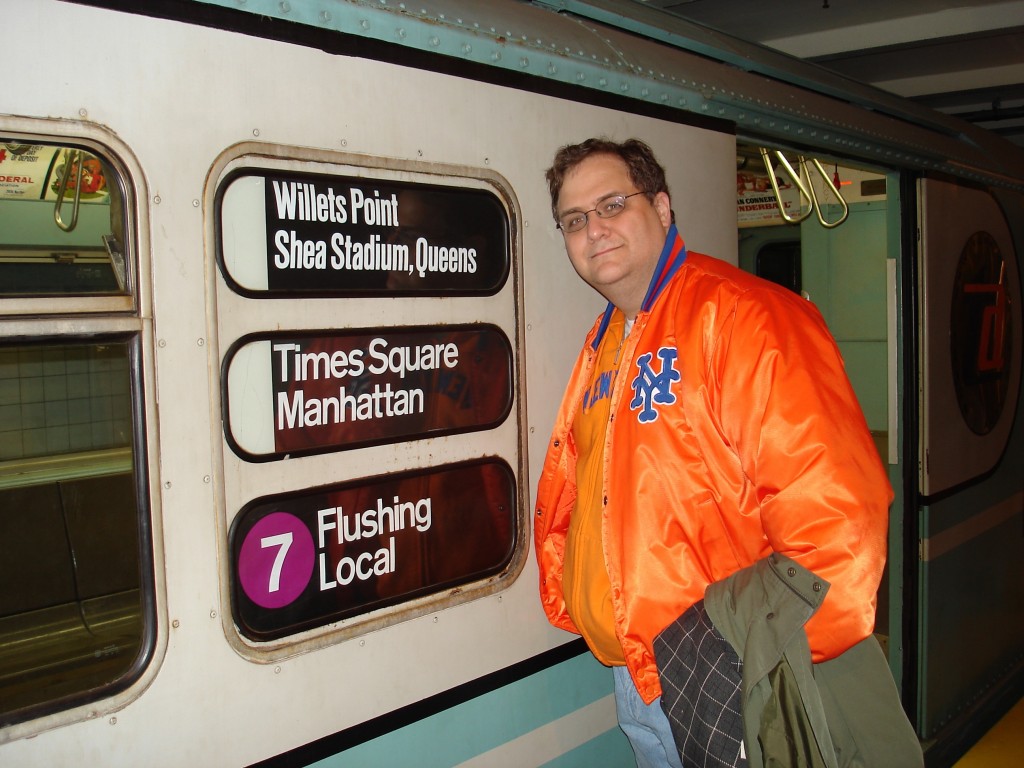
You prefer express but you’ll take any train that advertises its destination with such specificity. Sadly, this 7 was idling at the Transit Museum in Brooklyn last fall. They need to put these Shea specials back into service at once. If you’re anything like me, you’re starting Your Day of Days. *** *** The “161-1” winks are no longer valid. And I'd forget the 160-2 scenario based on precedent. Yesterday was the first game of the year in which the throw pillows on the couch lived up to their name. With that game-tying line drive intercepted just shy of the end zone (Georgia being SEC country), I threw a pillow clear across the living room. Last night, luxuriating in a 4-0 start, I debated noting that the Mets hadn’t trailed in an inning in 2007. I decided not to — as I wrote to my co-blogger, “Nah. We’ll point it out the first time it’s true.” These last couple of years the trademark of the Atlanta Braves has been a preponderance of young, homegrown players who were born and bred in Georgia: Jeff Francoeur, Brian McCann, Chuck James, Macay McBride, Kyle Davies. Think maybe the inbreeding has caught up with them? The family elders — Cox, Smoltz and those dirty Jones boys — still preside over the clan and I keep hearing about this new, improved bullpen that’s nothing like all those previously new, improved bullpens, but the Braves don’t look like The Braves to me anymore. Turner Field doesn’t look like Turner Field to me anymore. They’re just another team in just another ballpark on just another road trip. They could beat us today. They could beat us tomorrow. Anybody could beat anybody twice. That still wouldn’t make them The Braves. That’s over. That’s not four games talking. That’s 166 and counting. Chris Woodward…Tyler Yates…Roger McDowell…the Braves don’t poach outside the family as well as they used to either. Opponents' fans, as New York Mets bloggers we would like to remind you to come to the game early. Like you, we like nothing better than to bask in all the joys a few hours at the ballpark can bring: The sights and sounds of batting practice, that first bite of a hot dog, warbling the Star-Spangled Banner, having your buddy hand you a cold beer, watching your kids lick stray cotton-candy fibers off their fingers, appreciating the arcs and lines of the ball going around the infield while the pitcher warms up, and of course just relaxing in the sight of all that green grass. We love all these things too, and we want to ensure that you and your guests get to enjoy them. So please — make sure you have enough time to savor your surroundings. Because by the second or third time through the New York Mets' batting order, your time at the park will no longer be so enjoyable. By then it may hurt quite a bit. When their season began, they were nobody. When it ended, they were somebody. If it’s the first Friday of the month, then we’re remembering them in this special 1997 Mets edition of Flashback Friday. Ten years, seven Fridays. This is one of them. If these Julio Franco times, when ballplayer age is such an elastic yardstick, could be transported back to 1962, it’s not inconceivable that the Mets would have selected Jackie Robinson in the expansion draft. Robinson turned 43 that January, more than five years younger than Franco is now. Had health and choice permitted him to have continued playing a theoretical sixth season beyond his actual retirement, he was exactly who the Mets would have drafted. He was an old Dodger. We already know Walter O’Malley wouldn’t have hung onto him. Hell, Walter O’Malley traded him to the Giants after the 1956 season for Dick Littlefield. Robinson quit the game rather than join his archrivals. He had other opportunities outside baseball and 38 was very old then. Very old for baseball, very old for someone who had lived as much of a life as Robinson had. Really, it’s a ludicrous hypothetical. Jackie Robinson wasn’t about to become a Met in 1962. He would have to wait 35 years for that honor. April 15 marks 10 years since the night Jackie Robinson’s 42 went up on the left field wall at Shea Stadium. It went out of circulation just about everywhere that night, an overwhelming honor for a single player, one deemed appropriate by Commissioner Bud Selig who told a sellout crowd that “no single person is bigger than the game of baseball…no one except for Jackie Robinson.” With that, the number was retired by the Mets, by the Rockies, by the Orioles, by franchises whose players shunned and mocked and harassed and spiked the man of the hour, by everybody. It was a bold and grand gesture by a commissioner not especially noted for effective leadership, an unprecedented tribute to the man who changed baseball forever exactly 50 years earlier. I was at Shea for the occasion. I had no intention of missing it, no matter how cold it was going to be. It was a great night even if one can, to this day, sift through and quibble with the decision Selig made. • Was baseball guilt-tripping all over itself on that cold (very cold, extremely cold) night in 1997, attempting with one mighty swing to compensate for all it got dead wrong before 1947, all it was still getting wrong by 1987 when the Al Campanis “necessities” debacle exploded all over Nightline? Probably to some extent, but what’s the point of acknowledging a misdeed if you’re not going to go all out in correcting it? Jackie Robinson absolutely “changed the face of baseball and America” on April 15, 1947, as President Bill Clinton, the first chief executive to visit Shea while in office, said in the on-field ceremonies. Baseball can’t undo its pre-1947 segregationist past, but it can shine a light on all that was done to move forward in the hope that it — and America — would keep moving forward. Vince Coleman infamously professed ignorance regarding Robinson’s life story. With 42 in plain sight everywhere and with the sport invoking his name, his number and his legacy every April 15 since, no ballplayer of any color would ever again be able to get far in his chosen profession unaware of the one person who did more than any other to shape its contours. It doesn’t seem unreasonable that you know a little bit about the field in which you’ve opted to pursue a career for yourself. The fans would learn, too. We can always stand to learn a little more about our game. • If Jackie Robinson rated his number’s retirement, what about Babe Ruth’s 3 for the man who saved and/or popularized baseball? What about Roberto Clemente, whose 21 represents humanity at its pinnacle and engenders a legacy all its own? What about them? 3 is retired by the Yankees, 21 by the Pirates. But weren’t they bigger than the game, too? On one level, sure. Ruth (despite the team for whom he played and the house he allegedly built) deserves to be remembered as the biggest star baseball ever knew and will ever know. But there were ballplayers before him. He pulled the sport out of the shadow of doubt cast by the Black Sox scandal, but chances were there’d be ballplayers after him. Clemente died one of the most noble civilian deaths imaginable, rushing relief supplies to Nicaragua after that country’s devastating 1972 earthquake. That alone is worthy of memorial — such as that embodied by the Roberto Clemente Award presented every October to the Major Leaguer who combines outstanding play on the field with devoted work in the community, the most recent recipient of which was our own Carlos Delgado (who wears 21). Clemente was one of the first Latin players in the big leagues, the first superstar among them. He certainly blazed trails, he certainly suffered indignities on account of his heritage…like Robinson — and after Robinson. Chronologically speaking, Jackie carved the first and most sustained path for the times in which we would come to live. In that sense, that makes Robinson bigger than Ruth, bigger than Clemente, bigger than everybody, bigger than the game. • If 42 means so much, why take it out of circulation? This is the toughest question to answer as a baseball fan. For that one Arctic night in 1997, you couldn’t have asked for a better way to focus the world’s attention on Robinson’s deeds and meaning. Remember that the number-retirement was a surprise. We knew the commissioner and the president and Rachel Robinson would be at Shea for what was officially billed as the Jackie Robinson 50th Anniversary Celebration (there were rumors that the newly green-jacketed Tiger Woods would fly in to represent the next generation, but he declined the last-minute invite). There were commemorative “Breaking Barriers” patches on everybody’s uniform sleeves that year. There were special sections in all the papers. The Interboro Parkway became the Jackie Robinson Parkway that week. Anheuser-Busch replaced its usual Budweiser ad on the scoreboard with one praising the all-time Dodger (which made the well-intentioned referral to his having been a “giant” rather unfortunate; Rob Emproto rolled his eyes and suggested to me they just get it over with and “call him a Giant Yankee”). But until Selig made his remarks about Jackie Robinson being bigger than the game and then directed our gaze toward left field, we didn’t know 42 was being removed from active duty. We discuss retired numbers the way other cultures ponder sainthood. The Hall of Fame may be understood as the ultimate baseball honor, but Cooperstown is out of our hands. The retirement of a player’s number is something closer to our hearts and thus somehow more sacred. Our team can do something about it. We understand the soul of our ballclub and our ballplayers. We know damn well the level of their celestial significance in our universe and we tell each other all the time. We use as our currency in this discourse the uniform number. How great, how important, how eternal was this guy to us? Or that guy? He was so great, so important, so eternal, that you just have to retire his number. Nobody who decides these matters asks us to weigh in but we do. It’s the one vote to which we’re sure we’re all entitled. With 42 retired, that vote was taken away. No, Ron Taylor, Ron Hodges and Roger McDowell weren’t candidates to join Casey Stengel, Gil Hodges and Tom Seaver in the Met numerical pantheon, but now neither would be Butch Huskey, who had worn 42 since 1995 as his own salute to Robinson. Huskey was wearing 42 when the game started that night. Here after five innings, as the ceremonies proceeded (only Jackie Robinson was big enough to interrupt at length a game in progress), he and we were told his number was done. Well, not exactly. Selig said 42 could stay on the backs of those who already had it, grandfathered in for those were paying personal tribute to Robinson. That described mainly Mo Vaughn of the Red Sox and Butch Huskey of the Mets. (The ruling also left 42 undisturbed on the back of the Yankees’ new closer Mariano Rivera.) Huskey would wear 42 through 1998 until he was traded to Seattle, and that was assumed to be it among 42ish Mets. But it was born again when Vaughn became a Met in 2002 but finished up with him the next year (though Bob Murphy was presented with a framed Mets 42 jersey to represent the totality of his years behind the mic in 2003 and a few nitpickers somehow managed to find this insulting to Robinson.) Syracuse University’s football team long maintained a fascinating tradition. It didn’t retire Jim Brown’s 44 because it considered the issuing of it to a deserving Orangeman an honor, a tradition to be carried on. Ernie Davis won a Heisman wearing 44 after Brown matriculated his way to the pros. Floyd Little wore 44 after Davis. Number 44 was such a big deal at Syracuse that they changed the school’s ZIP code from 13210 to 13244. The tradition ceased in 2005 when 44 was finally raised to the Carrier Dome rafters. SU athletic director Daryl Gross reasoned “if you can’t take 44 off the table, then you’re just never going to retire a jersey.” True that. But still… Syracuse had a nice thing going and, more germane to Jackie Robinson, what Vaughn and Huskey had done was stirring. At least once every series that Vaughn, a superstar, came to bat for Boston, the announcer for Boston’s opponent would explain why he wore 42. As Huskey became more established, word was getting out on his and his back’s behalf. These were two players right in our midst who decided to be the living, breathing embodiment of American history, who decided that the game was bigger than themselves (and in Vaughn’s and Huskey’s cases, that was extra large indeed). That would be over with the commissioner’s decision. Now 42 would be on the wall at Shea and in some form or fashion in every ballpark. It was in danger of becoming wallpaper. Everybody would pay homage, therefore nobody would pay homage. Washington’s Birthday and Lincoln’s Birthday had become, in a manner of baseball speaking, Presidents Day. Ten years later, Bud Selig has made another decision concerning 42. This April 15, a week from Sunday, the number comes out of retirement for a day. One uniform on every team can bear the 4 and the 2 (except on the Dodgers, where everybody will wear them, and the A’s, who will allow two players and one coach to share them). On the Mets it will be the skipper Willie Randolph, New York’s first African-American manager. He’s thrilled: It’s a tremendous honor. When I heard that today, they were joking with me about who would wear it, and I said, “I’m going to fight whoever’s got it.” It’s an honor to be even mentioned with his name. It’s going to be a special day for me to be able to wear number 42. You can’t fight the manager and you can’t argue with his logic. Ken Griffey, who switched to 42 on 4/15/97 and convinced Selig to take this step on 4/15/07, will don the number for the Reds. Jimmy Rollins will shut up long enough to take it for the Phillies. Jesse Barfield will be 42 on the Indians, as Coco Crisp will do on the Red Sox. You can’t argue with them either. But Dave Murray raises a point of contention on Mets Guy in Michigan concerning what Willie said about 42: I’d love the quote even more if it came from David Wright. Or Greg Maddux. Or Chipper Jones. Or Randy Johnson. Or Jim Thome. Or Pronk [Travis Hafner]. Or Curt Schilling. Or any other star who happens to be white. All of them benefited greatly the day Jackie Robinson bravely stepped on that field, not just the black players. Amen. It’s hard to overlook the practicality of Jackie Robinson’s debut. Where once baseball was segregated, it was, by his hand, integrated. It was no longer Whites Only. Of course the impact was most direct on black players and, logic would follow, other non-white players. But we all benefit from knowing each other as people, not races. We all benefit from Robinson and 42, all Americans, all baseball fans. And the Mets? As noted, Jackie was out of baseball and with Chock Full O’ Nuts as a vice president by 1962. He went into the Hall of Fame that summer. Except for Old Timers Days, when he wore a Dodgers uniform, Robinson didn’t forge any particular bond with the Mets. It was the 50th Anniversary night in his honor, taking place on Met ground — with the no-longer-Brooklyn Dodgers as visitors — that cemented his posthumous place in Mets history. Mrs. Robinson has returned regularly since April 15, 1997. The Wilpons have supported the Jackie Robinson Foundation enthusiastically. And if you’re not sure why there will be a rotunda devoted to Jackie Robinson at Citi Field in 2009, you can probably trace it back to that shivering night a dozen years earlier. Fred Wilpon may have grown up a Brooklyn Dodgers fan, but it was that salute to Jackie that seemed to have sparked his determination to reinvent Ebbets Field in Flushing. If you’re still wondering why the next home of the Mets will be all Bummed out, Jackie Robinson Night is a night worth remembering. As for who has played for the Mets these 46 seasons of their existence — specifically who was not white — you can’t help but credit Jackie Robinson for ensuring their opportunity. 1962 wasn’t all that long after 1947 and it was but three years after 1959, when Pumpsie Green (a future Met himself) became the first player on the last team, the Red Sox, to employ a black player. Ensuring integrated accommodations for the first Met Spring Training in St. Petersburg were still an issue in 1962. Ed Charles, seven years before ascending to poet laureate of the Miracle Mets, debuted as a Kansas City Athletic in 1962 at the age of 28, same age as Robinson in 1947. Pretty similar reason, too: most organizations kept a pretty strict quota on the number of black players it would promote. Ed Charles had knocked around the Brave system since 1952. It took him ten years to climb the ladder. Did Robinson make it possible for Green and Charles to make it to the Majors? Sure. What about, as a piece in the Post put it in April 1997, Lance Johnson and Bernard Gilkey and Butch Huskey? That seemed a bit far-fetched to me. It was fifty years later; if not Robinson, wouldn’t have somebody else have come along eventually? Was not America moving inexorably in the direction of integrating its institutions? Maybe. But sometimes a move needs a shove, and it was definitely Jackie Robinson’s (and Branch Rickey’s) role to administer it. In the previously recommended Best New York Sports Arguments, Peter Handrinos makes the case that there was only one Robinson, only one man who actually did what he did — and maybe nobody else could have done it as effectively if he hadn’t done it when he did it: What would have happened if Jackie Robinson failed? Robinson would have been dismissed. He would have been labeled an outside activist and/or hothead. Undoubtedly, the editors of The Sporting News (“Baseball’s Bible”) would have concluded they were vindicated in saying blacks didn’t have the intelligence or inner fortitude to succeed on the highest level. And estimated 60% of the Major Leaguers of 1947 were white southerners who’d never known anything but racial segregation, and every one of them, including high-profile players like Enos Slaughter, Dixie Walker and Bobby Bragan, would have been treated as heroes for calling anti-Robinson boycotts. Those who had stood with Robinson, the Pee Wee Reeses of the world, would have been the marginalized ones. Handrinos admits his worst-case scenario is speculative but the prevailing circumstances of 1947 (Brown v. Board of Education wouldn’t reach the Supreme Court until 1954) back up his assertions. As he points out, even with Robinson’s successes, college coaching titans like Adolph Rupp and Bear Bryant kept integration at bay for another two decades…and that was with Jackie Robinson’s remarkable career having changed so much. Changes couldn’t have been denied forever, but Robinson’s failure would have deferred them indefinitely. On April 15, 1997, on a cold Queens night, those changes were instead celebrated. A number was posted on a wall. A legacy was extended. A team became one with a player who never played for them. A sellout crowd — the most racially mixed crowd I ever sat among at Shea Stadium — cheered. Cheered Jackie Robinson. Cheered Rachel Robinson. Cheered Bill Clinton and Bud Selig. And cheered Toby Borland. One player was bigger than the game, but the game did go on. And it was a damn fine one, easy to recognize because to that point in 1997, the Mets had played virtually none like that. We opened on the West Coast, which was unusual but was supposed to be the great new thing. Cold-weather teams would go west and come home when it got warmer. The plan didn’t work well at all. The Mets went 3-6 on The Coast, looking lost and anemic. They came home to open on a Saturday. Why a Saturday? Because the defending world champion Yankees, who also opened out west, would be raising their 23rd flag on Friday afternoon and the Mets didn’t want to compete for attention. They postponed their opening a day, but rain postponed it again to Sunday. A Home Opener doubleheader. Little pomp. Dire circumstances. Not quite 22,000 saw the Mets drop two to the Giants. Twelve-thousand more watched another loss to San Francisco Monday. We were 3-9 entering Jackie Robinson Night. This would be our de facto opener, then. The Mets unveiled what were supposed to be their Sunday unis: snow white pants and shirts, no pinstripes and, for reasons unclear, white caps with blue bills. Armando Reynoso must have liked the look because he threw five shutout innings before Selig & Co. took over the field. Once the number was retired, it was back to baseball. Bobby Valentine wouldn’t send out a starter on such a frigid night (yeah, it really warmed up while we were in California) after such a long delay, so out to the mound went Borland. And Borland authored four scoreless frames for his first and only Met save. Cold but worth it. Mets 5 Dodgers 0, Lance Johnson with four ribbies. Our record rose to 4-9. It marked the beginning of a brief run of .500 ball by the Mets, from whom nobody expected anything remotely that good. Two losses in Montreal sent us to 8-14 as of April 26, but there were a couple of positive developments in the interim. John Olerud, dumped on us by Toronto, was hitting .360. Rick Reed, the former replacement player (he was introduced that way every time he pitched like it was the law), had moved from the pen to the rotation out of desperation, and was posting an ERA in the low ones. Pete Harnisch had gone down to panic attacks on Opening Day, Jason Isringhausen was lost to a tuberculosis scare and a fractured right wrist and the Flammable Four relievers — Ricardo Jordan, Yorkis Perez, Barry Manuel and, despite his Robinson Night save, Toby Borland — were burning themselves out of jobs, but maybe the Mets wouldn’t be quite as bad as we thought they’d be entering the season. Mike Francesa doubted there were really 54,047 paying fans for the Jackie Robinson celebration. The Mets had distributed blocks of tickets to school and community groups, either out of altruism or to ensure themselves a full house. After he and Christopher Russo cackled over the total attendance, Francesa magnanimously allowed the Mets their numbers. This would be, he proclaimed, all the Mets would have to hang their white hats on in 1997 anyway. Not so fast there Mikey… Next Friday: We could’ve been something else altogether. 13 comments - (Comments closed) | | Print This Post | 1997 Mets, Flashback Friday, Jackie Robinson, Retired Numbers, Shea Stadium |
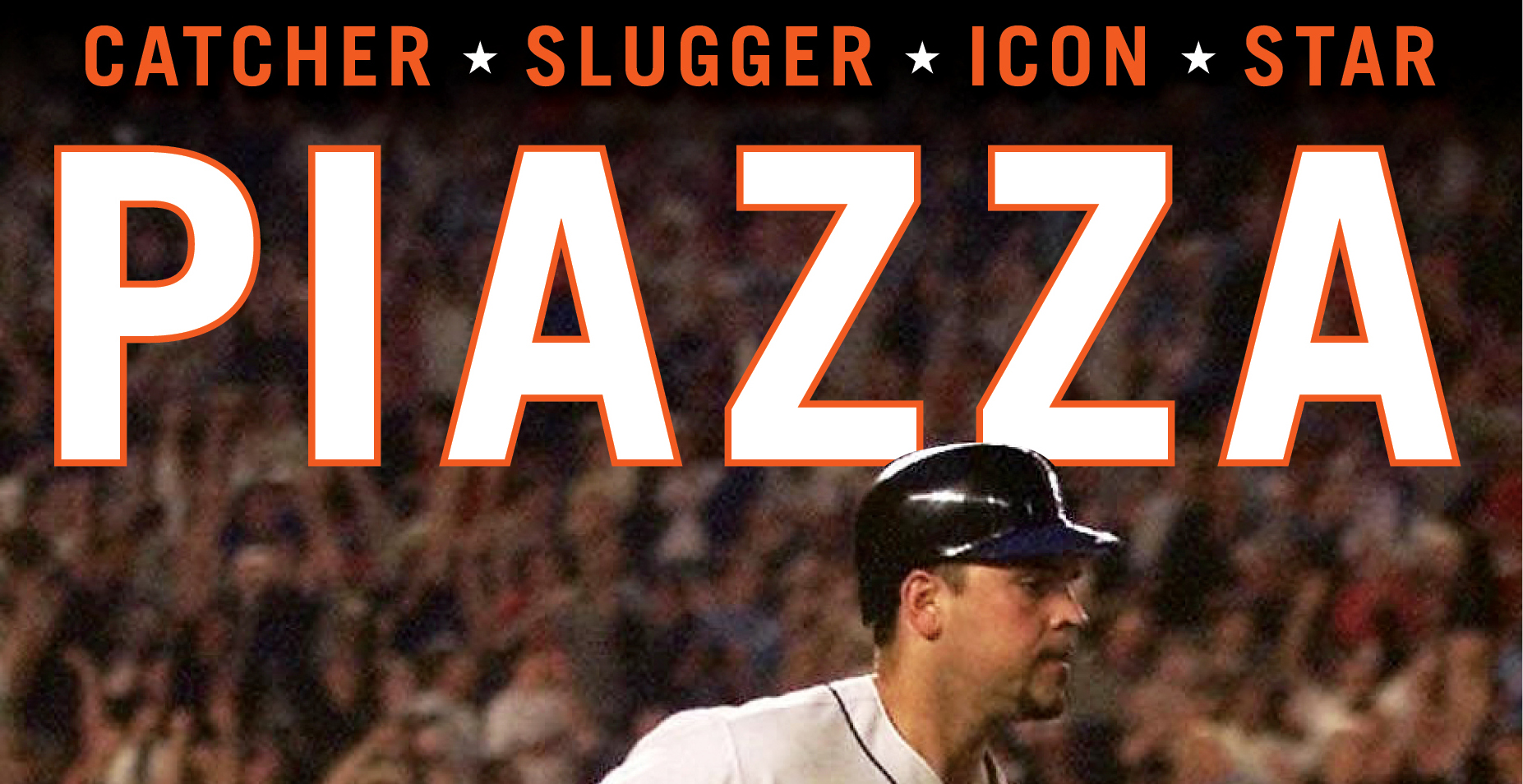
Piazza: Catcher, Slugger, Icon, Star by Greg Prince is available from Amazon, Barnes & Noble and other online booksellers. 
Amazin' Again: How the 2015 New York Mets Brought the Magic Back to Queens by Greg Prince is available from Amazon, Barnes & Noble and other online booksellers. 
Volume I of The Happiest Recap: 50+ Years of the New York Mets As Told in 500+ Amazin' Wins by Greg Prince is available in print and for Kindle on Amazon. 
Faith and Fear in Flushing: An Intense Personal History by Greg Prince (foreword by Jason Fry), is available from Amazon, Barnes & Noble and other online booksellers. |
|||||
|
Copyright © 2026 Faith and Fear in Flushing - All Rights Reserved |
|||||||