The blog for Mets fans
who like to read
ABOUT US

Faith and Fear in Flushing made its debut on Feb. 16, 2005, the brainchild of two longtime friends and lifelong Met fans.
Greg Prince discovered the Mets when he was 6, during the magical summer of 1969. He is a Long Island-based writer, editor and communications consultant. Contact him here.
Jason Fry is a Brooklyn writer whose first memories include his mom leaping up and down cheering for Rusty Staub. Check out his other writing here.
Got something to say? Leave a comment, or email us at faithandfear@gmail.com. (Sorry, but we have no interest in ads, sponsored content or guest posts.)
Need our RSS feed? It's here.
Visit our Facebook page, or drop by the personal pages for Greg and Jason.
Or follow us on Twitter: Here's Greg, and here's Jason.
|
by Greg Prince on 29 December 2016 3:58 am If there was one candidate for higher office everybody could get behind in 2016, it was Oscar Madison. Our favorite fictional sportswriter was running for New York City Council, which you might have missed amid other political news, but in reruns, the best campaigns always pick up right where they left off. In “The Odd Candidate,” which first aired on October 20, 1974, on ABC, it wasn’t Oscar’s idea to seek the seat — Felix got him involved on behalf of saving neighborhood playgrounds — but once Oscar committed to the race, he literally used his head to win votes. He and his volunteers fanned out all over the 34th District and showed residents they were devoted to New York’s best interests in the most accessible way possible.
By wearing Mets caps on the stump.
As we Mets fans understand intrinsically, the Mets cap doesn’t always signify a winner (Oscar lost to longtime incumbent Councilman Simpson) but we know when we see one that there’s a lot of heart in the head that hosts it. At the end of every year, we salute the character who wore the Mets cap with the most verve and panache of anybody in the history of popular culture, Oscar Madison, portrayed for five seasons on The Odd Couple by Jack Klugman, and hand out the Oscar’s Cap Awards. They, in turn, recognize the breadth and depth of the Mets’ presence in pop culture over the preceding twelve months.
What “Aristophanes” is to “ridiculous” is what the Oscar’s Cap is to the sighting of Mets apparel, memorabilia, personnel or awareness in film, television, theater, literature, song…really anywhere outside the world of sports and sports-related news where you wouldn’t necessarily expect to encounter Met-specific content. If it pricked our consciousness in 2016 — either as new or new to us (’cause we’re always discovering great old finds) — it rates a mention here. And that, sports fans, is essentially the Oscar’s Cap.
Whereas the original Odd Couple series smoothly and subtly worked the Mets into its fabric from 1970 to 1975, the rebooted version currently airing on CBS makes a bigger show of its Met associations, but since when do we mind attention? In the episode titled “Madison & Son,” which ran on April 28, Oscar (Matthew Perry as a sports talk host in this incarnation) gets to realize a lifelong dream and throw out the first pitch prior to a game at Citi Field. His catcher for the occasion will be his buddy Marcus Murphy — “Murph,” they call him — a former Met who has six All-Star appearances and eight Gold Gloves to his credit. Oscar clearly had dad issues, because he tries overly hard to impress his father, Walter, played by the creator of the original incarnation of the series, Garry Marshall. Instead of hitting Murph’s mitt, Oscar hits Mr. Met in the head. Well, as these things will go, Oscar becomes a citywide object of ridicule and he has to return to the Mets clubhouse and apologize to Mr. Met, who is wearing a bandage on his head. Mr. Met plays himself.
Other notes from this most Met-intensive episode of anything from 2016:
• Oscar wears No. 4, Murph No. 11 — authentic Mets jerseys.
• Walter wears a very old Mets cap.
• In Oscar’s living room, he and Walter watch Matt Harvey pitchers versus the Marlins. Harvey’s “really throwing smoke,” in Oscar’s estimation. Walter tells him he thinks he saw Harvey once at a Denny’s, maybe a Red Lobster.
• Howie Rose can be heard providing play-by-play.
On November 7, in “Taffy Days,” The Odd Couple tacitly acknowledged Marshall’s real-life passing by having the character of Walter die and Oscar attempt to scatter his ashes. The son’s parting words: “I hope that wherever you are, the New York Mets are on and it’s always the ’86 World Series.”
As if all this isn’t heart-tugging enough, a second CBS sitcom determinedly colored itself orange and blue in 2016. Kevin Can Wait, starring celebrity Mets fan Kevin James, draped itself in Metsiana to a greater extent that Citi Field did when it opened in 2009. A fleece blanket with the Mets skyline logo was visible in a summertime promotional spot. In the pilot, which aired September 19, retired cop Kevin Gable (James) wears a Mets hoodie while sitting on an exercise bike he’s not pedaling too strenuously. “GO TO METS GAMES” is on a PowerPoint presentation of potential group outings he shows his similarly retired cop friends, which should be easy enough since the series is set in Massapequa. James chose to shoot the series on Long Island in part because he wanted to stay close to home and take his real-life children to more Mets games. In later episodes, Kevin’s TV wife Donna (Erinn Hayes) wears a Mets shirt to bed and Kevin sports The 7 Line’s New York State tee.
But why stop with Met garments when you can have an actual Met? James used his pull to lure Noah Syndergaard onto the October 31 episode, “Hallow-We-Ain’t Home,” in which Thor guest stars as the Viking, an otherwise unnamed character who plays his music loud at a Halloween get-together, but is otherwise soft-spoken and cooperative (his girlfriend wanted the music loud; when he explained he turned it down in deference to a complaint, she complains that he’s so boring).
Syndergaard got around in 2016, In a baseball-themed episode of Cartoon Network’s Uncle Grandpa, which debuted October 22, Noah voices himself and is drawn in a Mets uniform. He is introduced (alongside several other All-Stars) as “the powerhouse pitcher that his fans call Thor.” Noah emerges from the cartoon’s version of the cornfield and says to the title character, “I’m guessing you want me to sign that for you,” pointing to an oversized Thor’s hammer. “Yes, please,” the coach says, and Thor does. Later, Thor explains baseball: “It’s just hitting the ball with a stick. How hard could it be?
While Thor was being animated, Harvey was being Harvey on Bravo’s Look Who’s Talking: Live with Andy Cohen, guesting alongside Connie Chung on January 28. There was one baseball question (pertaining to staying in for the ninth inning of Game Five; Harvey claimed he had no idea what inning it was until he went back out to the mound) and the rest involved whether Harvey’s been in a three-way (he has), whether he’s had shall we say relations on a ballfield (he has, in college), whether he’s in the mile high club (he’s not) and which Met brings the most sizable Louisville Slugger to bear, if you will (he invoked the Fifth Amendment). At the end of the show, Cohen promised a call-in to the aftershow from “the catcher with the best ass in baseball,” Anthony Recker. On February 3, Harvey continued his run of unlikely appearances when he showed up on Late Night With Seth Meyers, ostensibly promoting his role as a “men’s ambassador” during New York Fashion Week.
The talk/variety show circuit has always had a place for the Mets. If you got the Decades channel in 2016, you were reminded that in the introduction to the trailer for 1986’s Do The Right Thing, Spike Lee, as himself, wears a Mets cap, selling tube socks on the street. This was shown on The Dick Cavett Show, where Spike entered in a white NEW YORK baseball jersey (block letters blue with orange outline). As rerun on Decades thirty years after the fact, Spike and Dick discussed how great the recently completed 1986 World Series was. Spike said he was at Game Six. “Here we are in December, and you’re still celebrating the Mets,” Cavett said. “Believe it or not, after all this time, we still have a few Mets fans in the audience,” Cavett winked as he opened the show, which aired on ABC late in the fall of 1986 but was taped not long after the World Series for later broadcast — and after he had some genuine Met guests. Nothing new for Cavett. In the previous iteration of his late night show, on April 14, 1970, Dick Cavett welcomed defending world champs Jerry Koosman, Art Shamsky, Ron Swoboda, Ed Kranepool and Ron Taylor.
Indeed, the Mets had come a long way since October 1, 1964, when, on that evening’s episode of The Jimmy Dean Show, Rowlf the Dog (Jimmy’s puppet sidekick) held up signs that said “Drop Dead Mets” and “Lets Go Mets”. The tenth-place Mets were about to put a scare into the pennant-contending Cardinals on that season’s final weekend, so one supposes Rowlf couldn’t be too careful. The early misfortunes of the Mets no doubt informed the thinking of composer Skip Battin in his 1972 musical lament, “St. Louis Browns,” when he wrote and sang, “The St. Louis Browns were a baseball team/and they lost more than the Mets could ever dream.”
Ah, but when the Mets were good, they remained legendary. In Stephen King’s Dark Tower series, there is an exchange between two time-disconnected characters, Eddie Dean (from New York, 1987) and John Cullum (Boston, 1977). Cullum wants to know, “Have the Red Sox won it all yet? Have they ever won the Series? At least up to your time?” Dean talks him out of wanting to know before cheerfully telling him, “You don’t want to die before 1986. That’s gonna be a corker.”
On the first episode of HBO’s 2016 animated series Animals (“Rats”), two “PDNY” horses are discussing parades they can march in and doubt there’ll ever be a “Mets parade…they’re terrible this year,” though one says his father’s father “was in the ’86 Mets parade” and adds an aside about Doc Gooden, “blow” and horse tranquilizers. Similarly, on February 2’s Brooklyn Nine-Nine (“Karen Peralta”), Jake Peralta is told his “birthday surprise” has arrived: “You got the ’86 Mets? Be warned, a lot of them turned out to be drug addicts, so this could be a bummer.” (A few episodes earlier, on December 14, 2015’s “Yippie Kayak,” Rosa says to Amy “You’re always cold. You brought a blanket to a Mets game in mid-July.”) Remembering a more innocent championship season was Coach Ken Reeves on The White Shadow, December 23, 1980, in “A Christmas Story”: Ken Howard’s lead character chooses a 1969-vintage wine because, as the nun (Penny Peyser as Coach Bellini) he’s drinking it with notes, “The Mets won the Series.” Ken confirms that he indeed chooses wine vintages based on a given year’s World Series.
Ken Howard, like Garry Marshall, passed on in 2016. Along the way, we picked up on a couple of other Met pop culture contributions left behind by another star who departed the constellation this year. You can’t beat this lyric from A Tribe Called Quest’s “Skypager” (1991): “I keep my bases loaded like the New York Mets.” The Tribe’s late Phife Dawg wore a Mets jacket and Mr. Met cap on The Tonight Show with Jimmy Fallon on November 13, 2015.
In Everything Is Copy, the 2016 HBO documentary, Nora Ephron is seen wearing a Mets cap while she’s directing the 1992 film This Is My Life, which may explain this exchange from her script for When Harry Met Sally (1989):
HARRY (Billy Crystal): Did Julian seem a little stuffy to you?
JESS (Bruno Kirby): He’s a good guy, you should talk to him, get to know him.
HARRY: He’s too tall to talk to.
JESS: He took us all to a Met game last week, it was great.
HARRY: You all went to a Met game together?
JESS: Yeah, but…it was a…last-minute thing.
HARRY: But Sally hates baseball.
A different kind of romantic comedy vibe emanates from “The Panic in Central Park,” the March 27 episode of Girls (“The Panic in Central Park”), in which Marnie encounters this complaint from another young lady: “Why is everybody such a fucking disappointment?” She asks, “Guy problems?” and is told, “Yeah — if you call a hot dyke with a strap-on and a Mets cap a guy.”
New Yorkers should be familiar with the fashion happening that is the Met Gala, an event, that Stephen Colbert explained on the May 3 edition of The Late Show, “is all for charity, and I hope they raise enough money so Mr. Met can finally get the cranial surgery he so desperately needs.” In the realm of fashion, let’s award style points to O.T. Genasis for wearing (or “rocking,” as some prefer to say) a custom leather Bartolo Colon jersey during his performance at the 2016 BET Awards; the members of Major Lazer for performing at the 2016 Global Citizen Festival at NYC Central Park while dressed in pinstriped Mets jerseys; and one of Bruno Mars’s backup singers, who modeled a black Mets jersey with HUNDLEY 9 in white letters on the back on October 15’s Saturday Night Live.
Two other SNL sightings to log: on April 9, in advance of the New York primary, Kate McKinnon as Hillary Clinton flipped around a Yankees cap to reveal a Mets cap, thus proving her longstanding allegiance to “the New York Meats”; and Michael Che wore a Mets cap during the goodbyes at the end of Saturday Night Live, October 8. That was the installment hosted by Lin-Manuel Miranda, which provides the segue to note one of the managers of the Hamilton softball team wore a Mets shirt as the cast, led by Miranda, gathered outside the Richard Rodgers Theater on June 1 to sing “Heart” from Damn Yankees.
As long as we’re up on stage, let’s record that in March 2015, Jon Weber, our esteemed blolleague over at The Ballclub, directed a play titled Great Kills, at Theater for the New City. As Jon describes it, the production “opens with a solo character, Mr. G (played by Joe Pantoliano), watching a fictitious Mets-Reds game on TV. Yours truly played the part of Gary Cohen’s voice, as Jacob deGrom pitched to Joey Votto in the third inning. Ultimately, the sound is turned off and the game becomes part of the background. Later, Mr. G requests to be left alone so that he can go back to watching the game. The play closed with the TV being turned back on and we learn that Bobby Parnell ended up blowing a three-run lead and the Mets wind up losing, 6-5.”
All the world’s a stage, and regarding the one we care about most, Citi Field, we became aware in 2016 that the May 21, 2009, episode of Ugly Betty (“Curveball”) was filmed in part at the then-new ballpark. It was the first television show to shoot there. Game footage of the Mets and Nationals is interspersed. A first ball is thrown out and relationships are pondered. The CitiVision board is used to great effect as the title character considers the two guys she likes and imagines their faces appearing on the Jumbotron, each getting a “ding!” for every nice thing she thinks of them. The magazine at the series’ center, Mode, is promoting its wedding issue at the game, which explains what the characters are doing there. Much of the show’s action takes place in the Delta Sky360 seats. Also, in case you missed it, Law & Order: Criminal Intent shot footage in 2012 at Citi Field in Caesars Club, Acela Club and the board room of the administrative building.
While the Mets were away winning at good old Turner Field on June 25, Dead & Company played Citi Field, and when it came time to play “Ripple” for an encore, John Mayer came to play in a No. 77 Mets jersey.
Elsewhere on the Met pop culture spectrum…
Randy Rice wore a The 7 Line neon Shea catcher cap on the January 29, episode of The Smartest Guy in the Room on the History Channel.
In the 2015 novel Third Base…A Love Story by Kenny Arena, fictional Mets third baseman Danny Reynolds is a gay ballplayer who falls in love with Jake, who is based loosely on the author (a real-life Mets fan who grew up in Jackson Heights).
“…that shit-brown Camaro you won betting on the Mets,” is something Skip says to a record store guy on HBO’s Vinyl, March 6.
On The Middle (“Crushed,” April 6), perennial misfit Brick wears a slightly too large hybrid blue and orange Mets cap to prove his commitment to becoming a “professional baseball man,” which is really about trying to get his parents to loan $700 they don’t have to his girlfriend Cindy’s parents so they don’t have to move.
In 2016’s Season 2 Episode 2 of The Unbreakable Kimmy Schmidt on Netflix (“Kimmy Goes On A Playdate!”), Titus Andromedon is hit on by construction worker Mikey: “I like you. You remind me of Carlos Delgado of the Mets.” In Season 2, Episode 12 (“Kimmy Sees a Sunset!”), Mikey wears a The 7 Line “Eat, Sleep, Mets, Repeat” t-shirt.
Mets fan John Oliver wears a Mets cap riding alongside Mets fan Jerry Seinfeld in a 2016 installment of Comedians In Cars Getting Coffee.
In the 2016 play, Another Way Home, Philip, the dad character, wore a Mets cap in its Washington, D.C., production.
On March 8, 1996, Jason Isringhausen appeared live via satellite from Port St. Lucie on The Late Show With David Letterman, throwing baseballs at an archery target. Dave kibbitzed aggressively, Izzy appeared a little baffled.
A Dwight Gooden jersey is visible on the cover of the 1989 Beastie Boys album Paul’s Boutique.
In HBO’s The Night Of (2016), Stone (John Turturro) has a son named after Dwight Gooden.
In the 2016 CBS series Angel From Hell, Kevin Pollak as Marv Fuller tells a love interest that if she loved the Mets, he’d marry her right now.
Yogi Berra, portrayed as a Met, is one of the many characters portrayed by illustrator Jack Davis — another 2016 loss — on the cover of the 1979 Mad Magazine paperback It’s a World, World, World, World Mad.
In the 1966 film Penelope, banker’s wife Penelope Elcott, played by Natalie Wood, asks police lieutenant Horatio Bixbee, played by Peter Falk, “Who’s Ron Swoboda?” upon finding him in a pack of baseball cards (that Falk is carrying only for the bubble gum) and “Do I get to I keep Ron Swoboda?” as they part ways.
Kristy McNichol as Molly (or “Pete,” as she prefers to be called) wears a Little League-style shirt — yellow letters on red background — that says METS, Starsky & Hutch, “Little Girl Lost,” a Christmas-themed ep first aired on December 25, 1976. Southern California seemed to breed this sort of off-brand Mets identity in the Bicentennial year, for one of the teams in the North Valley League in The Bad News Bears (1976) is known as the Mets.
In bringing up the First Lady’s Chief of Staff Lily Mays, The West Wing Weekly co-host Joshua Malina likens her name to Willie Mays and briefly mentions his Mets fandom on the podcast as he and Hrishikesh Hirway discuss the Season One West Wing episode, “The White House Pro-Am” (recorded in 2016).
In Season 2 of USA Network’s Mr. Robot (2016), taking place in the early summer of 2015, a character is reading a newspaper and says, “Mets won again…this could be their year!”
In the Amazon series Crisis in Six Scenes (2016), Episode Four, Lennie Dale (Miley Cyrus) complains to Sidney Munsinger (Woody Allen) that he had the TV on until 2 AM. He tells her that game went into extra innings and he wanted to see “if the Mets would beat the Dodgers.”
Characters dress up in Mets jerseys and caps at a Halloween party on Fox’s Scream Queens, 2016 (the show’s second season).
Looking ahead, a trailer for Spider-Man: Homecoming (2017 release) includes a PIAZZA 31 HALL OF FAME pennant in Peter Parker’s apartment. Next year will also see the premiere of Going In Style, which, as reported in this space a year ago, is slated to feature Morgan Freeman in a Mets cap.
Thanks to all who tipped us off, knowingly or otherwise, in the course of the last year to stuff we weren’t aware of. We keep an eye peeled for Mets pop culture appearances, whether they’re fresh or well-preserved, but we don’t necessarily see or hear everything. If you want to tell us about any Met sightings you think we might not already know about, feel free to mention them in the comments or drop us a line. (And for more on Met-infused lyrics, particularly in hip-hop, check out this comprehensive Amazin’ Avenue survey.)
by Greg Prince on 26 December 2016 7:53 pm Maybe Terry Collins should have motivated the Mets more directly once they got to the postseason. Maybe he should have taken a page from Walt Michaels, the Jets head coach who, in the midst of the 1982 NFL playoffs, grabbed his players attention by focusing it squarely on the bottom line.
“I remember Walt Michaels walking in — I forget the difference in dollar amount, if you won the game or lost the game — but I think the first game if we won, you got $5,000 per player,” Marty Lyons told Greg Prato in Sack Exchange: The Definitive Oral History of the 1980s New York Jets. “I remember Walt walking in there with a stack of one-hundred dollar bills at the team meeting, and saying, ‘Hey do you guys want this? Then win.’ And the next week, he did the same thing […] It was a materialistic thing that you could look down and go, ‘Wow, man, that’s a stack of a-hundred-dollar bills. If we win, we each get a stack.’”
The Jets beat the Bengals, then the Raiders, road wins earned when Michaels showed them the money. The coach literally brought a briefcase full of bills into the locker room. His players responded. It was genius, at least until Don Shula directed the Orange Bowl grounds crew to keep the tarp off the field in a monsoon. There, into the Miami mud, went the Jets’ opportunity to make the Super Bowl for the first time in fourteen years, not to mention the $36,000 each man could’ve stuffed into his own briefcase had they won what non-rights holders are legally obligated to refer to as The Big Game.
Fast-forward to the 2016 Mets. Different sport, different times, different values, but you’d figure the chance to survive, advance and cash in might still carry sway among professional athletes. A little “walking around money” never dampened anybody’s enthusiasm (unless that was its intention). So maybe if Collins, before first pitch on October 5, had gathered his troops and opened a couple of valises of legal tender and told them how they could be enhancing their personal situations by sticking it to Madison Bumgarner, then perhaps the lefty wouldn’t have proven so unhittable to them.
Ah, probably not. Major League Baseball players, on average, pull in more than $4 million a year. That’s a lot of hundred-dollar bills and a lot of luggage to begin with. Postseason bonuses probably don’t hold the same sway they did in 1951, when, after Ralph Branca gave up a home run of some renown to Bobby Thomson, Carl Erskine remarked to Clem Labine, “That’s the first time I’ve seen a big fat wallet go flying into the seats.” Erskine knew that just for showing up in the World Series, the Dodgers would have gotten paid. Instead, the Giants picked their pockets.
The Mets showed up for just one game in the 2016 postseason, and they got a little somethin’ somethin’ for their trouble. That’s how it works these days. Even the Wild Card teams that get left behind are entitled to a taste. Fifty percent of the gate receipts from the two Wild Card games goes toward filling the overall postseason qualifiers’ players’ pool, so why shouldn’t have the Mets gotten their beaks modestly damp?
Among them, our boys got to divide $1,149,417.41. One would like to think the 41 Seaveriffic cents was Met-specific, but the Orioles got the same amount for making/losing the A.L. Wild Card game. The total was not only less than the Mets received for winning the pennant in 2015 ($16,771,715.82), but their individual full shares of $17,951.65 amounted to $386.53 less than the $18,338.18 each world champion Met received in 1969. It’s nice to know some numbers still hold up in baseball.
The Mets already did their voting and sharing and so forth, issuing those 51 full shares, 12.75 partial shares and five cash awards. They don’t tell us who exactly got what (they include coaches, trainers, batboys and various characters in their calculations). As we discussed in this space a year ago, there is a long and rich — sometimes not so rich — tradition to this business. When the Mets finished tied for third in the National League East in 1975 (back when a “first division” finish earned you points), The Sporting News was kind enough to let its readers know Jerry Moses, the catcher who spent time on the roster but never in a game, was awarded $27.34 by his sort-of teammates.
They didn’t ask me then to help distribute the funds, and they haven’t asked me lately, but as in 2015, I’m not going to let that stop me. Here, for the players’ theoretical chump-change pleasure and our vicarious thrills, are the second annual — and ain’t it great that we get to do it two years in a row? — Faith and Fear Mets Postseason Shares Like They Oughta Be. We have 46 members of the 2016 Mets to take care of and $1,149,417.41 with which to do it. We’d love to be more generous, but we’d also have loved it if the Mets had won the World Series and collected the $27,586,017.75 the Cubs pulled in.
In the midst of the Christmas and Chanukah seasons, as in early October, it serves as a good reminder that we can’t have everything we want, but a little is better than nothing.
The Biggest Share: The Most Valuable Met gets the most valuable slice. Let’s give Asdrubal Cabrera a cool $80,000.
The Biggest Bat: You don’t get anywhere without Yo. Yoenis Cespedes can use his share to purchase polish for the wheels on one or two of his flashy automobiles. $65,000.
The Captain: In our imagination, he’s too humble to accept a dime after missing the final four months of the season, but we’ll pull rank on David Wright’s behalf and let him now his position still means something to us. $60,000.
The All-Stars: In addition to Cespedes, Noah Syndergaard, Jeurys Familia and Bartolo Colon each earned trips to San Diego. Unlike Cespedes, they actually went (none pitched; thanks again, Terry). $50,000 each.
The Team Player: Curtis Granderson remained active every day of 2016, the only ostensible regular who could say that. Played in 150 games. Switched positions as needed. A team man and then some. $45,000.
The Mainstays: Alejandro De Aza, Addison Reed and Jerry Blevins remained on the active roster every day of 2016. They were the only Mets besides Thor, Bart, Jeurys and Grandy to do so. They are recognized for their durablity. $42,500 each.
The Almost Mainstays: Hansel Robles missed only the first two games of 2016, serving a dopey leftover suspension from 2015. Jacob deGrom left only for family reasons in April and was gracious enough to stick around in September even though he was unable to pitch. $42,000 each.
The Tough Break: Wilmer Flores, Neil Walker and Steven Matz were coming back any day. Really they were. The stretch drive ensued without them, but they pushed the Mets toward the edge of success. $40,000 each.
The Rescue Squad: Who had René Rivera, James Loney, Jose Reyes, Kelly Johnson, T.J. Rivera, Seth Lugo and Robert Gsellman in the Ultimately Indispensable Pool on Opening Night? $35,000 each.
The Remembered Guys: Not to be forgotten are those whose contributions were curtailed after being vital elements of a contender early. Here’s to Lucas Duda, Juan Lagares and Michael Conforto. $30,000 each.
The Big Hang With ’Ems: Better days ahead, we hope, for Matt Harvey, Travis d’Arnaud and Kevin Plawecki, three whose careers took a step back in 2016. $25,000 each.
The Power Ball Bonus: Let’s say two-hundred per Met homer for Jay Bruce. $1,600.
The Latecomer: Fernando Salas showed up just in time to be sort of important to the cause. $1,200.
The Grand Illusion. A grand for the illusion that was Justin Ruggiano in a Mets uniform. Was he really here? Did he really hit a grand slam off Bumgarner? Damn, that might have come in handy in October. $1,000.
The Welcome…Aboard: Matt Reynolds, Ty Kelly, Brandon Nimmo and Josh Smoker all made promising debuts. We promise they’ll get more if they come back and do more to get us further. $500 each.
The April Showers: Logan Verrett and Jim Henderson were twice as good in the fourth month of the year as they were at any other time. $400 each.
The Sayonara: Good luck in Japan, Eric Campbell. You too, ideally, Rafael Montero (seriously, he should definitely try pitching on the other side of the International Date Line, since that’s where most of his pitches land anyway). $300 each.
The Long Schlep Back. No doubt Josh Edgin worked hard to return to the majors. To what end is another matter, but the effort is appreciated. $200.
The Nice Kids: Gavin Cecchini and Gabriel Ynoa certainly seem nice enough. Niceness should be its own reward, but we’ll be nice to them. $150 each.
The Also Appearing: Clearly I’m missing something with Sean Gilmartin and Erik Goeddel, because I almost never remember either is on the roster (and am almost invariably sorry to learn they are after they’ve pitched). $100 each.
The Decision: It was recently pointed out to me that Antonio Bastardo appeared in 41 games without a decision, and that must be a franchise record. I looked it up, and sure enough, it is, beating Alex “The Hat” Torres’s previous standard by two. For an 0-0 record and taking a Keith Hernandez sigh-inducing eternity to come to the decision that he wanted to throw a pitch, we’ll give him $17.
The Him Again: Jon Niese, like Tom Seaver, was traded back to the Mets by the team they traded him to — for Antonio Bastardo, no less. For earning a mention in the same sentence as Tom Seaver in the only way we could imagine in 2016, we’ll give him and his 11.45 ERA in six appearances the remaining 41 cents.
by Greg Prince on 22 December 2016 5:37 pm We now join a traditionally accurate version of “Meet The Mets,” already in progress.
’Cause the Mets are really
Recording those outs
Putting up zeroes
Leaving no doubts
That’s not how it goes, but it is a reflection of Mets baseball like it oughta be, right? This is the pitching-rich organization, the franchise defined by the Franchise, whose most delicate operations were once assigned to the Doctor, whose annual offseason talking point is how good its rotation is. That’s what one of our aces is talking about as 2017 looms, it’s what got us giddy going into 2016.
The starting pitching was real good last year, if not as great as we cracked it up to be. On paper and occasionally in practice, we had a Fab Four, several Fifth Beatles and a couple of crucial Wings for when almost everybody else fell through. There’s no way the Mets would have hung on as they did without their starting pitching.
But there would have been nothing to hang onto had it not been for their slugging. More than at any point in their 55-year-history, the Mets we met lived up to the real lyrics in their Metropolitan anthem. The Mets were really socking that ball, hitting those home runs over an array of walls 218 times, more than they ever had before. The previous team mark was 200, set in 2006, so this year truly represented a decisive blow for striking decisive blows.
Met home run records are not easily surpassed as a rule. The 1962 total of 139 stood as the impregnable house standard all the way until 148 were launched in 1986 (68 more wins, just nine more homers; go figure). On the lone batsman front, we’re about to enter the third decade of Todd Hundley’s 41 proving difficult to tie—only Carlos Beltran has done so— and impossible to top. Hell, it took thirteen years for Dave Kingman’s 36 to unseat the Original Frank Thomas’s 34.
I’m guessing you didn’t know 200 had been the Met record or that it was set in 2006. I didn’t know it, and I’ve been accused of knowing lots of stuff like this. It’s quite likely your garden-variety knowledgeable Mets fan would have been quicker to tell you about the 1980 Mets and their notoriously low 61 homers than any edition that cranked out more than three times as many. Your New York Mets simply tend not to hit a lot of home runs, so when they reverse form in record-rewriting style, it deserves to grab our attention.
It has. In recognition of the record that provided the backbeat of a playoff season, Faith and Fear in Flushing presents its Nikon Camera Player of the Year honor — the award bestowed upon the entity or concept that best symbolizes, illustrates or transcends the year in Metsdom — to The Home Run. Without it, we surely would have been…OUTTA HERE!
Home run production rose as a rule in 2016, with 5,610 rounding the bases throughout the majors, second-most ever, a veritable tick behind the 5,693 clobbered in 2000. That was at the height of the something’s-up…and we don’t just mean baseballs flying through the air…era. Nobody tested for anything back then and we were a few years from genuinely wondering how everybody had gotten so darn powerful at once over the course of the previous decade. PED testing and improved pitching were supposed to have taken care of that unnatural spike. In 2014, all of baseball got all of the baseball, so to speak, 4,186 times, making for the lowest full-season (non-strike) home run total since 1993. Normality had returned. Then another new normal took hold. The number jumped to 4,909 in 2015 and practically broke the windows across Waveland Avenue this past season.
Was pitching not all it was cracked up to be? Were the balls wrapped tighter that specifications dictated? Did somebody miss a test? Without anybody pushing 60 or even 50 home runs (Mark Trumbo, with 47, was the only major leaguer who topped 45), it didn’t feel like anything out of the ordinary was going on. Let’s shrug our shoulders and admit we have no concrete idea.
The strangest thing, relative to our parochial concerns, was the Mets finished second in the National League in home runs, seven behind St. Louis. The Mets are almost never one of the top two home run-hitting teams in the league. They placed first every year from 1988 through 1990 — Strawberry, McReynolds, HoJo — but have otherwise historically found other ways to score.
In 2016, the Mets found almost no way other to score. When they weren’t homering, they were abstaining (courteously), finishing eleventh out of sixteen in runs sans home. They had the fourteenth-most doubles, fourteenth-most triples, fourteenth-most steals, eighth-most walks…but, oh my goodness, as a unit, boy they could homer.
As individuals, they did OK, too, though not to an eye-popping extent. You’d guess the team with the second-most home runs in the National League would be represented among the most sluggingest of sluggers. Good intuition, bad result. No Met was among the five top home run hitters in the N.L. Jay Bruce finished tied for sixth, but 25 of his 33 were swatted for Cincinnati. You don’t find a Met among the league leaders until you get to the ninth-highest position, for which Yoenis Cespedes tied Yasmany Tomas with 31, a total that is robust enough, but not that impressive in the annals of Met single-season homering.
Thirty-one, certainly a pleasant number in the realm of Metsopotamian association, has been exceeded twenty-five times in Met home run history. No. 31, Mike Piazza, did it four times, Darryl Strawberry, Howard Johnson and Dave Kingman three times. Ike Davis and Bobby Bonilla — to name two no more than semi-legendary Met mashers — each blasted more than 31 in given years. It’s a damn fine total (no Met before Cespedes had ever hit exactly that many, and Yo reached it in only 132 games played), but it’s nothing overtly landmark, not even for a traditionally power-averse outfit like the Mets.
Where the club bulked up was with several very good if not great totals; call it strength in numbers. Behind Cespedes lurked Curtis Granderson with 30 (and, seemingly, 15 RBIs, but he really drove in 59), Asdrubal Cabrera and Neil Walker with 23 apiece (a middle-infield power combo for the Met ages), part-timer Wilmer Flores with 16 and the Gun of April, Michael Conforto, with 12. It could have been a double-digit festival to behold had a few more balls carried or stayed fair off the bats of James Loney (9), Kelly Johnson (9), Jose Reyes (8), Bruce (8), Lucas Duda (7) and David Wright (7). You’ll notice a thread running through everybody who missed 10 by just a little: none of them was on the active Met roster for close to a full season. The Mets stitched together a lot of partial individual seasons to get where they got, but each of them charged with an ample power supply.
Four Met rookies — Ty Kelly (1), Matt Reynolds (3), Brandon Nimmo (1) and T.J. Rivera (3) — hit their first career home runs as 2016 Mets. One Met due in Japan — Eric Campbell — hit what looms as his last North American homer, at least for a while. Journeymen like Justin Ruggiano (2), René Rivera (6) and Alejandro De Aza (6) chipped in their share. Travis d’Arnaud (4), Juan Lagares (3) and Kevin Plawecki (1) you figured might have been good for a few more. Lest we forget about how important Met pitchers were to 2016, Noah Syndergaard tied Walt Terrell with two home runs in a game and Tom Seaver with three in a season.
And, as if it’s escaped your short-term memory, erstwhile New York Mets and current Atlanta Braves starting pitcher Bartolo Colon hit one…one home run, that is.
According to Baseball Reference’s essential Play Index tool, you get to 218 with 10 lidlifting leadoff homers (seven from Grandy, three by Jose); back-to-backers to start a game for only the second time in franchise history (Jose and Asdrubal replicating what Jose and Ruben Gotay did in 2007); 13 of the pinch-hit variety; 7 grand slams; 32 spanked on the first pitch of an at-bat; 21 on a full count; 7 apiece off Jeremy Hellickson and Tom Koehler; 17 that tied games; 62 that untied games; 2 from designated hitters (though we won’t hold that against them); 45 in August, spanning the month that went to hell and came back on the verge of heavenly; 112 at previously daunting Citi Field; 18 at Citizens Bank Park, including 6 in one game there; 10 to the opposite field, 2 that were part of an overall six-for-six afternoon (Wilmer’s), 6 in extra innings; and 4 that definitively ended games.
Walker started the fun with a line drive to right off alleged “old friend” Chris Young in Kansas City on April 3 (help beat us a World Series, you’re not much of a friend). Ces gave the home folks one to grow on at Citi Field on April 10. It was a quiet first week or so: eight games, two home runs. Then it was off to Cleveland, future site of epic cursebreaking, and, to borrow from Romy and Michele’s High School Reunion, Explosions! The Earth Was Moving! Was That An Earthquake? No, it was the Mets with seven home runs in a weekend visit to Progressive Field, just ahead of the dozen that left Philly across three more games. At that point, it was off to the races, a.k.a. Home Run Derby.
How about that freezing April night a hobbled Yo came off the bench or out from behind the scenes or wherever he was and proffered a three-run pinch-bomb to tie the Reds in the seventh? And how three nights later when he cherried the bleep out of an offensive sundae by blasting a grand slam to top off a record-setting twelve-run inning? Of Cespedes’s 31 homers, approximately a thousand of them were Amazin’, Amazin’, Amazin’. Even the requisite great home run launched in a losing cause was a truly great home run: a nine-pitch battle versus Adam Wainwright ending with a wallop deep to left, putting the Mets up 4-3 in a game that got itself lost 5-4. But Yo — the first batter to visit Citi Field’s promenade during the course of play (versus the Cubs on June 30) — did much in winning causes, particularly those three homers in two games in his first series back at San Francisco.
Cespedes hit one of the stretch drive walkoffs, too, but drama was present in nearly every swing from nearly every Met during late August and throughout September. Granderson, who posted 10 of his 30 from August 30 onward, saved two for the same set of extra innings, tying Minnesota in the eleventh on September 17 at Citi Field and beating them in twelfth. Rivera earned his first curtain call (road game notwithstanding) by breaking a 3-3 deadlock in Washington in the top of the tenth on September 13. Reyes never hit a bigger Met homer than the one that tied the Phillies at six in the ninth on September 22, and no Met hit a bigger homer in 2016 than Cabrera’s game-winner two innings later.
When Cabrera badly needed a day off in early September, Reynolds picked up any hint of slack by belting one out of Great American Ball Park. Bruce didn’t do nearly enough, but when he got around to slugging, his four homers in the last week of the season reminded you why he was always such a trade target. Wright couldn’t move around very much, but he got around on three pitches for four bags apiece in his last week of action way back in May. Walker missed a little more time than desired, but his bat kept the dam from bursting when his three-run job salvaged the last game of the Rockies series at the end of July and a two-run ditty did the same trick a week later at Detroit. Johnson’s well-timed clout was the “1” in a 1-0 thriller that went eleven at Turner Field. And, finally, Loney did a convincing Crash Davis impression when he reacted with authentically earned WOW, ME, HUH? glee as his sixth-inning round-tripper, the last Met shot of 2016, more or less clinched the Wild Card on October 1.
Did we mention Bartolo? Even if we did, it bears repeating: Bartolo Colon hit his first major league home run, for the Mets, on May 7 in San Diego. Rob Manfred immediately disqualified himself from future Hall of Fame consideration by not immediately abolishing the DH.
You can close your eyes and see them all if you try. Or, as our friends at Amazin’ Avenue recommended, you can go to YouTube and watch them all in a row. Two-hundred eighteen home runs take about 44 minutes to witness in a montage, about six months to properly enjoy, and about 55 years to compile. Indeed, it required more than a half-century, but at last, we Mets fans could say everything was coming up Apples.
FAITH AND FEAR’S PREVIOUS NIKON CAMERA PLAYERS OF THE YEAR
2005: The WFAN broadcast team of Gary Cohen and Howie Rose
2006: Shea Stadium
2007: Uncertainty
2008: The 162-Game Schedule
2009: Two Hands
2010: Realization
2011: Commitment
2012: No-Hitter Nomenclature
2013: Harvey Days
2014: The Dudafly Effect
2015: Precedent — Or The Lack Thereof
by Greg Prince on 14 December 2016 1:31 am The 2016 Mets were on the verge of coming apart. Asdrubal Cabrera kept them together. Move over Elmer, there’s a new glue guy in town.
There was so much to like about Cabrera and so little to detract from his season and his contribution that we are stuck on the idea that nobody was more valuable to the cause than our power-hitting, solid-defending shortstop. He made it stick, so Faith and Fear in Flushing will attach to Asdrubal Cabrera the title of Most Valuable Met of 2016.
Where would have we been without him? Probably not in the playoffs. Probably not in contention for the playoffs. Probably not in as many games as we were. Asdrubal was almost all upside almost all the time. When he was less than his best, he didn’t kill us. When he found himself, he made us stronger. This was a baseball player’s baseball player, a Mets fan’s Met.
And a year ago, despite a career that dated to 2007 and encompassed two All-Star appearances, we were barely aware of him. Beautiful how that can work.
He filled a need. Shortstop, by consensus the most important position on the field, was kind of a black hole for four seasons, no offense to Ruben Tejada (whom we don’t mind offending anymore, I suppose), Wilmer Flores and whoever else stood stage left to David Wright’s glove hand post-Jose Reyes 1.0. Let’s just say the position rarely felt fully settled. Cabrera settled that once and for all, starting at 134 games, more than any Met shortstop since Reyes in 2008. “He made all the plays” may be a cliché, but, yeah, basically, he made all the plays. You didn’t worry when Asdrubal was out there, no matter who his double play partner was (and he had five of them).
He was literally a winner. The Mets won more games with Asdrubal Cabrera playing than they won with anybody else. Play a lot on a winning team and you’ll win a lot when you play, one supposes, but thanks to Baseball Musings, we can quantify on Cabrera’s behalf. The Mets won 87 games; Cabrera played in 79 of them, or two more than runner-up Curtis Granderson did. The Mets’ winning percentage with Asdrubal playing was .560, just an eyelash off that compiled when Yoenis Cespedes participated (.561). When the Mets and Cespedes made official their long-term intentions, Sandy Alderson noted, “it has been clear that when Yoenis Cespedes plays for the Mets, the Mets win.” It’s just as clear the same result occurs when Asdrubal Cabrera is in the game.
He persevered through pain. How’s your left patella tendon? Asdrubal’s wasn’t so good all year. He hurt it in Spring Training. He played anyway. Only when it got too bad to put pressure on did he go on the DL in August. He was missed. He returned. He wasn’t in the best of health down the stretch. He played anyway. The Mets made the playoffs, you might recall. There was a quad problem, there were back spasms, there was all kinds of mishegas that made you cringe when you watched the shortstop not rest, but you, like he, knew that what’s the offseason is for. Cabrera’s gamer-manship postponed the offseason as long as it could be put off.
He made a difference. The shortstop who comes back from the disabled list and pulls the infield together is a legendary figure in Mets lore. That’s what Bud Harrelson did for the 1973 Mets, the direct linear ancestors of the 2016 Mets. That’s what Cabrera did forty-three Septembers later.
He solidified the batting order. On August 20, Terry Collins wrote in Reyes, then Cabrera, then Cespedes at the top of his lineup card. This was the beginning of the 27–12 stretch that clinched the Wild Card. RCC (or JAY, if you prefer) forged a formidable unit that anchored a Met offense that had meandered all year. Cabrera in the two-hole was key. Before August 20, he bounced around. Once we had a 1-2-3 that was as solid as that rock Ashford & Simpson serenaded, Granderson slipped in beautifully behind them as the cleanup hitter, and suddenly the Mets had stability, like a real playoff team. Asdrubal was in the middle of that alignment — slashing .350/.413/.650 as the Mets rampaged to a clinch — just as he was in the middle of the Reyes-Cabrera-Cespedes trio said to define the heart of the team off the field.
He overcame adversity. There was a point when the Mets had this one guy who could never get a hit with runners in scoring position. His name was Asdrubal Cabrera. He went 0-for-32 during one vexing RISP stretch, a span covering more than two months. It didn’t overwhelm him (he claimed he wasn’t aware of the schneid). That it became an asterisk to his year rather than its calling card reminds us what a long season 162 games can be — and good players will eventually play well if you give them time.
He showed uncommon power. For what seemed like a million years, Eddie Bressoud held the Met record for home runs in a single season by a shortstop as a shortstop, with 8 in 1966, including the last home run any Met ever hit off Sandy Koufax. Then Kevin Elster came along and shattered the shortstop mark…OK, barely topped it, with 9 in 1988. Eventually Reyes made the whole thing moot with 19 in 2006. Cabrera outmooted them all, blasting 22 from the shortstop position (plus one as a pinch-hitter). In this regard, Asdrubal looked less like Harrelson and more like Howard Johnson. HoJo, though primarily a third baseman, hit 45 as a shortstop between 1985 and 1991. His most memorable homers came as a shortstop, actually, including the bomb off Todd Worrell that sent the Cardinals reeling in early 1986, and the one later that year that put the Mets ahead in the fourteenth inning at Cincinnati in one of the two craziest games the Mets ever won (a.k.a. the Eric Davis-Ray Knight/Gary Carter at third base/Orsoco and McDowell in the outfield affair). The other craziest game, the nineteen-inning game of July 4-5, 1985, also featured a Howard Johnson home run when HoJo was a shortstop. Asdrubal now takes a back seat to no Met shortstop when it comes to dramatic home runs, not after his bat-flipping, arms-raising, game-winning shot of September 22, the eleventh-inning three-run walkoff job that gave the Mets a 9–8 decision over the Phillies, reversed the tide from the Ender Inciarte Game the night before and deserves to air as a Mets Classic until the end of time. It was the signature moment from the signature player of 2016.
He was the most pleasant of surprises. You knew Yoenis Cespedes would be an important part of the 2016 Mets. You figured Noah Syndergaard was likely to fully establish himself as a top starter. You could be confident in Jeurys Familia after 2015. You had no idea, however, that Asdrubal Cabrera was going to be granite throughout the year and a meteor down the stretch.
Mets didn’t come any more valuable in 2016.
FAITH AND FEAR’S PREVIOUS MOST VALUABLE METS
2005: Pedro Martinez
2006: Carlos Beltran
2007: David Wright
2008: Johan Santana
2009: Pedro Feliciano
2010: R.A. Dickey
2011: Jose Reyes
2012: R.A. Dickey
2013: Daniel Murphy, Dillon Gee and LaTroy Hawkins
2014: Jacob deGrom
2015: Yoenis Cespedes
Still to come: The Nikon Camera Player of the Year for 2016.
by Greg Prince on 9 December 2016 7:20 pm As recent election returns go, I suppose this set rates no more than a shrug in the scheme of scary things, but it’s baffling that there was very recently a vote concerning excellence in baseball announcing in which Gary Cohen was a nominee, yet Gary Cohen did not emerge as the winner.
Talk about the system being broken.
Earlier this week they gave the Ford C. Frick Award to Not Gary Cohen. The winner’s identity is irrelevant to me. If I say something sporting like, “I’m sure he’s deserving, too,” I’d be disingenuous. Nobody’s more deserving than Gary Cohen within a universe of candidates that includes Gary Cohen.
Gary was a wonderful partner to Bob Murphy, half of a perfect team with Howie Rose and the anchor of a booth in which both Keith Hernandez and Ron Darling shine. And he’s never better than when it’s just him and us. He’s great at the dramatic moments, he’s even better during the slow innings. He hits every play-by-play note, he analyzes every on-field and off-field situation with aplomb, he knows when to step back, when to cede the microphone to others, when nothing need be said.
I’m biased, I suppose. I’ve been listening to Gary Cohen broadcast baseball on a nearly nightly basis for twenty-eight years. I’m convinced nobody on any ballot could be any better. When he showed up among the finalists for the 2017 Frick Award, I was delighted. When he didn’t get it…well, let’s just spin this as a rain delay. When they roll up the tarp of obtuseness that denied Gary the award this time around and give it to him down the road, they’ll have the good fortune of adding to its presentation however many more “major contributions to baseball” with which he’s embellished his legacy by then. Twenty-eight years in baseball broadcasting is several drops in the bucket, but good sense and good health be willing, Gary will be filling our aural pail for many seasons to come. Frick voters know his name. Hopefully they’ll remember to check it off next chance they get.
Elsewhere in the realm of selections a little out of the blue and orange is the report that the next United States ambassador to Japan could be our beloved guide from one millennium to the next, Bobby Valentine. “Diplomat” is not a word I’d look for on the front or back of Bobby V’s baseball card — “You’re not dealing with real intelligent guys for the most part,” is how he characterized his own players late in 1999 — but he is renowned for understanding the culture of the country to which he might be assigned, and not all ambassadors can say that. And express discontent as one will with a vast array of elements pertaining to the incoming administration (for example, its existence), the president-elect did kind of nail one issue of Japanese-American trade in 2004 when he volunteered, “I would certainly say Kaz Matsui of the Mets has been a bust. There’s no doubt about that.”
There really wasn’t.
The part I like best about the possible Valentine appointment is it was apparently suggested by occasional transition macher Chris Christie, who I wouldn’t trust to regulate traffic on the Shea Bridge, but is the kind of Mets fan who, all things being equal, seems to put the Mets first. Thinking that results in “Met legend who was big in Japan” as the ideal ambassadorial prospect can only come from a Mets fan. If you’d asked me forty years ago to recommend appointees to President-elect Carter, I would have endorsed Bruce Boisclair for a posting in Paris, if only because a) his name sounded French; b) he was a Met; c) Le Grand Orange had already been traded; and d) I was not quite fourteen years old. For that matter, this correspondent predicted in 2006 that Bobby V would be Japan’s prime minister by 2026, and ambassador in 2017 is close enough.
I’m guessing not all of Christie’s high-level recommendations have been received as warmly. Otherwise, based on the recent trend of shall we say counterintuitive cabinet nominations, we’d be looking at Daniel Murphy for Secretary of Defense, Ray Ramirez at Health and Human Services, and Steve Trachsel and Antonio Bastardo to co-chair the new efficiency initiative at the Department of Labor.
by Greg Prince on 5 December 2016 1:18 am I don’t know what the Winter Meetings will bring us in the way of new players, or which superfluous lefty-hitting outfielder will be Mettisioned, but I’m enjoying a vibrant December glow from the steps taken to retain several of our old players thus far. We still have Neil Walker. We still have René Rivera. We still have Yoenis Cespedes.
Mostly we still have Yoenis. That’s the part that registers as super and then some. It felt really great last winter and the fact that we had to go through the machinations of not being sure we had him before confirming that he never left for any longer than it took for him to grab a smoke (he really should stop doing that) didn’t make treating his return as breaking news any less fun.
“What we’re celebrating,” Jay Leno once announced to a room full of reporters NBC had gathered to make it clear they weren’t taking The Tonight Show away from him, “is I’m not being fired. It’s very, very strange.” What the Mets did last week was give Cespedes the platform to let us know he wasn’t firing them. We didn’t know he’d stay. He stayed. He stayed again. Helluva story. Twice. We’ll take it over and over. Signing Yo at the end of November was the best news since signing Yo at the end of January, which was the best news since trading for Yo the July before. Whatever did we do for good news before Yo?
Oh, right, we didn’t have much. The offseason press conferences took place in distant precincts. I came to miss them and the competitive aspirations they represented enough that I wished we could rent a big-name free agent for an hour, or just long enough so we could do dogs and ponies before getting back to waiver claims and Rule 5 selections. Those were dark winter days.
These are better. These have Cespedes, which is fantastic; and Walker, which is quite all right; and Rivera, which is fine. Rivera provided a reliable target for Noah Syndergaard and Walker hit when he wasn’t visiting Pittsburgh. Neil was also properly appreciative in accepting the Mets’ qualifying offer, tweeting that he was “happy to say I’m back in Orange and Blue for 2017!! Let’s go Mets! #unfinished business.” Parse those sentiments for a few hours and you’ll be overjoyed at player sentiments that transcend boilerplate. (The capitalizing of Orange and Blue may be my favorite part).
They were 2016 Mets who helped us provide us with a Wild Card. You don’t get to keep every vital body from your playoff teams, as we learned when Bartolo Colon took his bat, arm and aura to Atlanta, where he will presumably find spiritual kinship with R.A. Dickey, but the less turnover of essential personnel from a successful unit, the warmer your winter will feel. And if they want to hold weekly press conferences to remind us our Silver Slugger of a left fielder is still a well-compensated Met and that No. 52 continues to fit over a shirt and tie, I’ll tune in every single time.
by Greg Prince on 28 November 2016 12:42 pm  Coming soon… I hear it’s Cyber Monday. If this is a day you, my fellow Mets fan, shop online, maybe you’d like to buy a book about Hall of Famer Mike Piazza so fresh that you can’t yet hold it in your hands. Piazza: Catcher, Slugger, Icon, Star by Greg Prince (hey, that’s me!) will be published in March, but is available for preorder on Amazon here and now. It’s what I’ve been writing instead of stuff on this blog over the past several weeks, and I believe you’ll find it a worthwhile use of our collective time. Sort of like Mike was from 1998 to 2005.
I look forward to telling you more, but I have to get back to putting the finishing touches on the manuscript. If, in the meantime, you’d like to purchase a Mets book as a holiday gift, I can think of a few that already exist.
(And a return to blogging is forecast for very soon.)
by Greg Prince on 3 November 2016 4:22 pm June 12 to June 14, 2017, at Citi Field. September 12 to September 14, 2017, at Wrigley Field. I’ll go back to intensely disliking the Cubs then, on a need-to-spite basis. Maybe in between if our potential postseason fate seems to depend on it.
Until then, certainly for now, all hats off to the new world champions, same as the old world champions, and I mean really old world champions, as in an Old World that will no longer be reflexively referenced by everybody looking for a cheap laugh.
Rest easy, Teddy Roosevelt. Nobody will be writing any longer about teams that haven’t won since your administration. Bully for that. Bully for getting off the century-plus schneid. Bully for those who’ve never previously experienced the ultimate high experiencing it at last.
Bully for the world champion Chicago Cubs. Bully, too, for the National League, a circuit for which I stand tall and proud despite routinely detesting 14/15ths of its occupants as a matter of course.
Sorry, though, for the not quite world champion Cleveland Indians and their fans who, with a relative handful of elder exceptions, have never experienced the ultimate high. So close, yet so far. That proximity can’t help, yet it must be appreciated that for six games and nine-and-a-half innings, the title out of their grasp from 1949 forward was still within reach. The Tribe gave the members of their tribe a helluva ride. I hope it was enjoyed to its extreme until it could be relished no more.
And how about that baseball? Game Seven is listed until Game Six is decided fortuitously as “if necessary”. Gotta be a misnomer. Every baseball game is necessary. On Wednesday night into early Thursday morning, they were playing scintillating baseball in warm November weather in Northeast Ohio. Necessary? It should have been mandatory! Why is nobody making this an issue in the 2016 election? Why must baseball like this stop while the presidential campaign around it is allowed to continue?
Baseball and us: stronger together. I approve this message.
Cubs fans rooted for a Cubs win in Game Seven. Indians fans rooted for an Indians win in Game Seven. The rest of us, I’m pretty sure, were mostly rooting for Game Seven, both its arrival and its extension. Rajai Davis homering for the second and third of three runs in the bottom of the eighth to forge a 6-6 tie was, we hoped, only the beginning. Let’s keep this going. Let’s Go Game Seven! That was our team now.
Details, details. The blur was a blessing. Take out pitchers who don’t need to go. (Bye, Kyle Hendricks.) Bring in pitchers who’ve already thrown enough. (Oy, Aroldis Chapman.) Save the whole kit not to mention caboodle. (What a play, Francisco Lindor). Overmanage. OverMaddon, even. Bring out a tarp if you must, but make it snappy and roll it up just as fast. Bunt. No, actually, don’t bunt. Tag up (run, Albert Almora, run!). Fill the open base. (You sure about that, Tito?) Call a meeting. Say something inspirational. (You may not hit, Jason Heyward, but you sure can talk.) Send up somebody who knows how to double in World Series play. (But why must he be a certified Royal pain like Ben Zobrist?)
The Cubs go up, 7-6. The Cubs go up, 8-6. The Indians get a guy on. The guy runs unaccosted to second. The guy is driven in. It’s 8-7. It’s the bottom of the tenth with two out, Davis, who is why we still have baseball, is on first and, if somehow the next guy can do something, maybe we’ll never have to leave Game Seven.
But the next guy, Michael Martinez, only taps a ball to Kris Bryant, who picks it up and fires it to Anthony Rizzo, and it doesn’t fly down the line or anything suitably extraordinary like that. It’s an out. It’s the third out. It’s the end of the World Series and the baseball season.
Joy for the Cubs. Oof for the Indians. Nothing left for the rest of us. Can’t wring another inning out of If Necessary. Can’t convince the Dodgers and Blue Jays to throw down for a bronze medal, though maybe if we ask nicely…
Alas, away drifts baseball from 2016, following David Ross; and 108- if not 68-year droughts; and the certainty of what we shall occupy our minds with virtually every night. “The game is on,” we said for seven months, usually meaning the Mets, lately meaning the Series. We liked saying that. We can say it no more.
We’ve got no baseball left to watch, but we will find baseball to think about. Because we need to fill our own open base, we will instinctively grope about in a morass of qualifying offers, sad court dates and, for those who are so moved, the state of knees in the Arizona Fall League. Because it won’t actually be baseball, it will be baseball without being baseball like it oughta be. Baseball like it oughta be was Game Seven. And Games One through Six. And all those games that decided who’d be in the World Series, including one that involved us, though it’s hard to recall four weeks later that we were one of the first links in this most recent championship-determining chain of events. Oh, and Games 1 to 162, a Sunday night in Kansas City to a Sunday afternoon in Philadelphia, which is where we scooped out that Wild little prize rattling around the bottom of this Cracker Jack box of a season. I’ve still got it around here somewhere. That, too, was baseball like it oughta be.
It was all there, just like it is every year, just like it will be again. If it’s designed to break our hearts, we’ll forget all that because we’ll be so happy that it mended them in the first place. Cubs fans will be back looking for more. Indians fans will be back looking for solace. We’ll all be back because, despite what the void insists between now and April 3, 2017 — Braves at Mets, first pitch scheduled for 1:10 PM — it never leaves us and we never leave it.
by Greg Prince on 24 October 2016 12:43 am Congratulations to the ballclub that just broke a 71-year pennant drought. Let us rejoice that its dry spell wasn’t snapped after only 70 years.
The National League has a new champion that is no longer us. It feels as if there should have been some sort of formal ceremony to mark the transfer of grandeur, maybe Terry Collins congenially turning his tiara and sash over to a tearful Joe Maddon. The passing of the torch from the Mets to the Cubs via a defeat of the Dodgers was only figurative, yet it was nevertheless pretty impressive to witness on whichever channel MLB attempts to carefully hide these events. Momentous, too. I hope Nationals fans woke their children to let them watch the last outs so that when they grow up, they’ll be able to say they saw yet another team that isn’t theirs advance.
Alas, we knew the day was coming when a team that isn’t ours would have affixed to their head what so proudly we hailed a year ago. Somebody else has been due to hoist the prestigious Warren C. Giles Trophy once the Mets bowed out of the single-elimination portion of the 2016 Autumnal Invitational on October 5. If it wasn’t going to be the Cubs, it was going to be the Dodgers. If it wasn’t going to be either of them, it was going to be two subjectively worse options.
It definitely wasn’t going to be us, yet there was a slight emeritus feel to the Mets’ 2015 accomplishment lingering in this fall’s air. It helped that we were around (briefly) at the beginning of these proceedings and it helped even more that the two teams battling to succeed ours upon the senior circuit throne were those the Mets cast aside in the previous tourney, as if our imprint was an official wrinkle in the system now. How the Cubs or Dodgers got as far as the 2016 NLCS could not be fully explained without retracing their steps from 2015, and whenever some cable-network announcer went that route, he had to note who tripped them up the last time each attempted to make a World Series.
I doubt the rest of the continent has been watching this postseason through precisely that prism, but we are ever-reluctant to remove our Howie Rose-colored glasses. Everybody else’s obvious angle, that the Chicago Cubs have won a pennant for the first time since 1945, can further be folded into our parochial view that not only do they have the honor of succeeding the 2015 Mets, but they have a chance to do what only one baseball team has ever done: get knocked out by the Mets one postseason, go all the way the next.
Everywhere else you’ll hear about 1908. We know the real feat the Cubs are after is one accomplished solely to date by the 1970 Orioles, the last team to have fully learned its lesson twelve months after the Mets took them to school. If the Cubs do indeed win their first world championship in 108 years, perhaps they can thank the Mets for toughening them up.
They probably won’t, but injecting a tenuous Metsian backstory into Cubfest ’16 guarantees us a proprietary interest in what’s going on. Then again, it shouldn’t take much to suck a (lower-case) catholic baseball fan into the upcoming World Series. If you like glimpsing at something you’ve never seen before, how can you not like the Cubs-Indians matchup that lies ahead? If you like a sure historic thing, how can you not salivate at the prospect of cashing in a winning ticket no matter who comes out on top? If you remember that the Mets compiled a combined 7-3 record over the two World Series teams in 2016, how can you not believe that on some vague level we have already proven our championship timber?
Good luck scheduling a parade based on convenient cherrypicking, but it is fun to stay involved. Sorting out the emotions attached to the Not Since 1908 Cubs and the Not Since 1948 Indians should be fun anyway. Unless antipathy for Cleveland’s unfortunately enduring secondary logo gets the best of you or you hold some other private grudge toward the denizens of America’s North Coast, I don’t detect an obvious beef with the A.L. Champion Tribe. The Cubs, meanwhile, are as close as we have to an ancient if recurring rival, but I’m all out of Sheadenfreude where everything from 1969 to 1984 to 2015 and obscure points in between is concerned. “Ha-ha, you’re without the ultimate prize for 109 years!” doesn’t really carry much more punch than the 108-years version as long as we weren’t directly trampled over in service to the potential erasure of 1908.
And we weren’t, although I’m sure there would have been a bounty of eyeteeth given all around Flushing to have had the opportunity to throw ourselves in the Cubs’ path. Like you, I still have my eyeteeth.
Like my NLDS refund, that’s modest consolation.
When the National League Wild Card Game came and went, I needed a couple of days. The Toronto-Texas ALDS transpired without my grabbing more than a gander of its sweeping Canadian activities. Cleveland and Boston drew my attention toward the end, mostly because there was a rainout and thus an extra day that allowed my psyche’s Bumgarnerian bruises to heal. Nonetheless, as with the Jays and Rangers, I was happy the Red Sox and Indians were done in three games. I preferred resolution over drama — just get everything over with already. No Game Four for Big Papi? Boo-bleeping-hoo. Where the hell was our Game Two? (Also, hearing Ron Darling on TBS doing any games that aren’t ours always makes me suspect he’s cheating on us.)
The NLDSes took longer and encompassed stronger biases, so once I was ready to partake, I wasn’t necessarily in the same kind of rush to brush them aside. The team that ended our postseason, naturally, needed to be dispatched after what they did to us. Forming an ad hoc alliance with the Cubs was easy for me despite the three Octobers in this decade when I allowed an affinity for all things Giant to sublet my baseball affections. I nurtured a cache of warm memories from San Francisco’s runs to glory in 2010, 2012 and 2014, codas to seasons when the Mets were nowhere to be found after 162 games. In 2016, all residual vicarious fondnesses from those orange-and-black dalliances were tossed into the nearest Dumpster-brand trash receptacle. Conor Fuck That Guy and Madison Can Go Screw Himself put the kibosh on what had heretofore been a perfectly lovely platonic postseason relationship.
The Cubs and Giants wound up producing a riveting quartet of contests, and I watched as many of their climactic scenes as I could when not nodding off (because a West Coast game is a West Coast game no matter the time of first pitch). Since I didn’t get to use my tickets for NLDS Games Three and Four, seeing the team that phantomized them go down in front of their home crowd was as satisfying as this October figured to get.
Until the Nationals lost their series in five, that is, which was more awesome than I would have guessed. A little piece of me wanted to see a sequel to Daniel in the Cubbies’ Den, and a larger chunk of me wanted to learn Chase Utley had been shoved from the top of the Washington Monument with only a cement trampoline below, but I could live with the Dodgers advancing as long as it was at the Nats’ expense.
Utley is now gone, which is splendid, as is the tableau that remains in the wake of his demise. The Cubs, a team I’m certain I don’t despise anymore, and the Indians, a team a good friend of mine has boosted loyally since the days of Daddy Wags, are on the cusp of meeting in a space they’ve rarely gathered on their own let alone in the company of each other. You could say both sides’ fans have suffered enough to each earn a ring, and you wouldn’t get an argument. Proper appraisal of the magnitude of 108 years and 68 years free of fulfillment will rub your empathy glands raw, but after a while, those figures amount to little more than vicious Fun Facts. For those who are truly Cubbed Up as well as those who were initiated as legitimate members of the Tribe from 1949 forward, the experiential equivalent of “never” is long enough.
Let’s be honest, though. If it’s your team, ten minutes without winning something substantial is too long. The laurels of 1986 were still fresh in memory when the names “Terry Pendleton” and “Mike Scioscia” planted and replenished a bad taste in our mouths that nearly three decades’ worth of Listerine has failed completely washed out. All of our 2015 N.L. Champs merch and “The Pennant Will Rise” apparel is still within easy reach, yet Fuck Conor Gillaspie now and forever. It’s not about suffering. It’s about the incandescent desire to do the opposite. Winning something substantial is a drug of the most addictive sort. Being deprived of winning something substantial after having very recently won something substantial brings on the DTs. The Wild Card provided a nice hit of methadone. It let us feel like we were a part of all this even if our prescription expired mere innings after it was filled. It certainly gave us a healthy jones for the smiting of our enemies, and on that count we were sated, albeit via hands that were not our own.
It’s been said losing feels worse than winning feels good. I’d contend not winning feels worst of all. You don’t realize there’s a difference between losing and not winning until you are reminded how good winning feels for those who have made it to the World Series and still not lost it one year after you had that feeling for yourself.
I’d prefer the Mets be taking on the Indians Tuesday night at Progressive Field (which is a funny name for a place where Chief Wahoo continues to hold sentimental sway). I’d prefer we had elbowed aside the Cubs in the NLDS and Dodgers in the NLCS, reversing the order in which we vanquished them last year. My preferences, however, were not given special consideration by the baseball gods. No particular fan’s are, which is why sooner or later or — in the case of the Cubs — much later everybody gets the kind of shot the two teams left standing have coming to them.
Though, as of this writing, not the Nationals, which remains awesome.
by Greg Prince on 6 October 2016 11:41 am There I sat, an unaffiliated baseball fan, watching the game because it was the only game that was on, the final game that would be on, Game Seven of the World Series, October 29, 2014, the Royals playing the Giants for the championship of the sport I loved. Those teams and that circumstance had nothing to do with my team and where it sat that year and the several years before it.
If you had told me what the next two Octobers had in store for my team, and that those two teams on the television would transform from admirable strangers to final obstacles, I would have suggested, depending on my mood of the moment, that you have another drink or perhaps put down the booze. You’re drunk, you’re nuts, stop saying silly things.
You weren’t silly, hypothetical you. You knew what I couldn’t have conceived. Twenty-four months ago, I straight up lacked the imagination to believe that in 2015 the Mets would play in the World Series and in 2016 return to the postseason. I did not look at the Royals and Giants in that Game Seven and see a scintilla of the Mets’ future.
Yet that future came without warning — not so much as a push notification appeared in 2014 to indicate how 2015 and 2016 would unfold. One season led us into ultimate conflict with the Kansas City Royals, the next, an urgent entanglement with the San Francisco Giants. Two teams I had nothing against have come to represent bitter ends to otherwise beautiful stories surrounding our New York Mets.
Had I bothered to set my preferences, I assure you I would have tapped on a better conclusion.
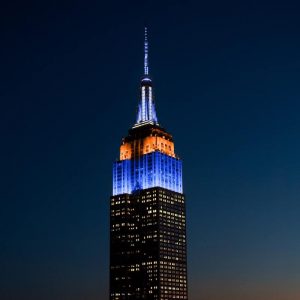 This little light of mine, I’m gonna let it shine. Still, I’ll take it. Or, should I say, I took it and I shall be back for more. Less bitter, more better, I hope. I was back for more in 2015 when all I was doing was doing what I always did. I came back for more Mets and to hope they’d get better. I had no concrete expectations. I generally hoped blindly before 2015. A year later, after a thrill ride dropped the National League pennant off on our porch, my hopes and expectations were heightened. Then lowered. Then raised. Then crushed. Now they’re gone for 2016.
But, oh boy, will they be back in 2017, and not just because I’ll be doing what I always do. I will come back for more Mets and I will come back to hope. Technically, I will be activating what is always there. It was there, lying dormant, when teams like the Royals and Giants were playing on a plane far above ours, and it was there, crackling through every last pitch and missed opportunity, when we rooted against the Royals and then the Giants because the games and the circumstances in October had everything to do with us and our team.
The 2016 postseason party goes on without the New York Mets now, our invitation to this grand autumnal festival quietly rescinded. It was fun while it lasted. Well, it was fun for eight innings, then it turned into the stuff of “I’ll get the coats, you bring the car around, let’s get out of here before anybody notices we’re gone” in the ninth. Pretty soon, everybody else still at the ball won’t remember we were honored guests when the gala began. It used to be they’d let you stick around, get used to your surroundings, make a nuisance of yourself before showing you the door. This Wild Card RSVP didn’t work like that.
Instinct tells us that after losing an entrancing Game One, we’re gonna be fine, it’s a long series, we’ll go get ’em in Game Two. But, of course, it’s not a long series. It wasn’t a series at all. It was one-shot, a one-off, a one-and-done. Appropriate to how we classify it, we were shot, off and done in one night.
The nihilistic and tempting view the morning after is we went to a lot of trouble to lose 3-0 and go home. Had the Mets, who flailed helplessly through so much of the summer, floundered just a little longer and not recovered their mojo in late August, we could have been spared the ceremonial execution of our hope. It would have continued to fizzle and eventually evaporated like it always used to, privately, with only a relative few of us serving as witnesses. Our winter would have arrived on what was its usual schedule, same as it did in 2014 and 2013 and 2012 and so on. We could have dismissed 2015 as an aberration and watched a new episode of Modern Family or whatever else was airing Wednesday night.
Happily — yes, happily — 2015 was not an aberration. It did alter our expectations. We did enter 2016 conceiving that the new season would somehow outdo the last season. “World Series or bust” was a phrase thrown around with a straight face, as if the options following almost winning it all were limited to going one step further or failing completely.
How droll.
Perhaps you remember the sharpest zinger from the film version of Moneyball. GM Billy Beane and coach Ron Washington visit Scott Hatteberg in the offseason to convince him to sign with the A’s and play first base for them. Thing is, Hatteberg’s been a catcher his entire major league career. Brad Pitt’s Beane assures Chris Pratt’s Hatteberg, “It’s not that hard, Scott,” and then turns confidently to his stonefaced coach (Brent Jennings) for backup.
“Tell ’em, Wash.”
“It’s incredibly hard.”
That’s just first base in the movies. Now consider trying to approximate one year’s unexpected success the very next year, yet with the burden of expectations, but without the participation of all kinds of key contributors from the year before. Imagine you’re asked to make the playoffs twice in two years when making the playoffs just once in a while is a historical rarity in your organization. Imagine you fall almost hopelessly out of the race remarkably late in that second season. Then go and do what you set out to do when the season commenced, when your goal was no mean feat to begin with.
Yeah, it’s incredibly hard. But the New York Mets just did it. They were postseason qualifiers for the second time in two years, busting past the 162nd-game barrier just as they did in 2015, yet nothing at all like they did in 2015. They made it, though. Not as division champions, and not with ninety victories, and not on the glittering arms of a golden rotation, but they made it just the same.
Somehow, the portion of the journey that defined this season felt even more Amazin’ than the season that preceded it. This wasn’t 2015 2.0, which is not to say that wouldn’t have been splendid had such a reproduction been available to us. This was 2016, its very own chapter in our ongoing family history and a worthy descendant of a season we’ve been invoking for decades every time summer was down to a wisp and the contemporary campaign was circling the drain.
We had to believe, we’d been telling each other since 1973. This year, 43 years after the seminal surge that confirmed faith doesn’t have to be futile, we saw again what can happen when we consent to believe. That year faith carried us almost all the way. This year it got us only so far, but certainly further than could have been rationally projected a blink ago. As play began on August 20, our Mets were 60-62 and five-and-a-half games out of a playoff spot (those are coordinates we will be repeating as long as we root, which is to say as long as we live). As play continued on October 5, so did we. In between, the Mets did everything they had to in order to deliver us to the doorstep of possibility, a place we had to squint to see from where we seemed stranded less than seven weeks before.
The Mets won 27 games from August 20 to October 1. Almost every one of them felt like The Game of the Year until it was supplanted by a victory even more astounding. Whenever faith threatened to revert to folly, something we needed to happen would happen. A home run was hit. A strike was thrown. A catch was made. A player we’d barely heard of or thought of before this season took up residence in our hearts. In the middle of 2016, the Mets were comprised to an alarming extent by guys who essentially wandered in off the street. How were we supposed to get behind them if we could barely remember who they were?
When it came to selecting retreads and promoting obscurities, Sandy Alderson proved himself, à la Hatteberg in the movies, a pickin’ machine. We know who these Gsellmans and Lugos and Loneys and Riveras and Kellys are now, and if they listen closely, they can hear us do our best impression of Gerry and the Pacemakers, regardless that their ferry didn’t cross all the way into the NLDS:
We don’t care what your name is, boy
We’ll never turn you away
Not after a finish to the regular season like they and their teammates gave us, not even after the lone postseason night that ended their trip sooner than we’d hoped.
In the only Wild Card Game the National League had to offer us, we couldn’t furnish our ferryman, Noah Syndergaard, with nearly enough offense to get us to the other side. Syndergaard was brilliant. Ten strikeouts, two hits, three walks, one stolen base, one not so stolen base (thanks, replay) and one gargantuan Grandersonian grab at the wall added up to a shutout in progress. The Giants did nothing against him for seven innings and never appeared on the verge of doing anything irreversible against him. The only way Noah’s night would go for naught is if there happened to be on the Citi Field premises somebody in a San Francisco uniform matching him pitch for pitch.
That could be a problem. It was. The Giants brought Madison Bumgarner to Queens; why the TSA didn’t detect this deadly weapon I don’t know. Bumgarner owned that seventh game versus the Royals in 2014. He’s excelled in game after game versus everybody in every postseason he’s pitched in since 2010. He’s been in a lot of them and never been rousted from any of them.
That track record holds. Whereas Thor was epic over seven, Bumgarner was Bumgarner for nine. The Mets put six baserunners on across nine innings. None neared home plate. Once or twice the “Mad” in Madison appeared poised to overtake the visiting starter — the strike zone was not a constant by Mike Winters’s reckoning — but there is, unfortunately, no bum in Bumgarner, not in October. (Not that I didn’t hurl far worse epithets at his televised image over the course of the Wild Card evening.)
Bumgarner barely bent and didn’t come close to breaking. Syndergaard departed and left the Mets’ chances of outlasting his counterpart to the best of his bullpen. Addison Reed wriggled from a bases-loaded jam in the eighth, making it 26 consecutive innings of the Giants not scoring against the Mets in postseason play, a string that dated back to October 7, 2000. Maybe, just maybe, the ghosts of Benny Agbayani and Bobby Jones would be kind enough to kindle some friendly spirits for us.
Instead, Jeurys Familia turned the ninth inning into a haunted house. A double to Brandon Crawford. A one-out walk to Joe Panik. A three-run home run to Conor Gillaspie. A three-nothing Giant lead. When these SOBs break a scoreless streak, they don’t mess around.
Familia, who saved 51 games in 2016 on top of 43 in 2015, but was charged with three blown saves in last year’s World Series and now has this loss emblazoned on his ledger forever, was booed as he left the mound after completing the rest of the ninth inning to Mrs. Lincoln’s satisfaction. I thought the reaction was tacky. I also thought it was a helluva spot to give up a three-run home run to Conor Gillaspie, only the second home run Jeurys allowed this entire year.
The last three Met batters of 2016 were Yoenis Cespedes (flied to right), Curtis Granderson (flied to left) and T.J. Rivera (flied to center). The Mets’ final out was recorded at 11:21 PM. When the projected time of first pitch is announced for Opening Day 2017, I’ll be back around to let you know when we’ll be reaching the Baseball Equinox, that instant after which we will be closer to the coming season than we are to the last one. Until then, we drift involuntarily away from the Mets, at least in the active sense. They will stay with us without playing as they tend to do, ever more so in this era, a period that commenced in 2015, endured with challenge in 2016 and, because pessimism is as big a bummer as Bumgarner, has every chance of going forward in the foreseeable future…if there is such a creature.
We foresaw a 2016 fronted by more than Thor. We foresaw Harvey and deGrom and Matz and Wheeler. Have you seen them lately? We foresaw Neil Walker holding down second and Wilmer Flores coming off the bench. We foresaw Lucas Duda socking long balls, Juan Lagares tracking down most other balls and, if physically handled wisely, David Wright dispensing captainly wisdom and the occasional double into the gap. We foresaw a quantum leap ahead for Michael Conforto. We foresaw the necessary last step in the development of Travis d’Arnaud.
Tell me more about foreseeable futures. We foresaw the Mets as a contender and a playoff team when we were foreseeing all of the above, before actually seeing no more than a fraction of it. Yet we wound up contending and in the playoffs. We got there, as noted, via a team made up of Gsellmans and Lugos and Loneys and Riveras and Kellys (both Johnson and Ty), but also Granderson in his indispensable mode for a month; and Cabrera as invaluable all year; and Cespedes as explosive in indelible bursts; and Reyes as the prodigal infielder you grudgingly gave a chance and weren’t sorry you did; and Colon as Colon, which needs little delineation but inspires a mountain of appreciation; and De Aza and Reynolds and Ruggiano and Nimmo and Jay Bruce of all people filling vital roles; and Blevins and Edgin and Robles and Smoker and Salas, not to mention Reed, to say nothing (not that you’d want to at present) of Familia, providing relief.
And stirring together this unlikely goop mélange until it qualified as postseason pudding, Terry Collins. They don’t always supply him with the freshest or most appetizing ingredients, yet somehow he whips up a feast and manages to come up with something Amazin’ for dessert. Our second consecutive trip to the Viennese Table didn’t last long, but just getting us a seat at that table took some fancy doing.
We could have danced all month, but we won’t. Nevertheless, 2016 will stand forever as an affair to remember. Thanks to all who joined me in taking part. I hope you had as wonderful a time as I did.
|
|






