American League update:
Yankees.
Eliminated.
No playoffs.
Just like us.
Carry on, October.
 
Faith and Fear in Flushing made its debut on Feb. 16, 2005, the brainchild of two longtime friends and lifelong Met fans. Greg Prince discovered the Mets when he was 6, during the magical summer of 1969. He is a Long Island-based writer, editor and communications consultant. Contact him here. Jason Fry is a Brooklyn writer whose first memories include his mom leaping up and down cheering for Rusty Staub. Check out his other writing here. Got something to say? Leave a comment, or email us at faithandfear@gmail.com. (Sorry, but we have no interest in ads, sponsored content or guest posts.) Need our RSS feed? It's here. Visit our Facebook page, or drop by the personal pages for Greg and Jason. Or follow us on Twitter: Here's Greg, and here's Jason. |
American League update: Yankees. Carry on, October. You know why you should pay attention to your Metsies 162 times a year, even between 12:35 and 3:26 in the afternoon of the 158th time they play in a lost year like 2013? Because if you do, you might find yourself immersed in the unlikeliest of debates, such as the one my friend and I had via email sometime after 3:30. HIM: Terry shouldn’t have taken out Dice-K so soon. We went back and forth on the merits of leaving in Daisuke Matsuzaka, who had pitched a splendid seven and two-thirds innings but had allowed a hit to open the eighth, versus removing him for Pedro Feliciano with two lefties, Shin-Soo Choo and Joey Votto, due up. Whether I was right in light of Feliciano stranding Derrick Robinson on second or my friend was right because Matsuzaka theoretically earned the chance to get out of the inning suddenly struck me as irrelevant. Can you believe, I asked, that after all we’ve seen from this team that our big issue today is that we aren’t sure whether Terry Collins left Daisuke Matsuzaka in a game long enough? Dice-K’s come a long way, baby, and the Mets…well, they won a Matsuzaka start, 1-0, in less than three hours; they took a series against a playoff team; and they finished up a road trip 5-1, bringing them to 9-4 in their last thirteen outings overall. The numbers mean only what you can make them mean by now, but still. Pay attention and you see things. You see a catcher whose name existed on the farthest periphery of your Mets consciousness four weeks ago throw out an instantly legendary basestealing sensation with a ready-made Hall of Fame moniker. Juan Centeno? Gunning down Billy Hamilton? Who had been 13-for-13 in his core competency since coming up to Cincinnati in early September? Who had swiped a typographically correct 333 bases in his last three minor league campaigns? With Dice-K of the notoriously leisurely pace on the mound? Yeah that thing happened in the fifth, and it was important in the context of a game in which only one run was scored and it wasn’t scored by Hamilton or any Red. It scored only because Wilfredo Tovar — a high-profile personality compared to Juan Centeno — was kind enough to get hit by Mat Latos, move along to second on a Matsuzaka bunt, take third when Latos threw a pitch that eluded the grasp of Devin Mesoraco (speaking of names that loiter in the back of your baseball awareness) and dash home when Eric Young broke his bat to produce the tricklingest of grounders that snuck into right through a drawn-in Red infield. The Mets went up, 1-0, in the third without anything that could be remotely mistaken for a component of an offensive attack and Matsuzaka, Feliciano and LaTroy Hawkins made it stick. That thing happened, too. I wasn’t expecting it but it was worth paying attention for when it materialized. Call it the magic of the final weekday afternoon game of the year. Call it the Reds in a slump at the worst possible juncture for them; they’re all but eliminated from winning their division and they’ve fallen dangerously behind in their quest to host the Wild Card game. Call it Dice-K in renaissance mode, making each of us who doubted him, scoffed at him and napped to him very slowly eat our words. Y’know what? They’re delicious. 73-85 with four to go isn’t so tasty, but it could be worse. This entire Met season has been an exercise in replacement-level baseball, maybe not in the strictest statistical sense of the phrase but in that the Mets have continually replaced guys who’ve replaced guys who’ve replaced guys and they somehow don’t own one of the ten worst records in the sport. Should that ranking hold and the crossroads of free agency and draft position grow muddy in the offseason, so be it. That’s for fretting over from November to February. All we have left to deal with in the near term is late September and the small satisfactions to be derived from winning a little more than we had been in mid-September. In the last week of the season, when one of your allotted 162 games arrives inside your attention span on a Wednesday afternoon and delivers you a most pleasant victory, you take it, you grab it and you try to hold onto it a little tighter than if it showed up much earlier. You do it because you know damn well you won’t get another opportunity like this for a very long while.  11 comments - (Comments closed) | | 11 comments - (Comments closed) | |  Print This Post | Print This Post |  Billy Hamilton, Daisuke Matsuzaka, Day Games, Juan Centeno, Midweek Afternoon Games, Reds, September Billy Hamilton, Daisuke Matsuzaka, Day Games, Juan Centeno, Midweek Afternoon Games, Reds, September 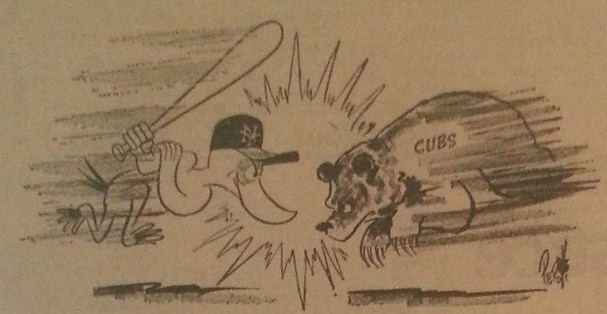 Most indelible image ever. Vic Black’s my kind of Met. I haven’t felt this kind of simpatico with a September callup reliever since Julio Machado arrived 24 years ago and brushed back Tom Pagnozzi, his very first batter. True, things didn’t work out so well for Machado in the long term, but he knew how to announce his presence with authority…at least until the Venezuelan authorities got hold of him for a crime far worse than coming in high and tight on a Cardinal catcher. Black hasn’t been quite so bold since arriving from Pittsburgh’s suddenly fertile farm system, but he’s put Cholula on the ball, he’s thrown it by plenty of batters and, as he proved Tuesday night in Cincinnati, he might very well be the Closer of the Future (sorry Bobby Parnell, we have conveniently short memories when it suits our whims). But that’s not why I’m into Vic Black at the moment. We’ve had our share of Closers of the Future who eventually disappeared like Derek Wallace or receded into a sad state of Heilmanhood. I’m into Vic Black because of what he told reporters following the notching of his first Met save. “We never liked the Reds.” Huh? A player admitting disdain for a particular opponent? A veritable five minutes after his promotion? They can do that? Mind you, Black was smiling when he said it, but he was serious. The “we” in question wasn’t the Mets, but his family. The Texan explained he has an uncle who had a particular distaste for Cincinnati’s baseball enterprise; young Vic simply adopted it and apparently relishes it. Closing out a game that did damage to the Reds’ playoff position was an achievement that rose above clichéd icing on the cake. It was, in a promising touch of Dickeyspeak, “watering that flower of hatred.” I will not be kissing Vic Black, but I almost want to. Yes! Those guys on the other team…HATE THEM! Not hate to a point where you’re Julio Machado in a rage and going to prison for it, but don’t be blasé about your opponents. Pick a team and make them your rival. Hey Vic, I still hate the Cubs the way you hate the Reds. I picked up on hating the Cubs when I was six. They were the nasty bear on the back page of the Post my father brought home from the city every night. The Mets were the duck. Together they represented the National League East race, my first chance to choose sides. Of course I chose the duck. The duck was from New York. I was from New York. The duck was lovable. The bear was unlikable. The Mets trailed the Cubs. They passed them. And I still hate the Cubs from that seminal exposure. I hated them in 1970 when both they and the Mets unsuccessfully chased the Pirates. I hated them in 1973 when — spoiler alert! — they were the last obstacle between us and a second division title. I hated them in 1979 when they were atrocious but we were more so. Oh, how I hated them in 1984 for turning 1969 on its head; I took special pleasure in the Pirates clinching their 2013 playoff berth at Wrigley Field because I ruefully remember the Cubs clinching theirs 29 years ago at empty Three Rivers Stadium, thereby ending a beautiful Met dream. I relished stomping on the disintegrating Cubs in the summer of 1985, sweeping them four straight at Shea, a series the AV squad capped off by blasting “The Night Chicago Died” loud enough to intrude on Tim McCarver’s postgame report. I hugged and high-fived that much more forcefully because we clinched our 1986 N.L. East title in their ursine faces — take THAT, Chico Walker! I was extra disgusted that we finished second to them instead of Pagnozzi’s Cardinals (about whom I’m still not crazy) in 1989. I laughed hysterically at Brant Brown dropping a fly ball in 1998, grumbled mightily that they won the Wild Card over us days later and Sheadenfreuded in my heart when Steve Bartman showed better defensive form than Moises Alou in 2003. Nine years ago today I danced a jig in my soul as Victor Diaz took LaTroy Hawkins over the wall at Shea and sunk the hearts of probably 20,000 Cubs fans in my midst. I literally skipped to the 7 train on the afternoon of May 17, 2007, when the Mets scored five in the ninth to stun the Cubs, 6-5. And on June 16, 2013, when the Mets and I were as mopey as we’ve ever been together, Kirk Nieuwenhuis raised Western Civilization to new heights and we as a people experienced a spiritual renaissance that lasted clear to the final week of July. Yeah, I still have no use for the Phillies and Braves in the same way I have no use for the Cardinals. Those are legacy hatreds, but they feel too recent to fully resonate in my deepest, darkest recesses and the Mets were lousy at keeping up their end of the bargain against them on the field. The Marlins are the Marlins, which speaks a volume or two, but they’re also just the Marlins. The Nationals’ existence is grating, but we’ve never competed for anything but our dignity with them (which we lost two weeks ago). Current era of good Bucco feeling notwithstanding, I haven’t forgotten Pirates fans howling obscenities at Lenny and HoJo in the summer of 1988 — or the idiot who sat behind me in May who incessantly repeated “C’mon Cutch!” for nine miserable innings — but to mine the residue of that scab at this late date seems counterproductive. And yes, the Yankees. But that’s the other league. What I guess I’m saying is if I was reincarnated as a hard-throwing youngster just called up to the hopelessly out-of-it Mets and I had my choice of impeding any team’s playoff plans, it would be those of the Cubs. Can’t water that flower enough. 9 comments - (Comments closed) | | Print This Post | Cubs, Julio Machado, Reds, Rivalries, Vic Black Forty years ago today, the Mets were hosting Montreal, sitting in first place, one half-game ahead of the second-place Pirates in the N.L. East with a record of 79-77…and they were about to post one of the 500 most Amazin’ wins of their first 50 years. From The Happiest Recap (First Base: 1962-1973)… *** What mattered most, per the parameters of any pennant race, was how the game ended, and on this Tuesday night, it ended spectacularly well, with Tug McGraw coming on to throw two-and-a-third innings of shutout ball to seal Jerry Koosman’s 2-1 victory over the fast-fading Expos. Sparked by yet another Cleon Jones home run, the Mets won their seventh in a row, stretching their lead over second-place Pittsburgh to a game-and-a-half with five to play. McGraw was doing everything in his power to back up his You Gotta Believe credo. From September 5 to September 25, as the Mets took 15 of 19, McGraw made a dozen appearances. Every one of them was a personal and team success: he saved nine games and won three more. Eight of the outings were at least two innings long. Tug’s pitching put the usual exclamation point on the Shea festivities, but nothing could have made more of a statement about the magical properties of this Met month than the way the evening began. Hours before Tug bid au revoir to the team from Canada, his most revered teammate was issuing a memorable signoff to a whole other nation. It was Willie Mays Night, marking the end of a career surpassed by nobody for utter brilliance. Mays began it in 1951 in the same place where the Mets learned to crawl, at the Polo Grounds in Upper Manhattan. Six years and a slew of indelible images later, Willie and his team, the New York Giants, were whisked away to San Francisco. Their departure, along with the Brooklyn Dodgers’, facilitated the birth of the Mets, which was a good thing for the millions wrapped up in total Belief by September of 1973, but old-timers would tell you there was always a little something missing from the New York National League baseball scene as long as the quintessential New York National League baseball superstar was plying his trade on the West Coast. Mrs. Joan Payson attempted to turn back time and make all right with the world in 1972 when she plied a trade of her own: Charlie Williams and cash to the Giants in exchange for Willie’s homecoming. It was a dramatic success from the Say Hey get-go… though after the euphoria of Willie Mays in a New York uniform settled down, it couldn’t help but be noticed that a season later, the Mets were left with a 42-year-old legend who had never been anything but a legend — but had never been 42 before. Willie contributed a few timely hits in 1973, but after going 0-for-2 in Montreal on September 9, his batting average sank to a most unMayslike .211, accompanied by six homers, 25 RBIs and a mere 24 runs scored in 66 games played (Willie had scored more than a hundred runs annually from 1954 through 1965). He was hurting physically after cracking two ribs on a metal rail at Jarry Park in pursuit of a foul ball, and mentally, not being the Willie Mays whom fans from coast-to-coast idolized and idealized finally caught up with him. Thus, he announced his retirement at a press conference in Shea’s Diamond Club on September 20. Phil Pepe covered the SRO event for the Daily News, reminding any readers who were perhaps momentarily dismayed by Mays’s descent into cranky mortality — a couple of times as a Met, he hadn’t shown up when and where expected, making Yogi Berra’s managerial tenure no easier — what Willie represented beyond his 660 home runs, 1,903 runs batted in, 2,062 runs scored, 3,283 base hits and .302 lifetime average. “[It] is not the records or the statistics or the awards that distinguish him,” Pepe wrote. “It is the memory of the way the man played the game, with a zest and a daring, with an excitement that is unmatched.” “I’ve had a love affair with baseball,” Mays told the media, but acknowledged, “you just can’t play at 42 the way you did at 20.” The Mets had already scheduled Willie Mays Night before his retirement went official. When they announced their intention to honor him, it was before there was any inkling that it would serve as a sidebar in a sizzling-hot pennant race…or that a pennant race might provide the backdrop to Willie Mays Night. Where No. 24 was concerned, it was unfathomable that he wouldn’t be the main attraction. Sure enough, a full house of more than 53,000 showed up at Shea to bestow its appreciation on Mays. After a 45-minute tribute in which Willie was showered with all manner of gift and applauded by a veritable Hall of Fame cast of his Giant, Dodger and Yankee contemporaries from the golden age of New York baseball, it was the man of the hour’s turn to speak. *** What happened next? You’ll find out when you read The Happiest Recap (First Base: 1962-1973). Print edition available here. Kindle version available here. Personally inscribed copy available here. Pick up The Happiest Recap and get the whole Amazin’ story of the Mets’ most unbelievable stretch drive ever…and everything else. 2 comments - (Comments closed) | | Print This Post | 1973 Mets, The Happiest Recap (The Book), Willie Mays You’d have to be made of iron, or perhaps impaired by Iron City, to not feel absolutely overjoyed for Pittsburgh Pirates fans this morning. You know the figures. They’ve been drummed into you ever since they coalesced into a thing: not in the playoffs since 1992; not even a winning record since 1992; not much of anything since 1992. Check your since-ing at the door (or darrgh!). The Pirates are in the now again. They’re now in the postseason, having had their ticket validated at Wrigley Field Monday night. Heartiest congratulations to those who’ve rooted unrelentingly for a team without receiving any kind of tangible reward for more than two decades. My short-term hope is that Pittsburgh somehow supercedes Cincinnati for home field in the Wild Card game if they can’t win the N.L. Central outright. This Buccaneer breakthrough won’t be nearly as sweet without PNC Park sparkling for, at minimum, one high holy night of nationally viewed baseball. Not exactly helping to reserve a glimmering October evening along the banks of the Allegheny were the Mets, who spent Monday night 250-some miles west of Pittsburgh, where the mighty Ohio flows practically up to right field. In Cincy, the Mets — conscientious objectors to playoff participation since 2006 — succumbed to the Reds in ten innings, 3-2. The score and the length imply a competitive contest, which I suppose it was. Mostly the Reds found creative ways to not score (15 LOB) before ensuring their own postseason berth in extras, while the Mets dutifully marked time just long enough for their manager to be dissonantly self-congratulatory about it afterwards.
Remember Jerry Manuel’s occasionally infuriating cackles as he tried to explain away losses? Those weird little laughs tended to be taken as a manager finding something funny about his team suffering a defeat. I generally saw them as a nervous tic, a flummoxed skipper’s way of throwing up his hands and rhetorically asking, in essence, whaddayagonnado? I don’t miss it, or Manuel, but Terry Collins’s mantra of how hard his Mets played, how they don’t give up no matter how many innings it takes and how we ought to remember the guys on the other side are good major league players, too, is just as infuriating to listen to after a loss. He repeats these lines constantly as if the Mets are to be commended for not jogging into the dugout and forfeiting by 7:30 (though that would leave more time for wacky wedding picture planning, the one category in which the Mets seem to be blowing away the competition). The Mets tried to beat a better team Monday night. They couldn’t. They loomed as a spoiler, but wound up serving as a freshener for the Reds’ autumnal intentions. But, no, they didn’t abandon the field in the process. I will not add, “good for them,” as their manager reflexively does, even if it’s probably just his version of the Manuel cackle. Whaddayagonnado? Sandy Alderson is gonna retain Terry Collins for 2014. Here’s hoping a decent guy who’s been a decent manager is granted better material with which to work and we get to hear him elaborate engagingly on how the Mets just won yet another ballgame. Or he can be boring as all get-out in victory. To paraphrase Al Davis, just win already yet, baby. “We haven’t won and that’s always an issue,” Alderson added to an otherwise glowing non-confirmation of Collins’s return. I’d say it’s a glaring one, along with the Mets’ pre-existing condition when Sandy and Terry arrived three years ago to ever-so-slowly turn this hulking vessel of dismay around. Given the Minayan and Wilponian circumstances under which Alderson and Collins took their respective reins, patience and understanding are reasonable requests to make of a fan base that is only one-third as starved for tangible reward as the Pirates’ was until Monday night. I didn’t expect results in 2011 or 2012 or 2013, thus I haven’t been terribly disappointed when they’ve failed to materialize. Still, I could do without the outward organizational satisfaction that things are going along swimmingly because everybody’s giving it their best. Their best adds up currently to a 71-85 record, which fits snugly with the preceding seasons’ 77-85 and 74-88. It may not be Terry’s fault. It may not be Sandy’s fault. It may turn out to be well-disguised progress when we are able to view these days with the benefit of hindsight. In the interim, however, I’d ask the fellas to please tone down the “we played hard” stuff, at least until MLB adds a Good-Natured Effort column to the official standings. 18 comments - (Comments closed) | | Print This Post | 2013 Postseason, Jerry Manuel, Pirates, Playoff Droughts, Reds, Sandy Alderson, Terry Collins Forty years ago today, the Mets were hosting St. Louis, sitting in first place, one game ahead of the second-place Pirates in the N.L. East with a record of 78-77…and they were about to post one of the 500 most Amazin’ wins of their first 50 years. From The Happiest Recap (First Base: 1962-1973)… *** Tommie Agee was in the house, but there was nothing ceremonial in his role. Sure he was a Miracle Met, but the franchise he helped make famous wasn’t honoring the 1969 club’s feats this Sunday at Shea. But they sure seemed to be replicating them. It may be heresy to suggest what the 1973 Mets were in the midst of attempting to do was tougher, more unlikely and every bit as thrilling as what their Amazin’ predecessors pulled off a quadrennium earlier, but consider that Agee’s Mets, for all their underdog status, had lit their fuse by mid-August and weren’t too bad in the months before that. When the 1969 Mets reached the end of the penultimate week of their schedule, the magic number count was in full effect and a division-clinching was inevitable. Nothing was inevitable for the 1973 Mets as they prepared to play the second of their two-game set against Agee’s Cardinals. Tommie’s post-Flushing campaign had been anything but miraculous. He didn’t thrive in Houston (where the Mets sent him for instant washout Rich Chiles and minor leaguer Buddy Harris) and he didn’t exactly ignite for St. Louis when the then first-place Redbirds picked him up for the stretch drive in August. But he was still Tommie Agee and this was still Shea Stadium in a pennant race, so it was little wonder that the center fielder who almost single-handedly won a World Series game on this same field in 1969 would come through for his team when they desperately needed a lift. With one out and Ted Sizemore on second in the top of the first, Agee belted a George Stone pitch over the familiar Shea wall to stake starter Mike Thompson to an instant 2-0 lead. It was a fitting locale for what became the final home run of Tommie Agee’s big league career. The rest of the day, however, would be devoted to a blend of new and old Met heroes coming through for a new Met miracle. Stone, one of the Mets’ opponents in the 1969 NLCS as a Brave, had provided an unexpected boost to New York fortunes all year long, but the lefty didn’t have it against the Cards. Yet as things continued to click for Yogi Berra’s bunch, a pitcher from whom even less was anticipated in 1973 emerged to dash St. Louis’s hopes. Harry Parker, given up on by the Cardinals a couple of years earlier, became a bullpen stalwart for Berra in his first full season on a major league roster. The righthander took the ball from Yogi in the third and stayed on the mound through the sixth, allowing only two Redbird baserunners. While Parker pitched, the Mets did a bit of walking at the expense of another former teammate. Rich Folkers, who was part of the eight-player trade that brought Parker to New York, was on for the Cardinals in the third and went wild. He walked Wayne Garrett, Felix Millan and Rusty Staub to start the inning. Folkers wouldn’t be around by its end when a Cleon Jones sacrifice fly cut the Cardinal lead to 2-1. Staub (a .387 batter over the Mets’ final fifteen games) tied the score in the fifth on an RBI single off Folkers’ immediate successor, Orlando Peña. In the sixth, Mr. September — Garrett — tripled to bring home Bud Harrelson and Ken Boswell, making it Mets 4 Cardinals 2. In the seventh, Jones, having his own magnificent month, homered. Before his finishing kick would be over, Cleon would notch six homers and 14 RBIs in the Mets’ final ten games. All that was left was for someone to close out the Cardinals in style, and in September 1973, that could only be one person. To the glee of the 51,926 You Gotta Believers on hand, Tug McGraw emerged from of the bullpen buggy to pitch the final three innings. *** What happened next? You’ll find out when you read The Happiest Recap (First Base: 1962-1973). Print edition available here. Kindle version available here. Personally inscribed copy available here. Pick up The Happiest Recap and get the whole Amazin’ story of the Mets’ most unbelievable stretch drive ever…and everything else. The Mets would be better off continuing to lose — if they finish in the bottom third of teams record-wise, they can sign a free agent who’s received a qualifying offer without surrendering their first-round draft pick. (This is, of course, assuming the team will sign decent free agents this winter, which I’ll believe when I see somebody awkwardly button a jersey over a dress shirt.) Right now the Mets are in a three-way tie for the ninth-worst record with the Phillies and the Blue Jays, with the Padres and Giants within a game futility-wise. It’s gonna be close. We should be hoping for a string of Ls. No, really — strip away the caveats about ownership and draft picks working out and everything else, and it’s simple: If we stay bad, we can spend money and still keep a high-value draft pick. That will do far more for the long-term interests of the ballclub and our sanity than the rosy afterglow of winning 75 games instead of 73. I kept reminding myself of this during the afternoon, but it didn’t matter. Because there were the Phillies, before a packed house on their final home date of the year, and there we were poised to sweep them, take the season series by a skimpy 10-9 and move into a tie for third place. I wanted the Mets to win, and I wanted it badly. The thing is, I’ve never really disliked the Phillies that much. This is mostly because I grew up being tortured by Yankees fans instead of Phillies rooters. (See this post before the World Series From Hell, still our recordholder for comments.) It’s also that for most of my life as a Mets fan, the Phils didn’t matter — as a team they could be relied upon to tune out their manager and fold every summer, and their stadium was hideous but accessible provided you didn’t rile up the surlier denizens, the ones for whom an on-site jail had been built. There wasn’t much point to wasting hate on the Phillies, because they were never really in our way — if we were good they were bad and vice versa. Things changed with the coming of Jimmy Rollins and Cole Hamels and Chase Utley and Shane Victorino, and the change has been good — franchises a mere 100 miles apart should feel more for each other than a vague shrugging dislike. But I’m still getting used to it, just as the Phils are facing another long stretch of irrelevance. This is a rusted and broken team, locked into crummy long-term contracts — in 2015 the Phils will owe $25 million to Cliff Lee, $25 million to Ryan Howard, $23.5 million to Hamels and $13 million to Jonathan Papelbon. The Mets may be cash-strapped, but they should volunteer to pay Ruben Amaro Jr.’s salary as Phils GM for life. Anyway, it was sweet denying Lee the win and denying those Phils fans a last hurrah. It was fun watching Carlos Torres battle his way past Rollins and Utley and Chooch Ruiz and other guys whom I haven’t managed to classify as Phillies quite yet. (Where did Roger Bernadina come from?) It was great watching Juan Lagares continue to hit, and give us some hope that the Great Outfield Puzzle might be solvable after all. It was heartening watching Anthony Recker soldier on with a season that’s quietly gone from a debacle to not really so bad. And best of all, it was a blast seeing Wilfredo Tovar — the first No. 70 in Mets history — collecting his first big-league hit with a liner over short that scored two runs, giving the Mets the lead back for keeps. (Though boo to SNY for missing the ritual of the precious ball being tracked down and removed for safekeeping — they apparently covered it entirely with replays.) Tovar would follow with another hit, steal a base, and he looks better than you’d expect when crammed into a little black dress. Was that all worth a draft pick? In the chill of January I’m sure the answer will be no. But it’s not January — not quite yet. It’s still September, and winning was wonderful. I’m off to California for a week — see you for Piazza Day. Will leave you in the capable hands of Mr. Prince. May all your recaps be happy … and if not, think of the draft pick. 11 comments - (Comments closed) | | Print This Post | Anthony Recker, Fans, Phillies, Ruben Amaro Jr., Wilfredo Tovar Forty years ago today, the Mets were hosting St. Louis, sitting in first place, a half-game ahead of the second-place Pirates in the N.L. East with a record of 77-77…and they were about to post one of the 500 most Amazin’ wins of their first 50 years. From The Happiest Recap (First Base: 1962-1973)… *** Wayne Garrett proved himself worthy of regular’s status as September intensified. He was practically a star by the time the Cardinals came to Shea this Saturday, doing his best Brooks Robinson impression on both sides of the ball. While taking care of the defense just fine, the redhead’s bat caught fire. He would hit .422 over the season’s final dozen games and produced the biggest blow of his biggest month in the third inning when he homered with Bud Harrelson on second to give Jon Matlack a 2-0 lead. Matlack was so appreciative, that he never let it go, tossing a four-hit, nine-strikeout complete game gem to solidify the Mets’ grasp of first place. The 1972 National League Rookie of the Year experienced some sophomore rough patches but hadn’t lost a decision since August 13. He won this one, 2-0, extending the Mets’ winning streak to five and their lead in the East to a full game over the rained-out Pirates. *** What happened next? You’ll find out when you read The Happiest Recap (First Base: 1962-1973). Print edition available here. Kindle version available here. Personally inscribed copy available here. Pick up The Happiest Recap and get the whole Amazin’ story of the Mets’ most unbelievable stretch drive ever…and everything else. The Mets won a truncated game in Philadelphia Saturday night. Though earlier this year we were subject to a plethora of unnecessarily lengthened contests, this version of baseball aberration — six innings and change before the rain made itself unstoppably intrusive — seems more fitting for the 2013 Mets, given that almost every 2013 Met has played a shortened season. Wilfredo Tovar is set to become the 53rd Met to see action this year, a year on the verge of finishing behind only 1967 (54) for most Mets used. That’ll happen when your players don’t make it from one end of the season to another. As was first divined and reported here and widely disseminated without attribution since, the only Mets to start 2013 and (presumably) end 2013 without wandering off to other organizations, lesser leagues or disabled lists have been Saturday night’s winner Dillon Gee, dependable Daniel Murphy and officially ageless LaTroy Hawkins. Everybody else has been a comer, a goer or, when things went reasonably well, a returnee. Things went reasonably well for August hamstring victim David Wright. He’s returned. During the seven weeks he was out… • the Met seasons of Matt Harvey, Ike Davis, Jeremy Hefner, Jenrry Mejia, Robert Carson, Scott Rice, Ruben Tejada and Zack Wheeler came to a definitive end; • the Met careers of John Buck and Marlon Byrd definitively concluded. • the Met careers of Wilmer Flores, Travis d’Arnaud, Daisuke Matsuzaka, Matt den Dekker, Vic Black, Sean Henn, Aaron Harang and Juan Centeno definitively began; • the dormant Met careers of Tim Byrdak, Frank Francisco, Mike Baxter and Zach Lutz each resumed; • and somewhere in there, Jon Niese was routinely reactivated, Lucas Duda was reluctantly recalled and Bobby Parnell subjected himself to surgery. With so many Mets who have been lost or perhaps just misplaced, it has been reassuring to rediscover David Wright in the middle of the Met lineup these past two nights. He produced a homer Friday and another homer Saturday. He’s provided a pedigreed major league presence that had been missing since he came up lame against the Royals on August 2. And he’s manned third base like he was born there. Which he wasn’t, though that fact was hard to remember until we were forced to by circumstance. In the 45 games Wright missed, four different Mets started at third base and a fifth filled in for a couple of innings. The ol’ notorious Mets Third Base Count had to be dusted off to accommodate the additions of Wilmer Flores (No. 151) on August 6 and Omar Quintanilla (No. 152) on September 15. True, Wright’s injury triggered a boom for obsessive Met listmakers, but it wasn’t worth the shortfall it created on offense, defense or special teams. Mind you, it’s not that anybody who played in the Captain’s absence — including Zach Lutz (No. 150), Josh Satin (No. 147) and Justin Turner (No. 141) — was irredemably bad from August 3 through September 19. It’s just that they weren’t David Wright (No. 129). David Wright has played 1,359 games at third base for the New York Mets. Is that a lot? It really is. Never mind that he now outdistances his mentor and runner-up Howard Johnson (No. 78) by more than 500 games. Never mind that Wright’s 1,359 is more games at third than the combination of the third basemen in third and fourth place — Wayne Garrett (No. 40) and Hubie Brooks (No. 68). Instead, keep in mind Wright’s grip on third relative to other Mets in other spots. MOST METS GAMES PLAYED BY DEFENSIVE POSITION Wally Backman (No. 69), incidentally, played 8 games at third base between 1981 and 1983, while Jerry Grote (No. 28) logged 18 games at third, with 2 as early as 1966 and 11 as late as 1977. One of the hallmarks of Mets third base when the counting was frequent and furious, you see, was the out-of-position planting of players you wouldn’t normally associate with third base at third base. Backman? He wasn’t yet established as a starting second baseman, so in a utility role it wasn’t crazy to see what he could do at third. But Grote? The greatest defensive catcher the Mets ever had shuffled off to third? Why not? It was the Metropolitan way to take fellas better known for playing other positions and trying them at third when all else failed or the bench was disturbingly bare. It explains, to various extents, how outfielders Frank Thomas (No. 6), Jim Hickman (No. 15), Amos Otis (No. 36) and Elliott Maddox (No. 59) were trotted over to third and put through some less than ideal paces. Alleged “versatility” is what made Dave Kingman (No. 51) a third baseman for a dozen games in 1975. A marathon punctuated by a brawl is responsible for Hall of Fame catcher Gary Carter (No. 80) landing on third. Talents better suited to DH indicate why Gregg Jefferies (No. 84) was given ample opportunity where he was decidedly unsuited. The tradition of anybody and everybody being given a whirl on the far left side began early and often in Mets lore. Don Zimmer (No. 1) was given less than a month to prove he couldn’t hack it. Zim’s ostensible replacement, Cliff Cook (No. 5), stopped being a Met after two months. During a two-day period in 1963, the Mets tried four new third basemen: Chico Fernandez (No. 11), Larry Burright (No. 12), Al Moran (No. 13) and Ron Hunt (No. 14). Hunt retained a bright future at second — presaging by three decades the career trajectory of Jeff Kent (No. 94). The rest would be gone from the Mets before 1964 was over…by which time Sammy Samuel (No. 19), Wayne Graham (No. 20) and Bobby Klaus (No. 21) would solidify third base’s reputation as hard to solve. Once the Mets had put six seasons in the books — in that Grand Central Terminal year of 1967 — they had tried 38 different third basemen, or more than six wholly new faces per year. The sole survivor from that band of hot cornerers, at least from a still-at-third standpoint, was Ed Charles (No. 32). The Glider glided into 1969 where he shared primary tertiary-base responsibilities with Garrett and Bobby Pfeil (No. 41). It was good enough to add up to a world championship. Alas, Charles and Pfeil didn’t see 1970, Metwise, while Joe Foy (No. 42), Bob Aspromonte (No. 44), Jim Fregosi (No. 46) and Joe Torre (No. 48) were all hailed as veteran answers as the decade proceeded. Inevitably, though the question reverted to “why not Garrett?” At this momentous moment in 1973, Wayne was all the third baseman the Mets would ever need. Yet within two years, the reliable redhead was being shunted aside in favor of prospective wunderkind Roy Staiger (No. 50). But Staiger didn’t last. Nor did one-year whiz Lenny Randle (No. 54) or bright-eyed utility guy Bobby Valentine (No. 57), never mind sourpuss extraordinaire Richie Hebner (No. 62). You could be a catcher like John Stearns (No. 60) or Alex Treviño (No. 61) or Mackey Sasser (No. 82) and get a shot at third. You could be iron-gloved like Phil Mankowski (No. 64) or easing to the end of the line like Mike Cubbage (No. 70) or potentially able but obstinately unwilling like Joel Youngblood (No. 56). Or you could simply be Rich Puig (No. 47), no discernible relation to Yasiel. You could go on like this, but you get the idea. A lot of Mets dross at third base for seasons on end. A little gold here and there, but with luster of a limited nature or tenure. There’d be a Hubie or a HoJo getting the job done admirably until another assignment beckoned. There’d be a Ray Knight (No. 76) winning a World Series MVP award (but then being shown the door), an Edgardo Alfonzo (No. 100) establishing himself as a pro’s pro (but then accepting a request to focus on second) and a Robin Ventura (No. 114) doing everything you could ask for a while (but then rapidly aging). Yet across a maturing franchise’s middle age of sifting through what was left of Garry Templeton (No. 89) and Carlos Baerga (No. 103) and John Valentin (No. 123) and Jay Bell (No. 126) while deciphering if there was anything at all to Craig Shipley (No. 86) and Junior Noboa (No. 91) and Aaron Ledesma (No. 101) and Alvaro Espinoza (No. 104) and Kevin Morgan (No. 106) and Shawn Gilbert (No. 110) and Jim Tatum (No. 112) and David Lamb (No. 120), all the way up to whatever it was the Mets saw in Ricky Gutierrez (No. 128), we waited for the count to slow not just chronologically but conceptually. We waited for the third baseman who would so impress for so long that after many a summer we would have to explain that believe it or not, third base wasn’t always a Met strength. We waited 42½ seasons for No. 129 to arrive and endure. An unfortunate seven-week hiatus that separated us from him just reminded us why. 1 comment - (Comments closed) | | Print This Post | 2013 Mets, David Wright, Mets Third Basemen, Team History Forty years ago tonight, the Mets were hosting Pittsburgh, sitting in second place, a half-game behind the front-running Pirates in the N.L. East with a record of 76-77…and they were about to post one of the 500 most Amazin’ wins of their first 50 years. From The Happiest Recap (First Base: 1962-1973)… *** The Mets commenced to grabbing. As of September 12, they had won nine of thirteen. They’d take an additional three of four as they headed into Pittsburgh to begin their two-city, five-game showdown against the Bucs. They’d lose one, then win the next three. And finally, on the evening of September 21, they ascended to where nobody in his right mind would have predicted the morning of August 31. Tom Seaver threw a Friday night five-hitter while his teammates pounded luckless Steve Blass and five Pirate relievers to beat the Bucs at Shea, 10-2. In a four-day span in September, an unprecedented Metamorphosis occurred. The Mets not only picked up one game per day in the standings, they picked up one place per day. From fourth and 3½ out after Monday, they climbed to first and a half-game up on Friday. It had been barely three weeks since they were in last place. Now they were in first place. And for good measure, they brought their record to 77-77, .500 for the first time since they were 21-21 on May 29. Everybody else was under .500, but only the Phillies could be written off as out of it. The Pirates trailed by that half-game, the Cards by one, the Expos by one-and-a-half and the lately undead Cubs by two-and-a-half. The National League East was still up for grabs, but there was no mistaking that it was the first-place Mets — on a four-game winning streak and a 16-6 roll — who had chosen the ideal moment to make their play. They’d grabbed hold of a lead. With eight games left, the challenge would now turn to holding on to it. *** What happened next? You’ll find out when you read The Happiest Recap (First Base: 1962-1973). Print edition available here. Kindle version available here. Personally inscribed copy available here. Pick up The Happiest Recap and get the whole Amazin’ story of the Mets’ most unbelievable stretch drive ever…and everything else. |

Piazza: Catcher, Slugger, Icon, Star by Greg Prince is available from Amazon, Barnes & Noble and other online booksellers. 
Amazin' Again: How the 2015 New York Mets Brought the Magic Back to Queens by Greg Prince is available from Amazon, Barnes & Noble and other online booksellers. 
Volume I of The Happiest Recap: 50+ Years of the New York Mets As Told in 500+ Amazin' Wins by Greg Prince is available in print and for Kindle on Amazon. 
Faith and Fear in Flushing: An Intense Personal History by Greg Prince (foreword by Jason Fry), is available from Amazon, Barnes & Noble and other online booksellers. |
|
Copyright © 2025 Faith and Fear in Flushing - All Rights Reserved |
||