The blog for Mets fans
who like to read
ABOUT US
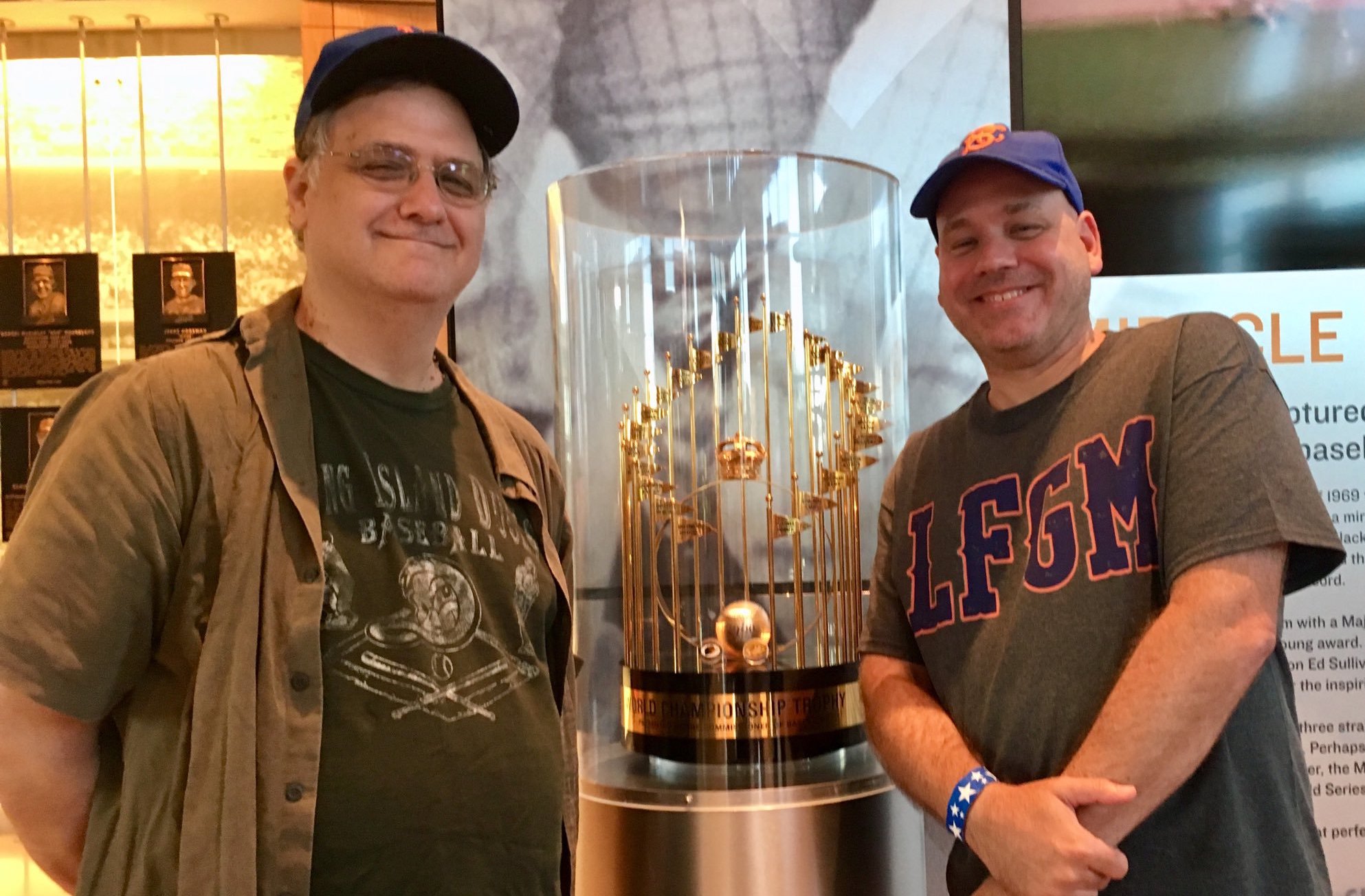
Faith and Fear in Flushing made its debut on Feb. 16, 2005, the brainchild of two longtime friends and lifelong Met fans.
Greg Prince discovered the Mets when he was 6, during the magical summer of 1969. He is a Long Island-based writer, editor and communications consultant. Contact him here.
Jason Fry is a Brooklyn writer whose first memories include his mom leaping up and down cheering for Rusty Staub. Check out his other writing here.
Got something to say? Leave a comment, or email us at faithandfear@gmail.com. (Sorry, but we have no interest in ads, sponsored content or guest posts.)
Need our RSS feed? It's here.
Visit our Facebook page, or drop by the personal pages for Greg and Jason.
Or follow us on Twitter: Here's Greg, and here's Jason.
|
by Greg Prince on 27 February 2011 11:00 pm Most dignified-looking Met: Duke Snider. That gray hair gets them. If he offered to sell you the Brooklyn bridge you’d be certain he owned it.
—Leonard Shecter, New York Post, 1963
“I think Casey was referring to the fact that when I was 29, I’d have 10 years in the league, but of course, he mangled the quote. Even he probably didn’t remember it.”
—Greg Goossen, Los Angeles Daily News, 2009
The confluence of events leads us to contemplate two former Mets who, at first glance, had nothing to do with one another. Duke Snider was one of those Hall of Famers whose “NEW YORK N.L.” notation can be viewed by those not afflicted by a Metsian mindset as a footnote to a brilliant career forged in another uniform. Greg Goossen, on the other hand, played most of his baseball in our favorite clothes but didn’t play it terribly long or with particular distinction. Yet we consider these two Mets at this moment because fate saw fit to bring their lives to an end on the same weekend.
Snider and Goossen were both born in Southern California and both died there, at ages 84 and 65, respectively. They were not contemporaries, having just missed each other in a manner of speaking. Snider’s long major league tenure ended in 1964, a year before Goossen’s began. Duke played until he was 38, though to look at him in his twilight, you would have guessed he edged closer to Hoyt Wilhelm/Jamie Moyer territory. Goossen came up in ’65 as the Mets’ fifth-ever teenager.
Age, though, may be where we find the common ground between the two men whom we mourn.
Duke Snider, post-Flatbush, was a 1963 Met just waiting to happen: he used to be an outstanding National Leaguer and he did most of his standing out in Brooklyn. First Mets president George Weiss constructed his initial roster with an eye on distracting the paying public. No way the ’62 club was going to be any good anyway, so why not stock it full of as many (faded) Senior Circuit stars as could be had, and if they happened to be old Bums, all the better. Thus, the first Metropolitan edition included Gil Hodges, Roger Craig, Clem Labine, Charlie Neal and Don Zimmer; the 1962 Mets could have been the 1956 Dodgers, save for the inevitable deterioration of the human condition.
Then came the Duke, the big bopper in Brooklyn through their incandescent ’50s stay, a lesser light as time (and the Los Angeles Coliseum’s dimensions) took their toll on him in L.A. The Duke Snider the Mets signed just ahead of the opening of the 1963 season was only in name and fame the same slugger who hit more home runs than any other individual in the 1950s. But these were the Mets, and name and fame was good enough.
So was Snider, actually. In modern terms, consider his 1963 a prototype for Gary Sheffield’s last-minute arrival in 2009 (except more fans were happy to see the Duke). Strapped for talent, Casey Stengel played him in the outfield too much — sort of like Jerry Manuel with Sheffield — but he produced a few certifiably memorable moments, including a milestone homer. Just as Sheff joined the 500 Club in Citi Field’s first week, Duke hit No. 400 as a Met, at Crosley Field in Cincinnati, though the shot that survives in memory and kinescope footage was the one before it. The Mets trailed the Cardinals 2-0 at the Polo Grounds in the bottom of the ninth on June 7. With one out, Rod Kanehl on third, Ron Hunt on second and Diomedes Olivo on the mound, the Duke swung and sent No. 399 soaring over the right field fence…same as he might have taken aim at Bedford Avenue once upon a time. The Mets prevailed 3-2 in their only Duke-off win.
Snider totaled 14 home runs as a Met and served as their lone All-Star representative in 1963. Unbeknownst to everybody 48 years ago, he also posted the second-best WAR on the club, behind only Hunt. Toward year’s end, the unthinkable occurred and the Duke of Flatbush was given a Night of his own at the Polo Grounds, replete with a car, a golf cart and trip for two anywhere he wanted in the world. The occasion was warm and fuzzy enough, but overall, his Manhattan “homecoming” wasn’t everything Duke could have wanted. The Mets were a 51-111 enterprise, Casey Stengel was grabbing a few winks on the bench and Snider wasn’t getting any younger. He wanted out and, on the cusp of the 1964 season, his wish to go to a contender was granted — Duke Snider was sold to the Giants.
Which was a lot weirder than a Brooklyn Dodger becoming a New York Met, but at 37 and with his skills clearly receding, even future Hall of Famers couldn’t be choosers.
As Snider was escaping the Queensbound Mets, the emphasis for the third-year franchise was changing from familiar veterans with little left to kids whose eventual limit may very well have been the sky. With the Mets 140 games under .500 after two years, there was no time like the present to find out how high those youngsters’ ceilings might rise. In the spring of 1964, Stengel stirred to proclaim the Youth of America was en route to beautiful new Shea Stadium.
Hardly anybody was more youthful than catcher Greg Goossen in Shea’s first seasons, though he was hardly alone among those barely old enough to enjoy an ice cold Rheingold after games (and not old enough to vote in anything but an All-Star election). Seven members of the 1965 Mets played big league ball before turning 21. Hardly any of them was truly battle-ready. Goossen wasn’t ripe yet, but he gave a decent enough accounting of himself upon his cup of September coffee, batting .290 and reaching Bo Belinsky at Connie Mack Stadium for his first homer.
Goossen would be back in the minors most of 1966 until September, when he cracked one more homer but hit a scant .188. Wes Westrum kept him on the roster the first month of 1967, and brought him back from the minors in July, but Greg’s progress was moving in reverse: .159 BA/.216 OBP/.174 SLG in 74 plate appearances. He lasted three months under Gil Hodges in 1968 and didn’t impress. Just before the 1969 Mets began to coalesce in St. Petersburg, Goossen, 23, was traded to the expansion Seattle Pilots for Jim Gosger.
This may be the longest anyone has ever written about Greg Goossen’s Mets career without mentioning the one thing it seems everybody remembers, so let’s mention it. It comes in slightly different shapes and flavors, with the ages sometimes fudged for fluidity’s or accuracy’s sake and sometimes without the proper setup — namely that in the spring of 1965, Casey Stengel was touting the potential of his many youngsters, including bonus baby Ed Kranepool, who, Casey declared, was 20 but had a chance, ten years hence, to grow into a star.
Let Jack Lang, via New York Mets: Twenty-Five Years of Baseball Magic, pick it up from there.
“‘And we have this fine young catcher named Goossen who is only 20 years old, who in ten years has a chance…’ Stengel stopped. For a split second he was stumped. Then he continued in classic Stengelese, “‘in ten years he has a chance to be 30.’”
Greg Goossen had more in store for himself beyond simply aging. He was one of the few Seattle Pilots there ever were (joining most of the rest of them in Jim Bouton’s Ball Four) and then, after following them to Milwaukee (and finishing up as a Washington Senator) in 1970, he went Hollywood. Goossen enjoyed a lengthy career as Gene Hackman’s stand-in, nabbing more than a dozen screen credits for himself along the way.
Still, Casey wasn’t altogether wrong. Greg Goossen did turn 30 ten years after he was 20 (even if he was only 19 when Stengel offered the most oft-told version of his forecast). The kid had a future…it’s just that baseball wasn’t much a part of it. The Youth of America, however, yielded a few tasty plums, per the Ol’ Perfesser’s prognostications. Three of his sub-21 Mets from ’65, his final season as skipper, were Kranepool, Ron Swoboda and Tug McGraw, all of whom would become world champions the year Greg Goossen was a Pilot. Then again, the rest of that era’s kiddie corps didn’t necessarily have it so good — witness the long and winding road to obscurity for 1964 teen dream Jerry Hinsley — leading one to wonder how much better off the most callow mid-‘60s Mets might have been had they not been rushed onto a perennial cellar-dweller.
Greg Goossen was probably too young to be a Met when he was called to active duty, though, to be fair, he wasn’t going to be a baseball star at any age. Snider, conversely, was one of the absolute greats of his era, a period that, unfortunately for us, preceded by several years the existence of our Mets and the season he played for them.
But that’s OK, too, I suppose. In his baseball prime, Duke Snider’s job was to hit home runs and catch fly balls for the Brooklyn Dodgers. Afterwards, as best as I can tell, it was his role to have been Duke Snider.
There was something quintessentially nostalgic about the existence of Duke Snider once he quit playing. It was comforting just to hear his name, even for those of us who never saw him as a Dodger or a Met or a Giant. Whenever Duke’s name came up, particularly if it was brought up by his contemporary Ralph Kiner (or, better yet, when Duke joined Ralph for a chat when he was working as an Expos announcer in the ’70s and ’80s), it reminded you of what had been. Here was evidence that there were Brooklyn Dodgers, that there was Ebbets Field, that The Boys of Summer wasn’t just an apropos book title, that the 1950s were more than the setting for Happy Days.
Duke Snider somehow reassured me that the whole thing wasn’t just something my Brooklyn-born mother made up.
As much as I read about those Dodgers, there was a certain unreality to them in my mind, no matter how beautifully Roger Kahn brought them to life, no matter how many of their National League pennants were stitched into the permanent record. Intellectually, I got that there was a Pee Wee, a Jackie, a Campy, an Oisk and so on. I understood that the Los Angeles Dodgers were a transferred (stolen) entity. But somehow it never quite registered as real, probably because the Brooklyn I saw from the back seat of the family Chrysler on visits to relatives or doctors evoked a number of images for me, but home to a major league baseball team wasn’t one of them.
Thanks, then, to Edwin Snider, for serving as “the Duke” long after the Dodgers left Brooklyn. Thanks to Duke for showing up here and there over the decades and telling his stories, feeding our nostalgia and constituting one-third of an immortal trio not just for Terry Cashman but for the rest of us as we wrapped our heads around the way it really was. That there were Brooklyn Dodgers. That there was an Ebbets Field. That Willie, Mickey and the Duke each roamed the earth in geographic proximity to where we’d come along later. Being Duke Snider had genuine value for so many of us who are proud to call ourselves baseball fans and New Yorkers.
And being Greg Goossen? You mean to be young and a Met? Even a little too young and a Met? Who among us, no matter how allegedly mature, wouldn’t sign for that at any stage of our lives?
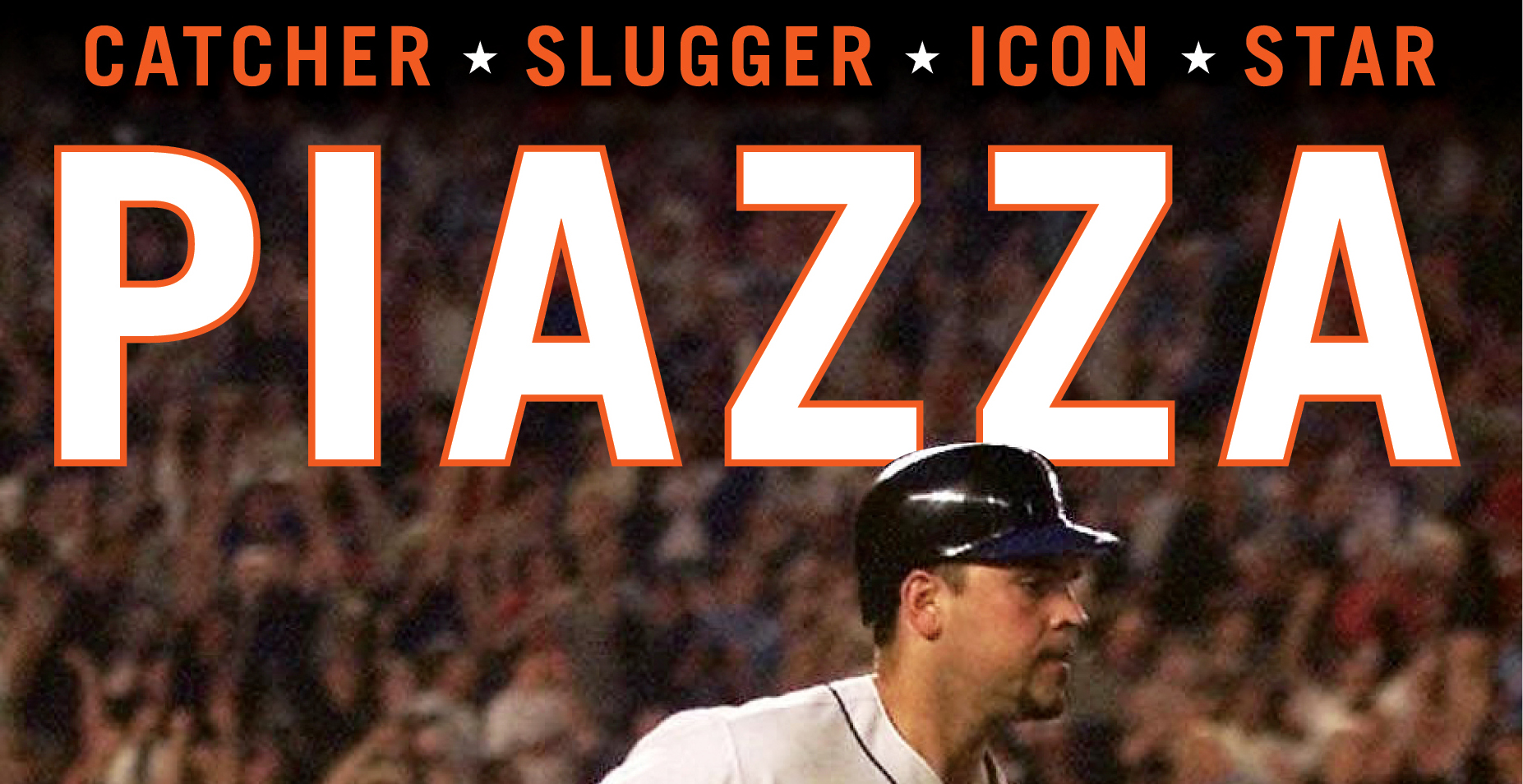
Two great preseason publications are out, each with contributions from Faith and Fear and other Mets writers you know and love. Get your hands on Amazin’ Avenue Annual here and Maple Street Press Mets Annual here.
by Jason Fry on 26 February 2011 3:01 pm A few weeks ago today was a new entry on my Google Calendar: 2/26 Mets WPIX 1p. A couple of days ago I saw it waiting there, suddenly not so far away. Thursday night, as plans unfolded for the weekend, I raised it as an item in the mix.
And then today, there I was coming back from brunch navigating the uncertainties of the F and A and E and C, scrambled as usual for the weekend. Through some uncharacteristic subway luck — which I took as a sign of personal virtue, as New Yorkers are wont to do — I was able to walk into my apartment, plop down on the couch and get the volume up just in time to see Jenrry Mejia throw the first pitch of 2011 — with Gary, Keith and Ron noting it as such. I was glad to see all concerned, and felt a huge smile spreading across my face.
As always with the first spring-training games, I was tremendously excited for about 20 minutes and then found my attention drifting — hence this blog post. But that’s OK — it’s as much a part of the process as dead-arm periods, waiting for the last-minute cat-for-dog trade that scrambles the roster, and, frankly, getting good and sick of spring training. (This seems to happen earlier and earlier each year.)
Where my blog partner has (blue-)blurred vision, I have double vision. I think the Mets are being constructed and run much better than they have been in years. Their offseason moves have been mostly low-risk, high-reward moves, taken amid discussions of actual statistics instead of sunnily vacuous Omarisms about Veteran Leadership and Having Been Here Before. Sandy Alderson seems disinclined to bid against himself for players or hand out ruinous options. And Alderson’s very presence seems to suggest that owners with a reputation for meddling have been convinced — at least temporarily — to change their ways.
But it’s with ownership that the double vision comes in, and I start getting a headache. I find myself in an unhappily familiar position: When it comes to the team’s finances, I don’t believe anything the Mets say.
From the minute the name “Madoff” became attached to the New York Mets, I’ve felt terrible for Fred and Jeff Wilpon. The pain of personal betrayal and the sense of violation must have been and still be agonizing. I have trouble believing the Wilpons were crooked — it seems to me like they were too trusting, and fell prey to the all-too-human impulse to let good news speak for itself rather than digging into it. (This is, granted, based on very little beyond a gut feeling at a distance.) And it must be awful to have all that get dragged into the public eye again and again.
Yet for all that, the Wilpons’ business is unavoidably my business. At my most detached I probably spend an hour a day worrying about the Mets; at full throttle, the Mets are top of mind to a worrisome degree. Not to mention the games I go to, the stuff I buy that’s slathered with Mets logos, and everything else. For obvious reasons, I’ve wanted to believe the Wilpons’ attempts to be variously reassuring, insistent and defiant in proclaiming that the Madoff mess wouldn’t impact the Mets’ operations. But believing that has gone from difficult to impossible. The team borrowed $25 million through MLB in November, a back-channel loan that club officials attempted to explain away with a curt acknowledgment and a haughty warning that “beyond that, we will not discuss the matter any further.”
I don’t believe that’s the extent of it, or that the issue won’t come back. The Mets have trained me not to.
I think the Wilpons will ultimately be forced to surrender majority ownership of the Mets — I’d call that a when, not an if. And given word of that loan, I think that “when” may be approaching more quickly than we’d thought: The Rangers were pushed onto the block pretty quickly as their own financial problems mounted, and Bud Selig’s friendship with Fred Wilpon can only go so far in comparison with his duty to have one of the National League’s highest-profile franchises on stable financial ground.
However critical I’ve been of the Wilpons over the years, I don’t welcome this: It’s cruel that the Wilpons may see Citi Field and everything else taken away without a season of glory. And those of us who want the Wilpons out should remember that there are individuals they’d probably like a lot less as owners — to say nothing of having your baseball team become a line item in a corporate earnings report.
Still, this will take a while. And that brings me back to double vision.
The Mets are retrenching this year, getting out from under a few contractual Omar Specials. It’s quite possible they’ll be doing the same next year. (I’m going to avoid talking about K-Rod’s option in an effort to not descend into sputtering rage.) And if the Mets continuing making smart deals and rebuild the farm system, this could all be fine. I’m willing to wait while the team is rebuilt according to a smart plan.
This rebuilding might even coincide with a resolution of the Madoff mess and the uncertainties around the team’s finances and ownership. In which case the Mets could be just fine, emerging from financial shadows in much better shape than when they went into them. But it feels like everything would have to break right for the timing to work out. And it’s been years since the Mets have had that kind of luck.
It’s a sunny day in Florida. The Mets have just tied the score. Everything on the field looks fine. But then it usually does. That’s the beauty of baseball. But it’s also what can blind you to the rest.
On a Happier Note: Greg and I teamed up to contribute an essay to the 2011 Amazin’ Avenue Annual about how the Mets can continue turning Citi Field from bland to grand and further embrace all things Metsian. AA is one of the finest Mets blogs in the land, and their folks assembled a Murderers Row of smart writers whose essays will help you see the Mets and baseball differently — and enjoy both even more than you do already. Besides AA’s crack staff, you can read the likes of Ted Berg, Tommy Bennett, Will Leitch and Joe Posnanski, for my money the best sportswriter on the continent right now. We’re enormously pleased to be in such, well, amazin’ company. Check out the book here — and, if you’re somehow not already a regular, Amazin’ Avenue itself.
by Greg Prince on 24 February 2011 4:37 pm Ronny Paulino reportedly isn’t in Mets camp yet. How can they tell? Based on the onslaught of images filtering north from Port St. Lucie, there seem to be approximately 2,000 players in Mets camp. Check harder — our backup catcher’s visa’s gotta be in there somewhere.
In the spirit of that which is so crowded that nobody goes there anymore, I’ve treaded (or perhaps trod) lightly on in-depth Spring Training coverage since it began to spill out of every pore of my computer, my digital device and my SNY. I’m not complaining that it’s there, mind you; it beats the hell out of staring out the window and waiting for snow to melt. But if I were perched breathlessly on every syllable regarding how good [guy I never heard of/gave the slightest thought to before this week] looked in this morning’s side session, I’d probably be OD’ing right about now.
Whereas I usually read as much of what is written about the Mets as possible, I’ve mostly skimmed the minute-by-minute Florida updates, and otherwise marveled at all the pretty pictures. My sense from my marveling is the 2011 Mets, as presently constituted, are one big blur of blue. There go a few hundred guys in Mets batting practice tops running this way and there go a few hundred more in Mets batting practice tops stretching that way. Somewhere in between, perhaps in several places at once, is the blurriest Met presence of them all, Terry Collins.
Is Terry Collins doing a great job? Well, he’s doing a job, which in itself is commendable in this economy. Otherwise it’s premature to draw conclusions based on every last pronouncement the manager makes to however many microphones are projected toward his lips. For the rest of us in our comparatively humdrum occupations, whatever Terry Collins is doing would qualify as preparation, the stuff nobody else would see, the stuff nobody else would judge us on. Terry operates on a more fascinating stage, I suppose, but everything to this point is a rough rehearsal for which the stage door happened to be left unlocked. Just because people get to watch what he’s doing doesn’t mean there’s a ton to be divined from it.
Let Collins at least manage one pretend game first…and whaddaya know? The Mets’ first pretend game is Saturday, on Channel 11, which will help me craft the vaguest of underinformed impressions regarding who should play second, who should be in the bullpen, who should be handed the ball on fourth and fifth days. Right now, I blissfully and ignorantly admit I have no idea whose those players should be. I could pick a name based on all the well-intentioned observing others have done, but I’d like to see a few pitches, a few swings, a few ground balls in exhibitions for myself. Then and only then, when I happen to be looking at the TV long enough to be impressed by a fleeting shot of [some other guy I never heard of/gave the slightest thought to before this week], will I insist that that guy has to make the team.
Right now, I only insist that there be a team, and I’m comforted that there seem to be enough Mets in St. Lucie to form forty of them. Until they sort themselves out, I’ll content myself to root for that big blue blur.
In the meantime, does MLB have a job for you!
by Greg Prince on 22 February 2011 4:41 pm The Montreal Expos were slowly infiltrating the field and the Mets were leaving one by one. I did make one more attempt to speak with Frazier. Southern accent and all, he has the face and appearance of an Appalachian moonshiner, a lot like Ron Hodges. “Why do you want to write this book?” he asked. “Why do want a chapter on me? What are you going to ask? What would anyone want to know? I don’t know what I can tell you.” He went on like this until I was beginning to wonder why I was writing the book myself. “Let me think this over,” Joe concluded. “Give me a little more time, and then we’ll talk.” Well, I figured, fair is fair.
—Kathryn Parker, We Won Today: My Season with the Mets
Broadly speaking, Joe Frazier had plenty of time. He lived to 88 years of age. One hopes the final 34 of them, far from where he briefly became a central figure in the lives of Mets fans, were perfectly happy.
In Metsian terms, Joe Frazier was as here and gone as any regularly scheduled Mets manager can be said to have been. Joe Frazier managed 207 Mets games, one fewer than George Bamberger, seven more than Jeff Torborg. Save for The Interims, that’s as little skippering as a leader of Mets has done.
Was it fair? Thirty-four years after he was introduced to the door, Joe Frazier’s managerial tenure doesn’t come under the Met microscope too often. It took his passing last week to bring his name out for a posthumous curtain call. It hadn’t been publicly mentioned much since his May 31, 1977 dismissal. Bill Madden wasn’t being disrespectful in Sunday’s News when he referred to Frazier as “the least-remembered Mets manager”. He was quite accurate, and that was after the fact.
Few knew who he was ahead of time, either.
Of the fifteen full-time managers the Mets deployed prior to hiring their sixteenth and current chief of dugout operations, Joe Frazier was the only one who was almost totally unknown when duty called.
• He held no New York baseball pedigree, a trait common to some degree among Messrs. Stengel, Westrum, Hodges, Berra, Torre, Bamberger, Harrelson, Torborg, Green, Valentine, Randolph and Manuel.
• There was no previous major league managing in his past as there was for most of the above as well as the selectively flashy Art Howe (Art Howe lit up a room for Fred Wilpon the way Mr. Ed spoke to Wilbur; not a single other soul could detect the phenomenon in question).
• His playing career, comprised of 217 games spread across four seasons with four teams, wasn’t remotely on the same level as that of the only other Met manager promoted from Tidewater to Flushing with no big league track record, four-time All-Star second baseman Davey Johnson.
Compared to Joe Frazier, erstwhile minor league field coordinator Terry Collins — the first Met manager to be elevated directly from the farm system since Bobby V — boasts a profile as high as Oliver Perez’s ERA. Terry Collins managed the Astros and the Angels. Joe Frazier managed Visalia and Victoria.
For those of you who weren’t around for the entirety of 1976 and the not quite first third of 1977, you’re excused if you haven’t exactly been steeped in the legend of Joe Frazier. Those of us who rooted during what we’ll refer to as his era (if an era can cover no more than sixteen months) can vouch there wasn’t much legendary to what he did and how he did it. The Baseball Digest version is the Mets overcame a midsummer malaise to post their second-best record to date during his one full season, and commenced their long, painful late ’70s swirl down the tubes early in his second.
If there’s something useful to be divined in considering Joe Frazier’s stint as Met manager, it’s that he didn’t seem to make that much of a difference in the overall trajectory of his Mets teams. They were middling when he got here, they stayed middling as long as they could while he was here and they were probably doomed to fall off from middling to miserable no matter what he did before he was forced out of here. Thus, for those who objected to objections to Collins’s appointment on the basis that an individual manager’s impact on the fortunes of a franchise are traditionally overstated, you have your exhibit “A” in Joe Frazier.
Though I doubt “leave few footprints” is the overriding goal any given spring.
Joe Frazier came to New York from a pretty successful minor league managing run, culminating in his Tides having made the Junior World Series as International League champs in 1975. Upon meeting the big city press, he talked a very good game…which placed him in the same company as everybody who’s ever taken over a major league team.
“If I have my way,” Frazier said, “you’re going to see a ballclub that hustles. I stress fundamentals, real fundamentals. I want my players to be aggressive. I want to see them go from first to third base and from second to home on base hits. That’s how you win games.”
The Mets had been leadfooted under Yogi Berra and Roy McMillan in 1975, not so much stealing bases as accidentally wandering into them once or twice a week. They were last in the National League with 32 bags…or fewer than seven individual players in that theft-happy era. Frazier came along and the Mets more than doubled their stolen base output — still last in the league, but no longer outpaced by any one player.
The ’76 team’s actual progress on the basepaths proved as molasseslike as any pair of contemporary Met legs. From 1972 through 1976 — Frazier’s first year included — no Met stole more than a dozen bases in a season. It was as if the Mets were participating in one sport, while the signature speedsters on their opponents’ rosters (Brock, Lopes, Morgan) were taking part in another.
Things certainly felt faster, however. Frazier, Jerry Koosman observed in his new manager’s first May, had the Mets “running, stealing, playing hit-and-run. Yogi wasn’t the type to move the ballclub.” Ed Kranepool agreed that “Joe does all the little things … [He] keeps you in the game. He’s all over the place. He’s in your locker. He’ll tell you something about how to field or how to hit. I like that.”
“I love Terry. He’s a guy who has a lot of energy, a lot of passion for the game, just like me.”
—Jose Reyes to Mike Francesa, February 18, 2011
“[W]hen he pulls you aside one-on-one, it’s just a different intensity or a different volume. He’s just that excited about baseball and that excited about this season that he gets all fired up and it’s like a snowball.”
—David Wright to Adam Rubin, February 21, 2011
These days, stolen bases aren’t necessarily considered the golden key to scoring runs, but however one chose to get around the diamond in 1976, there wasn’t — despite Frazier’s declarations and whatever vibe his veterans picked up — as much going from any base to home as there had been in ’75. The Mets scored fewer runs in our nation’s Bicentennial year and they drifted further downward from the league average. The shortfall likely had little to do with hustle or fundamentals.
The Mets were ill-equipped for the nine or so times per game they were forced to bat (bat — not hit). The team Frazier took over was essentially the offensively limp 1975 unit minus Rusty Staub, who had been shipped off to Detroit for Mickey Lolich out of Chairman Grant’s pique over ballplayers who thought for themselves. Slow as Le Grand Orange may have been, he led the ’75 Mets with 93 runs. A year later, no Met scored more than 70.
Even if Cobra Joe had subscribed to Earl Weaver’s pitching and three-run homer philosophy, he was half-constricted considering the Mets were unlikely to have two men on when Dave Kingman was up. Kingman constituted the Mets’ offense for a little more than half of 1976, swatting 32 home runs before making the mistake of attempting to catch a fly ball. A SkyKing-sized power shortage followed the resulting injury.
Still, those first Frazier Mets had their moments. An 11-2 stretch catapulted them into first place at 18-9 after a month of play, and the manager was receiving his share of the credit. “I don’t like to say we’re gonna win a pennant this early in the season,” he said, “but we’re playing pretty good ball.”
That ended soon enough. The Phillies took off on a historic blitz of the N.L. East (72-34 by the first week of August) and the Mets’ competitive aspirations lapsed in their wake. John Milner’s three grand slams notwithstanding, Kingman’s absence reduced them to pitching and no-run homers. The starting — Tom Seaver, Jon Matlack and 21-game winner Koosman all in their prime — was characteristically splendid, but the offense was close to nonexistent, and fundamentals (9th in errors, 12th in double plays turned, 4th in caught stealing) weren’t particularly in evidence.
Yet there was a second-half surge to enjoy. It didn’t jar the Mets out of their third-place standing, but it did boost their record to new post-1969 heights as Frazier, perhaps true to his minor league managerial roots, came to rely more and more on “my kids”. There was hot corner hypee Roy Staiger; pinch-hitting prodigy Bruce Boisclair; fleet Leon “Motor” Brown (who possessed, in Bob Murphy’s words, “a world of speed”); versatile Leo “Bananas” Foster; Expo exile Pepe Mangual; never quite recovered Mike Vail; and, come September, the ambidextrous pride of Sheepshead Bay, Lee Mazzilli. Bolstered by this infusion of promising youth, the Mets reeled off a 34-16 stretch that lifted them to as many as 15 games over .500, all but eliminating the Pirates from the pennant race with a spoiler’s zeal along the way.
Just as the Mets felt faster, they seemed better when they landed on 86-76 after 162 games. Despite not hitting their Pythagorean mark (91-71), they were trending younger and we could feel hopeful about 1977. The big three pitchers would be back. Kingman figured to be healed. Mazzilli and Staiger and John Stearns would all be gaining that panacea for all youngster shortcomings, experience. And Joe Frazier…he’d be back. After working under a one-year contract in ’76, he earned a return to Shea.
But Joe Frazier’s sophomore season was a different story. Its narrative was shaped by chaos. After the brave new world of free agentry left Grant unmoved to pay major league stars major league star wages, the veterans grew unhappy. Seaver wanted to be traded — one night sending the following peevish message to Frazier through pitching coach Rube Walker when Walker was sent to visit the ace on the mound: “Tell him to leave me alone.” Kingman didn’t say nearly as much but he wanted to be traded, too. So did Matlack. Those were your three 1976 Met All-Stars right there, and the last place they wanted to be in 1977 was right here.
Alas, last place was exactly where Frazier’s Mets found themselves twenty games into their schedule. At 15-30, just swept a doubleheader by the fifth-place Expos and languishing fourteen games behind the first-place Cubs, Joe Frazier was put out of his misery, replaced by player turned player-manager Joe Torre.
“I was ready to get out from under,” Frazier told the UPI’s Milt Richman as he hustled to the exit. “It was driving me up a tree … If Joe can do better with the team, more power to him, but I honestly didn’t see anything encouraging on the outskirts.”
You can’t say Joe Frazier wasn’t a visionary where the fortunes of the 1977 Mets were concerned. Except for a brief spurt of changed-guard momentum — going 7-1 in Torre’s first eight games as skipper — the Mets of Frazier were essentially the Mets of the rest of the decade. Those who wished to be traded were briskly accommodated (Seaver and Kingman in June, Matlack in December) and a full-steam youth movement was well underway. Joe Torre would prove a Hall of Fame-caliber manager, but not for another two decades and three uniforms.
The Frazier footprint was indeed faint. Only five major leaguers could claim Cobra Joe as their first manager and only one — Mazzilli — would carve out a substantial career in the bigs. Lee remembered him with some fondness, however. One night in 2008, when Mazz was in-studio as an SNY analyst, Matt Yallof fed him a postgame question about the impact of managers on players. I don’t remember the precise topic or answer, but Mazzilli referenced Joe Frazier without irony, to which Yallof (per the modern style of sports anchoring) smirked ironically.
“Joe Frazier was a good man,” Mazzilli shot back, which erased Yallof’s smirk instantly.
In real time, Joe Frazier could be sly. Upon the Mets getting off to a dreadful 0-7 Spring Training start in 1976, he likened himself to “the illegitimate son at a homecoming.” The North Carolinian could also stuff his foot way up into his mouth, which he did after the Mets lost an extra-inning affair to St. Louis, a result on which he largely blamed African-American umpire Artie Williams’s ball-and-strike judgment. Managers lashing out at umpires was nothing new, but Frazier’s characterization of Williams’s qualifications — “We all know the reason he’s here” — sounded as bad in 1976 as it reads in 2011. When the Mets began to take heat over the comment, Frazier offered his resignation (declined by GM Joe McDonald) and issued a heartfelt apology, though he managed to mix in a dig at the beat writers of the day:
“In regards to all my good black friends in this country, I meant nothing racist in what I said. It’s terrible to think it came out that way. You guys blew it up like I was some kind of I don’t know what. In the thick of battle, I get riled up. Everybody does.”
That moment of controversy aside, I don’t remember being all that stirred or shaken by Joe Frazier during his 207-game reign of Met caretaking. The farm wasn’t raising pitchers like it used to and Grant was dead set against going to market for hitters. No wonder the vets were growing impatient as surely as they were growing old. Against that backdrop, you had Frazier, an organization man in the theoretical mold of Earl Weaver and Walt Alston. They had been promoted to their signature gigs in Baltimore and Brooklyn from the minor league ranks without so much as a major league coaching background.
Joe Frazier wasn’t Earl Weaver or Walt Alston. Few are — so few that you rarely see managers promoted in that fashion anymore.
Honestly, the most interesting thing about Joe Frazier was his heavyweight name. The best thing he did was generally leaving Seaver (and Matlack and Koosman) alone to pitch. The worst? Besides that crack about Artie Williams?
By my judgment, it was an in-game move that irked me when it happened and irks me still. In terms of every Mets manager leaving behind a default image — Casey Stengel explaining the “Metsie…” phenomenon; Gil Hodges marching out to left field to check on Cleon Jones’s mysteriously aching leg; Davey Johnson audibly preparing to “dominate” the National League; Bobby Valentine going rogue upon ejection — I have one thing I automatically think of when I think of Joe Frazier.
He once pinch-ran Felix Millan.
I don’t mean he pinch-ran for Felix Millan. He used Felix Millan as a pinch-runner. If you’re not old enough to recall Joe Frazier as manager of the Mets in 1976 and part of 1977, then you don’t recall that Felix Millan was, in those years, nobody’s idea of a pinch-runner.
But there he was, being inserted into the game of April 23, 1977, in the bottom of the ninth inning, the Mets trailing the Pirates by the eventual final score of 6-5. Ed Kranepool had led off the home half with a single off Pittsburgh closer Goose Gossage. Kranepool tended to run with a grand piano bolted to his back. You didn’t really want Ed Kranepool representing the tying run if you had someone faster available. Having otherwise deployed all position players who would bring speed to bear — and apparently not considering the gams of any spare pitchers — Frazier replaced Kranepool with Millan.
The same Felix Millan who ran with a Thomas organ on his back.
I didn’t care that it was Kranepool who was coming out. It baffled me that anybody would consider Felix Millan a viable option as a pinch-runner. I had never seen any indication that Felix Millan, a slow 33 (when 33 was old), could gain you a step in any baseball situation. Geez, it hadn’t been two years since Felix Millan singled four times in one game and was immediately forced out as the lead runner on four Joe Torre ground ball double plays — a major league record for the both of them.
What the hell, I wondered then and wonder still, was Joe Frazier thinking?
The strongest case I could come up with at age 14 was Joe Frazier knew of other Puerto Rican players who were swift and therefore decided Felix Millan must have some sort of innate speed he’d been hiding from the rest of us. Or maybe he confused the geographic “P.R.” abbreviation for Puerto Rico with the “pr” box score designation for pinch-runner.
However he wound up there, Millan was on first…as a pinch-runner. Stearns came up and flared a Gossage pitch that fell into short right. Fantastic! We’re gonna have first and second, nobody out and…
Pinch-runner Felix Millan, practicing caution rather than some of that trademark Joe Frazier aggressiveness, held up to see if the ball would drop. And because Felix Millan was the slowest pinch-runner Joe Frazier could have called on, Dave Parker picked up the ball from the right field grass and threw to Pirate shortstop Frank Taveras, who waited at second with one foot on the bag.
Pinch-runner Felix Millan was forced out 9-6 on what should have been a single to right.
Because Ed Kranepool couldn’t have done that himself.
by Greg Prince on 18 February 2011 10:11 pm Except for my standard-issue human blood and my mother’s accusations that I harbored “Bolshevik” sympathies as a nine-year-old McGovernite, you won’t find a drop of red in me. No Cardinal red, certainly. Ptui! on the 1985 Cardinals. Ptui! on the 1987 Cardinals. Ptui! on the Best Fans In Baseball. A Niagara Falls of loogies on Yadier Molina, obviously.
And yet, I don’t want Albert Pujols to leave the Cardinals. Not even for the pipe dream of seeing Albert Pujols pull up stakes from St. Louis and put them down for some strange reason in Flushing do I want to see Albert Pujols leave the Cardinals.
This is pure baseball fan romanticism at work. This isn’t Albert Pujols exercising the freedom of movement Marvin Miller labored so hard to ensure. This isn’t knowing how much he may be fuming at the Cardinal front office these days and how, like any employee, he might have had it with his upper management. I’ve had it with his upper management, on principle, anyway. I heard the GM of the Cardinals, John Mozeliak, issue some flat corporate statement the other day after Pujols’s deadline for signing an extension passed, as if Mozeliak had the right to embody the franchise and Pujols — “part of our organization in 2011” — is some interchangeable commodity. I was truly offended by the notion that John Mozeliak gets to speak as if he, not Pujols, represents what it means to be a St. Louis Cardinal.
And I don’t even like the St. Louis Cardinals.
Yet now and then a fan recognizes there are more transcendent issues than a single contract or a behemoth bat coming onto the market. Albert Pujols is the Cardinals like Stan Musial was the Cardinals. Like Cal Ripken was the Orioles. Like an almost infinitesimal handful of ballplayers every generation are their team and better baseball because they wear one team’s uniform and excel in that team’s cap and never star at a press conference at which they try on some alien color scheme.
No. Don’t wanna see it. Don’t wanna see Albert Pujols in a non-Cardinal uniform almost as much as I don’t want to see Albert Pujols come up in extra innings against the Mets (a situation in which he’s filleted one of our relievers every year for the last three years). I don’t even wanna see Albert Pujols as a Met.
It’s not that I don’t want an Albert Pujols on the Mets. I just want the Albert Pujols to stay on the Cardinals.
I’m happy with Pujols weaving his immortality in another division, and will roll the dice that our pitchers will limit his damage unto us when there is a crossing of paths. Competition’s OK. Bring on their guy, and let’s cheer for our guy to get him out.
Or maybe walk him on four pitches if there’s a runner on second and first base is open.
Aside from believing that baseball’s integrity is preserved when its absolute crop cream stays forever ensconced from whence it rose, I just assume that some hypothetical fantasyland signing of Albert Pujols by the Mets would go horribly awry. That’s not kneejerk fatalism. That’s my wary conclusion after watching the Mets give out lengthy mammoth contracts to superstars who made reasonable sense in the short- and mid-term and became disastrous or at least truly burdensome albatrosses before their deals expired.
George Foster. Gary Carter. Bobby Bonilla I. Mike Piazza. Pedro Martinez. Carlos Beltran. Billy Wagner. Now Johan Santana, a truly excellent pitcher when not aging or injured — and suddenly not such a bargain. Wouldn’t have skipped the chance to get him. Understood there were risks involved that had nothing to do with the minimal fortunes that awaited Phil Humber, Deolis Guerra, Kevin Mulvey and Carlos Gomez. Did the math that told us A Ton of Money + A Mighty Long Time = Who Knew What? and accepted the equation. It was as worth it as the kind of thing can be.
It was. I love that Johan Santana became a Met instead of staying a Twin (which he wasn’t going to stay anyway). I remain enchanted that he didn’t wind up a Red Sock (or worse) when it was generally thought the Mets were a long shot to procure his services. I’ll always remain thankful he was on our side during the last week Shea Stadium operated considering little else was.
But geez that was a lot of bucks invested against an asset that hasn’t exactly appreciated since its first year on the books. Johan Santana didn’t finish the 2009 campaign. Johan Santana didn’t finish the 2010 campaign. Johan Santana won’t begin the 2011 campaign. The Mets have Johan Santana under contract through 2013 (with an option for 2014), yet starting pitching cannot be considered a Mets strength presently.
It’s not kneejerk fatalism to suggest that this always seems to happen to us. There’s often a terrific upfront payoff. Carter, Piazza, Pedro, Beltran, Wagner…they all delivered big-time within their first two seasons. Santana surely did in 2008 and during the first months of 2009. It is conceivable (as opposed to not inconceivable) that starting sometime in the second half of 2011 he’ll be his magnificent Johan self again. But boy is there unenviable precedent — Carter, Piazza, Pedro, Beltran, Wagner — hinting he won’t.
Our payroll blues are supposed to lift (Madoff mishegas pending) after 2011. No more Castillo. No more Perez. No more Beltran. If the vest can somehow avoid buttoning, no more Rodriguez. Reyes? Maybe no more, maybe far more of a payday for him. Wright will be in line for a boost or a boot of his own after 2012. Bay…let’s hope we get that big second year out of him the way we got it out of Beltran in 2006, but there’s still $48 million coming his way after this year. And plop atop all that $49.5 million owed Johan Santana for 2012 and 2013.
Thus, I can’t imagine, if he truly splits from St. Louis, that whatever it is Albert Pujols will want/would merit could be coming to him in Queens. And if it somehow did? If Albert Pujols suddenly decided blue and orange were his colors of choice?
I can only cringe at the vision of his first serious injury…as a Met; his first significant falloff…as a Met; his first positive test…as a Met; his first negative back page…the first of many as a Met. Maybe the kneejerk fatalism is overcoming me here, but it wouldn’t work. It just wouldn’t. Albert Pujols would rapidly descend into Alfredo Pedrique in no time as a Met.
I’m almost certain that Albert Pujols, had he been drafted by the Mets instead of the Cardinals, would not have grown into Albert Pujols. He would not have posted the best first ten seasons of any player ever. He would have… what? Become Prentice Redman (picked two rounds ahead of Pujols by the Mets in 1999)? Maybe a modestly productive John Milner or frustrating Gregg Jefferies type? Would have Albert Pujols in an alternate universe been, at best, Darryl Strawberry or David Wright, the top position players we ever produced? Maybe Cleon Jones, who was very good but rarely great? Maybe Robert Stratton, a big-time power prospect who never made it to the majors?
How is it possible, as long as fantasyland is spiraling into urban blight, that we’ve barely produced a remote facsimile of Albert Pujols? Strawberry and Wright, terrific as they were and are only approached Prince Albert’s level. They never resided there. Even if you acknowledge Albert’s level is the unreachable star, you’d figure once in a half-century it would be a possible dream to have a homegrown Met turn into something like that. It didn’t happen for Strawberry and it’s not happening for Wright. Reyes and Edgardo Alfonzo…not in the same league. Jones and Jefferies…uh-uh. Ed Kranepool…we love him, but Prince Edward he wasn’t.
Pitching we’ve developed, but the lab goes haywire when it comes to hitters. Has our scouting and instructing and coaching and leadership been that totally lacking for fifty years that all but a handful of our most substantial offensive contributors have had to come from somewhere else?
Maybe we’re turning a corner. Maybe Ike Davis will live up to my aspirations for him to at least back up Pujols in a few All-Star games. Maybe he and Thole and Tejada are the foundation for a franchise that under new and sound guidance won’t need to throw too many dollars and too many years at the biggest name that floats by every couple of winters. Maybe the next Pujols who whets our appetite will loom as icing rather than cake.
by Jason Fry on 17 February 2011 9:23 am Like my blog partner, I registered the wholly unexpected presence of Jason Isringhausen in Mets camp — and, however briefly, allowed myself to dream.
Stories like Izzy’s are an object lesson in why it’s good that fans don’t run baseball teams. The reaction of the Sandy Alderson braintrust to Izzy’s availability, I’m sure, was a businesslike “eh,” resulting in a risk-free minor-league contract. My first reaction was to throw Izzy a virtual parade, welcoming him back to … OK, not the starting rotation or closer duties, as not even my imagination could stretch that far. But some kind of heroic middle-relief role with a side of mentoring young pitchers? I could close my eyes and convince myself I saw that.
This is foolish, of course: Mets history is not exactly littered with successful reacquisitions. There are instances of sentimental score-settling: Tom Seaver II, for instance, or Dave Kingman Redux. There are revivals that proved the curtain fell a while ago: the unofficial Seaver III, David Cone. There are thoroughly farcical second acts: Kevin McReynolds and Bobby Bonilla. There are wrongs put right that should have been left wrong: Marlon Anderson and Greg McMichael. There are unfortunate return visits that seemed only to squander the original promise: Mike Jorgensen, Tim Foli, Hubie Brooks, and Mike Jacobs. There are forgotten encores: Did you really remember off the top of your head that Alex Trevino, Jeff McKnight, Kelly Stinnett, Josias Manzanillo, Brady Clark and Anderson Hernandez returned? Two of the most successful repeat Mets engagements featured players in much-reduced roles: Rusty Staub and Lee Mazzilli, returned as pinch-hitters. The best second Met go-round, sad to say, might be a tossup between Pedro Feliciano (if Japan counts) and Jeromy Burnitz. Of such stuff legends aren’t exactly made.
And, of course, there’s a more immediate example of a failed comeback where Izzy’s concerned. As if on cue, Izzy’s Generation K partner Bill Pulsipher popped up yesterday to half-jokingly suggest his own Mets comeback might be on tap. The accounts I read ignored the full extent of Pulse’s role as Greek chorus: After all, he had an unsuccessful Met return of his own, retrieved from Milwaukee Brewerdom to toil futilely for the 2000 Mets. I remember the reclaimed Pulsipher being saved early in a shaky start against the Giants by Jay Payton, leaping above the fence to snatch back a Bill Mueller home run. It was a great moment, one I let myself imagine would rekindle Pulse’s confidence, leading to his rejuvenation as a starter and place in a World Series parade. Alas, very soon Pulse was giving up shots not even Payton could catch; he slumped off the mound as I tried to convince myself that I’d expected this and was not, in fact, crushed.
It’s an unfortunate duty of front-office types to snuff out fan sentiment in these situations. It’s their job to cut loose David Cone, to verify that Tom Seaver III was right about what it means to be annihilated in a simulated game by Barry Lyons, to trade Jesse Orosco for Joe McEwing, to not call up Edgardo Alfonzo. We’re not capable of that — we usually see the glass as minutely full.
Or at least I’m not capable of it. Seeing photos from Port St. Lucie of Izzy grown thick and impossibly old, I let myself daydream. But then I always have with Izzy. He and Pulse grabbed my attention when they first came around: They were young and talented and full of hope when I was the same, and I was giddy to think of having near-contemporaries rise to Mets glory. Izzy would be Seaver and Pulse would be Jerry Koosman, unless it was Paul Wilson who’d be Seaver, which would maybe make Izzy Jon Matlack. Except pretty soon it became horribly clear that all three members of Generation K would be Gary Gentry.
Pulse was obviously slightly nuts from the get-go, gazing out at the world from under the low-slung bill of his cap with a slightly too intense stare. But Izzy turned out to be the loose cannon in terms of misadventures, calling Jay Horwitz “Jewboy” (a situation not particularly helped when it emerged that this was a clubhouse term of endearment) and turning up during rehab playing softball with strippers, among other things mercifully forgotten. He was forgiven every time, but his pitching decayed, until he was packed off to the A’s for the very tall Billy Taylor, who was greeted by Todd Pratt near the Wrigley Field mound with “I’m Tank, whaddya throw?” That was the highlight of Billy Taylor’s Mets career.
Still, I remember being more reluctantly accepting of the Izzy trade than outraged. It was like the day your mom got tough and threw out your raggedy baby blanket, or you realized that cheerleader/cool artsy girl/whoever she was would never decipher your longing looks, or you stumbled home blasted and found your friends and family waiting grim-eyed to start the intervention. Choose your own metaphor — whatever it was, it was the end of something, simultaneously unwelcome and inevitable.
Izzy’s later success never particularly moved me: I always saw him as proof that Billy Beane was right in thinking that closers could be manufactured from failed starters, a position that I fully grant may be sour grapes. Still, on some level I kept rooting for him: He was the A’s closer against the Yankees in the 2001 playoffs, and I laughed happily to read that he’d admitted to Jason Giambi that he couldn’t feel his legs. Good ol’ Izzy! That only ebbed after he became a Cardinal and thwarted what I was sure would be the coming-out party for a young David Wright. After that he was just another closer; my affections had moved on to younger hopes.
And yet here he is, again, and I can’t help myself. He could be 2011’s Staub, or Mazzilli, or maybe an Al Jackson or Bob L. Miller. He could, couldn’t he?
Well, I suppose. Or more likely he could be 2011’s Mike Birkbeck. Making these judgments is why they pay Sandy, who can think about Izzy without seeing a 44 or a magazine cover with two other young pitchers or being pissed about the Baseball Network’s existence or mourning an alternate Mets reality in which many, many things are different.
by Greg Prince on 16 February 2011 8:07 pm Today is the sixth anniversary of Faith and Fear in Flushing, and I’m touched that the Mets thought to get us Jason Isringhausen to mark the occasion. A 1995 Met is the perfect touch.
From the standpoint of FAFIF mythology, only Bill Pulsipher would have been more appropriate. Your co-bloggers’ first game together was June 17, 1995, Astros at Mets, major league debut of the first third of Generation K, Pulsipher. Pulse basically whiffed that day and didn’t have too many great days after that, but he was a huge part of the 1995 Mets. So was Isringhausen, whose July callup was a cause célèbre and whose second-half surge (9-2, 2.81 ERA) earned him a late look by Rookie of the Year voters. Izzy finished fourth, behind Met-to-be Hideo Nomo, Met-killer with training wheels Chipper Jones and 1998 Halloween Hindsight Haunter Quilvio Veras. It would have been swell had our guy garnered more support, but Izzy, like Pulse (5-7, 3.98), was laying down a marker for the future. Just wait until 1996, when they’d be starting the year with the big club — them and even more über prospect Paul Wilson would be leading the Mets to big things, I tell you what.
We’re still waiting. The next spin of the rotation that includes the early Internet acronym IPP (Izzy, Pulse and Paul) will be the first. Injuries slowed Pulse in the spring of ’96, Izzy and Paul were shaky almost all of the annum that followed and none was on hand to commence 1997. Wilson never pitched for the Mets after 1996. Pulsipher fought his way back — twice — but couldn’t make it stick. His starting stock irreversibly dropped, Isringhausen wasn’t getting anywhere as a Met reliever, either, by 1999, so he was packed off to Oakland for bullpen depth as personified by Billy Taylor.
At which point Jason Isringhausen emerged as a star.
That’s usually the kicker in every “Mets trade young player” anecdote, but except that Billy Taylor was totally miscast as a noncloser and revealed himself a total nonstarter as a Met reliever, the Isringhausen trade wasn’t that much of a Metropolitan calamity in context. It was 1999. Everything worked out about as fine as it could have. Further, when Izzy was making his first All-Star team as an Athletic in 2000, we were headed for a second consecutive playoff date, and the ’pen (ninth-inning home runs to J.T. Snow and 48-pitch walks to Paul O’Neill notwithstanding) was one of our stronger suits. Like Nolan Ryan and Mike Scott, Isringhausen had a reasonable shot to achieve stardom in New York, yet turned in ample evidence that Shea probably was not the stadium for him.
So Izzy went on to pile up saves as an A and then as a Card. One night in 2006, he failed to close out the Mets when he had a 7-6 lead and it resulted in one of the best nights of one our best years. That signature swing of Carlos Beltran off Jason Isringhausen (in the same game in which Albert Pujols and Carlos Delgado each homered twice and we rallied from down 7-1 to win 8-7) unleashed much Joy in a summer stuffed with it.
I’d trade Billy Taylor for Carlos Beltran every time.
I don’t know that Jason Isringhausen has anything left to give the 2011 Mets. Even as Terry Collins opened camp by declaring he and his coaches need to “recreate” the bullpen, it’s hard to imagine good old (38) Izzy, after three surgeries and a no major league appearances since 2009, as a legitimate piece of its bedrock foundation. But this is February 16, FAFIF Day, when all is worth mulling, all is worth imagining, all is worth remembering — selectively and otherwise.
That’s FAFIF right there, I think. That, too, is the mindset of the Mets fan, for which we’ve been accused of serving as surrogates on a recurring basis since February 16, 2005. We began this adventure relying mostly on our Met memories, supplemented by maybe a wisp of confidence that the upcoming season would be better than the ones that came directly before it. Carlos Beltran, come to think of it, was the primary reason we had to be enthusiastic as we attempted to put the wreckage of 2004 (and 2003 and 2002) behind us. Carlos showed up in St. Lucie at almost precisely the same instant we landed in this space. Beltran was the future that day. Izzy, meanwhile, was an unspoken tile within the enormous mosaic we brought to bear at Faith and Fear. Neither Jason nor I rushed to blog about him, but he resided firmly in our shared subconscious as one of hundreds of Met Kilroys.
Izzy was here. Pulse was here. Hundreds of names we casually drop not because we can, but because we can’t help ourselves were here — Al Schmelz; Mike Vail; Steve Springer; Mike Phillips; Steve Henderson; Rico Brogna; Melvin Mora; and so on, Aase to Zimmer alphabetically, Ashburn to Gee chronologically. This is what being a Mets fan does to a fellow or gal. Eight-hundred ninety-five names all hang around in your brain, some more actively than others, some decidedly less welcome than the rest. It’s not just Jason and it’s not just me who are like this. It’s you, too. Allow me to illustrate as I “recreate” one of many of the conversations I’ve had with other Mets fans I’ve met through Faith and Fear these past six years.
“Hi.”
“Hi.”
“Richie Hebner!”
“I KNOW!”
From there, it’s usually about three sentence fragments to Dan Norman, and we’re off to the races.
That’s the beauty of the Met mindset, that we hold on to these guys. We hold on to their moments, their games and whatever significance we long ago attached to their identities. We don’t let loose of anything. We are a zillion-celled institutional memory that refuses to forget anything. Some things remain more accessible than others depending on your personal inclination, but it’s all there for the dwelling.
For example, I’ll bet roughly 80% of you who saw that bit about Carlos Beltran’s “signature swing” from 2006 against the Cardinals mentioned above immediately fast-forwarded two months to when Izzy was on the shelf, Adam Wainwright was filling in as the St. Louis closer and Carlos Beltran crafted his signature take.
Me, too. I just figured I’d skip mentioning it for a couple of paragraphs to give you the opportunity to come up with it yourself.
But it’s OK. We’re Mets fans. We wallow. It’s an intrinsic core competency in our skill set. We can’t have an all-encompassing, overarching beautiful memory without affixing the next unavoidable chapter to its trailer hitch. It’s like we’re too fair to avoid telling the whole story.
1969 was great, but Tom Seaver was eventually traded.
1986 was stupendous, but they should have won again and again after that.
1999 was brilliant, but Kenny Rogers ruined it.
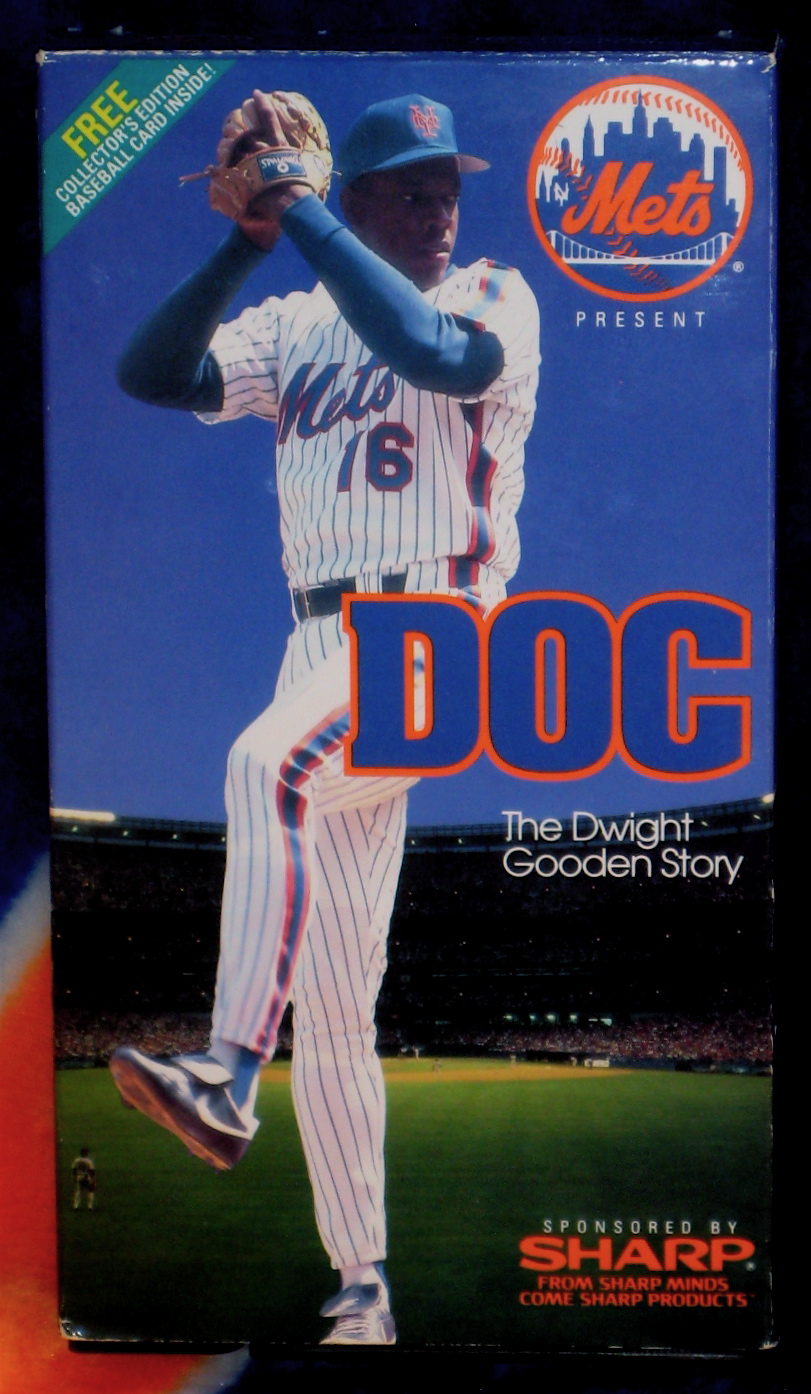
Nobody was better than Doc Gooden, but he let us down.
Carlos Beltran may have been the best all-around player the Mets ever had, but he took strike three from Adam Wainwright.
Mike Vail hit in 23 consecutive games, but he did something terrible to his foot while playing basketball after we’d already traded Rusty Staub to clear a position for him — and we traded Rusty Staub!
For Mickey Lolich!
And Ken Singleton, Tim Foli and Mike Jorgensen were too much to give up in the first place to get Rusty!
And we shouldn’t have traded Tim Foli for Frank Taveras!
And (ten- or twelve-dozen Met misgivings later) Generation K generated so much hope but mass-produced mostly disappointment.
And we’re only just now able to use disappointment in a sentence without automatically invoking devastation.
“Hi.”
“Hi.”
“T#m Gl@v!ne!”
“I KNOW!”
Still and all, it must be kind of fun to be a Mets fan because we keep doing it. It was fun when Izzy was in his Met prime, which was a short, short span, to be sure, but a worthwhile one. The Isringhausen-Pulsipher stitch is an important element in my Met tapestry. They’re all important, I suppose, but I really loved that 1995 team, particularly in the second half. I loved how I cared so much that they went 34-18 down the stretch, even if a team that’s way out of it probably can’t accurately be said to have a stretch.
Make no mistake: The 1995 Mets were way out of it, but I slathered myself in whatever there was for them to stretch toward. In their case, it was a tie for second place on the last day of the season. Isringhausen started that Closing Day, offering us eight shutout innings whose only blemish was a total lack of run support. The Mets would win 1-0 in eleven on a bases-loaded walk to Tim Bogar. When I returned home, soaked in my private jubilation, I tuned through the crackle of my living room stereo to pick up the Phillies broadcast at 1210 on its AM dial. They were in Miami. Their game was still going on. I heard them lose.
And I went nuts!
The Mets, two seasons removed from when they finished 38 games behind the Phillies — and one year after a players strike finished everybody prematurely — ended this campaign tied for second with them. Never mind that half of second place was still 21 games south of Atlanta; never mind that 1996 marked a tepid return to fourth place; never mind the rest of Jason Isringhausen’s (first) Met tenure encompassed a 9-19 record punctuated by injuries and incidents that made him seem less Met bedrock than Barney Rubble. Never mind what we would come to know. What I knew on October 1, 1995, was the Mets had raised their status from distressing 35-57 losers to striving 69-75 mediocrities and it was good for 50% of second place, or what they used to refer to as the first division.
No wonder I went nuts.
I went nuts in a good way every five years from my first full season in 1970 onward. Every half-decade on the half-decade I’d feel something in my Mets fandom elevate me to a new plateau of loving and caring about this team and loving and caring that I loved and cared about them as much as I did. 1970 established me. 1975 immersed me. 1980 surprised me. 1985 mesmerized me. 1990 assured me.
It had been quite a streak, yet it was teetering on the edge of extinction five years later. It would have expired without Jason Isringhausen and Bill Pulsipher and Butch Huskey and Jeff Kent and Rico Brogna and Edgardo Alfonzo and Alex Ochoa and Dave Mlicki and Paul Byrd and Robert Person and Jose Vizcaino and Todd Hundley and Carl Everett and Tim Bogar all pulling together and making me very nuts very late in a very good way. Thus, 1995 reminded me. 2000 vindicated me. 2005, with the founding of Faith and Fear, channeled me into writing about this thing of ours, these Mets of ours. 2005 changed the nature of my fandom forever and, I believe, for the better, just like those 0/5 years that preceded it.
2010, I regret to report, didn’t do anything like that, and I consider the 0/5 streak over. Last season had some fine moments — including an intensely personal winning streak of its own — but I didn’t feel a change in me the way I did every five years from 1970 to 2005. Maybe I’ve perfected my Mets fandom to a state that’s as good as it’s gonna get. Maybe I’ve peaked as a Mets fan, halted from climbing any higher by the disappointing, devastating episode of September 30, 2007, a moment from which my psyche has yet to fully and completely recover. Or maybe my next step up the Mets fan ladder is just running late. (It’s February; it could have visa problems.) I don’t know. It doesn’t really matter, because it’s not like I’m going anywhere. I’m still here.
When I go to my third Mets game of 2011, it will be my 500th official Mets game attended — that’s Shea, Citi and road, postseason inclusive. When Jason or I recap the Mets’ 18th game of 2011, it will be Faith and Fear’s thousandth consecutive Mets game blogged, starting with our first Looper-induced primal scream on April 4, 2005, winding through our only two playoff rounds since, and taking us to next game after No. 1,000 (scheduled for April 20, 2011, when the Mets play Houston, unless rain plays havoc beforehand). As if habit and affection aren’t enough to keep me going, I’ve got Met milestones on the table. So even if 2010 didn’t lift me to new heights as a fan, it didn’t shoo me away.
Like I said, I’m still here. There’s nowhere I’d rather be.
A couple of days ago, I was added to a Facebook group whose members are all from my high school graduating class. I took a look at its page. There was talk of another reunion. I blanched. I went to my 20th, and it was lovely. I went to my 25th, and it was plenty. I maintain a handful of close friendships from high school, but everybody else, the ones with whom I never bothered to stay in touch once graduation was done, are from the past. No offense to any of them, but, for the most part, they can stay there where my present is concerned. I won’t be insulted if they leave me out of their present, either.
I never feel that way about the Mets. I love the Mets’ past. I embrace how it stays with me. I’ve lived through 42 discrete seasons since discovering the Mets in the latter stages of 1969 (43 if you categorize the two halves of 1981 as singular elements, which is what the official standings did once that year’s strike concluded) and all 42 (or 43) are perpetually counted in my daily official attendance. I’m never completely out of 1970 or 1995 or 2010 or whichever year you choose to cite. They’re all living, breathing organisms in my head. Why, right now, somewhere in some brain crease, I’m wildly pissed off that Bill Spiers just grounded out to kill another rally.
But the Met past is truly prologue for me, too. I don’t live there, I just check in on it by instinct. It contributes to my present rather than blot it out. It contributes to this season, to this moment, to this unpaid vocation (you might call it a calling) in which I get to write about the Mets and being a Mets fan and engaging in wonderful conversations with the likes of you, whether they’re here on this blog or in actual physical proximity.
“Hi.”
“Hi.”
“Bill Spiers!”
“I KNOW!”
In case you actually don’t, insert the futility infielder of your choice on the off chance that Real Time With Bill Spiers escaped your attention when it aired first run in 1995.
First run? Hell, Bill Spiers scored all of five runs in 63 games as a Met. That’s only five more runs than I’ve scored for them in no games. And five more runs than turns through the rotation for Izzy, Pulse and Paul in 1996.
Whoops — there I go wallowing again.
Anyway, thanks to the Mets for bringing back a relic of a time gone by and a time that never completely disappears. And thank you, our fellow Mets fans who like to read, for these last six years and whatever the seventh we spend together brings.
Here’s hoping.
by Greg Prince on 15 February 2011 4:39 am Always make the difference between optimism and hope. I’m not an optimist at all — I’m a prisoner of hope. I don’t believe in optimism. That’s too thin.
—Dr. Cornel West, Real Time With Bill Maher, February 11, 2011
I hope Carlos Beltran is feeling 29 again. That Jose Reyes is all revved up to go at 27 and then doesn’t go anywhere. That David Wright swings free and easy, his shoulders and his mind less burdened than they’ve been in recent seasons.
I hope Daniel Murphy stitches together his several partial skills and creates a versatile monster. That Brad Emaus is the steal of the century at second. That the inevitable “Hu?” jokes give way to back page headlines along the lines of THAT’S HU!
I hope Angel Pagan and R.A. Dickey are not at all surprising in 2011, just more of what they were in 2010. That Mike Pelfrey’s bad outings are aberrations rather than indicators. That Jon Niese extends his June form into September.
I hope Francisco Rodriguez earns his way back to everyone’s trust off and on the field. That Johan Santana proves a medical marvel. That the National League Comeback Player of the Year is named Chris and that the award is split two ways.
I hope Nick Evans’s lack of options is balanced by a bounty of base hits. That Josh Thole and Ike Davis are the youngest old pros imaginable. That Oliver Perez inspires a round or two of stories about how “maybe Omar Minaya knew something after all.”
I hope Luis Castillo catches on with Oakland or Seattle. That Bobby Parnell is both a year older and wiser. That Jenrry Mejia’s next appearance, whenever it may be, is universally described as “polished”.
I hope Terry Collins is as ready as he says he is. That Luis Hernandez’s next home run is pain-free. That somebody can come in and get a lefty out as needed.
I hope Jason Bay hits this year like he hustled last year. That Sandy Alderson has cause to buy in July. That somebody to whom I’ve given no thought in mid-February is one of my favorite Mets come mid-season.
I don’t know that I’m all that optimistic about the 2011 Mets. But by god, on this day of all days, I am brimming with hope.
by Greg Prince on 14 February 2011 5:11 pm As more and more Mets crowd into Port St. Lucie just long enough for it to be exciting before it becomes amazingly tedious, here’s what I don’t get: The Mets have four — four! — alliterative pitchers in camp, and none of them has been issued an alliterative uniform number.
According to the spring roster Adam Rubin was kind enough to post on the ESPN New York Mets blog, Chris Capuano will wear 38; Taylor Tankersley possesses 47; Boof Bonser is to model 27; and Blaine Boyer — the reason we didn’t make the playoffs in 2008, I read a while ago — alights in No. 23.
So Sandy Alderson goes to the trouble of assembling a quartet of alliterative pitchers and then Kevin Kierst, the Mets’ new and alliterative clubhouse manager, doesn’t think to clothe them in repeating numbers.
Rookie mistake. Or a communications breakdown. It’s too bad, whatever it is. The Mets need to be known for something positive on the off chance their wins aren’t frequent and their lawsuits aren’t rare. Alliteration can still be their ticket to ride if the numbers get switched appropriately. In a year when nobody dares to pronounce The Magic Is Back or that Baseball Like It Oughta Be is in effect, “Bring Your Kids To See Our Alliterative Athletes” looms as a splendid, no-cost marketing concept. Besides, check the calendar: ’11 is as alliterative a year as we’re going to have until 2020.
Can’t anybody here play this theme?
Let’s see who’s in the numbers that could conceivably belong to the pitchers who should be known as C.C., T.T., B.B. and the other B.B.
11: Ruben Tejada. He had it last season. He won’t have it this season, at least not right away. Tejada showed plenty of second base glove and a little bit of bat in 2010, but his youth (and perhaps a nefarious plot to unload Jose Reyes) will have him exiled to Buffalo this April where he’ll refamiliarize himself with shortstop. Wear a coat, kid. I hear it gets chilly up there. 11 may be the Opening Day temperature at Buffalo.
22: Willie Harris. Like this whole Willie Harris on the Mets thing isn’t some kind of counterintelligence plot undertaken by the Phillies. Let’s face it — Harris is just here to gather information on where to best play Mets hitters when he ultimately signs with Philadelphia. And by “best,” I mean how far away he can position himself as a defensive replacement for Raul Ibañez in order to make yet another soul-crushing circus catch to kill yet another ninth-inning comeback. Willie Harris on the Mets…yeah, right. Switch with Boyer, you phony.
33: Taylor Buchholz. Except for Taylor and his more accomplished cousin Clay, I don’t know that I’ve ever come across internal alliterative h’s on a baseball uniform. That alone is impressive, but not enough so that he couldn’t trade with Taylor Tankersley. Then Buchholz must pitch real well, for 47 needs an overwhelming presence to rid itself of whatever residual Gl@v!nism still lingers between the 4 and the 7. Hisanori Takahashi did a fine job last year, but his aura has faded as quickly as Casey Fossum’s (who will be wandering around the minor league complex this spring for some unknown reason).
44: Jason Bay. For a man who slammed his face into the Dodger Stadium fence and coped with a concussion for two months thereafter, the last thing we need is for him to see double. Bay starred in Pittsburgh as No. 38. Jason and Chris Capuano can switch at once.
55: Chris Young. I assumed he was 55 in his previous stops on the assumption that no veteran just winds up with 55 on a new team without a history with it. Orel Hershiser had been 55. Shawn Estes had been 55. I was going to bow to Chris Young’s veteran’s prerogative, but he’s never been 55 in the majors before, so the hell with that now. You want a new number? You be 27, and give 55 to Boof Bonser. Boof Bonser among all the alliterative pitchers cries out to be in an alliterative number (or annumerals). Two hashtags (BONSER ##) would be even better, but let’s not get carried away just yet. It’s only February.
OK, so now we are placing Blaine Boyer in 22, Taylor Tankersley in 33, Chris Capuano in 44 and Boof Bonser in 55.
There. You’re welcome.
As long as we’re fixing things in this vein, let’s move D.J. Carrasco and his internal double r’s (which are more noticeable than Harris’s) from 77 to 66. How can you have a “D.J.” and not align him with the frequency of your flagship radio station? For crissake, the Mets haven’t been on WABC-77 AM since 1963.
A real visionary would change the name on D.J.’s back from CARRASCO to WFAN and you’d open all kinds of potential revenue streams with WFAN 66 coming into pitch. (It didn’t work when Ted Turner tried to send Andy Messersmith to the mound as CHANNEL 17 on the old WTBS, but Bud Selig seems more amenable to playing ball.) This would click that much more perfectly if WFAN actually had DJs instead of sports talk hosts. They certainly have my blessing to go all-music every weekday afternoon at 1 o’clock.
In case you’ve forgotten (or somehow lived this long without ever knowing it), the Mets have already had one D.J., two-sport athlete D.J. Dozier, in 1992. He wore No. 7 and batted .191, going 9-for-47 and proving he was better suited for football than baseball, let alone radio.
What kind of D.J. can’t put together a Top Ten hits list?
by Greg Prince on 13 February 2011 5:09 pm This isn’t a piece on the Mets and Bernie Madoff, but as explained somewhere below, it was inspired by the current mishegas surrounding those unfortunately linked bedfellows. There is no literal tie between the 2011 mess and what it brought to mind — it’s just that something occurred to me in the wake of what’s been going on and I decided to write about it.
That established, we return now to the pre-apocalyptic final days of Spring Training 1991. The Mets had just completed a string of seven consecutive winning seasons. Thing is, they didn’t know they’d completed it. None of us necessarily did. Our team had averaged 95 wins per annum from 1984 through 1990. We were conditioned by perennial success to believe a similar total would pile up next to the Mets’ name in the standings in ’91, then ’92 and then indefinitely. Winning many more baseball games than they lost is simply what the New York Mets did every year.
If visible storm clouds weren’t yet gathering over Port St. Lucie, one’s Met radar might have detected a change in the weather was in the offing. This, remember, was the spring that followed the winter in which Darryl Strawberry made good on his recurring threats to leave New York for Los Angeles. Right there, 37 home runs and 108 runs batted in boarded a westbound 747. In exchange, essentially, came a theoretical boatload of stolen bases from one Vincent Maurice Coleman and the recently not altogether powerless bat of old friend Hubie Brooks. In modern terms, the 6.5 WAR posted by Straw in 1990 would be replaced by Coleman’s and Brooks’s combined 4.2 WAR.
I’m no sabermetrician, but two guys who were brought in to replace one guy and accounting for two fewer Wins Above Replacement doesn’t seem to add up.
It was a creative solution to the Strawberry void, all right, but that’s not the one Mets executive VP Al Harazin later gave himself a case of the back-pats over. Darryl Strawberry was gone. Replacing him with Vince Coleman and Hubie Brooks would prove a fool’s errand (combined 1991 WAR: 1.3, never mind Coleman’s winning personality), but that wasn’t yet known — even if it could have been predicted had we not developed Met myopia from staring hard at those 95 or so wins every season.
Replacing Dwight Gooden, on the other hand…
What’s that? Replace Dwight Gooden? Unthinkable!
Even with Frank Viola, David Cone, Sid Fernandez and Ron Darling returning from 1990’s 91-71 squad, the Mets wouldn’t have been the Mets without Doc…not even without the Doc who was no longer automatically threatening to go 24-4 in a given year. In 1990 — when a panel of leading National League hitters, convened by the Sporting News, named him after all those years the senior circuit’s toughest pitcher — Gooden’s won-lost record was 19-7, highlighted by a vintage 16-1 stretch that spanned the Mets’ surge into their seventh pennant race in seven seasons. Gooden received a ton of run support in ’90 (6 runs every 9 innings), but Doc returned the support when it mattered most intensely in September.
Four of the Mets’ ten best starting pitcher Game Scores in their final month of ultraserious pennant contention (until 1998, as it turned out) were achieved by Gooden. The Mets went 5-1 in Gooden’s September 1990 starts; the only loss occurred when they handed a 3-3 ninth-inning tie to John Franco and Franco a) couldn’t keep Tim Raines at first base (stole second, wild pitched to third) and b) couldn’t retire the immortal Junior Noboa (go-ahead single that, per usual, found a hole between infielders). When Gooden wasn’t starting that September, the Mets’ record was 10-14. They finished four behind the Pirates in 1990.
There was a security blanket aspect to Dwight Gooden pitching every fifth day, even when he wasn’t operating like the Doctor of his slowly receding youth. Doc would be 26 when the 1991 season began. It was young for most pitchers. It seemed young enough for Gooden, though by now he was an old fixture, someone on whom we had come to rely for his presence as much as his stuff.
But what if we were to go without any of it? Not for two sad months of Smithers Institute rehab as was the case in 1987 nor for a couple more months due to an aching shoulder in 1989, but for good? It was unthinkable, but the possibility loomed as St. Lucie filled up in February 1991. Dwight Gooden was entering his walk year. He had been a well-paid 24- and 25-year-old pitcher and would be handsomely compensated again, at 26. Prior to the 1989 season, Doc signed a then industry-leading deal that would earn him $6.7 million across the next three seasons, 1991 being the last of them. But this was baseball, where superstar salaries were (and are) always climbing upward. In the winter of 1991, Doc — staff ace for a team that had never not contended with him as its top gun — was due for a big raise.
The Mets avoided giving one to Darryl Strawberry in 1990, his walk year. Every night, after Darryl would launch a barrage against one National League scoreboard or another, Howie Rose would come on Mets Extra and offer his counsel to GM Frank Cashen: “Pay the man!” Cashen didn’t listen. The Dodgers did. It wasn’t a popular decision in New York. But, you could reason, that was Darryl, and Darryl was…you know, Darryl.
This was Dwight…Doc. You can’t lose Doc. You can’t even think about losing Doc.
But can you pay him what he wants? You can’t say Doc hadn’t earned a surgeon’s ransom: 119-46, 2.82 ERA, 8.2 strikeouts for every 9 innings pitched since 1984. Who had been better? More dominant? More consistent?
There was only one other pitcher in the conversation in the spring of 1991, and he was, if you’ll excuse the expression, Roger Clemens. Clemens crossed paths with the Mets memorably in the 1986 World Series and would present himself and his huge ass (Shawn Estes notwithstanding) again on a recurring basis between 1997 and 2007, but his role in 1991 was of an off-stage nature…off-stage and upstage, you might say.
Clemens got the contract he (grrr…) deserved that February, four years, a little more than $21.5 million, or $5.38 million annually. That was the kind of number on which Cashen choked the previous summer when it was suggested Strawberry had an enormous payday coming. Nevertheless, Gooden wanted to reside in Mr. Roger’s neighborhood.
The Mets were not rolling out the Welcome Wagon, as such.
Four years was one year too long by their calendar — a “dealbuster,” by Cashen’s reckoning. Thing is, Gooden not only wanted a Clemens-like deal but wanted it in place by the time pitchers and catchers reported (February 22, in 1991). As that Doc-imposed deadline approached, the Mets’ offer was three years for $13 million, or $4.33 million a year through 1994. When the deadline slid by like Vince Coleman under a shortstop’s tag in his Cardinal days, talks were broken off. Gooden made no secret of his miffedness when he told a press conference, “The next time I talk to the Mets, I’ll be talking to everybody. We’ll see what everybody feels about Dwight Gooden.”
Dwight Gooden was the Mets’ best pitcher entering 1991. He was the Mets’ best player. Next to Tom Seaver, he was the most important player they’d ever had, and it wasn’t heresy after seven seasons to suggest that by the time Gooden’s career was over, he might earn equivalency with Seaver in Franchise status. Tom, Doc…Doc, Tom…the historical race was too close to be called at that juncture.
Never mind experiencing another Darryl Strawberry-style exit. Imagine a replay of June 15, 1977. It was unimaginable to the Mets fan as winter became spring in 1991, yet here was The Franchise, Jr., suggesting he was being pushed out the door.
To think it, no matter what we know with twenty years’ hindsight, is to shudder at it.
Thankfully, in negotiations, absolute deadlines suddenly prove movable, just as hard and fast numbers tend to shift with the breeze. The Mets and Doc’s agent, Jim Neader, returned to the bargaining table and kept talking after pitchers and catchers arrived at camp; after position players joined them for full-squad workouts; after exhibition games began; after — as happens every spring — the whole March baseball panorama lost its novelty and everybody got antsy for the season to start already.
With one week remaining before Buddy Harrelson would hand Dwight Gooden the ball for his sixth Opening Day start, it got done. Doc had a new contract, effective with the expiration of his current pact. It wasn’t what Clemens got, but it more or less satisfied Team Doc.
“The bottom line is we got what we wanted,” agent Neader said. “The Mets got Dwight for three years and Dwight got his $5.4 million,” referring to his average annual compensation if you took all incentives, bonuses and other factors into account. Added up that way, it topped Clemens’ yearly number, making Doc the highest-paid player in the game. Calculated by base salary, Clemens held the edge by about $230,000 per year, a relatively minute amount in the world of baseball megabucks, even back then. Being No. 1 was “important,” Gooden said, “but when it’s that close, it doesn’t really matter.”
It must have mattered to the Mets, because it was that close, and they stopped just short of it and couldn’t bring themselves to simply pay The Man. “If we step up and make the Clemens standard the standard of the Mets,” Harazin said when negotiations took a sour turn in February, “it impacts on the entire organization. Everything flows from that.” Viola was entering his walk year, too, that spring, so the Mets had a multitiered interest in keeping the price of pitching down.
“To them, it’s a business,” Gooden reasoned in early April as regarded his not insignificant $5.15 million average annual base salary, “and so you can’t blame them for having tried to get me as cheap as possible.” Harazin, meanwhile, spun it as a win-win: “The beauty of the deal is that it can be perceived in different ways by different people. We’d like to think we stood up for things we believed in.”
Harazin labeled it a “unique contract for a unique player,” partly to signal to Frank Viola that, comparatively speaking, he wasn’t nearly as special to the Mets (Gooden was the “heart and soul of the club,” according to Cashen’s ranking deputy) and partly to take a bow for devising a clever-seeming contractual provision. Anybody could pay a pitcher millions of dollars. Anybody could lay out a signing bonus. Anybody could promise more money based on innings pitched. And Doc definitely had all of that coming if everything went to plan.
But only the Mets, it seemed, could come up with a clause paying Dwight Gooden $250,000 a year for three years for, as the New York Times put it, “the right to produce and use Gooden in commercial videos.” The Times’ Joe Sexton reported it was the video idea, proposed by the Mets late in negotiations, that “clinched the deal”.
So Clemens’ package was “irresponsible and incomprehensible,” in Harazin’s words, but guaranteeing Gooden three-quarters of a million dollars by saying it was for videos and not pitching…well, Al was right. It was unique.
Videos? What the hell did that mean? It certainly brought out the wiseacres in the New York press (proving, perhaps, that bloggers didn’t invent snark). George Vecsey of the Times wanted to know, “Will he carry a synthesizer with him on the road to work on some rap music?” Tom Verducci, then with Newsday, suggested, “The organization can build an entire Mets library of videotapes while thinking they are holding down salaries.” Verducci’s gems included:
• Duck Hunting with Kevin McReynolds
• Surfing with Sid
• Jeff Innis, Live at the Improv
As for what that element of the contract actually yielded, there was one video produced, titled, Doc: The Dwight Gooden Story. It was filmed (taped, actually) during the 1991 season and — perhaps ominously — had its world-premiere screening that November, when Harazin, since promoted to succeed Cashen as GM, was preoccupied by free agent negotiations with Bobby Bonilla and Eddie Murray.
They’d be wanting money, not videos, but at the public screening for Doc, Harazin did not indicate any displeasure with the final product the previous spring’s dickerings brought about. “It solved a variety of objectives,” Harazin told the Times. “Desperation breeds creativity.”
 There was a time when Nobody beat the Wiz or the Doctor. I don’t recall the Mets advertising Doc quite that way, but as soon as they put the word out that the first (and only) Dwight Gooden video was available, I raced to my nearest Nobody beats the Wiz and purchased a VHS copy. I watched it immediately, stored it on a shelf, took it down a couple more times in the ensuing two decades to either cheer or depress myself during dark Met times and otherwise hadn’t given it any thought until just the other week. Those recent revelations about the unholy link between the clever deferred payments to Bobby Bonilla and how the money for them was supposed to be bearing interest in Bernie Madoff’s accounts, however, served for whatever reason to remind me of Al Harazin’s 1991 creativity — even if nobody has cause to sue anybody over Doc: The Dwight Gooden Story.
I’ve no reason to believe this video isn’t a perfectly legal 50 minutes of baseball entertainment.
However it came about, I found myself thinking about it lately, so I took the tape down from its shelf once more and watched Doc: The Dwight Gooden Story for the first time in who knows how long. I can report it remains alternately cheerful and depressing, depending on your Met mood.
Doc is clearly a curio from its time, both for production values and content. Anybody who’s excessively watched An Amazin’ Era or A Year to Remember will recognize it as emanating from the same basic school of Met video storytelling, save for the lack of a recognizable soundtrack. Amazin’, which commemorated the 25th anniversary of the Mets franchise, and Remember, the tribute to our second world championship, were both made in 1986, when MTV’s influence was cresting. Thus, “real” music was a must, whether you were setting highlights to Petula Clark and Neil Diamond (An Amazin’ Era) or Duran Duran and Bob Seger (A Year to Remember).
By 1991, the Mets weren’t paying the necessary rights fees to use anything you’d ever heard, though an original hip hop theme, “Doctor Doctor” was composed for the occasion — credited to Richard Fiocca and D.C. Smooth. Though it focuses on Gooden and his ability to throw strikes, “Doctor Doctor” is not to be confused with Mellow Mel’s 1986 recording, “Dr. K,” nor, for that matter, Robert Palmer’s 1979 hit, “Bad Case of Loving You (Doctor, Doctor)”.
Nothing about Dwight Gooden’s synthesizer was mentioned in the credits, but crafting scores for video productions was about the only thing Doc couldn’t do if you believed Doc. And why wouldn’t we? Who was going to buy this thing except Mets fans for whom Dwight Gooden indeed represented heart and soul, even at the late date of winter 1991-1992?
Doc, it should be noted, wasn’t a warts-free exercise in hagiography. There was always an elephant-sized drug test in the room when the subject was Gooden’s career and it was impossible to avoid. The video therefore dealt honestly with his 1987 brush with cocaine even if it couldn’t offer foolproof prophecy regarding relapse. Aside from that detail, and a little problem regarding arthroscopic surgery curtailing his most recent season — and, oh yeah, an ill-fated pitch to Mike Scioscia in October 1988 — it was all good.
“All good” always carries caveats when you’re a Mets fan.
The narrative is otherwise what you’d expect. It’s all about greatness. Doc was a great kid growing up in Tampa. Doc had great parents. Doc was, of course, a great rookie in 1984 and authored an all-time great season in 1985. Doc was a great Met among Met greats in 1986, the greatest season of them all. Doc has great career numbers. Doc’s a great teammate. Doc’s a great practical joker. Doc’s a great hitter (within reason). Doc’s a great guy to be around. Doc’s got great character. And once his shoulder is completely healed, goes Gary Cohen’s’ voiceover, “He’ll be here at Shea creating more memorable moments.”
Two ghosts hover over Doc — his and the Mets’ past, and his and the Mets’ future. Despite insisting that in terms of technique, “I’m a better pitcher now than in ’85,” we know his best days came when he was 20 years old. We intellectually understood that when this video came out, but we still held out hope that the Doc Gooden of 1985 (24-4; 1.53 ERA; 268 K’s in 276.2 IP) might peek his head in now and again in 1992 and thereafter. After Dwight went 13-7 (3.60 ERA; 150 K’s in 190 IP) in his injury-abbreviated 1991 campaign, it didn’t seem altogether out of the question.
But 1985 was long over by then, just as 1986 was. Doc: The Dwight Gooden Story was released by a company called Halcyon Days, and clearly the Mets’ halcyon days were fading by the early ’90s. While Doc footage was being recorded, the 1991 season — projected as the Mets’ eighth consecutive year of contending — unraveled like a cheap Fan Appreciation Day scarf. It’s no wonder, then, that references to ’86 feel like allusions to another time entirely. By late 1991, the 1986 Mets were of an era separate from the present. Except that Dwight Gooden and a handful of teammates were still on the roster, the 1986 Mets might as well have been the 1969 Mets, and that’s how they are treated in Doc: as distant, sepia-toned nostalgia.
Sigh.
As for what lay beyond 1991, it couldn’t help but spread out as “who knows?” territory, but you watch Doc, and you wish you could delete the parts all but promising for Gooden more World Series appearances, 300 wins and an inevitable landing spot in Cooperstown. There’s a moment when pitching coach Mel Stottlemyre is telling Doc, “The next time you’re out there in a playoff situation or World Series situation, somebody’s gonna pay.”
At that point, Mel is smacked in the face with a pie, which, in retrospect, is what happened to all of us where Doc and the Mets after 1991 were concerned.
Who could know, exactly? Who could know that Doc Gooden, like the Mets, would not post a winning record in 1992 or 1993, or that in 1994 he’d throw his last Met pitches (dreadful ones, mostly) on June 24. Who could have conceived he’d fall short of pitching 500 innings over the life of his three-year contract and not collect what was surely supposed to be one of his gimme bonuses? Who wanted to consider that the segment about cocaine and 1987 wasn’t a cautionary tale but a prequel?
If you dare to watch Doc, you have to glean from it the enjoyment you would from any random time capsule you come across. You have to enjoy Dwight’s fade haircut. You have to respect his wearing surgical scrubs and a Janet Jackson Rhythm Nation t-shirt while paying a goodwill visit to a hospital. You have to marvel that somebody thought to interview Gary Carter while he was a Dodger, Tim Teufel while he was a Padre and Dale Murphy while he was a Phillie. You have to remember when you see Mark Carreon and Mackey Sasser representing the 1991 Mets with “Gee, Doc is swell” testimonials that maybe it wasn’t so shocking the Mets were about to decline precipitously as a competitive entity.
With hindsight, we can see 1991 was this franchise’s sign of the apocalypse. They were so generally good in the years before it; they were so very bad in the years after. The Mets slipped from 91-71 in 1990 to 77-84 in 1991. Heart and soul notwithstanding, the Mets were less and less Dwight Gooden and more and more Sasser and Carreon, Coleman and Brooks, whoever and whoever, none of whom could ward off the impending storm of ineptitude that was about to drown Metsopotamia. 1992 brought a new-umbrella brigade to Flushing — Jeff Torborg in for Buddy Harrelson; Bobby Bonilla in (in essence) for Darryl Strawberry; Bret Saberhagen in for Frank Viola — but that didn’t provide protection, either, and the spiritual flood commenced.
I don’t know how many Mets fans need guidance on how best to watch Doc: The Dwight Gooden Story since I doubt there are many copies in circulation. It was offered in a doomed format that as far as I know never found new life in DVD or Blu-Ray, and YouTube yields no indication that any Mets fan ever transferred it to digital or dared attempt to sneak it by MLB’s watchful eye. Even in real time, during the twilight of the Doc, I don’t think it was what you’d call a hit. In the spring of 1994, more than two years after its release, I visited the Mets Clubhouse Shop in Roosevelt Field in search of a road batting practicing jersey that had caught my eye.
“We don’t have it,” I was told by a clerk who pointed to a rather dense display of blue VHS boxes. “But we have a ton of Doc the video.”
More recent Mets-related video release, available here, highly recommended.
|
|