The blog for Mets fans
who like to read
ABOUT US

Faith and Fear in Flushing made its debut on Feb. 16, 2005, the brainchild of two longtime friends and lifelong Met fans.
Greg Prince discovered the Mets when he was 6, during the magical summer of 1969. He is a Long Island-based writer, editor and communications consultant. Contact him here.
Jason Fry is a Brooklyn writer whose first memories include his mom leaping up and down cheering for Rusty Staub. Check out his other writing here.
Got something to say? Leave a comment, or email us at faithandfear@gmail.com. (Sorry, but we have no interest in ads, sponsored content or guest posts.)
Need our RSS feed? It's here.
Visit our Facebook page, or drop by the personal pages for Greg and Jason.
Or follow us on Twitter: Here's Greg, and here's Jason.
|
by Greg Prince on 19 May 2010 12:45 am Sorry gang. I neglected to mention in the promotion of Amazin’ Tuesday that the Mets tend to lose on Amazin’ Tuesday. Well, they didn’t lose in March, because the season hadn’t started yet, but otherwise, there’s reading, there’s pizza, there’s Met camaraderie like you wouldn’t believe every time we hold one of these things…but there’s also a loss.
It’s the opposite of me at Citi Field wherein I go to a Mets game and the Mets almost always win. On these Tuesdays, I attempt to read aloud about the Mets during a Mets game, and they always, always lose.
The Mets are 0-5 on Amazin’ Tuesdays. I fear it’s a trend. Didn’t seem like such a big deal in 2009 when the entire season was a total loss, but I hate having potentially karmically contributed to the recellarization of the 2010 club…though I’m not taking the heat for this one alone. I’m not the one who couldn’t deliver Luis Castillo from third with one out against Billy Wagner in the top of the ninth to obtain a lead, and I’m not the one who couldn’t throw a chopped baseball properly to first base to stave off a loss.
The one behind both of those misfortunes was David Wright, who should have enough goodwill accumulated in the Met bank to allow him a doubly bad ninth inning and maybe even another batch of strikeouts. But we’re a last place team again, David Wright fanned three times in Atlanta and goodwill’s in short supply. As we speak, Steve Somers’ callers are proposing trades whose core principle is let’s exchange David Wright for a starting pitcher. This, mind you, is happening after midnight. So don’t blame Amazin’ Tuesday for Anxiety-Riddled Wednesday.
Tuesday was Amazin’ as long as Amazin’ Tuesday lasted. The Grand Central version of Two Boots was ideally situated — I ♥ Grand Central Terminal as I ♥ few public spaces in New York City. The only thing we were missing as we shared our Metsian testimony (besides utterly optimal acoustics) was a dead-on view of the game. The TV was at the bar and our little Speakers’ Corner was set away from it. It became quite low-tech in our physical niche when we learned nobody’s digital devices could find enough of a signal to click up a score. Hence, we had to do stay informed the old-fashioned way, calling out toward the bar for periodic help:
“HEY! WHAT’S THE SCORE?”
Semi-accurate word would filter back to us from time to time. We knew the Mets had tied the Braves 2-2 in the fifth. We knew Jeff Francoeur had homered. We thought (or maybe it was just me) that Frenchy’s homer was a two-run job, but it was a solo shot, matching Ike Davis’s from earlier in the same inning. Didn’t matter. 2-2 is 2-2. We divined Johan was doing his thing, keeping it 2-2 for a long while.
Yet based on precedent, I sensed it wasn’t going to end well at Grand Central via Turner Field. It never does for the Mets on the road when we do these things while they’re away. The game screeched to an unsatisfying halt while I was on the Long Island Rail Road, David throwing away Melky Cabrera’s chopper, Brent Clevlen scampering home with the losing run. That much I heard live. The part where David didn’t drive home Castillo and struck out three times I learned during the recap.
The recap’s never happy in the aftermath of Amazin’ Tuesday, save for wrapping up Amazin’ Tuesday itself. Amazin’ Tuesday is always great fun. It was great fun to hear from Taryn “Coop” Cooper as she brought My Summer Family to life. It was great fun to get a dose of Cardboard Gods spirituality from Josh Wilker (a Red Sox fan who possesses the soul of a true Metophile). I always enjoy co-hosting these events with MBTN’s Jon Springer, and I really like when the “official” festivities begin to break up and I get to acquaint and reacquaint with other Mets fans who are kind enough to drop by. I met one guy, Frank from Connecticut, who said he’s surrounded by Red Sox and Yankees fans all day long, making a night like Amazin’ Tuesday a revelation for him. He had no idea there were so many people like us.
There are. And we’re all a little miserable right now.
by Greg Prince on 18 May 2010 12:07 am The setting: Visitors clubhouse, Turner Field
The time: Monday night, moments before first pitch
The speaker: New York Mets chief operating officer Jeff Wilpon
Boys, gather round. You’ve got a big game coming up in a few minutes, and I wanna set you all of base monkeys straight. I didn’t fly into Atlanta to fire anybody, no sirree Fred. Not my style. When Jeff Wilpon flies into town, he brings good cheer, and he comes bearing insights.
Insight No. 1 is for you, Big Fella. I told Jerry to give you the ball tonight. You thought the rotation said you pitch? You pitch when I say you pitch. I say you pitch tonight. We’re in a rut, Big Fella. We’ve lost five, six, seven in a row. The number isn’t important. What’s important is you’re big, and I know it takes a big man to stop a big losing streak. You’re my Big Fella…atta boy!
Next insight is for you, the catcher. Catcher, listen, you gotta bring the Big Fella home tonight. Block those pitches, tell him he’s not falling down on the mound. I didn’t come here to fire anybody, but I can get a catcher anytime I want. I got you in the middle of February. There’s probably another one just like you floating around out there on the waiver wire. You wanna stay the catcher? Drive in a couple of runs early.
Insights, more insights, I’m an insight machine. Shorty, you — the shortstop. Run! Run a lot! Run around the bases! I couldn’t be clearer.
Where’s my Animal? Animal, get over here, you base monkey! You’re hitting cleanup and you’re batting fourth. Some people think it’s the same thing, but you and me, Animal, we know different. Make things happen. Gouge their eyes out if necessary. That’s why we’ve got insurance. Baseball’s a tough game. I flew all the way into Atlanta to see a tough game, not to fire anybody.
Jerry — find a place for the Animal out there in the field somewhere. Animals love fields!
Who else wants to play a little ball tonight, huh? Who wants to back up the Big Fella? Where’s that kid who pitches every night? No, not that one, the other one, the one from last year. Yes! The dynamo! Lefty! Lefty, you’re my dynamo. You’ll be out there behind the Big Fella at some point. Make it count! Get my drift? GOOD!
Where’s Goggles? I’ve got an insight for Goggles. You’re Goggles? You’re not wearing your goggles. What’s that? You only wear ’em when you pitch? Not interested. What I’m interested in is results. You’ve been light on results, Goggles. Don’t think I haven’t noticed. You may not see me watching in the ninth, but I’m watching. I have my spies. My spies tell me Goggles isn’t getting it done. Goggles, get it done. I didn’t come here to fire anybody, but Goggles, you’re getting on my nerves. Word to the wise: don’t get on the COO’s nerves. They’re not the nerves you want to be on.
The rest of you base monkeys: Water Commercial Guy, Bay Guy, French Guy, Junior Guy, that second baseman I don’t remember signing but my lawyers say I did — my insights go for the rest of you, too. Don’t get on my nerves.
I had a little talk with Jerry and Omar and the rest of the staff. Nobody’s getting fired tonight. Tonight we win. We’ll re-evaluate tomorrow. But I swear to Fred, don’t make me fly to Atlanta again. I only have so many brilliant insights to light a fire under the whole bunch of you base monkeys.
Now go win one for me!
Jeff Wilpon isn’t likely to be flying in for tonight’s Two Boots Grand Central debut of AMAZIN’ TUESDAY, but come anyway. Your hosts are Jon Springer of Mets By The Numbers and me. Our very special guests are Taryn Cooper of My Summer Family, Josh Wilker of Cardboard Gods and, hopefully, you. We convene at 7 PM. Details here.
by Greg Prince on 16 May 2010 7:15 pm I was napping when Sunday afternoon’s game began. So were the Mets. When I awoke and flipped on the bedside radio, the first thing I heard from Wayne Hagin was something about trying to limit the damage.
But the damage had been done. The Mets were down six-nothing and yet another starting pitcher…and it wasn’t even the fourth inning. A comeback of sorts was generated, and it was almost invigorating — yet it wasn’t enough. There’s generally never enough you can do when you’re losing six-nothing. The damage, on the scoreboard and within Jonathon Niese’s hamstring, had been done.
Following a most disillusioning four-game sweep in Miami — a new name for Whatchamacallit Stadium, ¡por favor! — there’s not much left to do besides hope for better nights ahead in Atlanta and, perhaps, channel the wisdom of Ellis Boyd ‘Red’ Redding, former resident of Shawshank State Prison in Maine. Red was last seen violating his parole somewhere near Fort Hancock, Texas, but en route to Zihuatanejo he left behind some words that describe well the weekend that was.
I wish I could tell you that the Mets fought the good fight, and the Marlins let them be. I wish I could tell you that — but the National League East is no fairy tale world. They never said who did it, but we all knew. Things went on like that for a while — baseball season consists of routine, and then more routine. Every so often, the Mets would show up with fresh losses. The Marlins kept at them — sometimes they were able to fight ’em off, sometimes not. And that’s how it went for the Mets — that was their routine. I do believe those four games at Florida were the worst for them, and I also believe that if things had gone on that way, last place would have got the best of them.
The Mets are now incarcerated in the cellar of their division, length of sentence undetermined. They’ve lost five in a row, eleven of fifteen. There’s not a day goes by I don’t feel regret.
Find some measure of Met redemption at Two Boots Grand Central debut of AMAZIN’ TUESDAY. Your hosts are Jon Springer of Mets By The Numbers and me. Our very special guests are Taryn Cooper of My Summer Family, Josh Wilker of Cardboard Gods and, hopefully, you. We convene at 7 PM. Details here.
by Greg Prince on 16 May 2010 8:17 am Saturday night was the night I remembered that I picked the Mets to finish fourth. If you check the standings after 37 games, that’s where they are.
It was the night I remembered that the Mets are composed of players who have their upsides and strengths, but that none of them is the type of player who displays mostly upsides and strengths. A few upsides and a little strength were evident Saturday, but most of it went untapped.
It was the night, too, when I realized that for as likable as these fellows are as inidividuals and a unit, and how unlike 2009 this 2010 season has felt, that 2010 is only one season removed from 2009.
The Mets are a terrible ballclub again. A different kind of terrible than they were last year, but terrible just the same.
I don’t get hung up on preseason predictions, even during preseason, but in a noodling session among friends, I said the Mets would wind up in fourth place and win 78 games. They have, after exciting us a bit in late April, locked in at that level. They way they looked last night, I’d be thrilled if they didn’t win fewer.
How quickly we turn on our team, I’m thinking. I wasn’t exactly blocking out all of October on their account before last night, but I had been feeling pretty good about the 2010 Mets until last night. I still feel good about them in the sense that I don’t silently hate them, that I’m not on some level feeling justified in my lack of faith toward them. I feel bad for these guys more than I did those guys of 2009, overlap of personnel notwithstanding. When they fell apart Saturday — and kept falling apart — I could see they were dissolving not out of apathy or idiocy, but out of true commitment…and maybe some idiocy.
Rod Barajas, for example, touched second base in the process of leading off the ninth inning. He’s no Ryan Church missing third in that regard. It’s just that he touched it about ten minutes after being tagged out in front of it as he tried to stretch what looked very much like a double into a double. Alas, it was only a double for non-glacial catchers. Chris Coghlan made a lovely play on his ball in the corner and quite the professional throw, but most baseball players are surefire safe at second in that situation. Barajas, however, is markedly slower than most baseball players.
Rod tried but it wasn’t enough.
Jeff Francoeur, having gone completely to seed as a hitter, did not stumble around and embarrass himself in the Whatchamacallit Stadium outfield in the fifth inning. He’s no Daniel Murphy dropping a fly ball in that regard. It’s just that once he picked up Hanley’s hit, he got ambitious and sought to limit Ramirez to a single. Nobody can stand Francoeur’s bat right now, but everybody loves his arm. Jeff’s arm loves the admiration so much that it apparently wanted to justify the praise. It made a helluva throw, and if Hanley Ramirez had been sliding into shallow left field, he would have been out by a mile. Instead, Ramirez was safe at second, secure at third and on his way home in a matter of moments.
Jeff tried but it wasn’t enough.
John Maine isn’t the John Maine of 2009, neither in the sense of being disabled or being somewhat dependable when he wasn’t disabled. John Maine put it in reverse last night, backed up past Oliver Perez territory, even, in the first inning. He backed all the way up to September 28, 1971. That was the last time a Mets pitcher walked the first three batters of a game. That the pitcher 39 years ago was Nolan Ryan (who walked the first four Cardinals he saw and was summarily removed from what became his final Met start) does not make Maine a stealth Hall of Fame candidate. He’d get one out before walking his fourth Marlin, and a three-run first was underway.
Maine did not pull a Perez. He did not instantly and inexorably implode. His second, third and fourth innings were fine. But he did eventually come back for more, and once the fifth inning was over, John was throwing exactly what Oliver was doing the night before: his glove, in the dugout. Perez gave up seven runs and the Mets were done Friday. Maine gave up six runs and the Mets were as good as done Saturday. They had tied it at three while Maine was briefly finding himself. Despite Barajas contracting his double into a single, they made it all the way to two out in the ninth with the tying run at the plate. But that only made Saturday night more exasperating because even with the Marlin lead cut to 7-5, I knew it was hopeless. I knew Angel Pagan was not going to keep the last-ditch rally going. And he didn’t.
I didn’t want to know that. For weeks I haven’t known that. For weeks I’ve been pretty sure the Mets could come back from any circumstance. When Big Pelf finally proved human in Philadelphia and Doc Halladay was operating and the eight-game winning streak of late April was about to turn into the 4-10 (and counting) of May, I heard myself think, “C’mon, let’s get it back.” We were losing 6-0 that Saturday, but I believed anything was possible, even against one of the best starters in baseball. Two weeks later, against the undistinguished Florida bullpen, I just assumed we were doomed.
It’s a different kind of doom than 2009’s thus far. I am empathetic toward it. I’m fed up with Maine yet I maintain some empathy for him. He reminds me of Matt Saracen, onetime starting QB of the Dillon Panthers on Friday Night Lights. Matt is a forlorn character. John is a forlorn character. Not necessarily sad sack like Ollie, but at this point, with gloves flying through the dugout by the fifth inning, it’s hard to discern much difference.
I’d be fuming as much as John as I was at Ollie except we’re running out of starters at whom to fume, so Maine’s gotta get back on the horse and all that. I’d fume at these Mets but they’re generally not fumeable. I root for Barajas’s legs to have a little more oomph and Francoeur’s arm to maybe have a little less of it. I root for Maine to not worry and be happy. I’d root for Ollie, too, if he wasn’t being a jerk about not going to the minors.
They’re still the same guys from the 10-1 fun run. They still have the ability to win more than 78 games and finish above fourth. They have Jose Reyes as a leadoff hitter again, for example. They have Jason Bay on a nine-game hitting streak. They have David Wright hitting hellacious home runs again when not striking out all the time. They don’t win on the road very much, but they’re giving us a show at home (no matter how Charlie Manuel claims they’re achieving it). There was even a Carlos Beltran sighting at Whatchamacallit Stadium Saturday night. He lives and is said to perhaps jog. Someday he may play. Someday he may be up in that third slot in the lineup as the tying run in the ninth.
For today, however, it’s the guys we’ve got. And the guys we’ve got are very much a fourth place team. They’re quite likable, but their immediate prospects are not.
Were you wondering about Bill Simmons’ future plans? I wasn’t, but I found myself interested after reading Jason’s piece at Deadspin.
Two days away: the Two Boots Grand Central debut of AMAZIN’ TUESDAY. Your hosts are Jon Springer of Mets By The Numbers and me. Our very special guests are Taryn Cooper of My Summer Family, Josh Wilker of Cardboard Gods and, hopefully, you. We convene at 7 PM. Details here.
by Greg Prince on 15 May 2010 12:39 am Two things from Friday night’s game stood out as rather unbelievable, not necessarily in order of import to Mets fans.
1. Keith Hernandez said he has better things to do with his day than be driven a half-hour from the Mets’ hotel in Miami to get a haircut, yet I can’t believe Keith Hernandez has anything better to do with his day.
2. Jerry Manuel said the Mets will have to evaluate Oliver Perez’s status in the starting rotation, yet I can’t believe Oliver Perez will be in the Mets’ rotation the next time his turn comes up.
Keith found himself a fine barber on the premises of Whatchamacallit Stadium. His problem was solved. Ours, regarding who will take the ball every fifth day and give us a reasonable chance to compete, must be taken care of next. En route to that solution, the ball must be removed from Oliver Perez’s cold or hot dead fingers.
Ollie’s dead in this rotation. He’s dead on this team. He’s a sympathetic soul and a human being, but get him the hell out of here. Get him to Buffalo or points south. Keep him off the Met mound at all costs…even if it costs more than $20 million over the next season and two-thirds.
This has become a farce. It was a farce when he was granted a three-year, $36 million contract, it was a farce when he was allowed make ineffective start after ineffective start in 2009 and it was high farce when, this week, the excuse made for him in every corner was it was tough to pitch at windy Citi Field last week. I’m sure it was. I’m also sure it was windy for Tim Lincecum, who managed all right. It was windy most of the last homestand. Nobody pitched as poorly as Oliver Perez in that wind. Just you wait, we were told. Just you wait till Ollie reaches the beaches in Miami. He likes that hot weather. He’s had success at Whatchamacallit Stadium with the sacks of Soilmaster stacked up in the dugout.
So it’s Ollie vs. the Marlins in ideal conditions, and guess who had it most ideal Friday night? Ollie’s problem wasn’t windy walks. It was home run upon home run upon home run climbing into the South Florida atmosphere. The weather didn’t cure him. Nothing cures him. We hold our breath with this guy. We wait for the slightest sign of recovery. We pat him on the head when he goes two innings without calamity. That’s fine for your kid’s tee ball league. It’s a disgrace for Oliver Perez, highly compensated professional.
And what are we waiting for exactly? What is the upside here? Oliver Perez hasn’t gone seven innings in a Mets win since August 8, 2008. He’s thrown 31 consecutive non-outstanding starts since then, and it wasn’t like he was burning it up all that much before this extended run of uselessness. Rick Peterson lost him. Dan Warthen lost him. He’s beyond coaching. He’s beyond help at the major league level. Surely there is a league below where somebody can tinker with his mechanics or his mindset or something.
What’s astoundingly obvious is it can’t be done here, not every fifth day, not in games that count.
There’s no sense of urgency with this management. Jerry Manuel trots the same ineffective lineup out there a day after acknowledging it was ineffective. Guess what — it’s still ineffective. Ollie, meanwhile, is a veritable white flag every fifth day. Other than amortization of what used to be an asset, there’s no excuse for him continuing to be trusted to pitch. The excuses must end five games from now. Be it R.A. Dickey or P.T.J. Misch or D.K. Gee or E.J. Korvettes, the Mets must take Ollie to the proverbial returns counter and exchange him for another arm, one slightly more alive, as if any of them could be deader.
The Mets maintain no sure things on their roster and precious few near certainties. Of the quintet of starters in their employ, Johan Santana is a near certainty. Mike Pelfrey is nearing near certainty status. John Maine and Jon Niese, coming at it from different angles, are still finding their place in this world. Oliver Perez is simply lost. He got his weather this time. He says there’s nothing physically wrong with him. His only ill is terrible, terrible, terrible pitching outside the strike zone and within the strike zone. If it’s not bases on balls, it’s bases on gophers. Per Roseanne Roseannadanna long ago, it’s always something. If it’s not one thing, it’s the other. And Oliver Perez sure makes a lot of money for a guy who pitches from hunger.
by Greg Prince on 14 May 2010 1:32 pm Welcome to Flashback Friday: Take Me Out to 34 Ballparks, a celebration, critique and countdown of every major league ballpark one baseball fan has been fortunate enough to visit in a lifetime of going to ballgames.
BALLPARK: Busch Stadium (Old)
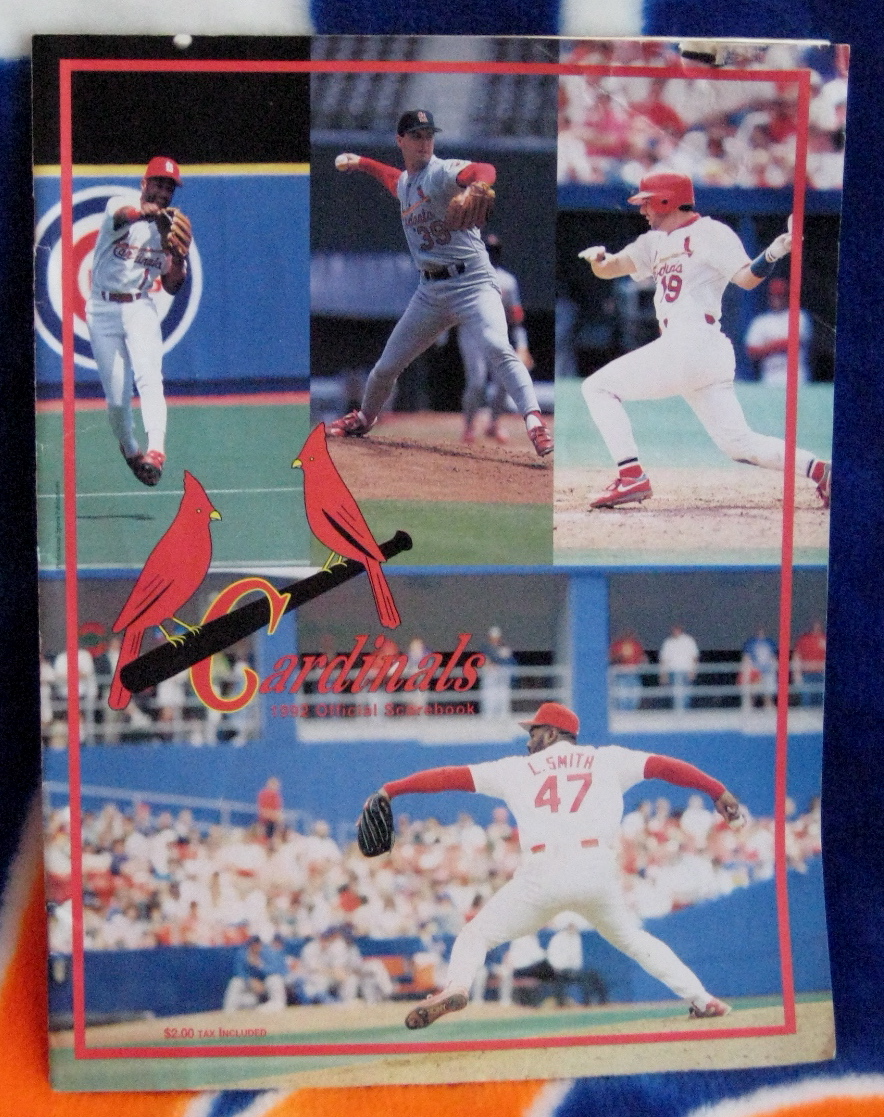
HOME TEAM: St. Louis Cardinals
VISITS: 1, plus a tour at a later date
VISITED: August 6, 1992
CHRONOLOGY: 8th of 34
RANKING: 25th of 34
I hate class trips. I haven’t been on one in nearly thirty years, but I still hate them. I hate being insinuated into a large group. Not 55,000 at Shea, per se, but any gathering of more than about four people that moves at somebody else’s behest. I hate being organized by total strangers unless I’ve paid for the privilege. I hate being outnumbered. I hate being a number.
For all those reasons, I all but hated my first exposure to old Busch Stadium. I probably wasn’t going to like it very much under optimal circumstances. I hated the Cardinals, too. I wasn’t crazy about their opponent.
Goodness, I’m kvetchy regarding this trip, but it encompassed all those things I generally despise, plus it was work. I had previously twisted a couple of work trips into ballpark detours, but this was actually work. I was in St. Louis as part of a trade magazine junket sponsored by the good folks who used to own the Cardinals. Their main business was beer. They brewed more of it than anybody else. The idea was to take us on a “V.I.P.” tour of their brewery, show us their Clydesdales, give us a talk or two on topics relevant to what we covered and then, for fun, take us to their ballpark to see their ballclub.
When this came up as a possibility, I was the dog in The Far Side who only heard what she wanted to hear: “Blah, blah, blah, BASEBALL! Blah, blah, blah, CARDINALS!” Hence, I had no compunction against volunteering for this particular assignment.
Of course I’m still glad I did. I would do it again, given the circumstances. I would have done it again a few years later when another brewer was organizing another outing to Milwaukee around a baseball game. That trip was assigned to another staff member at my trade magazine before I could speak up for it. My editor, who was clueless in all things sports (among many, many things), seemed surprised that I was miffed not to be given right of first refusal. “You wouldn’t want to fly all the way to Milwaukee just to see a baseball game, would you?”
I just stared at him and walked away.
Despite my enthusiasm for getting to add another ballpark to my life list on somebody else’s dime, I must have signed up later than most for St. Louis There was no room at the official junket inn and I wound up at a Courtyard by Marriott on the edge of downtown. Not a big deal, but it meant I wasn’t greeted by the official welcome basket full of the sponsor’s product. The next morning, when we gathered at the brewery, there was much official joshing around regarding the beer that was in everybody’s room. “What beer?” I thought. Wow, already one big inside joke, and I’m on the outside looking in.
By the summer of 1992, I’d been covering beverages for nearly 3½ years, so I’d crossed paths with various colleagues and competitors on the circuit. I had at least a few nodding acquaintanceships here and there. But that Thursday morning in St. Louis, I didn’t recognize anybody. When the gist of the junket agenda was spelled out, I figured out why. These other fine reporters were representing publications that were read primarily by retailers. Mine was read primarily by bottlers and wholesalers. You, the non-beverage civilian, may not get the fine difference, so let’s say that in baseball terms, they wrote for centerfielders and I wrote for third basemen. It was all still baseball, but they were going to be doing stories on How To Best Approach The Warning Track while I’d be learning nothing for my exposé on Playing The Bunt. Reconstructing the series of events that landed me in St. Louis, I remembered the junket application I sent in late had been rerouted my way from a retail magazine within our company. The company that owned the Cardinals didn’t really want me there to begin with.
Which was fine. All I wanted the baseball game that night.
Nevertheless, the day proceeded as somebody else’s class trip. I tried to befriend a person or two (somebody worked at a magazine where a guy I kind of knew used to work) but it didn’t go anywhere. I’m very bad at making friends on class trips, particularly adult class trips. So I sat, for hour upon hour, taking notes, smiling at our hosts, and not saying very much to anybody. We got to visit the Clydesdales and pick up Beechwood chips (better than Clydesdale chips) and found out something about carbonation, maybe something else about why six-packs are stocked on this shelf while twelve-packs are stacked over there in that display. Some of it was interesting, a little bit of it was informative as regarded what I wrote about, most of it was lonely time-killing. When’s first pitch?
Our day at the brewery ended late in the afternoon. We were released to our accommodations for a brief period (everybody else to their hotel rooms for the basket of complimentary beer, me to the Courtyard on the edge of downtown) and told to reconvene at a sports bar a couple of blocks from Busch Stadium.
I went back to my room, changed into slightly less confining business clothes — I wasn’t sure how “on” we were supposed to be for the rest of the evening — and took a cab through St. Louis to the place. I found my group and attempted to circulate. I’m terrible at that, too. They may have set up an informal spread with chicken wings and camaraderie, but it was really just another industry cocktail party with more suffocating small talk with people you didn’t know.
What’s worse, it was with fellow trade journalists. Something you need to know about trade journalists: nobody likes being one, not really. Nobody aspires to being one, certainly. You get the bug to become a journalist and, in my day anyway, you think of Lou Grant or All The President’s Men or Time magazine or Rolling Stone. You don’t think of trade magazines. You don’t know they exist. As it happened, I did. My sister was in the business for a while and that’s how I got involved. That’s how my view of the journalism job world came to include trade magazines. I started writing for them freelance in college, I kept writing for them freelance out of college and when I needed a full-time position, I gravitated to trade magazines.
Could I have done something else for a living? Something where somebody besides bottlers and wholesalers would have heard of me? I didn’t think in those terms. I thought about trade magazines, publications where you could become an expert at something nobody outside your field would ever ask about. You may have been a maestro at it, but your performances were closed to all but a scant few enthusiasts. Your friends and your family had heard of Time and Rolling Stone and so on. They never heard of what you wrote for except that you wrote for it.
That reality always hung over you, and nobody else understood it except other people like you who had somehow made a left turn into trade magazines. Theoretically, then, when you found yourself sharing a corner of a sports bar with them, you all shared a bond. You may have been frustrated by the limitations you imposed upon your professional self, but so were they. We could all drink to that. We could all get to know each other better because of it.
But that would’ve been depressing, so when it came up as a topic of conversation, it came up softly and obliquely, with just one junketeer, a charming Southern fellow nearing 50, daring to mention amid a bit of rambling the dissatisfaction his professional life was bringing him, how he had to do something else and soon.
Yeah, I agreed — me too.
“How old are you?” he asked me.
“I’m 29.”
“Oh, you’re just a baby,” he said more assuringly then dismissively. He rambled a bit more about himself and I went for another wing.
You know when beer is at its best? When it’s shipped fresh from a beermaker’s main brewery. The beer was as on the house as the wings, and I helped myself to several of both. I’m not much of a beer drinker, but when in St. Louis…you know. The brewer at the time had been pushing a “dry” version of its flagship brand (“flagship brand” is one of those phrases I worked into every story). Purists and dilettantes alike laughed at the concept of dry beer, just as they would laugh at ice beer a year later, just as the fact that soft drink franchisors started extending their lines to include caffeine-free and cherry colas became fodder for lazy comedians in the mid-’80s. I guess there’s just something funny about beverages to most people. In any event, I had never tried their dry beer, but it was there for the taking at the sports bar, so I took it.
My god, it was good. It was so good I had three full cans. It was less the need to cool down the chicken wings than to drown out the self-loathing. Why did I go into trade journalism? Why ask why? Try the dry.
Sufficiently refreshed, it was off to Busch Stadium, which I’m pretty sure is the nominal topic of this essay. Busch…it was OK, I guess. I’d always admired it on television as having a bit more character than the other round, turf-laden parks. I liked the arches atop the stadium. I liked, in person, that it was around things like bars and hotels. Otherwise, it was full of ramps like the Vet and Shea, and it was full of Cardinal fans. I’d come to hate Cardinal fans in 1985 when they didn’t so accidentally spill their beer on Lenny Dykstra at the peak of Met-Redbird hostilities. The hatred between New York and St. Louis had waned since then. This was the final year of the “pure” National League East. The Cardinals weren’t much of a factor in the divisional race and the Mets were slipping from factordom quickly. We were both well behind the Pirates, that night’s visiting team. Pirates and their fans weren’t my favorite people, either.
This was the first N.L. game I’d ever attended where the only evidence of the Mets was their decal on the outfield fence and their space on the out-of-town scoreboard. I didn’t really want anybody to win here in St. Louis. But as long as the brewery that owned them was treating, I pretended to root for the Cardinals. I even put on the adjustable Cardinals cap they gave us (marveling at how long ago 1985 suddenly felt). I thought I’d be doing my faux-rooting from really excellent seats, maybe a luxury box. If we were rolling with the company that bore the same name as the stadium, and we were special guests, I expected special treatment — as if those three fresh dry beers weren’t special enough.
Alas, our group was seated somewhere in the second deck. Not bad seats, but nothing special. I imagine the Busches had better guests on whom to shower their finest hospitality. The whole atmosphere felt rather corporate, and not because I was dressed better than usual for a ballgame. I imagine there were a lot of Busch-ites at Busch. If not exactly a company town, the A and Eagle footprint figured to be pretty formidable. And whether it was fealty to a local employer, Redbird rabidness or just the way those nice folks in St. Louis supported their team, I decided this must be what’s it’s like to going to a baseball game in Japan. Everybody wore red. Everybody cheered in unison. Everybody smiled a bit too much.
It was a class trip again, but this time the class contained 32,000 other students and I had nothing to say to any of them beyond “nice catch” when a lean Barry Bonds made a sliding grab of a liner that was about to sink onto the carpet in left. Bonds would leave the Pirates after the season, but that catch remained a mainstay of highlight reels for years to come. “Hey,” I’d think whenever it popped up. “I was at that game.”
That’s all I remember in the way of baseball from that game. I was thoroughly disengaged from the action, getting up to walk around to explore the ramps (which were just ramps) and peeking again and again at the out-of-town scoreboard (which was just more bad 1992 Met news). I’d been to one Mets game by myself in 1988 and it was weird, but this was weirder. I was with a group — our names went up on the scoreboard in the middle of the game — but I was as alone as I’d ever been at a baseball game. Nobody’s fault but my own. My fellow trade journalists didn’t necessarily seem like bad sorts (unlike an eerily similar Shea experience in 1979 alongside high school journalists). I’m just not good at small talk. The only talk I really find embiggening, as they say on The Simpsons, is Mets talk. These people weren’t Mets fans. I was stymied in conversation from the get-go.
I put in nine or ten innings at Busch. The game would go thirteen, but I’d had enough of color-coded enthusiasm for one night. I thanked our hosts and split. Cabs were lined up out front. Being downtown had its advantages.
There was no more official business, so I headed to the airport Friday morning. A week or so later, I received an envelope from the company that owned the Cardinals. It was my Honorary Brewmaster certificate. Had I stayed to the game’s conclusion, I would have received it on the spot. Nice of them to think to send it to me. I hung it in my office, where it remained displayed until my company moved.
Several months later, I was beverage shopping in advance of a photo shoot. I threw a six-pack of that dry beer into the cart while I was on assignment. I had never bought myself a six-pack of anything other than soda, but it had tasted so good at that sports bar in St. Louis, and the Super Bowl was coming up, so why not try the dry one more time?
It didn’t taste close to how good it had been down the block from Busch Stadium. It couldn’t have been as fresh. We weren’t in the middle of summer, and I was in my living room where I had no need to make small talk. I guess I no longer needed a dry beer.
***
All told, save for the thrill of getting out of the office and seeing live baseball where I wouldn’t have otherwise, my Busch Stadium trip was pretty miserable and I found the stadium fairly unimpressive. Yet I don’t rank it all that low. If I ask why, I know the answer.
It’s because I got another chance at Busch Stadium. And it went much better.
This time, I was alone, but it was a good alone. I was in St. Louis in April 1995 to write a cover story on that same brewer’s best-selling beer brand. This worked better for me than the forced conviviality of a class trip. I wasn’t one person lost in a crowd. I was an army of one. One trade journalist, but a trade journalist doing what I’m supposed to do: light on the small talk, heavy on the Q&A.
Only drawback to the scheduling was that the Cardinals weren’t home. Nobody was home in baseball. The strike that wiped out 1994 had just been settled, but Opening Day was delayed by all that labor-management nonsense. A ballpark loomed nearby, yet there was no baseball.
But, I would learn, there was something else. Once I was done with my interviews, the PR guy in charge of handling me brought me back downtown for lunch. When I told him I had much time to kill before returning to the airport, he told me I could go to Busch Stadium and take a tour. It had nothing to do with my being a guest of the company that would, for one more season, own the Cardinals. They offered tours all the time to anybody. It would kill the requisite time and perhaps give me an insight or two that I missed amid my own miasma in 1992.
I took him up on his suggestion. Walked over from the restaurant to the ticket window at Busch, bought one admission and got myself attached to a group. These people were total strangers, but they were supposed to be, so that was cool. The tour itself was incredibly cool. They took us everywhere inside Busch Stadium. With the season a couple of weeks away, there was lots of activity, so it felt we were getting a sneak preview of sorts for 1995. I noticed a much darker, less deathly carpet had been put down on the field (a year later, new owners would rip up the rug altogether and install good ol’ grass). We got to visit the press box. I had never sat in a stadium press box before. As part of my high school journalism tour group, I got to glimpse Shea’s, but I didn’t get to sit there.
Still in a coat and tie from my interview, I asked somebody to take a picture of me sitting where the man from the Post-Dispatch sat. The man from the Post-Dispatch presumably never asked to be photographed where the guy from the beverage magazine usually sat, but so be it. I tried to furtively write LET’S GO METS on the workspace while our tour guide spoke, but the surface was unkind to such sentiments.
The tour ended on the turf. It was my first time on a major league field. Even though it was carpet, it was thrilling. We stood in foul territory on the first base side and were told to not step over the line lest we incur the wrath of the grounds crew. It was just turf, but who wanted to make trouble? As the guide wound down his remarks, my eye wandered to right field. On October 3, 1985, Gary Carter hit a fly ball over there with one man on and two men out in the ninth inning, the Mets down a run. When he connected, I was convinced it was going out, that the Mets were going to pull ahead of the Cardinals in the game and tie them in the standings and that everything would be great. Instead, the ball was routine and the outcome — 9-unassisted, caught by Andy Van Slyke — was predictable. Still, for a moment, I reveled in standing feet away from bittersweet Met history. We won those first two games in St. Louis that first week of October. They could call us pond scum, they could spill their beer on Lenny, but we went to the ninth inning of the third game with a genuine chance. Keith had singled for his fifth hit of the night, and Gary, on fire for a month, was up against Jeff Lahti. That was 1985. This was 1995. Baseball had been gone since the previous August. Now it was so close, I could taste its lingering heartache.
Three seasons after having had quite enough of it, I would exit Busch Stadium the second time not particularly wanting to leave.
***
Speaking of ballpark tours, the Mets are initiating their own; details here. Until those commence, there’s no better place to be when the Mets are on the road than Two Boots Grand Central for AMAZIN’ TUESDAY, coming this Tuesday, 7 PM. Your hosts are Jon Springer of Mets By The Numbers and me. Our very special guests are Taryn Cooper of My Summer Family, Josh Wilker of Cardboard Gods and, hopefully, you. Details here.
by Jason Fry on 13 May 2010 10:46 pm That was a brutal way to lose a baseball game. I’m referring to tonight against Cody Ross and the Marlins, though I could be referring to Wednesday afternoon against the Nationals, Monday night against the Nationals, Sunday afternoon against the Giants, last Wednesday against the Reds or last Monday against the Reds.
But then brutal is what happens at Soilmaster Stadium, that dispiriting, poorly lighted, oddly colored den of horrors.
Technically, Soilmaster has a new name: Sun Life Stadium. At least I think that’s what it’s called now. Honestly, I don’t particularly care — I had trouble remembering the Marlins’ park wasn’t actually called Soilmaster Stadium, and that’s just a joke Greg and I came up with at some point in 5+ years of chronicling mostly aggravating things that have happened to the Mets when they visit.
Shooting holes in our own feet is so well-established a tradition when playing the Marlins at Soilmaster Stadium that I can’t even work up more than grudging admiration for the old-fashioned showdown between gunslingers Johan Santana and Josh Johnson. Santana was armed with his indomitable will and more importantly his changeup, while Johnson had that cannonball fastball and perfect location. After he blew away Jason Bay in the sixth, I couldn’t even manage to be aggravated: Bay, no slouch at hitting a baseball, hadn’t had a chance.
OK, so maybe I did admire it some. But then both aces were in the discard pile, leaving various mid-range clubs and diamonds to fumble along in their wake. You knew, somehow, that the first team to make a mistake would wind up sitting glumly in the clubhouse. Given the Marlins’ seeming lack of interest in catching balls, you might have thought the Mets had the advantage — and perhaps tricked yourself into a sense of optimism when Luis Castillo wound up at second with nobody out in the ninth. But if so, you’d probably pushed all the awful things that have happened to the Mets here out of memory.
Last time it was stupid for Jose Reyes to bunt, and he screwed it up. Tonight the bunt was harder to argue with, and Jose screwed up, after which Bay grounded out and David Wright … wait, a minute, you WILL NEVER GUESS … struck out. And soon enough there stood Fernando Nieve, on the way to being one-armed by July, with the porcine Cody Ross on third, his fellow Met killer Ronny Paulino on first, and one out. Would the fatal blow be a bloop hit? A de facto single over an already-departing outfielder after walking the bases loaded? A misplay? A ball lost in the lights? A balk?
Perhaps it would be a ball buried a little too solidly in the dirt to Dan Uggla, one you thought Rod Barajas maybe should’ve got, until you remembered he’s playing with a busted finger and was our offense for the night and forgave him. Wild pitch. Game over.
You probably didn’t guess it would be that, but you knew it would be something. It always is at Soilmaster Stadium.
***
Next Tuesday, May 18, 7 p.m.: AMAZIN’ TUESDAY makes its Grand Central Terminal debut at the Two Boots in the Lower Dining Concourse. Read about our Mets reading series here.
by Greg Prince on 12 May 2010 10:48 pm That was a brutal way to lose a baseball game. I’m referring to Wednesday afternoon against Roger Bernadina and the Nationals, though I could be referring to Monday night against the Nationals, Sunday afternoon against the Giants, last Wednesday against the Reds or last Monday against the Reds. Actually, the same could apply to the previous Sunday night and Saturday afternoon against the Phillies. Those two were blowouts and not nailbiters, but brutal is brutal.
That means we’ve experienced seven defeats in our last eleven games. Within that time frame, we’ve also enjoyed four exhilarating wins, each of them attained in the last inning the Mets batted — the ninth against the Reds, the ninth against the Giants, the eleventh against the Giants and the eighth against the Nats. There has been glory interspersed with the brutality, but it’s been more brutal than glorious these last eleven games.
And before that? Practically uninterrupted glory. That was when, if you can remember back that far, we were all but unbeatable. We won two games against the Cubs pretty easily, then absorbed a loss, then reeled off eight only partially contested wins versus Chicago, Atlanta and Los Angeles. Those were the days and nights of the 9-1 homestand, topped off by our first game at Philadelphia. That added up to 10-1, a solid shield that has protected us to a certain extent against the harmful effects of the 4-7 stretch that has followed.
You didn’t think we’d ten of every eleven for five months now, did you? No, you didn’t think that. Maybe you didn’t know what to think of your Metsies when they surged from a hopeless 4-8 to a triumphant 14-9. Most of that was the now legendary 9-1 homestand, which we were told a few dozen times was unmatched in Mets history, save for 1969 and 1988. In both of those seasons, we were National League East champs, winning 100 games on the nose.
We wouldn’t mind locking that in as precedent, eh?
I don’t know that there was anything specifically magical about playing a homestand of exactly ten games and winning nine of them. It was uplifting as hell, of course, but the Mets play homestands of various lengths across a given season. They also play spans of ten games that take place partly at home and partly on the road. Sometimes they’re all road games. There was probably more to going 9-1 at home two weeks ago than simply matching a rather incidental record.
I did a little checking and found that Mets had played ten or more consecutive games on 38 discrete occasions in the life of the franchise without losing more than once. I was curious to see if there was a pattern to going 9-1 or better vis-à-vis the seasons in when the Mets did it. We knew about the 9-1 homestands of ’69 and ’88 and that those seasons begat postseasons. But do 9-1 stretches necessarily mean playoffs?
No, but they sure do help.
It’s not so much that you’re a good team because you go 9-1 a lot; you go 9-1 a lot because you’re a good team. Good teams tend to win much more often than they lose, you might have heard. That’s probably why the Mets, notorious for not being good prior to 1969, never enjoyed a 9-1 stretch before 1969. In 1969, however, they went, at various intervals, 11-0, 12-1, 13-1 and 9-1. That right there is 45-3. That’s quite a leg up on going 100-62, which was the final regular-season record of 1969.
A similarly delightful situation arose and kept arising through 1986. There was the 18-1 run that defined April and May, a pair of 9-1 stretches in June and July, an 11-1 to wind down August and another 9-1 to finish off the schedule. The Mets went 56-5 in five distinct periods that constituted almost 38% of their season. Breathtaking, ain’t it? Maybe even more remarkable is that when they weren’t at their absolute hottest — a.k.a. the rest of the season — there were still a winning club, posting a record of 52-49 to finish 108-54.
If you’re curious to know just how good our two world championship clubs were, this provides you with some evidence. They were both about as outstanding a baseball team could be.
We remember 1988 today for its shortcomings in the NLCS, but the business about 9-1 homestands remind us that was a sensational team, too. Those Mets went 10-1 between April 26 and May 8. Come September, they’d overlap a couple of similar stretches, 13-1 and 11-1, equaling a 16-2 mark at one point. The Mets were hot early and scorching late.
The 2000 Mets maintained similar stretches of momentum. They were 11-1 at one point in April, 9-1 at the end of June and the beginning of July and 10-1 about a month after that. Quietly and efficiently, the Mets banked a 30-3 mark, which helps explain why their 2000 Wild Card was achieved without the terrible angst we tend to associate with the ends of Mets seasons. In more recent memory, the 2006 Mets made their bones on a 9-1 run in April, a 9-1 road trip in June and an 11-1 victory lap in August. The rest of the year, which varied from fine to dandy, was essentially gravy.
Win a lot of games at once often is an almost foolproof formula for making the playoffs. Do it a little less often and you’re on your own. The 2008 Mets had a 10-1 and a 10-0 but they still fell a game shy. The 2007 Mets, it’s easy to forget (if you can forget 2007), went 9-1 between August 31 and September 10. They split their next two and then, all too memorably, lost twelve of seventeen. Thud!
The 1999 Mets went 9-1 once and barely made the playoffs. The 1998 Mets went 11-1 once and just missed the playoffs. From June 12 to July 6, 1990, the Mets ran off overlapping 16-1 and 15-1 skeins, adding up to an imposing 20-2 stretch. The rest of the year, however, they were just a wisp over .500. They finished a wisp behind the Pirates for first.
Two other Mets teams put up a pair of non-overlapping 9-1 or better stretches without getting postseason bang for their buck. In 1985 there was a 13-1 record and a 12-1 record a few weeks apart. In those pre-Wild Card days, it wasn’t enough. In 1976, the Mets enjoyed two 9-1s; they weren’t nearly enough. Four years earlier, the 14-1 sunburst of May 1972 was completely obscured by a barrage of injuries and resulting mediocrity.
If you’re looking for some reasonably encouraging sign, it may be that if a Mets team wins nine of ten at some point, it’s probably going to give us a minimally good show. The only Mets teams that posted a stretch of ten or more games with no more than one loss and didn’t enjoy a winning record for the season were the 1974 Mets and the 1991 Mets. The ’74 edition was dead and buried when it unspooled its 10-1 in late August. The ’91ers seemed to be gathering steam when they won ten in a row in the first half of July. Alas, it was just a prelude to disaster.
Otherwise, in sixteen of the eighteen seasons in question prior to this one, you at least get a team that finishes over .500. You may not get a pennant or even a pennant race, but after 2009 (when there was no 9-1) and after the beginning of 2010 (when we were 4-8), I personally would be pretty happy to maintain a few threads of hope and feel there’s a chance for success well into summer.
In that sense, it’s already a pretty good season. But you know the old adage: you have to take baseball eleven games at a time.
***
Here is the entire list of discrete stretches when the Mets played at least ten games and lost no more than once. I also threw in some home record data in deference to the 9-1 homestand that helped inspire this train of thought.
We’re using stretches here where momentum was at its peak, leaving out overlapping duplicates (taking the last nine wins of a ten-game winning streak and slapping on the loss that follows, for example). All stretches began with a win.
• 10-1 from April 19 to April 30, 2010, encompassing a 9-1 homestand.
• 10-1 from August 12 to August 22, 2008 encompassing 4 consecutive home wins.
• 10-0 from July 5 to July 17, 2008, encompassing a 6-0 homestand.
• 9-1 from August 31 to September 10, 2007, encompassing 4 consecutive home wins.
• 11-1 from August 17 to August 30, 2006, encompassing an 8-1 homestand.
• 9-1 from June 5 to June 15, 2006, all on the road.
• 9-1 from April 6 to April 17, 2006, encompassing 6 non-consecutive home wins.
• 11-1 from September 3 to September 22, 2001, encompassing 2 consecutive home wins.
• 10-1 from August 29 to September 8, 2001, encompassing 4 consecutive home wins.
(All relevant overlapping considered, the Mets went 15-2 from August 29 to September 22, 2001, encompassing a home record of 6-1.)
• 10-1 from July 25 to August 5, 2000, encompassing an 8-1 homestand.
• 9-1 from June 22 to July 1, 2000, all wins at home (part of a 9-4 homestand).
• 11-1 from April 13 to April 25, 2000, encompassing 8 consecutive home wins.
• 9-1 from June 15 to June 25, 1999, encompassing a 3-0 homestand.
• 11-1 from May 19 to May 31, 1998, encompassing a 6-1 homestand.
• 10-0 from July 1 to July 13, 1991, encompassing 3 consecutive home wins.
• 16-1 from June 17 to July 6, 1990, encompassing homestands of 5-0 and 5-1.
• 15-1 from June 12 to June 29, 1990, encompassing 7 non-consecutive home wins, including a 5-0 homestand.
(All relevant overlapping considered, the Mets went 20-2 from June 12 to July 6, 1990, encompassing a home record of 11-1.)
• 11-1 from September 14 to September 26, 1988, encompassing 8 consecutive home wins.
• 13-1 from September 8 to September 22, 1988, encompassing a 9-1 homestand.
(All relevant overlapping considered, the Mets went 16-2 from September 8 to September 26, 1988, encompassing a home record of 9-1.)
• 10-1 from April 26 to May 8, 1988, encompassing 5 consecutive home wins.
• 10-1 from July 28 to August 7, 1987, encompassing 5 consecutive home wins.
• 9-1 from September 25 to October 5, 1986, encompassing 3 consecutive home wins.
• 11-1 from August 17 to August 30, 1986, encompassing 3 home wins.
• 9-1 from June 25 to July 6, 1986, encompassing 4 home wins.
• 9-1 from June 6 to June 16, 1986, encompassing a 6-1 homestand.
• 18-1 from April 18 to May 10, 1986, encompassing 10 home wins.
• 12-1 from July 29 to August 13, 1985, encompassing 8 home wins.
• 13-1 from July 2 to July 18, 1985, encompassing 3 home wins.
• 12-1 from July 1 to July 14, 1984, encompassing 9 home wins.
• 9-1 from June 23 to July 4, 1976, encompassing 6 consecutive home wins.
• 9-1 from April 24 to May 4, 1976, encompassing a home record of 7-1.
• 10-1 from August 25 to September 4, 1974, encompassing a 6-1 homestand.
• 14-1 from May 7 to May 21, 1972, encompassing a home record of 10-1.
• 9-1 from September 21 to October 1, 1969, encompassing 5 consecutive home wins.
• 13-1 from September 6 to September 18, 1969, encompassing 7 consecutive home wins.
• 12-1 from August 16 to August 27, 1969, encompassing a 9-1 homestand.
• 11-0 from May 28 to June 10, 1969, encompassing 7 consecutive home wins.
Thanks to my compatriots at the Crane Pool Forum for facilitating the thought process on this topic.
***
Speaking of trains of thought, AMAZIN’ TUESDAY makes its Grand Central Terminal debut at the Two Boots in the Lower Dining Concourse. Read about our Mets reading series here.
by Greg Prince on 12 May 2010 11:23 am You think the Mets bringing in Rod Barajas, bringing up Ike Davis and blotting out Frank Catalanotto with Chris Carter were winning moves? Sure they were. But if this organization really wanted to do nothing but win, they would bring somebody else to the ballpark every single game.
They would bring me.
They want me on that wall. They need me on that wall. They need me somewhere within the walls of Citi Field whenever they play ball.
There is no need for me to be coy about this any longer: I Am Home Field Advantage. Believe in me, Mets. When I’m literally with you, you can do no wrong.
The Mets are 34-11 at the ballpark I didn’t particularly want built when I’m inside it. They’re 8-1 in 2010, including 7-for-7 since Willie Harris besmirched this season’s bid for perfection. They did well with me in attendance last year; they are all but impenetrable with me on hand this year.
Who do you think made this particular Tuesday as Amazin’ as it was? Barajas with his clutch double to the left field corner? Davis with his third tumbling dugout catch (which, unlike his cake-icing grand slam over the foul pole, counted)? Carter the Animal attacking bad luck charm Tyler Clippard in his first Met at-bat? Yeah, whatever.
It was me. I showed up, the Mets won. They needed six runs entering the eighth, but they were going to get them. They were going to get them because they were, eventually, going to pick up my vibe.
Took them longer than usual. For that, I apologize. I was hard to track down Tuesday night. I was all over the place. Perhaps they think I was hiding my vibe from them. I wasn’t. It was a special occasion — besides the six runs in the eighth, I mean.
On May 11, 1987, I was minding my own business, listening to WHN on my Walkman as Rick Aguilera began to lose it in Cincinnati. The Mets lost that Monday night, but I got on a winning streak that’s now at 23 years and counting. That was the night I met my future wife. Four nights later she met the Mets (our first date: Mets 8 Giants 3) and the three of us were off and running from there.
May 11 rolls around, we usually take note of it. These past few years, the Mets have made our anniversary a threesome. In 2007, we spent part of our day at the Met (close enough). In 2008, we double-dated with the Mets and Reds, echoing the same matchup that was in my ears in ’87 (with a better result). Last year, we revisited the neighborhood where we met, Lincoln Square, and giddily clicked pictures of the window at the Barnes & Noble on 66th and Broadway. I tried to imagine my 1987 self imagining this moment: married to the woman I’d just fallen for with my new book about the Mets on display for all to see. But I never had very much imagination about those sorts of things back then.
So May 11 rolls around again and, it happens, somebody offers to sell me, on a Value night, a pair of Field Level tickets for the Mets and Nationals. I probably wouldn’t have bit except I was thinking maybe Stephanie, who almost never wants to go on a weeknight and never ever wants to go when there’s the slightest chance of a chill in the air, would think it would be a fun anniversary outing.
I’ll be damned, she did. It helped that she’s on vacation this week and it helped just as much that she’s been exposed to the Mets for 23 years. The other night when Jeff Francoeur made a nice catch, she let out an unprecedented and enthusiastic “FRENCHY!”
Where the hell did that come from? Oh right, me.
Anyway, one of the selling points of these tickets, besides it being May 11, was that the Mets have widened access to their clubs this season. A Field Level seat means you can wander into the Promenade Club (unlikely that you would from downstairs), the Caesars Club (big whoop, unless it’s cold and/or raining) and the Acela Club.
Stephanie and I spent a memorable afternoon in the Acela Club last November, courtesy of Ryder Chasin upon his ascent to manhood, but I’d never been in there during the actual baseball season. Several times in 2009 I sat on either side of it, not exactly dying to get in but a little curious as to what the fuss was about, or whether there was fuss. For the prices they charge, there ought to be. For the prices they charge, I was never planning on finding out.
But this was going to be May 11. On May 11, we do things we might not otherwise do. Yesterday, I did something I can’t remember having done in at least fifteen years: I made a reservation for dinner. As long as our microwave is working, the only reservation I have regarding dinner is wondering how many preservatives are safe for human consumption. But May 11 is our Night We Met anniversary. This May 11 would present us with the chance to dine finely while overlooking a baseball game.
Couldn’t not do it. And when I called for the reservation and was asked if I wanted a windowside table, I couldn’t not say yes. Oh, there’s a surcharge per person, I was told. Good information to have, but it was too late. Of course I wanted the window. What’s the point of the Acela Club if I can’t see the ballpark? If the rest of the ballpark can’t see me?
We showed up, per our reservation, at 6:45. Somebody with a clipboard greeted us and asked us nicely to show a ticket to prove we were allowed up here, lest we be denied the privilege of willingly forking over beaucoup bucks. We had our ticket. And we forked.
You walk into Acela with your reservation, you’re sent to the front desk. The front desk confirms you, and you are passed along to somebody else with a headset. There’s an army of people in headsets throughout the Acela Club. The Acela Club’s aura is less gracious living than military precision. They are going to get you to that table if it’s the last thing they do.
Correction: The last thing they do is present you with your check. The surcharge is on there. So is everything else. It’s not a cheap night out (never mind that you already bought Field Level tickets so you could be up here). But it’s May 11, so you rationalize your head off. Well, we don’t this very often. Well, I never ate at the Diamond Club. Well, we can buy groceries next week.
Is it worth it? I decided it would be, so it was. Your prix fixe dinner entitles you to unlimited access to a super salad bar (it’s called the Market Table and it’s very generous in its offerings, but really its spiritual ancestor is the Ponderosa) plus a serious entree. Stephanie ordered the swordfish. I went with the lemon chicken. Neither one of us was going hungry. The whole thing was very good and very filling. The service was very courteous and our waitress was extremely friendly, particularly when we mentioned it was our Night We Met anniversary. The field spread out below us. The windows were sealed shut in deference to the gametime temperature of 52 degrees, so we felt rather removed from the action, but the action was there to be taken in from a distance.
The only problem was that dinner was served with an Adam Dunn three-run homer, so that can kill an appetite. (Only kidding — when you’re paying the Acela Club prix, your appetite will remain robust for the duration.) The night was developing as a lovely detour into heretofore untrod territory and, oh by the way, the Mets were going to lose. They were down 3-0, Niese was struggling, let’s try the carrot cake (prix fixe does not include dessert, but Night We Met anniversaries must).
Consumed by the Acela experience, I didn’t realize why the Mets were losing. They were losing because they didn’t think to peer through the window to see me. Remember, I’m the key. If I’m there, they win, but I guess they have to know that I’m there. After three innings, we took our Field Level seats. The Mets apparently didn’t know I was there either. That had to be why Niese got knocked out and Acosta got touched up and the score was 6-1 by the middle of the fifth.
Then it began to rain. Barely, but rain is rain. Me, I sit in light rain at ballgames. I sit — and stand — through gale-force winds. It’s what I do. But Stephanie…not so much. First sign of rain reminded her of why night games before Memorial Day aren’t her cup of tea. It was quite obviously time to take advantage of that Caesars Club access.
This is where all those headsets came into play. They weren’t just for seating Acela Club customers. They were to get the word out to the Mets that I was in the house — me and my winning vibe. They couldn’t confirm it until Stephanie and I settled at a table in the Caesars Club (which should be called the Seavers Club or, better yet, the 41 Club). The headsets went to work; somebody tipped off somebody; somebody else let the dugout know it was safe to start hitting and start winning. I’m pretty sure I saw Jerry Manuel wink at me through one of the TVs over the Caesars bar.
At first, per usual, it was kind of lame in there, with nobody besides us seeming to pay much attention to HD heaven. But then, in the eighth, when the game got intensely interesting, suddenly everybody was watching the Mets at the Mets game. Caesars went from being the place you take your wife to get out of the rain to one of the better Citi Field crowds I’ve ever been in. Sure, it was a little bro-ey in there, but what the hell? The Mets were loading and clearing bases with spectacular alacrity. It deserved the bro treatment. Let us all bump fists like the Romans did! A deep chant of RE-PLAY! went up for Ike’s ghost slam, which charmed Stephanie. She was also amused by Howie Rose’s kvetching about Milwaukee, which she heard in the ladies room prior to the six-run outburst. I love that they pipe play-by-play into the men’s room. It never occurred to me they do the same next door.
Stephanie’s been listening to Howie and Wayne a little bit lately. She’ll get ready for bed in the late innings. The bathroom radio is sometimes tuned to the FAN and she simply doesn’t change it. Or maybe she changes it to the FAN so she can follow along while she brushes her teeth. When did that start happening?
Oh right, 23 years ago.
Everybody’s vibe was perfectly synced as we headed to the ninth. The rain had dissipated and a cup of hot chocolaty water had fortified my bride enough so that we could head back outside to watch Frankie maybe hold a two-run lead. Having gained access to the almighty Excelsior level, we grabbed two of the many empty seats behind first base and watched Ike sacrifice his body to the greater good one more time. In the Mets’ dugout, Ike was grabbing the last out and six Mets were grabbing Ike. In the Citi Field rest rooms, Howie was putting it in the books. On the anniversary of the night we met, we — the Mets and me, Stephanie and me, Stephanie and the Mets — all kept our intertwined winning streaks intact.
The Acela Club was fine, and I enjoyed my introduction to Chris Carter, but what I’m really a big fan of is May 11.
Next Tuesday will definitely be Amazin’, as AMAZIN’ TUESDAY makes its Grand Central Terminal debut at the Two Boots in the Lower Dining Concourse. Read about our Mets reading series here.
by Jason Fry on 12 May 2010 1:07 am Even fans of juggernauts endure a fair number of four-run deficits in the eighth, as games that haven’t felt particularly close trudge to a merciful conclusion. Being a baseball fan means putting up with God knows how many such affairs — lousy, irritating games that you stick with because bad baseball is ever so slightly better than the absence of baseball, after which you forget them as quickly as possible.
Most of last night’s game followed this dreary template: Jonathon Niese was wild and thoroughly unimpressive, beginning his night by serving up a meatball to Adam Dunn and ending it by watching Manny Acosta further drive up his ERA. The Met hitters, for their part, were specializing in hitting into double plays. Occasionally they looked frustrated or peeved; most of the time they looked as listless as the sparse, chilly crowd muttering amid the sea of forest-green seats.
If you were at the game and stayed, I applaud you. If you were at the game and left, I don’t blame you. I heard the whole thing, but I’m not patting myself on the back too heartily: I spent most of the second half sitting at my desk writing, ever so often registering via Howie and Wayne that the Mets had done something else that would have annoyed me thoroughly had I still been in front of the TV, a level of commitment the Mets clearly didn’t deserve.
But then there were interested voices behind me. It was late, but Scott Olsen was out of the game, and the Mets were showing fitful signs of life.
Now, I feel it’s my duty to make something very clear for any newly minted Mets fans who’s happened by these parts.
Most of the time, teams that fall behind 3-0 and then deepen that hole to 6-1 don’t come back.
Most of the time, ekeing your way back to 6-2 is as close as you come to a moral victory. Which isn’t very close.
Most of the time, deciding to change the channel or turn off the TV isn’t punished.
Wishing for it to be otherwise is the sign of a good heart, and believing it will be otherwise reflects admirable loyalty. But most of the time, these praiseworthy traits yield no reward — unless you count watching hours and hours and hours of dull, dispiriting baseball as a reward. (In the middle of the winter you’ll think it would totally count. This only proves that the middle of the winter is no time for perspective.)
But every once in a while, something different happens. One hit turns into another, there are walks and errors and goofiness and the world turned upside down.
Every once in a while Jason Bay singles and David Wright doubles and Ike Davis is safe on an error and there’s an out but no big deal because Rod Barajas doubles and you laugh at Josh Willingham’s imitation of a left fielder and realize you’re within one somehow and turn on the lousy little TV by the treadmill but then think there’s luck in the radio and scurry back to your desk to not screw up that luck and then Alex Cora bunts but it’s a single so Cora is brilliant and the TV is about five seconds behind the radio so you have time to hear that something good has happened and rush to the TV and then Chris Carter is up for his Mets debut and now it’s like you have springs in your behind because you’re so eager to rush to the TV for another highlight and the Animal equals five weeks of the jettisoned Frank Catalanotto with one swing and holy cow we’re up by one and there’s a pitching change and Jose Reyes is walked and Jason Bay walks for an insurance run and there’s another out and then Ike Davis HITS A FUCKING GRAND SLAM rats hits a really deep foul ball and then flies out but oh my goodness it’s Mets 8, Nationals 6.
And then, if you’re really lucky, Ike will end a 1-2-3 ninth inning with his third Spider-Man catch over the dugout rail, capping just about the best night a rookie can have while going 0 for 5 with runners in scoring position, and Frankie Rodriguez will laugh and the Mets will high-five and you’ll imagine that you all might actually be able to walk on water right now. (Just in case, don’t try it.)
When that every once in a while comes around, it’s pretty fun. You’ll flip around for the highlights and listen to the entire postgame show and the normally insipid callers and periodically giggle and high-five imaginary people.
And then the memory of that game will keep you watching for the next 160 to 180 hours of baseball in which every once in a while doesn’t happen.
|
|