The blog for Mets fans
who like to read
ABOUT US
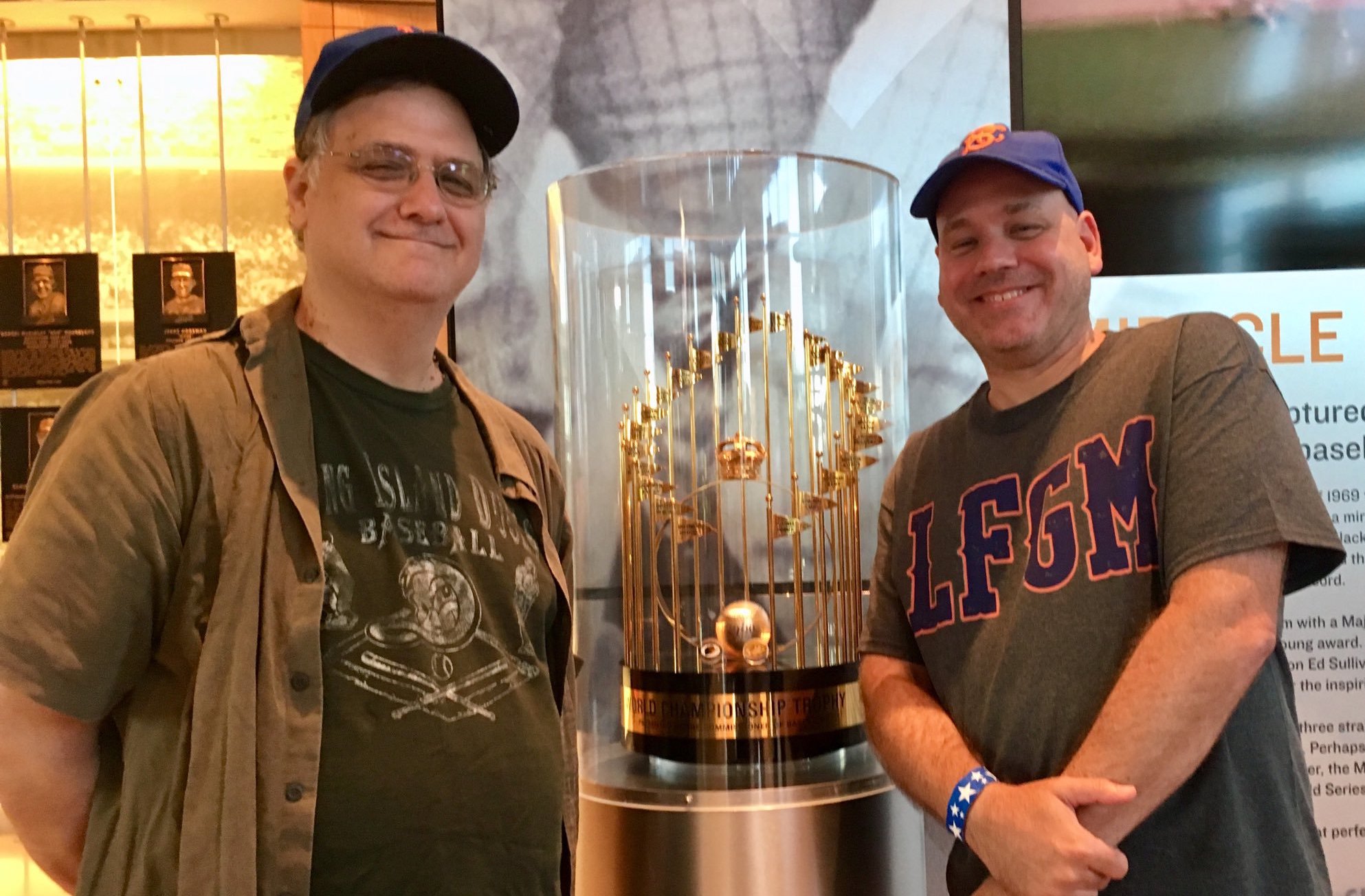
Faith and Fear in Flushing made its debut on Feb. 16, 2005, the brainchild of two longtime friends and lifelong Met fans.
Greg Prince discovered the Mets when he was 6, during the magical summer of 1969. He is a Long Island-based writer, editor and communications consultant. Contact him here.
Jason Fry is a Brooklyn writer whose first memories include his mom leaping up and down cheering for Rusty Staub. Check out his other writing here.
Got something to say? Leave a comment, or email us at faithandfear@gmail.com. (Sorry, but we have no interest in ads, sponsored content or guest posts.)
Need our RSS feed? It's here.
Visit our Facebook page, or drop by the personal pages for Greg and Jason.
Or follow us on Twitter: Here's Greg, and here's Jason.
|
by Greg Prince on 6 March 2008 1:36 pm 
Moises Alou is out four to six weeks (probably months, maybe years) in deference to the removal of and recovery from a hernia. We wish him well even as we wish he hadn’t been counted on to such absurd lengths. We liked his September plenty, mind you. We just didn’t think he had another one in him, at least not right away.
So we welcome to the Mets, for all intents and purposes, our starting outfield for 2008, Angel Pagan. At the rate things are going, I assume he’ll be counted on to display Bugs Bunny versatility. You know:
Left Field — Angel Pagan!
Center Field — Angel Pagan!
Right Field — Angel Pagan!
I thought Angel Pagan’s value in camp was going to be anecdotal. He was here to remind me of the halcyon days of the Original Cyclones, the 2001 New York-Penn League co-champs, the team that brought baseball back to Brooklyn, the team that made the minors major. For a half-decade, Angel Pagan’s name had been safely tucked in my subconscious with Frank Corr and John Toner and Jay Caliguri and Forrest Lawson and the hero of the McNamara Division playoffs, Brett Kay, and brilliant views of the Atlantic and those carnival-style lights that lit Keyspan Park when dusk rolled around. I was surprised when he surfaced with the Cubs in 2006. I was delighted when the Mets signed him this offseason. I expected no more than a cameo at Shea.
Now it appears he will be our starting outfield on Opening Day, a third of it anyway. He hit .264 for Chicago last year. He hit .315 for Brooklyn in ’01. I can’t think of many worse situations for a club in the Mets’ position than for Moises Alou to go down for an extended period. I can’t think of many short-term solutions that make me happier than Angel Pagan finally getting called up to Queens.
by Greg Prince on 5 March 2008 9:12 pm Alou is heading to New York for an MRI (which stands for Moises Regularly Injured). Beltran hasn't played and is worried. Church failed to successfully cross paths with Marlon Anderson. Anybody seen Endy?
We need some outfielders besides Brady Clark and Brooklyn's Own Angel Pagan, we really do.
Well, how about these? Gilkey in left, Johnson in center, Everett around in right…plus Huskey to DH. For one game, you couldn't do any better.
They'll be in the lineup Friday night for a Mets Classic worthy of the name. The date was June 16, 1997. The starter was Dave Mlicki. The rest is pretty self-explanatory.
Fire up your DVRs and whatnot.
by Jason Fry on 4 March 2008 10:03 pm Get the Mets to a New York hospital.
My goodness: If it's not Ryan Church wearing sunglasses indoors because of a concussion, it's Ruben Gotay gimping about on crutches. Read this morning that in order to avoid some chronic problem El Duque is scrapping his leg kick, which is a bit like hearing BMW is taking its circular logo off the hood. Except if El Duque were a BMW he'd be an early 80s model missing most of its paint, with a trunk held closed with a bungee cord and an engine given to rackety wheezing — still cool, and admirable for its service time, but not necessarily one's first choice when picking a vehicle for a lengthy trip. (Such as, say, to October.)
There's all too much of that right now — I haven't even mentioned the various Mets sidelined with aches and pains of various causes and expected durations. (Wasn't it just a week ago that Duaner Sanchez was the feel-good story of the spring?) Normally at this time of year it's Greg who's struggling to warm up to a new team and the marathon of a long season; this year it's me, waylaid by the demands of work and various fuss but also by the unlikeliness of turning on a spring-training game and seeing actual major-leaguers, instead of guys with nosebleed numbers and no names on the back. I'm all for prospects, but to get the blood flowing in March, I need something with a little more narrative kick than Murphy to Tejada to Abreu.
I also confess to a certain anticipatory weariness about a seasonlong goodbye to Shea. Some of it will be great — I'm eager to see which icons of Met history will pay a visit for the inevitable countdown of home games, for instance. (Though I bet the parallel-universe countdown Greg's putting together with a bit of help from me will be far more satisfying.) And a hopeful early sign, for the faithful like us who care about such things: The patch the Mets will wear on their sleeves is a winner, acknowledging Shea's history in a way that's both iconic and stylish. For an organization with no great track record at being either, it's a good start.
It's Shea itself for which I can work up precious little sentiment. I'm not immune to the tug (or the Tug, if you wanna personalize things) of its history, and I haven't forgotten the many, many happy days and nights I've spent there in good company, watching Mets of various vintages win and lose in exhilarating and excruciating ways. But the on-field history is exactly that -– limited to the wedge of green grass and infield dirt and warning tracks. And the company was there because the Mets were there. Give me the same people and the same game to watch and I would have had nights to treasure at, say, a DMV that happened to have a baseball game on inside.
Which, alas, is a great description of Shea.
It was never a great baseball stadium, emerging in the first wave of multipurpose stadiums designed to accommodate baseball and some lesser game played by brutes in the winter, with the baseball audience getting the short end of the compromise that required. If it seems ungenerous to penalize Shea for the sins it shared with its now-vanished brothers and sisters, it also seems overly kind to excuse it for being one of the last ones standing. Since opening, it's decayed steadily, settling into decrepitude that no annual coat of paint can hide, from its 120-degree-angled seats and sticky floors to its fountaining toilets, rusty-drip girders and inert escalators. Has the city done a particularly good job keeping Shea looking its best? Only the most-determined bureaucrat could make that case, but even in tip-top shape Shea would be dumpy and miscast as a baseball stadium. For a long while, its only saving graces were that it had real grass and wasn't entirely a full donut, like the multipurpose monstrosities that followed it in the 1970s. But that was never much, and the retro-park craze has erased such advantageous comparisons.
Is there a certain sameness to the new retro parks? (Which now aren't so new.) I suppose there is. But as sameness goes, copying the quirks and angles of downtown parks is a lot better than echoing the interchangeable Soviet sameness of the concrete donuts. It's easy to be dismissive of franchise after franchise following the Camden Yards blueprint — it's always easy to sniff at herd-following. But it's a pretty good blueprint. Seats that are close to the field and properly angled for following at-bats? Concourses that let you buy your kid a hot dog without losing track of the game? Brick arches instead of concrete and increasingly exposed rebar? These should be givens in a stadium worthy of baseball, not new features to discuss.
I know Citi Field will be a tough ticket for a while, and an expensive ticket for a while after that. I know that at the beginning we'll be competing with an echelon of baseball tourists whose determined lack of interest in the proceedings will make us long for your average front-running camp follower. (Though perhaps not for the guy in zebra-striped pants who's smoking in the stands and braying through the lip foam of Beer #5 at every batter who dares to take a strike.) But those people will get interested in the new new thing soon enough, and the normal ebb and flow of wins and losses will settle things down. And then we'll have a park I'm confident I'll like — and not just because I get to see my favorite team play there in the company of friends.
The logo? Eh, it does look a little corporate, and uncomfortably like the Domino's Pizza box. But logos are the way of our world, and we've at least been compensated with a name that sounds like an actual place name from the age before corporations ruled the land – not to mention a stipend for one Johan-sized contract each and every year. Twenty million dollars buys a lot of soggy pretzels — if Citibank needs an outlet for a tenth of that a year, I'd be willing to discuss tattooing that logo on my bald head.
Is the seating capacity reduced, and have the Mets been a bit dodgy in their explanations of that? Yes and yes. But the Mets don't draw 55,000 a night — even in good recent years, most games at Shea have been played with acres of red seats in the upper deck. And yeah, I've heard a greater percentage of those seats will go to corporate accounts. But I've been a second- or third-hand occupant of innumerable corporate-account seats in my Shea tenure. I doubt that will change at Citi Field — once the novelty passes, plenty of those seats will find their way via StubHub and other outlets to folks who want to fill them. Including, I hope, me.
Will the Mets do embarrassing things in trying to make their new home glitzy and zingy? Probably — the Mets usually do. Take the apple, for instance. I'm heartily glad that there will be an apple to greet home runs at Citi Field — I've come to appreciate Shea's apple for its mangy, high-school shop-class charm, though it always seems faintly pathetic when seen quiescent amid dust and broken parts in the DMZ beyond the outfield wall. I doubt the current apple would survive the move or fit in at Citi Field, but the prospect of a steel apple on steroids depresses me. I understand why the Mets won't keep the same apple, but I hope they keep the apple the same.
But that's an apple, not a park. I don't begrudge my co-blogger his increasing reluctance to let go of Shea, or some Met friends' longtime attachment to the place. While we all root for the same team, we root in different ways, and find ourselves struck to the quick by different associations bound up with the Mets and their history. I won't shed any tears for Shea, but I'll understand when others do.
And in the end, I'm confident that our shared glue — this team, with all its accumulated glory and tragedy and hope and despair –- will mean far more than whatever we see differently. It's hard to pick a single memory from so many days and nights at Shea, but here's one: Todd Pratt sends the Diamondbacks into winter with an unlikely homer.
Steve Finley, who's pretty much death to flying things, stands at the wall, stretching, reaching. Pratt, for some reason, is exhorting and pointing and staring instead of running. Rey Ordonez is doing much the same, for similarly not very good reasons. 55,000 of us are trying the difficult task of screaming and holding our breath at the same time.
You remember. I remember. But what do I remember? What happened on the field, of course — how Finley came down and looked in his glove and finally hung his head. Pratt floating around the bases, mouth agape and fist raised. Rey Rey leaping in the air. The mad scene at home plate. And other things too — hugging Emily as hard as I could, then finding myself hoisted into the air by Greg and realizing, “Whoa, this is one strong dude,” then trying to hug everybody in range and finally aiming my head at the sky and screaming even though I knew I wouldn't be able to talk above a whisper for a few days. And I remember the simultaneously impressive and somewhat-frightening sight of the upper deck and the mezzanine flexing under all those thousands of people jumping up and down and hugging and screaming, too.
I have faith that sometime in 2009 or thereafter, a backup player will hit another unlikely home run in a huge spot. Perhaps he, like us, will be so caught in the moment that he'll watch instead of run. Perhaps a runner ahead of him will do the same. (And admit it, you can totally see Ramon Castro and Jose Reyes pulling that one, can't you? Maybe Andruw Jones is the one left hanging his head, heh heh.)
When that happens, I have faith that the players will raise fists and leap and dogpile and roar with all the same fervor they did in '99. I have faith that we'll hug just as hard and scream just as loud as we did in '99. And those will be the keys to that memory, just like what I remember from '99.
And you know what? If Citi Field's upper deck holds still, I think I can live with that.
by Greg Prince on 3 March 2008 3:28 pm One afternoon five years ago, I'm walking by a desk occupied by a writer for the magazine I was editing in those days.
“Hey,” the writer asks amid several sheets of legal pad paper (none of which have anything to do with the magazine we're supposed to be producing), “which uniform number would you guess has the most homers in Mets history?”
Immediately thinking Darryl, I reply, “It's not 18?”
“18 is up there, but there one's that higher.”
“Uh,” going from career Met home run champ Strawberry to single-season Met home run champ Hundley, “9?”
“Good guess. 9 is up there, too, but that's not it.”
“Hmmm,” the wheels grinding so as to add HoJo plus Agee plus current unfortunate occupant Jeromy Burnitz, “20?”
“Yup, 20. More Met home runs have been hit by players wearing 20 than any other number.”
So forgive me if I'm not blown away when I open Mets By The Numbers to page 107 to learn that the three most powerful numbers in Mets history are 20 (384 homers through 2007), 18 (377) and 9 (314). It's not because I had the sneak peek five years ago, though — it's that I think about this stuff, albeit in a less specifically numerical way than does the book's co-author, Jon Springer. He is my former co-worker and a longtime friend but someone with whom I would feel a baseball kinship even if I'd never actually met him because of the way he writes about our team.
But don't for a second think that I'm not blown away by this book, Mets By The Numbers, because it is perhaps the most incredible repository of Mets data, Mets trivia and Mets Zeitgeist you will ever find between two covers. And, in all sincere immodesty, if someone like me can be blown away by this kind of Mets book in this manner, I can only imagine the absolute tsunami effect it will have on Mets fans who are every bit as committed as I am, maybe just not as…let's say obsessed.
We speak often in this space of our regard for the Web site Mets By The Numbers. When Jon told me he and Matt Silverman, author of last year's excellent Mets Essential, were going to create a book based on it, I was excited at the potential outcome but just the least bit wary. The site was already the blue and orange standard. How could a book, static in nature, compete with that?
Answer: It doesn't. It somehow exceeds it. Jon and Matt have burnished the best of MBTN and built on it. All the vital info is there, but so are new stories and fresh perspectives. It's part almanac, part encyclopedia, part bible for Mets fans. If you love the Mets the way I do, it's practically the Komiyama Sutra.
Why? Because it gets it. It totally gets what being a Mets fan is about, even though it is not specifically about the Mets fan experience. Every word, however, is informed by the Mets fan experience, and Jon and Matt are experienced Mets fans, falling inside that blessed demographic that came along when the franchise had already taken root but not too late to absorb most of its history already in progress. Like Jason and me, they listened to Bob Murphy and fastened their seatbelts. They've been along for the wild ride of Mets baseball for more than 30 years and now they steer us across more than minutiae. It may as well be a way of life.
Theoretically, the publishers could have hired two crack researchers and said “go find who wore every Mets number” and a handy reference guide might have resulted. But that wouldn't be this. That wouldn't have 1/58th (58 for Luis Rosado, natch) the soul that Mets By The Numbers brings to the Picnic Area table. That's why I love this book as I've loved few Mets books. It was so obviously written by Mets fans. It's not cheerleading, mind you. It's one loving but clear-eyed micro-biography of one Met after another, and if that Met disappointed, Jon and Matt don't pretend he didn't. If, on the other and rarer hand, he ignited, he thrilled, he lit our candle, then he gets his due.
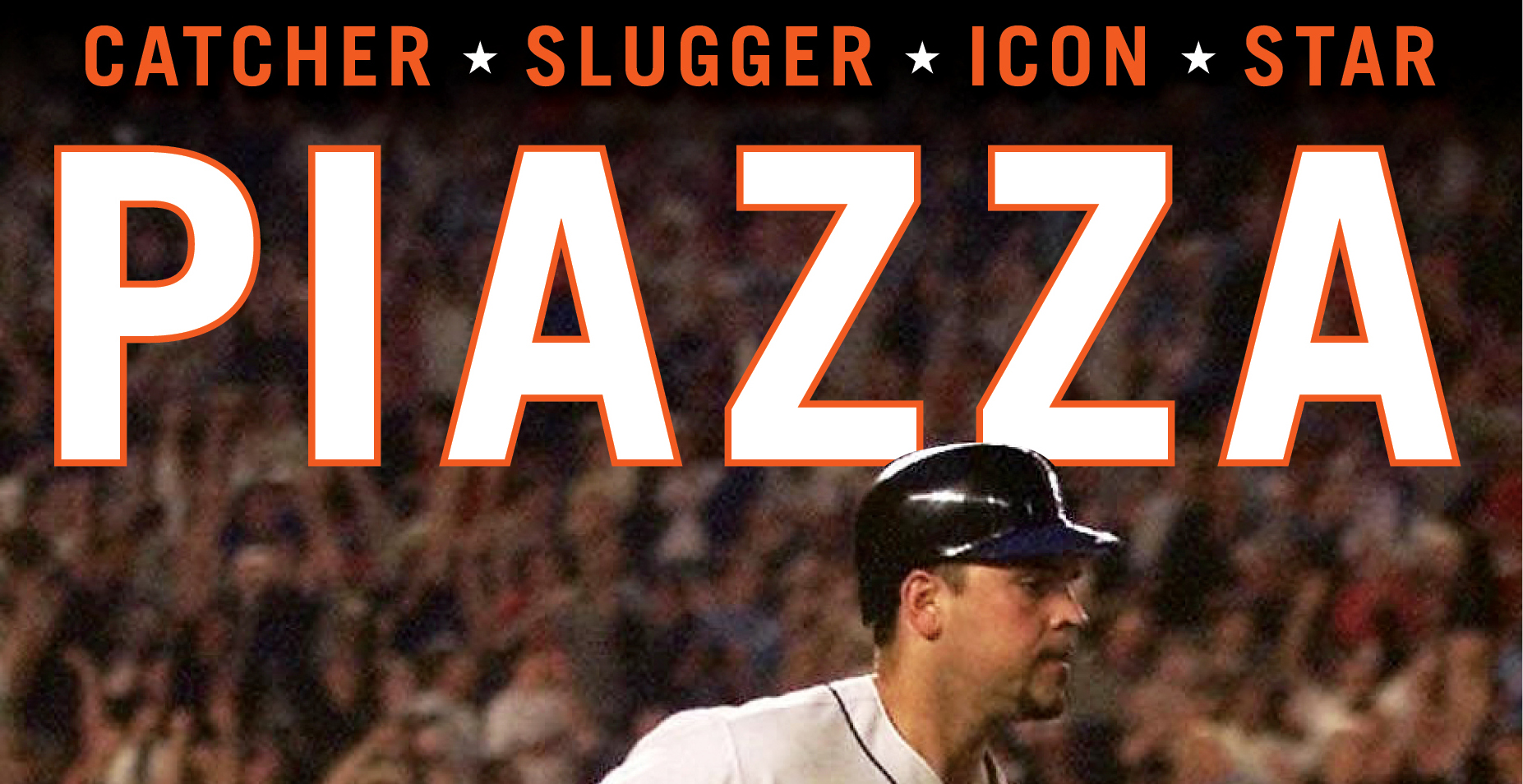
And we find out what number he wore, and why, and why it was important. Let's not lose sight of the mission of the book. You don't need a book to tell you Mike Piazza wore 31…you may not even need to be reminded Mike Vail wore 31 (I mindlessly place him in 23 for his incandescent rookie hitting streak)…but it sure is sweet to have it all in one place. It's explosively gratifying to open to a chapter titled “#10: THEY BROUGHT THE FUNK” and think without even thinking, “Shingo Takatsu!” It would be too much in any other setting to read “#19: HE'S CRAFTY” and wonder, “Beastie Boys…Bobby Ojeda…right?…right?” but not here. Would it be too much to expect an in-depth examination of the Willie Mays/Kelvin Torve controversy or the evolution of the patches on the Mets' sleeves or which numbers have been worn by the most catchers?
Nope, not here. That's what you get in Mets By The Numbers. There isn't a Mets fan alive (certainly not among Faith and Fear readers) who won't be happier because they read this book. Honestly, you would be poorer to live without it.
by Greg Prince on 3 March 2008 3:27 pm 
The periodical to have on tap as you gear up for the coming dream season/injury-riddled debacle is Meet the Mets 2008, 112 pages crammed with “the most in-depth coverage you can get on the Mets”. It offers articles on what went wrong last year, what might go right this year, what awaits down the road in terms of farm and Field (Citi, that is), great stuff on Shea and more than a little in-depth history here and there. Plus, unlike some more general newsstand publications, Meet the Mets didn’t go to press until the Santana deal was in the books.
This plug is a bit shameless because you will see my name among the authors in there (alongside some other bylines familiar to denizens of the Metsosphere), but rest assured I’ve already been paid my stipend, so this is an almost purely selfless recommendation.
You can find Meet the Mets at finer retail establishments or you can order it here.
by Greg Prince on 1 March 2008 12:05 am Welcome to Flashback Friday: Tales From The Log, a final-season tribute to Shea Stadium as viewed primarily through the prism of what I have seen there for myself, namely 358 regular-season and 13 postseason games to date. The Log records the numbers. The Tales tell the stories.
8/21/98 (1st) F St. Louis 6-5 Nomo 1 68-68 L 10-5
8/21/98 (2nd) F St. Louis 7-5 Reynoso 2 69-68 W 1-0
How rare is Leap Day? Today is but the ninth February 29 to occur since I saw my first game at Shea Stadium.
How rare are doubleheaders in The Log? Exactly as rare. I have been to but nine since I saw my first game at Shea Stadium.
There won’t be another Leap Day until Citi Field is being spruced up for its fourth season opener in 2012. I’m betting I’ve been to my last doubleheader at Shea Stadium.
Sure it could rain, but in modern times, that’s what the separate-admission day-night doubleheader was invented for. It would take a real quirk of scheduling to get a makeup doubleheader wherein you pay once and you watch twice. It would take rioting in the streets for the Mets — or any team — to plan in advance on giving up a gate and giving us a deal. This ain’t news. The last evidence of a scheduled, non-makeup, traditional doubleheader I can find is from August 14, 1988, an Emerson Banner Day sweep of the Expos, 4-3 and 4-2. That Sunday afternoon served two purposes (three, counting the banners, speaking of lost Shea traditions):
1) It stopped Montreal’s divisional ambitions dead in their tracks. Les ‘Spos had crept to within 4-1/2 of first and into a virtual tie for second with Pittsburgh; oh for those days when the Mets could play disinterested for three months and brush away young, hungry competition nonetheless.
2) It tranquilized the restless natives in the stands who had taken to expressing their impatience with the first-place but undeniably torpid 1988 Mets. Or as Howard Johnson impolitically put it in Newsday as he packed for a Western swing, “That ought to shut the animals up for a while.”
It’s been twenty years since the Mets meant to have a doubleheader. Every twinbill since ’88 has been begrudging improv, usually from precipitation, once from Olympic Stadium falling apart, never from a sense of civic duty.
Are doubleheaders great or what? That’s not a rhetorical question. There is a school of thought that they fall into the category of “what,” as in “what time will this be over?” I’ve yet to hear a player wax sentimental about two for the price of one or an additional three-some hours at the ol’ ballpark (though I suspect, if pressed, David Wright would be all for it). As my blog partner put it after attending what stands as the fourth-to-last single-admission doubleheader in Shea Stadium history, persevering for eighteen (or 32) innings of a doubleheader can give even the hardiest fan “the baseball equivalent of an ice cream headache“.
Oh, but isn’t ice cream delicious?
That’s a rhetorical question. Of course ice cream is delicious and of course you are going to go nuts when told you’ve got two scoops coming your way. Who wants to be a single-scooper party-pooper when you can go to a doubleheader? Who wants to go to a game when you can go to a pair? Who cares what time this will be over?
Two games!
It helps, naturally, if you get a split, banana or otherwise, if you can’t get a sweep. Bob Murphy always said the opener was the one you wanted to make sure you won, thus relieving the pressure of a potential whitewash before you were in the hole. Hogwash, experience tells me. Over my first seven Shea doubleheaders, the Mets were 7-0 in the nightcap (nightcap: a great baseball word you hear less and less). Even if there was a loss in the first game — and there was four times — I could leave sated and gratified. The last thing I saw on the field was the Mets’ catcher shaking the Mets’ pitcher’s hand. It wasn’t until my eighth and ninth/final Shea doubleheaders that I left with a bad taste in my mouth, both from the wrong kinds of sweeps, both in 2002 (when bad taste was an epidemic).
I’ve seen a little history, Met and otherwise, in doubleheaders. Saw Rusty Staub tie the record for consecutive pinch-hits (eight) in ’83. Saw Randy Niemann’s only Met start in ’86…and Mike Draper’s only Major League start in ’93. Didn’t get there early enough to watch Robin Ventura club a grand slam in the opener of a twi-nighter in 1999, but arrived in time for a fantastic finish (Mets 11 Brewers 10 when Alex Ochoa ran Milwaukee out of a rally) and was then treated to Robin’s second granny in as many games. If you ever wanted to see one player hit one grand slam in one game and then hit another grand slam in the next game and have it happen on the same ticket, you had to do as I did and go to Shea Stadium on May 20, 1999.
Yet the doubleheader I pay tribute to on Leap Day is the most appropriate to the occasion. It’s the only one in which I watched one game in one part of the ballpark and another from another part. There was a vertical leap in seating and, happily, a jump for joy by the end of the night.
August 21, 1998, the third doubleheader the Mets are playing in four nights. May showers brought on this madness. From Tuesday to Saturday, the Mets would clock in 72 innings over roughly 96 hours against three different teams. This was Friday, and if it was Friday, it must have been the Cardinals. And if it was the Cardinals in August of 1998, it had to be Mark McGwire.
Remember him? He was big then. Literally. Figuratively. Every way you could describe. Mark McGwire was Saving Baseball. He was also filling up Shea.
Shea shouldn’t have needed him to pump…it up, considering the Wild Card fever that was enveloping those of us who didn’t need baseball saved by inflated numbers or sluggers. I was at the Tuesday night doubleheader, against the Rockies, and it drew barely 20,000. I was at the Sunday game that followed the eight-game marathon dance, against the Diamondbacks, and that got only 36,000. But for Mark McGwire, the turnstiles clicked. More than 45,000 for two Cardinal games Thursday night, more than 52,000 on Friday night.
It was a big enough deal that Yankees fans where I worked, who barely acknowledged the Mets’ existence, envied my ticket-holding. “Hey, I hear you’re goin’ to the deuce!” one of them said. To that moment, I had never heard a doubleheader referred to as a deuce. I’ve only heard it maybe twice since then. I don’t think it’s recognized baseball slang.
Nevertheless, my ticket for the deuce was courtesy of Jason, who bought a three-seat six-pack when that sort of scheme was novel. I’d be joining him and Emily deep in the left field mezzanine. You’ll probably get there ahead of either of us, he warned, but we’ll be there.
As it happened, Laurie was also deucebound. She had a friend who was pretty good at leaving her very, very good tickets, like player family section good. But nobody from that family was joining her, so what say I sit with her in the early going, before Jace and Emily show? Sounded all right to me. Now I had two tickets to two games for which I only needed one…an embarrassment of riches.
I headed out from my office, targeting a bottom-of-the-first, top-of-the-second arrival; Laurie of Queens was going home to change into normal Met clothing so I’d be meeting her at the great seats. The first homegirl I recognized, however, wasn’t Laurie. No, as I descended steps from the 7 to the rotunda, it was another woman of note from the borough and I hadn’t seen her in a long time.
It was Geraldine Ferraro. She was, in a sense, the Mark McGwire of fourteen summers earlier, on magazine covers, all over television, the talk of the nation. In 1984, Geraldine Ferraro was breaking a barrier more daunting than 61 home runs. She was the first female candidate on a national ticket, running as vice president with Walter Mondale.
That didn’t work out so well for her, at least not electorally. But in 1998, she was back…kind of. A U.S. Senate primary loomed a couple of weeks away and she was on the ballot. Ferraro knew enough to go where the voters might be and, in Queens on a Friday night with Mark McGwire packing ’em in, her people knew enough to position her at Shea to greet her potential public.
But nobody was stepping right up to greet Geraldine Ferraro. It had been fourteen years. Her advance staff’s work was not impressive. With the first game already started, she stood alone in a beige dress between the rotunda and the ticket windows, solitary amid scattered twi-night foot traffic. One guy tried to drum up interest. “COME MEET GERALDINE FERRARO FOR U.S. SENATE!”
So I did even if no one else would. I wasn’t planning to vote for her, but gosh, this woman had made history, had made the cover of Time as “a historic choice” (as opposed to the grammatically incorrect “an historic choice” which letters to the editor demanded but didn’t get; cripes, the stuff I retain). Geraldine Ferraro, three times a Congresswoman from right here in Queens, once the second-leading vote-getter among vice presidential candidates in the whole United States (albeit a distant second), and nobody cared.
I walked over, shook her hand and wished her luck. She smiled and said thank you, less out of political instinct, more like “finally…somebody!”
Ferraro finished well behind Chuck Schumer in the primary. Schumer showed up before a Mets game on a Saturday in early September, planted himself right in front of the Gate E entrance (his people had megaphones and weren’t shy about using them) and shook everybody’s hand the way McGwire swung for the fences in ’98: forcefully, effortlessly and in a way that made folks glad they were a part of it. Schumer still has his job. I’ve no idea what McGwire and Ferraro are up to these days.
Once inside, things were McCrazy! You heard me, McCrazy. When you sit in the player family section (new to me, old hat to Laurie), you sit among things and people you don’t see elsewhere. You see the brother of a closer, the wife of a lefty specialist, the nephew of the organization’s pitching guru, the son of a centerfielder wearing a t-shirt with a caricature of his dad (in a Royals uniform) and it says, “We’re McCrazy!”
You don’t forget a sight like that, mostly because you’re as likely to see it at Shea Stadium again as you are to see a scheduled doubleheader.
Laurie’s connections left us marvelous seats and it provided us with a great view of a terrible game. Matt Morris (one of those dozens of non-Mets my Mets-loving friend doesn’t mind succeeding against the Mets based on sincere attractions that elude me) threw seven solid innings while Hideo Nomo was spongy and unsatisfying in his approach to Cardinal hitters (5 IP, 6 BB amid 8 SO). McGwire didn’t start, but doubled home a run as a pinch-hitter (big deal, it was against Mel Rojas) to the thrill of front-runners in every section where somebody wasn’t related to a Met.
Ah, McGwire, the one for whom most of Shea was going McCrazy. We were so innocent then even if it really began to come apart for him there if you’re here to talk about the past as it relates to the present. The night before, also a doubleheader, he hit his 50th home run in one game (off Willie Blair, possibly the most pointless Met ever), his 51st in the next. That was the night Big Mac decided he would talk about taking on 61 for real. He was all smiles. But that was also the night when a reporter reached into his locker, picked up a bottle of androstenedione and asked, “Hey, what’s that?” McGwire’s brief Paul Bunyan smile dimmed at the first whiff of inquiry, but nobody asked too many questions.
Lousy game, but great view. McCrazily good view. Practically behind the plate. Didn’t want to leave those seats too soon. As the innings of the opener rolled by, I kept telling Laurie, “I should get going, Jason and Emily must be here by now, upstairs, way upstairs.” But as spouses and siblings of the stars kept sashaying by, I was having a hard time tearing myself away. These were the beautiful people. I’d never sat among them before. I didn’t know when I’d sit among them again.
Not that my friends in the mezzanine weren’t lovely in their own way. So I rode out the 10-5 loss, bid Laurie a reluctant adieu and found a working escalator or two. It was off to the hoi polloi.
I show up at my assigned seat and receive a quizzical look from Jason and Emily, as in “uh…where were you all of game one?” I also got a “so nice of you to join us!” from a nosy total stranger who found it odd that someone would suddenly appear at like 8:30 for an evening that began at 5:10. I apologized profusely, but, Jace, Emily…ya gotta understand…there was a guy who looked like a slightly misshapen John Franco; and Mrs. Dennis Cook; and a teen who was thrilled that I knew who his uncle Dave Wallace was; and there was a kid in a McCrazy shirt! A McCrazy shirt!
The McCrazy shirt got me off the hook for my bad manners.
So-so seats, no glamour per se, but a much, much, much better game. Fonzie homers in the second off Manny Aybar, who is otherwise competent (or the Mets hitters are not). Armando Reynoso, who could be bulletproof for weeks at a time, gave up virtually nothing, not even to McGwire.
It was a lot darker by now than it was when I arrived at the park. It felt very late. While Geraldine Ferraro was, perhaps, home reading discouraging poll results, a survey of the left field mezzanine would have predicted few votes for the Mets.
Why? McGwire again. Big ovations every time up…except from us. If you had asked me in the late ’90s why I liked Jason so much, I would have listed no lower than third that it was because amid McGwiremania and the Summer Baseball Was Saved By Him, Jason stood and BOOOOOOOO!ed America’s hero. Not because he loved Roger Maris, not because he suspected something was up with those biceps, but because Mark McGwire was a St. Louis Cardinal getting his ass kissed inside Shea Stadium.
What a great idea! I’m gonna boo, too!
So we booed: long and loud and lustily and totally outnumbered. The instant Cardinal fans cheered. The event people, taken in by the lure of the deuce, cheered. The idiots in Yankees caps cheered. Probably a few too many Mets fans cheered.
Not us. BOOOOOOOOO!
It was not a popular decision, particularly with one red-shirted McGWIRE 25 one row in front of us and six sheets to the wind. He turned around and addressed us directly:
“OH, WHO THE METS GOT? THE METS DON’T GOT NOBODY! THEY GOT RUSTY STAUB! RUSTY STAUB’S A FAG! A FAG! YOU BETTER SHUT UP! RUSTY STAUB’S A FAG! THE METS SUCK! YOU BETTER WATCH IT!”
We didn’t, but I was a little put off. Fortunately, Reynoso did not give McGWIRE 25 home run 52. He walked him in the first and struck him out to end the third and fifth. The more McGwire failed, the fewer fans he seemed to have. And Rusty Staub tied the consecutive pinch-hit record, so screw you, scary and drunk man.
The guy in the red shirt got up and never came back. He went to the men’s room. I know that because when it was all over, he was slumped over a urinal and not moving. Pity. That Cardinal jersey looked brand new.
Reynoso went seven. His last pitch was called strike three to Big Mac. His circus would go on. Turk Wendell came on in the eighth. His circus was just beginning. August was the month Wendell converted early boos to cheers the oldest and most effective way in the book: by pitching very well. Turk’s rosin bag slam had come into vogue. He warmed up and…SLAM! The non-interlopers in the crowd roared.
My god, we fans are so easily amused.
Wendell gave up nothing in the eighth. The brother of the guy who looked like John Franco gave up nothing in the ninth. A 1-0 win on top of a 10-5 loss, a deuce whose components couldn’t have been more different, a pair of seats that couldn’t have been more different, six hours and sixteen minutes of baseball rendered, a tie in the Wild Card race, a Rey Ordoñez pinch-hitting appearance, a Todd Hundley sighting in left field (though not as a defensive replacement), the McCraziest shirt I ever saw, a chance meeting with a historic choice and a slightly grudging glimpse at a historic chase.
On the ramp down, free of the tensions wrought by our battle with the Cubs and far from the Rusty Staub-hating urinal-slumper, Jason, Emily and I agreed McGwire, out of our hair for the remainder of ’98, could go ahead and break all the records he wanted. Hey, we just won after we had just lost. We could be generous. What was androstenedione anyway?
Twi-night, long night, good night. I left sated and gratified.
by Greg Prince on 29 February 2008 2:50 pm …and read this. It is Mets By The Numbers' q&a (third part of a three-part series) with longtime beat writer Marty Noble, formerly of Newsday, now with mlb.com. It may be the best and most eclectic history of the New York Mets ever recorded.
Kudos to mbtn and its founder, Jon Springer, on beginning a tenth year of tracking Met numerology with such understanding, insight and wry humor. He and fellow obsessive Matt Silverman (who's got a fun new blog of his own, Metsilverman, worth checking out) have released a book based on Mets By The Numbers and it will be reviewed here early next week. Until then, ya gotta read the Noble piece. You'll never think of half the Mets you think you know the same way again.
by Greg Prince on 28 February 2008 4:05 pm 
Now that Shawn Green has let it be known he won’t be playing baseball for a living any longer, I can let it be known I rooted just a little extra harder for Shawn Green.
Not to the point that it clouded my judgment on his decreased offensive output, his limited mobility, his disappearance from the runs batted in column for nearly two months. I believe I viewed Shawn Green as just another Met where all that was concerned.
But I rooted just a little extra harder for Shawn Green. It made me happy he played for my team. I would have been happier had he played for my team five years sooner, but you can’t have everything.
He had his moments. He had an eleventh inning to remember at the end of June. He, like the Mets, enjoyed a very nice first two months of last season. He did his best fielding in the second inning of the first game of the 2006 NLDS, when Green to Valentin to Lo Duca produced the two most electrifying tags you’ll ever see at once.
Shawn Green also had this: According to the 2007 GourMets Cookbook, matzoh ball soup “is Shawn’s clubhouse favorite”. It makes me smile to think Shawn headed straight for a shissel of chicken broth and knaidlach right after walloping that walkoff homer off the Cards (and accepting his teammates’ heartiest congratulations), even if, as my friend Sharon (who passed this culinary tidbit along to me) noted, “From this I glean that a) Green is the only one who the authors realize is Jewish; b) you’re less likely to be embarrassed if your wife submits an actual recipe; and/or c) the clubhouse caterers put out a WEIRD postgame spread.”
None of it was a reason to keep Shawn Green on the Mets. None of it was a reason to look past the gathering horde of late-career deficiencies that turned him into a fourth outfielder/second first baseman before September. But Shawn being, as the back of the baseball card above (created by these folks) pointed out, “the premier Jewish ballplayer and Jewishly identified ballplayer of this generation” and a Met…well, I rooted just a little extra harder for him.
Soup for you, Shawn. You earned it.
(FYI, that’s Scott Schoeneweis on the other half of that card. His combination of Jewishness and Metsishness gives me no naches whatsoever.)
by Greg Prince on 28 February 2008 8:55 am Your 2008 New York Mets' potential/likely Opening Day roster:
CATCHERS (2)
Brian Schneider, Ramon Castro.
• Givens.
INFIELDERS (5)
Carlos Delgado, Luis Castillo, Jose Reyes, David Wright, Ruben Gotay.
• Gotay's switch-hitting and youth give him a leg up on Jose Valentin for utility infield purposes.
OUTFIELDERS (6)
Moises Alou, Carlos Beltran, Ryan Church, Endy Chavez, Marlon Anderson, Damion Easley.
• Anderson and Easley are versatile enough to play first and second. Because they can do that and pinch-hit, Brooklyn's Own Angel Pagan probably starts the season in New Orleans or goes elsewhere.
STARTING PITCHERS (5)
Johan Santana, Pedro Martinez, John Maine, Oliver Perez, Orlando Hernandez.
• If El Duque is healthy, it's unlikely Mike Pelfrey gets a foot in the door before El Duque is certifiably unhealthy.
RELIEF PITCHERS (7)
Billy Wagner, Aaron Heilman, Duaner Sanchez, Pedro Feliciano, Scott Schoeneweis, Jorge Sosa, Matt Wise.
• Wise has a partially guaranteed contract that gives him $750,000 whether he makes it or not. If he doesn't, the other options are Steven Register, Brian Stokes, Ruddy Lugo and maybe Joe Smith. Under better circumstances, Ambiorix Burgos might be, too, but his bejeweled right arm isn't ready.
So, if I've got this straight…
…putting aside stretching and golf…
…barring injuries…
…taking into account rehabilitation from injuries…
…making a schedule-oriented strategic decision that foregoes the fifth starter until the middle of April…
…and understanding the dangers implicit in solemnly trusting the best-laid plans of Minaya and men…
…we're basically holding Spring Training as a precaution against Matt Wise pitching himself off the team.
Just checking — and by no means complaining. Having witnessed enough camps whose overriding purpose was inventing roles for Mike Bruhert and Mardie “The Chief” Cornejo, I'm not about to underrate the general appeal of roster stability. Still, suspense does seem on the verge of taking a spring break if all we're waiting for is to discover whether the back end of our relief corps is Wise or unWise. Then again, the Mets have a way of making their own drama just when you're settling in for the utterly prosaic.
by Greg Prince on 27 February 2008 12:30 am If you've seen Mathematically Alive, the wonderful documentary on the condition known as Mets fandom, you will remember a cat in a hat straight out of Dr. Seuss. That cat, Matt Hoey, is the fellow who made it his business to camp out at Shea days in advance of the first tickets going on sale every February so he could get them before anyone else. (Could there be a loftier ambition in winter?) I was always amused to see his name and/or his picture printed in the papers without fanfare or backstory every single year. “Hey,” I thought of this fellow, “it's the same guy! How come they never mention that?” Eventually they did. The Dr. Seuss lid (blue and orange, natch) struck me as a bit ostentatious, but the film gave me a valuable insight into him: He's a Mets fan like you, like me, like all of us. Sometimes that's all we need to know about a person.
Kathy Foronjy and Joe Coburn, directors of Mathematically Alive, send word that Matt has been in a serious accident and was hurt pretty badly. They ask that Mets fans everywhere send our best wishes for a speedy and full recovery to one of our own via getwellmatt@mathematicallyalive.com. Kathy and Joe will pass your messages of love and support to Matt's wife Tracey, who will let him know that Mets fans everywhere are thinking of him. If you take a minute, it will mean a lot.
|
|