The blog for Mets fans
who like to read
ABOUT US
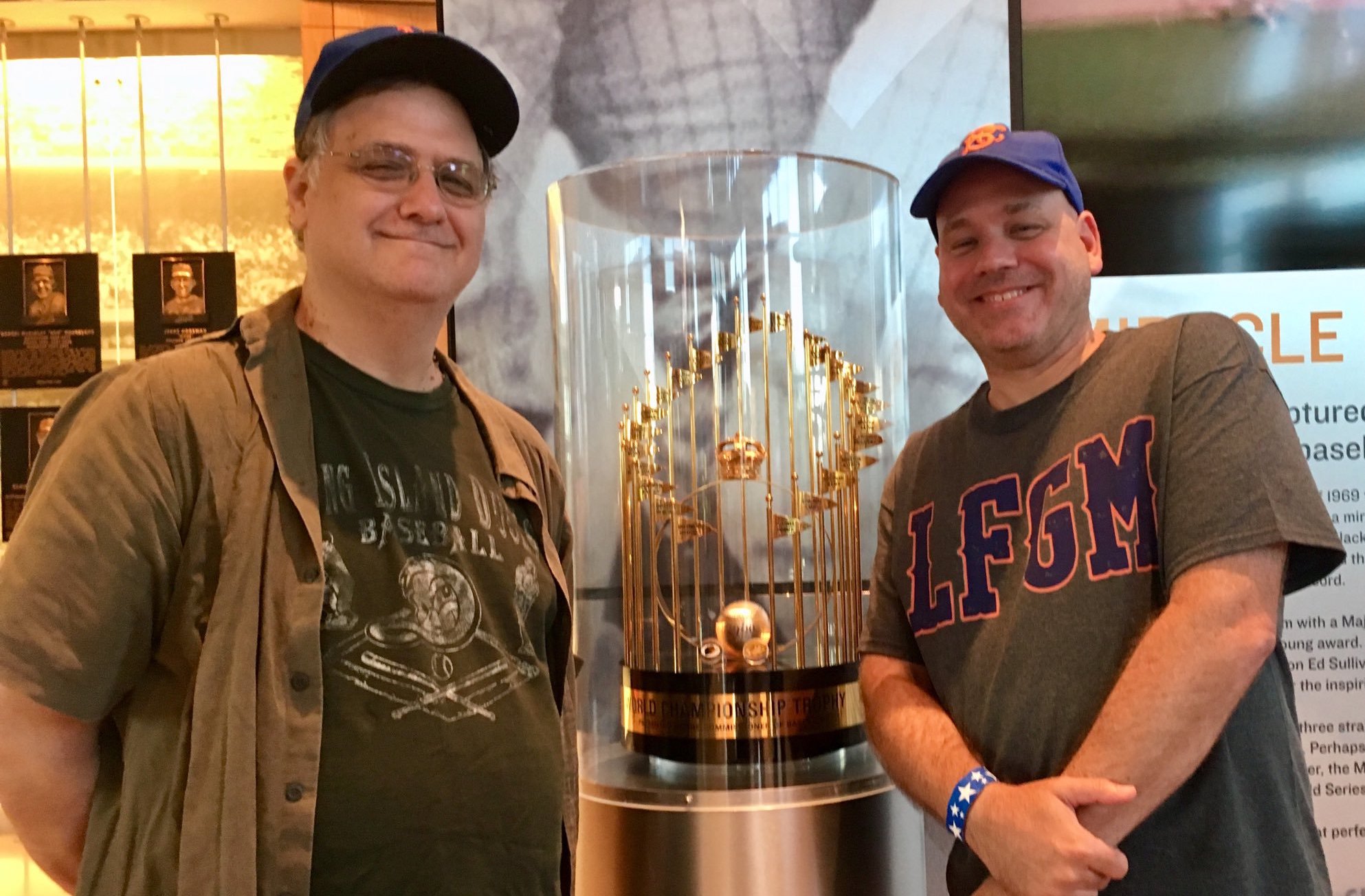
Faith and Fear in Flushing made its debut on Feb. 16, 2005, the brainchild of two longtime friends and lifelong Met fans.
Greg Prince discovered the Mets when he was 6, during the magical summer of 1969. He is a Long Island-based writer, editor and communications consultant. Contact him here.
Jason Fry is a Brooklyn writer whose first memories include his mom leaping up and down cheering for Rusty Staub. Check out his other writing here.
Got something to say? Leave a comment, or email us at faithandfear@gmail.com. (Sorry, but we have no interest in ads, sponsored content or guest posts.)
Need our RSS feed? It's here.
Visit our Facebook page, or drop by the personal pages for Greg and Jason.
Or follow us on Twitter: Here's Greg, and here's Jason.
|
by Jason Fry on 9 January 2010 9:00 am Yesterday Greg and I exchanged a brief flurry of emails. I found myself wanting to write something about the Montreal Expos. He had been gripped by the same need, and was already working on this.
Not a surprise; stuff like that happens when you’re both baseball fanatics like-minded enough to share a blog, even when there’s no Met in the picture. What the heck, we decided. It’s Expos Weekend.
The funny thing is, I never particularly cared about the Expos while they were around. If anything, I found them vaguely ridiculous. First of all, there was the name. I’ll grant you that it’s not immediately obvious what a Met is. If I may risk disloyalty, it’s kind of a stupid name. But compared to “Expos” it’s genius. As a child I figured “Expo” must be French until the children’s grapevine opined that that wasn’t true (though actually it kind of is), leading me to finally ask some adult or other. When I got an explanation, I assumed I was being made fun of. Why would anyone name a baseball team after that?
Then there was the hat. I never saw the “Newhart” episode mentioned by Tyler Kepner here — in fact, while I’ve always been aware of “Newhart” and trust that it’s worthy of respect, I don’t think I’ve ever seen any episode of it — but hearing that George couldn’t figure out what was on their hat made me clap my hands. I know how he felt — I puzzled over the Expos cap for years as a kid and was well past puberty when I looked at it one day and suddenly yelped “It’s an M!” as if I’d spent a lifetime staring at a baseball “Magic Eye” book and finally got it. (Well yeah, except it also included an e and a b, for “Expos” and “baseball.” Which was really stupid.)
Then there was Olympic Stadium. There was the way you could see the backs of the umpire and the catcher and the batter and the front of the pitcher in the camera shot from center field, which was maddening once you noticed it and threatened to give you vertigo as you proved unable to take your eyes off of it. There was Youppi, whom I could never stand, not so much because he was a mascot but because he was so thoroughly generic, like the product of a committee that had actually wanted to make the kind of lackluster thing that gets blamed on committees. And there was the way the light always seemed off. At least on TV, games there looked faintly yellowed somehow, and I always got the feeling there wasn’t enough air, like the players were going about their business in some giant Canadian terrarium, except instead of having sadistic children rap on the glass you got morons blowing air horns throughout the middle innings of interminable games. Braaaaaaaap braaaaaaaap braaaaaaaap. Remember that? I think if I heard that sound on my deathbed I’d sit bolt upright and gasp, “Jesus, it’s Olympic Stadium!”
This is not to scorn the Expos, mind you. I respected them as a collection of players. Heck, I feared them — they had a habit of ending our dreams, either by exposing scrappy Met teams as noncontenders relatively early or tearing the underbelly out of good Met teams heartbreakingly late. (Somewhere, Chris Nabholz is still laughing at us.) And I felt for their fans. They were unstoppable in 1994, only to have that season turned into less than an asterisk by a labor war, and then they were consistently treated in the most cruel and dirty way by Major League Baseball, whether it was denying them callups in a pennant race, reducing the payroll to penury, frog-marching them to Puerto Rico for a farcical semi-relocation or then finally gift-wrapping them for a city that had already lost two franchises. (And then that city unretired the Expos’ modest collection of retired numbers.) Expos fans couldn’t be blamed for not showing up for the team’s final years — why on earth would they? They were a city of Charlie Browns who’d finally decided Lucy could take her football and stick it.
But as the Expos began their death spiral, they became something else to me. They became the baseball expression of my own paranoia.
Greg will recall that while baseball’s poohbahs were studying contraction with unseemly eagerness (and let me pause here to hope that Satan just gave Carl Pohlad another quarter-turn on the spit), I was grimly certain that somehow these wheels would grind until one of the teams contracted was the Mets. Obviously this was insane, and on some level I was aware of that, but I’d babble incessantly about it anyway, and my only hope is that I was never dumb enough to do that in front of an Expos fan. I knew of the weird links between them and us, of course. How the Expos began their existence by beating the Mets (by a single run) for an inauspicious beginning to the Mets’ best-ever year. How they were often our trading partners for deals good, bad and ugly. How two of the players they honored with retired numbers were also revered by us. And how they ended their existence by being beaten by the Mets, with the final tally Mets 299, Expos 298. Maybe that was the source of my paranoid fantasy — the feeling that in some ways the Expos were a distorted version of us, but with even worse luck. Much worse luck.
And in the end — after the end, in fact — I realized that I did care about the Expos. Greg and I were there for that final Expos game, and I remember looking around in the stands and seeing Expos hats and jerseys. They weren’t everywhere, though give me 20 more years and maybe I’ll say they were. But there were a lot of them, worn in pride and sorrow and defiance and just by way of bearing witness. And I don’t remember a single Shea Stadium lout offering one of those Expos fans typical Shea Stadium hospitality. Even the worst of us knew better. It was our stadium, but we were guests at their wake.
Except the story of the Expos wasn’t quite over. A few weeks later, a collection of players played exhibition games in Japan. On the roster was Brad Wilkerson, wearing a Montreal uniform. (He went 7 for 26, with a home run.)
I’ve never been able to get that out of my head: a lone player, on the other side of the world in the middle of the night, wearing the uniform of a dead franchise. There must have been Montreal fans who figured out how to watch, who tracked Internet updates, who gazed at this final ember of the team they’d loved, until in the early hours of Nov. 14, 2004, Frankie Rodriguez closed out a 5-0 win MLB win and that last little light went dark and there was nothing. There must have been Montreal fans who figured out how to watch, because I know that’s what I would have done, just as it’s what Greg would have done and what a lot of us would have done. Would I have stayed up watching stuttering Web video in Japanese to see a last few swings by, say, Daniel Murphy, wearing the uniform of the team that had been taken from me? You bet I would have. And at the end I would have wondered how many pitches were left and would have wished that he’d foul them off forever, until the world was forced to notice and common decency demand that the clock be turned back so some kind of fairness could prevail.
* * *
Remember: 1986 NLCS, Games Three, Five and Six. Noon to midnight today on the MLB Network.
by Greg Prince on 9 January 2010 12:18 am From noon to midnight today, MLB Network will be showing Games Three, Five and Six of the 1986 National League Championship Series. That’s (spoiler alert!) the Mets beating the Astros on Lenny Dykstra’s walkoff ninth-inning home run; the Mets beating the Astros on Gary Carter’s walkoff twelfth-inning single; and the Mets beating the Astros on Jesse Orosco’s sixteenth-inning hanging on for dear life. That last one’s where they win the pennant, too.
Game Three starts at noon. Game Five starts at three. Game Six starts at seven and practically never ends. The indispensable MLBN reairs Game Three at midnight and Game Five at three in the morning in case you haven’t had enough. And who could get enough of the 1986 NLCS?
Also, the Jets are playing a playoff game at 4:30 PM. I’ll be sure to flip over and check on them during commercials.
If you need or would care for a refresher, the 1986 NLCS was recalled in one fell swoop — whatever the hell a fell swoop is — in this Flashback Friday.
by Greg Prince on 8 January 2010 4:58 pm Andre Dawson’s election to the Hall of Fame conjures up a most frightening vision of a very scary slugger with a terribly lethal bat ready to destroy the next innocent baseball a New York Mets pitcher throws his way. I’ve read grumbles and snorts that Dawson’s career on-base percentage is too low to be worthy of Cooperstown, but I gotta tell ya: as one who gripped pillows, remote controls and anything handy in anxiety when he’d come to the plate to face Ron Darling (.333 batting average against, according to Ultimate Mets Database), Bobby Ojeda (.350), Wally Whitehurst (.400), Pete Falcone (.444), Tom Hausman (.467), Randy Jones (.500), Jesse Orosco (.546) or Kevin Kobel (.625), I surely was not thinking, “Oh good, Dawson’s up — little chance of him drawing a walk here.”
I’ve grown fairly numb to the Hall of Fame process if a Met (or somebody who wore a Mets uniform while lounging for a year-and-a-half) isn’t involved. That includes the “which cap?” dilemma that arises often in these days of frequent player movement. Just as I don’t have it in me to get up in arms about whether or not Fred McGriff‘s a Hall of Famer, I don’t particularly care how his hypothetical plaque portrays him. Dawson, though, is an exception to my apathy rule, because I really hope Andre Dawson goes into the Hall as an Expo.
Nobody goes anywhere as an Expo anymore. It would be nice, now and then, if somebody would.
The further we drift from October 3, 2004, the further we are from actual Expos, and the further we get from them, the more exotic they seem. Did we really used to play them eighteen times a year? How could we have? There are no such things as Expos anymore.
An entire baseball culture evaporated the moment Jeff Keppinger tossed a two-out, ninth-inning ground ball to Craig Brazell (speaking of evaporations) and the Expos lost their last game ever to the Mets. Don’t get me wrong — I was happy the Expos lost to the Mets. I was always happy when the Expos lost to the Mets. But in those final three seasons when Major League baseball in Montreal carried an MLB-mandated death sentence, I was sad we were losing the Expos.
It didn’t feel right. Montreal was not just our divisional rival. They were our spiritual kin. While games were in progress, they might as well have been Padres or Pirates. They were the enemy. But the peripheral stuff appealed to me when I wasn’t worrying about what an Andre Dawson or a Tim Raines or even a John Bocc-a-bella was going to do to us next. I particularly liked the Mets-Expos connection.
• They were expansion like we had been expansion.
• They were named for a World’s Fair while we played next to a World’s Fair.
• They were born bilingual and our first manager spoke fluent Stengelese.
• They wore beanies without propellers while we smushed together blue and orange against a field of pinstripes — and we both looked beautiful as a result.
• We had to send our guys through security to play them up there, and Jeff Kent once got pulled aside by the authorities for carrying a firearm to the airport.
• Jeff Kent had his first reported mental breakdown in the Olympic Stadium visitors clubhouse when his veteran teammates tried the ol’ rookie hazing on him, and Kent — forever winning fiends and influencing people — would not stand for it.
• Youppi and Mr. Met each have loads more personality than Jeff Kent.
This is to say nothing of the player pipeline that spanned the St. Lawrence Seaway south to the Port of Flushing: Rusty Staub, Gary Carter, Ellis Valentine (whoops). There was a lot of action back and forth between the two franchises. The Expos’ first game ever was against the Mets, at Shea (they won). The Expos’ last game ever was against the Mets, at Shea (we won). That 4-3 grounder, Keppinger to Brazell, that ended the Expos’ existence? It was hit by Endy Chavez, former Met farmhand and future Met icon. Endy was acquired for Montreal from New York by Omar Minaya, former New York assistant general manager turned Montreal general manager, a post he held until right before that final Expos series at Shea…when he became New York general manager.
And so it goes. Omar’s still here. Jerry Manuel’s still here. Fernando Tatis is still here. Jason Bay, whom Expo Omar traded to the Mets before Moron Steve traded him to San Diego, has just arrived. So has 2002 Expo first-round draft choice Clint Everts. The Met-Expo link endures more than five years since the Expos went to Washington, which left Montreal to stand in silence as a latter-day Louisville.
Surely you remember the Louisville Colonels. They finished ninth in the twelve-team National League of 1899. Then they were mathematically eliminated forever. Louisville would never again have what we consider major league baseball — National League or, despite the DH, American League. No other standalone city (ahem, Brooklyn) that had an N.L. or A.L. team in the 20th century would be sentenced to a life term with no big league ball. Washington appeared doomed that way for a long while, but they got the Expos. Besides, Washington always seemed destined to get something to make up for their being hosed twice. They did. They got the team that was once beloved by hosers.
It’s for the Canadians who cared and who still might care that I hope Andre Dawson’s plaque shows him as an Expo. He came up as an Expo in September 1976, getting a jump on Steve Henderson for Rookie of the Year the next year and establishing himself as one of the most exciting players and dangerous hitters in North America. Those Expos clubs he and Gary Carter led into pennant races in 1979, 1980 and 1981 (when they clinched their only regular-season crown, the strike-compelled split-season divisional title…at Shea, of course) were ferocious.
They were popular, too. The Expos’ average home gate from 1979 through 1983 always ranked in the top third of league attendance. It wasn’t until the Dawson-Carter-Raines Expos began to fray at the seams like the carpet barely hiding the Big O’s concrete floor that Montreal’s fans began staying away en masse. And it was only once management made clear their entire operation would be permanently threadbare did the Olympic Stadium we remember most vividly — empty and echoey — materialize regularly.
Andre Dawson left the Expos after a decade in Montreal. He was part of the free agent class of 1986-87 that was sideswiped by ownership collusion. The Hawk wound up accepting a below-market, one-year deal from the catbird-seated Cubs — Dawson, so desiring Wrigley’s natural grass as a salve for his turf-battered knees, legendarily signed a blank contract, telling his prospective employers to fill in the amount — and proceeded to tear up the National League from his new perch. He played six seasons in Chicago, the first of them spectacular, most of them fine. The Cubs did for Andre Dawson what the Mets did for Gary Carter: they raised a superstar’s profile to the level where it deserved to be back when that star shone in Quebec.
When the Hall insisted Carter wear an Expos cap on his plaque in 2003, I was disappointed but I understood. There was still a Montreal Expos franchise then, but it was going, going en route to certifiably gone. Kid had a lengthy and worthy track record up there, so it wasn’t an affront to the Mets to present him for posterity as an Expo. I believed there should be something for Expos fans to hang their — and his — hat on.
Now, a second Expo alights in Cooperstown. Andre Dawson is said to prefer the Cubs cap. It wouldn’t be crazy, given the MVP he earned in Chicago in ’87 and his general fearsomeness there through ’92. Plus, the Cubs can hold a press conference to congratulate Dawson. The Expos can’t. The Cubs can have a day for Dawson. The Expos can’t. Cubs fans who cheered for Dawson can perk up some desultory middle inning at Wrigley Field by remembering the time Andre came up and ripped a huge homer to left. Expos fans can’t sit inside Olympic Stadium and do a damn thing.
That’s the best reason I can come up with for Andre Dawson to cast his eternal fate with a defunct franchise. He doesn’t need the Expos, but the Expos could sure use him.
by Jason Fry on 7 January 2010 9:00 am I enjoyed this post yesterday by The Vertex’s Eric Bienenfeld about this year’s Hall of Fame ballot, which included a Met who almost was — Barry Larkin — as well as Roberto Alomar, a Met we could have done without. (Robby will probably get in next year, which would be fine with me — longtime Alomar hater though I am, I’m happy with a speed bump between him and Cooperstown, and don’t need a barricade. For more on the Splendid Spitter, here’s Greg.)
Barry Larkin, you’ll recall, almost became a Met at the trading deadline in 2000, when the team needed a substitute for the sidelined Rey Ordonez. The Mets and Reds worked out a deal, and that weekend Mets games unfolded on TV accompanied by a timer counting down the 72-hour window for the Mets and Larkin to agree on a contract extension, without which he was staying put. The extension never came to pass, Larkin stayed a Red, the Mets traded Melvin Mora to the Orioles for Mike Bordick, and that was that.
If memory serves (and it’s entirely possible it doesn’t), I opposed the trade, because I didn’t want to surrender Alex Escobar. This isn’t surprising — I’ve always overvalued prospects and bought into the hype surrounding ours in particular, which I really ought to get over given ample evidence suggesting one shouldn’t get too excited in theses situations. For the most part, Mets prospects are like Microsoft products were when Microsoft was still relevant — insanely hyped, late to arrive, then painfully buggy.
Nonetheless, I wanted to see Escobar’s bright future blossom in New York, the same way I’d wanted to witness the bright futures of Terrence Long and Jorge Toca and Alex Ochoa and Ricky Otero and Ryan Thompson and other marchers in this mostly sad parade. And when Larkin stayed home, I got my wish. Hooray! Hooray for us all!
Granted, there’s no guarantee Larkin would have been the answer to much of anything: He was pretty much shot after 2000, though it doesn’t seem like a stretch to think he would have topped Bordick’s 4-for-32 performance in the 2000 postseason. Still, yesterday I found myself dreaming about an alternate reality that began with Larkin saying, “Sure, I’d love to play in New York.”
Come away with me, to a very different world….
October 21, 2000: Timo Perez is gazing out at the left-field wall in Yankee Stadium when (as he’ll later tell reporters) he somehow hears a familiar voice through the cacophony of a World Series crowd. It’s Barry Larkin, and what he’s yelling is “Run, stupid!” Larkin later apologizes for the insult, but neither player minds — after all, a chastened Perez scores just ahead of Derek Jeter’s desperate heave, the key play in the Mets’ 4-3 Game 1 win.
October 26, 2000: Larkin, sprawling on his belly behind second base, smothers Luis Sojo’s little bounder up the middle and nips Jorge Posada at the plate, preserving a 2-2 tie in a hard-fought Game 5. In the bottom of the ninth, Mike Piazza’s home run gives the Mets a 3-2 series lead. “I thought it was going to die on the warning track,” Piazza says later, “but something pushed it over the wall. I don’t know, maybe it was me not wanting to let Barry down after all he’s done for us.”
October 28, 2000: Home runs by Larkin, Piazza and a grand slam by Melvin Mora send Roger Clemens to an early exit, chased by boos from a vengeful Yankee Stadium crowd. By the end of the 13-1 assault, the House That Ruth Built has been left to Mets fans exulting in the Amazins’ third World Series title. Buster Olney’s “The Last Night of the Yankee Dynasty” will later look back at this night as the start of everything else to befall the Yankees in later years.
October 29, 2000: An astonishing day in New York sports history, as a team of Daily News reporters arrive at Clemens’ New York City apartment for an interview the Rocket’s agent has forgotten to remind his client about. Admitted to the apartment by a confused nanny, the reporters discover Clemens being injected in the buttocks with an unknown substance by country singer Mindy McCready. An enraged Clemens rampages across the city before being Tazed by New York City police in the middle of the Brooklyn Bridge. Five years later, Clemens’ escalating problems will end with his incarceration in the Hague.
December 11, 2001: George Steinbrenner, still livid over the Yankees’ loss to the Mets and subpar 2001 season, orders a megadeal aimed at restoring the luster to his fallen franchise, acquiring All-Star second baseman Roberto Alomar from the Cleveland Indians for unhappy former stars Derek Jeter and Jorge Posada.
July 1, 2003: The Yankees trade Alomar to the Chicago White Sox after two brutal seasons that tarnish an apparent Hall of Fame career, accompanied by booing, dugout confrontations with his teammates and an on-air blistering by John Sterling. Shortly before the trade, Sterling’s assault on Alomar’s poor effort wins him plaudits, though the good reviews come with left-handed compliments. In the New York Times, Richard Sandomir writes that “given Sterling’s indifferent track record as an announcer and reputation as a homer, a listener can be forgiven for thinking it was almost as if someone else were speaking that day.”
November 6, 2006: Steve Phillips, who parlayed his success as general manager of the New York Mets into an unlikely political career, is elected governor of New York.
May 28, 2007: Baseball owners approve George Steinbrenner’s request to move the Yankees to New Jersey. The team’s relocation to New Jersey for the 2008 season sparks an exodus of Yankee fans from the city. A link between this exodus and a subsequent rise in New York City standardized test scores and perceptions of civility in the city remains hotly debated by scholars and economists.
May 17, 2008: A shocking day for New York as Gov. Phillips steps down, acknowledging reports of serial infidelities that have disgraced his office. In a statement issued on behalf of the Mets, GM Jack Zduriencik says that “while in no way condoning our former governor’s actions, all of us at the New York Mets will remember Steve’s successes in the early part of his decade, and ask that everybody respect his family’s privacy during this difficult time. Our focus will now return to our ongoing celebration of Shea Stadium and all it has meant to our devoted fans, a year-long celebration we hope to cap with a successful defense of our title as World Series champions.”
Interesting world, isn’t it? But it’s not our world. No, in our world Barry Larkin wanted to stay a Red.
Oh well. We’ll always have the memory of Mike Bordick.
by Greg Prince on 6 January 2010 11:43 am One of your Mets trivia staples is, “Name the Mets players who have been inducted into the Hall of Fame.” For the longest time, you had but four names to memorize if you wanted to answer in full:
• Yogi Berra, inducted 1972
• Warren Spahn, 1973
• Willie Mays, 1979
• Duke Snider, 1980
You understood each of these men were Hall of Fame Mets only because they played here after establishing their Hall of Fame bona fides elsewhere. Yogi Berra, dubbed the “Eternal Yankee,” by Allen Barra, had all of nine at-bats as a Met before re-retiring to serve as Casey Stengel’s first base coach in 1965. Warren Spahn spent only the first half of his final season, also ’65, as a Met starter; the longtime Brave finished up in San Francisco. Willie Mays gave Joan Payson the gift of almost two seasons back in New York in 1972 and ’73, and while he made an indelible impression, his Cooperstown credentials were secured as a Giant. Similar circumstances surrounded the Met tenure of signature Brooklyn Dodger Duke Snider, a Met mostly for sentimentality’s sake in 1963 (who, like Spahn, bolted to the Coast to end his career with the Giants).
We were along for the ride on their induction days. Berra was managing the Mets when he went in and Mays was in his sixth season as a Mets coach, so their hoopla wasn’t completely foreign to us, but they weren’t Hall of Fame Mets players. They were Hall of Fame players who had been Mets.
We knew we’d get one who was truly our own once Tom Seaver spent five full seasons retired from baseball — and we did. In January 1992, we got the news that 98.8% of Hall of Fame voters voted Seaver in the first chance they got. The five Baseball Writers Association of America members (of 430 voting) who didn’t check off Seaver? There were three, I think, who said they’d never select anybody on the first ballot and two older gentlemen who copped to missing Seaver’s name altogether and felt embarrassed by it.
After Seaver, it was back to trivia. Richie Ashburn became the first Met voted in by the Veterans Committee, in 1995. Like the pre-Seaver inductees, Ashburn was a Met at the end of the line, though he was, by the standards of 1962, the first good Met. Still, he was a Hall of Famer because of what he’d done as a Phillie. In 1999, Nolan Ryan became the second player inducted who had started his career as a Met. Unlike Seaver, however, his career wasn’t defined by his Mets days.
The eighth and ninth Mets went into the Hall together, in 2003. Eddie Murray was from the old school: in because he stood out as something else (an Oriole), a Met mostly in the just-passing-through sense. Gary Carter, on the other hand, became the first Met in the Hall who can be said to have burnished his credentials as a Met. He established them as an Expo, but raised his profile with us, particularly by being — judged on camera time — the face of the franchise when the Mets were at their most visible in the mid-’80s. Carter’s the second Met whose NEW YORK, N.L. line on his plaque isn’t incidental.
Rickey Henderson was elected last year, the tenth Met player in the Hall of Fame and the fifth, following Mays, Seaver, Ryan and Carter, to appear with the Mets in the postseason, indicating his stay with us was more than a footnote. But Henderson’s Mets time was a season-plus in a career that spanned four different decades. We weren’t his first team, we weren’t his last team. We’re a line on his résumé, mostly, and he’s a tenth of our trivia answer.
This afternoon, there will likely be an eleventh component to, “Name the Mets players who have been inducted into the Hall of Fame,” when Roberto Alomar is presumably announced as heading the class of 2010. Should it happen, then his plaque will — below a recitation of his many accomplishments as the game’s premier second baseman — note he was a member of NEW YORK, N.L. in 2002-2003.
If it were up to me, they’d cut off his plaque at 2001.
I saw nothing that made me think I was watching a Hall of Fame player when Roberto Alomar was a Met. If they gave me a ballot for this election, I’d have sent it back to the BBWAA blank because the only reason I’d want to vote would be to not vote for Alomar…at least not the Alomar I watched give it his none for a season-and-a-half. And unlike those two guys who missed Seaver, I wouldn’t be embarrassed by it at all.
If they gave me a ballot with two Roberto Alomars, the one who excelled from 1987 through 2001 and the one who came to the Mets and completely imploded, I’d happily vote for the first Alomar. That guy was a lock Hall of Famer. I didn’t watch him every day when he was a Padre, Blue Jay, Oriole and Indian, but I was familiar with his work. It was stellar and deserving of all the praise that will be heaped on him today.
But I’m not terribly interested in the Roberto Alomar from before 2002. He was just some superstar on some other teams. He became my baseball concern when he became a Met, and when he became a Met, he practically vanished from the face of the Earth.
I’m fine with Yogi Berra’s NEW YORK, N.L. His nine at-bats (two hits) were understood in their time as an emergency cameo. Berra had been hired to coach or publicity’s sake and because of Stengel’s high regard for his baseball acumen. After he hung up his chest protector for good, Berra went right back to coaching full-time. He spent nearly eleven seasons in a Mets uniform, before and after his induction into Cooperstown. There’s nothing wrong with Yogi Berra being thought of, however fleetingly, as a Hall of Fame Met.
I’m fine with Warren Spahn’s NEW YORK, N.L. Serving as pitching coach and regular starter, Spahn stormed from the gate, at 44, in 1965. He registered two complete game victories in April, and by early May was 2-2 with a 2.83 ERA for a still-horrendous Mets club. Eventually age and stubbornness caught up with him and, refusing assignment to the bullpen, he was released in July. Shea was only a stopover, but there’s nothing wrong with Warren Spahn being thought of, also fleetingly, as a Hall of Fame Met.
I’m fine with Ashburn and Snider in this regard, too. They were our 1962 and 1963 All-Stars, respectively. Snider (14 homers) wasn’t the happiest of Met campers, and Ashburn’s sense of irony at being the best player (.306 average) on the world’s worst club told him it was time to call it a career after one year. But they have their positive places in team history. There’s nothing wrong thinking of Richie Ashburn and Duke Snider as Hall of Fame Mets.
Willie Mays wasn’t an unvarnished vase full of roses as a Met. He could be choosy about when would play (his presence hastened the departure of Tommie Agee) but when he did play, he was still, as much as he could be, Willie Mays. You know he hit a home run in his first game back in New York to beat his old team for his new team; you might know he drove in a crucial run in the deciding game of the 1973 NLCS while scoring another; and I hope you’ve seen at least part of his “Say Goodbye to America” farewell at Shea (echoed the following week at a valedictory press conference). What may have been most life-affirming about Willie Mays as a Met is he was still playing the game mentally as he always had physically. which transcended the village limits of Cooperstown. Take Ira Berkow’s 2001 remembrance of how he played it in just another game in 1973.
Well, let me tell you about the greatest play in baseball I ever saw — or thought I saw. Few recall it, though it was probably the greatest play Johnny Oates, a second-string catcher and later a big league manager, also ever saw — or thought he saw.
Oates was the hapless catcher in the play, which was executed by the wondrous and wily Willie Mays, who incidentally, is in the news, being frequently lauded by his godson, the basher Barry Bonds.
I was reminded of the play at the Baseball Hall of Fame induction ceremonies in Cooperstown last weekend when I saw Mays. I had wondered what he saw on that play — if he even remembered — it being so subtle, so long ago and his career so crammed with highlights.
The play was not, to be sure, the famous, stupendous back-to-the-plate catch in center field off the Vic Wertz drive in the 1954 World Series, or any other of Mays’s acclaimed swats or snares.
It took place when Mays was a Met, in a Saturday afternoon game at Shea Stadium in July 1973. The great Say Hey Kid was no longer a kid, and no longer even greeting people with, ”Say hey.” Mays was then 42, and in the 22nd and last season of his brilliant, Hall-of-Fame career.
In my mind’s eye, sitting in the press box that day, this was the situation:
Close game. I forget the opponent. Late innings. Mays is on second base. The batter — don’t remember who — drives a hit to right field. Normally, the runner would score from second fairly easily, but this is no ordinary runner. Mays seems to trudge around third, like, well, an old man, and heads home, cap still on head — remember, in his heyday the cap used to fly off his noggin as if he were in a wind tunnel. The right fielder winds up to fire the ball to the plate, certain to nail Methuselah Mays. But incredibly, Mays picks up steam and there he is racing to the plate like, well, the Say Hey Kid!
He beats the throw and is safe at home. Not only that, but because he drew the throw to the plate, the batter is able to go to second, sitting there now in scoring position.
In an instant, Mays had craftily set the whole thing up in his marvelous baseball brain. He obviously had run slowly at first to draw the throw, knowing all along he could make it home.
For me, there is nothing quite as exciting in sports as watching a player — particularly an aging veteran— use his experience, his intelligence and his considerable if waning skills to accomplish something remarkable under pressure.
One hesitates to use the word genius in such endeavors — especially with such folks as Einstein, Picasso, Freud and Frost looking from the stands — but in my view certain athletes performing certain feats may indeed possess a kind of genius.
Some three decades later I recalled the play to Mays, describing it as I remembered it. Did he remember it?
”Absolutely,” he said, in that familiar high-pitched voice. ”It was against the Braves. But there’s more to it. See, I was on second base and Felix Millan was a runner on first. Ralph Garr was in right field. But not only did I score, I slid into the catcher — it was Johnny Oates — and I pinned him to the ground so Millan could score, too.”
I didn’t remember the pinning business, so I later called Oates, at his home in Virginia. ”I always tell that story at banquets,” Oates said. ”It was the smartest play I’ve ever seen, and an embarrassing one for me.”
I told Oates what Willie told me.
“I was under the impression that it was a sacrifice fly,” Oates said. ”And I don’t remember him on top of me. He made a perfect slide and took my legs out from under me. My recollection is that I wound up on top of him. But definitely we were lying on the plate, and somehow Willie wouldn’t let me get up. The throw went over my head, and the runner behind him did indeed score — how he found the plate with us lying on it I don’t know.”
To check further for details, I called the Elias Sports Bureau, located in Manhattan, the record keeper for Major League Baseball. Elias confirmed the play essentially the way Mays remembered it, with him and Millan scoring on a hit by Wayne Garrett.
Seaver’s Met HOF credentials need no introduction. Nor Carter’s. Ryan was an integral piece of the 1969 World Champions. Henderson was the catalyst for the 1999 playoff club. Eddie Murray wasn’t particularly pleasant to the outside world as a Met in 1992 and 1993, and his Mets teams were rancid and then some, but he drove in 93 and 100 runs, respectively, and was generally vouched for as a veteran leader among his teammates.
Does any of the above sound like Roberto Alomar as a Met? Did anybody say nice things about his clubhouse presence? Were his intangibles on display? His tangibles certainly weren’t. He carried what appeared to be an air of indifference onto the field and it translated into his performance. From April 1, 2002 until his July 1, 2003 trade to the White Sox, he put up distressingly subpar numbers — certainly below the standards he set when earning the Hall of Fame votes he will surely collect.
It’s all right for a veteran to fall off. It was disturbing to see Alomar fall so far so fast in 2002 since he was in a Mets uniform while plunging, but it happens. Snider and Spahn ran out of gas, too, But you can be more than your numbers. Mays, by key accounts, was. Tom Seaver, Jerry Koosman and Tug McGraw all credited Mays — despite the lingering image of him falling down and missing fly balls in the sun-drenched Oakland Coliseum outfield — as a big influence on their ’73 pennant run that brought them to the World Series. Snider attempted to mentor a young Ed Kranepool. McGraw said Spahn helped straighten out his wayward ways when he was a rookie. Ashburn is widely renowned as the soul of the ’62 team — he midwifed the legend of Marvelous Marv Throneberry, no small task it its time.
My memory could be foggy, but I don’t remember Roberto Alomar accomplishing anything of substance or style as a Met. He exhibited lackadaisicalness and, at best, emitted disinterest. He got off to a slow start and struggled from there. Off the field? We only know what we read and hear, but this, from William Berlind, writing in the New York Times Magazine in 2002, stays with me:
Next to Piazza, Alomar is also getting changed, but they don’t say anything to each other, not even hello. Alomar has been a perennial All-Star second baseman, and the Mets expected him to become a significant part of the team, another star to pair with Piazza. Alomar lives alone in a Long Island City condo, and whenever he gets a chance, he flies back to his home in Cleveland, which is crammed with posters and paintings of himself. Earlier in the season, outfielder Roger Cedeño tracked down a picture of Alomar’s rookie baseball card and taped it up in his locker. When he saw it, Alomar flipped, and they nearly came to blows in the dugout before the game.
Alomar was supposed to be Piazza’s co-equal in 2002. He was going to help lead the team back to prominence after a mediocre 2001. He did no such thing. He didn’t do it as a second baseman, as a hitter, as a future Hall of Famer. Lots of players let down the 2002 Mets. None was a bigger downer than Alomar.
My partner nailed all of this four years ago when he consigned Roberto Alomar to the Eighth Circle of Mets Hell:
In 2002 he hit .266, drove in 53 runs and stole 16 bases. Mediocre numbers, but rarely has a player shown so little in achieving mediocrity. Shea Stadium didn’t seem to agree with him: There were mutterings (always secondhand) that he was dismayed to see previous years’ home runs turn into flyouts, that he was miffed to find Shea’s thick grass turning ground-ball hits into 5-3s and 6-3s and 3-1s. Maybe that was the explanation for his mulish insistence on dropping down bunt after bunt, regardless of whether or not the situation called for one. And then plenty of times Alomar would snatch defeat from the jaws of questionable ideas, turning potential bunt hits, however ill-conceived, into outs by trying to dive head-first into first base.
In the field, that Gold Glove turned into pyrite. Balls that he snapped up in San Diego and Toronto and Baltimore and Cleveland skittered by him, but the worst thing was watching him turn the pivot. One of the most-acrobatic second basemen in the history of the game had turned into Gregg Jefferies: He’d take throws from shortstop with his rear end heading for left-center, shot-putting a lollipop throw that would float into the first baseman’s glove or bounce into it after the batter crossed first. It happened again and again and again, as Met announcers wondered what was going on and the boos came down from the stands.
But surely a lock for Cooperstown made his teammates better with his intangibles? Ha ha ha. Alomar sulked about being moving around in the batting order and took such umbrage to needling about his rookie card from Roger Cedeño (who may not be able to play baseball but has always been hailed as a prince of a guy) that Mo Vaughn had to intervene in the dugout in front of TV, God and everyone. Then in April 2003 he was part of the double-play tandem that blamed Jae Seo — a rookie — for the well-coiffed, Bentley-driving Rey Sanchez’s failure to cover the bag against the Expos. That’s veteran leadership! (Given that Jose Reyes’ first two double-play mates and counselors were Alomar and Sanchez, it’s a testament to his character that he isn’t Maurice Clarett.)
Then, in late June 2003, a miraculous thing happened. Suddenly Alomar was hanging in there on the pivot. Suddenly plays not made for a season and a half were being made. Suddenly he looked like…well, suddenly he looked like Roberto Alomar. The source of this miracle? The Mets were openly shopping him on the trade market. (Talk about testaments to character.) When Alomar was sent to the White Sox, he departed without mentioning the mysterious Other Roberto Alomar: “I didn’t feel real comfortable with the situation. Sometimes teams don’t work for you. I think the New York Mets weren’t the right team for me.”
Of course, sometimes players don’t work for teams. Gary Cohen, witnessing the Miracle of Robbie, turned the blowtorch on, offering a furious, dead-on indictment of his halfhearted play and famously calling him a disgrace. The response from Alomar (who was honoring the White Sox by showing actual interest in the game he was paid millions to play) was to boycott the New York media. “I heard the tape,” he said of Cohen, adding that “I did the best I could. It just didn’t work out. But to say I was a disgrace or I didn’t play hard, I don’t understand that.”
Amen to Jason’s summation. And shame on Alomar still not copping to being such an immense non-entity across nine months of Metsdom. Just the other day, he told Tyler Kepner of the Times, “A ballplayer doesn’t make excuses. In New York, I don’t think we all clicked together as a team. If we would have clicked as a team, maybe we would have done a little bit better. There were a lot of big expectations from Day 1. We played good in spring training, but when it was time to play during the season, we didn’t play good, we didn’t pitch good, and we didn’t hit good. You can’t win games like that.”
Sounds like an excuse/alibi to me.
It’s not a crime to come to the Mets and play baseball badly. (Imagine how overcrowded our prison system would be if it were.) But playing as badly as Alomar did, and showing as little as Alomar did is going to make me think twice about punching his ticket to the Hall of Fame. His time here wasn’t a Yogiesque walk-on. He came here to be the center of the team. He drifted offstage instead. There was no evidence of a Hall of Famer in either his conduct or his results.
It doesn’t mean I wish him ill in any way. I just don’t want to bestow on him the highest honor baseball has. He lost that in my eyes.
I understand that the Hall of Fame does not induct only on what a player does as a New York Met. My eyes watched Alomar most closely as a Met, but I’m not blind to his career before 2002. I comprehend his previous accomplishments as sizable, but they were disembodied from what I saw and was passionate about. From my reading about them, I can see why Berra, Spahn, Ashburn and Snider were held in fairly high regard as Mets en route to the Hall of Fame despite their not playing at that caliber as Mets. From my watching them, I could see why Mays, Murray and Henderson, while no longer shining as they did earlier in their careers, were Mets on their way to the Hall — the vestigial greatness within each of them would still reveal itself in flickering flashes and medium doses. I can remember Ryan as a youngster and can make out, in hindsight, the outlines of his greatness to come. I was privileged enough to enjoy Seaver across his prime and Carter before his waned. Those were Mets who were Hall of Famers as Mets, to be sure.
Someday I’ll say the same of Mike Piazza. I’ll say it of Pedro Martinez and even T#m Gl@v!ne, to some degree, because I was able to discern why they were considered the stars they were before they got here, and marveled at how well they continued to ply their craft (at times) even as their skills diminished. I’d go as far to swear that if Hall of Fame membership were based solely on the ability to steal bases, I’d support Vince Coleman’s induction, because amid all his myriad Mets Hell nonsense, he showed off his once-awesome base-theft ability pretty well his first Met year (even if what he ultimately stole, mostly, was money).
I never saw anything in Roberto Alomar, as a Met, that suggested to me, without knowing what he did before he got here, why he’d ever be considered a Hall of Famer for anybody. Let others whose eyes fixed on him from 1987 to 2001 consider him an indisputable Hall of Famer and celebrate his imminent induction.
I’ll just look at NEW YORK, N.L. 2002-2003 and see nothing more than trivia.
***
ADDENDUM: Son of a gun, Roberto Alomar didn’t get in after all. Just as with us in advance of the 2002 season, I guess this proves you can’t always count on receiving what you expect.
***
Also entering the Hall this summer with a blue and orange pedigree of sorts (via the Veterans Committee) is Whitey Herzog, former archnemesis when he managed the Cardinals, but quite an important figure in building the first championship Mets club. For more on the Rat from before he was such a rodent, check out Jim Burns (James H. Burns) in the Village Voice and Mark of Mets Walkoffs.
by Greg Prince on 5 January 2010 5:56 am 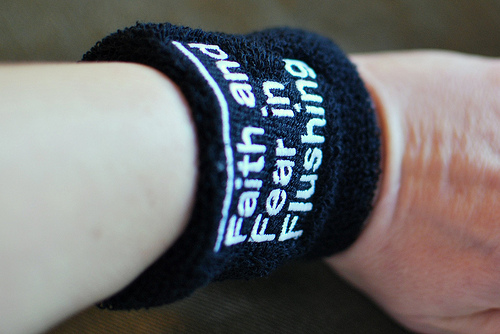 Six years ago today, the world became deprived of Tug McGraw. The prevailing emotion among Mets fans, baseball fans and humanity fans was sadness, which seemed not quite right since I can’t think of a ballplayer who more personified Joy with a capital J, to say nothing of Belief with a capital B. When it came to positive emotional responses, Tug brought out the Upper Case in all of us. Six years ago today, the world became deprived of Tug McGraw. The prevailing emotion among Mets fans, baseball fans and humanity fans was sadness, which seemed not quite right since I can’t think of a ballplayer who more personified Joy with a capital J, to say nothing of Belief with a capital B. When it came to positive emotional responses, Tug brought out the Upper Case in all of us.
“It’s 1973 forever in some essential compartment of our collective soul,” I wrote in the wake of the news. “Tug McGraw is forever a Met, the quintessential Met, the Met whose DNA defines this franchise. Imperfect rather than inept. Hilarious but not comical. Excitable boy who’s The Man on the mound. We’re never out of it. We always have some kind of chance, some screwy opportunity to get back in the game, get back in the race, cast aside all those errors and fat pitches and LOBs that dug us into this impossible hole in April and May and June and July and August and claw our way out.”
Tug was a lovable character but he could pitch some, too. It was his turnaround as much as his spiritual uplift that made the 1973 division title and pennant possible. He was no mascot. He was a fireman, a closer, a true relief ace. All the Mets came together down that most memorable of stretch drives, but when it came to getting back in the race, it figuratively started and literally ended with Tug recording the big out.
Now there’s another race involving Tug. And that wristband above will be a part of it.
We recently told you about our friend Sharon Chapman, a.k.a. Inside Pitcher from the comments section, and how she’ll be running the New York City Marathon as a member of Team McGraw. She and they are devoted to raising funds and awareness for the good work of the Tug McGraw Foundation, an organization established to help those facing the same struggle with brain cancer that Tug fought. “Over 200,000 adults and children annually receive a diagnosis of brain cancer,” according to the Foundation, which has made its mission the support of “research that will improve their quality of life in the physical, social, spiritual, and cognitive areas.”
The wristband? Well, à la Stephen Colbert and the U.S. Olympic speedskating squad, it signifies that when Sharon runs the Marathon, she will be representing the Faith and Fear Nation. Jason and I didn’t even know we had one, but the more we thought about it, the more we liked the idea of being a small component of this big effort for Team McGraw. And even if FAFIF doesn’t quite qualify as a nationality, we do have a very nice community here, its quality proven time and again by citizens like Sharon. She did all the heavy lifting on this, getting the wristband made up amid her other myriad training and organizing efforts. All we’re doing is cheering her on and asking, if you can, to help her and the Tug McGraw Foundation’s cause along. We’ll be checking in on Sharon’s road to the New York City Marathon periodically throughout the year and telling you more about what’s fueling this truly Amazin’ run.
To learn more about the Foundation, visit their site here. To donate (any amount is vastly appreciated), visit Sharon’s page here. Share these links with whomever you think might be interested.
Go Nation Go!
by Jason Fry on 4 January 2010 2:07 pm No, not Citi Field. That’s so last decade.
We seem to be fairly well settled in to our new Web home (many thanks to John Keegan for his help and for answering a million questions), so I thought I’d offer a quick tour of the new stuff and talk a bit about where we’re going. The idea isn’t to brag, but to get your help with identifying what’s not quite working and what could work better.
Here are some things we’ve added:
New Comment Features — You can now have your own picture or avatar, via gravatar.com — if you sign up there with the email address you used here, your picture should show up here after a few minutes. (Same for any other site on which you have a Gravatar.) You can now edit your comments for 30 minutes, request that a comment be deleted, and edit your email address and any linked URLs. You can also use URLs and other markup in comments, though be aware that too many URLs will trip our spam filter and get a comment stuck in moderation until we can rescue it.
Sharing Tools — Next to the Comment icon/counter you’ll see icons for sharing a post via email or on Facebook, Twitter, Digg or Delicious.
Print Tools — Reading Faith and Fear on the go? This will format it nicely to be printed.
Tags — We’re just starting to play with these, and resisting the urge to go back through 3,000 posts and tag every single one of them to within an inch of its life. (You might have noticed we’re a bit obsessive.) As we build out our tags we hope this will become an easy way to trace, say, all the mean things we say about Luis Castillo.
Mobile Support — Faith and Fear should now automatically format itself to look friendly on an iPhone, Blackberry, etc.
Kindle — Got a Kindle? You can read us on it for 99 cents a month.
And here are some things we’re still working on/thinking about:
More Comment Tools — We’re looking at supporting Facebook Connect for easier commenting, and more ways to build out our discussions. If you’ve got ideas, we’re all ears.
Galleries — We’re still looking around for an easy gallery tool like the one we had with Blogharbor. Many thanks to my partner, by the way, for resurrecting as many of the old site’s photos as he could.
Redesign — For now we just wanted to get the blog over onto WordPress more or less intact. Looking ahead, we’re going to make some design/layout changes, without messing with the overall look. (You know what a pain it is to figure out the Pantone colors for Mets blue and orange and then convert them to hex? No way am I revisiting that.) The goals are to get more useful information up higher (we’ve now got a right-hand column we’re not using) and more blog posts visible without a ton of scrolling. Another thing that will never change is our favicon. Mini-Shea forever!
Ads — As we said in our fall survey (thanks again to all of you who answered our questions), we intend to put ads on the site sometime this year. We’re going to go slow in hopes of getting our sea legs and figuring out what we’re doing. Anyway, stay tuned.
That’s where we are right now. If you’ve got ideas for things you’d like to see or suggestions for widgets/plugins/etc. that would make Faith and Fear work better, we’d love to hear from you in the comments or via email. Thanks for your patience with the technological bumps and the construction dust — we very much appreciate your reading and commenting, and look forward to chronicling 2010.
by Greg Prince on 4 January 2010 8:28 am Happy Baseball Equinox! We are now closer to the start of the 2010 Mets season than we are to the end of the 2009 Mets season, and I think we can all agree we’d rather have next season than last season any day. May Jason Bay’s impending physical move us that much closer to Spring.
In the meantime, the Jets saw their own shadow, didn’t trip on it, and are giving us one more week of winter in the best sense possible.
Can they give us one more besides? Well, consider that the New York-Cincinnati sporting dynamic has worked surprisingly well when it’s counted most.
Like last night when the Jets augmented the Bengals’ generously striped uniforms with a set of 37-0 tire tracks.
Like October 4, 1999 when Al Leiter, Edgardo Alfonzo and the rest of the suddenly surging Mets ran over the Reds en route to a similarly unlikely Wild Card.
Like January 9, 1983 when Freeman McNeil piled up 202 yards on his own and the Jets dropped 44 points on a stunned Riverfront Stadium to open the 1982 playoffs.
Like a well-remembered and even better-regarded National League Championship Series from October of 1973.
Like the night in November 1969 when the Knicks trailed the ancient Cincinnati Royals by five points with 16 seconds to go, yet came away with the 106-105 victory to establish an NBA-record 18-game winning streak.
Like October ’76, when the Big Red Machine operated in accordance with our wishes and produced a four-game sweep of a team claiming to represent New York.
History’s a wildly unreliable indicator of contests still to come, but with the Jets earning the right to play Cincy all over again on Saturday, we’ll take all the good omens we can gather.
Only someone who’s paid attention over the past two decades would note on this brilliant green and white morning how many different regimes have come in and definitively/permanently changed the Jets’ culture, attitude and fortunes for the better. In their first or second seasons, Bruce Coslet, Bill Parcells, Herm Edwards, Eric Mangini and now Rex Ryan each led the Jets to the playoffs amid declarations that their triumph marked the end of the Same Old Jets. These — in 1991, 1998, 2001, 2006 and 2009 — were the New Jets, as evidenced by the much-needed facelift the clear-eyed coach and the revamped organization that was fully behind him had given the heretofore hopelessly wrinkled franchise. You could throw in, under this banner, Pete Carroll (1994) and Al Groh (2000), who didn’t make the playoffs in their sole seasons at the helm but were credited as breaths of fresh air during their evanescent strong starts.
The Jets turn over more new leaves than recidivist junkies. But it beats turning over the ball. Just ask the Bengals.
Congratulations, then, to this latest crew of Whole New Jets for soaring into the postseason on the wings of circumstances weird enough to faze even Sully Sullenberger.
• They lost games by 4, 3, 5, 2 and 3 points.
• They lost games with less than 2 minutes to go, less than 10 seconds to go, with no seconds to go and in overtime.
• Their coach, with two weeks remaining, announced they were eliminated from contention even though they technically weren’t. (I can’t believe Jerry Manuel never thought of that.)
• Their multiple rivals for a potential playoff spot all had to lose with one week remaining…and they all lost.
• Their final two opponents were each division champions. Yet the Colts graciously decided to quit playing in the middle of their game and the Bengals politely stepped aside in the first quarter.
And that, plus a punishing rushing game and steadfast defense, is how you somehow go from a hopeless 4-6 to a jubilant 9-7 and wake up the 5-seed in the AFC.
The long-term implications don’t matter right now. It won’t matter whether Ryan’s overhaul truly transforms the Jets for seasons to come or if a few Week 17s from now some other coach in a green sweater vest is celebrating how his special system and awesome outlook have finally pushed the Jets from perennial disappointments to consistent contenders. The Jets are winners now is what matters. The Jets were winners Sunday night. They took one of the odder paths any team in any sport has ever taken to the playoffs, but they’re there. They’re at Cincinnati in five days, six days after Cincinnati only nominally made a trip to the Arctic Meadowlands.
The Bengals have been installed as slight favorites. As Pete Rose himself might say, take the Jets and the points.
by Greg Prince on 2 January 2010 3:49 pm Move over, Joe Carter. The University of South Florida Bulls’ 27-3 romp over the Northern Illinois Huskies in the 2010 International Bowl has supplanted the 1993 Toronto Blue Jays’ walkoff World Series win as the greatest moment in SkyDome/Rogers Centre history.
Why, it’s even better than the time Ken Huckaby took out Derek Jeter at third base. (Not that we ever, ever cheer for injuries, mind you.)
USF is my alma mater. I graduated from there so long ago they didn’t have a football team (and I was robbing various roommates of sleep by clacking the night away on an electric typewriter). Then they invented one with the hopes of someday playing a bowl game in January. They were probably thinking of something a little more traditional than the International Bowl, but newbies can’t be choosers.
In the past five years, USF — handling a pigskin only since 1997 — has participated in the Meineke Car Care Bowl, the PapaJohns.com Bowl, the Brut Sun Bowl (earned after an occasionally spectacular 2007 campaign), the magicJack St. Petersburg Bowl and now the one that mysteriously materializes in Canada on the first Saturday of the new year.
Canada? College football? It doesn’t sound prestigious on the surface, but I’ll take the win and consider it a measure of the Bulls going global. Seven American wins this season and now one North of the Border. You know what that means…
Prestige Worldwide!
by Greg Prince on 1 January 2010 6:08 pm Tomorrow, Saturday, January 2, looms as one of the finest days and happiest New Year’s greetings in sports broadcasting history. After your USF Bulls gore the Northern Illinois Huskies in the much-awaited International Bowl at noon on ESPN2 (it’s on ESPN2 because it’s twice as big a deal as any bowl on ESPN), switch to SNY by five o’clock for the METS YEARBOOK MARATHON.
• 5:00 PM — Mets Yearbook: 1968
• 5:30 PM — Mets Yearbook: 1963
• 6:00 PM — Mets Yearbook: 1975
• 6:30 PM — Mets Yearbook: 1971
• 7:00 PM — Mets Yearbook: 1984
I’m not sure if SNY planned this blessed event as a way of extending the good vibes sure to be wrought by the Bulls’ victory (guarantee of victory not included) or as a way of catapulting us in style toward the Baseball Equinox, that point on the calendar where we are exactly as far from the end of the previous season’s final Mets game as we are from the scheduled first pitch of the forthcoming season’s first Mets game. This winter’s Baseball Equinox arrives Monday morning, January 4, at approximately 2:22 AM, Eastern Standard Time. Chances are you’ll be asleep, dreaming of vintage highlight films, and hopefully not up, cursing out the callowness of Mark Sanchez or the general bizarreness of Rex Ryan.
In any event, you have been warned, so be sure to watch and/or record. And in case you missed it when we were transitioning to WordPress, be sure to check our blog-exclusive interview with Gary Morgenstern, SNY’s vp of programming, to get the scoop on how Mets Yearbook came to air.
|
|