The blog for Mets fans
who like to read

ABOUT US

Greg Prince and Jason Fry
Faith and Fear in Flushing made its debut on Feb. 16, 2005, the brainchild of two longtime friends and lifelong Met fans.

Greg Prince discovered the Mets when he was 6, during the magical summer of 1969. He is a Long Island-based writer, editor and communications consultant. Contact him here.

Jason Fry is a Brooklyn writer whose first memories include his mom leaping up and down cheering for Rusty Staub. Check out his other writing here.

Got something to say? Leave a comment, or email us at faithandfear@gmail.com. (Sorry, but we have no interest in ads, sponsored content or guest posts.)

Need our RSS feed? It's here.

Visit our Facebook page, or drop by the personal pages for Greg and Jason.

Or follow us on Twitter: Here's Greg, and here's Jason.

The Happiest Recap: 088-090

Welcome to The Happiest Recap, a solid gold slate of New York Mets games culled from every schedule the Mets have ever played en route to this, their fiftieth year in baseball. We’ve created a dream season that includes the “best” 88th game in any Mets season, the “best” 89th game in any Mets season, the “best” 90th game in any Mets season…and we keep going from there until we have a completed schedule worthy of Bob Murphy coming back with the Happy Recap after this word from our sponsor on the WFAN Mets Radio Network.

And, if we may borrow another Murphism in light of the epic nature of the games in today’s spotlight…fasten your seatbelts.

GAME 088: July 10, 1999 — METS 9 Yankees 8
(Mets All-Time Game 088 Record: 23-26; Mets 1999 Record: 50-38)

When intensity is invoked as it pertains to the six annual Subway Series matchups, this is the game that is implied.

This is the gold standard of Interleague baseball.

This is the indisputable proof that there is a Mets-Yankees rivalry.

The argument that the teams play in different leagues and only six times head-to-head, therefore they aren’t really rivals, is rendered hollow when this game enters the conversation.

The reasonable notion that two series per year between the Mets and Yankees are at least one too many crumbles into absurdity when this game is added to the intracity equation. Watch this game and you’d be convinced the Mets and Yankees are wasting their time playing anybody else the other 156 dates of the year.

If you factor out games that have had a direct impact on potential pennant positioning, this game would almost certainly have to go down as the most thrilling win in the half-century existence of the New York Mets — and it may be precisely because the Subway Series has no head-to-head impact on the standings that it stands out as unrivaled when it comes blending emotion and entertainment. Strip away whether you’re gaining or losing ground in N.L. East or Wild Card race, then you have to judge a Mets game on its own isolated merits.

This one takes all the merit badges it can pin to its chest.

For validation.

For redemption.

For exhilaration.

For indelible imagery.

For unrivaled ending.

OK, maybe not for pitching, but you can’t have everything.

The Subway Series was still young as this overcast Saturday afternoon at Shea Stadium approached. The Mets and Yankees had played all of ten games against each other. The Mets won the first of them, in 1997, and the most recent of them, the night before. Overall, the Mets trailed the all-time series 6-4. In public perception — as portrayed by the New York media, certainly — the Yankees presumably won all ten games to date. It was 1999, the year after the Yankee world championship of 1998, three years after the Yankee world championship of 1996. It was a time when the Yankees were presumed winners in any matchup until proven otherwise, especially against the Mets.

The Mets? What were the Mets? The literal answer would have been a very good team as of the morning of July 10, 1999. They were eleven games over .500, four games behind Atlanta for first place in their division and a hair behind the Houston Astros for the National League Wild Card. Since snapping out of their mysterious 0-8 rut in early June, they’d been on a roll, going 22-10, topping that roll with a most decorative toothpick, a 5-2 win on Friday night, Al Leiter and Mike Piazza sticking it to Roger Clemens. Throw in the Mets’ status as a perennial contender for three consecutive seasons and how they fortified their ranks heading into 1999 with the likes of Gold Glove third baseman Robin Ventura, speed merchant Roger Cedeño and living legend Rickey Henderson, and this was a solid, solid team.

That was the literal answer. The rhetorical answer — asked and answered by the papers, the radio and the TV — was less kind and didn’t get overly hung up on accuracy. What were the Mets in that context?

They weren’t the Yankees, so why bother?

The headlines were condescending (Times: “Yankees Show the Mets How to Win in New York”; Post: “Twenty-Five Reasons Why Yankees Own City”). The history was myopic (as if baseball had only been played in New York since 1996). The hype would get short-circuited, since after all, these were the Yankees, 24 championships stashed in a vault somewhere in Switzerland, a 25th assumed en route. They were playing who now? The Mets?

What were the Mets again?

That was the backdrop for this game. The Mets had won Friday night, but they’d won one in each of the previous three-game series only to drop the other two games every time, so it might have been assumed by those who didn’t spend a lot of time contemplating the depth and the texture of the home club that there wouldn’t be much suspense to figuring out who would win Saturday. But assumptions, like leads, wouldn’t be safe across this Shea afternoon.

Nor, would be the pitchers.

Start with Rick Reed, generally reliable righthander for the New York Mets. Three batters in, he gives up a two-run home run to Paul O’Neill.

Flip to Andy Pettitte, revered as one of the clutchest hurlers in either league. Four batters in, he’s allowed an RBI double to Piazza and the Mets are down 2-1.

Reed strikes out the side in the second, but Pettitte isn’t so careful. With one out, he walks Cedeño. This is where the speed merchant peddles his goods. Roger steals second. Roger steals third. Rey Ordoñez drives him home with a sacrifice fly. Now we’re tied at two.

Nobody scores in the third…the only inning of which that will be able to be said by day’s end.

Reeder enjoys another 1-2-3 in the top of the fourth, but the bottom of the fourth jump-starts the scoreboard again. Benny Agbayani beats out an infield hit. Ventura doubles him home to make it 3-2, Mets. Cedeño bunts Ventura to third and Ordoñez delivers another valuable fly ball. Robin runs home and it’s 4-2, Mets.

Then, trouble. Reed’s first batter in the top of the fifth is Ricky Ledee. He homers. Reed’s second batter in the top of the fifth is Jorge Posada. He homers. The Yankees have tied the Mets at four.

By the sixth, Reed is removed in favor of Greg McMichael. But McMichael does the Mets no favors. He gives up Paul O’Neill’s second homer of the game. The Yankees lead, 5-4. McMichael puts two more runners on and he’s removed in favor of Rigo Beltran. Rigo restores order, striking out Chad Curtis and Posada to extricate the Mets from the jam.

It’s still 5-4 when the seventh begins. Joe Torre has gotten six innings out of Andy Pettitte. They haven’t been great ones, but they were enough for a lead. He pinch-hits Jeff Manto and Beltran strikes him out. Rigo Beltran is emerging as Bobby Valentine’s secret weapon, it seems, but then he’s exposed. Chuck Knoblauch homers off him. It’s the fifth Yankee home run this Saturday and it puts the visitors ahead, 6-4. Beltran strikes out the next batter, Williams, but then gives up a double to O’Neill. After intentionally walking Derek Jeter, Rigo departs and Dennis Cook comes on to face Tino Martinez, who grounds to Edgardo Alfonzo for the third out of the inning.

Time to stretch. And, if you’re a Mets fan, time to wonder if the Mets can maybe make use of the home run ball.

In the bottom of the seventh, it is learned Brian McRae cannot; he grounds out against Ramiro Mendoza. Rickey Henderson, however, doubles, but Alfonzo lines to O’Neill in right for the second out. John Olerud walks (the fifth Met walk of a day when they’ll collect nine). That makes if first and second, two out, the Mets down by two.

The batter is Mike Piazza. The broadcasters are Bob Murphy and Gary Cohen.

MURPH: The two-one pitch…HIGH FLY ball hit deep to left field…way, way back, it’s going…yah, there it goes! Mike Piazza, a three-run homer!

COHEN: Oh my goodness!

MURPH: Where did that land?

COHEN: It hit the picnic tent, beyond the left field bullpen, about halfway up the picnic tent roof!

And the Met majority among the 53,792 in attendance were halfway to heaven. Piazza had done it. He had done it in the sixth the night before to Clemens and he just did it again to Mendoza here in the seventh. Two games against the Yankees, two three-run blasts.

Blasts: Not an expression, not hyperbole. They were launched, and Mets fans were riding Piazza’s lunar module an estimated 482 feet to utter nirvana as the Mets took a 7-6 lead. Nothing could possibly bring them down.

In the eighth, the Mets and their fans were brought down.

Cook was still pitching. He walked Scott Brosius, retired Curtis and then faced the other catcher in the game, Posada. Posada didn’t hit anything as high or far or as deep as Piazza had, but pedestrian home runs counted, too, and Posada had just hit one of those, his second of the game. The Yankees led the Mets, 8-7.

Heaven was over, and the Yankee minority, returned to their familiar state of ascension, was suddenly quite vocal in their approval of the turn of events.

Turk Wendell cleaned up after Cook and kept the score 8-7 heading to the bottom of the eighth. Mike Stanton replaced Mendoza  and did the same. Pat Mahomes entered in the ninth, and the Mets’ long man pitched a scoreless inning despite Yankee runners reaching first and third.

Now, the bottom of the ninth.

Now, Mariano Rivera.

Now what?

What are the Mets? What are their chances? What can they possibly do against the closer who is already, in his third season in the role, talked about as the best in the sport? What has been the point of this back-and-forth, heavy-artillery ping pong match if all it’s going to come down to is the wretchedly predictable? The Mets have faced Mariano Rivera on four previous occasions. Mariano Rivera notched a save in each of those meetings.

Is he perfect? Nobody’s perfect. Even Mariano Rivera isn’t perfect. He’s blown two saves in 1999. The first one was on April 25 against the Blue Jays. The Yankees won anyway. The second was just four days ago, in Detroit. The Yankees won anyway. They won 9-8. A real slugfest. This one was like that. It was 8-7. The Yankees had more slug through 8½ innings than the Mets. They were three outs away from having the entire fest.

Update: They were two outs away once McRae, batting in the nine-hole following a double-switch in the seventh, led off by grounding to Knoblauch at second and Knoblauch didn’t throw it wide of Martinez at first.

If Mariano Rivera was emerging as the best closer ever, it was appropriate that the Met lineup turned over and revealed the best leadoff hitter ever, Rickey Henderson. Henderson came to the Mets a 40-year-old and immediately proceeded to halve his age. It wasn’t so much that Rickey was ageless. It was more like Rickey didn’t bother with calendars. What he knew was baseball: what to do on the basepaths (he was the one credited for harnessing Cedeño’s speed and turning it into honest-to-god skill) and how to get on them. Rickey’s expertise had been on display all day long.

First inning: Henderson singles and scores.

Third inning: Henderson walks.

Fifth inning: Henderson singles.

Seventh inning: Henderson doubles and scores.

Ninth inning? Henderson walks.

Rickey Henderson is on base for the fifth time today. The base in this case is first.

But it’s about to be another one, as Alfonzo lifts a fly ball deep to center, toward the wall. Bernie Williams, who will be rewarded with the third Gold Glove of his career in 1999, is fooled by the height or the trajectory or the appearance of the sun or the presence of molecules in his midst, because Bernie Williams has no clue where Fonzie’s fly ball is going. Hence, it ticks off his Gold Glove for a double. Henderson, leaning on the side of caution, proceeds with something shy of abandon, and takes third.

The tying run is ninety feet from home plate. The winning run is ninety feet behind the tying run. And John Olerud, as trustworthy a hitter as Bobby Valentine could wish to have up in this spot, comes to the plate.

Yet Mariano Rivera grounds John Olerud to first. Caution prevents Henderson from breaking for home. There are two out. But Mike Piazza, he of extraordinarily recent three-run homer fame, is the batter.

Like hell he is. Of course Torre tells Rivera to walk Piazza. There’s an open base and Piazza’s theoretical run doesn’t matter a whit. What matters is the next batter is slated to be Melvin Mora.

Mora? The rookie? The kid…not really a kid — he’s 27 — the guy who’s batting .067 on the season? This is what the Mets are about to come down to? Mariano Rivera versus Melvin Mora, who came in for defense in right way back when Piazza had put the Mets up 7-6?

Like hell it will. Mora and his 15 major league at-bats are called back to the dugout and Matt Franco is sent to the plate. Matt Franco is the Mets’ best pinch-hitter, 10-for-36 thus far in 1999.

Mariano Rivera is the planet’s pre-eminent closer. The loading of the bases hasn’t changed that. Henderson may have walked. Alfonzo may have doubled. Piazza may have loomed. But look: the Yankees are still winning, and Mariano Rivera is still pitching.

Then again, that is Matt Franco up there. It may not be a name that strikes fear into the heart of the pinstriped nearsighted, but he’s Valentine’s best option, and it’s pretty amazing that in a game that’s gone past three hours and forty-five minutes and that’s included 15 Yankees and 18 Mets, Bobby V has managed to preserve a nineteenth player…and exactly for the spot he’d want him up in, too.

Pretty good managing.

Franco swung at the first cut fastball Mariano Rivera threw him and fouled it to the backstop. Matt considered it “my pitch to hit” and was distressed he didn’t do anything with it.

Franco swung at the second cut fastball Mariano Rivera threw him and didn’t touch it. “I had a couple of good swings at the first two pitches,” Franco said. “I felt I was right on him.”

Franco took the third cut fastball Mariano Rivera threw him, just below his knees.

It was low, according to home plate umpire Jeff Kellogg.

It was not, barked Joe Torre.

It was life, knew Matt Franco, who acknowledged that his heart “skipped a beat” as he waited for Kellogg’s ruling.

“It was low,” Valentine confirmed. “It was low when Dennis Cook was pitching. It was low when Rick Reed was pitching.”

“I thought I had it,” Mariano Rivera countered. Well, of course. Yankees were used to having it all.

“It felt down,” Franco explained. What Franco felt was correct, per Kellogg. And, as a result, Franco was still up.

And a fourth cut fastball was coming.

COHEN: Now Rivera brings the hands together…runners take a lead at all three bases. One-two to Franco…LINE DRIVE base hit into right field! Henderson scores! Here comes Alfonzo…here comes O’Neill’s throw to the plate…Alfonzo slides…he’s safe, the Mets win it! THE METS WIN IT! MATT FRANCO WITH A LINE DRIVE SINGLE TO RIGHT AND HE’S BEING MOBBED BY HIS TEAMMATES! Matt Franco, a two-run single off Mariano Rivera in the bottom of the ninth inning, and the Mets win it, nine to eight!

Yes, the Mets win it, nine to eight.

Not just any 9-8 win…as if there is a vast enough subgenre of Mets’ 9-8 wins to shunt any of them off to the side as merely routine.

Not just any walkoff win in which the Mets were down to their last strike…though they were, weren’t they?

Not just any win against the team that was said to own its city and be exclusively capable of teaching its neighbors how to triumph…though it was the first one to clinch the Mets a given Subway Series.

Not just an unsurpassed ending, but a hellacious middle and uncommonly busy beginning…both of which were destined to get lost amid the fifth and final lead swap.

Not just momentum shifts and mood swings, but hot flashes, cold sweats and a veritable change of life undergone by thirty-some-odd-thousand Mets fans in-house and who knows how many millions more following along from afar.

Not just another nine innings of midseason baseball, that’s for sure. All of it jumbled together and coalesced into an extended outburst of pure, ecstatic joy on behalf of the home team, peppered by a hearty sprinkling of Sheadenfreude as regarded the overbearing visitors (and their twenty-some-odd-thousand acolytes) from one borough away.

There were Henderson and Alfonzo hosting a victory party at home plate, where the first guest was Ventura, the on-deck hitter who didn’t have to do a thing besides kvell when his services were no longer required.

There was McRae leading — and Ordoñez bolting from the dugout to join — a welcoming committee charged with letting Franco know he could sit anywhere he wanted once they all got back to the clubhouse.

There were the knots of orange- and blue-drenched souls in every section of Shea Stadium, likely accounting for no more than 65% of the tickets sold this day, yet now making 100% of the noise (save for a little instinctive whining among the begrudging 35% who weren’t terribly joyful, but hey, that’s life in the big two-team city).

And there would be, in a town where print still ruled your reading, paragraph upon paragraph in the Sunday papers commemorating what had just transpired on this Saturday in this park. Phrases flew off the pages the way balls flew out of Shea.

• “Put yesterday’s game in a time capsule as a tribute to baseball at its best…”

• “One of the most incredible games any of them will ever play…”

• “This game will be etched into the archives of this city’s baseball history with bold, brilliant strokes…”

• “If it’s overkill, that’s only because it’s now OK to die knowing we will never see a better game…”

• “Occasions don’t get any bigger in July…”

• “You have a living, breathing case to commit the next man who declares six duels between the Mets and Yankees as three too many…”

Who said all that? Everybody. And they were all as accurate as this game was phenomenal.

ALSO QUITE HAPPY: On July 12, 2007, the Mets gave new meaning to getting off to a good start as their very first two hitters after the All-Star break each homered. Jose Reyes belted the third pitch he saw from Reds starter Bronson Arroyo out of Shea Stadium and, four pitches later, Ruben Gotay followed suit. Two batters, two homers, two runs. At that pace, the Mets would still be batting, but the homer parade ended there and the Reds eventually tied them. Fortunately for the Mets, Gotay would single home Lastings Milledge in the fifth to give the Mets a 3-2 edge that Orlando Hernandez and three relievers made hold up. The two homers right out of the gate was a Met first and demonstrated interesting timing for another reason. The club had dismissed hitting coach Rick Down over the break and had yet to name Howard Johnson as his replacement, thus nobody was officially tutoring Reyes or Gotay this Thursday night. As students, they proved pretty adept self-starters at independent study.

GAME 089: July 17, 1973 — Mets 8 BRAVES 7
(Mets All-Time Game 089 Record: 17-32; Mets 1973 Record: 39-50)

Yogi Berra doesn’t require any extra quoting, but here goes, nonetheless. When he was managing the Mets, Ken Boswell allegedly went to him for help in solving himself of a bad batting habit, namely that, “I keep swinging up at the ball.”

To which, Yogi replied, “Well, swing down.”

Not quite up there with other Yogi gems, but if we can craft a Yogi-ism from that exchange (and the man does claim, “I never said most of the things I said”), it might be that you have to stop doing what’s not working if you want to stop doing what’s not working. That perfectly sound Berra logic was put into play this Tuesday night in Atlanta when the most important element of the Met bullpen was offering his team virtually no relief.

Tug McGraw was a National League All-Star in 1972, when giving relievers such honors was a relative rarity. American League manager Earl Weaver thumbed his nose at bullpens everywhere by taking nine pitchers — all starters — while his counterpart, Danny Murtaugh, made McGraw one of his staff’s two lefties (Steve Carlton, in the midst of his 27-10 season for the 59-win Phillies, was the other).

“Earl certainly doesn’t recognize us,” McGraw lamented.

Tug turned out to be the winning pitcher in the ’72 All-Star Game at Atlanta Stadium, throwing the ninth and tenth and keeping the score tied at four until Joe Morgan singled in Nate Colbert with the winning run. His several years as one of baseball’s best relievers should have been evidence enough that McGraw belonged, but the Mets’ fireman didn’t necessarily feel completely at ease.

“I started getting nervous when they introduced Mays and Aaron before the game,” Tug admitted. “That got to me and I realized where I was. Later, I caught myself being extremely nervous and told myself the only reason I should be nervous is if I’m scared and I’m not scared. So I took myself on a confidence trip.”

He had no problem making that sort of psychic sojourn in 1972. His confidence was born of his success: Tug posted his second consecutive ERA of 1.70 and his 27 saves were second-most in the N.L., behind fellow All-Star Clay Carroll of Cincinnati. Confidence trip…smooth sailing…whatever you wanted to call it, Yogi knew if he called on Tug in the late innings, he’d probably have no regrets when the game was over.

Fast-forward a year, and the only trip Tug was on when the Mets came to Atlanta was a bad one. McGraw was in the midst of “my famous slump of 1973”. As he recalled it in his book, Screwball, it was no fun whatsoever:

“I couldn’t figure out what had happened to me. I couldn’t even say to myself, forget about it, you’re human. Tug, you’re human. I wanted to figure it out, hassle it out. But I was so wild that they weren’t even trying to hit my pitches. So I wanted to know what the hell had happened: why?

Tug couldn’t answer it. Yogi couldn’t answer it. Nobody could answer it. All anybody could divine was Tug’s bottom line by mid-July. He was 0-4, he had blown seven saves (while recording only eleven) and his ERA was just a smidge below six. He was having an awful season and, not surprisingly, so were the Mets. They were in last place, twelve under .500 and eleven games out of first. It was a year straight out of the early portion of Tug’s Met career, except prior to 1969, there were no expectations for him or them. These 1973 Mets were supposed to be contenders. They appeared to be dead.

“I didn’t have any feel for the baseball at all. I didn’t have any idea how to throw the baseball. It was as though I’d never played before in my entire life. I just felt like dropping to my knees and saying: Shit, I don’t know what to do. Don’t know what to do. Cannot hack it anymore.”

So for a night, Berra decided McGraw didn’t have to, not as a reliever, at any rate. After being skipped in a Monday night 8-6 loss when the Mets clearly needed relief help, Tug showed up at Atlanta Stadium on Tuesday to discover a baseball sitting in a shoe in his locker. It was the manager’s way of telling Tug he was going to be that night’s starter.

It wasn’t unprecedented in McGraw’s career. He made 25 starts from 1965-67 and four more in early 1969 before Gil Hodges decided Tug would better serve the team (and his career) as the lefty complement to Ron Taylor in the Mets’ bullpen. Except for a token start in the second game of a doubleheader late in 1971, Tug transformed exclusively into a reliever for the next four years, making 229 of his 230 appearances out of the ’pen. There was no reason to think he’d ever return to the Mets’ rotation. But nothing was working for Tug and little was working for the Mets, so, in essence, why not start him?

Tug was surprised by this assignment, but tried to play it cool, even kidding Yogi that he’d been on a bender the night before. Whether Berra got the joke or not, he had a message for McGraw: “You’re starting tonight and you better do a good job.”

There had been no bender, but there wasn’t much clarity. Tug did not take comfort in taking the mound in the bottom of the first. “But then,” he wrote, “I gave myself the old pep talk: Got to fight your way out of it. Can’t feel any different just because you’re starting the game instead of finishing it. Get hold of yourself, beginning right now.”

The uplifting conclusion to the story would be that McGraw fought the good fight, figured out what he was doing wrong and pitched the game of his life that night. But baseball is no fairy-tale world. What really happened was Ralph Garr hit his first pitch over the center field fence. Yet Tug did take some solace in falling behind 1-0. “At least it can’t get any worse,” he decided, opting to view his start as “an experiment: one pitch, one run. Maybe I can get the next guy out.”

He did. Marty Perez flied to John Milner at first for the first out. McGraw escaped the inning without further damage. But it wasn’t really happening for him out there on the Atlanta mound, at least not as discerned from the scoreboard. A wild pitch scored Paul Casanova in the second; Dusty Baker and Davey Johnson drove in runs in the third; and with the Braves ahead 4-1 in the sixth, Tug gave up a two-run homer to Perez and a solo shot to Henry Aaron, the 698th of Hammerin’ Hank’s career.

Most of America was zeroing in on Aaron’s chase of Babe Ruth’s lifetime home run mark that summer, and Tug’s gopher had allowed 39-year-old Bad Henry to move within sixteen long balls of the Bambino. To Aaron, the important thing was he put his team up, 7-1: “I felt like when I hit it, it was just another run, like icing on the cake.”

As for McGraw, you might say he was wearing a hit-eating grin. Yes, he’d given up the three homers, the seven runs, had hit Darrell Evans and unleashed that wild pitch — and yes, he had his team in a six-run hole — but Tug could feel himself hacking it again: “I was just beginning to relax. I thought what the hell, I’ll just have a ball tonight, whatever they do.” Despite the ugly pitching line, he judged himself having had “a fair night” and left after six.

That appeared to be that for Tug, enjoying a small, intangible private victory amid yet another dispiriting Met defeat in a season crammed with them.

Except for this: John Strohmayer pitched a perfect seventh for the Mets; Buzz Capra pitched a perfect eighth for the Mets; and the Mets offense still had to bat in the top of the ninth.

Braves manager Eddie Mathews didn’t see trouble ahead. He pulled Aaron and his 698 home runs (25 of them hit in ’73) from left field and sent Carl Morton out to bid for a complete game. Wayne Garrett singled to lead off the ninth, but ex-Brave Felix Millan lined out. Rusty Staub homered, but that only made it 7-3. Morton stayed in the game to face Cleon Jones, who singled. He stayed in to face Milner. Milner homered.

The Mets trailed 7-5.

Mathews had seen enough of Morton and brought in Adrian Devine, who got Ron Hodges to ground to Johnson at second. Two out, nobody on…the Braves appeared to be in Devine shape.

But Don Hahn singled to keep the game going. Pinch-hitter Ed Kranepool walked, and was pinch-run for by Teddy Martinez. Jim Beauchamp was Berra’s next pinch-hitter and he singled. Hahn raced home, Martinez went to third. Now the Mets were down 7-6, with runners at the corners. They had batted around and knocked out Devine. Matthews chose Tom House to pitch.

And Yogi Berra chose Willie Mays to hit for Garrett.

Unlike his longtime superstar contemporary Aaron, Mays was no longer producing like his young self. Willie was 42 and batting .214 as a part-timer. It was clear Aaron had outlasted him. But two other things were just as clear as Mays stepped in to take on House:

1. Willie Mays was batting, while Hank Aaron was out of the game.

2. Willie Mays was batting.

That’s an aspect of a baseball game that can never be underestimated, as Tom House discovered. Mays worked House for a 3-2 count, which meant the Mets’ runners were in motion when Willie swung and lined a single into deep right field. Martinez scored easily to tie the game at seven. Beauchamp, nobody’s idea of pinch-runner, had a more difficult challenge as he took off from first.

“It was lucky it was a 3-2 count on Willie,” Jim said, “because I got a big jump. Halfway between third and the plate, I ran out of gas.” It wasn’t a fortuitous moment for an energy crisis, but Beauchamp had a little more in the tank than he suspected. Garr’s throw from right was high and Jim slid in safely with the Mets’ seventh run of the ninth inning. In the final game in which Willie Mays and Hank Aaron both appeared, the Mets went ahead, 8-7.

This would have been an ideal time to bring in an accomplished closer like Tug McGraw, but McGraw was obviously not available. So Berra went with his third reliever of the night, rookie Harry Parker. Due up first was Evans, and Parker struck him out. Due up next should have been Aaron, except Mathews’s routine substitution in the top of the ninth meant Harry would face not Henry, but Sonny Jackson. Sonny struck out. Finally, Baker fouled to Milner and Parker joined Strohmayer and Capra in having pitched perfect innings, ensuring the Mets’ 8-7 win.

Blowing a six-run lead in the ninth couldn’t have gone over well in the Braves’ clubhouse, where the volatile Mathews was known to “hurl a tray of Church’s Chicken” at the wall, according to Tom Stanton, author of Hank Aaron and the Home Run That Changed America. Aaron himself, however, was more philosophical than furious.

“That’s baseball for you,” he said.

McGraw, meanwhile, was in the midst of a much happier scene, one in which the poultry was treated much better. “The clubhouse man,” he wrote in Screwball, “had fried chicken on the table in the locker room and we gobbled up all the beer he had, too, and went out and had a big time. We felt we had to do something crazy to get back into contention, and that night we did.”

Contention was still a ways away, actually. The Mets were still in last place and McGraw’s ERA was up to 6.17. But Tug was thinking positively — believing, if you will — and now there was a positive result to get his and his team’s confidence trip going again.

“We got seven runs in the ninth and won it, 8 to 7,” Tug wrote. “Amazing Mets, my ass.”

ALSO QUITE HAPPY: On July 20, 1975, the Mets learned how handy it was to have a genuine slugger on their side, particularly when your customarily reliable pitching fails you. The team that came at opponents more than half the time with Tom Seaver, Jon Matlack and Jerry Koosman was trying to get by on odd fifth days with rookie Randy Tate. Tate was no Seaver, no Matlack, no Koosman…he wasn’t even Randy Tate this particular Sunday at Shea as the Houston Astros whacked him around pretty good, chasing him and then Ken Sanders with a five-run fifth to build a 7-1 lead.

To the rescue rode Dave Kingman, who maybe didn’t make much contact — striking out 68 times in 70 games played — or court many friends — “Hey, who gave me an error?” he was reported to bellow after the game, instantly fingering shortstop Jack Heidemann for a third-inning throw Sky King couldn’t handle at first base — but nobody questioned what he could do if he got hold of a pitch. And that he did in the bottom of the fifth, launching a three-run homer to pull the Mets to within 7-4. Three batters later, Heidemann compensated for his non-error by tripling in two runs on a ball to center that Cesar Cedeño lost in the sun. It cut the Astro lead to 7-6. Unfortunately for the Mets, Hank Webb, another of the non-Big Three starters, came on in relief and gave the Astros back a pair of runs to make it 9-6, Houston.

But come the eighth, still facing starter Dave Roberts, the Mets obliterated the Astro advantage on an RBI double by Felix Millan, a run-scoring single from Joe Torre and, finally, a two-run homer off the bat of David Arthur Kingman. Added to an RBI groundout from the first inning, that gave Dave six runs batted in to go with his two home runs on the day. Most importantly, the Mets had a 10-9 lead after being down 7-1. Harry Parker relieved Tom Hall (2.2 IP, 0 R, 1 H, 1 BB, 5 SO) and shut down the Astros for his second save of the season.

“This was one of those days when everything went right,” Kingman said of his performance, and nobody could question his assessment of that, either. It was the first time Dave hit two home runs in one game as a Met, giving him 18 on the year in the Mets’ 89th game of the season. It may not have concerned him as much as being charged with that error he thought should have been Heidemann’s, but Kingman was now six games ahead of Frank Thomas’s pace for most home runs by a Met in a single season. Thomas, who mashed 34 in 1962, didn’t hit his 18th until the club’s 95th game that inaugural campaign — and Thomas was a regular, whereas Kingman, given his propensity for striking out and his lack of what you might call defensive prowess, had played in fewer than four of every five games to date in 1975.

With days like this one too good to ignore, Dave Kingman was about to become a full-time starter. “My mistake in San Francisco,” the ex-Giant reflected, “was that I listened to too many people rather than rely on my own instincts. It takes a long time to learn that some days will be bad and some good, and that each day is new.” If Kingman was going to be playing every day the rest of the way, chances were the Met home run record was going to be new, too.

GAME 090: July 22, 1986 — Mets 6 REDS 3 (14)
(Mets All-Time Game 090 Record: 19-30; Mets 1986 Record: 62-28)

Howard Johnson blasted a three-run homer in the top of the fourteenth inning that proved to be the difference in the Mets’ eventual 6-3 win this Tuesday night in Cincinnati, but y’know what? It was maybe the fifth-most noteworthy aspect of what was probably — and this is saying a ton — the most bizarre game the New York Mets have ever played.

We have to say “probably,” because it was only 382 days since the other most bizarre game the New York Mets have ever played, the one that had started 383 days before and required a night and a third of a morning to complete. That was the 19-inning rain-soaked Fourth & Fifth of July marathon in Atlanta the Mets won 16-13 after Rick Camp tied it in the eighteenth with…well, you know. Yeah, that might have been more bizarre than this one, but this one did a fantastic job of compressing its weirdness.

For the first eight innings, this game’s only really strange quality was that the first-place Mets were losing, 3-1. Bobby Ojeda scored the Mets’ only run in the fifth, and Darryl Strawberry was ejected for arguing a called strike three in the sixth, but otherwise, it was just another tepid Tuesday.

Then the ninth and a different kind of Fireworks Night erupted.

Reds player-manager Pete Rose had the right pitcher in the game to end things routinely. Ron Robinson was 7-0 on the season and began the inning as a perfect pitcher might, by striking out Johnson, who was pinch-hitting. But his catcher, Bo Diaz, dropped the ball and HoJo kicked it away, ran inside the baseline and was hit by Diaz’s throw. He was ruled safe anyway. It might have been just the spark the Mets needed, except Robinson grounded Mookie Wilson into a 4-3 double play, leaving him with just one out to attain.

Robinson, however, walked Dykstra and gave up a double to Tim Teufel to put runners at second and third and compel Rose to make a pitching change. He called on his tough lefty closer, John Franco. Franco had been pitching quite effectively of late. Back in his hometown of New York just two weeks earlier, he garnered a save and a win at Shea against the team he rooted on from the upper deck when he managed to clip enough milk-carton coupons. Franco threw two-and-a-third and two innings in those respective outings. Here his task figured to be briefer, if challenging: get Keith Hernandez to make the final out of the game.

Franco did his part. Got a simple fly ball out of Hernandez. Couldn’t have been any simpler. It was lofted to right field, almost directly to the sure hands of Dave Parker, three times the winner of a Gold Glove award. All Cobra, as he was known, had to do was snare the kind of ball he no doubt hauled in with ease thousands of times in his life. If you were the impatient type, it was a real Warner Wolf “you could have turned your sets off right there” kind of moment.

But if you’re the kind to stick with a ballgame all the way through, then stay tuned.

Parker — whose two-run homer off Ojeda in the third gave the Reds a lead they hadn’t surrendered clear to the moment Hernandez swung — dropped the ball. Or, technically, he didn’t catch it. It glanced off his glove. He didn’t use two hands. He said he was concerned about having a play on Teufel if it came to that and stumbled a bit in his approach. Whatever. The ball was not caught. Dykstra scored. Teufel scored. Hernandez was on second on an E-9.

The right fielder’s error pulled open the curtain on a whole new ballgame, one so determined to leap off the charts in its bizarreness that Parker’s misplay would have to rank as maybe the fourth-most noteworthy aspect of the night.

Because, really, the Mets and Reds were just getting rolling.

Gary Carter left Hernandez on second to end the visitors’ ninth. Doug Sisk, Davey Johnson’s fourth pitcher of the game, was entrusted with getting the Mets to extras. Two Reds reached, but Sisk escaped the bottom of the ninth. After one out in the top of the tenth, Sisk was due to bat. Davey looked down his bench and saw little from which to choose. The circumstances of the first nine innings had strained the resources of his 24-man roster. He had used three pinch-hitters, made one double-switch and was forced to replace Strawberry upon his ejection. So for the fourth time in 1986, Davey called on Rick Aguilera (the previous night’s starter and winner) to pinch-hit. And for the first time in 1986 in that role, Aggie reached base when Franco walked him.

The Mets were in good shape that was getting better. Ray Knight singled Aguilera to second, and Franco wild-pitched both of them up a base. HoJo, however struck out. Rose ordered Mookie intentionally walked and, with the bases loaded, Franco struck out the side when he fanned Lenny Dykstra.

Jesse Orosco replaced Sisk on the mound and struck out Parker to start the bottom of the tenth. Pete Rose called on his favorite pinch-hitter in the entire world, Pete Rose, and Rose came through for himself, singling to center for the 4,247th hit of his 24-year career, setting the all-time major league record for hits for the 56th time. Rose thought less of his baserunning skills at the age of 45 than he did his hitting, so he removed himself and inserted Eric Davis to pinch-run for him.

Rose made a good bet betting against himself. While Eddie Milner batted, Davis stole second without incident. He then took off for third.

Where there would be incident.

Davis was running for Rose but might have been channeling his manager circa 1973 when he slid hard into Ray Knight just as Rose took aim at Buddy Harrelson thirteen years earlier, precipitating a legendary NLCS melee at Shea. Now, Harrelson was the Mets’ third base coach and had a ringside seat for arguably the fiercest regular-season donnybrook in which the Mets had ever engaged.

Not that fights were new to the 1986 Mets. They’d been in three of them already. It seemed to come with the first-place territory or perhaps the methods by which the Mets laid claim to the top of the heap that season. The Mets gave more than lip service to taking no prisoners as they pillaged their merry way through the National League. Tom Niedenfuer of the Dodgers, Rick Rhoden of the Pirates and David Palmer of the Braves had all incurred the Mets’ wrath in the preceding two months. The Mets offered each of those opponents fist service. They had developed a reputation.

And they had no compunction about living up to it.

Davis’s hard slide struck third baseman (and former Golden Gloves boxer) Knight as unnecessarily hard. The players pushed each other and said a few things. The last thing Ray said was, in essence, “POW,” via a right hook to Davis’s pretty — and pretty enraged — face.

“He said, ‘You pushed me,’” Knight recounted. “I said, ‘I didn’t push you on purpose.’ He said, ‘Don’t push me again, you so-and-so.’”

This round of he said/he said could only say so much. “He came at me,” Knight continued. “His eyes looked like he was mad. He was moving toward me, so I popped him. It was just reaction.”

The Mets didn’t need much provocation to react when pushed, and every one of Knight’s teammates poured on the field to defend Ray’s honor — everybody but apparent pacifist George Foster. All the Reds came rumbling in, too, and the main event was on. It was like one of those cartoons in which Popeye and Bluto went at it, except there were approximately two-dozen Popeyes and two-dozen Blutos taking swings and nobody needed any spinach.

It was a fight for the ages, though probably, at best, the third-most noteworthy aspect of the game. Its real significance came into focus just after everybody stopped punching everybody else. For when the infield-cutout dust settled, the Riverfront Stadium turf was deprived of the company of four ejectees: Knight and Davis, quite obviously, along with Reds pitcher Mario Soto and Mets right fielder Kevin Mitchell.

Which was a problem, because Mitchell, unlike Soto, was playing in the game at the time, and he was playing because Strawberry had been thumbed four innings earlier. Remember, Davey Johnson was so hard-pressed for reserves in the top of the tenth that he had to use a pitcher to pinch-hit. Now, with Mitchell (who would take on Popeye, Bluto and Olive Oyl at the drop of a hat) ejected, Johnson had a problem.

Wally Backman had started at second, but Teufel pinch-hit for him in the seventh. Danny Heep had started in left, but Wilson replaced him in a double-switch in the eighth when Sisk took over the pitching from Randy Myers. Foster had earlier pinch-ht for Ojeda. Rafael Santana was the starting shortstop, but that’s who HoJo was pinch-hitting for in the ninth. Straw, as mentioned, got himself thrown out by Gerry Davis; Mitch drew the same punishment when he attempted revenge on Eric Davis.

That left Davey with the following players in the game: Carter behind the plate, Hernandez at first, Teufel at second, HoJo at short, Wilson in left and Dykstra in center. He just lost his third baseman and right fielder to crimes of passion, and he had but one position player on his bench, backup catcher Ed Hearn. Johnson hated to not have a catcher in reserve because if your last catcher goes down, then what? Even in the 19-inning game in Atlanta, Davey managed to hold out Ronn Reynolds altogether. But he had no choice here. Hearn would have to come in.

Which was fine, but that gave Johnson seven position players and he needed to fill eight positions…and not to be picky about it, but he has two catchers yet only three infielders at this point. And still no third outfielder.

Let’s see, then…Hearn was a rookie catcher, so he was told to go catch. Carter, a veteran catcher, once played one inning of third base for the Expos eleven years before, when he was a rookie. So he became the Mets’ 80th third baseman right then and there. It may not have been ideal, but it literally covered the Mets’ bases.

But still no third outfielder. How to compensate for that shortfall?

By inventing one, of course.

Davey Johnson made like Dr. Frankenstein and created a right fielder comprised of the most useful parts his two relief aces. While lefty Orosco was finally allowed to continue his figurative battle with Eddie Milner, righty Roger McDowell was directed to right field. McDowell was a pitcher, but even a team that holds a double-digit lead in its division encounters desperate times across the vast expanse of a 162-game season. This was one of them, and Johnson responded to it with a plainly desperate measure.

Two of them, actually, because once Orosco struck out Milner (with pitcher Tom Browning on third, running for Davis), Davey made a defensive change unprecedented in the quarter-century history of the New York Mets. He sent Orosco to right and brought in McDowell to pitch. It was desperation born of lefty-right discomfort, for sure — not of concern for lefty-righty pitching matchups but for whether lefty or righty Reds were likely to hit a ball to a pitcher playing right instead of left.

Yet it was audacious, too. It seemed of a 1986 piece with the slamming down of bats and the charging of mounds and the inevitable curtain calls that made the Mets appear “arrogant” to the rest of the outclassed league. Let other teams running short on arms and legs struggle with their personnel depletions. The Mets would bask in theirs and turn them into opportunities. Seriously, the only thing that would have made Johnson moving his nine pieces around more perfect would have been Roger and Jesse high-fiving as they literally passed in the night.

Oh, and McDowell struck out Wade Rowdon to end the tenth inning.

Would you believe that the Jesse-Roger tango, repeated several times (and eventually incorporating Mookie, who gamely shuttled between left and right when Davey tried extra hard to hide a hurler), was probably only the second-most noteworthy aspect of this game?

Maybe nothing beat it for peculiarity — a sense enhanced when Rose flipped through a rule book in the Reds’ dugout in an effort to protest Orosco being allowed to throw warmup tosses when he and McDowell switched in the midst of the eleventh inning — but the presence of a pitcher in the outfield didn’t truly define the classic this game was about to become.

That defining moment arrived in the bottom of the twelfth. It was still 3-3, the two-headed pitching outfielder experiment proceeding apace when Orosco allowed a leadoff single to Buddy Bell. As McDowell scurried from right to left and Wilson glided from left to right, lefthanded slugger Parker singled up the middle. The Reds now had first and second with nobody out. Carl Willis, the Cincinnati relief pitcher, was up in a clear bunting situation. It was Willis’s first plate appearance of 1986.

But it wasn’t Keith Hernandez’s first rodeo at first base. The best defensive first baseman anybody had ever seen was not shy about playing close in on bunts. He was, as the cliché went, close enough to the lefty-batting Willis to shake hands…or, more accurately, pick his pocket.

Willis got down his bunt. Hernandez pounced and fired to the third baseman, who, let us not forget, was a catcher. In the bottom of the twelfth of a game that was all but over in the top of the ninth, though, Gary Carter wasn’t interested in labels. He had already proven himself a quick study by handling two balls cleanly in the eleventh, so he was a third baseman now. And third baseman Gary Carter took Hernandez’s lightning-fast throw for the force on Bell and then zipped a throw of his own across the diamond to Teufel, who was covering first on the bunt play. The throw nabbed Willis.

The Reds went from two on and nobody out to one on and two out on the 3-5-4 double play of a lifetime. Its brilliance and beauty, engineered by two of the top players of the decade, have to make it the most noteworthy aspect of a game where the notes piled up almost as high as the worthiness. Though you could take the Orosco-McDowell business if you like. Orosco kept pitching, flying Milner to center to end the twelfth after that sparkling DP, and later returned to fielding, catching Tony Perez’s liner to right to help McDowell record a 1-2-3 thirteenth.

It was more than Dave Parker had done for John Franco when Franco could have used a little help.

Hearn, who had come in only because Davey had to break the glass on the EMERGENCY case in which he preferred to leave his last catcher, doubled off Willis to start the fourteenth. After Orosco walked for the sixth time in his seven major league seasons, Rose took out Willis and brought in the intimidatingly named Ted Power, who fanned McDowell for the first out of the inning. Howard Johnson, however, wasn’t intimidated at all. The 1986 Mets never were.

“We’re probably the cockiest team in the league,” HoJo said after speaking power to Power in the form of a resounding three-run homer to give the Mets a 6-3 lead. “You can’t push us around.”

Nor could you beat them, even if you held a two-run lead with two outs in the ninth; even if you attempted to shove their players from the game; even as you forced them to resort to their wits in a pinch. These Mets had those in spades and were no more hesitant to use them than they were their fists. They had Orosco and McDowell pitching a combined five innings in non-consecutive fashion. They had Carter, a man who crouched for a living, standing tall at a corner so hot four guys had just been thrown out from it. They had Hernandez, a deceptively selfless soul who wouldn’t allow an opponent to even think about sacrificing.

Geez, they even had two pitchers, Aguilera and Orosco, drawing walks in extra innings.

Most of all, they had a 6-3 win in fourteen innings in one of their, let’s say, two most bizarre games ever. It was either this one or the 16-13 spectacle from the year before. That one had twenty more runs, five more innings, went several hours later and you can’t forget about Rick Camp and the 4:00 AM fireworks. This one had…well, let’s ask the manager who won both of them.

“This is the strangest game I’ve been involved in,” Davey Johnson declared in picking the set-to in Cincy over the jaw-dropper in Georgia. “Even stranger than Atlanta. I’m out of pitchers, and I’m out of extra players.”

Yet never out of whatever it took to win. For the 1986 Mets, there was nothing strange about that.

ALSO QUITE HAPPY: On July 13, 1997, the Mets completed their first series at Turner Field and came away thinking it wasn’t such a bad place. And why would they view “the Ted” as anything but friendly territory considering the way they finished up their mostly happy weekend there? After taking two of three from the first-place Braves, they fell behind 6-0 in the bottom of the first when their All-Star pitcher, Bobby Jones, showed himself to be decidedly less than stellar. Yet somehow Bobby Valentine didn’t view Jones as a lost cause and left him in there to battle Atlanta. He wound up giving his manager six more innings and the Braves no more runs.

In the meantime, the Mets’ offense didn’t give up. Most determined to keep the Mets in the fight was right fielder Butch Huskey, who reached Denny Neagle for a two-run homer in the second and a three-run bomb in the fourth. A Manny Alexander double, followed by a Mark Lemke error in the fifth made it, suddenly and shockingly, a 6-6 game. It stayed that way into the tenth when pinch-hitter Alex Ochoa homered off Mike Bielecki to give the Mets a 7-6 lead, one John Franco protected for the New York win. The Mets left Turner Field with a lifetime record of 3-1 in the former Centennial Olympic Stadium…though maybe they should have been suspicious when the locals seemingly hospitably urged them to come back down anytime, y’all.

Mets: The Final Frontier

The Faith and Fear shirt made it to Space Mountain not too long ago, courtesy of the truly happy to be there Jason Fingerman. And if you have space in your t-shirt collection, you know how to fill it.

TWO Closers? How Would THAT Work?

In a telephone conversation Wednesday afternoon, Roenicke said he intends to use both Axford and Rodriguez in save situations and both in setup situations.
–Adam McCalvy, mlb.com


John Axford was the closer for the Milwaukee Brewers. When the phone rang, he knew it was for him.

AXFORD: Hey, I got this.

But Francisco Rodriguez was one of the game’s most celebrated closers. When the phone rang…

RODRIGUEZ: Hey, I got this.

Then one day, Francisco Rodriguez was traded to Milwaukee.

AXFORD & RODRIGUEZ TOGETHER: Hey, I got this.

AXFORD & RODRIGUEZ TOGETHER: I said I got this!

MILLER PARK PA ANNOUNCER: Now pitching for the Milwaukee Brewers…uh…

PRINCE FIELDER: What the…?

BOB UECKER: Say, there’s something you don’t see every day — two closers on one mound! Looks like the Brew Crew is gonna hafta get six outs here in the ninth. Ax and K-Rod go into their windups…

ANGEL HERNANDEZ: Strike! Ball!

MATT HOLLIDAY: Man, you really are a bad umpire.

RYAN BRAUN: This counts as only half an appearance for Rodriguez, right?

UECKER: Ju-u-ust a bit unorthodox.

Learn what happens when two closers from different worlds try to share one job…and end up sharing each other’s hearts.

That is if they don’t beat each other to a bloody pulp first.

They’re the pair of TOOLS every baseball fan needs to win this summer!

Will Ferrell is John “Ax” Axford.

“I’m the closer around here. Why don’t you set me up with a beer?”

John Leguizamo is Francisco “K-Rod” Rodriguez.

“You’re lucky I underwent court-mandated anger management or I’d treat you like a member of my family!”

Ray Romano is beleaguered Brewers manager Ron Roenicke.

“Fellas, c’mon. You can’t both have balls. Wait, that’s not what I meant.”

With Bob Uecker as himself.

“Ax strikes ’em out! But K-Rod gives up the grand slam. It’s a single-game split for the Brewers here at Miller Park.”

Ax & Rod…the baseball comedy with TWO endings — maybe even one of them happy.

AXFORD: Save isn’t the only thing you’re blowing, buddy.

RODRIGUEZ: You wish.

ROENICKE: Fellas…

AXFORD & RODRIGUEZ TOGETHER: WHAT?

ROENICKE: Forget it.

Ax & Rod…you’ll be CLOSER to the edge of your seat than ever before.

This tandem is not yet rated. May not be suitable for winning divisions.

Omar, Is That You?

Funny, Frankie Rodriguez gets traded and I keep thinking about Omar Minaya.

And not entirely in a negative way, either.

In thinking about the confounding yet entertaining 2011 Mets, you can’t miss that a number of the team’s more encouraging success stories — Jonathon Niese, Daniel Murphy, R.A. Dickey, Dillon Gee, Justin Turner and Ruben Tejada — were either Minaya acquisitions or developed under his regime. (Hopefully we can put Ike Davis back on that list before season’s end.) When we get into Little Black Cloud mode, we wail and moan that the Mets are perennially unlucky, that our lists of player arrivals and departures is thick with Heath Bells. Which is true, but every so often we get an R.A. Dickey. And Omar brought him here.

But while Omar could be pretty good at spotting amateur talent, sixth starters and fourth outfielders who had something better in them, there was his bizarre, panicky habit of bidding against himself for bigger-ticket players. Which is where Sandy Alderson has had to trudge into the Augean Stables of Flushing with a huge shovel and ammonia rubbed under his nostrils. So long, Luis Castillo, Oliver Perez and now Francisco Rodriguez. As Greg noted earlier, K-Rod performed a lot better than either Castillo or Perez, but in none of the three cases do I recall the Mets emerging triumphant from an exhausting bidding war. (Correct me if I’m wrong; it happens.) Rather, Omar would take the stage looking pleased with having given Player X at least one and sometimes two more years than anyone else seemed likely to offer, and/or having thrown in an insane vesting option. (Omar made it rain when he signed Jason Bay too, saddling us with another time bomb.) It was so frustrating that once upon a time I wondered if Omar didn’t understand mirrors and was constantly outbidding the mysterious Ramo who showed up to thwart his every move. That wasn’t particularly nice, but then I’d been antagonized into acting out.

Anyway, K-Rod is gone, the Omarpalooza vesting option now joins clogged arteries as an issue for the good people of Wisconsin, and the Mets now have more flexibility to pursue retaining Jose Reyes, or whatever else they choose to do in a few months’ time. Conscious of Scott Boras arriving and the market for closers getting crowded, Sandy moved even before the American Leaguers (featuring those Yankees who could be troubled to show up) had left Chase Field in defeat. It’s a smart move, and one unlikely to cause the heartache that trading Carlos Beltran may bring, if he decides to go that route. Yes, K-Rod was mostly good this year — but closers succeed most of the time, and tend to be made, not born. If you don’t have one of the truly great ones, better to create one out of a Bobby Parnell or return a Jason Isringhausen to the role. Odds are he’ll do pretty well, because those are the odds.

So anyway, I was feeling more kindly about Omar — and then I read David Waldstein’s Times piece about Parnell, which reminds us that the Mets had an opportunity to try him as a closer during garbage time last year, which is what a responsibly run team would have done. But Jerry Manuel was managing to try and save his own bacon, even though that bacon was in the trash with the eggshells and the coffee grounds by then. Manuel managed for the short-term, to the long-term detriment of the team, and Omar did nothing to stop him — perhaps because he was worried about his own job, or perhaps because paying attention was false hustle, or perhaps …

You know what? Who cares — onward we go. The man is gone, even if some of his messes remain. As well as a good thing or two that he did.

Shirts So Good

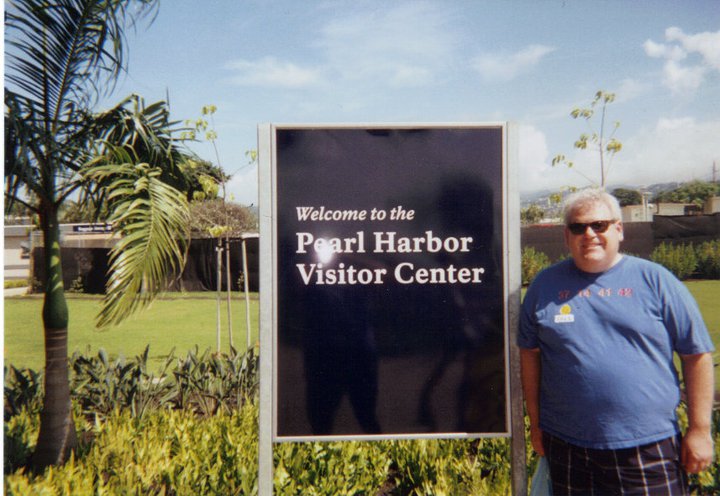
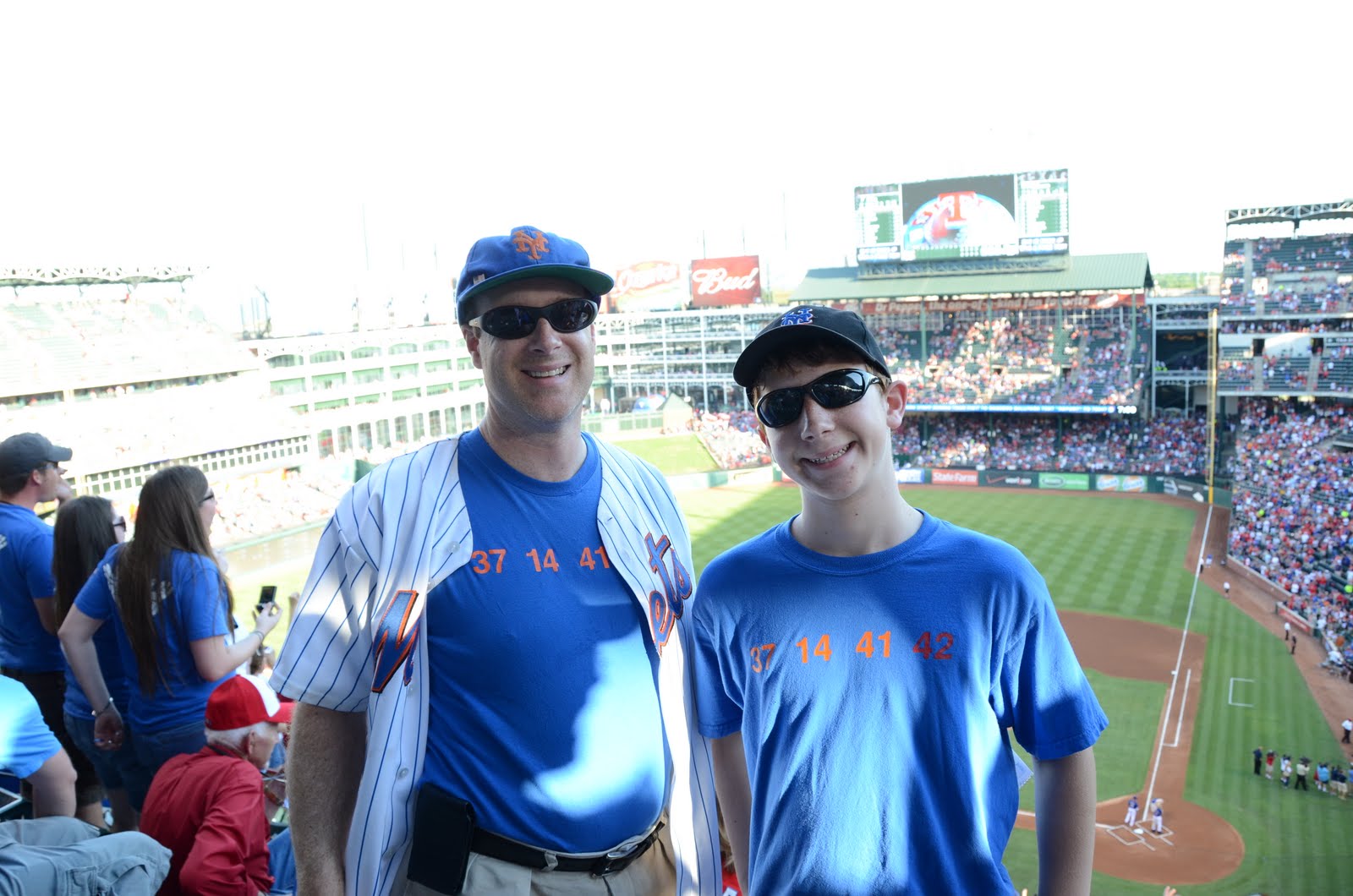
We probably won’t be updating the world-famous Faith and Fear t-shirt to incorporate “75” into its world-famous design, but as long as we’re throwing the phrase “world-famous” around, we have a couple of relatively recent examples of the shirt out in the world, both from way back when Francisco Rodriguez was still a Met.

Here is our old pal Charlie Hangley from a Hawaiian adventure a few months back. The connotation of disaster that Pearl Harbor evokes…well, this picture was taken before Terry Collins worked his magic on Charlie’s psyche.

And here are two other friends of FAFIF, Kevin and Ross Chapman, following the Mets to Arlington, Tex., last month. They (and photographer Sharon) showed up and the Mets scored a Texas-size mess of runs. So we thank them for that. And the wearing of the shirts.

Really makes you want to get yours, doesn’t it?

Frank You Very Much for Coming

“He slept, he stole, he was rude to the customers. Still, there goes the best damned employee a convenience store ever had.”
—Apu, on Homer, “Lisa’s Pony”

I doubt there’ll ever be much nostalgia for the Francisco Rodriguez era of New York Mets baseball, an epoch officially declared over in the minutes following the National League’s second consecutive All-Star victory in Phoenix. Rodriguez and his harrowing vesting option are on their way to Miller Park, transferred from Queens along with a reported $5 million in exchange for two Milwaukee Brewer minor leaguers to be named eventually. Not as excellent a way to end an era as the third out of a ninth inning of a fourth win of a World Series would have been, but definitely classier than locking the guy in the clubhouse after he finished his 54th game of the year in the middle of September.

Our closer of 2009-2011 recorded 83 saves as a New York Met. Can anyone describe any three of them in any kind of detail? Not the games he blew or let get tied, but big Mets wins preserved by the dominant and/or courageous pitching of Frankie Rodriguez, possessor of the seventh-most saves in Mets history?

As Dwight Eisenhower told a reporter in 1960 who wanted to know what “major idea” his vice president, Richard Nixon, contributed during his administration, “If you give me a week, I might think of one. I don’t remember.”

Granted, I can recall a save here and a circumstance there, but not that many and few that were compelling, considering there were 83 of them and they all took place within the past three seasons. Part of that is a function of the times we live in. Met times haven’t offered compelling competitive circumstances since K-Rod arrived, and even though Met times have become better times of late, they didn’t exactly rise to the baseball version of crucial as the Francisco Rodriguez era drew to a close.

The irony here is Francisco Rodriguez was signed to close New York Mets games because that’s what the Mets perceived they needed more than anything else in the aftermath of 2008: someone to slam the door that was left disturbingly ajar down the stretch in the absence of Billy Wagner and throughout the August and September presence of Luis Ayala, Aaron Heilman, Scott Schoeneweis, Brian Stokes, Joe Smith, Duaner Sanchez, Eddie Kunz for five minutes, Ricardo Rincon for five seconds and Pedro Feliciano before he became lovably perpetual. Those names give you chills and not the good kind, don’t they? Plus, it’s not like Billy Wagner was a serenely calming presence before he went out, either.

So in came K-Rod, he of the more saves than any closer compiled in any one season ever. And in came J.J. Putz, a closer in his own right, to smooth the access road to K-Rod. And, oh yes, Sean Green, with the live right arm and no culpability for what went wrong in 2008. He came in, too.

None of them is here any longer, you might have noticed. Green was atrocious, Putz was mostly injured, and K-Rod…well, we’ll get back to him before letting him go in a moment, but the fellas brought into renovate the bullpen had a fairly benign impact on the overall fortunes of the post-2008 Mets. There were nights when the late innings blew up, and those occasions surely added to the sense that the Mets couldn’t do anything right. But that was the thing: the Mets of 2009 and much of 2010 and the earliest stages of 2011 really couldn’t do anything right. It was a team effort. Now and again you could blame your relievers (their mistakes do tend to stand out), but it didn’t seem like the Mets were doing everything right except for pitching near the end of a given game.

That may not have been immediately discernible in advance of the great Met implosion of 2009, but I think we learned that the Mets were probably destined to head downhill as a unit, and not just because they lacked a dependable closer and set-up crew in August and September of 2008.

Of course, you do have to win the games that are there for the winning, even if all they’re determining is fourth place, and from that perspective, I thought Frankie Rodriguez did OK by the Mets. His disasters were, naturally, disastrous, but no worse and no more pervasive than any of his predecessors from the previous two decades. John Franco, Armando Benitez, Braden Looper and Billy Wagner all gave away games in cringeworthy fashion. They didn’t do it as often as memory insists (which is to say almost always), but when they did, it was horrible. When K-Rod did, it was horrible, too, and a little showy, not to mention scarily inefficient the way he fell off the mound and practically into Little Neck after just about every pitch…but it wasn’t worse. I’d dare say he was the best, most consistent, least nerve-wracking closer we had around here since Randy Myers.

That’s not to say he was fantastic. He wasn’t. Or that he couldn’t be erratic. He could be. Or that blood pressure medication claims didn’t spike at insurance companies all over the Metropolitan Area when “Sandungueoso” played. They did. Yet for one big Met ninth inning, I think I’d take him over Franco, Benitez, Looper or Wagner. It’s just a shame he didn’t have too many big ninth innings to test such confidence.

As for the elephant in the bullpen, the one who had to be led away in handcuffs by the cops last August, enter a plea and undergo anger-management, that’s hard to forget, though most of us managed to exile it from our minds when three outs needed to be nailed down this year. As sports fans, we make those types of deals all the time, probably, yet don’t know it. I’m sure I’ve rooted hard for real jerks over the years; they just managed to keep their jerkdom out of the papers and weren’t necessarily violent about it. K-Rod, on the other hand, gave recurring indications that he was quite the a-hole and then he left no doubt when he punched out his girlfriend’s father (whether he was goaded into it or not). He underwent his rehabilitation, he got in no more trouble, everybody vouched for his latent good-guyness and we moved on. Like Putz pitching eighth innings in ’09, it didn’t make for an ideal set-up, but Rodriguez seemed to have saved himself there, and good for him on that count.

I wasn’t actively wishing Frankie traded away, though like any sentient Mets fan, I knew the meter was running on that ludicrous 55-games-ended clause, and as much as I liked (or at least didn’t mind) having him around, I didn’t want the Mets on the hook for $17.5 million in 2012. It’s to Frankie’s credit he himself didn’t feel like the kind of albatross Luis Castillo and Oliver Perez each became, but his contract status loomed as far more onerous than theirs upon their respective departures. Kudos to Sandy Alderson for playing this one as well as he played those two. Alderson had to delete Castillo and Perez physically from the Mets organization (have you even once this year missed either of them?). Even with the ugliness of the assault episode hanging over Rodriguez’s head entering Spring Training, the Mets didn’t need to devour another contract. They didn’t, and it paid off. The Mets got valuable mileage out of Rodriguez, made him more attractive on the trade market and now, unlike with the pariah twins, they’re not stuck paying him for nothing.

Maybe the Brewers to be named later will amount to something useful. The more significant amount, though, will be the $17.5 million (minus whatever had to be sent to Milwaukee to make this happen) the Mets save next year. One can only hope Mets ownership — including, soon enough, Brewers/Mets fan David Einhorn — will work with Alderson to include that sum in an offer to Jose Reyes. But that’s for later.

For now, who closes? The temptation is to say “who cares?” Who closes should be whoever Terry Collins deems capable of getting the next three or four or five guys out as situations dictate. That doesn’t seem likely, however, because in contemporary baseball, somebody winds up closing on a basis so regular it could be mistaken for obsessive-compulsive. As silly as it seems that one man is designated for a particular inning, this is the business of the sport in 2011 and has been for about as long as Randy Myers has been an ex-Met. “I just want to know my role” is the common refrain of the reliever (and his agent), and perhaps you’d have to be in the bullpen trenches to appreciate that. Pitching the ninth is a skill unto its own self, one Frankie Rodriguez mastered in Anaheim, one that got him paid in Flushing, one that now has him warming up in Milwaukee.

Some pitcher will take his place here. The one who gets the hang of it will do it most often and then be assigned to do it exclusively. He’ll be good most of the time, a little too terrible some of the time and make us nervous all of the time. It comes with the territory.

The Happiest Recap: 085-087

Welcome to The Happiest Recap, a solid gold slate of New York Mets games culled from every schedule the Mets have ever played en route to this, their fiftieth year in baseball. We’ve created a dream season that includes the “best” 85th game in any Mets season, the “best” 86th game in any Mets season, the “best” 87th game in any Mets season…and we keep going from there until we have a completed schedule worthy of Bob Murphy coming back with the Happy Recap after this word from our sponsor on the WFAN Mets Radio Network.

GAME 085: July 29, 1995 — METS 2 Pirates 1
(Mets All-Time Game 085 Record: 26-23; Mets 1995 Record: 33-52)

One assumes the overriding agenda for a baseball team in any given game is winning that game. Sometimes, however, there might be ancillary concerns on display…especially if the game in question takes place close to July 31.

That’s the trade deadline, and it means different things to different clubs. The clubs that are contending tend to be shoppers as prelude to becoming buyers. The clubs that are hopeless in the standings — including those from big-market New York — are hopeful of creating a seller’s market. The 1995 Mets were well out of contention and had something to sell; they hoped it was in good enough condition to bring a nice package in return.

One day after executing one such late-July trade, when Bobby Bonilla, finally having the kind of season for which the Mets were paying him handsomely, was shipped to Baltimore, their other valuable ware went into the Shea Stadium display case: Bret Saberhagen.

Whether it was injuries or a decline in skills (or both), Saberhagen never consistently lived up to whatever hype accompanied him to New York in 1992 upon his trade here from the Kansas City. There was one outstanding season, in 1994, when Sabes won 14 while walking only 13 before labor strife sent everybody home on August 11. There were several embarrassing incidents in 1993, most infamously when Bret filled a kids’ water rifle with bleach and mindlessly sprayed a cluster of beat writers at work in the Met clubhouse. But mostly there was disappointment. Saberhagen, along with Bonilla and Eddie Murray, was supposed to lead the Mets back to glory in the early ’90s.

There was no glory, and as 1995 rounded into its final two months, all that lingered from the 1992 overhaul was an expensive pitcher with whom the Mets preferred to part ways.

The last-place Mets decided to cut their losses and start over. The organization’s M.O. became apparent in June of 1995 when, after a wretched start to the strike-delayed season, the Mets called up 21-year-old lefty Bill Pulsipher to take the place of veteran Mike Birkbeck in their starting rotation. A month later, Dallas Green squeezed in another heralded rookie, 22-year-old righty Jason Isringhausen. With Izzy, Pulse, Bobby Jones (25) and Dave Mlicki (27) on board and Paul Wilson (22) not far off, Mets pitching was getting younger and less costly. By the middle of 1995, the Mets were looking at paying Saberhagen more than $6 million through 1996 on a contract extension he signed in Spring Training 1993. With no realistic hope of contending behind their nominal 31-year-old ace, they were looking to dump that commitment on a team that could make better use of his services.

Thus, when Bret Saberhagen took the mound on a Saturday afternoon in late July to face the Pirates, he wasn’t just pitching for the Mets and the 17,781 in attendance at Shea. He was pitching for the scouts.

Everybody who was watching Bret with a vested interested in his performance had to be pleased. Could Saberhagen — making his first start in two weeks since straining a muscle on his left side — help a contender? How could he not if he was going to pitch as he did here: eight innings, three hits, one walk, seven strikeouts and no runs. Bret Saberhagen was positively Royal in what loomed as his last start as a New York Met. He certainly gave the scouts something to salivate over. And when Brett Butler walked, Tim Bogar bunted him to second and Carl Everett’s ground ball to the left side found a hole in the bottom of the eighth, Saberhagen was in position to have a fine going-away present to pack with him, wherever he went. Everett’s RBI single off Jason Christiansen accounted for the first run of the game. Denny Neagle had pitched seven shutout innings himself, but now the Mets had a 1-0 lead, and all Green had to do was hand it for safe keeping to his closer and Sabes’s buddy, John Franco.

Well, so much for that plan. Bret Saberhagen did not collect the 30th win of his four-year New York Met tenure because, as seemed to be the storyline of every ninth inning he pitched in the mid-1990s, John Franco made things interesting. He got two quick outs, but then Steve Pegues reached him for a single and Nelson Liriano tied the game on a double Butler didn’t play all that brilliantly. It was 1-1 heading to the bottom of the ninth.

Where had Bret Saberhagen and every Met starter seen this movie before?

Fortunately (save for Sabes’s won-lost record), there was a surprise ending in store. Pinch-hitter deluxe Chris Jones led off the bottom of the ninth and delivered a quick change in Met fortunes: a walkoff home run versus Pirate reliever Ross Powell and a most undeserved 2-1 win to John Franco’s account.

The important thing was the team victory, but no one could miss the trade-deadline subtext. Saberhagen afterwards didn’t come right out and say “I’m outta here,” but when asked about his status, he attempted to mix tact with truth, as evidenced in Howard Blatt’s reporting in the Daily News:

“They keep saying that we’re rebuilding and going with the youth movement, but it has been like this the last three years […] I hope I’m here when this team is doing big things, but if it is four years down the road, I really doubt it.”

The Mets would be doing big things — playoff things — in four years, but Saberhagen was correct in assuming he’d not be a part of them. Two days after he went eight against the Pirates, he went to Colorado in exchange for spot-starter Juan Acevedo and minor league pitcher Arnold Gooch. Saberhagen was injected into the Rockies’ rotation as they made their surprise, offense-fueled run at a playoff spot in only their third year of existence. In true ace fashion, he started their final game of the season, the one they needed to win in order to claim the National League Wild Card. And they did win, 10-9 at Coors Field, despite Saberhagen being knocked out at 5,280 feet in the third inning.

Acevedo would become a bit contributor to the Mets’ resurgence in 1997 before being traded to St. Louis the following spring for Rigo Beltran. Gooch may have played the largest Met role of anybody involved in the Saberhagen trade. Though the kid never reached the majors, he was part of the three-cornered deal that brought the Mets Roger Cedeño and Armando Benitez in the 1998-99 offseason. Big things — playoff things — followed Gooch’s exit.

In the short-term, the 1995 Mets shed salary and got demonstrably younger in their starting pitching. In an almost symbolic passing of the torch, Isringhausen earned his first big league win the day after Saberhagen’s final Met start (with Franco pitching a much calmer ninth to wrap the 2-1 victory). Though Saberhagen wasn’t exactly over the hill — despite missing two full seasons due to injury, he pitched until 2001 — his old club was happy to give as many starts to the Generation K demographic as possible.

The Mets wouldn’t again trust — or at least pay — anybody over 30 to start a game for them until the final week of the 1996 season, just after Pete Harnisch celebrated his 30th birthday. It was all Pulsipher, Isringhausen, Jones, Mlicki, Wilson and their cohort. No wise old hands à la Don Cardwell or grizzled swingmen in the mold of Terry Leach needed apply for 218 consecutive starts. Even thirty years earlier, when Casey Stengel would delightedly chew your ear off about his Youth of America kiddie corps, there was always a Frank Lary or a Warren Spahn around to provide graybeard gravitas to any given spin of the rotation.

Only in 1995-96 was there a pervasive Logan’s Run feel to Met starting pitching. The results were mixed, to be kind, and they didn’t start to tip in the direction of clearly positive until thirtysomething guys like Rick Reed, in 1997, and Al Leiter, in 1998, lent the staff an air of experience.

There was a longer-term implication to the Saberhagen saga as well, one that stretched beyond whatever bounty Arnold Gooch brought the Mets, and one that informed off-field matters that began to gain traction long after everybody who played alongside Bret as a Met (except for Jason Isringhausen) had hung ’em up. It dates back to that contract extension Saberhagen signed on the eve of the godforsaken 1993 season. Part of Bret’s deal involved deferred payments…very deferred. They were scheduled to begin in 2004 and run through 2028 at $250,000 per annum. That obligation remained on the Mets’ books despite Saberhagen’s trade to the Rockies and his subsequent tenure with the Red Sox.

And it’s still there. The Mets are still paying Bret Saberhagen, who hasn’t pitched for them since 1995, or for anybody in a decade. They began paying him on a deferred basis seven years before they commenced compensating Bonilla — as arranged in an extrication of his second Met go-round in 1999 — with the first of 25 approximately $1.2-million annual payments in July 2011.

Bonilla’s deal has been much more notorious, probably because Bobby Bo’s stays as a Met were more contentious and the nut owed him is considerably larger than what’s coming Saberhagen’s way. What both deferrals have in common is the funds set aside for each of the dimmed Met stars were arranged through owner Fred Wilpon’s investments with the eventually discredited, Ponzi-scheming Bernard Madoff. Wilpon’s wide-ranging involvement with Madoff would, by ’11, force him to sell at least a portion of the team, perhaps the whole thing when all is said and done.

So it appears Bret Saberhagen didn’t really need a gun filled with bleach in order to clean up.

ALSO QUITE HAPPY: On July 17, 1986, the Mets pretended the All-Star break never happened, simply continuing to win as if they never shifted their season into park for three days. In the Astrodome, the same place where five Mets represented the best the National League had to offer two nights earlier, first-place New York pounded the Western Division’s second-place club, Houston, 13-2. To be fair, it was very close for quite a while this Thursday night, but the Mets’ late-inning lightning couldn’t be contained forever, not even under a dome. Nolan Ryan and Bobby Ojeda were dueling for six innings, with the Astros clinging to a 1-0 lead, when the Mets unleashed a furious two-out rally in the seventh. When the smoke cleared, Ryan was gone and the Mets were ahead, 7-1.

Nobody was happier with the momentum swing than Wally Backman, who experienced travel travails in his effort to return to the team from Oregon. Wally showed up perilously close to first pitch. “I missed all the card games,” Backman bemoaned in the winning clubhouse “I missed dominoes.” He also missed his manager’s wrath. “I told him if he didn’t get three hits, I was going to fine him,” Davey Johnson said. As it happened, Wally went 3-for-6 and drove in five runs, all in the final three innings, proving the 1986 Mets could now and then be delayed, but rarely if ever denied.

GAME 086: July 7, 2007 — Mets 5 ASTROS 3 (17)
(Mets All-Time Game 086 Record: 24-25; Mets 2007 Record: 48-38)

Over hill, over dale…not so much the dale, but the hill surely came into play like only it could this particular Saturday night at strivingly adorable Minute Maid Park.

Two teams were working late, well past regulation. The Mets and Astros were knotted at 3-3 after thirteen innings, though the end appeared on the horizon for the home team in the bottom of the fourteenth. Joe Smith, the Mets’ sixth pitcher of the night, got into immediate trouble when he plunked leadoff man Chris Burke. A sacrifice bunt and a slow grounder to short put Burke at third with two out. Mike Lamb worked out a walk on a 3-2 pitch, bringing up Luke Scott with two out.

And Luke Scott hit a home run in every park extant except, perhaps, for Yellowstone and this one, where deepest center sat 436 feet from home plate. But Scott didn’t need to hit one out. He just needed to hit one far enough so that it could not be caught. It appeared he succeeded in his mission, because Scott’s very long fly ball was hit to such deep center that it soared past flat land and headed for Tal’s Hill.

Tal’s Hill was, depending on how you judged these things, a nuance or a nuisance. It was intended as an homage to Crosley Field in Cincinnati, which would, on the surface, appear to have nothing to do with the Houston Astros, except longtime Astros executive Tal Smith began his baseball career with the Reds, and Astros owner Drayton McLane seemed to have a taste for the kitschy, quirky or, if you like, unique. Nobody else in the majors decided to stick a mountain — or even a molehill — within the field of play. Crosley’s 15-degree incline (known as its terrace) was an organic aspect of the Reds’ old stadium, owing to issues of elevation where the ballpark’s site was concerned. Tal’s Hill?

“Drayton said, ‘What can we do from the standpoint of the ballpark — the inside of the playing field — what can we do to make it unique?’” Smith recalled for The Biz of Baseball in 2005. Smith threw some ideas out and one that stuck was the hill, which became known internally as Tal’s. The name also stuck, as did the sense among center fielders that it was a disaster waiting to happen, though its namesake disagreed.

“It hasn’t really caused a problem,” Smith said in that same 2005 interview with Maury Brown. “I see more players trip over the pitcher’s mound than I do over the hill we have in center field.”

Still, the 30-degree, 90-foot-wide incline, home to an in-play flag pole, was a factor that could not be ignored. It certainly wasn’t by Astro outfielders, even those who were with the club for only a brief time. For example, Houston had a center fielder it picked up for its playoff push in 2004, and coach Jose Cruz gave him some valuable advice: “You have to change the way you run, because if you run like you run normally, you’re going to hit and fall down.”

The outfielder remembered that advice three years later when he came back to Houston as a visiting player. It served Carlos Beltran well, as the Met center fielder turned and raced after Scott’s ball as he approached Tal’s Hill. Per Cruz’s tutelage, Carlos sprinted full out, then adjusted his gait. He practically tapped on the brakes of the soles of his spikes while circling under the descending fly. Once he divined the lay of the land, he pulled in Scott’s would-be game-winning RBI with two hands, tumbling to Tal’s grass in the process. In football-loving Texas, Carlos Beltran could just as easily have been a wide receiver hauling in a Hail Mary pass from David Carr.

Except in this case, the design of the end zone forced him to run uphill and Beltran’s catch meant the Mets and Astros were going to a sixth overtime.

Beltran wasn’t a popular man in Houston. Never mind that he put the team on his back and nearly carried them to the World Series in 2004. What Astros fans remembered was he left for New York and free agent dollars. As a result, he was booed harshly at every turn on every Met trip in. In 2006, those who once applauded him cheered when he slammed into a fence making another catch and lay on the ground in pain. But there was no denying the spectacular nature of what Carlos Beltran had just done to the Astros in the fourteenth inning in 2007. It was “the greatest catch ever made on this field,” according to the Astros’ TV booth.

So the teams played on, clear into a seventeenth inning when, with Jose Reyes on second and Ruben Gotay on first, Beltran lined a single to right. Jose scored the run to put somebody ahead for the first time in extra innings, 4-3. Wright snuck a ball into left, sending Gotay home to make it 5-3. Another ex-Astro, Billy Wagner, who’d warmed up nine times in case the Mets took a lead (throwing a veritable complete game in the bullpen), came on in the bottom of the seventeenth for what the box score called the save.

Tal and his potentially hellish Hill know who really rescued the Mets from defeat that long night in Houston.

ALSO QUITE HAPPY: On July 14, 1985, the hottest team in baseball rode the hottest pitcher on the planet to a win that was almost secondary in its concerns given the specter that hung over said team. Dwight Gooden operated per usual on opposing batters as the Mets finished out their first-half schedule at the Astrodome, but they worried that a real doctor might have to spend a frightening amount of time working on Gary Carter, whose inflamed right knee — “it popped out of its socket,” said Davey Johnson — required rest and examination that Sunday night in Houston. Carter had left the previous evening’s 10-1 romp over the Astros, taking a bit of the shine off what had been the Mets’ 11th win in 12 games. As Kid sat out the first-half finale, the Mets had to see if they could survive any kind of absence from their rugged catcher and cleanup hitter.

They got by for a night with a little help from one of Carter’s caddies, Ronn Reynolds. The understudy played a featured role, singling to start the only Met rally of the night, one that gave Doc a 1-0 lead in the top of the eighth. This being the summer of 1985, that was all Dwight needed. Reynolds had the pleasure of being on the receiving end of 11 Gooden strikeouts as the Doctor made that one run hold up via a five-hit shutout victory over Bob Knepper, the Mets’ twelfth win in thirteen games. With the All-Star break imminent, the Mets not only completed their journey through Atlanta, Cincinnati and Houston at a scorching 10-1 pace (the franchise’s best ever to date), but they stayed hot on the heels of the first-place Cardinals, hovering just 2½ back.

Carter would sit out the All-Star Game to which he was elected starting catcher, but he experienced his own victory when it was determined the pain he’d been feeling in his right knee was attributable to “residual torn cartilage” from a previous injury. Gary would go about the second half of 1985 getting his the knee wrapped like a mummy before games, but he’d persevere without surgery to start behind the plate in, at one point, 63 of 74 games after the break. All of them, like his presence on the Mets, were deemed crucial.

GAME 087: July 13, 1978 — Mets 4 REDS 2
(Mets All-Time Game 087 Record: 24-25; Mets 1978 Record: 37-50)

Two pitchers, two stalwarts. But then one was gone, sent away in a fit of fiscal insanity (or just the plain kind). However it happened, the Mets found themselves 13 months removed from the Tom Seaver trade and having to face their former ace and eternal Franchise in his new Ohio home. With more than a year to get used to the sight of Seaver in Cincinnati Red, he still looked undeniably out of uniform.

Good thing the Mets still had Jerry Koosman in their ranks. Good ol’ Kooz was now the dean of the Mets’ staff, one of two remaining 1969 champs (Ed Kranepool was the other) around to remind Mets fans of better times. As impossible as it was to imagine Seaver pitching against the Mets, it somehow cushioned the blow to know he’d share the mound with Koosman for a second consecutive year. It was Tom vs. Jerry at Shea on Seaver’s return the previous August. That one — like the four-for-one trade that made the matchup necessary — went Cincinnati’s way, 5-1.

This one, the first game after the All-Star break, was a different story…and eventually something of a poignant story. But at its heart, it was just another game in the view of the starting pitcher for the visitors. “Beating Tom Seaver was the last thing on my mind,” Jerry Koosman insisted, yet beating Tom Seaver’s team was in sight early, once the Mets put two runs on the Riverfront Stadium scoreboard in the top of the second. They were both unearned runs, thanks to errors committed by Seaver’s celebrated Cincinnati teammates Johnny Bench and Davey Concepcion.

Funny, Seaver was supposed to be leaving that kind of slipshod play behind when he departed the last-place Mets in June 1977. But the Red Machine, circa 1978, was a little wobblier than its reputation would have indicated On the other hand, it could still perform pretty Big when it had to, as evidenced by Joe Morgan’s run-scoring single off Koosman in the third that cut the Mets’ lead to 2-1.

Doug Flynn, ex-Red, welcomed himself back to town by leading off the fifth with a double versus the man for whom he was traded. Koosman bunted him to third, and Lenny Randle drove him home with a fly to left. Koosman and the Mets led Seaver and the Reds, 3-1. The two former rotationmates then buckled down into a duel for several innings thereafter, one not interrupted until all-time Met villain Pete Rose doubled home Dan Driessen in the bottom of the seventh, extending Charlie Hustle’s hitting streak to 26 games and making the score, 3-2.

Rose was batting with two out directly after ex-Met Ken Henderson pinch-hit for Seaver, so that ended Tom Terrific’s night. And when Joe Torre pulled Koosman after Rose’s double, that ended the game within the game, as the old friends made their way to their respective showers. But because Jerry’s successor, Skip Lockwood, flied Ken Griffey to center to quell the Red menace, Koosman was in the clubhouse on the winning side and Seaver stood as the pitcher of record on the losing side.

Another former Red, Joel Youngblood, reached reliever Manny Sarmiento for a homer to provide the Mets another two-run cushion. Lockwood took it from there, pitching a scoreless eighth and ninth, making it a 4-2 final in favor of the Mets.

Winning Pitcher: Jerry Koosman.
Losing Pitcher: Tom Seaver.

Imagine that.

“Joe Torre felt this might bring out the best in me,” Kooz allowed afterwards. “I’ve been struggling during the first half of the season, and Joe thought the challenge might do me some good. I wouldn’t want to pitch every day against Seaver, but I relish the thought of a match.”

The defeat lowered Seaver’s record to an unusually pedestrian 9-8, though by season’s end he’d win 16 games have an ERA in its customary space below 3.00. Koosman, however, really needed a win. Getting this one hiked his mark to 3-9. As Seaver could attest, pitching for offense-challenged Mets clubs didn’t help any Met starter’s won-lost ledger. Kooz rediscovered that fact of life as the second half of 1978 wore on. Eight of his next thirteen starts would see Jerry pitch into the eighth inning or deeper; once he went ten, another time he went eleven. What he never went was into the winner’s circle as a Met again. He ended what became his final Met season on a six-game losing streak.

Thus, the final victory of Jerry Koosman’s Met career was accomplished by defeating Tom Seaver.

It happened, but it’s still hard to imagine.

When he was traded to Minnesota for two minor league pitchers named Greg Field and Jesse Orosco that December — ostensibly so he could finish out his baseball days close to home — Koosman had won 140 games in blue and orange, best of any Met lefty, second only to Seaver overall among Mets at that point. As it turned out, Koosman had another 82 wins remaining in his left arm, earned not just for the Twins but for the White Sox and Phillies, too. A Seaver-Koosman reunion seemed at hand in Spring Training 1984 when Tom landed (through extraordinarily questionable decisionmaking) with Chicago, but the Sox shipped Jerry to Philadelphia to complete an earlier deal for Ron Reed. The two pitching stalwarts hadn’t competed in the same league since 1978 and now they never would again.

That meant the last time Tom Seaver and Jerry Koosman crossed paths during a baseball season was when Jerry Koosman won and Tom Seaver lost on an occasion that demanded only one could pitch as a Met.

ALSO QUITE HAPPY: On July 14, 1979, a Mets team that seemed incapable of inspiration played some inspiring ball. Though glued to the basement of the National League East, the Mets made like the first-place team they had been a decade earlier, beating the Giants at Shea, 3-2, on a Tom Hausman complete game six-hitter for their fifth consecutive win. “We’re on our way back,” Joe Torre declared. Also on their way back that Saturday — arriving, actually, before the game — were sixteen members of the ’79 club’s infinitely more successful predecessors, the 1969 World Champion New York Mets. Their presence for Old Timers Day (along with a concomitant spotlight on Met coach and new Hall of Famer Willie Mays) drew the second-best crowd of the year to Big Shea.

“They looked remarkably young,” the Times’s Joe Durso wrote of the recent retirees, chalking up their relative callowness to their having been “just past childhood in 1969.” Indeed, most of those who constituted the Miracle Mets were in their early and mid-twenties when they shocked the baseball world. That team’s elder statesman, third baseman Ed Charles, understood ten years after what their championship still meant. “Some guys may try to be cool about it,” the now 46-year-old Glider told George Vecsey in Inside Sports magazine,  “but I’m not kidding myself. It was beautiful.”

Among those who couldn’t attend the festivities were seven still-active 1979 ballplayers: Tom Seaver of the Reds, Nolan Ryan of the Angels, Jerry Koosman of the Twins, Duffy Dyer of the Expos, Wayne Garrett of the Chunichi Dragons in the Japan Central League and two Phillies, Bud Harrelson and Tug McGraw, though those fellas helicoptered up to Queens once their game at the Vet was over. One active 1969 Met, however, could make the scene: 1979 pinch-hitter and fill-in first baseman Ed Kranepool, still a Met after all those years. Krane, 34, was introduced alongside such miracle workers as Donn Clendenon, Gary Gentry and J.C. Martin, to say nothing of faux 1969 Met Chico Escuela (portrayed this Saturday afternoon live by Garrett Morris). Kranepool frolicked with his old teammates in the pre-game ceremonies but wasn’t called on by Torre to help his current teammates. Eddie did, however, pinch-hit the night before in the Mets’ fourth consecutive win.

A Bump in the Road to Somewhere

Honesty compels me to admit it wasn’t really Mike Pelfrey’s fault.

My 2011 designated scapegoat pitched OK; his teammates let him down with a second straight evening of shaky defense and a distressing inability to collect hits when they were most needed. The Beard wound up Feared, the Mets lost, and a West Coast trip that started a giddy 3-0 ended up a more meh 4-3. Which isn’t bad for a West Coast swing even when you’ve got a complete club, and is nothing to hang one’s head about. But after that 3-0 start … well, 5-2 would have felt a whole lot better, wouldn’t it?

And so the calendrical first half is done, and the Mets disperse until Friday, when they will have to march straight into the blur of bullets and sharp objects that is the Phillies. They’re 46-45, 7 1/2 games shy of a wild-card berth with three teams between them and the Braves.

What to make of that? Well, 7 1/2 out seems like a long way to go, particularly the Braves looking like an awfully good club. (I’m not even thinking about that 11-game gulf separating the Mets and the Phils.) On the other hand, the Mets are without Johan Santana, David Wright, Ike Davis and Jose Reyes — but today, in a reversal of the usual Metsian narrative, they got rather encouraging news on all four of the missing. Johan is soon to begin throwing BP to actual players, Wright is headed for a minor-league assignment, Ike has been running and Jose’s hamstring seems to be on the mend. With all the talk of potential player moves, the Mets stand to significantly upgrade two roster spots within the next couple of weeks, with two other upgrades a possibility within a month or so. Meanwhile, they’ve seen encouraging campaigns from the likes of Daniel Murphy, Ruben Tejada, Justin Turner, Bobby Parnell and Jonathon Niese, all players who seem to have made strides beyond what we thought we had in them at the beginning of the season.

Sure, we still have those larger uncertainties, starting with the question of the Wilpons’ roster spots and what level of success on the field and at the turnstiles David Einhorn would like to see. Francisco Rodriguez and Carlos Beltran could be on the move and Jose Reyes could be headed into an orange-and-blue sunset at year’s end. If the Mets get mauled by the Phillies next weekend, sink back below .500 and are soon 10 behind the Braves, the team could and probably should look very different in early August, in which case those three straight wins against the Dodgers will be tinged with melancholy.

But who knows? Disaster seemed in the cards when the club was 5-13, but they’re 41-32 since then despite taking more body blows than a Monty Python knight. They play hard for Terry Collins and seem to have internalized Dave Hudgens’ advice, more often than not working tough counts and getting good pitches to hit. They’re undermanned and sitting on shaky fiscal underpinnings, no doubt. But they’re also reliably fun to watch. They feel like more than the sum of their parts, even if some of those parts are factory seconds or have been bashed into spaces where they don’t quite fit.

If you’d told me when the Mets were 5-13 that before the All-Star Break they’d be stripped of David and Ike and Reyes, I might have canceled my cable and yanked my Internet connection right then, retreating to a dark room with a stack of ’69 and ’86 DVDs and a message for someone to come get me when the whole depressing ownership mess had been sorted out. But instead the Mets are still bobbing along, surrounded by intriguing possibilities as well as agonizing ones. Four Metless days might have been expected to feel like a respite; instead, I wish Friday would hurry up already so I can have them back.

But Who's Counting?

Things looked promising Saturday night right from the get-go in the top of the first when Carlos Beltran doubled for the 1,854th hit of his illustrious career and Daniel Murphy doubled right behind him for the 268th hit of his illustrious career to give the Mets an early 1-0 lead. But then Tim Lincecum settled down and allowed only the 61st hit of Justin Turner’s illustrious career and the 123rd hit of Josh Thole’s illustrious career.

I had a modicum of hope in the ninth when Scott Hairston came up with a runner on and the Mets down two with two out in the ninth considering how Hairston came up with the 433rd hit of his illustrious career — a home run! — in the ninth the night before, but it wasn’t meant to be, as Hairston struck out against Sergio Romo and therefore failed to collect the 434th hit of his illustrious career.

What a shame the Mets lost 3-1, especially in light of Chris Capuano pitching six strong innings and surrendering only the 1,174th hit of Aaron Rowand’s illustrious career, the 250th hit of Nate Schierholtz’s illustrious career and the 447th and 448th hits of Pablo Sandoval’s illustrious career.

Caps left with the Mets trailing 2-1. Bobby Parnell then came in and gave up the 1,175th hit of Rowand’s (still) illustrious career and the 2,354th hit of Miguel Tejada’s illustrious career, which contributed to extending the Giants’ lead to 3-1, but what really wound up dooming the Mets on Saturday was a series of double plays not made and the clutch pitching of Lincecum and the three relievers who followed him.

There’s so much more to baseball than the hit totals accumulated within players’ illustrious careers. Sometimes, however, that can be hard to tell.

And now, apropos of nothing in particular, enjoy some truly splendid defensive highlights from my own personal favorite New York rookie shortstop of 1996, who had 767 hits in his illustrious career, which apparently concluded in 2004:

Per Moe Szyslak on why he chose a mechanical bull over cable TV for his bar, “I made my choice, and I stand by it.”

Fear the Beardless

Some games are taut testaments to the majesty of baseball when it’s played at the highest possible level by the best players in the world.

And other games are just fun.

Tonight’s opening tilt with the Giants certainly wasn’t a taut testament to anything, not with balls being misplayed and dopey stuff on the bases and grousing at a rookie ump. But it sure was fun — a topsy-turvy affair with some dramatic home runs, intriguing subplots and even a little outside-the-lines interest.

The outside-the-lines interest was the announcer switcheroo that sent Gary Cohen and Ron Darling over to the MLB Network mikes in exchange for Bob Costas and Al Michaels. (Michaels has already been traded for a cartoon rabbit in his broadcasting career; I bet he liked getting swapped for Darling better.) I was tempted to switch over and stick with Gary and Ron, but hung around partially out of laziness and partially because, much as I hate to say it, there’s a certain red-light effect when national announcers are calling your hometown team. This makes no sense — Gary and Ron know the Mets far better, and I think they’re superior announcers anyway. But it still happens — you hear the national guys and you lean closer to the set and look for bunting on the walls. Maybe it’s just conditioning from all those years of hearing Costas declare that Robin Ventura’s grand-slam single had traveled “back to Georgia!”

At least Michaels and Costas got a good one to call — and one with an intriguing subplot, no less. R.A. Dickey (magisterial in the Jose Reyes t-shirt he donned for a pregame interview) fell down on his third pitch and seemed in obvious pain, but continued on, bad glute and torn foot tendon and all, pitching very nicely despite all these ailments and having to leg out an infield hit and falling down in the basepaths. R.A. gets a lot of love from us for being smart, well-spoken, analytical and insanely interesting, but he also deserves credit for being one tough dude.

Let’s add that R.A. also had to endure watching some interesting defense behind him — as did his Giants’ opponents. Aaron Rowand misplayed a Carlos Beltran fly ball into a double, which led to Jason Bay doing the same thing soon thereafter. Later, Angel Pagan looked awfully tentative on a Bermuda Triangle pop-up hit by the loathsome Cody Ross, which fell in as various Mets looked at each other sheepishly. In the ninth, Pagan got revenge by hammering a ball to center that knuckled, traveling a bizarre parabola that befuddled poor Andres Torres and fell in. It was the only ball mentioned in this paragraph to be ruled an error, which proves for about the 8,372,145th time that baseball is not fair. Oh, and infielders got into the act too: There was poor Lucas Duda crawling, lunging and belly-flopping into first for a putout as Dickey tried to avoid him, the base and Pablo Sandoval, followed in neat symmetry by Brian Wilson making a quick snatch and grab of Justin Turner’s vertical bunt with Eli Whiteside crashing to earth in the very near vicinity. Just a weird game for anyone with a glove on.

Ah, Brian Wilson. You knew we’d get to him, didn’t you?

I’ve changed my mind about the Giants’ nuttily hirsute closer — goonily surrealist ballplayers are more than OK with me, particularly now that professional sports all but insist on blandness in athletes. But there was Wilson on the mound, in a knotted-up game, and I was thinking back to how the Mets crumbled in this same park last year, and all the terrible things that have happened while up too late watching baseball against the Giants, and how much I didn’t want the Mets to limp into the break having seen a promising California swing turn sour.

Apparently Scott Hairston didn’t want that either. Our gleaming-pated chief power bat looked frankly overamped earlier this year, swinging pop-eyed at pitches around his eyebrows, but he gave Wilson the kind of grinding, patient at-bat the Mets have specialized in for a month or so, then drove one wonderfully beautifully and thrillingly over the left-field fence above those cute little cars that I always hoped would come to life and devour Barry Bonds. After the aforementioned double error and missed bunt, Wilson exited in favor of Jeremy Affeldt, and Bruce Bochy managed rather oddly, pitching to Beltran instead of Daniel Murphy, which led to Pagan stealing third with Beltran in Whiteside’s way and then driving Angel in. I’d write something cute about Beltran reminding Bochy that he’s Carlos Beltran, but hey, Bochy’s the one who just put him on the All-Star team. Thoroughly strange. Nick Evans then freed himself from the back of the organizational milk carton to drive in another, and the final series before Phoenix was off to a very nice start, thank you very much.

* * *

Addendum: Ike Davis is currently going mano-a-mano with treadmills, but on Sunday July 17 at 7 p.m. he’ll be at Michael’s Restaurant in Brooklyn for a good cause — a dinner that includes a Q&A session with ESPN’s Linda Cohn, raffles and prizes for attendees. All proceeds will go to Solving Kids’ Cancer, a group committed to significantly improving survivorship of childhood cancers. Tickets are available from www.solvingkidscancer.org or by calling (212) 588-6624.