The blog for Mets fans
who like to read
ABOUT US

Faith and Fear in Flushing made its debut on Feb. 16, 2005, the brainchild of two longtime friends and lifelong Met fans.
Greg Prince discovered the Mets when he was 6, during the magical summer of 1969. He is a Long Island-based writer, editor and communications consultant. Contact him here.
Jason Fry is a Brooklyn writer whose first memories include his mom leaping up and down cheering for Rusty Staub. Check out his other writing here.
Got something to say? Leave a comment, or email us at faithandfear@gmail.com. (Sorry, but we have no interest in ads, sponsored content or guest posts.)
Need our RSS feed? It's here.
Visit our Facebook page, or drop by the personal pages for Greg and Jason.
Or follow us on Twitter: Here's Greg, and here's Jason.
|
by Jason Fry on 24 April 2010 11:25 pm Baseball isn’t really a team game.
We talk of it as if it is one, but with a couple of exceptions (relay throws, hit-and-runs) it’s really a game of individual acts. The pitcher makes his pitch or doesn’t, the batter hits it or doesn’t, a fielder catches it or doesn’t. These individual acts get strung together into the illusion of a group effort — and we imbue this stringing together with qualities that are either impossible to quantify or don’t exist. Our team is hot, is firing on all cylinders, is coming together, and so forth.
This is one of the key lessons of the sabermetic era, exposing a lot of psychobabble and broadcaster bushwah for what it is. I’ve come slowly to appreciate advanced stats: They help me better understand the game I love, which is reason enough to engage with them. Beyond that, they’re excellent for figuring out which players are lucky and which ones are good, as well as which ones are being sabotaged by performance of those around them. And they’re crucial for figuring out how to construct a roster, something the Mets may decide to get better at one of these years.
But for all the usefulness of advanced stats, games and stretches of games and seasons still have storylines. We insist that they must, and so we create them, searching for meaning and constructing it out of whole cloth if need be. So it is with the 2010 Mets. There isn’t any reason I can think of that the 2010 Mets should be a great come-from-behind team — I’m sure it’s a statistical quirk of this very small sampling of games. But as a fan — which is to say an amateur storyteller — that’s what they’ve become. They’ll hang around until the late innings and then jump on you. Dangerous comeback team, these Mets.
And that’s great.
Come-from-behind teams are enormous fun to root for. Cheering for one makes tie games more sweet anticipation than nagging worry, and early deficits become just part of the dramatic arc. You don’t get too down, because you’ve seen again and again that the bad guys will be laid low, patience will be rewarded, and justice will prevail. The certainty that all of this is selective memory makes it no less fun to watch or listen to.
And it’s even more fun when it’s the Braves. The Braves — once the Globetrotters to our Generals — haven’t really been an outsized factor in our baseball lives since Beltran’s march to the sea, but you can root against laundry as easily as you can root for it. And goodness knows you can still root against Bobby Cox.
Cox didn’t come out of the dugout today, probably because if he had the temptation to throttle someone else wearing his uniform would have been too great. He’s retiring at the end of the season, though for most of this afternoon his charges looked like they were trying to get him to storm away from his desk and throw his ID at the harpy from HR before the cake and the speeches. (What do you want to bet Yunel Escobar is locking himself out of his hotel room in a towel right about now?) The Braves have played two days of stupid, with Chipper Jones not a factor and not playing tomorrow, Brian McCann not particularly damaging so far, Met killer in training Jair Jurrjens mastered today and Jason Heyward not yet embarked on what I’m sure will be years of ripping out our hearts.
Meanwhile, for us it was a (relative) lark: Jon Niese was wild and typically Metsian in his inefficiency, but held the Braves down when he needed to, keeping us down just a run for our (is it too early to call it typical?) late-inning charge. Good eye by Ike, long drive by Frenchy, Jose causing trouble on the bases (he’s got to keep Henry Blanco in the SB rearview mirror, after all), a Jason Bay sighting, and a welcome lack of drama from K-Rod, and we were officially a .500 club.
Mediocre never felt so good.
by Greg Prince on 24 April 2010 3:39 am “Citi Field,” according to the 2010 Mets Media Guide, is “home to one of the longest ribbon boards in baseball.” That is most definitely not one of the Top 1,000 most interesting facts to be found in this otherwise indispensable publication. For that matter, the ribbon boards, when they’re flashing advertisements that have zero to do with baseball, are about the easiest feature to ignore in the entire ballpark. Yet Friday night, during the sixth inning, a message glowed that totally fit the moment:
OPPORTUNITY. PURE AND SIMPLE.
Those words were paid for and posted to promote a business news and opinion cable channel, but they were uncommonly relevant to what stared the Mets in the face as they batted in a close game:
Opportunity. Pure and simple.
With one out, Jose Reyes, suddenly a three-hole hitter extraordinaire, tripled. Jason Bay, cleanup hitter more by default than merit to date, followed by doing exactly the same to put the Mets ahead 2-1. You know the last time the Nos. 3 and 4 hitters in the Met lineup tripled consecutively? Never. In fact, a trusted source tells me, the only time the No. 3 and 4 Met batters even tripled in the same game was in 1964, when the pairing was Ron Hunt and Joe Christopher and the triple-happy haven was Connie Mack Stadium.
Go to a Mets game and maybe you’ll see something you haven’t seen in 46 years.
That’s also about how often the Mets cash in on opportunities. Oh, exaggeration, you are amusing when we win, but really, a runner on third, less than two out and he is brought home with a triple? That’s fantastic. Then, a moment later, there’s a different runner on third and still less than two out? We don’t need a third consecutive triple. We just need a fly ball.
That’s scarier than it sounds, considering the batter is David Wright.
Nineteen months ago today, David Wright had a chance to deliver a sac fly that could have changed history and averted impending collapse. It was near the end of 2008, a year when Wright tied for the National League lead in sac flies. If only he had led it instead. If only he had lifted a fly ball to score Daniel Murphy from third with nobody out in the bottom of the ninth on September 24, 2008 and the score tied. Murphy had tripled, but he died there. The Mets died an inning later. Their season and stadium died four days after that.
So much death for such an ostensibly happy pastime.
David Wright has lofted seven sacrifice flies since that night of pure and simple opportunity eschewed, one of them, tauntingly, the very next night (generating an instant and ungrateful grumble of “Where was that last night?” from this particular spectator). Of course David tries hard, even as perception dies hard. David had driven in seven runs on sac flies since driving in none on September 24, 2008. But it’s the none that stubbornly stays with a fella.
Now, however, he has driven in eight since that fateful ninth. Wright brought home Bay with a very long fly ball that would have flown beyond a less confining outfield wall than Citi Field’s. But this, for better or worse, is Citi Field, where triples can be instantly doubled yet sacrifice flies are always appreciated.
Our new No. 5 hitter made the score Mets 3 Braves 1. It wasn’t as aesthetically exciting as what the 3 and 4 guys had just done, and it didn’t turn as many heads as No. 6 hitter Ike Davis did when he launched (and I mean launched) his first major league home run onto the Bill Shea Bridge, presumably causing a pothole in the process. Wright’s fly ball also wasn’t nearly as entertaining as Jose’s seventh-inning infield fly that befuddled Brave after Brave while triggering heretofore unseen baseball instincts in Angel Pagan who thrillingly knew enough to cross a plate that every Brave left enticingly uncovered.
But that Wright sac fly was as huge as anything else in this game, and I swear I’ll try to make it rather than the lingering sting of 9/24/08 my default man on third, less than two out, David coming up scenario. It probably won’t take, but I’ll attempt to keep it in mind.
Busy night all around, from John Maine’s spasming left elbow (leaving because of pain in his nonthrowing arm — not to make light of anybody’s pain, but that sounds, on the surface, like something that would befall Steve Trachsel) to Hisanori Takashi’s seven relief strikeouts in three emergency innings to the Braves’ four errors to Frankie Rodriguez registering three slightly uncomfortable outs 24 hours after he netted five. A little something for everyone, and a lot to hope on from here.
You hope Maine’s OK.
You hope Takahashi can do something like this again though you’d prefer the occasion not present itself the same way.
You hope somebody can step in for K-Rod should a game need saving Saturday.
You hope the Braves continue to forget the finer points of the infield fly rule.
You hope Ike gets so proficient at homering to extremely deep right-center that the Citi Field engineering corps has to double-deck the BSB.
You hope triples continue to explode from the middle of the batting order now that it contains a certified leadoff man.
Finally, you hope whatever runners the Mets leave on base, they’re not left on third with less than two out, because that’s opportunity wasted, and the Mets really can’t afford much, if any, of that.
Like ribbon boards, sacrifice flies aren’t inherently interesting. But when they weave their way into one night’s successful narrative, you just have to take notice.
by Greg Prince on 23 April 2010 4:12 pm Welcome to Flashback Friday: Take Me Out to 34 Ballparks, a celebration, critique and countdown of every major league ballpark one baseball fan has been fortunate enough to visit in a lifetime of going to ballgames.
BALLPARK: Comiskey Park (New)
LATER KNOWN AS: U.S. Cellular Field
VISITS: 2
FIRST VISITED: July 31, 1994
CHRONOLOGY: 11th of 34
RANKING: 27th of 34
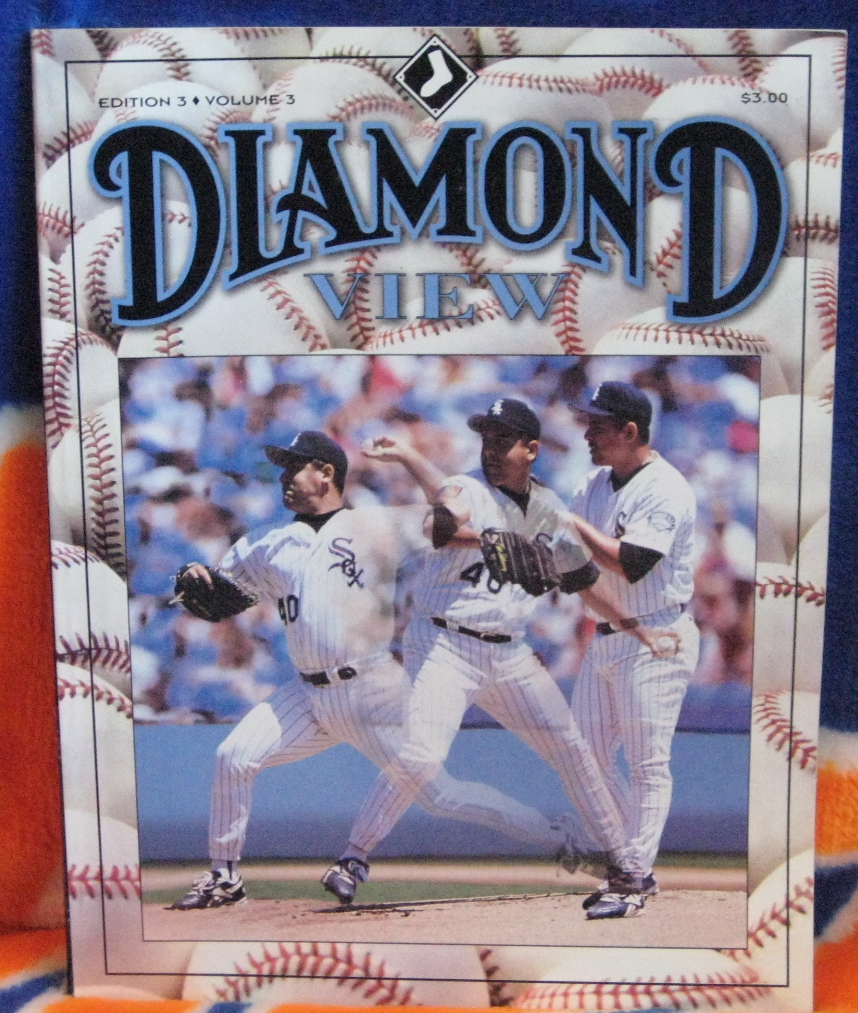
New Comiskey Park may have ultimately suffered from bad timing, but it represented good timing for me. It had the temporal luck to be open and hosting a ballgame at the outset of a four-day span in which Stephanie and I set out to see three baseball games in three different baseball facilities. A trip like that requires pinpoint precision, and we benefited from it: New Comiskey on a Sunday, County Stadium on Monday, Wrigley Field on Wednesday. It became known in family lore as Chicago-Milwaukee-Chicago.
It’s probably not that rare a triple play to pull off for the ballpark-ambitious, but in the summer of 1994, we needed to have our timing down, for if we were to try this, say, two weeks later, we’d have been severely out of luck. The baseball strike that killed one season’s World Series and wrecked another’s Spring Training went into effect a little more than a week after we executed C-M-C to perfection. It was no fun to have no baseball to watch from August 12 on in ’94, but at least we had our memories of the baseball we immersed ourselves in from July 31 through August 3.
Memories being what they are, New Comiskey was going to have a tough time competing, both for my affections and aficionado acceptance. That’s where bad timing came in. New Comiskey showed up a year before Camden Yards. Camden Yards changed everybody’s idea of what a ballpark could be. New Comiskey came off, after a year as the new kid on the block, as the last dinosaur out of town. It had opened as a stadium that by not being multipurpose; by installing grass; and by including a few touches toward the nostalgic. figured it was a legitimate step up from the concrete circles of ’60s and ’70s.
Camden Yards blew that equation out of the water. State-of-the-art changed from 1991 to 1992. Oh, so THAT’S what a ballpark can be was the consensus across America. And if Baltimore was the Ball Ideal, then what was left on the South Side of Chicago?
Not Camden Yards. In a nutshell, that was half of its problem. It wasn’t human-sized. It wasn’t charming. It didn’t integrate itself into the fabric of its neighborhood or its city. Nobody much thought about this stuff before Camden Yards, certainly not me, but now I was acutely aware of it. I’d read up voraciously on OP@CY since it opened and in April of ’94 I made my first pilgrimage there. It meant New Comiskey was not the ballpark you wanted to discover after Camden Yards.
New Comiskey also suffered in comparison to Old Comiskey. It was impossible for me to shake off the “New” distinction, because Old Comiskey, which thrived for 81 seasons in what was now New Comiskey’s parking lot, was the real thing. I spent one evening there five years earlier and it made quite an impression. It may or may not have been falling apart as White Sox ownership claimed (while they demanded a new luxury-laden stadium, lest they vamoose to St. Petersburg), but damn was it real. This Comiskey, the one that devoured its predecessor, couldn’t help but feel synthetic.
For example, Comiskey’s arches represented legendary ballpark architecture. New Comiskey attempted to mimic them, but the fakery felt Disneyesque, and not in the seamless fashion Disney makes Disneyesque work in its theme parks. On paper, trying to recreate the arches probably seemed like a respectful or at least comforting nod to the Comiskey of yore. In the corporate present, however it served only as a reminder that Progress had just kicked the living daylights out of the Past.
So if New Comiskey wasn’t Comiskey and it wasn’t Camden, what was it? It was too high. That’s what we’d heard going in, and we weren’t disavowed of the notion once we left. Capacity was in the low 40,000s, but the upper deck negated any notion of intimacy. Original Comiskey, by dint of posts, kept the upper deck within striking distance of the field of play. Cantilevering (one of those words I learned when I was having my ballpark-consciousness raised in the early ’90s) removed such obstructions, but there was now the chance your view of the game would be blocked by a bird. The last row of the last tier the old park, I’d read, was closer to home plate than the first row of the last tier of the new park. I believe it.
No kidding, it was high and steep up there. I was a veteran of the Shea upper deck, but that was a dash up the steps next to New Comiskey. Bring water. Bring a guide. Bring oxygen.
Maybe don’t bring your wife on a 90-degree day, particularly when she is averse to glaring sun and has left her Mets cap in New York. (One adjustable White Sox cap never to be worn again: $15.)
The happy part of this, I suppose, is the park was crowded and their fans were enthused by the home team’s play. The White Sox were in first place and headed for the playoffs for a second consecutive season…except there would be no playoffs in 1994, darn it. It was widely known on July 31 that baseball was likely headed for doom — beloved organist Nancy Faust played Christmas carols that morning, which was something she usually did on the final home Sunday of the year. The White Sox would be on the road the following weekend. This was, in essence, their Closing Day. Consciously or not, no matter how far up they sat (and it was remarked again and again by the locals who had climbed to our vicinity that “boy, this is high”), they were into their team and their game.
That’ll make any ballpark feel genuine.
An added element to the excitement was the prospective “showdown” between arguably the sport’s two top young players, Frank Thomas of the White Sox and Ken Griffey of the Mariners. I had never seen either and, by the end of the day, I still hadn’t seen Griffey. He was given the day off, his first and only DNP of 1994. Thomas went 1-for-2, but the real star of the day was Lance Johnson, who hit a game-breaking grand slam in the sixth. When the same Lance Johnson became a free agent following the 1995 season, I insisted the Mets get him based almost entirely on that swing on that one hot Chicago afternoon.
The White Sox won easily. We cooled off eventually, about the time we were back in our downtown hotel room watching ESPN rerun the Hall of Fame ceremonies — it was the same day Bob Murphy received the Ford C. Frick Award in Cooperstown. Unlike Murph, New Comiskey wasn’t great, which wouldn’t have been a concern before Camden and the destruction of true Comiskey, but it did have baseball on a Sunday. By the middle of August, such simple summer pleasures would be unavailable to us.
***
A second visit materialized in 1999. Also hot, but a night game. I was in Chicago on business and got in touch with my friend Jeff, who didn’t much care for the White Sox (Indians fan by birth, Cubs fan by proximity), but a ballgame was a ballgame. This was a Monday night, and at New Comiskey in late of July of ’99, upper deck seats were five bucks apiece. “But I’m not sitting in the upper deck,” Jeff announced with uncharacteristic entitlement. He explained to me that these days, with the White Sox no longer exciting too many people, they weren’t about to kick you out of seats you didn’t pay for. Quite casually, I followed his lead into perfectly lovely and unoccupied field level seats behind first base. No way we could have done that at Shea.
It was a better view down there for sure. It was actually quite nice. A little generic, but not at all overwrought as it had seemed five years earlier. They’d been making improvements at New Comiskey in response to the generally negative reviews it had gotten and would continue to renovate well into the next decade (best improvement: the addition of a 2005 world championship banner). This time I had a chance to explore the lower concourse which was mall-ish, but not necessarily offensive. There was a neat little museum tucked away and an adequate slice of pizza to be found at the Old Roman stand. You could even see where Nancy Faust worked her magic.
If the only New Comiskey I saw was the New Comiskey I saw the second time around — from ground level, beneath the luxury boxes, removed from the incline above — I might have thought less harshly of it all along. And if I were judging it from one particular at-bat, I’d think it was greatest ballpark ever.
It’s the bottom of the second. Pat Hentgen is pitching for the Blue Jays. Leading off the inning for the White Sox is Carlos Lee, a rookie of some promise. As someone chronically unfamiliar with the American League, he is mystery to me. Yet he is about to become a household word, for Carlos Lee fouls one back to the first base side.
And it lands in our section.
And it rolls under a seat to my left, one row in front of me.
And the guy sitting in front of me reaches for it, but he can’t grasp it.
And I reach for it. And I do grasp it.
FOUL BALL! I GOT A FOUL BALL!
It was the only foul ball I ever got at a major league game. I had been to 160 games at Shea to that point, but never got a damn thing. The closest I’d ever come, actually, was at Old Comiskey ten years earlier.
You’d think this would cause my affection for New Comiskey to soar to upper deck levels, and in a way it did. Nevertheless, the image of picking up the foul ball is countered by the other image I maintain from that evening. It was generated when Jeff and I were making our way to the ticket windows where we were about to spend five dollars on seats we wouldn’t sit in. It was in the parking lot. I hadn’t seen it in 1994.
“Look,” he said.
There it was, a quiet five-sided marker.
COMISKEY PARK 1910-1990 HOMEPLATE
It was flanked by two batter’s boxes. Stemming from them were two white lines that stretched out forever. Progress won. Here’s where the battle ended.
The Carlos Lee foul ball still makes me smile. The Comiskey Park marker, however, can still move me toward tears.
by Greg Prince on 23 April 2010 2:55 am In case you haven’t turned on ESPN in the last week, the NFL Draft is in progress. It began Thursday night and it runs through late June. Makes for captivating theater, as in you’d have to hold me captive to get me to sit inside Radio City Music Hall for all 481 rounds of it.
Correction: I’m told there are actually only ten rounds and that the NFL Draft takes only three days to conduct. My mistake. That’s not overlong at all.
If the NFL Draft has given us anything besides Mel Kiper, Jr. over the years, it’s the phrase “Best Available Athlete”. It’s what football teams say they went for when they didn’t get the player their fans and media were clamoring for. It’s a nice catch-all and it means, from what I can tell, absolutely nothing. You get a look at these kids? They all appear to be comparably athletic. One would hate to think NFL general managers and their lieutenants plot hour after hour in their war rooms (as they are so charmingly called) only to blow their pick on the best available plumber.
Though if you get a tough clog, you’ll look at that hulking defensive end you traded up for and think, “This place is a mess. I wish we had gone with the plumber instead.”
It’s easier in baseball. Their draft is conducted in a cave somewhere in Secaucus while the season’s in progress, leaving relatively few to give it more than a moment’s attention when it rolls around every June. Major League Baseball tried to glamorize it in 2009. You know how? By literally holding it somewhere in Secaucus. Last year, the only player the average fan had ever heard of going into the draft was Stephen Strasburg. The year before, the only player the average fan had ever heard of going into the draft was…uh-huh, exactly. As for phrases like Best Available Athlete, baseball doesn’t waste those on draft picks.
That’s because everybody knows the Best Available Athlete in a given baseball game is Johan Santana.
Johan has speed, as demonstrated by the way Thursday night’s game fairly zipped along while he was pitching out of tight spots, and dragged unconscionably (yawn 3:16) after he left.
Johan has strength, as evidenced by the way he carries the Mets on his broad shoulders until they finally (after 17 consecutive innings of nonsupport) score a run for him.
Johan has size, too, particularly in the stature department. Tom Gorzelanny may have been matching him zero for zero there for a while, even threatening to no-hit the Mets — call it the Jaime Garcia effect — but ultimately Johan will tower over the competition.
Johan Santana also presumably scores well on the Wonderlic Test, the examination the NFL gives its prospective draft picks to determine mental agility. For example, Johan was smart enough to take the Mets’ money two years ago, and no matter what certain bored columnists conjure in their own addled heads, that was a pretty agile move right there.
The Mets’ other available athletes wouldn’t be bested, either, Thursday night. Their 2008 top pick and 2010 freshman sensation I.B. Swinger racked up three more hits. Former sandwich pick David Wright (who is said to be quite fond of peanut butter, honey and jelly) fulfilled every schoolboy’s dream and tied Ed Kranepool’s career total for doubles when it couldn’t have counted more. The heretofore forgotten closer Francisco Rodriguez came in early to slam the door not three but five times. Most impressively and encouragingly, he tickled the strike zone to end the eighth, leaving Chicago’s potential tying runs on base where they would wither like early-season ivy.
The Mets, for all their deserved reputation as tackling dummies, were the clearly best available athletes in this set of downs against the Cubs. Gorzelanny — along with the Met pen prior to K-Rod — may have kept the series finale uncomfortably close a little too long, but fortunately for us, the Cubs are as brutal to watch as the NFL Draft. Doesn’t matter, though; three out of four from anybody is a selection we’ll make any day.
As for tonight against the Braves, John Maine is on the clock.
Thanks to Dave Murray for dizzying up his FAFIF t-shirt earlier this month in Jupiter, Fla. Read all about it at Mets Guy In Michigan. If you want to look sharp standing up straight or staggering to the ground, you can get your own shirt here.
And yes, Faith and Fear in Flushing: An Intense Personal History of the New York Mets is indeed available in paperback, featuring an all-new epilogue regarding the Mets’ first season at Citi Field. It’s been spotted at several New York area bookstores and is available to order via Amazon and Barnes & Noble. Mets fan and film buff Vince Keenan gives it two thumbs up here.
by Greg Prince on 22 April 2010 1:18 pm Violinist Issac Stern played great music. Writer Isaac Bashevis Singer wrote great fiction. First baseman Issac Benjamin Davis made a helluva catch on a foul popup in the first inning of Wednesday’s otherwise desultory Met loss.
All these Isaacs were blessed with a talent for doing something most people can’t. Stern was awarded the Presidential Medal of Freedom; Singer was a recipient of the Nobel Prize in Literature; Davis — better known as Ike — is our unanimous choice for best Met called up from the minor leagues in the last week, no offense to Manny Acosta or Tobi Stoner. He is also, by Alex Belth’s reckoning, the first major league ballplayer to share a name with a Woody Allen character. In Manhattan, Ike Davis is a middle-aged comedy writer dating a high school girl.
In Queens, Ike Davis is barely five years out of high school and en route, we pray, to becoming — apologies to Mr. Singer (Isaac Bashevis that is, not Annie Hall‘s Alvy) — the Magician of Flushing.
Also, each of these Isaacs, it turns out, is Jewish. Issac Stern and Isaac Bashevis Singer are members of the Jewish-American Hall of Fame. Isaac Benjamin Davis, early signs of a beautiful swing notwithstanding, probably needs a few more plate appearances to merit Hall of Fame consideration of any kind. The similarities among our trio of Issacs end there for now.
When I say “it turns out” Ike Davis is Jewish, that’s because I had only the barest inkling that was his background. I don’t generally give any thought to Mets’ backgrounds. Tom Seaver was in the booth for a half-inning last night. It occurs to me I’ve never known or wondered about Tom Seaver’s religion. Seaver religiously threw strikes like nobody else, which meant I was a practicing Seaverite from the time I was old enough to know right from wrong and left from right. If Seaver advertised his faith when I was seven, I probably would have petitioned my parents to convert to whatever that was.
The bare inkling I had about Davis came because our blog (like most blogs, I suspect) comes equipped with an internal information page that tells us, among other things, what kinds of searches people do that lead them to click on a link to us. On and off for a couple of months, apparently, a few people per day were going on Google and typing in “Ike Davis Jewish?” and finding FAFIF. We had never written anything about it, but we had mentioned him, and deep within our sidebar, under the heading “Extreme Baseball,” is a link to a site called Jewish Major Leaguers. That’s search engine alchemy for ya.
I noticed this, but I never much wondered. We get those searches from time to time for David Cone (not Jewish), Mike Jacobs (not Jewish, despite the best efforts of the 2006 Marlins’ promotions department) and Sean Green (wrong Green), among others. Not having seen Manhattan lately, the name “Ike Davis” didn’t necessarily resonate as Jewish or not Jewish. It never occurred to me before learning otherwise that “Shawn Green” was a Jewish name. Or, come to think of it, “Dave Roberts,” the last Jewish Met, from 1981, to predate Green, who arrived in 2006.
There’s an intensely interested audience for this information, however. Jewish baseball fans are almost always interested in knowing if a baseball player is also a Jewish baseball player. We’re not gonna not root for a guy because he isn’t Jewish — and we’re not necessarily gonna root for a guy because he is Jewish (did you hear any discernible vocal support from any demographic for Scott Schoeneweis during his two-year stay at Shea?), but it’s just somehow nice to know. It doesn’t make any of us who aren’t particularly athletic any more handy with a bat, but it gives us the idea, somehow, that it’s not so odd that someone who is Jewish can be a very sweet swinger.
Nobody told me I couldn’t be a professional baseball player because I was Jewish. My complete lack of skills told me that. But you grow up, you’re aware of who you are from a religious or cultural (or both) standpoint, you become aware there are very few who share that segment of who you are in the big leagues and you begin to accept that it’s very unusual to almost unheard of to find Jewish ballplayers.
Jewish violinists? There’s Isaac Stern. Jewish writers? There’s Isaac Bashevis Singer. Jewish ballplayers coming through the Met system?
There was nobody for decades until Isaac Benjamin Davis.
It didn’t matter, because Shea Stadium was your temple and Metropolitan-American was your true ethnicity, but, like I said, it’s nice to know. I only found out the other day about Davis when that stream of searches began to pick up. It was supplemented by cautiously joyous e-mails: “Did you hear…?” “Is it true…?” Thanks to Google, it didn’t take much detective work to track down this February tidbit from Pittsburgh Jewish Chronicle columnist Jonathan Mayo, delivered via New Jersey’s own Kaplan’s Korner:
I asked him in an email if there are any promising Jewish prospects to keep an eye on. His reply: “Ike Davis, the Mets’ first-round pick from 2008. [Former Yankees pitcher] Ron’s kid (mom is Jewish). He told me he’s not religious at all, but that’s ok. He’s not running from it, either.”
“He’s not running from it, either.” Why he would in 2010 I don’t know. If Ike Davis doesn’t deny being related to a Yankee, why would he eschew any of his heritage?
But seriously, this is nice to know. Going with the most generous delineations possible, the Mets have had nine Jewish players through the years — Green, Roberts, Schoeneweis, Joe Ginsberg, Norm Sherry, Greg Goossen, World Champion Art Shamsky, Elliott Maddox and David Newhan — but save for Goossen, never one who commenced his career as a Met (who, ten years after he broke in was indeed, per Casey Stengel’s projection, ten years older than he had been). So now, with Ike Davis, not only do we have enough for a minyan, we have one who is homegrown.
That’s only important in the sense that it’s always better to have a player who holds the promise of getting better, whatever his background. Shawn Green may have been a great Jewish ballplayer, but he peaked as a Blue Jay and Dodger. When it came to his Met days, he was a member of a vast and nonsectarian group of late-career acquisitions whose congregation was clearly situated Over The Hill (their rabbi: George Foster; their cantor: Carlos Baerga; the president of their men’s club: Jim Fregosi). The reason we’re liking Ike is he’s a Met who we can still rightly hope will become a great ballplayer. A great Met ballplayer. And if he’s Jewish while doing it, that’s nice, too.
Maybe more than a little nice for some of us.
by Greg Prince on 21 April 2010 12:00 pm [T]he only name anyone sings in the Yorkshire ale houses, raising their stinking jars to their stinking mouths, is Brian Clough. Brian Clough über-fucking-alles! Understand?
—Brian Clough, The Damned United
I don’t know when it will be 2006 again for the Mets. I don’t know when we’ll have a regular season in which we praise our lads to the high heavens from the Third of April to the First of October, from the top of the order to the pitcher’s spot. Nothing was ever wrong and all was always right a mere four seasons ago.
That’s a gauzy distortion of real time history, of course. We fretted everything and everybody when the season began and our ship was taking on anxieties by the nautical ton as it wound down, but there was a golden period somewhere in the middle when all was bright, all was clear and, above all, there was Jose.
Jose! Jose! Jose!
In the late ’90s, early ’00s, my friend Joe and I would go to random Saturday games, by no means seeking the same section every time, yet we always seemed to wind up in proximity to a group of fans who would break out into sing-song chant with no apparent baseball provocation. I never could make out what they were saying, singing or chanting, but it sounded more appropriate to one of those English football clubs whose games bars in Woodside advertised on their outdoor chalkboards than it did to whatever was going on at Shea.
Then one night in June 2006, after Jose Reyes had rounded first on a single that followed a homer, a double and a triple to therefore create a cycle, I heard it again through the TV. That chant or song. The English football guys from years before. What were they chanting/singing exactly?
“Olé”?
“Oyez”?
“Oy vey”?
No, it was Jose!
Jose! Jose! Jose!
As the animated man in the Guinness ads of the time would have put it, “BRILLIANT!”
I’ve never learned from whence Jose! was born. Was it a Shea scoreboard thing that actually caught on? Was it fan-generated? Was it the lads from the Mezzanine who used to congregate in full throat behind Joe and me? Don’t know where it came from, but it wasn’t going anywhere. Only Jose was going somewhere: to second or third most nights. Jose was going from “could be” to “is,” as in Jose is the Mets’ catalyst, the Mets’ ignition switch, the Mets’ lifeblood. Jose is the best leadoff hitter in the game. He is atop our lineup and we are on the top of the world.
Jose!
Jose! Jose! Jose!
Jose!
Jose!
As happens with every year once it becomes the past, 2006 gets harder to remember fully and accurately. The bright period from then is generally eclipsed by the gloomy ending now. What had been a storybook season became prologue for a dark and stormy next three chapters. Jose himself would have his moments across those pages — as would Jose! — but the resonance would literally and figuratively diminish. By 2009, Jose/Jose! took an involuntary extended sabbatical.
Met life, regrettably, went on without him.
Eleven days ago, a still young fellow wearing No. 7 stepped in to lead off a game for the New York Mets for the first time in a long time. He looked familiar, but his carriage struck no chord. The No. 7 I remembered was swift and sleek and above all sunny. This one was grim and attempting without success to gain his bearings. I kept an eye on him for the succeeding week and change. Still not quite right, still not quite what I remembered. Silence and glumness sat in his wake.
Then last night, on the radio, in the car, in the bottom of the second, joined in progress…Carlos Zambrano has already allowed one runner but he has two outs and the pitcher up. It’s Mike Pelfrey, with the Big Pelf-sized strike zone. But Zambrano finds it not big enough and walks his opposite number. That’s two on, meaning the order turns over to the leadoff hitter.
It’s Jose Reyes, mired in what is, for all intents and purposes, an 0-for-’10 slump. Gosh, I think, while making a left turn toward home, if he’s ever going to break out, this would sure be an ideal time to do it. The count goes to three-and-one. A walk wouldn’t be the worst thing, but, you know…
With that, there’s a swing and a drive to left and — yes! It’s in the gap! Here comes Pagan from second. Here comes Pelfrey from first (Christ, don’t get hurt on a play at the plate). Is Mike gonna score? He is, which is great and all, but now I want to know what I really want to know.
And then I know because Howie Rose tells me: Jose Reyes slides into third with his first triple of the season.
Jose Reyes with a triple. The 74th of his major league career, more than any Met. The first he’s collected since April 29, 2009, almost a year. There had been triples at Citi Field since then, but none by Jose Reyes, he for whose bat and legs and particular talent for creating triples this park was designed. Earlier, in the first, there had been a single. Later there’d be two more, plus a stolen base. But for now there was a triple. A Jose Reyes triple.
I don’t know how much or even if they were singing at Citi Field. But alone in the car, I sure as hell was.
by Jason Fry on 21 April 2010 1:38 am Watching Mike Pelfrey obliterate the Cubs and the Mets hitters do enough, I felt something I hadn’t felt since Opening Day. Or rather, I noted the absence of something.
Panic.
In 2009, a late two-run lead for the Mets was called foreshadowing. In the first week of the season it was a fantasy, as the Mets weren’t much for leads. Last night, it felt like a two-run lead — a number you’d like to see larger, but still proof against disasters of the lightning-strike variety. Could this still be the Mets? Could this still be me? Not long after I started thinking about this, Fernando Tatis refused to go gentle into that good night, slamming a pinch-hit home run over the left-field wall whose height has perhaps victimized him more than any other Met. We were four runs up, that felt safe, and it was.
And yet the Mets’ position remains precarious — in fact, it grew more precarious as the night went on. Ryota Igarashi slipped on the grass, strained a hamstring — SNY showed it contorting sickeningly in super slo-mo, which I’d like to ask them to never do again — and is headed for an MRI tomorrow. (Igarashi told the Times through an interpreter that “I felt the numbness develop,” which would be an excellent title for a book about being a Mets fan in the late Aughts.) And word came that Carlos Beltran had been to the doctor in Colorado and not pronounced fit for anything except more rehab. The idea of Beltran returning in May just evaporated; June is a place-holder, and here’s betting the All-Star break creeps into conversation before too long. Meanwhile, David Wright is being eaten alive by sliders and Jeff Francoeur is once again swinging enthusiastically at bags of peanuts he spies being tossed in the Excelsior level.
Given all this, why wasn’t I panicking? Because Pelfrey’s new splitter looked superb again, and you could see its owner seemingly growing more confident by the inning. (At one point Pelfrey was smiling and bantering with the umpire and/or catcher, and I barely recognized him.) And because after nearly a year of injuries, inactivity, questions, whispers, mysteries and troubles, Jose Reyes finally got to fly around the bases again like a giddy colt. His pregame interview with Kevin Burkhardt was oddly vulnerable for a professional athlete, so it was immensely reassuring to immediately see the old Jose on the basepaths — reassuring for us, but probably far more so for him.
An MRI. No Beltran doing much of anything. Wright and Frenchy looking lost. Bay still ice cold. And yet all of a sudden I can feel myself relax. I doubt that’s justified, but I’m not inclined to talk myself out of it.
by Greg Prince on 20 April 2010 3:14 pm It’s great to be young and a Met, Ike Davis could tell you after his most successful major league debut Monday night. The 23-year-old first baseman was the toast of Citi Field from the moment he showed up wearing No. 42. If ever anybody stood out in a mononumeric crowd, it was this kid who came up from Buffalo and raised Mets fans’ hopes and won Mets fans’ hearts with an easy swing, a power stroke and two hits quickly stashed in his pocket.
He was too amped to wait for more. Hence, he arrived at the ballpark early Tuesday. First one in the clubhouse, first one dressed. Ah, that rookie spirit combined with tangible talent. What a pleasure to have around. We’re gonna like this Ike Davis. We’re gonna like him for a long time.
Naturally, being the first one to report to the clubhouse means you’re all alone there. So when the phone rings, and you realize it’s only you in there, you answer it. You’re a rookie — you want to do everything.
“Hello.”
“Hi,” says the voice on the other end. “Is this the Mets clubhouse?”
“Yeah.”
“Oh wow! I can’t believe I got through! Can I talk to that awesome Met they just called up? The one who we’ve been dying to see, the one who’s singlehandedly pulling us out of this horrific teamwide slump?”
“Speaking.”
“Ohmigod, I can’t believe it’s you!”
“It’s me. Who is this?”
“Are you kidding, I’m your biggest fan?”
“I have a biggest fan already?”
“Of course you do. I’d been reading about you at Triple-A, and now you’re off to this great start, and I just know you’re gonna be the one to lead us to the promised land.”
“That’s a lot to ask of one rookie.”
“Don’t be so modest. If anyone is the harbinger of great Mets things to come and is going to be an eternal favorite of Mets fans, it’s you, Alex Ochoa.”
“Who?”
“Alex, stop kidding around.”
“I’m not Alex O…whoever you said.”
“Seriously, who is this, really? Is this Mark Clark pretending to be Alex Ochoa? If it is, stop screwing around, Mark, and put Alex on.”
“I don’t know who that is either. I think you have the wrong number.”
“You said this is the Mets clubhouse.”
“It is.”
“You said you’re that awesome Met they called up who we’ve been dying to see.”
“I am.”
“But then you say you’re not Alex Ochoa. That can’t be! We all worship and adore Alex Ochoa here.”
“Here? Where’s here? Where are you calling from?
“1996.”
“Huh?”
“This is a call from 1996. We all love Alex Ochoa here, we’re all convinced he’s going to be a five-tool superstar and that Mets fans will always love him the way we do now. I mean, we called WFAN and everything. We demanded Alex Ochoa come up. He was hitting .339 in Triple-A and he had to be better than what we running out there. So when he came up to stay, we were elated. We gave him standing ovations every time we saw him.”
“Sorry, I never heard of him.”
“Yeah, right. Everybody here knows Alex Ochoa. Alex Ochoa was batting .400 after seven games. Then a few days later he hit for the cycle in Philadelphia. New York magazine ran a feature on him calling him ‘The Cuban Missile’.”
“Sorry, dude, I never heard of Alex Ochoa.”
“That’s a good one, Chris. You’re Chris Jones playing a joke on me, right?”
“Seriously, I have no idea who these people are.”
“Fine. Just tell Alex Ochoa that 1996 called and that we’re all behind him here.”
Weird, Ike Davis thinks. Weird the calls they get in big league clubhouses. Yet just as he finishes the thought, the phone rings again. He looks around, sees no one else has come in, so he figures he’ll take his chances and answer it again.
“Hello.”
“Hi, I’d like to speak to the first baseman.”
“You’ve got him.”
“Awesome! You’re doing an awesome job!”
“That’s nice of you to say, but I only just got here.”
“Small sample size or not, I can tell you’re the real thing. You’re just what this team needs.”
“Well, I’m trying. That’s all I can do.”
“‘Trying…’ You’re succeeding is what you’re doing. You come up, and first thing you do — POW!”
“It wasn’t that big a hit.”
“Not a big hit? C’mon, it was huge, Mike!”
“That’s Ike.”
“What?”
“You got my name wrong. It’s Ike.”
“If I’ve got it wrong, so do the announcers and everybody else. They’ve been calling you Mike all week.”
“They have?”
“My apologies, Mr. Jacobs. I thought your first name was Mike.”
“Jacobs? I’m not Jacobs. Jacobs doesn’t work here anymore.”
“Huh? That’s doesn’t make any sense.”
“I don’t know what to tell you.”
“Wow, this is certainly news to everybody here. He’s not on the DL already, is he?”
“DL? No…hey listen, I know I’m just a rookie first baseman, but I thought everybody knew. I heard it on the radio in the cab when I got into town that Jacobs was gone.”
“On WFAN?”
“Yeah, I guess that’s the station.”
“But I was just listening to WFAN the other night after Mike Jacobs was tearing it up in Arizona, and everybody was so excited. Steve Somers was playing this really catchy song, ‘I Like Mike‘…”
“You mean Ike.”
“No, not ‘I Like Ike’. That’s the bit. The song is called ‘I Like Mike,’ by somebody named Jay Spears. It’s a real song, and Steve was playing it because we’re all so hyped up about Mike Jacobs hitting all these home runs.”
“Home runs? When?”
“When? Now?”
“Sure, now. When else?”
“Hey buddy, where you calling from?”
“I’m calling from 2005. Everybody here is totally into Mike Jacobs. Four home runs and 9 RBI in his first four games! We’ve got him penciled in at first for the next five years. I can only imagine where he’ll be by 2010.”
“Uh, yeah. You’ve got the wrong number.”
“Hey, if you see Mike, could you tell him we’re going to start a fan club for him? And a Web site?”
“I gotta go. Bye.”
Enough, Ike thought. Enough with these strange phone calls he didn’t understand. He was just happy to be here, in the big leagues, with the Mets. He’d deal with the media and the fans out there, on the field.
But then the clubhouse phone rang again. Ike, still all by his lonesome, felt obligated to pick it up again.
“Hello.”
“Uh, hi, I was wondering if anybody there remembered Daniel Murphy.”
“Oh geez, let me guess. You’re calling from 2008, you’re going to point out the hot start Daniel Murphy got off to when he came up, how he was hitting .467 after 30 at-bats, how Mets fans swooned over him as if he was a lock to be a superstar here, how Shea Stadium sold out of MURPHY 28 t-shirts as soon as they went on sale and how this should be a cautionary tale for me as well as Mets fans because I’m a big deal right now, yet you never know what kinds of detours a baseball career will take. Is that it?”
“Uh, no.”
“Oh, sorry. Can I help you?”
“Um, this is Daniel Murphy, down in Florida rehabbing. I was just wondering if anybody remembered me. But yeah, now that you mention it…”
Ike hung up and trotted outside for early BP.
by Jason Fry on 20 April 2010 12:45 am Ike Davis: I am NOT the Messiah!
Mets Fans: We say you are, Ike, and we should know — we’ve followed a few.
Apologies to Life of Brian, but that what’s it’s been like over the last 24 hours: Ike Davis was hastily recalled from some hazy, happier future to the troubled present, and after thinking about the prospects of halfheartedly cheering for Gary Matthews Jr. to not strike out or John Maine to reach the sixth inning, we decided that yes, we do like Ike and would like him front and center as soon as possible. Ike is up, having spent just long enough enjoying Buffalo to ensure he’ll enjoy whatever city we tell him to enjoy through 2016, and life is better.
I’ve always had a weakness for the possibilities of rookies and the ceremony of their debuts.
When I was living in Washington D.C. in the summer of 1993 I drove to Philadelphia to see Bobby Jones’s debut, which now strikes me as a preposterous thing to do. Jones was victimized by typical 1993 Met defense, but won because Tim Bogar went 4-for-5 with two home runs. The second was an inside-the-park job keyed by Lenny Dykstra diving for the ball and missing. Bogar slid safely into home, but tore a ligament in his hand, was out for the year and never the same player. I spent the game in front of Veterans Stadium’s gigantic videoscreen. It made unpleasant, vaguely organic wheezing noises while it operated, like a failing organ, and I could feel a pulse of heat when pixels behind me lit up.
On Opening Day of 1996 my new friend Greg Prince and I sat in the right-field mezzanine (I paid $13 to sit in section 33, row G, seat 5) to watch shortstop Rey Ordonez ply his trade against the Cardinals on a misty day. The Mets fell behind 6-0, but cut the deficit in half thanks to home runs from Todd Hundley and Bernard Gilkey. In the seventh, with two outs and Royce Clayton on first, Ray Lankford hit a double to left off Jerry DiPoto. Ordonez took the throw behind third base and hurled it home from his knees with an oddly fluid motion, somehow simultaneously collapsing, rolling over his shoulder and imputing all the energy of his body into the throw. Clayton was out at the plate, and I heard a sound I’d never heard before at a ballpark — the sound 21,000 people make turning to the person next to them and asking if they saw that. The Mets won, 7-6. I assume Tony LaRussa overmanaged.
In the summer of 2004 I dragged my friend Tim to Shea for a meaningless game against the Expos, because young David Wright was making his major-league debut. I paid $23 to sit in section 3 of the upper deck, the 711B box, seat 2. Wright, hitting seventh, was retired by Montreal’s Brian Schneider on a deft catch over the dugout rail in the second inning and went hitless on the day. But the Mets won, 5-4, on an error by Nick Johnson, overcoming a three-run homer by Montreal’s Endy Chavez.
My presence at Ike’s debut was sheer luck — I had a ticket thanks to the kindness of Sharon Chapman, runner extraordinaire and all-around Good People. I came to the game from a meeting in midtown with a backpack full of layers and Mets gear; when the V train dipped below the East River I stripped off my Responsible Adult button-down and blazer, leaving a t-shirt foundation, then donned a long-sleeved shirt, hoodie, Mets replica jersey with the wrong Tug McGraw number and Cyclones cap. By the time we emerged in Queens my transformation into Met Man was complete.
At Citi Field the night held a foreboding chill but the crowd was cheerful enough, politely applauding Rachel Robinson and various college students wearing 42 jerseys with can-do qualities stitched in the place of names while trying to figure out which Met wearing 42 was the new guy. Rachel Robinson is a treasure, but I’m willing to stick my chin out and say that having home-and-away Jackie Robinson Nights is a mistake that threatens to cheapen a moving gesture.
But soon enough it was game time, and so Greg, Sharon, David and I settled in to see if Ike Davis could indeed save us from all that has gone so depressingly wrong of late. The fans cheered Ike’s every move, with a good third of the crowd rising to its feet for his first at-bat. (That struck Greg and I as a bit much; we cheered with behinds firmly affixed to our seats.)
Ike did the job, reaching out his long arms to muscle a Randy Wells changeup into right in the second and adding an RBI single under second baseman Jeff Baker’s glove in the seventh. At home in the land of Wi-Fi (an amenity that would make a great addition to Citi Field), I watched the replay avidly, loving that you could see the moment when Ike realized the ball he’d struck was ticketed for the outfield grass, and treasuring the first-hit pageantry: the rookie trying and failing to look like it’s business as usual, followed by the momentary worry that someone might forget to ask the opposing team to surrender the ball or that it might accidentally get tossed into the stands. (An hour or so ago, you can bet, some teammate handed Davis a battered decoy ball with all the information scribbled down wrong and something crossed out, just to see if he’d panic or blow his stack. Though since his father was a big-leaguer himself, maybe he knew this initiation was coming.)
The rest of the game was pretty good too: Jon Niese pitched gamely, though his inefficiency made you remember the Maine, Angel Pagan clubbed a two-run homer into the left-field seats to break a tie, and Jenrry Mejia closed things out. Between them and Ike, you could consider it a preview of a brighter Mets future. And who knows? Maybe it’s not as far off as we fear.
by Greg Prince on 19 April 2010 2:08 am Pirates manager Jim Leyland took issue with the team’s We Play Hardball promo. “We can’t say we play hardball, I’m tired of that bleep,” he said.
—Peter Gammons, Sports Illustrated, June 9, 1986
Adam Wainwright gave the Cardinals everything they could have asked for Sunday night: a 107-pitch complete game victory. John Maine gave the Mets everything they could have asked for: five innings, 115 pitches, not putting victory hopelessly out of reach too early.
The Mets don’t ask for much — and they don’t receive it very often. But this time they got exactly what they were looking for. An experienced baseball man in the team’s employ eagerly anticipated the Mets losing two of three this weekend, and he got what he said he wanted.
I unleashed a steady stream of expletives in the latter half of the Saturday marathon as well as all kinds of incorrect predictions (of the “oh god, we’re gonna lose right here” nature) and certain declarations that never had a chance of holding up in any fan court of law. During whichever extra inning it was when we couldn’t seem to do anything right before we actually did, I declared, “IF WE LOSE, I GIVE UP!”
Which, of course, was silly. I knew it was silly so quickly that I immediately recanted it. C’mon, I thought, if I haven’t given up over these past few years, why would I give up now?
The Mets didn’t give up on Saturday, which was truly to their credit, considering the man who ostensibly makes the decisions that affect them most kinda, sorta gave up on them Friday.
One of the underlying drags on my fandom since 2007 has been the tendency of the Mets organization — though we probably shouldn’t assume they’re organized — to overstate their competitive excellence. While they were proving unprepared for all comers, their brochures insisted prematurely that Our Season Had Come. When the Collapse of 2007 was resonating clear to the Echo Collapse of 2008, Mets management treated both colossal catastrophes as aberrations in deference to the partial success of 2006. And when all unraveled on the field in 2009, the bad play wasn’t the thing; it was just bad injured luck.
The Mets’ losing is unfortunate, but the Mets institutionally preening while in the act of losing has been the grating part. Even allowing for marketing campaigns that will, by necessity, play up a product’s attributes over its drawbacks, the face put on Mets baseball was surely akin to the one Nero wore while furiously working his Charlie Danielsesque fiddle. Flushing is burning? We’re having Ash Day! (First 25,000 fans only.)
 Have the Mets overhyped their ability in the past? Does Charlie Daniels play a mean fiddle? I once worked with an advertising salesman whose credo was, “Underpromise and overdeliver.” Do the opposite, he said, and you’ve got grumpy customers. When the Daveotronic 5000 robotically insists the Mets are World Series-bound, it’s a bit of a turnoff, no manner how kindly the Daveotronic’s sound chips are programmed. When pamphlets hawking season tickets suggest a Belief in Comebacks and nothing more, that’s easier to digest. From a 70-92 mudhole, the most nominal of comebacks would require only 71 wins and your minor league honcho keeping his shirt on. Leave the “postseason option” bait for the fine print until such an enticement proves operative.
Better yet, just hang out that GAME TO-NITE sign and we’ll figure it out from there.
If you’re gonna sell us fertilizer, I’ve been thinking since the Mets went to seed, don’t grin and tell us its top-grade Soilmaster, y’know? If you’re not gonna play baseball like it oughta be, don’t pretend that’s what you’re gonna do. I’m not talking about advertising campaigns per se. I’m talking about your general portrayal of what you’re putting out there. If you can’t legitimately say you’ve got a great team playing great, then, really, just say we’ll sure try to win. Failing that, say nothing at al.
“This is an era of limits and we all had better get used to it.”
—California Governor Jerry Brown, 1975
The same advice would hold true when reality and despair merge into a year like this to date. For example, if the team for whose performance you are responsible is not on a roll, but is at least on a one-game winning streak as it was following Thursday’s feelgood finale in Colorado, don’t bring everybody down by telling a widely read national baseball writer the following:
“St. Louis is always tough. If we can win two out of three, that will be outstanding. If we win one, I’ll take it.”
For the love of Mike Birkbeck, don’t do that. Don’t, if you are Omar Minaya, tell Jon Heyman of Sports Illustrated that sweeping a three-game series in April is off the board and that simply not being swept is an acceptable outcome.
It was too late, as Ray Stevens might have put it. We’d already been incensed…and still have yet to experience a streak that involves anything but losing.
Think it all you want, but don’t tell Jon Heyman, because Heyman’s gonna tell us, and boy is it gonna bring us down to new depths we had yet to contemplate nine games into this rapidly hollowing season. We may think it, too, but we don’t know it for sure, and we sure as hell don’t wanna hear it from you.
We don’t really wanna hear much from you, Omar, beyond, “I want to spend more time with my family” at your reluctant resignation press conference. As much as I don’t want you to BS me, as you did via Heyman, about how awesome your 3-6 (soon to be 4-8) Mets will be as soon as Murphy and Beltran and the ghost of Iron Man McGinnity come off the DL, I don’t need you to think out loud that the Mets seemed capable of no more than one win in three against the Cardinals this weekend.
They’re the Cardinals. They’re not the Popes. They’re not supposed to be infallible. And in baseball, no one is so sinfully terrible that they can’t conceivably win a series from a team with a better record. Not even the 2010 Mets, who are being positioned internally less like the best-compensated roster in the National League and more like a 49th-year expansion team.
We’ll take it if we can win one out of three in St. Louis, Omar said. Jerry Manuel, meanwhile, told Brian Costa of the Star-Ledger before Friday’s series opener that if the Mets are still “in the game” when Ollie leaves, he’d consider it a good outing. Nice to read such confidence emanating from the manager. FYI, Iron Man McGinnity completed 44 of 48 starts for the 1903 Giants, and I’m guessing John McGraw expected nothing less…and I’ll bet Tony LaRussa was looking for nine from Wainwright Sunday the way Davey Johnson counted on Rick Aguilera to do the same — which he did — on July 5, 1985, the game after that famous 19-inning marathon in Atlanta.
The Mets seem to be about cutting slack, so I’ll attempt to do the same, a bit, for the general manager and manager by acknowledging it’s a long season, and there are a clutch of reporters following Omar and Jerry around at all times with notebooks and tape recorders for just about every day of it. It’s an unnatural situation, but it exists in baseball. Over the course of Spring Training, 162 games and Hot Stove gatherings, people will say things (such as “how do you get a job in baseball?” per Adam Rubin). Not all of it should be taken literally. It gets tiring out there on the road, I imagine. You must think out loud a lot, sometimes before you think to yourself. You just find yourself saying what wouldn’t make sense to you if it was placed before you in script form. I’ll bet Omar Minaya would question a cue card that instructed him to tell a high-profile media member that he’d be satisfied by his team losing two of its next three games.
Omar can’t possibly be as clueless as he comes off. But he does tend to repeatedly come off that way, and he did again. He admitted winning one of three this weekend would be all right by him. You can take that as an inadvertently articulated realistic assessment of having to face Chris Carpenter and Adam Wainwright in two of three games, or you can be aghast that the general manager of a sports team is writing off two of three games before they’re played.
Most things in this life aren’t measured in terms so simplistic that they can be chalked up as either wins or losses. Yet in baseball, that’s exactly how things are measured. You win or you lose. There’s room for nuance and big pictures and all that, but eventually, there are wins and there are losses. That’s all that gets measured in the standings, and the standings are all that determine your success. Omar Minaya said, whether he meant to be so forthcoming or not, that he would take losing two of three games in St. Louis.
And I’m sure he took it well.
As for Jerry, I don’t know. Last Saturday, after the ninth inning during which few cheered without electronic tickler, I told my friend Joe that the good thing about this upcoming road trip was if the Mets do badly, it will help get Jerry fired. Then I thought for a moment (albeit with no recording devices to take down my clarification) and amended that sentiment:
“Or they could win some games and it would mean Jerry is a good manager.”
If we follow the McCarver memorandum that no team’s as good/as bad as it looks when it’s winning/it’s losing, we have to apply that lesson to managers. When Jerry Manuel blew in as a breath of fresh air in June 2008, and the Mets started to reel off victories a few weeks later, man, could Jerry Manuel manage. Everything he said was deep or funny or both. He was gangsta and we were his happy homies.
Now and again, there’s a flash of whatever it was that made Jerry Manuel appealing beyond his not being Willie Randolph. During Friday’s PIXcast, Gary Cohen explained how Jeff Francoeur’s batting eye became his taking eye. Manuel asked him what pitch he’d want if the seventh game of the World Series was on the line and he was at the plate. Jeff showed him. OK, Jerry said, and proceeded to throw him BP with the caveat that he only swing when he gets his dream pitch. Next thing you know, Jeff Francoeur’s on-base percentage, before Saturday’s baseless game, is .535. I’d like to believe the same man who can get through to baseball’s most notorious free swinger has more on the ball than threatening to bat Jose Reyes third and actually batting Frank Catalanotto fourth.
Omar’s greatest attribute is sometimes he hasn’t been wrong about a player. Jerry’s greatest attribute may be a future in sports psychology. But neither is burning it up in his present position and neither is helping his cause by saying whatever pops into his head. “First, do no harm,” Hippocrates wrote in Epidemics, and there’s been a rampant epidemic of harmful Met stupidity already this season.
“It’s the classic Washington scandal. We screwed up by telling the truth.”
—C.J. Cregg, “Dead Irish Writers,” The West Wing
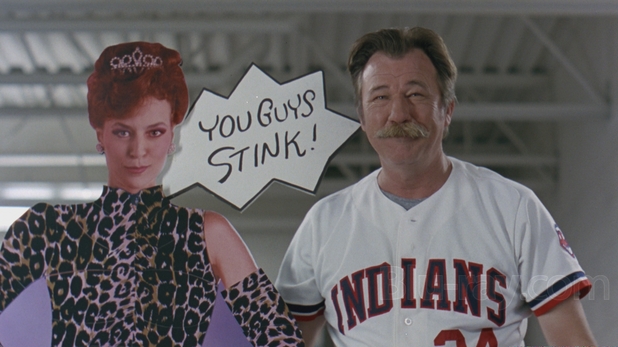
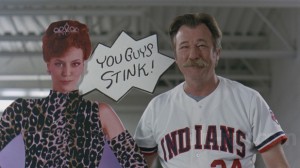 Omar's remake: One down, none to go. Win one of three? What did that mean once 20 ridiculous innings had been put in the books Saturday? That the Mets could follow Keith Hernandez’s example and hop the early plane back to New York Sunday morning? Fellas, Omar said we can take a personal day! Whatever happened to the fine example set by Cleveland skipper Lou Brown in Major League wherein he’s calculated it’s going to take 32 wins to clinch the division and with each Tribe triumph and pledges they’ll peel off 32 dress segments to stick it to their doubting hussy of an owner? In the Omar-directed remake of the movie, the Mets would remove one swatch of fabric and return numbly to their slumps.
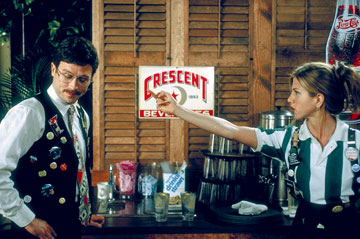
“No,” Omar might tell Jennifer Aniston if he filled in for Mike Judge as her Tchotchkes supervisor in Office Space. “Fifteen pieces of flare, the bare minimum, is adequate. Just serve one of the next three meals and you can knock off early.” Too bad the Marlins didn’t alight at Shea the final weekends of ’07 and ’08 with the Omar attitude. We’d probably have two more banners in our museum right now.
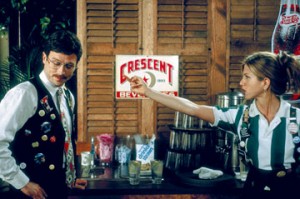 Fifteen pieces of flare or one win in three games...either way, the bare minimum will do. The general manager said one of three would be fine. I sure hope that means tickets at Citi Field will be two-thirds off next week. And that Omar Minaya has to buy one if he wants to see the Mets.
Brent Gaff is what happened to the 1982 Mets. The other kind of “gaffe,” Michael Kinsley once wrote, “is what happens when spin breaks down,” but it’s not simply semantics at stake here. It’s the leitmotif of the current Mets to act as if just enough is enough. I couldn’t help but remember, as he circled the bases after his grand slam off Raul Valdes, that Felipe Lopez sat on the open market forever before the Cardinals snapped him up. You gonna tell me the Mets couldn’t have used a middle infielder/relief pitcher with some pop? Re-signing Alex Cora, heretofore hidden first base talents notwithstanding, was just enough. Felipe Lopez was more than enough. But just enough is apparently enough.
Just juggling the same question mark pitchers is just enough, so that’s enough. Just handing pre-designation Mike Jacobs a couple of dozen at-bats and Fernando Tatis a couple of dozen more is just enough, so that’s enough. For all we know, Tobi Stoner replacing Jacobs on the roster is just enough, and Ike Davis will continue to refine his home run swing in Buffalo.
Oliver Perez reaches the seventh and allows a baserunner his shortstop could have thrown out? That’s enough, Ollie. You’re working on a shutout (at last), but make way for relief. Mets lose by one run for the second time in three days? That’s close enough, seems to be the feeling. I keep hearing Jerry Manuel asked about the Mets having been in the game right to the end and Manuel doesn’t reflexively remind Ed Coleman that you play to win the game. He doesn’t dispute the moral victory theory at all; he brought it up again Saturday with Tim McCarver and Kenny Albert, deluding himself that one-run losses represent progress. Hours later, he’s instructing Luis Castillo to sacrifice-bunt against Joe Mather. It’s not a far descent from there into Art Howe “we battled” territory.
A balance can be struck between overblown hype and diminished expectations. The Mets haven’t found it. They’ve gone from chest-puffing to poor-mouthing. It’s no more comfortable a place than this start has been. Then again, living in last place is rarely an easy fit.
|
|