The blog for Mets fans
who like to read
ABOUT US

Faith and Fear in Flushing made its debut on Feb. 16, 2005, the brainchild of two longtime friends and lifelong Met fans.
Greg Prince discovered the Mets when he was 6, during the magical summer of 1969. He is a Long Island-based writer, editor and communications consultant. Contact him here.
Jason Fry is a Brooklyn writer whose first memories include his mom leaping up and down cheering for Rusty Staub. Check out his other writing here.
Got something to say? Leave a comment, or email us at faithandfear@gmail.com. (Sorry, but we have no interest in ads, sponsored content or guest posts.)
Need our RSS feed? It's here.
Visit our Facebook page, or drop by the personal pages for Greg and Jason.
Or follow us on Twitter: Here's Greg, and here's Jason.
|
by Greg Prince on 4 July 2023 9:50 am With 25 home runs, Pete Alonso is an All-Star for the third time as a Met. Despite first-half performances suggesting they could have planned to join Pete on the flight from San Diego to Seattle this Sunday, Francisco Lindor and Brandon Nimmo remain players who’ve never been All-Stars as Mets. It is the latter cohort that we’re focusing on this week on National League Town.
Out of affection for all the Mets we’ve loved before, Jeff Hysen and I, over at the podcast that’s all about Mets History, Mets Fandom and Mets Life, constructed an All-Star ballot strictly of Mets who never made an All-Star team as Mets. We set out to retroactively elect Mets who were overlooked or snubbed in their time by the Midsummer Classic powers that be. At their Met best, they may have been having very good seasons, but found themselves excluded for various reasons.
• A traffic jam at a given position.
• The Mets meeting what amounted to their quota.
• Fans elsewhere taking the “popularity contest” aspect of voting a little too literally.
• Managers who chose to cater to their own players rather than ours.
• The international anti-Met conspiracy.
It seemed time to give all these Mets who missed the All-Star Game as Mets a second chance. That’s what this ballot is about. We offer a dozen slots with five choices apiece, along with some write-in possibilities, and we remember some Mets who don’t otherwise come up in conversation this time of year. We didn’t consider current Mets, in the hopes that some year soon, when the Mets are playing better as a unit, the Lindors and Nimmos finally get their number called, and we didn’t try to sneak Mets who already made it onto an All-Star team as Mets on some more. Those 61 Mets already have the designation All-Star next to their names. Met All-Star Ed Kranepool. Met All-Star Pat Zachry. Met All-Star Michael Conforto. If you made it once, you’ve made it for life. If you made it as an Expo or a Brave or whatever, good for you, but we’re concerned that you didn’t make it as a Met, no matter that you might have been celebrated on the cover of the 1973 Official Yearbook for having made it in another guise.
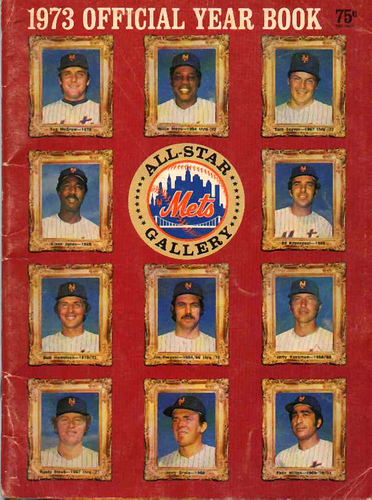 If you haven’t made it as a Met, have you really made it? This exercise is also informed by having been twelve years old once and remaining twelve years old somewhere inside. Mets who could have been All-Stars but weren’t when you were twelve represent an injustice that stays with you when you’re twelve years old times five.
Here’s the ballot. Listen to the episode for particulars and cast your own vote in your heart and/or head.
FIRST BASE
__DONN CLENDENON, 1970
__IKE DAVIS, 2010
__CARLOS DELGADO, 2006
__JOHN MILNER, 1974
__JOHN OLERUD, 1998
SECOND BASE
__WALLY BACKMAN 1986
__DOUG FLYNN, 1980
__GREGG JEFFERIES, 1990
__JEFF KENT, 1994
__FELIX MILLAN, 1975
THIRD BASE
__HUBIE BROOKS, 1984
__WAYNE GARRETT, 1973
__RAY KNIGHT, 1986
__LENNY RANDLE, 1977
__ROBIN VENTURA, 1999
SHORTSTOP
__ASDRUBAL CABRERA, 2016
__KEVIN ELSTER, 1989
__REY ORDOÑEZ, 1999
__RAFAEL SANTANA, 1987
__FRANK TAVERAS, 1979
CATCHER
__JOHN BUCK, 2013
__TRAVIS d’ARNAUD, 2017
__JESSE GONDER, 1964
__WILSON RAMOS, 2019
__MACKEY SASSER, 1990
LEFT FIELD
__GEORGE FOSTER, 1984
__CLIFF FLOYD, 2005
__BERNARD GILKEY, 1996
__KEVIN McREYNOLDS, 1988
__FRANK THOMAS, 1962
CENTER FIELD
__TOMMIE AGEE, 1970
__LENNY DYKSTRA, 1986
__JUAN LAGARES, 2014
__DEL UNSER, 1975
__MOOKIE WILSON, 1982
RIGHT FIELD
__JAY BRUCE, 2017
__JOE CHRISTOPHER, 1964
__CURTIS GRANDERSON, 2015
__RUSTY STAUB, 1975
__RON SWOBODA, 1968
ONE EXTRA GUY*
__BENNY AGBAYANI, 1999
__ENDY CHAVEZ, 2006
__CARL EVERETT, 1997
__WILMER FLORES, 2016
__ART SHAMSKY, 1970
*Player who’s somewhere between a utilityman and an everyday starter
STARTING PITCHER
__MARK BOMBACK, 1980
__GARY GENTRY, 1971
__TERRY LEACH, 1987
__BOBBY OJEDA, 1986
__CRAIG SWAN, 1978
SETUP RELIEVER
__LARRY BEARNARTH, 1964
__DENNIS COOK, 1998
__PEDRO FELICIANO, 2010
__DOUG SISK, 1984
__TURK WENDELL, 1999
CLOSER
__NEIL ALLEN, 1980
__BOB APODACA, 1975
__BRADEN LOOPER, 2004
__ROGER McDOWELL, 1986
__RANDY MYERS, 1988
There you have your National League Town Retroactive All-Star Ballot — happy listening, happy voting and happy Fourth!
by Jason Fry on 3 July 2023 2:39 pm A team played shoddy defense.
A team saw its relievers struggle.
A team hit balls right at defenders.
A team rallied, sent a strong hitter up in a big spot … and got nothing out of it.
That’s a familiar 2023 script, and it’s what we got on Sunday night, along with ESPN personalities we hadn’t asked for. (I at first accidentally turned on some alternate ESPN flavor and was subjected to A-Rod and Chris Russo, a situation I’d thought the Geneva Conventions protected me from.)
Except all the bad things from that familiar script happened to the Giants, not the Mets.
There was still some drama of course, more than you might suspect from an 8-4 final score. Jeff Brigham was terrible in relief and Dominic Leone wasn’t much better, turning 5-1 business as usual into a 5-4 sigh-fest. Brooks Raley refused to take a page from his colleagues, pitching ably, but Adam Ottavino surrendered a four-pitch walk and a two-pitch HBP to bring up J.D. Davis with the bases loaded, the tying run on second and Ottavino yet to besmirch home plate’s airspace with by sending a baseball through it.
I didn’t see what Jeremy Hefner did during the mound visit that followed, but it’s entirely possible he unplugged Ottavino and then plugged him back in, because when Ottavino started pitching to J.D. the idea of the strike zone had returned. Ottavino painted sinkers descending in the strike zone and heading for the outside of the plate, then put a four-seamer out there on the edge that Davis missed. In the bottom of the inning Seattle-bound Pete Alonso crashed a two-run homer that happily turned the game back into a mere diversion.
Still, our applause would be best described as muted: The Mets hadn’t secured a series win since May 31 and won two in a row exactly once in the now-gone, unlamented month of June. A night’s good work and some lousiness on the other side of the field isn’t going to make us clear our October calendars. But hey, the first step in doing good things is to stop doing bad things, and for one night at least that proved a good blueprint.
by Greg Prince on 2 July 2023 2:47 pm Almost everything was great Saturday. Really.
The start time, Saturday afternoon at 4:10, was great. As a start time, 4:10 has élan. On any day, 1:10 can be too early, 7:10 too mundane. On a Saturday especially, 4:10 is the sweet spot. You have your day. You have your night. You have your baseball in the middle. That’s the sandwich a fan craves.
The train going to the game was great. Conceptually great. Anecdotally fine. I mean, it’s a train ride that requires a couple of transfers. You just want it to get you where you’re going when you need to be there. Romance for train travel takes a beating when you’ve spent any part of your life as a Monday-through-Friday local rail commuter, yet I will contend for the rest of my days that Saturday afternoon is ancestral prime time for Long Island Mets fandom, when, if blessed with tickets, our instinct is to reach for our Long Island Rail Road schedule. We know in our hearts and heads that we should drive only as far as the station in the town where we live. We will wait antsily. We will stare down tracks. We will board. We will change at Jamaica. We will wait at Woodside. We will climb staircases and trundle across boardwalks. We will tamp down our resentment and suspicion of strangers and roll as one orange-and-blue ball until our journey reaches its destination, at which point we will disperse, albeit inside the same facility. We have arrived at Shea Stadium or, if progress insists, Citi Field. We have avoided traffic. We have saved on parking ($40, unless you rely on secret spots). I will go to Mets games at any juncture of the week, yet to me, Saturday afternoon is home, and the LIRR — with an assist from the 7 — means I’m homeward bound, coming and going. Granted, I am influenced by personal experience: my first Saturday afternoon game came at the end of June in 1974, so I’ve been doing it forever. It was also my first win at Shea, so I tend to associate a Saturday train ride to the ballpark with a seminal happy memory.
The date on this Saturday was great, in that it marked the beginning of July. We very much needed to end June in 2023. June 2023 is already one of the most infamous months in Mets history. We live through a lot of Junes like that. And a lot of months like that. After going 7-19 in June, July arrived right on time, which is something you can’t say of every conveyance scheduled by the Metropolitan Transit Authority.
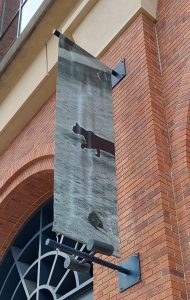 If you know, you know. And we know. The parade of banners running down the first base side of Citi Field was great. I don’t know if they’ve been hung lately or I simply didn’t see them until July 1 because I had no reason on previous 2023 visits to head for the right field entrance, but I’m taken by the imagery the Mets have decided to project. It’s not just famous faces, but famous scenes, none more recognizable to the clued-in Mets fan than The Black Cat. There’s no accompanying text, no caption. It’s The Black Cat, no explanation necessary. It’s classic IYKYK.
The seat that I was commuting toward was great. The section is behind the Mets dugout, to the rear of the Mets dugout. The row is numbered 19. I’m not automatically enamored of Field Level in the way Shea-raised fans are conditioned to be. The angle-closeness tradeoff doesn’t always work for me, and I can never shake the feeling I’m surrounded by people who were given tickets to the game and would otherwise not be there. Then again, I was given a ticket to the game and would otherwise not have been there, so who am I critiquing, exactly?
The weather was great. You can’t take weather for granted in an outdoor stadium in a city (and nation) where air quality alerts share space on our apps with temperature. On this Saturday, it is not raining and it is not smoking. That’s like being ahead two-and-oh in the count. Four nights earlier, on my previous Citi Field adventure, I was in jeans and kept a long-sleeve shirt handy. That was June. July is here. I’m in shorts, carrying no additional sleeves and I’m not regretting my choices. The Shea winds of Citi can be tricky. No mischief today. Play ball!
The starting pitcher about to start the 4:10 start is great. No qualification is necessary to describe career 246-game winner Justin Verlander just that way. His groping for greatness in a Mets uniform has been another matter, but nineteen rows from the home dugout, I take a second to process that I am seeing Verlander pitch for the Mets in front of me. Ever since the ballpark reopened to fans in 2021, I’ve drawn a lot of Carlos Carrasco starts (6), practically every Rich Hill start (4), plenty of Taijuan Walker starts once he stopped being routinely outstanding (5, with the Mets going 1-4) and a few relative oddities I was happy to add to my collection for novelty’s sake (Robert Stock, Mychal Givens, Joey Lucchesi and Trevor Williams twice). I lucked into David Peterson throwing shutout ball on two separate occasions, Tylor Megill three times appearing as if he belonged at the big league level, Marcus Stroman pitching effectively enough to get Marcus Stroman a new contract somewhere else, and, though it seems distant and sort of impossible now, Jacob deGrom being Jacob deGrom a couple of times last year, when that meant superb rather than injured. The luck of the draw — or a lack of proactivity on my part — has yet to have me and Max Scherzer doing our thing together and, until Saturday, I had never written “Verlander” in The Log II, the steno pad where I keep track of, among other essential details, who has started the games I’ve gone to. Barring unforeseen revelations that prevent his seemingly inevitable Cooperstown induction, I was, on July 1, 2023, seeing a future Hall of Famer start for the Mets for the first time since September 25, 2008, Pedro Martinez’s last home start at Shea. It’s worth taking a second to process greatness when it appears right before your eyes.
The starting pitcher for the opposition in a 7:10 start thirteen years prior was not great, which was great…for us. And noteworthy thirteen years later in the context of Saturday’s 4:10 start, for I saw Justin Verlander of the Detroit Tigers pitch at Citi Field on June 22, 2010, one of those Junes that didn’t implode on the Mets (that would come in July). Verlander was in his fifth full season in the majors. He’d been Rookie of the Year, attracted Cy Young votes, and was about to make his fourth All-Star team. But he was neither the primary attraction nor a particular obstacle that June night. Looking back via the magic of blog archives, I can see I wrote about the rain you get in an outdoor stadium; and the personnel who operated the outdoor stadium and how they could make a rain delay even worse; and the fleeting sighting of the pitcher Justin Verlander has reminded me of from afar in the years since — Tom Seaver was on hand in his ambassador capacity, making it the last time I’d ever see him in person; and the torrent of runs that fell on the Tigers, falling harder on the visitors than the rain fell on us. The Mets won 14-6. I was thrilled that the Mets were winning by so much, and more thrilled that the Mets were winning so many games I was going to that year. The Log II and the blog archives will confirm it was my tenth win in a row at Citi Field. The Mets were legitimately competing for first place as June grew late. I was so giddy with the provincial and personal success, that I notice thirteen years later I never thought to mention in my on-site report the name of the losing pitcher. Verlander’s outing was halted by the precipitation, but he wasn’t getting anywhere when the skies were dry, surrendering five hits and three walks en route to being charged with five earned runs. Justin may have been developing into a Hall of Fame pitcher, but on June 22, 2010, he was just roadkill on my Mets-myopic romp through the rain.
The starting pitcher’s pitching on July 1, 2023, from 4:10 onward, was great. The Verlander we haven’t seen much of as a Met emerged in full form once the first San Francisco Giant stepped in the batter’s box. Joc Pederson was there for exactly three pitches, all strikes. The ultimate Old Friend™, Wilmer Flores, wasn’t any more successful, though he did make contact. Less beloved but still welcomed warmly Old Friend™ J.D. Davis battled Justin for six pitches. J.D.D. the SFG, determined to join the ranks of 3B-OF/OF-3B alumni who make the Mets regret dismissing them, singled to left, but Verlander shook off the setback and put rookie Patrick Bailey back in his place after the fresh kid put veteran David Robertson in his place the night before, popping the catcher to short.
The opposing starting pitcher’s pitching was great for a couple of innings, as New Jerseyan Anthony DeSclafani held the Mets scoreless in the first and second, but if I wasn’t gonna be at Citi Field specifically to see the emerging immortal Justin Verlander in 2010, what did I care that DeSclafani was matching zeroes with our imported hero in 2023?
Seeing my friend Dan arrive in Row 19 before the second inning was over was great. Truly great. Dan’s the reason, more than the glorious Justin Verlander, more than the glorious weather, more than the glorious recollections of Saturday afternoon trips via train to games past, that I was at Citi Field. Dan’s the one who gave me the ticket to the game in Field Level, but this wasn’t about the game. Getting together with Dan and being Mets fans with Dan was the point. It always is. Dan and I go back to my second wave of living the Mets online. First came the Metcave board, where Jason and I found one another in the mid-’90s. Later, as the 1990s were morphing into a new millennium, came a Mets fan email group that I nudged my way into via a side door. I was a stranger let in by a lurker. I spoke up and wasn’t kicked out. Those were the days of Bobby V, who you’ll recall as the most fun Met manager ever, running teams you couldn’t wait to talk to others about orally or electronically. For me, those were also the days of some real sweethearts I considered myself the luckiest fan on the face of the Web to get to know. One of them was and is Dan. The email group dissolved ages ago. Dan and I are still in regular Met touch, which in 2023 has meant Met commiseration, but on July 1, 2023, meant a Happy Bobby Bonilla Day live at Citi Field (Bobby Bo was the actual answer to a between-innings quiz on MegaCitiVision — if you owe it, flaunt it). Dan got to the park late because of traffic. He didn’t take the train, but he wasn’t coming from Long Island.
The conversational flow was great. Dan and I compared notes on which player-dedicated t-shirts we have or haven’t discarded from our respective wardrobes out of pique for the player’s departure or from eternal loyalty to that player’s tenure; how many years after a world championship a team’s fans can begin to righteously reclaim long-suffering status; what’s it’s been like to raise a child to adulthood as a Mets fan without being able to share a world championship with that child-turned-adult (Dan’s son Asher is still hanging in there); whether we should sip from our respective cans of Rheingold that we’ve been waiting to open more than two decades apiece, saving them for that moment families of Mets fans throughout the Metropolitan Area have been thirsting for since 1986; and what the hell is wrong with this team. There were no answers forthcoming on that last one.
Interrupting the conversation and general sense of doom was great when THREE home team home runs in the third inning made it too loud to talk and too celebratory to mope. There went one to right from Francisco Alvarez, which I briefly lost track of because I thought everybody was following the flight of another foul ball. There went one up onto the sponsored beverage porch from Brandon Nimmo, suddenly overcome by a thirst for power. And there went one in the direction of the bullpens from Francisco Lindor, who we would later to pause to praise for his steady defense, and here he was being offensive. There went DeSclafani from the game after the third, rendering him a footnote to this on-site report. Throw in an RBI double from Tommy Pham, and misery could take itself a long holiday weekend. Dan and I got back to our t-shirt talk in an uncommon state of relaxation.
The starting pitcher for the home team continued to be great. Justin Verlander, staked to a 4-0 lead, didn’t encounter trouble until Pete Alonso threw a grounder away on what could have been a 3-6-3 DP had he opted to step on first to begin with, but instead went as a fielder’s choice that wound up putting runners on first and third. A redemptive double play grounder scored one Giant run. An ensuing double and walk indicated maybe Justin was just about done, but an inning-ending strikeout of Brandon Crawford indicated better that Justin would be the one to determine when his day was over.
The seventh-stretch was great, mainly because it’s the middle of the seventh already? Dan and I were having such a marvelous time talking baseball, that the baseball in front of us was flying by, with much help from Justin Verlander’s 102 pitches in seven innings that I was surprised to realize were seven innings. I kind of didn’t want the game to go so efficiently, because Dan and I only get together like this every so often, but you’re gonna ask the Mets to complicate what has shaped up as a great day for them? The answer to that is the same answer we collaborated on regarding drinking the Rheingold from 2002.
Drew Smith was great, setting down the Giants in order in the eighth, which I swore felt like the seventh, but I wasn’t the most reliable of witnesses. When Verlander gave up that one run in the seventh, I thought it cut the Mets’ lead to 3-1, because I somehow had forgotten all about Pham’s double in the fourth scoring Alonso.
Adam Ottavino had to be great in the ninth, because let’s not blow this, guys. Otto was great for his first batter, Davis, grounding him out to surehanded Lindor for the first out. Otto was less great walking Bailey. Up stepped Thairo Estrada as not the potential tying run (it was 4-1, not 3-1), but who wants floodgates to open? Two pitches in, Adam induces another ground ball to short. Lindor to Guillorme to Alonso! Mets win! We win! We high-five! All but the usual influx of Giants fans cheer! That includes the guy at the end of Row 19 in a Los Angeles jersey — DRYSDALE 53 — who has come to Flushing presumably to hate on San Francisco. All things being equal, I detest the Dodgers and maintain an affinity for the Giant franchise, but all things are not equal when the Mets are involved. I’m with Don Drysdale over there.
“BACK! BACK IN THE NEW YORK GROOVE!” is so great to hear after a game is over. It’s the leading indicator of a Mets win, and that, no explanation necessary, is great. Not so great is when Ace Frehley is mysteriously and rudely interrupted. The KISSman briefly gone solo was, in fact, silenced, and all the on-field high-fiving was cut off. What gives?
The mystery is solved. The rude interrupter is Giants manager Gabe Kapler. He is issuing a challenge on the apparent game-ending double play. What is he talking about? The throw to first clearly beat Estrada, and Pete’s foot was on the bag. Wait, did he think Luis didn’t have his foot on second? What the hell? Dan and I already agreed that in the tale of two Luises, Guillorme would never turn a win into a loss for us the way we’re still sore at Castillo for doing that one time what Dan saw fit to invoke during an innocent 2023 pop fly lofted over the right side of the infield because he admits he can’t see any pop fly and not, in his mind, see Castillo circling under another, less innocent pop fly in 2009.
Thinking July is going to revert to June before it can move on with its own calendar page is not great. Thinking the Mets might find an all-new way to lose that not even Luis Castillo ever thought of is not great. And, very much in the moment, the clock is not great. The game that flew by permitted me a hopeful glance at my LIRR schedule app. I didn’t want to not enjoy the company of Dan or the thrill of well-played Mets baseball all day for all it was worth, but making a train is making a train. Commuter’s instinct never leaves a Long Islander. The game has ended at 6:18. It’s a fairly short walk from these great seats to the 7. I know there’s construction down the line, but the Super Express is running. I can make the 6:44 at Woodside. I can be home by 7:30. I never get home by 7:30 from a 4:10 start. I want to be home by 7:30 from this 4:10 start. I want to walk in the door at 7:29 and announce to my wife, we won a great game and we did it so quickly that I’m home already.
Waiting on this asinine challenge is not great. 6:18 is becoming 6:19. My train is scheduled to depart Woodside in 25 minutes. Every second counts. MegaCitiVision is showing every angle it has. Luis Guillorme is stepping on second. Of course he is. Isn’t he? Maybe not? No, don’t give into Kapler’s chicanery! This is a ploy! This is worse than Buck and the ear goo business with Joe Musgrove in the playoffs last year. It’s unbecoming of a major league manager. They shouldn’t allow challenges of a last out, I’ve just decided on the spot. They shouldn’t allow challenges when me making the 6:44 is on the line.
6:19 turning to 6:20 before a mic’d up pronouncement is forthcoming is not great, but it comes, and it is great. The call stands. Phew! Ace Frehley returns to the sound system. Dan and I congratulate one another anew. I tell the Dodgers jersey guy, “Screw the Giants, right?” (“We’re all Mets fans today” is his gracious reply.) I thank Dan profusely for inviting me, and then, like Gabe Kapler interrupting Mets fan revelry, I am rude. I bolt, because now that the day is done and night approaches, I want to make that train. I want to make that train so bad, I skip my standard precautionary men’s room trip because the line is snaking. I usually run up to take care of that precaution in the eighth, but the eighth showed up so suddenly that I didn’t want to pause my conversation with Dan. Every choice carries a price.
I walk heartily through Field Level, down the winding staircase and out the Rotunda. I do my best impression of a blocking back to reach the stairs to the 7. I’m swiping through the turnstile, I’m dodging the dawdlers, I am on the Super Express. I don’t get a seat. i don’t need one. I need to feel momentum beneath my feet. I feel none. An announcement tells us this train will be express, but not that super. It’ll stop at 74th Street. Then 69th Street. Then, finally, 61st Street, a.k.a. Woodside, where I need to be to catch the 6:44 to Jamaica, where I’ll change for the Babylon train and be home by 7:30, which, as mentioned, never happens.
All we need is for the Super-ish Express to get going. “Stand by for closing doors,” the disembodied voice says more than once, but the doors don’t close in response. False start, like when the Mets being 14-7 in April. Are we gonna go or are we gonna go? Not going is not an option. It’s before 6:30. I’m not totally worried. It’s after 6:30. I’m not overly worried. Then I’m a little more worried. Miss the 6:44, and it’s the 7:12 for me. Twenty-eight additional minutes at Woodside on an ever more crowded platform, plus the gap to the connecting train at Jamaica is longer, too. Come on, MTA. Don’t you fall victim to Kapler’s chicanery.
The closing doors close. We crawl out of Mets-Willets Point. We crawl to 74th. We crawl to 69th. We wait for a gust of wind to push us to 61st. I can see the 6:44 pulling in below. I stride off the 7 at maybe 6:43:30 and rush to the staircase. Even with plywood up everywhere as they make repairs they’ve been waiting since at least 1974 to make at Woodside, I know my way down. I make it to the top of the staircase that I know will lead me to my final dash.
What it does in reality is give me a great view of the 6:44 pulling away.
I kick a temporary plywood wall twice because Gabe Kapler is not available to take my frustrations out on. It’s his fault. The Super Express, whatever its machinations, is keyed to the end of the game. If the game ends two minutes earlier, the Super Express leaves two minutes earlier and I’m at Woodside two minutes earlier, and I’m on that 6:44, likely the one and only train that’s left anywhere on time all frigging day.
Kicking didn’t do it for me. Besides, one more kick would have given the cops on the other side of the station the opportunity to notice me assaulting public property. I need to cool off. I hit the street below. I stand and tweet something nasty about Kapler onto an app that I’m not sure is working well enough for anybody to see it. People do and tell me Kapler was probably right about Guillorme’s foot missing second, as if I frigging want to hear that right now. May the managerial suite in the Giant hotel be lodged directly above a jackhammer convention and directly below another jackhammer convention. I’m still fuming — and that not stopping to go to the men’s room before leaving Citi Field isn’t working out for me, either. I take a walk a few blocks, I circle back toward the station, I enter a neighborhood pizzeria I know has a bathroom it doesn’t hide from customers, I order a slice to go, I slip into the back to attend to certain matters, and I pay for the slice. Soon I’m on the predictably crowded platform waiting for the 7:12, contenting myself with the pizza and the win and the knowledge than unless everything goes to hell like so much of this season has, I’ll be home a little after 8 PM, and, really, that won’t be so bad.
by Jason Fry on 1 July 2023 9:20 am Was it David Robertson‘s fault, or just his turn?
The Mets normally reliable post-World Baseball Classic Plan B closer was called upon to protect a 4-2 lead in the eighth against the Giants and started by striking out old friend Wilmer Flores, who’d homered earlier. (With Wilmer, J.D. Davis and a hamstrung Michael Conforto on the roster, the Giants have become something of a Mets tribute band, playing hits from years when you actually liked the team.) Joc Pederson hit a grounder to first which Pete Alonso — so frustrated it’s a surprise when he doesn’t snap a bat over some portion of his anatomy — misplayed for an error. Peterson walked the aforementioned Davis to bring up Patrick Bailey, whom you’re forgiven if you’ve never heard of before, seeing how he started this season as a Richmond Flying Squirrel.
Bailey found one heck of a nut, driving a Robertson curveball over the center-field fence for a 5-4 Giant lead. A lead the Giants held, with insult added to injury in the ninth as Bailey made a perfect throw to gun down pinch-runner Starling Marte on a steal attempt about a nanosecond before Brandon Nimmo struck out to end the game.
Important note: You just read Bailey’s name multiple times. The temptation is always to attribute a loss to some moral deficiency, but sometimes it would be simpler to say the other guys won. I will now climb down off this soapbox and complain some more.
It’s all bad. It’s all so so bad.
The loss marked the end of a 7-19 June in which the Mets played eight one-run games and lost seven of them, surrendered 14 1/2 games in the NL East and 10 in the wild card, and went from contenders about whom we grumbled to dead men walking about whom we’d prefer not to think at all. (I cribbed those stats from the Athletic, which explores if what just ended was the worst month in franchise history.)
Some of these Mets will be elsewhere when this month ends, with Tommy Pham leading the list of those likely to have their sentences commuted. Maybe Robertson will join him, so long as further performances like Friday night’s don’t reduce the return on him from “Double-A lottery ticket” to “already opened bag of sunflower seeds.” Mark Canha, Marte and Brooks Raley could have new homes, one supposes. Perhaps someone will take a flyer on Max Scherzer and/or Justin Verlander, preferably someone with a time machine and/or a stack of Get Out of Stupid Pitch Clock Free cards.
We’ll see, and by then we’ll know what other horrors this star-crossed team has had inflicted on it and in turn passed on to us. Can’t wait!
by Greg Prince on 30 June 2023 11:40 am Three series remain in advance of the All-Star break, a break that can’t come soon enough — or last long enough. I picture various Mets repairing to their country estates or wherever they live, clearing their heads at their pools or in front of their sizable video game consoles and then, properly relaxed, forgetting that they’re eventually due back at a ballpark near us. “We did plan to bring you Mets baseball tonight,” Gary Cohen will explain in the cold open from a vacant Citi Field on the appointed Friday night, “but it seems the players have opted to continue their vacations.”
Would any among us truly object?
In the Mets’ 81st game, marking the mathematical midpoint of their lost season, the 2023 Mets played one of their signature games. More like a scrawl. They executed certain elements of their craft adequately, they raised hope modestly, they dropped a couple of balls, they offered not quite enough resistance when challenged, they let a couple of chances wither, and they fell short by one run. These are not limited-edition outcomes handed to merely the first 15,000. Everybody gets to see the Mets do something like this most every night.
The 3-2 defeat at the hands of the Brewers left the Mets’ record at 36-45, an easily multipliable mark if you’re still interested in their 162-game pace. Take 36-45, “times” it by two, as too many teachers said in elementary school (“times is not a verb,” I’d mutter in my head), and you’ve got the 72-90 Mets. For those who’ve already made the connection anecdotally, 72-90 was the final record of the 1992 Mets, known far and wide, thanks to the diligent work of Bob Klapisch and John Harper, as The Worst Team Money Could Buy. Except at the midpoint of 1992, the lavishly budgeted Mets were two games better than the 2023 Mets and within conceivable range of first place (the only playoff spot available in those two-division days).
If you want a numerical match for the 36-45 Mets of 2023, you can go back almost as far, to a season nobody wrote tell-all book about, because there wasn’t enough to tell. The 1994 Mets were 36-45 after 81 games, which wasn’t that season’s midpoint, because that season soon did what we wish this season would do: it went away. The owners and players reached an impasse, a strike was called, and the 1994 Mets lasted only 113 games. It was only two years removed from TWTMCB, but a Mets fan wasn’t actually aching for the 1994 Mets to take their leave. They were already an improvement over the Worst Team sequel — the 1993 Mets were 25-56 after 81 games — and they would play quite competently in what little second half there was, going 19-13 before bats and balls were stored for ’94.
Lousy first-half Mets teams have been known to morph into satisfying squads in select second halves. As recently as 2019, we gave up on the 37-44 Mets only to be charmed by their 49-32 turnaround and spirited samba along the periphery of Wild Card contention. Met history is dotted by, if not jammed with, such dramatic changes of direction for the better. A few abysmal half-years gave way to energizing stretch-run drives or at least a sense that the entire schedule wasn’t for naught. Another recent-past example comes from 2018, a season that saw the Mets with both a worse first-half record than 2023 (33-48) and a worse June than the current bunch’s 7-18 (5-21). We unanimously gave up on those Mets in advance of the second half, and we were not wrong in terms of the big seasonal picture, but somewhere along the way the 2018 Mets stopped performing as if weighed down by lead weights. In the second half, they went 44-37. Catch them in the right light, and you’d mistake them for a legitimate ballclub.
If you still dare to bottom-line 2023 through the prism of the Mets actually going somewhere rather than away, you know there’s only one acceptable answer in the historical precedent files. The 1973 Mets were 35-46 at their halfway juncture, separated from first place by five teams and twelve games. The 2023 Mets trail what passes for first place in their lives — the third bonus playoff position in the National League — by three fewer games, though they have just about everybody and their brother ahead of them. It is often noted that the 1973 Mets won their division with a tepid overall record, a reflection of the flaws of the NL East that year, but it is just as worth noting that in their second half (only 80 games due to a rainout that didn’t require a makeup), they went 47-33. Do the math and realize that’s a team that didn’t just put on a You Gotta Believable stretch drive. The 1973 Mets were playing at a 94-win clip for a full half-season.
Given that when we invoke the 1973 Mets, it is a highly singular invocation, with nobody asking, wait, which astounding comeback from last place to a pennant are we talking about again?, we know we’re in the land of long odds. All the 2023 Mets have going for them vis-à-vis a potential 50th-anniversary celebration for the ages is reputation. The 1973 Mets had too many good players to continue on as bad as they’d been for a half. Several of them were injured, a few had not yet found their groove, and leadership didn’t seem all it had been cracked up to be. Time healed the hurt, progression rather than regression toward the mean lifted the ailing averages (batting and earned run), and somebody instilled the notion that an incomplete schedule indicated room for improvement.
The 2023 Mets have too many good players to continue on as bad as they’ve been for a half. That’s the most generous/valid comparison to the 1973 Mets I can gin up to keep my chin up. I haven’t believed this edition has been outright bad. To me, it appears they’ve mostly fallen short of good. It’s a nuanced difference, but it gives me, if not a meaningful dose of it ain’t over…, then some sense that it won’t get any worse and might get marginally better, which, if they are going to return to the ballpark after the All-Star break, is the best to reasonably hope for if not excitedly expect. Not much of a rallying cry, I know, but the Mets will probably not go home and leave us alone, and it’s not our nature to wish they would.
On a more cheerful note, National League Town this week is devoted to remembering Mets who were good enough to be All-Stars as Mets yet somehow weren’t chosen, so we decided to retroactively make them All-Stars. If you’ve been a Mets fan for more than a minute, this is the podcast for you.
by Jason Fry on 28 June 2023 11:15 pm Oh, so we’re back to this again.
On Tuesday night your bloggers were reunited at Citi Field and had a wonderful time, which we would have had anyway but was definitely enhanced by the Mets hitting homers by the bushel and David Peterson being unexpectedly competent. Speaking for myself, I left the park with a certain smallish but real spring in my step and a willingness to entertain the probably ridiculous but still pleasant notion that the glass was better described as 1/20th full.
Wednesday night took care of that rather thoroughly.
Actually we should have seen it coming Wednesday afternoon, when Steve Cohen held a press conference that left you trying to hold two not entirely complementary ideas in your head at once:
- It’s good that Cohen isn’t going red wedding on his employees just because he’s mad — that would have been cathartic for a couple of hours and then revealed as corrosive and counterproductive.
- Was it really necessary to hold a 23-minute press conference to articulate that you’re frustrated but hey, sometimes life is frustrating?
It was a little off-kilter, which set up the night’s game rather well. There was Kodai Senga pulling a Verlander, which is to say that the bottom-line results were not bad but the execution was annoyingly inefficient and nothing you saw was even remotely inspiring. There were Mets not named Tommy Pham not disturbing baseballs while holding apparently ornamental bats in their hands. There was a rally of sorts that tied the game but still managed to be disheartening, as the Mets converted a pair of bases loaded/nobody out situations into a single run that scored via a base on balls.
And there was the thoroughly emblematic top of the eighth, the frame in which the Mets lost the game. Adam Ottavino entered the game with no one on and one out, secured the second out without undue fuss, but then gave up a double and a walk and hit Joey Wiemer in the hand with a pitch. Lost in the moment was the fact that Wiemer clearly swung and should have been called out by multiple umpires whose entire reason for being present is to ensure things aren’t lost in the moment. Rather than being down 0-2 against Ottavino, Wiemer went to first; three pitches later Christian Yelich slapped a ball slightly wide of second, not the kind of play you expect to be automatically made but one you can reasonably hope will be made. Jeff McNeil didn’t make it, the Brewers led by three, Ottavino let his disgust be apparent, Buck Showalter was ejected, and the only silver lining left was that T.J. McFarland made his Mets debut, which actually doesn’t matter at all except Greg and I had tried to will it into being Tuesday night and so still got a mild kick out of it a night later when nothing else good was happening.
I mean, seriously, look at that top of the eighth and tell me it isn’t this star-crossed season in miniature: a couple of guys who were really good last year continuing to not be good this year, some horseshit umpiring (seriously, Carlos Torres is terrible at his job), a sprinkle of bad luck, and another day ripped off the calendar, balled up and hurled in the direction of the trash.
Crap, missed the can. Guess I better go pick that up. It’s been that kind of year, hasn’t it?
by Greg Prince on 28 June 2023 2:48 am She said she’d meet me in the bar
At the Plaza Hotel
Wear a jacket and a tie
‘What’s the occasion?’
She just smiled and she wouldn’t say why
—Long Island’s Own Billy Joel
“6:30 at apple?” landed like a fresh breeze in my inbox Monday evening, a few hours before the person who sent it appeared to all but permanently swear off Mets baseball for the rest of his time on the planet or at least this season. Except I know him well enough to recognize his most seething contempt as an embrace of sorts, thus no matter how much he would profess to (quite understandably) hate the current iteration of Mets baseball when Monday evening was through, my answer to “6:30 at apple?” was of course going to be “LIRR willing,” rather than “only if they win tonight.”
The Long Island Rail Road was pokey, but as willing as I needed it to be. I made it to said apple a little before 6:30. He met me there a little after. Soon enough we were inside the ballpark the apple fronts, our first game together in 2023, our first game together since 2019, our even I don’t know how many games together since June 17, 1995, the day Bill Pulsipher debuted as the 532nd Met overall. Pulse is the touchstone for our ballpark relationship, given that his first start enmeshed with our first start, but I date us back to somewhere in the vicinity of Roger Mason and Rick Parker, the 507th and 508th Mets overall, each here and each gone shortly after their respective May 1994 launches into orange & blue society. Mason and Parker were Mets before we’d meet in person, but while we were getting to know one another electronically; Jim Lindeman (No. 509) and Shawn Hare (No. 510), too. As the future would prove, electronic communication could be authentic, to say nothing of enduring. Outlasting a string of 1994 Mets was just the beginning.
It had been all electronic for us since 2019, save for a random stop & chat just over two years ago right near that apple, the night of Tylor Megill’s bow as the 1,139th Met overall. The paucity of planned in-person Mettery over these past four years accounted for the fresh breeze quality of that email on Monday. We’d wholeheartedly if halfassedly tried to make a go of going to Monday’s game. Too much life was in the way, however. Plus it looked like rain. Nah, Monday wasn’t gonna work. What about Tuesday — 6:30 at apple?
“6:30 at apple?” felt very comforting to read. It felt like the plan to meet at Gate D 28 Junes, or 672 Mets ago overall, when I said I’d wear a New York Giants baseball cap and he said he’d wear one from the Capital City Bombers, and we figured we’d recognize one another somehow, even if he later admitted he wasn’t sure what a New York Giants baseball cap looked like and I was clueless regarding the logo of the Capital City Bombers. When we were beginning to get to know one another in the days of Roger Mason and Rick Parker, we never bothered to forward photography of each other to each other. Could you even do that in May of 1994?
 To date, there have been 1,204 Mets overall. Here in June of 2023, the most recent Met to debut was Danny Mendick last Saturday, the 1,204th Met overall. If the opportunity presented itself, maybe the 1,205th Met overall would present himself on Tuesday in the form of T.J. McFarland, called up on Monday, when it didn’t rain too hard but it sure did suck. McFarland, a veteran lefty reliever whose only real interest to us was the chance to account for his overall Metness, didn’t pitch Monday. Maybe he was waiting for us to drop by on Tuesday.
It appeared the Mets’ ability to win a baseball game had also hesitated to reintroduce itself publicly until we could be there to greet it. Had it been only Saturday and the debut of Danny Mendick when last the Mets produced a desirable result? Seemed longer. Seemed at least a few hundred Mets ago. We were in the midst of the world’s longest two-game losing streak. But did that stop us from meeting at apple at 6:30 Tuesday, the apple that used to be inside the ballpark that used to stand in the parking lot, when the ballpark that now stands was that ballpark’s parking lot? That apple, when it sat in a hat in its natural environs on June 17, 1995, didn’t have the opportunity to rise in salute to a home team home run. Craig Biggio did go deep for the Astros off Pulsipher, but the apple remained unmoved. Biggio was on his way to the Hall of Fame. Pulse was on his way to the showers.
Apples to apples. The one that sits inside the new ballpark was frisky Tuesday night. It doesn’t come out of a hat, but it will elevate from a bucket-like receptacle on command. Brandon Nimmo commanded it to elevate twice, Francisco Lindor and Daniel Vogelbach once apiece, all at the expense of former thorn Julio Teheran. What a show this apple touches off when it goes up. Fireworks shoot from its platform. Smoke wafts in the air. An apple-shaped counter clicks upward. A fresh breeze blows along the massive scoreboard. One line is Met runs, plenty of them. The other is exclusively Brewer zeroes, inflicted on Milwaukee by David Peterson, the 1,100th Met overall, and therefore a minor celebrity in our world, no matter that until Tuesday he had reverted to being a minor leaguer. But then Megill, ol’ No. 1,139, had repeated run-ins with roving bands of major league hitters and he was back to Triple-A, furnishing a roster spot for Peterson to fill and make the most of.
With the Mets scoring seven runs and the visiting Brewers scoring none entering the eighth inning, the stage should have been set for T.J. McFarland. “Pulsipher to McFarland,” it was said. Too good a throughline to interject, “Don’t forget Roger Mason and Rick Parker,” from when there’d been barely more than 500 Mets overall. All that was needed was the enormous lead to remain immense, and there’d be no reason to not bring in from the bullpen for the ninth inning the southpaw who would forever be the 1,205th Met overall and inch us closer to 700 Mets we could say we’ve shared across 29 years and counting of counting.
 We were both in the mood for a victory, Mets had us feelin’ alright. Except Jeff Brigham gave up a couple of runs, and Buck Showalter, too nervous to screw around too much these days, turned to Dominic Leone to finish up, and we had to settle for the Mets breezing to a 7-2 win and staying stuck on 1,204 Mets overall. Still, a delightful evening like so many we’ve enjoyed in neighboring seats in so many seasons in a couple of different apple-laden ballparks. We got everything but T.J. McFarland for our Tuesday night troubles. We even got “Piano Man” winning the singalong poll. One of us loves to sing along to “Piano Man”. The other loves to detest that “Piano Man” is being sung at all, but the seething contempt is an embrace of sorts all its own, and even that I looked forward to as I anticipated 6:30 at apple.
by Jason Fry on 26 June 2023 10:39 pm Another night, another loss.
At this point the bad losses — like the two HBP gag job in Philly — are hills breaking the flat endless plain of the more mundane losses, the ones where you have to furrow your brow and remember the details of what exactly sucked more than the background sucking that’s present all the time.
Like oh yeah, that was the one where Justin Verlander once again looked like the $43 million fourth starter he’s inexplicably become, only he somehow emerged from an off-kilter, inefficient outing unscored upon. (I suppose you could say Verlander battled or found a way or some horseshit, but does anyone really believe that?) It was the one where Pete Alonso and Tommy Pham kept hitting bullets right at guys and Jeff McNeil — let me check, yeah he really was a batting champ last year — once again didn’t hit a damn thing, which you could be angry at McNeil about except he’s already so much angrier about it than you are that what, exactly, would be the point?
All that sucked, but it was background sucking. No, the way to remember this mundane loss before it’s displaced in memory by tomorrow night’s mundane loss is it was the one where we got Drew Smith back and Smith kept leaving pitches too high in the strike zone and the Brewers somehow didn’t hit them until oops one of them did — a two-run homer by Joey Wiemer, whoever the fuck that is, was enough to beat Smith and the Mets. Two runs. Ballgame. A 2-1 loss sounds close except the 1 that went on the Mets’ side of the ledger was a gift and 2-1 in the ninth with the heart of our order felt like 20-1.
The Mets look not just bad but also meek and beaten. They have thousand-yard stares affixed to their faces before the horrors ensue, said horrors take place, the Mets slink away looking purse-mouthed and grim, and the next day it all starts again. How many games can slip by simultaneously horribly and in utter anonymity?
What’s the point of recapping this? Of watching it? Of being connected with it in any way? It isn’t fun or edifying, and even the flashes of hope for the future are hard to discern amid the dull smear of defeat after defeat after defeat.
I hate this team. I hate their chronic grinding failure, as inevitable as watching a glass that’s slipped out of your hand shatter on a tile floor. I hate their inability to get out of the way of each night’s slow-moving but inevitable disaster. And most of all I hate the way they make me feel about something I’m supposed to love.
by Greg Prince on 26 June 2023 12:23 pm The Mets won Sunday’s game by three if you’re counting high-leverage relievers rested.
Brooks Raley? Rested.
Adam Ottavino? Rested.
David Robertson? Rested.
Yup, that’s three. Each pitcher pitched some on Saturday, and one of them (Raley) pitched on Friday, and you know what they say about relievers’ arms falling off should you try to use them a second or third day in a row in a game you lead and it would behoove you to hold onto. I mean, I suppose somebody guarantees those arms will fall off if you push them a little further than you’d prefer. What do you think the Mets’ hierarchy talks about in their councils of state — Turk Wendell? They get out their linear programming charts, statistical decision theories, minimax solutions, and compute the price-cost probabilities of their bullpen usage/rest, just like everybody else does.
Thus, it’s not about trying to win the game in front of you on Sunday. It’s about resting 38-year-old David Robertson and 37-year-old Adam Ottavino and soon-to-turn 35-year-old Brooks Raley so they’ll be available for the Milwaukee series that starts Monday night, weather permitting. Those are your workhorses, your high-leverage assets. A game against Philadelphia hanging in the balance with a chance to take a series, something the Mets haven’t done in weeks, pales by comparison. Raley, Ottavino and Robertson each answered the bell on Saturday after the Mets got pretty much the best they could expect from mega-co-ace Max Scherzer. Max went six.
On Sunday, Carlos Carrasco went four. Seventy-eight pitches. They weren’t the most effective pitches, but they got as much of job done as Carrasco’s manager and pitching coach and anybody else consulting believed viable. Carrasco left with a 3-2 lead. The Mets’ bats were taking it to Old Friend™ Zack Wheeler. Pete Alonso blooped a well-placed single with the bases loaded to score two. Brandon Nimmo poked a ball to right to bring in one. Then, post-Carrasco, All-Star finalist Francisco Lindor hit a long fly ball that just kept going to put the Mets ahead, 4-2. Eventually, after the Phillies’ starter departed, the Mets held a 6-3 lead, the sixth Met run coming on Pete’s solo home run off Jose Alvarado, a high-leverage reliever who wasn’t infallible, because no reliever is every time out.
After Carrasco left, the Mets used Dominic Leone for an inning that can be described as Could Have Been Worse (one run built on Trea Turner walking to first, then pretty much strolling home via two steals and a bad throw) and Grant Hartwig for two innings, one of them defense-aided (sweet throw from Tommy Pham to nail Alec Bohm at second on what looked like it was gonna be sure double), both of them scoreless. We get to the bottom of the eighth with a three-run lead and the manager of the Mets calls on one of his less tested relievers, Josh Walker. The manager has been in similar if not wholly alike situations before. In June of 2022, there was a game that stands as the shiningest example of how everything the manager did that year showed how resourceful he could be or maybe that sometimes your least-desired option can surprise you. Against the mighty Dodgers, in Los Angeles, having already used his highest-leverage relievers that very day (Ottavino, Edwin Diaz, Seth Lugo), the manager turned to Adonis Medina in the tenth inning, which meant a runner was on second to stress the rookie righty even more than he was already stressed. The batters Medina was tasked with facing were Mookie Betts, Freddie Freeman, Trea Turner and Will Smith. That’s stress incarnate. The pitcher, nowhere on anybody’s depth chart on Opening Day, got the job done in June, and the Mets beat the Dodgers in the game that guaranteed those Mets were every inch a championship contender. “For this team to have that trust in me at that moment, it’s a big deal,” Medina said afterward. It was the kind of year, one when leverage, smeverage, sometimes it helped to be a lucky Buck.
This year is the kind of year when everything the manager touches turns to Showalter.
Turning to rookie lefty Josh Walker to get outs with a three-run lead didn’t work out. At all. A walk. A single. A walk. An exit. The Mets still lead by three. The manager brings in Jeff Brigham, a veteran righty who was surprisingly consistent in earlier innings in earlier weeks of this season, a little less so has time has gone on. Still, Brigham bounces the first batter he faces, Bohm, to third base. That could very well be a double play ball. All the third baseman, Brett Baty has to do is field the ball cleanly and throw it quickly and accurately. But he doesn’t. He double clutches, he throws low to second, everybody is safe, every base is occupied and a run has scored.
Brigham has been undermined by his defense but is still protecting a lead. He must face three batters in all. The second of them, Brandon Marsh, walks with the bases loaded. OK, not good, but the Mets still lead. Then Kody Clemens strikes out, which is much better. Hitting Kyle Schwarber…no, not very good at all. The game is tied. Then, upon Brigham’s fifth batter, Turner…another HBP. It is now Phillies 7 Mets 6. At last, Brigham is removed.
In favor of Vinny Nittoli, who like Medina in L.A. the year before, outpitches his reputation and gets two dangerous hitters, Nick Castellanos and Bryce Harper.
From the fifth through the eighth, the Mets have used five relievers: Leone, Hartwig, Walker, Brigham and Nittoli. Two of those relievers gave up no runs. None of those relievers was a Met on Opening Day let alone in 2022. Being a part of last year’s team isn’t a guarantee of success on this year’s team, we continue to learn, but it does seem telling that the quality that qualifies them most for a Met roster spot is options. The general manager engineered his bullpen depth based the ability to call up and send down relievers without fear of losing them on waivers. A couple of relievers previously counted on have, in fact, been lost to roster machinations. Stephen Nogosek and Tommy Hunter were designated for assignment, decided they were tired of Triple-A shuttling, and opted for free agency. The nerve of them not wanting to be yo-yo’d up and down. Nogosek and Hunter often got outs. They occasionally didn’t, just as the most platinum of closers sometimes implode. The state of reliever infallibility hasn’t changed since it was first invoked several paragraphs ago.
A reliever is in a game, he should be able to get an out or more. It’s not guaranteed. An eighth-inning three-run margin with the bases clean seems a plump enough cushion to show some trust in some kid who hasn’t been asked to ferry too many (if any) leads to the ninth inning. It didn’t work for Walker. Whatever was left for Brigham to brush aside didn’t work out either, no thanks to Baty, but also no thanks to his own control problems. From the distance of the television, a fan has no idea who really has that certain something that makes him the most solid bet on any given day, whatever the inning. Maybe we, or the organization, doesn’t really know whether Vinny Nittoli had a gut-check eighth inside him. But we can probably guess that Nittoli, like most of these guys, was in a Mets uniform because he had options.
“So I say, ‘Why don’t you call home and have somebody wire you the money? Or call your company and tell them the problem? Or, better yet, why don’t you take a personal check out of your checkbook, roll it up real tight, and then cram it!’”
“She gave me several options.”
—Customer service representative (played by Roseanne Barr) and customer (played by Phil Hartman), in an SNL credit card commercial parody that comes to mind every time I hear how important is to have relief pitchers with options
As for Raley, Ottavino and Robertson, in a Mets uniform specifically to maintain late-inning leads and extricate the club from late-inning jams (as would be Drew Smith if he weren’t serving out his sweat & rosin suspension), the manager wouldn’t think of using them. That, he indicated in his postloss comments, was a given. You might as well question an NBA coach who is sitting his superstars in the middle of January in the name of load management. Even if David Robertson isn’t exactly the baseball equivalent of Kevin Durant, a manager can make a straight-face case that you can’t always use relievers who’ve been used the day before, no matter that two of the relievers — Robertson and Ottavino — swore they were ready and willing to pitch, probably because they’re pitchers and they know they are in a Mets uniform to do so when needed most, which doesn’t necessarily include a bottom of the ninth that may never come if the bottom of the eighth isn’t navigated sans four runs scoring. Keeping them out of the game in the eighth almost makes sense on the surface, if one presumes there’s an epidemic of arms falling off over North America, and preventing another such incident is your goal as a major league manager. It makes less sense when a close, more or less must-win baseball game is in progress.
Say, wasn’t that Craig Kimbrel on the mound to nail down the Phillies’ 7-6 victory in the ninth? Joke’s on Rob Thompson. Sure the Philadelphia manager got to congratulate Kimbrel and the rest of the Phillies once his closer set down the Mets 1-2-3, but that’s one more inning of mileage on Kimbrel’s 35-year-old right arm, one that has saved 405 major league games, including 11 this year. Had Thompson gone with a lower-leverage, optionable reliever, Kimbrel might be fresher in September or October when the Phillies might be competing in a very big game.
Think how rested all the Mets, not just their highest-leverage relievers, will be by then.
by Jason Fry on 24 June 2023 9:47 pm “I swear I could tear your throat out right now!”
That was said by a parking-lot attendant at Citizens Bank Park after our friend Jerome pulled an admittedly unconventional U-turn in an effort to escape a tediously slow line of vehicles waiting for spaces.
Welcome to Philadelphia, the City of Brotherly Love! And yes, sometimes the jokes do write themselves.
However, I’m obliged to report that a) this rather gruesome threat was somehow expressed in a thoroughly amiable voice; and b) the parking-lot attendant’s reason for threatening violence had nothing to do with me, Emily and Joshua in the backseat clad in Mets garb. (In fact, our friends Jerome and Val are Phillies fans.) The attendant’s objection was that there were no spots in the section to which we were headed; told that we could see several available spots, he shrugged and cheerfully let us continue on our way, throats intact.
Not long before that, it didn’t seem like this was a game we were going to get to attend. It had rained Saturday morning on Long Beach Island, culminating a beach week that was half washed out; Philadelphia’s hourly forecast was just a copy-pasted SCATTERED THUNDERSTORMS 45% CHANCE OF RAIN, the meteorological equivalent of a shrug.
Not to worry — it was sunny the entire time. That only left the question of what would happen to the Mets, who based on recent evidence might not be capable of beating a squad of parking-lot attendants, homicidal or otherwise.
We were a section over from the 7 Line, first heard from when Starling Marte crashed a monstrous home run into the left-field seats and vocal for the rest of the game — to the occasional annoyance but mostly placid acceptance of the Phillies fans around us.
The Mets took a 2-0 lead and Max Scherzer looked sharp, with his off-speed stuff particularly deadly. More than that I can’t tell you, as we were in the upper deck — I could tell what was a fastball and what wasn’t, but details beyond that were fuzzy bordering on theoretical. But there was enough to see — or hear, as happened when I was getting a beer and Nick Castellanos slammed a Scherzer offering into the weird little shrubbery beyond the center-field fence, followed shortly thereafter by Trea Turner tying the game with a single.
Scherzer fanned Bryce Harper on a cutter and the Mets quickly built a new two-run lead, which the Mets protected with a pair of nifty double plays. Our vantage point high above the game was perfect for those — from up there, the geometry of the fielders tells its own story, whether its outfielders trying to close on a ball up the gap or infielders lurking where hitters would prefer they wouldn’t.
The DP David Robertson coaxed from his old teammates to end the eighth was a thing of particular beauty, with Luis Guillorme‘s catch and flip to Francisco Lindor looking like it had been doctored with a little CGI before Lindor fired the ball on to Pete Alonso. Robertson got in trouble again with one out in the ninth, surrendering a single to Brandon Marsh, whose soaked mane makes him look like Swamp Thing. That brought the tying run to the plate in the person of Josh Harrison, but it also left Guillorme and Lindor primed for action.
Harrison slapped Robertson’s second pitch on a beeline to Guillorme, with Lindor already in motion to his right. “C’MON C’MON C’MON C’MON!” I was shouting from the upper deck, and Guillorme and Lindor came on, securing both outs and the game.
It hadn’t rained. Parking-lot threats had been cheerfully empty. And most improbably, the Mets had won. Brotherly love carried the day after all.
|
|






