The blog for Mets fans
who like to read
ABOUT US

Faith and Fear in Flushing made its debut on Feb. 16, 2005, the brainchild of two longtime friends and lifelong Met fans.
Greg Prince discovered the Mets when he was 6, during the magical summer of 1969. He is a Long Island-based writer, editor and communications consultant. Contact him here.
Jason Fry is a Brooklyn writer whose first memories include his mom leaping up and down cheering for Rusty Staub. Check out his other writing here.
Got something to say? Leave a comment, or email us at faithandfear@gmail.com. (Sorry, but we have no interest in ads, sponsored content or guest posts.)
Need our RSS feed? It's here.
Visit our Facebook page, or drop by the personal pages for Greg and Jason.
Or follow us on Twitter: Here's Greg, and here's Jason.
|
by Jason Fry on 16 July 2023 10:26 pm Here’s a no doubt scintillating look behind the curtain at Faith & Fear headquarters: We divvy up games by having whoever’s more engaged/worried about the next week or so send out an email proposing a more or less equal division of labor:
Jace Th, Sat, Tues
Greg Fri, Sun, Wed?
That sort of thing. Then there’s some horsetrading, based on whoever’s stuck with non-baseball plans, actually attending a game and so wanting to chronicling it, or otherwise demonstrating some compelling reason to recap something or beg off said duty.
Which brings us to the last such email, from Greg: Fri, Sun, Wed for me; Sat, Tues, Thurs for him?
Friday was fine. Wednesday was fine — in fact I was going, as the Mets had scheduled a giveaway of Topps cards, and a little glance via TV ads suggested they were some unique spinoff. But Sunday was no good — I’d be in a kayak for the entirety of the game as scheduled.
Sure! I replied.
Why did I do that? In part because my blog partner has put up with waaaaaaay more of his share of my boozy dinner plans, vacations, conventions and miscellaneous running around over the nearly two decades we’ve been doing this. But I also did that because it’s only the 2023 Mets, and they’ve forfeited the right to dictate my schedule. When things are good the Mets’ schedule is what I arrange the rest of life around, if possible. Hell, when things are merely “not catastrophic” that’s also true.
It would be a stretch to call things “not catastrophic” right now. The team looks variously too old and too young, too tightly wound and asleep at the switch, and they’re failing both the quantifiable and the un-.
So I said Sure. Honestly, the exclamation point was more than the Mets deserved.
Friday night I managed to work myself into being fleetingly outraged about the negligent way Justin Verlander was handled. Saturday I was out seeing a rock concert and tuned in after the show just in time to hear Mark Canha, Brett Baty and Luis Guillorme string together three of the most pathetic at-bats of a season that hasn’t exactly been lacking in lowlights.
This was not really the kind of thing to suggest one ought to be devoted to one’s duty.
It rained cats and dogs Sunday morning. No kayaking, but also no Mets. The game was pushed back to 5:10 pm, which removed the no longer relevant kayaking conflict but put the rescheduled game up against my mom taking us all out for Emily’s belated birthday dinner.
In a non-catastrophic year this might have meant an earbud in whatever ear was most removed from the conversational center of gravity, or Gameday ticking along in my lap, or at least surreptitious check-ins while dishes were getting cleared and new drinks were arriving.
But you know what? I didn’t look at my phone once. When we were in car going home, my kid told me that the Mets had won. Great, I thought, and it was an hour or so before I got the details of a game that sounds a lot like other 2023 Met games. Max Scherzer pitched very well (that’s at least kind of new), the Mets didn’t score for him (not new), there was a bullpen lapse that threatened to ruin everything (also not new). The difference was that this time no one got hit in the face with a pop-up, or otherwise failed egregiously in public: Guillorme poked a ball down the first-base line in the bottom of the 10th to bring home Baty as Rob Manfred’s phantom runner, and the game was won.
Like I said, great.
The Mets are off Monday. I’ll watch with my mom Tuesday. I’m going Wednesday and will recap. So I’m not going to pretend the last two nights’ lack of attention is some principled protest or doofy fan walkout. I’ll be watching Tuesday and Wednesday, but that’s because doing so suits my schedule. The Mets are welcome to demonstrate that they deserve more attention than that, but as it stands, I think I’ve got things calibrated correctly.
by Greg Prince on 16 July 2023 12:35 pm One of the greatest baseball anecdotes ever repeated flew off the bat of Pittsburgh Crawfords catcher Josh Gibson, who was reported to have hit a ball out of Forbes Field “so high and so far that no one saw it come down,” leaving the umpire no choice but to call it a home run without definitive evidence. The next day, legend would have it, the Crawfords were playing in Philadelphia when “a ball dropped out of the heavens and was caught by the startled center fielder on the opposing club”. The ump’s response? He pointed to Gibson, and told the slugger, “Yer out — yesterday in Pittsburgh!”
In that spirit, congratulations to de facto New York Mets Player of the Week David Robertson, who was awarded a win for his pitching from April 27 on July 12. A surprisingly long-simmering official scoring change shifted the W in what was nearly a Met debacle at Citi Field — the Mets led the Nats, 7-3, entering the eighth; trailed the Nats, 8-7, by the middle of the inning; yet righted their ship, 9-8, in the bottom of the frame — from Brooks Raley to Robertson. Raley had succeeded Tommy Hunter to the mound in the top of the inning in question after Hunter had hit two batters and was victimized by an error, then allowed each of those runners plus a couple more to score, with a CJ Abrams grand slam the temporary crushing blow. When the Mets came back, the stubbornly reflexive act was to call Raley the pitcher of record on the winning side, and when Robertson set down the Nationals in order, David was credited with a save.
Official scoring changed its mind 76 days after the fact, with Robbie deemed the more effective reliever than Raley and therefore the only one worthy of a win, whatever you consider the worth of pitcher wins these days. David Robertson now carries a record of 3-2 rather than the 2-2 he brought into the break, albeit with 12 saves instead of 13, perhaps not as desirable to a closer for whom saves are recognized as currency of the realm.
Nevertheless, we applaud David Robertson for having notched the only win by any Mets pitcher in more than a week, even if it required more than two months for it to arrive. We also congratulate the amiable veteran for not pitching in any of the Mets’ past four games, a.k.a. the losing streak that has straddled the sport’s midsummer vacation period. There are few 2023 Mets we don’t currently associate with losing efforts. Let’s cherish David Robertson’s ability to mine a W when nobody was looking before we turn our attention to valuing whatever potentially useful minor leaguer the Mets might acquire from a legitimate contender in exchange for David’s services.
A pat on the back is order as well for Kodai Senga, who has developed into a true Met ace. He pitches well, and his team doesn’t score for him. There’s a fellow not doing much in Arlington, Tex., these days who can tell him, through the multilingual skills of interpreter Hiro Fujiwara, how rewarding that can be. On Saturday night, Kodai was true to emerging form, no doubt helped along by the oodles of rest of he received from a) the All-Star break; b) not pitching in the All-Star game to thoughtfully preserve his arm for league competition; and c) a 46-minute pregame rain delay that provided him an extra three-quarters of an hour of rest. Senga hasn’t really adapted to MLB’s every-fifth-day rotational norm, so why forsake him his ideal recovery time? Not a lot of Mets are getting it done as the second half gets underway. Huzzah for a Met who is…however long it takes for him to resume doing it.
Kodai threw six innings, allowed four hits and one walk, struck out nine, escaped a bases-loaded jam, was tagged only for a Mookie Betts opposite field solo homer and left engaged in a 1-1 tie enabled by Brandon Nimmo’s fourth-inning blast that flew clearly over the center field fence with nobody on base. (One wonders how replay review would have handled Josh Gibson’s 1930s cloudbusters.) The Mets hit other balls hard or far off Dodger starter Tony Gonsolin, but they seemed to find gloves, as balls hit by Mets do when the Mets as a whole are being the way these Mets can be.
The tense pitchers’ duel aspect of Saturday night’s contest vaporized over time, just as the 2023 Mets have. The culprits felt familiar: the opposition running game playing havoc with a reliever whose occasional glances at first are no more than an optic tic; a somewhat challenging infield play that had to be made but wasn’t; a play one wouldn’t think couldn’t not be made but wasn’t; and a complete paucity of offense. Met losses are a veritable smorgasbord of indigestible possibilities.
In the eighth, Adam Ottavino, who must have registered as a conscientious objector to holding runners on when he signed his first professional contract, didn’t pay discernible or at least efficacious heed to Max Muncy on first. Muncy thus took off like lightning despite rarely being mistaken for a streak across the sky, while J.D. Martinez was in the process of poking a ball into right field. Runners were on first and third with one out. Pete Alonso fielded the forthcoming bouncer from David Peralta. Pete could have thrown home to cut off the go-ahead run Muncy represented after streaking from first to third. Alonso threw to second, instead. Not a terrible choice, for if the throw to second is on target, because if it is, it sets up a double play, and the inning is over, and the game is still tied.
The throw to second was not on target. Francisco Lindor had to pull it down to keep it from sailing to parts unknown. Martinez was out at second, but Peralta beat the relay at first. Muncy, natch, scored. The Dodgers were ahead, 2-1. Ottavino proceeded to put two more runners on base but wriggled from danger. Danger became the Mets’ middle name (briefly supplanting “York”) in the bottom of the eighth when Tommy Pham pinch-walked and Francisco Alvarez singled, together accounting for one-third of the Mets baserunner contingent to that point. Earlier, you had that Nimmo homer in the fourth, an Alonso single way back in the second, and two Lindor walks. The single and the walks were erased on double plays.
The fifth and sixth Met baserunners of the game, Pham and Alvarez, would be the last of their kind. The three Mets who came to bat following their exploits devoted eight pitches to making three outs, with Mark Canha popping up the first pitch he saw as a pinch-hitter, Brett Baty striking out on three pitches, and esteemed count-worker Luis Guillorme striking out after four. Futile became the Mets’ first name (nudging ahead of “New”).
A splendid start cast into no-decision territory, a key double play attempt that became a run-scoring fielder’s choice, zero clutch hitting, and even less hitting in general all became obscured by Saturday night’s highlight play in the top of the ninth, if only a highlight comparable to those contained in the home team clips Marv Albert used to show when he anchored the sports on Channel 4 and called them lowlights (which I found incredibly clever when I was seven years old). Baseball coroners might wish to exhume this lowlight when they are compelled to investigate the death of the Mets’ 2023 season.
Muncy, the Dodger who from a distance resembles Justin Turner if you tossed Turner and too many ColorCatchers in the washing machine, pops up a rally-pausing pitch from Grant Hartwig. One is out. Runners are on second and third. The Dodgers are bearing down with insurance run possibilities a gecko would gladly endorse, but a popup to third is a popup to third. If Max Muncy doesn’t run like Max Carey (few have; Carey stole 738 bases), he also doesn’t necessarily hit balls so high and so far that no one sees them coming down à la Josh Gibson (Muncy has smacked 165 career homers, but legends are legends). A popup to third with one out should have “second out” written all over it, presuming you can make out the printing in the misty night atmosphere above Seaver Way.
Brett Baty did not have that capability. This particular product of Rawlings Sporting Goods must’ve got caught in one of those “gusts from the gods” that vexed Kevin Costner as Roy McAvoy in Tin Cup. Getting it caught in Baty’s glove was going to be more difficult than imagined by the home viewer. Ye olde horsehide swirled from foul to fair. Baty morphed from promising rookie we all embrace into the second coming of Luis Castillo. Buoyant Brett in an instant became Lost Luis as he dove onto the infield dirt, grasping for a miracle. The last one apparently left Citi Field with Dead & Company. The ball bounced to the ground, then, in a desperate attempt to add injury to insult, clanked off Baty’s face. Another Dodger run crossed the plate. It wouldn’t be the last one in what turned into a 5-1 Met defeat we can only hope a diligent official scoring oversight board will overturn eleven weeks from now.
Your New York Mets, if you still care to claim emotional possession of them, are now 42-50, or one game better than their predecessors from four years before, a crew invoked here for the benefit of the kind of good-hearted lunatic who can conjure a future for the contemporary bunch. The 2019 Mets lost their first game out of the All-Star break, looking as dead as a company of ballplayers could, falling to 40-51. Then they won their second game, touching off a probably already forgotten spurt for the ages. The 2019 Mets won 46 of their final 71 games — more or less the pace cockeyed optimists have plotted in their wildest dreams for the 2023 Mets — and injected themselves into the Wild Card race well into September. It took more than a hundred games for us to invest any faith in the ’19 Mets at all. By Game 116, the night when shirts were torn with force, fury and glee, we believed anything was possible. Succeeding events would disabuse us of that notion, but they gave us a helluva show, and if MLB’s powers that be had been as generous with playoff spots as they are now, we might have gone somewhere besides home that October.
I don’t intend to suggest 2019 presents an applicable precedent for 2023. I’m simply providing a less loaded yet still somewhat satisfying example besides 1973 to hang your aspirational hat on. Your aspirational hat is probably best stored in a cool, dry place, but some Mets fans never give up, and that strand of our DNA should not be allowed to curdle into extinction. This season will soon enough, if three-and-a-half hours later than scheduled, with first pitch today reslated for 5:10 PM in deference to the impending awfulness forecast to assault Flushing.
The weather, I mean. To what did you think I was referring?
by Jason Fry on 14 July 2023 10:56 pm By one measure, Justin Verlander looked pretty good after facing 16 Dodgers on Friday night at Citi Field to kick off the second half of the 2023 season: He hadn’t allowed a hit, keeping the Mets even in a 0-0 pitchers’ duel with Julio Urias.
And if that’s the extent of what you saw, well, maybe there’s a position available for you with the Mets braintrust, to stretch the definition of a word to the breaking point and possibly beyond.
Because Verlander had been maddeningly inefficient, as he has been so often this year. With one out in the fifth, he’d thrown 77 pitches — on a sweltering night, as an old power pitcher forced to deal with the relentless pace of the pitch clock. (Mark my words: This is going to be one of the lessons learned from the introduction of Rob Manfred’s new toy, with the Mets’ 2023 blueprint front and center in explanations of what no longer works.) What Verlander had done so far in Friday’s game strongly suggested he’d wind up trying to finish the fifth north of 90 pitches. And the combination of the heat and what Verlander had done pretty much all year strongly suggested viewing that at least as a yellow light and probably as a flashing red one.
But the Mets bullpen was quiet. And it stayed quiet as Verlander lost his command, walking the next three guys and indeed bringing that pitch count above 90. Eventually Jeremy Hefner was sent out to try and offer some counsel and Mets relievers started milling around and limbering up, but it was too late: The Dodgers’ best hitters were coming up and knew they had Verlander on the ropes with no chance of rescue. In a four-pitch stretch Mookie Betts singled and Freddie Freeman doubled and the game was lost. On my couch, I was sputtering in rage, not so much at Verlander having failed but at how he’d been fed into the meat grinder. Had Buck Showalter really not seen that coming? Was anyone in the dugout paying the slightest bit of fucking attention?
After Verlander imploded the game degenerated into a farce, with Met hitters doing literally nothing and Met relievers walking guys and giving up hits and trudging around disconsolately while a weary crowd booed halfheartedly, disgusted by a game that had gone wrong pretty much from the jump. Let the record show that the Mets’ leadoff hitter, Brandon Nimmo, hit what was called a home run, then (correctly) revised into a double, and that was the only hit the Mets tallied all game. Their 1-0 lead was a phantom that lasted about 90 seconds.
What a way to start the second half: The Mets not only played badly but also looked badly led.
Look, baseball players fail all the time — it’s a cliche of the game that a hitter who fails seven times out of 10 is considered All-Star quality. The game can be capricious bordering on deeply unfair, and the ebbs of a season — those teeth-grinding stretches where nothing goes right — are brutal.
But there’s failure and there’s setting up your players to fail. What happened Friday night struck me as inattention bordering on negligence. And if that’s the way a team’s going to be run, why in hell should anyone watch?
by Greg Prince on 12 July 2023 10:43 am On July 11, 2023, the National League defeated the American League in an All-Star Game for the first time since 2012, which added a flourish to the 50th Anniversary celebration of this correspondent’s first game at Shea Stadium, which occurred on July 11, 1973. To commemorate the seminal occasion, I dug into the Faith and Fear archives to repost my original report from July 12, 1973, which, of course, ran here exactly fifty years ago today. I hope you longtime readers will enjoy this trip down memory lane.
Well, it’s finally happened. I’ve been to Shea Stadium. For the first time, I’m able to tell you more than what a Mets game looked like on television or sounded like on radio. I had all five senses going for me on Wednesday, courtesy of Camp Avnet, where, as you know, I’ve been whiling away my days between fourth and fifth grades. Camp Avnet is kosher. I’m not, but I’m willing to go along with the program if it finally gets me to a Mets game. As you know from my continual grumbling on the subject, I was supposed to make my Flushing debut last September, but I got a cold, and my pediatrician told my mother it wasn’t a good idea to have me sit outside for several hours. My pediatrician’s office is stale with the smell of too many pets. She must not understand the benefit of fresh air.
The cold went away, no thanks to the family staying home and me not seeing the Mets beat the Phillies that Saturday, September 23, 1972, not that I’m obsessing on it nine-and-a-half months later. Maybe one of these days I’ll forget the date of what was supposed to be my first Mets game. Give me fifty years and get back to me.
My mother signed me up for this day camp because me hanging around the house, as I tend to do in summer, is considered not good for me. Where was this concern for getting me out of the house last September 23? Anyway, Camp Avnet, despite its dietary restrictions and parochial school-style interludes (it’s hosted by what’s usually the Hebrew Academy of Long Beach) has been all right thus far. We swim pretty much every day. On Mondays we head over to the Long Beach Bowl, where I must say I’m getting pretty good at an activity I’d only known about from watching Fred Flintstone do it. And we have trips beyond the bowling alley scheduled here and there. We’re supposed to go to Coney Island for go-karts at some point, Grant Park in Lawrence for paddleboats and, oh look, Houston Astros at N.Y. Mets on Wednesday, July 11.
No offense to the go-karts and the paddle boats and the bowling and the chance that the Red Cross might foolishly certify me some kind of junior life saver by the end of August. I cheerfully assented to be transported to Camp Avnet every weekday morning this summer because I saw that little trip planned. All I had to do was keep showing up and not catch a cold, and I could break the most vexing streak to which I have been party since discovering the Mets four summers ago, the one in which every day I love a certain baseball team, yet I never go to see them.
It’s over! I’ve done it! I’ve been to a Mets game! It has happened!
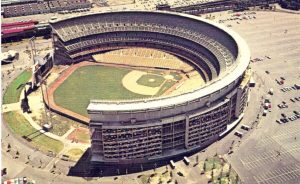 Hey, I’ve been there! To be fair, that’s probably more excitement expressed over Wednesday’s game than there was during it, even by me, partly because a 7-1 loss to the Astros simply isn’t very exciting, even if it’s taking place before your eyes, ears, nose and everything else; and partly because I realize I’m more comfortable when I’m playing it cool at the ballpark. Not that I had any ballpark experience before yesterday.
I’m sure you have plenty of questions befitting a ten-year-old who’s just been to his first major league baseball game, so I will try to conceive of what they might be and also answer them.
Really, it’s no trouble at all. I like to write.
Q: Did you catch a foul ball?
A: Don’t be misled by what you see on Channel 9, where happy fans are grabbing foul balls in the middle of seemingly every at-bat. That doesn’t happen everywhere at Shea Stadium, especially not where we were sitting. They don’t put camp groups in the seats closest to the field. Besides, our counselor, Marvin, warned us away from bringing our gloves. “You’ll just lose ’em,” he warned. Nice show of faith in the responsibility of your charges, Marvin, but we followed the presumably well-meaning advice and stashed them in our cubby holes before heading to Shea.
Q: Did you get any autographs?
A: Again, I’d caution you to not blindly buy into whatever you’ve seen on TV as the norm. No, no autographs. We were too far from the players, and, besides, Marvin says you have to be clever to get an autograph. He told us about how he came to the All-Star Game in 1964, the year Shea Stadium opened, and saw Willie Mays sitting on the team bus. He ran up to the window with a pen and a $20 bill. Willie signed. I’m ten years old. Do I look like I have a spare $20 bill? Hell, in school they make us use pencils. So, no, no valuable autographs from Willie Mays, but I did see Willie start at first base for the Mets, so I can always tell people that.
Q: How did you get to Shea Stadium?
A: How do day campers get anywhere as a group? We went on a school bus. Don’t ask me the route. I wasn’t paying attention out the window other than at the clouds, hoping it wouldn’t rain. With Marvin holding court about his autographed $20 bill, I don’t remember which highways or parkways we took, I just know that we got there. I am moved to wonder that, if I ever get to go another Mets game (assuming I didn’t catch my death of cold yesterday), how I would find my way. I understand the Long Island Rail Road has trains that go to Shea. I’ll have to check that out sometime.
Q: Did you get a yearbook?
Do you honestly think after parts of five seasons listening to Lindsey Nelson, Ralph Kiner and Bob Murphy imploring me to add the official New York Mets yearbook to my “baseball library” that I wasn’t going to avail myself of the in-person opportunity? Last year I had to ask my mother to write a check for, I think, $1.25 (including 50 cents for shipping and handling) to have it mailed to me. Seventy-five cents of my hard-earned allowance was jingling in my pocket for this purchase, and I was not displeased by the investment. I’m learning so much from the 1973 yearbook. For example, did you know Ed Kranepool was once an All-Star? It’s true! I am, however, kicking myself for not buying what they call the program, which it turns out is the same as a scorecard. The program has even more information about the Mets in it, which is a great thing. I mean it’s not like there’s some machine you can turn on, press a few buttons and get all the Met information in the world from, so, naturally I want to build my baseball library.
Q: Did you get a hot dog?
I see we’re back to those stereotypical TV images. No, no hot dog for me. Remember, I was traveling with the kosher day camp. God forbid we go off the culinary reservation for an afternoon. Camp Avnet packed box lunches featuring salami sandwiches. I hope they were in a cooler of some sort before they got to us. Judging from my reaction to them hours later, I would guess no. A little ice cream would have gone great, and lord knows they sell ice cream at Shea Stadium (little cups, wooden sticks), but try to slip that shanda by Marvin the counselor when the special of the day is sitting-out salami.
Q: What’s that big scoreboard look like in person?
Man, that thing is huge! I can’t imagine a bigger scoreboard in a baseball stadium. It even brought good tidings before the game started, announcing Jim Fregosi had been sold to Texas. Too bad it didn’t also announce Nolan Ryan would be coming back from California, but you can’t have everything. You can’t even have ice cream when you’re rolling with Camp Avnet.
Q: Did you see any home runs?
One, hit by Lee May, who I don’t have to tell you does not play for the Mets, so there goes the chance to get weepy-eyed over another of those iconic baseball images you hear so much about. I mean, it went over the fence, yea, but it also made the score Houston 5 Mets 1, so, at the risk of being more parochial than the Hebrew Academy, boo. I will tell you it took me a couple of innings to adjust to the notion that not every fly ball is a home run. From the Upper Deck at Shea Stadium, they all look so high that you think they’re all going, going, gone, but, no, they come down and are caught. Except for the one Lee May hit.
Q: Did the Mets win?
What are you, a wise guy? It’s the day after. You don’t need me to tell you that yesterday, Wednesday, July 11, 1973, the Mets lost to the Astros, 7-1. Jerry Koosman gave up nine hits and six runs, five of them earned (not that I’ve quite figured out exactly how that’s calculated; cut me some slack, I’m only ten). Seaver and Matlack had been so good beating Houston the two games before. Maybe one of our really good pitchers was due for a letdown. Jim McAndrew relieved Jerry and gave up two more runs. Felix Millan went 4-for-4 for us, but remarkably his three singles and one double led to no runs. Bud Harrelson drove in one run, or as many as Tommie Agee did. Agee is now an Astro. Rich Chiles, for whom Agee was traded last winter, was nowhere to be found despite the official yearbook telling me Rich was “Houston’s second choice in 1968 free agent draft after completing brilliant high school career as a 4-letter man in baseball, football, basketball and track.” I wonder what it’s like for Agee being managed by Leo Durocher, like if they ever get mad at one another about 1969. Ah, that was four years ago, a veritable lifetime, or approximately 40% of mine.
Q: Did you stay for the whole game?
When your ride home is somebody else’s bus, you leave when they tell you to leave, so, no, I did not stay for the whole game. I should have seen the writing on the wall, even if the writing was in Hebrew and I had to read it from right to left, when Marvin told us that on last year’s Camp Avnet trip they left in the eighth inning and listened to the Mets complete their win on the bus back to Long Beach. The game didn’t take even two hours this year, so I don’t know what the rush was, but then again, i don’t drive the bus.
Q: Do you think the Mets are any good?
That, as I’ve heard said by adults using a reference I’m not sure I understand, is the $64,000 question (plus whatever it is for shipping and handling). I mean, come on, these are the Mets! They’re good, right? I’ve only been watching them since 1969, but I think about what I’ve seen: a world championship and three third-place finishes. This team still has many of those players, and even if some of them have been injured, you look at them and you wonder how the Mets are 36-47 and in last place, 11½ games behind the stupid Cubs. I guess a lot of what ails us, besides ailing players, is the guy I didn’t get to see much of yesterday. Tug McGraw pitched the eighth and ninth and was perfect. Less perfect was we were on the bus by the time he was done. Totally imperfect would describe Tug this year. Maybe if he can start throwing his screwball the way he always has we’ll be better. Weren’t we 9½ behind the Cubs in August in 1969? (That’s a rhetorical question. You and I know we were.) Can’t we make up that much, plus an extra couple of games, with another month to do it in 1973? (I’m not sure if that’s a rhetorical question.)
Q: Do you think the Mets should fire Yogi Berra?
I know other teams sometimes fire their manager. Durocher became Astros manager last year because Houston fired Harry “The Hat” Walker. I think we’re legally required to refer to Walker as Harry “the Hat” at least once per mention. But I don’t think it’s all Yogi’s fault. The Post has been running a poll, asking if the blame falls on Berra, Bob Scheffing or M. Donald Grant. Maybe it’s a team effort, and based on his yearbook photo, this Grant guy — the “chairman of the board,” whatever that is — doesn’t inspire a lot of confidence, but whatever happened to patience? Cripes, I’m ten, and I seem to have more patience than most sportswriters. Leave it to a politician to make the most sense on the subject. I read in the Daily News that Brooklyn Borough President Sebastian Leone (and, no, I’m not sure what a borough president is, living outside the five boroughs as I do), was also at Shea yesterday to tell Grant to, in so many words, leave Yogi alone: “Yogi’s a warm human being, and he certainly deserves more dignity that Mr. Grant has shown him.” Maybe this Leone guy oughta run for actual president.
Q: Do you believe the Mets will get better?
Given that My First Game Ever at Shea Stadium figures to endure as a momentous event in my life, I asked my father if he could find me as many newspapers as he could so I could read everything written about it from throughout the Metropolitan Area. Good ol’ Dad came through, and got me The Record, one of those New Jersey papers at some newsstand in the city. In an article by Ron Drogo, it says, “there has been a noticeable change in the mental attitude of the team. A pep talk from board chairman M. Donald Grant, a couple of close wins over the Houston Astros, and the thought of a healthy team seem to have lifted the Mets’ spirits. Even yesterday’s 7-1 loss to the Astros and visions of a 13-game road trip that begins in Cincinnati tomorrow night didn’t seem to dampen their new-found optimism.” Mr. 4-for-4 himself, Felix Millan said in the Herald-News, from Passaic, “I still say this is a hell of a club.” I’m impressed they let Felix curse in a newspaper, but who knows what goes on over there in Jersey? Millan also noted that “McGraw’s screwball was good today,” which I appreciate knowing, having been absconded with to the bus too early to make that judgment for myself. “Yes, I threw some good ones,” Tug affirmed, even if it was in a bit of a mopup role, which the former All-Star and perennial Fireman of the Year candidate swore he didn’t mind pitching in. Listen, if the Mets can be upbeat after the 1973 they’ve had so far, and Tug McGraw can be upbeat after the 1973 he’s had so far, I guess we’ve got to believe.
by Greg Prince on 10 July 2023 9:57 am If you were beginning to worry that the All-Star break would impede the Mets’ gathering momentum for a push toward playoff contention, rest easy this week. There is no momentum. There will be no playoff contention.
All provisional prognostication is subject to change with the emergence of the next six-game winning streak, but by the time the Mets win six games in a row again, the All-Star break and the success that briefly preceded it before disappearing amid a lost weekend will be a faded memory — though should they somehow confound expectations and bolt from the “second half” gate winning six in a row to give them twelve of their last fourteen and make us all look like ninnies for giving up on them so soon, mazel tov. When we’re sure our team is sunk and they upend our certainty by rising to the surface and then some, we couldn’t be happier to be wrong. Our mood relative to the Mets is subject to change, too.
But we’re not going to be wrong. This ballclub’s brief peek at the light at the end of the tunnel revealed too much glare for them to handle. It’s dark in there again, likely for good in 2023.
Bill Parcells is oft-quoted on the subject of your record directly reflecting who you are. The Mets are a 42-48 baseball team. Moreover, they are what their Games Behind status says they are. After playing as well as they have all year for six games, before playing versus the Padres as they have more typically for the next two, they sit seven games behind the third-best non-first place record in the National League, with more teams than it is worth counting between them and that final postseason qualification slot. Had they gone into the All-Star break on an undeniable high note, they’d still be fairly far away and still need to step over a fistful of opponents, but momentum makes a fan see all kinds of crazy things over the horizon. And fans want to see all kinds of crazy things over the horizon. We don’t need to patronize comedy clubs. Given the slightest opportunity, we’re delighted to kid ourselves.
No punchline remains to this would-be 2023 rush into the Wild Card scramble. Fifty years after we learned to never say never, it’s over before it’s over. Saturday’s loss in San Diego a person could perhaps slough off as a pause in escalating fortunes, adequate pitching being shaded by better pitching. Sunday, though, was a bow out of conceivable contention most apropos of these Mets. They didn’t pitch well. They barely hit at all. They were hit five times (a franchise mark for pitches leaving a mark). They incurred an injury that had nothing to do with hit-by-pitches. They looked defeated. They were defeated.
In a good year, limiting our advice to “Let’s Go Mets!” is sufficient. This isn’t a good year. Thus, at the risk of presumptuousness, I will take it upon myself to issue instructions to the players who have lost 48 of 90 and in whom I’ve expressed little faith regarding their next 72.
• Each Met who was dinged by Joe Musgrove and Tom Cosgrove on Sunday should apply additional ice to their bruises as applicable.
• Tommy Pham and his groin should take it particularly easy for four days, following imaging.
• Max Scherzer (5.1 IP, 5 ER) should put his uncooperative slider out of his mind much as Manny Machado put it out of Petco Park.
• Pete Alonso and replacement pick Kodai Senga should enjoy their All-Star jaunt to Seattle and not get hurt.
• Everybody from the hottest-hitting rookie catcher to the most interchangeable optionable reliever should take a breather over the break. Drape yourselves in comfy bathrobes and order in pancakes, or do whatever major leaguers who are not going anywhere after this actually do on their days off.
• Rest up for a few days and don’t dwell on a season that’s gone to hell and shows no sign of coming back.
Actually, that last bit applies to us. Mets fans deserve a break today. And tomorrow. And the next day. And the day after that. Come Friday, maybe we’ll be kidding ourselves anew that can’t we wait for our team to return. We’re hilarious that way.
by Jason Fry on 9 July 2023 11:59 am A little over a week ago, we were lamenting the fact that the Mets seemed incapable of winning any games; Saturday night found us grousing that they couldn’t, in fact, win them all.
That’s how quickly things change in baseball, and how speedily they’d changed for the Mets: Good starting pitching, timely hitting and actual luck — good luck, to be clear! — produced a six-game winning streak. The combination of the June From Hell and the Braves vanishing into the standings stratosphere meant our ambitions were only modestly recalibrated, but it at least was no longer complete madness to study the wild-card standings, size up all the (other?) flawed teams ahead of the Mets and wonder.
(A sidebar: Some number of seasons ago I was chatting with Greg and lamented that so many of our posts reacted instead of analyzing. Surely, I posited, our years of experience as Mets fans and our feel for the game meant we could stay more above the fray and remain cooler under fire, eyeballing possibilities and looking at the season more holistically instead of being at the mercy of all the reactive ebbs and flows of winning and losing. Greg listened patiently to all this and said something along the lines of, “we’re fans — we react.” I thought about how to refute that and stopped because I realized he was right. It was OK to leave cool analysis to a handful of wise, numerically more dextrous writers and just react.)
Anyhow, the Mets ran into a dominant Blake Snell, who had multiple pitches working with punishing effectiveness, and while David Peterson was pretty good overall, he had one blowup inning that left the Mets looking out at a crooked number in the Padres’ column. That wasn’t the entirety of the game: Snell’s tank suddenly dropped to E in the sixth and the Mets failed to cash in on numerous opportunities late, with only Francisco Alvarez denting the Padres as the winning streak ended. There were some dissonant notes beyond that: Francisco Lindor inexplicably forgot how to field and Starling Marte looked off-kilter in all aspects of the game. The former was probably a one-game WTF; the latter is unfortunately nothing new, as Marte’s 2023 has been one long nightmare.
(Second sidebar: It was pretty funny Friday night when Jeff McNeil, 2023’s other offensive black hole, drove in Marte for the go-ahead run. Marte was out there as the ghost runner because of his own conspicuous failure at the plate; if nothing else, I’ll give Rob Manfred and his fellow vandals credit for uncovering rich veins of baseball irony.)
Anyway, while Saturday’s loss did bear some hallmarks of the Mets’ spring funk, it mostly just felt like a loss instead of, say, prosecutorial evidence that you were a fool for giving this baseball team more precious hours from life’s all too limited stock. The Mets play their final pre-ASG game late this afternoon, and while a week ago I couldn’t wait for them to go away and preferably stay away, this morning I found myself thinking I’ll miss them. Things change quickly indeed.
by Greg Prince on 8 July 2023 12:24 pm It took ten innings, but the Mets made the Padres look like the Mets while preventing the Padres from making the Mets look like the Padres. This is to say the East Coast version of the Padres beat the West Coast version of the Mets, 7-5, in extras.
If I wasn’t following one of these teams closely, I’d have a hard time telling them apart, save for the one I don’t follow closely dressing for Cinco de Mayo on the Seventh of July. The San Diego Padres have a lot of highly reputationed players who, together, I assume would be unstoppable, but have instead been quite halting. I recognize that formula. It’s the one executed to a tee until very recently by the New York Mets. To those with no particular stake in the success of either ballclub, the Padres and Mets are two overpriced peas in an underachieving pod.
On Friday night at Petco Park, they both met the enemy and, at various junctures, it was them. The Mets did their chances of extending their winning streak to six no favors early, playing shaky defense and undermining a not altogether sharp Justin Verlander. Verlander hung in there for six innings, and the Mets stayed close, despite adamantly keeping many of their own runners on base. A 3-1 deficit closed to 3-2 when would-be injury replacement All-Star reserve shortstop Francisco Lindor stayed scalding, homering off traditional Met tormentor Yu Darvish. In the fifth, more Lindor magic was at hand: a walk, a steal, an advance on a grounder, and a run when Daniel Vogelbach singled him in.
The game that bent but never broke maintained a sense of warpedness thereafter. A definitive breaking point was avoided in the home seventh when Ha-Seong Kim violated the cardinal rule of not making any of the outs of an inning at third. Tim McCarver drilled into me the verboten nature of first outs and third outs, but Kim, steaming past second on his ball down the left field line and then getting thrown out by a sneaky casual (or perhaps just casual yet lucky) Tommy Pham at third didn’t speak well for making the second out of an inning at third. When Brooks Raley gave up a bases-empty double to Juan Soto an instant later, one that theoretically would have scored Kim from second base had Kim stayed put, well, I kind of got what’s been plaguing the Padres all season.
They’ve been the Mets. Or what the Mets were some of April, much of May and all of June. It’s July. The Mets are something else this month.
Adam Ottavino, the personification of a green light, turned an eighth-inning two-out walk into a double when he didn’t hold Jake Cronenworth on first in the eighth. Cronenworth isn’t some privileged character in that regard. Otto holds no runner on, so against Adam, the cardinal rule is you won’t make any out of the inning at second. Old Fleeting Acquaintance™ Gary Sanchez proceeded to loft a fly ball to what appeared a little too deep left field, but instead of landing in the stands and unleashing countless “how did we ever let Gary Sanchez go?” recriminations, it fell into the glove of the proprietor of Pham’s Corner, no actual or narrative harm done.
The top of the ninth provided an opportunity for a continuation of elation or a resurgence in cynicism. Here came Lindor singling and stealing (with a little tag-averting flourish that would have made his buddy Javy Baez proud). Here came the Polar Bear walking, which in the city that houses the San Diego Zoo, probably didn’t seem too remarkable. Here came Vogey, who has been promoted back to his previous rank of endearing nickname based on his three hits — two of the infield variety — walking as well. Here came DJ Stewart to pinch-run for Vogey, because now the bases were loaded, and the Mets were grinding, and you knew they were ready to make things happen.
Too ready, apparently, was Starling Marte, who, rather than grind wild reliever Nick Martinez, tapped back to said pitcher, who began one of the most easily executed 1-2-3 DPs you’ll ever see. The Mets were very much the Padres in that moment, or just the Mets as we had known them for half-a-year. Visions of Drew Smith trudging off the mound after surrendering the game-losing home run in the bottom of the ninth filled my sleepy head, for a Met pitcher meeting misfortune in San Diego is inevitably typed onto the West Coast itinerary.
Good thing Drew packed an eraser. Not only did he not give up the run that would have called it a night, he got the last out versus Juan Soto, who must have been thinking, “Don’t I always beat these guys?” That meant extra innings were at hand, which meant Starling Marte would be granted second base to start, because the guy who kills a ninth-inning rally is on second to start the tenth in Rob Manfred’s sick, sad world. Sadder, still, is as soon as the ninth ended, I was totally aware Marte would be the automatic runner, maybe the first time since this abomination of a get-it-over-with rule was implemented in 2020 that I’ve factored the guy on second into my thinking rather than being surprised to spot a figure in the middle of the diamond who isn’t a fielder when the tenth dawns. I was proud of myself a few drowsy innings earlier when, during a Gary & Ron conversation about the Padres releasing Nelson Cruz, I thought, “maybe an American League team needs a DH,” before remembering, crap, that isn’t a thing anymore.
Just as I have reluctantly adapted to rooting for the Vogeys of the Mets to hit well when they’re so designated (and before they’re run for) rather than continually cursing out the existence of the Vogelbach role, I accept that there’s a man on second who shouldn’t be there and root for him to be a man crossing home plate. That rooting was rewarded in the top of the tenth when leadoff hitter and erstwhile champion of batting Jeff McNeil found Tom Cosgrove’s first pitch to his liking and swung. We were against first-pitch swinging when Marte did it in the ninth, and we are against Marte being on second to start the tenth on principle, but we do what we can to survive the late West Coast night and we cheer it when it happens. McNeil’s swing became a double. Marte’s phantom presence on second became a genuine run. Two pitches later, Francisco Alvarez — 4-for-5 — knocked in McNeil, and after a few more machinations that included the entry of Padre reliever Brent Honeywell (name presumably on loan from CBS’s The Bold and the Beautiful), Francisco Lindor — 3-for-5 — accounted for two more RBIs.
If our Franciscos hit so well in San Diego, imagine what the Mets could have done in San Francisco had they ever had Diego Segui.
The 7-3 lead entrusted to David Robertson in the bottom of the tenth wasn’t a save situation statistically. Spiritually, classic closing was in order once his second batter, Manny Machado, socked a two-run homer; one was out, but Soto was on second base for the same dim reason Marte was on second base in the top of the tenth. Robbie, still worthy of his endearing nickname, bore down to get the next two outs, make for a festive Siete de Julio and preserve the 7-5 win in the opener of a series that has me thinking of the Repus Bowl. Unless you were living in Tampa in the fall of 1983, you wouldn’t recognize that appellation. See, Tampa was getting Super Bowl XVIII in January of 1984, and there was unhinged preseason speculation in the Bay Area that the hometown Buccaneers might not just host but play. Except the Bucs, who’d actually been pretty good for a few years, completely fell apart, and were 1-11 heading into a late-November Tampa Stadium showdown versus the similarly dreadful 1-11 Houston Oilers. The Tampa Tribune took great delight in referring to the matchup as Repus Bowl I.
Repus. Opposite of Super. For Tampa, it was hilarious.
The Mets taking on the Padres doesn’t exactly constitute a replay of 1983 Bucs vs. 1983 Oilers, and one shouldn’t mistake it for the next Royals-A’s tilt, yet this best-of-three series below the surface of obvious contention does feel as if it carries an elimination component to it. It’s less another rematch of last fall’s dratted NLWCS than a potential last chance for the winner to maintain, at the very least, false hope in the second half. By virtue of winning six straight, the Mets have bolted to the top of the pretenders’ section of the Wild Card standings. We’re actually ahead of some teams for a change. We’re not really close to the cadre of clubs that a nonaligned observer would believe are the only National League teams legitimately angling for playoff positioning, but for the first time in a while, we’re not behind practically everybody who isn’t absolutely awful. Escaping San Diego with that kind of edge allows us to string ourselves along for the four off-days that follow Sunday’s series finale and anticipate the Mets’ next set of games somewhat seriously. In the realm of there being no “must” wins in early July, nothing could be less must than Game 88 when you’re a bunch of games under .500 and your opponent is a bunch of games under .500, and neither you nor your opponent is situated in the American League Central.
Yet Friday night in San Diego was a game the Mets absolutely could not lose. Nor could the Padres. But the Padres did and are materially worse off for it, meaning the Mets are materially better off for it. It could all amount to a hill of beans for both teams by the time either of them plays a hundredth game. It probably will.
But the East Coast version of them did indeed defeat the West Coast version of us, which is to say if we can win another game today or tomorrow, we can kind of put them behind us and entertain ourselves with notions of making up ground on the next tier of teams. It’s not much, but after the way our team has played for so long, it wouldn’t be repus.
by Jason Fry on 7 July 2023 1:06 am Who are these guys and what have they done with the 2023 Mets?
Actually, don’t answer that, because who cares? And don’t look for them, because this is fine.
Unlike Wednesday’s heroic, up-off-the-mat victory, there wasn’t a lot of sweat expended Thursday in urging the Mets across the finish line. The game was essentially over in the first, when Pete Alonso followed a Francisco Lindor triple with a laser beam over the left-field fence. That gave the Mets a 2-0 lead, and they were just getting started: Alvarez homered again, Daniel Vogelbach was heard from, and Lindor went 5-for-5, missing a double and a cycle by a couple of degrees of angle off the bat. (Points to Todd Zeile, who noted after the game that Lindor might well have had the cycle if the D-Backs’ ballboy hadn’t made a startlingly athletic move to avoid one of those two triples.)
With Met hits raining down all night — 17 of them, a whole week’s worth in June! — it was easy to miss Carlos Carrasco completely smothering the Diamondbacks, who looked befuddled early and then dispirited late. (In part, alas, because the marvelous rookie Corbin Carroll suffered a scary-looking injury to a shoulder that’s cost him considerable time in his young career.)
Carroll’s health aside, it was a laugher, when we’re all still reeling from a June that featured barely a guffaw. A night to hope for cycles and tut-tut about benches clearing (an overreaction) and admire young rookies and appreciate old veterans, instead of waiting for something else to go wrong.
Everything worked all night, after a month when pretty much nothing worked. I’d say go figure, but baseball will make you look foolish all the time. It sure is a lot more fun when you’re surprised by things going well, though.
by Greg Prince on 6 July 2023 12:29 pm A late night West Coast game is a late night West Coast game under any guise, whether the coast is relatively ballpark-adjacent or an entire state over. Arizona’s oceanic only in that it chooses to not spring its clocks forward for Daylight Saving Time, meaning that for all intents and purposes from a New Yorker’s view of the world, baseball games in Phoenix might as well start in California. Once you’re past 11 PM EDT and nobody’s risen for the seventh-inning stretch, it’s all too late for decent people.
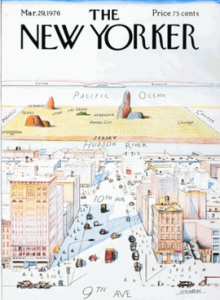 Honestly, they all look like West Coast games from here. Ah, but Chase Field isn’t Petco Park or Oracle Park or Dodger Stadium. The Mets have BOBbed for their share of losses at the former Bank One Ballpark, but it’s been more oasis than desert when it comes to a spot where they can refresh their winning ways on the other side of the country. The home of the Diamondbacks is where the Mets won their first playoff game in eleven years, in 1999, in wholly nocturnal circumstances back east (first pitch was 11:07 PM where most of us sat and tried not to snooze); where they wrangled thirteen consecutive wins between 2004 and 2007, highlighted by the most productive nights in the baseball lives of Victor Diaz and Mike Jacobs in 2005; where Matt Harvey introduced himself to major league hitting by shutting it down completely in 2012; where another six consecutive wins would be reeled off from 2013 to 2015; and where Jose Reyes, Jose Bautista, Brandon Nimmo and Asdrubal Cabrera teamed to wish a happy recap to all the fathers out there in an otherwise arid June five years ago. In most recent times, we took two out of three in ’21, two more out of another three in ’22, and resisted the temptation to blow up a Fourth of July victory in ’23.
Yet late is late, and sleep tantalizes, and no matter how your starter is pitching, if there are no Mets runs to keep you awake in New York, you really have to question why you’re struggling to keep your eyes open. About the only reasons I could come up with by the eighth inning of an impending 1-0 defeat was a) the chance to mark the debut of Trevor Gott as the potential 1,207th Met overall — he was indeed sighted warming in the bullpen; and b) the obligation to remark to anybody listening that Kodai Senga was taking the first Met complete game loss (not rain-shortened, not seven-inning pandemic doubleheader nonsense) since Dillon Gee was entrusted to carry his shutout against the Braves to the finish line in June of 2013. On that occasion, Freddie Freeman got Dillon in the ninth, and the Mets lost, 2-1. On this occasion, a suitably rested Kodai Senga, not having pitched in a week and not scheduled to pitch again until after the All-Star break, hung zeroes from the first through the sixth, masterfully mixing fastballs and forkballs. His only blemish came in the seventh, at the hands of graffiti vandal Christian Walker, who tagged Senga for a doubt-free solo homer. The bomb to left turned a scoreless duel to 1-0, as the Mets hadn’t done a thing to lefty Snake starter Tommy Henry nor his successors.
Walker’s shot was of the leadoff variety, so one could be forgiven for expecting Buck Showalter to appear from the visitors’ dugout to quickly remove Kodai, but no, he stuck with the guy who, except for that very long fly ball, was going untouched. Senga received the rest of the seventh and, despite Gott getting loose, all of the eighth. It was the right call, as the pitch count (107) was reasonable and the pitcher was marvelous: only three other hits besides the home run, only one walk and a dozen strikeouts. Supporting Senga with Met runs would have made it all worthwhile. Otherwise, you’re left trying to maintain alertness by searching your memory and Baseball-Reference for dispiriting precedent.
The bad news for Dillon Gee is he’s still the most recent example of a Met starter left in to complete a shutout that got away, for Kodai Senga got to trade in his nearly surefire CG L for a different, more rewarding result. It didn’t look like that would happen as the Mets batted to begin the top of the ninth against lefty closer Andrew Chafin. Starling Marte grounded out to second on Chafin’s third pitch. Jeff McNeil flied out on Chafin’s fourth pitch. All that stood in the way of the D’backs putting a win in their books (and Met offensive futility under our skin) was Francisco Alvarez.
I don’t know if you’ve noticed, but Alvarez presents quite an obstacle to opposing pitchers’ goals and desires. In this Last Chance Cafe of a plate appearance, Francisco pulled up a chair and showed no inclination to vacate his table. He worked Chafin the way the veterans who preceded him didn’t. Alvy was patient, collecting three balls. Alvy was resourceful, fouling off a three-two pitch. Ultimately, Alvy was powerful, as the folks in Chase’s right field stands were privileged to observe up close. The home team fans might not have been particularly juiced, but 21-year-old Francisco leapt and twirled on his way to first as if he had just taken his nattering nabob of a neighbor from up the block over two sewers to win a stickball faceoff. The ball has come down. I’m not sure Alvarez has.
Senga was no longer in line for a loss. Neither were the Mets. The blast felt like it had rocketed June’s mopesters into another stratosphere. Far be it from a viewer now leaning forward on a distant couch to note that game was only tied. We’d probably need another run ASAP.
Francisco’s fellow Citi Kid, Brett Baty, singled, and Mark Canha, who can summon a youthful spirit at age 33, laced a ball deep into the right-center gap. Brett took off. So did Mark. Baseballologists identified the result of the sequence a go-ahead triple. You never know what you’ll come across in the desert as the clock rounds twelve.
David Robertson was handed the ball for the bottom of the ninth. The bottom of the eighth didn’t work out so well for Robbie this past Friday, when Patrick Bailey, somebody else’s catching wunderkind, took him too deep with too many on. But that was in a month when no Met not named Tommy Pham could do right. This is a new month. By the bottom of the ninth, in New York at least, it was a new day. After midnight, David was protecting his third lead of July. The first two Arizonans were retired with ease. The third was Christian Walker, the slugger who had the curious and drowsy looking up Dillon Gee and Freddie Freeman. The count Walker worked was the same full version Alvarez constructed versus Chafin. These Snakes were one swing away from whacking an otherwise pleasing storyline. These Snakes this year have been one of the best teams in the league. These Mets…not so much.
Robertson relied on his offspeed stuff and Walker flailed above it for strike three. The Mets, left for dead in the desert barely minutes before, had sprung ahead and stayed there, 2-1 winners. The home viewer cheering the resilience of the road-trippers noticed his yawn was now a yay, or no worse than a yaWWWWn, with four wins in a row serving to infuse adrenaline no matter that the clock marched on. A person whose ambition was simply to see the action from Chase Field to its conclusion was now free to chase Zs. But when you’re this excited by a Mets win, who can think about sleep?
First pitch tonight in Arizona is 9:40 PM ET again. A new episode of National League Town is available to help get you to the starting line.
by Jason Fry on 5 July 2023 12:14 am The Mets have spent the better part of the 2023 season thralls to disappointment, mostly of their own making. Yet they’d somehow won two in a row, a modest accomplishment except that June was such a horror show that two in a row seemed like ascending a fair-sized mountain.
They didn’t play Monday, leaving their winning streak intact; Tuesday saw them in the Arizona desert, where it was 109 degrees and the Diamondbacks were waiting — the same D-Backs whose young hitters have seemingly arrived all at once, lifting them to the top of the National League West.
The Mets were lucky enough to miss Zac Gallen in the series; instead they drew Zach Davies, who entered with an ERA near 7. Davies’ opponent was Max Scherzer, who flipped spots with Kodai Senga at the last moment.
As for me, I tuned into the game a couple of minutes after turning onto the Mass Pike, en route from Connecticut to Maine. More through luck than planning, the timing was right for the Mets to carry me to my destination, with Keith Raab and Pat McCarthy as guides in the absence of Howie Rose. Despite the Mets’ recent struggles, I was happy as the game got under way — I adore having baseball as a companion when I’m driving, letting me measure out a journey by innings as well as by miles.
I’d be a lot happier if the Mets kept me coming while winning, of course.
It was an odd game. Scherzer’s performance was hard to scrutinize: He struck out Diamondbacks left and right but seemed allergic to good fortune, surrendering both leads that the Mets handed him, the second time on a bases-loaded walk. The Diamondbacks are awfully good, particularly their young phenom Corbin Carroll, but Scherzer once again was missing the put-away stuff he showed as recently as last year. One wonders, not for the first time, if power pitchers of a certain age are the ones most punished by the pitch clock — unfortunate since the Mets built their rotation around two of them.
It was also not exactly a riveting game, heavy on home runs, strikeouts and walks. For all baseball’s tinkering with its own rules, including some basics long held to be sacrosanct, games don’t look all that different than they used to. This was very much a “three true outcomes” game, as so many still are these days, which meant it was dull. It sure doesn’t seem to me like all that tinkering has changed the fundamental problem baseball’s critics agreed it faced. 2023’s dull games are half an hour shorter than 2022’s dull games; does that mean the sport is fixed? If it isn’t, what’s the point of all this mucking around?
Anyway, when Scherzer allowed the Diamondbacks to tie things up on a bases-loaded walk I was on I-95 a little short of Portland, and yes, I was bashing my fist into the steering wheel and saying less than kind things about our starting pitcher. But then around the time Freeport slid by on my right Francisco Alvarez faced off against old friend Miguel Castro and had the kind of AB that put a spotlight on how he’s maturing. Alvarez couldn’t do anything with Castro’s first two sinkers, but fouled off two more of them and refused to bite on a changeup just low and away. That was the pitch Castro had been working towards as an exit strategy; when it didn’t work he went back to the sinker, only it was the fifth one Alvarez had seen and Castro left this one in the middle of the plate. Alvarez destroyed it — the ball came down 467 feet away, which is to say basically in New Mexico.
The Mets had a 6-4 lead, which they then extended without (gasp) needing more home runs to do so. Which was fortunate, because Drew Smith got into trouble in the ninth and David Robertson got into more trouble, walking in a run for the second time in the game.
By then I was on the outskirts of Wiscasset, just a few minutes from my parents’ summer house, where I’ll be for the next few days. Robertson was in trouble but had two outs; normally I would have sat in the car and waited to hear what transpired, but the 2023 Mets have not exactly inspired that kind of loyalty. I took my phone into the grocery store to pick up a few things, and around the produce aisle the feed cut out.
Oh that’s right, there’s a Verizon dead zone here, I remembered a little too late.
And then I said fuck it, because I was tired and it was only the 2023 Mets. Robertson would get out of it or he wouldn’t, and my hearing what transpired wasn’t going to have any bearing on the outcome. I got my cheese and crackers and some cherries and a bottle of Prosecco and seltzer and other things from the staying in a summer house food groups, paid, got back in the car and revived MLB At Bat from its no-signal torpor.
Mets 8, Diamondbacks 5 FINAL.
Good, I thought to myself. At least for a day, the Mets had declared independence from disappointment. Not exactly worthy of fireworks, perhaps, but a small celebration was in order, so I pumped my fists in the car and started it up to finish my journey.
|
|






