The blog for Mets fans
who like to read
ABOUT US

Faith and Fear in Flushing made its debut on Feb. 16, 2005, the brainchild of two longtime friends and lifelong Met fans.
Greg Prince discovered the Mets when he was 6, during the magical summer of 1969. He is a Long Island-based writer, editor and communications consultant. Contact him here.
Jason Fry is a Brooklyn writer whose first memories include his mom leaping up and down cheering for Rusty Staub. Check out his other writing here.
Got something to say? Leave a comment, or email us at faithandfear@gmail.com. (Sorry, but we have no interest in ads, sponsored content or guest posts.)
Need our RSS feed? It's here.
Visit our Facebook page, or drop by the personal pages for Greg and Jason.
Or follow us on Twitter: Here's Greg, and here's Jason.
|
by Jason Fry on 17 April 2023 8:12 am It looked like everything had finally come together for the A’s. Not a new stadium without acres upon acres of foul ground, lots of other deficiencies and, well, possums — that’s too much to ask. And not owners more interested in building a winner than in civic extortion — ditto. But good starting pitching and timely hitting and some marvelous defense? The A’s got that, at least for one day, it looked like the combination would be enough to take down a juggernaut franchise with a payroll six times larger. One day isn’t a season, but during lean times you savor every game fate lets you snatch back.
But it wasn’t to be.
Dany Jimenez had retired Francisco Lindor for the first out of the ninth, but his 2-1 pitch to Pete Alonso was a four-seamer that sat in the middle of the plate, and when Alonso was finished with it little sprigs of yarn and shreds of cowhide descended back to Earth after a 430-foot journey to the footings of Mount Davis. That tied the game at 3 and caused an understandably dispirited Jimenez to instinctively shy from directing balls at home plate, leaving the Mets poised to take the lead with the bases loaded and Eduardo Escobar up. But Escobar banged a ball into the ground for the trademark double play, which might stand as an unfortunate end to his tenure as a starter — Brett Baty is apparently ticketed to join the Mets in Los Angeles.
In the bottom of the inning Jimmy Yacabonis made his Mets debut and it looked like the A’s might prevail after all: Yacabonis threw five straight balls and then surrendered a single. But the newest Met found his footing and got help from Brandon Nimmo, who came flying across the outfield grass for his second superb catch of the day. (Oakland’s Tony Kemp deserves the day’s highest defensive marks for a fifth-inning robbery of Escobar, however.)
Having given Yacabonis a reprieve, in the 10th the Mets did things the hard way, scoring Escobar on a wild pitch after failing to do so more conventionally. (BTW, in addition to everything else I despise about the ghost runner, there’s something subtly cruel about sending the guy who hit into an inning-ending double play out to stand at the base he’d just been hoping to arrive at unassisted.) David Robertson then navigated a Manfred-enhanced 10th thanks to some heads-up Mets plays and A’s omissions — Ryan Noda‘s bunt got the ghost runner exorcised from third instead of moved up, and Shea Langeliers arguably should have gone on contact from third when Conner Capel spanked a ball to first with one out, forcing the Mets to make a play instead of hoping for a hit that never came.
But, as discussed in reviewing Saturday’s game, none of that is our problem to fix. The Mets departed Oakland with a series sweep and the chance to look back on some big home runs, great defensive plays and (as a bonus) an effective outing from Jose Butto, who had a much easier time than when he was thrown to the wolves in Philadelphia last season.
I just hope they checked their luggage for possums — as A’s fans will tell you, those guys wind up in all sorts of places one wouldn’t expect.
by Jason Fry on 16 April 2023 2:38 pm Baseball is a fine diversion in all its forms, with one of its bedrock pleasures how those forms change day to day. On Friday the Mets inflicted horrors on the A’s and the A’s inflicted horrors on themselves, leading to a 17-6 win unique in the annals of Met scorekeeping and verging on unique for the appalled reaction of viewers and listeners. Honestly, it’s the kind of baseball exhibition that probably attracts possums.*
A day later, what a difference! The Mets and A’s played a relatively taut game that ended with the forces of good triumphant, 3-2.
That wasn’t exactly the obvious prediction, considering Shintaro Fujinami reported for duty with an ERA north of 17. (!!!!) But Fujinami and the other A’s pitchers only walked two, with no position players having to moonlight and Mark Kotsay watching the proceedings without looking like a guy standing on the shoulder after plowing his car into a tree.
Not that all was perfect in Met-Land. Carlos Carrasco looked OK-ish, though calling it his best outing of the year makes me feel like an aunt half-heartedly talking up a basement-dwelling nephew as dating material. And you kept waiting for the A’s to self-destruct and having it not happen — it seems like a team like the Mets in their current incarnation can’t possibly lose to a team like the A’s in their current incarnation, but of course that happens all the time in baseball.
Happily, it didn’t, thanks to a Pete Alonso home run (not pictured for your chronicler, who was ZZZZZing through a much-needed midgame nap) and another homer from former A Mark Canha and then a Brandon Nimmo double off old friend Trevor May, who I hope really likes the Bay Area because his workplace seems like it isn’t a lot of fun these days.
The Met comeback held up thanks to stout relief from Drew Smith, Brooks Raley, Adam Ottavino and David Robertson. The eighth inning was the full Adam Ottavino Experience — two walks, runners pell-melling their way around the bases, and a fusillade of frisbees launched at Conner Capel, with the Ottavino-Capel confrontation of course coming down to a 3-2 pitch. Ottavino struck Capel out with that pitch, which will happen sometimes and won’t happen other times, and being Ottavino his expression barely changed during the AB and inning. Robertson then wrapped up, ending the game with a tragicomic K of Kevin Smith. Smith struck out on an 0-2 curve ball, with Robertson’s spread arms of triumph being replaced by the spread arms of consternation when the ump tagged him (correctly) for a pitch-clock violation. Smith, given another chance, looked at a called strike three.
What’s happening to the A’s on the field and off is both tragedy and farce: Ownership has stripped the team down to nothing, asked fans to pay to see it do horrible things that rarely if ever resemble baseball, then used those fans’ understandable reluctance to take part in such a transaction as an indictment of the team’s current economics — the classic “look what you made me do” move of abusers since time immemorial. It’s appalling, even more so when you reflect that it will of course work, yielding a new stadium on the Oakland waterfront or in Vegas or some city yet to be infected with Monorail fever. It’s disgraceful, but it’s not the Mets’ problem to fix, and for two days they’ve done what ought to be done.
* Possums are actually perfectly nice creatures that deserve neither your scorn nor cheap cracks from bloggers. Though they probably shouldn’t live in stadium broadcast booths.
by Greg Prince on 15 April 2023 12:00 pm A walker can examine our past and present up close and come to some hazy conclusion over where we might be heading, not unlike Alexis de Tocqueville and Charles Dickens and so many others did when wandering similar byways during another uneasy patch of our history.
—Neil King, Jr.
If you took every 90 feet worth of bases on balls gifted to New York Mets batters by Oakland Athletics pitchers on Friday night at Oakland-Alameda County Coliseum; stitched them together; and stretched them out across San Francisco Bay, not only would the accumulated distance be enough to reach Oracle Park, but, if directed south, it would proceed to wend its way down the Pacific coast until it touched home plate at Dodger Stadium in Los Angeles.
That sounds too good to be true.
And it is.
But there’s something to be said for mythology.
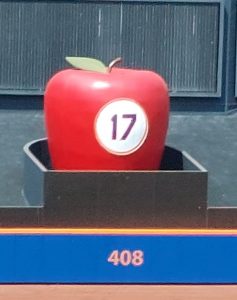 Far from home, 17s were wild. So were A’s pitchers. There’s something even better to be said for working out 17 walks and winning a game, 17-6. Those statistics are absolutely accurate. The Mets had never walked that many times before in a single game, nor had they ever won a game by that exact final, meaning they manufactured something we here like to refer to as a Unicorn Score, the Mets’ 23rd in regular-season franchise history. The Mets have won 4,660 games dating back to April 23, 1962. The first 4,659 were not by a score of 17-6. Stay up late and maybe you’ll see something you’ve never seen before.
Had you been awake since June 29, 1962, and been waiting for another night when the Mets walked at least 16 times, grab some shuteye. The Mets set their previous walks record in California as well, the southern end, back when a West Coast swing meant Dodgers and Giants, and a trip to Oakland would have indicated a wrong turn on the road to Candlestick. The 1962 Dodgers lost the pennant to the 1962 Giants by one game in October, part of a trio of contests affixed to the end of the schedule because the Dodgers and Giants ended their first 162 games tied. Losing at any juncture of the season may have been what cost Los Angeles the flag. Losing at any juncture of the season to the 1962 Mets likely cost them sleep. Those Dodgers woke up the day after those Mets drew those 16 walks and beat L.A., 10-4, with renewed determination to not let it happen again…which is a handy way of saying that on June 30, 1962, Sandy Koufax was their starter. Koufax no-hit the Mets (although he did walk five).
If the 2023 A’s are harboring another Sandy Koufax, they are keeping him well-hidden. Their starting pitchers’ collective ERA is 10.22. Their relievers aren’t quite as bad is the nicest thing to be said on their behalf. Let’s just say Friday night may have been the most glaring example of what plagues the A’s, but it wasn’t an aberrant evening. They have lost eleven of their first fourteen and don’t look one lucky bounce from turning things around. It’s awfully early to come to anything more than hazy conclusions over where we might be heading, but if the season ended today, the Mets would be the National League’s first Wild Card. And the A’s would be damn happy to go home.
It’s early, though, remember? Not that we’re going to expend much attention on the Oakland A’s after Sunday, save for checking the out-of-town scoreboard as it affects our potential postseason positioning, which only an unhinged person is doing in the middle of April (present company included). The Mets are playing the A’s this weekend because the Mets will be playing every American League entry in the course of 2023. So will the Braves, so will the Phillies, so will everybody in the NL and vice-versa. That, of course, is affront to nature, at least until we get used to it.
Interleague play has been around for 26 years in smaller doses. It used to be a stray matchup like the Mets and the A’s would summon visions of a lone, perhaps ancient October conflict, like that we and they conducted in 1973. When the Mets previously visited the Coliseum that’s been named and renamed so many times that it’s now going by its original handle, I’d necessarily think of Yogi and Seaver and glaring sun and a lack of Stone and all that. When they took Rickey Henderson Field (it’s called that, too) on Friday night, I thought of last September when we were there. It’s going to be more and more like that from now on. You don’t imagine playing one team from the other league one time for all the marbles and otherwise shake free of your daydream that you’ll ever see a team from the AL play yours for something that counts. You don’t have to imagine anything. Rob Manfred will bring you all the A’s, all the Royals, all the Orioles you could possibly want, whether you particularly want them or not.
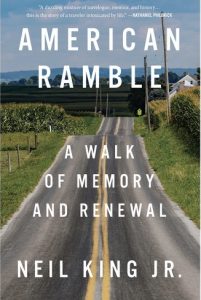 The Mets go out for a stroll in the other league. They may still be going. The only thing left for a traditionalist do is to revel in the American League ramble when applicable, especially if the hosts graciously clear a path for our enjoyment. Seventeen walks issued will glide your path just fine. It would probably take a grump to note the Mets left a dozen runners on base and that their starting pitcher, Kodai Senga, did not earn the win despite being furnished with a dozen runs by the middle of the fifth inning. Kodai can be pardoned for going cold and not quite qualifying (he went 4⅔), given that he had nothing to do for the longest time in the top of the fifth except attempt to stay warm in the bullpen — as the starting pitcher — while his teammates stood by, accepted free passes, and jogged from base to base. When the Dodgers walked the Mets sixteen times in 1962, our staring pitcher, Jay Hook, was part of the batting order. Jay walked three times himself en route to going the full nine, a much better method to keep a pitching arm engaged. Thanks again, American League.
Every member of the Mets’ starting lineup walked at least once. At least one didn’t think a walk was as good as a hit. Francisco Lindor found the bases loaded for him in the second inning and socked a grand slam to vault the Mets ahead, 6-0. Oakland starter James Kaprielian had walked the four previous batters. As with his hair, Francisco simply wanted to make sure he stood out in a crowd. The three-run double he delivered off Hogan Harris in the fifth, that one following four walks and a hit-by-pitch and giving him seven RBIs, added to Lindor’s distinctiveness.
Harris was making his major league debut. He wore No. 63. His career ERA is much, much higher than that: 162.00. A charitable interpretation would suggest Hogan was making his case to play every game of the season. But you didn’t have to be a raw rookie to miss the strike zone and then pay for it. In the first direct Old Friend sighting of 2023 (not counting rubbernecking what half the ex-Mets in captivity are up to in San Fran), Jeurys Familia pitched the eighth and a portion of the ninth for Oakland. Familia, arguably the best pre-Diaz righty closer the Mets ever featured, handled the eighth with aplomb. It was that portion of the ninth that certified him authentic Athletic material. There was a walk; then a walk; then a walk; you get the idea. Familia walked four Mets and was charged with four earned runs. To be fair, the last three were allowed to score by the next pitcher, Carlos Perez. In the interest of full disclosure, Perez is usually a catcher. Then again, before we started seeing them annually, the A’s were usually pretty good.
When we saw them in September, the A’s were on their way to losing more than a hundred games. That didn’t stop them from inflicting what I’m comfortable considering The Worst loss ever on the Mets. We took two out of three. As if the two are what one remembers most from facing an opponent whose management’s actions strongly imply a lack of interest in competing. Like the 1962 Dodgers, the 2022 Mets fell one notch short of the title they thought was theirs. The 1962 Dodgers, despite mounting an impressive 101-61 record and leading their circuit most of the year, went to a three-game playoff to settle the NL pennant. The 2022 Mets lost their division on a tiebreaker formula that would have not entered the equation had they swept the A’s…or won any one game they lost when not winning their own impressive 101. The Dodgers really shouldn’t have walked so many Mets on June 29, 1962. The Mets really shouldn’t have played their absolute Worst last September 24.
That uneasy patch of our history is water under the Bay Bridge, I suppose. Except that as the Mets were walking and walking and walking some more — if this were forty years earlier, some bright producer working for Warner Wolf or Len Berman would have spliced all the Ball Fours together and set it to Fats Domino — all I could think about (besides the Unicorn Score possibilities) was how much it would suck to lose to this A’s team in either, let alone both of the games remaining in this series. Because although these Mets are a quality outfit and these Athletics can’t even defeat a possum on their press level, we all know the scoreboard clicks back to 0-0 the next day, no matter that last night it read 17-6.
by Greg Prince on 13 April 2023 11:10 am When the Mets win, it’s best that the Mets win by doin’ Met things. When the Mets win, perhaps it’s not important to give the win a litmus test and just accept the W, but it’s more comforting to sense the Mets are functioning as they are supposed to so a given win doesn’t come off as an aberration.
On Wednesday afternoon at warm and sunny Citi Field versus San Diego, the Mets were doin’ Met things. Pitching competently from the start. Piecing together innings toward the end. Power from the power sources. Aggressive baserunning from the aggressive baserunners. Unflummoxed by fielding. Maybe a Met-killer meeting his kill quota, but that’s a Met thing by definition. Maybe a few too run-scoring opportunities by the boards, but that’s a Met thing this year. Maybe an unnecessary hope raised from the injured list, but that’s a Met thing every year. And, something we perceive as very Metlike yet has been mostly missing this year: the come-from-behind victory.
Met things, for better or worse, are what attract us to the Mets. Repel us sometimes, too, but on net, we seek the Met.
Let’s start with Tylor Megill, which is what Buck Showalter has done three times in 2023 and has looked like a genius for doing so on every occasion. Megill is a bulldog. He will get in trouble but gnaw his way out of it. Five innings were pitched. Three had baserunnrers. One had two runs scored. But when Tylor’s day was done after 81 pitches, he was the pitcher ahead. Genius!
You really wish you could get more innings from your starter. That ship sailed when Megill was told to test the water temperature inside the home clubhouse showers. Four innings were required by arms not belonging to the starter. Thus, the struggle begins. It helped that Wednesday would be followed by an off day. Maybe the manager could roll the dice on this arm and that arm as opposed to that arm and this arm and not default to if I use him today, I can’t use him tomorrow. Sometimes “there is no tomorrow” can be a positive forecast.
Brooks Raley faced four batters, giving up a double and hitting a batter. It was not an outing to take pride in. Drew Smith got the Mets out of the sixth, but got them in deep in the seventh by walking two of four Padres. Out stepped Smith, in came seventh-inning specialist du jour David Robertson, the de facto closer of the Mets, but how about we slam the door when it’s forebodingly ajar?
That we did, via Robertson, the old pro who was brought in for pre-ninth inning situations but got reassigned by circumstances. The circumstances Wednesday demanded his presence earlier. He showed up and got it done, then did it again — not without a little tsuris — in the eighth. As Casey Stengel might have said, if you don’t get out of the eighth, you’re not gonna have a ninth.
We had a ninth, and we had the other auxiliary closer ready to go, Adam Ottavino. If it’s not bullpen depth like crazy, it’s sane enough to find your way to a necessary tenth, eleventh and twelfth out.
That’s a Met thing. It better be. So are home runs from our sluggers, with which we are blessed with two. One is the shortstop, Francisco Lindor. The shortstop! He blasted the tying run over the fence in the third. One is the first baseman, Pete Alonso. He put the Mets ahead in fifth, wounding Blake Snell’s prospects for as much as a no-decision in the process. Pete is up to 152 home runs in his career, sixth-most in franchise history, two from tying Dave Kingman for fifth. Pete came up five minutes ago.
It’s easy to take for granted that the Mets have Francisco Lindor and Pete Alonso. It’s easy to think we’re missing something on those days Lindor and Alonso don’t deliver the big hit. Some days they remind you they are very much here.
Those home runs were both solo jobs. That’s two runs. The Mets needed more than that. They wound up with five in total. A steal from Tommy Pham set up the first run, driven in by Brandon Nimmo. A Jeff McNeil steal in the sixth got wheels in motion, and though he didn’t score in the same frame, Eduardo Escobar did, on another Nimmo RBI. Mark Canha also swiped a bag. If we’re going to have only two bona fide sluggers (plus several situationally capable of leaving the park), it helps to be able to run. The Mets, like a lot of teams, are suddenly rediscovering the basepaths.
They’ve also held on to their gloves post-shift. We saw two DPs on Wednesday, including the one that sealed the 5-2 final in the ninth. We may not be in “The Best Infield Ever?” territory, but defense is definitely keeping us steady most days. It shouldn’t go unnoticed.
A few Met things aren’t what you’d feature in a hype video, but they were in evidence as well. It’s part of the package. Juan Soto, even when not in the full bloom of his National youth (maybe he misses the cherry blossoms), treated a first-inning Megill delivery to a tour of the Queens stratosphere; the sky sure appeared more gray than blue at that juncture of the game. Later, Soto doubled to greet Raley in the sixth. It’s no wonder Buck, when the Padres had runners on first and third with two out in the seventh, called on Robertson to replace Smith — Soto was up.
Soto didn’t totally kill us, nor did the Mets leaving nine runners on base, as seven walks received didn’t necessarily translate to run after run. Because Robertson and Ottavino did their thing effectively, we didn’t miss our injured closer Edwin Diaz too much, but we saw who we don’t have because Diaz was at Citi Field Wednesday, letting reporters know he is encouraged by his rehabilitation — he looked a lot happier than he did when he limped up the stairs to wave to an adoring crowd before the Home Opener — and hinted he thinks he could be back this year. It’s a nice thought. It’s also probably self-sabotaging to our psyche if we let it fester. Too many Mets are expected back later in too many years. When they’re not quite ready, it’s a downer atop a downer. Just keep improving that knee, Edwin. We’ll see ya when we see ya.
The important thing is we saw the Mets win, and we saw them win after trailing. They’ve won seven games this season. They’ve only come from behind twice. Once in the series in Miami and this rubber game against San Diego. Maybe that’s why the season has seemed almost as stiff as those ad patches on the uniform sleeves look. Those come-from-behind wins adrenalize your season. Even if it’s a matter of losing in the first inning, taking the lead in the sixth inning, and holding it through the ninth inning, it says something to never saying die and intestinal fortitude and gotta-having-heart. If we can’t score five off the bat and then slowly pull ahead every single game, we need to know we’re not dead and buried at the first sign of adversity.
These are the Mets. Down by three in Game Five of the 1969 World Series. Down by three in Game Seven of the 1986 World Series. Down by six in the ninth inning one night in Philadelphia in 2022. A pair of rather famous Game Sixes. Examples abound. Such comebacks are what pump the blood. It all evens out after a while, but not overcoming deficits and taking them to the ledger (putting them in the books, that is) felt absent until they were present.
It’s a Met thing. Doin’ it defines us.
The pitch clock is ticking at National League Town. Listen to a pair of longtime fans grudgingly getting used to seconds being measured as never before.
by Jason Fry on 11 April 2023 11:14 pm Try to remember that Francisco Alvarez is all of 21.
The kid was the last out of Tuesday night’s game against the Padres, batting with the tying run on second. He was facing Josh Hader, whose wildness had gotten him into trouble that inning but arguably served him well against Alvarez. Hader threw two balls to Alvarez, the second one forcing him backwards into the dirt, then got two swinging strikes on fastballs at the top of the zone and above it, with Alvarez clearly overeager on both. The kid laid off the next pitch, which was juuuuust a bit outside — but which set up the fatal seventh pitch. That one followed the opposite trajectory, boring in on Alvarez’s hands. It was a ball, but that wasn’t apparent until after the fact — in the moment, it wasn’t a pitch anyone could take, or that anyone could hit. It tied up Alvarez for strike three and the ballgame.
Sigh.
Alvarez has things to learn, and those are the kind of ABs that count as tough teachers. If you want to put that on him, well, I guess that’s your privilege. Things that shouldn’t be put on Alvarez include the Mets’ inability to cash in early opportunities, or Dennis Santana surrendering a home run to Xander Bogaerts that should be conking some unfortunate in Portugal on the noggin right about now. Those missteps and the woulda shoulda coulda of that ninth-inning mutterfest put this one in the category of “games I’d like to never think about again, thanks,” though we’ll put an asterisk on David Peterson for pitching quite well against a deadly Padres lineup, at least until Manny Machado prevailed in a hard-fought battle that tipped a tight game in San Diego’s direction.
There was also the presence of David Weathers, who was a Met about 19 minutes ago, or so my brain told me when I recognized him chatting with Steve Gelbs. Nope, Weathers’ Mets tenure somehow ended 19 years ago after two and a half pretty solid seasons for terrible Mets clubs; he was there watching his son Ryan ply the family trade against his old club.
Yes, David Weathers has a kid who’s a big-league pitcher. (BTW, the Padres’ Brent Honeywell is a cousin of momentary Met Mike Marshall — the cerebral pitcher turned kinesiologist, not the annoying first baseman — because of course he is.) We’ll blink our eyes and Francisco Alvarez will have an impossibly grown-up kid of his own, maybe even one billed as a can’t-miss prospect. Maybe even one we’ll watch as he learns that even can’t-miss prospects have to take a few lumps on their way up Mount Ballyhoo.
by Greg Prince on 11 April 2023 11:44 am Six months and one day after it would have done the most good, the Mets beat the Padres at Citi Field. It didn’t tie up last October’s National League Wild Card Series at two apiece, because that was a best-of-three set. Noted baseball analyst Carole King says it’s too late, baby, to do anything about our first postseason series loss to a National League rival in sixteen years other than lick what’s left of our wounds and move on.
Implicit in this framing is the San Diego Padres are now a National League rival of the Mets in something more than cataloguing. From 1969 to 2021, they were as close to incidental in our scheme of things as a team could be. We were rarely good at the same time — the Mets and Padres had winning records in the same season only eight times prior to 2022, the last of those overlapping fifteen years prior. There’d be an occasionally memorable encounter in a Mets-Padres game, because baseball doesn’t ask for ID when it’s arranging ten consecutive strikeouts, or an 8-2-5 DP to complete a road trip, but prior to October 7, 2022, did a Mets fan ever “get up” for a Padres game beyond stirring from a disco nap for those held late at night on the Coast?
Now we and they have a different level of history. It may fade over time the way no Mets-Diamondbacks rivalry took root despite the heat of the 1999 NLDS, when we enjoyed sticking it to that smarmy Buck Showalter from Arizona. Remnants of a grudge may endure, as it seems to versus the Dodgers, a team I can’t look at when they play the Mets and not see Utley U Buttley, never mind that UUB is long gone from L.A. My guess is the sight of those brown-and-yellow duds that no detergent can quite satisfactorily clean will trigger flashbacks for a few years. I couldn’t look at them Monday night without remembering how I didn’t want to look at them (or baseball) ever again once the NLWCS was over. But that’s over, just as the 2006 NLCS stopped actively stinging eventually (even if it still hurts when one is moved to dwell on it). That was the last full postseason series we lost in October to another National League team; the L to SF in 2016 was just one game, barely enough time to build situational enmity. The schedulemakers cleverly had us in St. Louis to start the 2007 season. We swept the Cardinals. It was gratifying in the moment. It was also too late, baby.
But it was a new year. They all are. This one hasn’t mirrored 2022 from a dynamite start aspect. When we’ve looked good, we’ve looked all right. When we’ve looked lost, we’ve lost. We were a .500 club after ten games entering Monday night. Then we looked swell for nine innings and stuck it to the Padres in a way we didn’t much when it counted. Or counted more.
This right here counts very much, given that last year is last year and this year is just gaining traction. This right here, this 2023 season, will take all the boost it can get. Max Scherzer spent five innings boosting the Mets in their eleventh game of the current campaign, albeit via a bunch of full-count duels with Padre batters, but none that erupted into Padre runs. Sure, Max went to three balls on some of these guys, but also to two strikes. He still knows how to navigate those waters.
Maybe more mood-elevating than Max’s one hit and no runs in the face of three walks and 97 pitches; the four Met relievers who kept the Padres from scoring over the following four innings; and those two gasp-inducing dribblers — a bunt from Luis Guillorme, a tapper from Tomás Nido — that teased foul territory only to stay firmly fair, were the two two-out doubles lashed two ways that each plated two runs. That was Met offense coming to life without homers and without Marlins. Jeff McNeil’s to right in the third (off finally vanquished Metropolitan tormentor Yu Darvish) and Francisco Lindor’s to left in the seventh felt like something a team capable of producing offense produces.
The pair of swings may have added up to the first adrenaline rush of the young season. Maybe it was because they had nothing to do with new rules. The doubles weren’t about bigger bases, pickoff-throw limitations and steals that seem somehow stage-mothered into ubiquity (run into the spotlight, darling — show the director how swift you are!) or shiftless defense or the pitch clock on its face. They were two solid extra-base hits down the line when the Mets needed them, with two runners taking off to make the most of them en route to a 5-0 triumph sealed in 2:38, but who noticed the time of game? Until last night, the jury-rigged faster-paced contests didn’t necessarily seem more interesting than the ones they were intended to supplant. They just seemed over sooner. Maybe all of us, including the players, needed to get into the season a wee bit further to shake off the self-consciousness of what baseball is or is supposed to be now.
It helped that the Mets won. It always helps that the Mets win, but even the Mets wins since they lost to the Padres in three haven’t seemed all that vibrant. A slight sense of revenge achieved doesn’t hurt, either, even if it can’t do anything about last October. Anything it does to push us toward this October, however, is mightily appreciated.
by Jason Fry on 10 April 2023 8:23 am Sunday was another at least mildly notable first for the still-young 2023 season, and unfortunately I’m not referring to the sophomore-year debut of Francisco Alvarez. Our catcher of the future went one for four, with the one a dunker of an RBI single, while making some good throws to second and one bad one. One of the good ones would have counted as a caught stealing except Rob Manfred and his less than merry band of MBAs tinkered with the replay rules as well as more important things, leaving with the Mets without sufficient time to determine that a challenge would have been fruitful. The bad one went on the books as the Mets’ first error of 2023, an inevitability that still led to muttering.
But Alvarez’s performance isn’t the first under discussion here; rather, it was that Sunday’s game was the first of the season that left you thinking that there must have been a better use of your now-vanished afternoon. It was a slog, wandering spiritually between annoying and dismaying, with the Mets not truly out of it until the seventh but never giving you much of a hint that they were about to get back into it.
The biggest issue — assuming Starling Marte suffered nothing more than a neck strain in a collision at third — was Carlos Carrasco being terrible for a second straight start. This time out Carrasco had no problems with the pitch clock or recuperation between innings; rather, it was that his key pitches were MIA. His slider kept ambling into the middle of the strike zone, he had no feel for the splitter, and the fastball was missing a couple of ticks of much-needed velocity. To no one’s surprise he got lit up; the big blows were homers from Bryan De La Cruz and Garrett Cooper, but pretty much every Marlin ball put in play was hit hard. Carrasco is an innings eater, not an ace, but there’s eating innings and there’s making such a mess at the table that everyone else abandons the meal in disgust.
Still, an important reminder. It’s natural as fans to ascribe every win to the home nine’s diligent preparation and oorah gumption while chalking up every loss to those same players’ blundering and moral failures. It’s also nonsense. The other guys are trying too, and sometimes it works out better for them than it does for the protagonists. The Marlins played much tighter defense than we’ve seen from them of late and got the big hits when they needed them; the Mets collected nine hits but their sequencing was garbage, which is more bad luck than anything else. It happens, and while it’s not the best way to spend an early spring afternoon, a Just So story that makes more out of it than that is just compounding time wasted.
The Mets will now somehow not see the Marlins again until September, which seems like a relief in that the Marlins are horrible but might not be ideal for the W-L record given that the Marlins are horrible. Instead, the Mets will now entertain the Padres, which definitely feels like a case of Too Soon, right down to a repeat of the ill-fated Game 1 matchup between Max Scherzer and Yu Darvish. That’s not quite as cruel as the Mets having to open the 2016 season against the Royals, perhaps the unhappiest bit of scheduling roulette I can recall from nearly a half-century of fandom, but it definitely counts as a party for which you’d have preferred not to receive an invitation.
by Greg Prince on 9 April 2023 2:36 am Someday, perhaps, there will be another Kodai who plays for the New York Mets. I’d like to think that soon there will be a son of Mets fans, and his parents will name him for the righthander who left the Miami Marlins mostly spooked in his first two outings in the United States, the second of them his Citi Field debut. By my script, that kid, not only yet to be named but yet to be born, will show off a live arm, learn the ghost fork and be up with the team he grew up rooting for within the quarter-century.
Or we could just take everything one game at a time and appreciate the results wrought by the only Kodai currently in the Mets’ world. That would be Kodai Senga, 30-year-old MLB rookie who’s been around, if not around these parts until very recently. Shed of whatever nerves plagued him when he took the mound in Miami, Senga controlled Miami’s offensive aspirations long enough for the first five innings Saturday. The Mets provided him a run in the first (bases-loaded walk) and two more in the fifth (Pete Alonso homering, a blessedly daily occurrence). The Marlins got to Kodai for one run in the sixth (Jazz Chisholm going deep), but Senga outlasted his gas tank to complete the inning and exit in triumph.
Knowing he’ll be back to do what he does again is a comforting thought.
The bullpen diddled around a bit, but their foibles were minimal and cushioned besides when Eduardo Escobar finally hit into some good luck, which is to say an area beyond the left field fence. Maybe there’s a Metropolitan Area infant out there whose birth certificate just got filled in as Eduardo rather than Brett.
A 5-2 win awaited at day’s end for Kodai Senga and the Mets, a day that started with the sad news that Hobie Landrith had died at age 93. Hobie was the first major leaguer the Mets ever drafted, the first Hobie to ever play for the Mets and, as of this writing, the only Hobie to play for the Mets. That’ll make a feller an Original for a long time.
Hobie Landrith’s role in Met lore is pretty much Amazin’ 101, not just his status as the player picked before any other among those National Leaguers made available to George Weiss and Casey Stengel, but Casey’s explanation for taking a veteran receiver with limited pop and little in the way of glitter — no All-Star selections since reaching the bigs in 1950 as a defense-first catcher, never a sniff of the postseason. There are variations of the quotation, but I’ll go with the one Dave Bagdade used in his comprehensive survey on the 1962 Mets, A Year in Mudville:
”Ya gotta start with a catcher, ’cause if you don’t, you’ll have all passed balls, and you’re gonna be chasing the ball back to the screen all day.”
As Dave notes, “Speculation persists that Stengel’s comment was his way of poking fun at such an exciting first pick.”
However Casey meant it, the rationalization stuck, and it is Landrith who became embroidered in the upper tier of the legend of the Original Mets, just as it was Landrith who arrived first on every budding Mets fan’s depth chart in the fall of 1961. Come that first game in St. Louis six months later, it was Landrith who was the first to crouch behind home plate on our behalf. Let the record show that while his pitchers gave up seven earned runs that night, Hobie did not allow a single passed ball.
It bears mentioning that Landrith — the first of seven catchers Casey would employ in 1962 and the only one to live long enough to see the franchise turn sixty — batted lefthanded. A lefthanded-hitting catcher is something of a rarity. Omar Narvaez is the 25th lefty-swinging backstop the Mets have ever used. Only a few had much longevity as Mets. Hobie was on the roster for less than two months. He’s still twelfth among lefty-hitting Mets catchers all-time in RBIs. Two of the runs he drove in were on a game-winning home run off a lefty pitcher…a lefty pitcher named Warren Spahn. Eyewitness reports confirm the walkoff wallop was a pop fly that took advantage of the Polo Grounds’ inviting right field dimensions. It’s a two-run homer in the box score.
 The great Spahn bowed his head because he knew that he’d been beat by a lefty-swinging, defense-first catcher. Hobie’s third of three passed balls as a Met came in his final game as a Met, when he was already identified as the player named later in the May 9 trade for Marvelous Marv Throneberry, whose own Met legend was fast gaining steam. “Later” was officially June 6, when the Mets and Orioles agreed that Hobie would be the payment for the first baseman Baltimore had sent New York, yet there Landrith was in the Mets’ lineup in Philadelphia. The Daily News, in reminding its readers that Weiss had given the impression Throneberry’s acquisition was a straight cash deal yet was suddenly sending Hobie south, said the club president “deals in ballplayers and half-truths”.
Landrith probably chuckled mordantly at the description if he had the chance to read it en route to the O’s. “What a piece of work he was,” Hobie told This Great Game, frustrated decades later that the Mets, despite drafting him ahead of everybody, were determined to pay him less than he was getting from the Giants the year before. “I mean, if you’re the first pick, you figure you should make at least the same as you did the year before, right? […] The man was cold, cold, cold, and I didn’t enjoy that at all.”
Stengel seemed to be a different matter. Hobie liked Casey well enough to cite him fondly long after the Polo Grounds converted to that big ballyard in the sky. Listening to an interview Mark Rosenmann of Sportstalk NY conducted with Landrith in 2020, recalling how Stengel’s advice helped him navigate a tough situation behind the plate when he was catching for Gil Hodges in Washington in 1963, his last year in the majors, warmed my heart. Same for when Jay Horwitz told me in 2019 how much it meant to Hobie when Jay, new in his alumni relations role, reached out to our first catcher and was told, essentially, nobody from the Mets had been in touch with him since 1962.
Think about that: the first pick in the expansion draft, referenced at least a half-dozen times a year by Met announcers via the “passed balls” anecdote, and he’d fallen off the organization’s radar. It says something about Horwitz’s efforts to reconnect to an otherwise lost generation of retired players that it was the Mets, one of seven different teams for whom Hobie caught, who announced the news of Landrith’s passing.
Although I was barely in utero when the catcher in question was playing the bulk of his 23 games as a Met, Hobie Landrith impacted my historical consciousness beyond simply providing a shorthand explanation for why a team needs a catcher.
In October of 2006, when local media was seeking every angle possible for its coverage of the Mets as they headed for the NLCS, I remember reading an article from the Star-Ledger in which their reporter visited Landrith in California to see what the de facto first Met had to say about his alma mater’s latest burst of success. This was during that vast interval when the Mets didn’t call and didn’t write, which was mentioned in the article. At the time, I guess I was surprised there’d been no contact, but I think I was more shocked that Hobie Landrith was alive, well and conscious of the contemporary Mets. He’d existed in a such a defined nutshell — picked first; passed balls — that to me he was more a character from ancient Mets history than an actual person who a) used to play the game; b) was capable of commenting on it; and c) continued to live his life.
To this day, I know of no other Hobies in or out of baseball, so comprehending that the only one who was ever a Met was not only still with us, but still paying attention to the Mets (despite the Mets not paying attention to him) took me an extra beat. The more I thought about it after I found out he died, the more I realized what amounts to my ongoing determination to not gloss over any Met, particularly those Mets who predated my personal awareness of the team, and to try to learn something about the ones I missed or didn’t remember well so maybe I could pass something from their experiences along to whoever reads or listens to me, stems from that specific sense of you mean those guys in those stories are actually walking around? with which the Star-Ledger piece hit me. Some 1962 Mets had been on the scene as a matter of baseball course or were caught up with on “where are they now?” occasion, but others had all but vanished from public view, or at least my slice of it. Hobie Landrith was one of those.
I’ve been trying to make up for it ever since.
by Jason Fry on 8 April 2023 8:39 am Because it’s too early for more complex assessments, so far the Mets new season is a stark either-or: They’re either beating up on the Marlins or getting walloped by the Brewers.
Monday through Wednesday saw our gray-clad lads off under the roof in Wisconsin, where they spent two days looking gobsmacked while Bernie Brewer went down his slide about 50,000 times and then played a semblance of baseball but got walked off, proving that baseball is pain. The Mets then got rained out of their home opener before returning to New York, which wound up being hilarious because a) Thursday turned out to be perfect for afternoon baseball and b) nobody particularly minded because they’d played so badly that a day of sitting quietly and thinking about what they’d done seemed like a good idea.
Anyhow, the Mets got back to it on Friday (a colder, windier day than Thursday, because LOL), finally at home in the friendly, somewhat-reconfigured confines of Citi Field. The Mets have a new scoreboard, which you may have noticed because it’s smack in the middle of the ballpark and the approximate size of Hoover Dam. Not to mention that it is of course super state-of-the-art 4K — seeing it for the first time on the SNY broadcast, I had to convince myself I wasn’t looking at a video insert the truck had plopped atop the broadcast feed for some odd reason.
Seriously — to resurrect a 70s baseball joke, two-thirds of the Earth is covered by water and the other third is covered by our new scoreboard. Do Steve and Alex Cohen hang out in their suite on off-days and use it as the ultimate home-theater flex? What would it be like to watch Partridge Family reruns on this thing, or use it to play Call of Duty?
There are other tweaks to the ballpark, most notably that the right-field wall has been brought closer to accommodate a speakeasy that I’ll undoubtedly never get to enter. It will take some time to assess the import of that change, though I bet David Wright has already shaken his head and sighed while no one was looking. The lesser season commemorations have been consolidated rather intelligently (standalone WILD CARD WINNER banners are just sad), Bob Murphy gets his due up among the retired numbers and other tips of the collective cap, and the out-of-town scoreboard is no longer a tire fire. I’m sure there are other things I’ve missed, but they’ll wait for an actual visit.
(A visit that better coincide with a win after I suffered the indignity of going 0-for-2022, including the two postseason games we lost, but that’s another post.)
The Mets were playing the Marlins again, and they sure looked like the not-ready-for-prime-time Marlins we saw down in Miami. Edward Cabrera once again walked the ballpark, a dissolution that was equal parts due to ground-out Met at-bats and of his own making, while Huascar Brazoban let in a run by spectating on the mound as Daniel Vogelbach continental-drifted his way to first on a grounder to the infield. The Marlins were serially inattentive to details during Don Mattingly‘s tenure and look no better at the little things with Skip Schumaker at the helm, which tells you that you can’t blame the problem entirely on roster churn and young players. I should be happy about that, since Marlin mistakes mean Met benefits, but it galls me to see the best game in the world played so badly — errors and mischance are part of the sport, but my God, you can always cover first.
At least nothing terrible involved Jazz Chisholm Jr. for three hours. I suppose that’s what passes for progress in Miami.
On the Mets’ side of the ledger things were mostly good. Tylor Megill pitched well in his second straight matchup against Cabrera, apparently surviving a bullet off the foot, though I haven’t checked the news this morning and it’s entirely possible Megill is now in a leg cast and/or iron lung.* The Mets took a worryingly long time to break through, with Cabrera’s final line showing an improbable 2.2 IP, 7 BBs, 85 pitches thrown and … zero hits, but once they did the reversion to the mean was savage, marked by homers from Starling Marte, Francisco Lindor and Pete Alonso; Brandon Nimmo scampering happily to first a whole bunch; and hey, a Vogelbach infield hit has to count for something on the fan Bingo card. Dennis Santana gave up a three-run homer late and Eduardo Escobar heard boos from a crowd waiting with Baty’ed breath**, but when you win 9-3 you can overlook a few blemishes.
The Mets will be back at it Saturday, with Kodai Senga once again facing Trevor Rogers and perhaps Francisco Alvarez getting the nod behind the plate. Alvarez is now wearing 4, which is a nice bit of novelty even if 50 struck me as better suited for his broad back. As for Rogers, his middle name is J’Daniel, for which I can find no explanation, and his cousin is the loathsome Cody Ross, which isn’t his fault but is surely worth a boo or two. Perhaps the scoreboard will give those of you in attendance a 4K explanation of “J’Daniel,” with each letter the height of a brownstone in Carroll Gardens; failing that, I hope you get to see a win in 1080p, or however many pixels it is that real life offers. Should the experience of mere human vision leave you feeling dowdy and without, I bet you’ll be able to find our new scoreboard.
* I checked, he’s fine
** this one deserves an apology
by Jason Fry on 5 April 2023 9:33 pm I mean, sometimes it’s joy. A lot of times it’s joy, in fact.
But sometimes it isn’t.
Take, for instance, Wednesday afternoon in Milwaukee, which certainly did not count as joy.
I guess you could make a case that it was better than losing 10-zip on Monday, and superior to losing 9-0 on Tuesday. On Wednesday the Mets a) scored actual runs; b) scored six of them, in fact; c) held a lead, an aspect of baseball we’d forgotten existed for a while there; and d) actually held two of those mysterious things called leads.
None of which mattered in the end, as Garrett Mitchell — who’d just been foiled in attempting to bunt his way aboard, for Chrissakes — smacked an errant Adam Ottavino frisbee into the right-field seats for a walkoff 7-6 Brewers win.
Pain. On so many levels.
The pain of losing to start off the ninth without recording an out, which shouldn’t feel worse but somehow does — like getting walked off in the eighth with an asterisk. Nobody tell Rob Manfred or that will somehow be a thing by Memorial Day.
The pain of a three-game sweep, which is never fun even when you’re not outscored by nearly three touchdowns.
The pain of seeing a long streak of being .500 or better go by the boards.
The pain of getting steamrolled by a team that could do no wrong right after having your way with lesser competition, with all the discombobulation to one’s self-image and creeping existential doubt that brought with it.
The pain of confronting that oldest and bitterest of baseball questions: If your team’s fated to lose, would you prefer that they lose meekly and pitifully from the jump, or horribly and tragically at the very end? (There is no right answer. In fact, there is no answer. To this, or anything else.)
The Mets lost, and it was pain. Pain watching David Peterson walk the ballpark and Drew Smith report for duty to discover the mound was so fucked up nobody could do anything from it. Pain handling Corbin Burnes just fine only to have it not matter. Pain feeling like the outcome was preordained even after storming back to take a 6-4 lead on the second of two Pete Alonso homers. This was the kind of game where you shove yourself into the mud face-first, like a doughboy getting shelled in a trench, and pray that you’ll find yourself alive when the bombs stop gouging the earth while doubting you’ll be so lucky.
The Mets are already rained out for their home opener, a development that elicited a sigh of relief from me, because this is definitely a team that could use a day not playing baseball or, more accurately, not attempting the kind of baseball-adjacent activities that have been inflicted on us the last three days.
Being glad your team isn’t playing when baseball just returned to being part of the daily routine? Yep. Like I said: pain.
|
|






