Faith and Fear in Flushing made its debut on Feb. 16, 2005, the brainchild of two longtime friends and lifelong Met fans.
Greg Prince discovered the Mets when he was 6, during the magical summer of 1969. He is a Long Island-based writer, editor and communications consultant. Contact him here.
Jason Fry is a Brooklyn writer whose first memories include his mom leaping up and down cheering for Rusty Staub. Check out his other writing here.
Got something to say? Leave a comment, or email us at faithandfear@gmail.com. (Sorry, but we have no interest in ads, sponsored content or guest posts.)
The Mets beat the Marlins by one run. But the Phillies beat the Nationals by one run, and the Braves beat the Rockies by one run, so by the end of Thursday, nothing changed at the top of the NL East, though at least we got to maintain the sensation/illusion that the Mets reside somewhere near there.
We’re five games back. I use “we’re” reflexively if advisedly. After Javy Baez told us to go thumb ourselves, the them-against-us quotient emanating from the Mets clubhouse was too high to elicit my standard first-person plural solidarity. “If we win together, then we got to lose together,” was Baez’s explanation last Sunday for why he wanted to boo those who booed him. Dude, I thought, “we” have been losing together, sometimes winning together all our lives. We’ve got the together part down pat, no matter how it sounds to you as it echoes off your diamond earring or the hole where it used to sit. I didn’t mind the tone-deaf letting out of his frustrations or his daring to tell the customer that the customer is sometimes wrong so much as I did some stranger coming in here and telling me — telling us — how to be Mets fans. We were Mets fans before you’d ever heard of us and we’ll be Mets fans once you have to be reminded of those two months you played in New York.
But we are five games back, the earmark of a positive trend…though I’m pretty sure we were once five games up. I can’t be certain, because history has been rewritten on the fly this week ever since we continued and completed the April 11 game on August 31. Because the game started on April 11, it goes into the official annals as the game of April 11. Never mind that only seven of 360 pitches thrown in the game were thrown on April 11. Never mind that five Mets who are now listed as having played their first game as Mets on April 11 (Baez, Patrick Mazeika, Heath Hembree, Chance Sisco, Brandon Drury) were nowhere near the Mets’ active roster on April 11. Because what the Mets won over a span of about four hours on the afternoon of August 31 was a continuation of a few minutes conducted in pouring rain on April 11, the win is credited to April 11 and a half-game bump in the standings that didn’t exist for more than four-and-a-half months has been retroactively inserted into the daily log for 2021. So maybe we’ve had a five-game lead at some point this year. Maybe it was five-and-a-half.
It’s hard enough to fathom what happens with the Mets day after day without altering the days that came before.
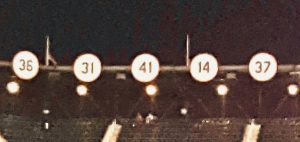
Still, we’re all caught up on games in terms of games that had first pitches and last pitches, even if we’re not all caught up in our division. At least we’re closer now than we were before the thumbs went down. Five games back in the scheme of recent things is as surprising as being told ahead of the season that Jonathan Villar would homer seventeen times or Jeurys Familia would garner nine wins. We haven’t lost a game in August, April or September dating back to No. 36 going up in the rafters. Jerry Koosman always did prefer to pitch in that cool autumn breeze, and we seem to be as refreshed as the weather — if as flooded by folderol as too many local neighborhoods were in Wednesday’s storm.
Not everything has something to do with everything else. I don’t know what Baez and the thumbs-down crew had to do with the dismissal months earlier of Chili Davis, but I read a column that linked them together. I don’t know what the very serious charge that Zack Scott had driven while intoxicated in the early hours Tuesday had to do with the Mets opting not to sign Kumar Rocker despite using their first-round draft choice on him, but I read that in a column somewhere as well. When the Mets spin out of control, everything gets caught up in the dreidel’s whirlwind. The conventional baseball wisdom coalesces around the Mets don’t know what they’re doing. Maybe they don’t. Or maybe some things they do they don’t know as well as they could while other things are coincidental. Hell, maybe the front office and its flawed parade of GM types knew what they were doing long enough to bring in the Villars, Pillars and Loups who have levitated the season just enough above sea level so that it hasn’t altogether drowned. Somebody in authority just signed off on bringing in Brad Hand.
From a thumb to a Hand and nobody making a fist in a week’s time. That’s progress.
However you use choose to use your digits, the Mets are five games back with a month to go, have a bunch of games remaining versus the two teams indisputably not in the top tier of the National League East, and have a whole bunch more against good teams from across the map. I don’t have a ton of faith that the current five-game surge (four, if you buy into August 31 having taken place on April 11) lays a legitimate path to glory, but here I am, being quite aware that the Mets are five games out with a month to go and staying on top of what the two teams above them are doing, which, honestly, I didn’t think I’d still be doing after the Giants and Dodgers shoved the Mets’ tail between the Mets’ legs eleven times in thirteen opportunities.
They’re five games out. We’re five games out. Only five games out.
***
If I had been at Tuesday afternoon’s resumption of the aforementioned suspended game, particularly during the bottom of the ninth inning, no doubt my focus would have been on the field. Where else would a person be looking while five runs are being conjured to overhaul a four-run deficit? Yet I imagine there must be spot at Citi Field, somewhere in the 300s, where if you turned your back on the field and aimed your vision toward the Ralph Kiner Television Booth and the Bob Murphy Radio Booth, adjacent as they are, you could probably get a decent view of both Gary Cohen and Howie Rose at work. Your ears are the proper receiver for their words, but to see them both simultaneously calling a moment like Conforto hitting and Baez sprinting and sliding would be a sight to see.
WCBS doesn’t seem to bother with visuals, deciding (not without radio logic) that the word picture Howie paints is enough.
For those who aren’t into clicking. Let me transcribe. It’ll be my pleasure.
Gary on TV:
Alonso the tying run at third, Baez the winning run at first, two out. And Conforto SLASHES one the other way, BASE HIT!! That ties the game! Alonso in. Baez digging for third, it’s kicked by Alfaro! HERE COMES BAEZ TRYING TO SCORE!!! HE SCORES and the Mets WIN it!!! Turn those thumbs around!! Javy Baez races home with the winning run, and the Mets win it, six to five!!
Howie on radio:
Baez the winning run at first, first pitch…swing and a ground ball, BASE HIT GOING INTO LEFT FIELD! The Mets have tied it! Alonso scores! Digging for third is Baez — the ball is BOBBLED! Baez comin’ around third, Alfaro’s throw to the plate, the slide — the ball gets AWAY! The Mets win! The Mets win! Put it in the books! The Mets come BACK from trailing five to one in the ninth inning, a single and an error in left field has won the game for the Mets, Michael Conforto gets the hit, they are POUNDING him as he had rounded second base, they’re gonna virtually unDRESS him between second and third, as they will YANK the shirt off of HIS back. Javier Baez had the hit that made it a one-run game, and then after Alonso had scored the tying run on that hit, and Alfaro — remember, a catcher by trade — in left field bobbled that ball, Baez flew around third and scored as the throw was not handled by Jackson, and the Mets have won the ballgame, six to FIVE!
I’m tempted to mix the calls together just to experience the sequence in Sensurround. But they probably come out better one at a time. Watch the action if it’s in front of you. Listen to the descriptions over and over afterward.
Russell Hammond’s message via William Miller to Stillwater’s leading band aid Penny Lane in Almost Famous was, “Tell her it ain’t California without her. Tell her we want her around like last summer.” Well, Howie, it ain’t gonna be the Mets without you in September. It might be in form and function, but the heart and soul we’ll have to ad lib for ourselves. As you recover from what ails you, know that we’re leaving an ear open for when you return to start next season. We want you around like every summer.
“All right, I’m glad you both came. I’m glad you’ve both committed to the process. The sign of a healthy relationship is when the people in the relationship acknowledge that its health is not a given and that you have to work consistently at improving it. Emmett, I’m picking up from your body language a sense that you may not be on board with that.”
“No, I’m fine. Actually, I’ve been great. We’ve been great. Everything is great.”
“Is that how you feel, Fanny?”
“I wouldn’t say great. Actually, I wouldn’t say that at all.”
“What are you talking about, baby? We’ve been great.”
“You don’t speak for me. I don’t think ‘we’ve’ been great.”
“Go with that, Fanny.”
“Emmett’s been tough to deal with lately. There’s been so much undependability.”
“What undependability? I said I’d keep to a schedule, and I do.”
“I never know what your schedule is. Last month you’d keep me up late at night, you’d tell me you were going to be there one night and then you’re not, then I’m supposed to meet you at 4 o’clock in the afternoon and then you tell me you can only give me seven innings of your time at a time.”
“Baby, you know I work when they tell me to work. I can’t control the time. I can’t control the weather. You’re gonna blame me when it rains?”
“And I don’t even know what day it is with you sometimes. You told me to come see you early in the afternoon on the last day of August and I get there and everybody’s telling me, ‘no, Fanny, this isn’t August 31, it’s April 11.’ I feel like you’re gaslighting me.”
“Baby, I told you, I got crazy hours. I don’t always know what day it is either. I just need you to support me whatever day it is.”
“Emmett, do you think that unconditional support is a lot to ask of Fanny?”
“Fanny always told me that’s what I’d get.”
“And you don’t think you’re receiving it? Fanny right now is wearing your name on more than one article of clothing.”
“Fanny says I’m No. 1, but doesn’t treat me like I’m No. 1.”
“Fanny, do you think there’s a valid disconnect between your actions and Emmett’s perceptions?”
“Emmett, you’re always No. 1 to me, but lately you’ve been like No. 3 to everybody else. You make it tough for me to support you emotionally when you’re so difficult…”
“What? What am I difficult about?”
“So difficult to watch.”
“I’m difficult to watch? Why do you look at me so much, then?”
“Because I can’t look away.”
“What we have here is a classic codependency. Emmett, Fanny wants to stay focused on you, but you have to be watchable. And Fanny, Emmett wants to appreciate your appreciation, but you also have to transmit a message that’s clear.”
“Hear that, baby? You clearly don’t appreciate me!”
“I didn’t hear that. I hear that you think I owe you a big standing ovation every time you walk into my midst.”
“Why wouldn’t you applaud me? I’m Emmett! My name’s right there on that shirt! And my initials are on that hat!”
“Just because I love you and I’m loyal to you, it doesn’t mean I approve of everything you do.”
“Fanny, tell Emmett what your areas of concern are.”
“Emmett, you said this last month was gonna be different, and I believed you. I saw you were backsliding as early as that trip to Philadelphia, but you said, ‘naw, Fanny, it’s OK, smile, I got this.’”
“And I did. What about Washington?”
“What about Los Angeles? What about San Francisco?”
“Oh, so now I gotta be perfect for you to love me?”
“Emmett, Fanny’s already expressed love for you.”
“Fanny says that, but when I have tough times — and I admit I have my faults — where’s the love then?”
“The love is in my anger.”
“Whoa, I don’t get that at all.”
“Fanny, explain to Emmett what you mean.”
“Emmett, I can’t watch you when you’re the way you are with Los Angeles and San Francisco and pretend everything’s all right. I gotta let it out some way.”
“I wasn’t so bad with them. I stayed within one run almost all of those times.”
“That’s not all right! That’s the opposite of all right!
“Fine, you got me. I wasn’t at my best with them. But what about Washington?”
“Am I supposed to get excited every time you do the bare minimum of what you’re supposed to do?”
“Yes! Yes, you are! For better or for worse, remember?”
“I didn’t think there’d be this much worse!”
“OK, let’s calm down. I want you to each address this recurring theme we seem to have in which you, Fanny, reach what might be described as a breaking point with Emmett, and in which you, Emmett, respond without necessarily grasping the core of Fanny’s volatility. Fanny?”
“I get upset sometimes, so I boo.”
“Emmett, how does that make you feel?”
“You wanna know how I feel? This is how I feel.”
“Emmett, we’ve spoken before about you making gestures at Fanny.”
“Well, I can’t boo back, so I gotta do something.”
“Why don’t you just do better?”
“I told you, I did good against Washington! Doesn’t that count for anything with you?”
“Why couldn’t you do good against Philadelphia? Or Los Angeles? Or San Francisco? You embarrassed me against San Francisco!”
“Please, let’s not cast judgments and let’s not go in circles. Fanny, how does that gesture Emmett made toward you make you feel, especially knowing what it means?”
“I feel Emmett doesn’t understand me and doesn’t care what I think. I feel like I’m supposed to be some sort of trained seal, uncritically clapping.”
“Emmett?”
“Why not a little more clapping? Why not recognize that I’m trying to do my best and that it doesn’t always work out? Why not motivate me with some praise instead of this constant criticism?”
“How much praise do you expect for a month like you’ve had?”
“Fanny, is it just the last month?”
“Every month is a struggle with Emmett. I know there were some good months, but they’re always hard.”
“Thank you. Thank you for recognizing that what I do is hard.”
“I do recognize that. But having to stand by while you let opportunity after opportunity go by and tell you how wonderful you are every damn day — it’s exhausting.”
“Emmett, you’re making the gesture again. I have to say it’s counterproductive.”
“Fanny criticizes me, I criticize Fanny. See if Fanny likes it.”
“Fanny?”
“I don’t like it. I’m this close to being done with Emmett.”
“Emmett?”
“Fanny’s always ‘I’m done, I’m done,’ but then it’s ‘let’s go, Emmett,’ like everything’s great. So how am I supposed to know that I did something wrong?”
“The two of you seem farther apart than when you walked in here. I have some exercises I’d like you each to partake in before our next session. Emmett, why are you making that gesture at me again?”
“I don’t have time for exercises. Look, baby, does this make it any better?”
“What is it?”
“Go ahead. Open it.”
“It’s…it’s a win! It’s a dramatic win! It has five runs in the ninth! Oh, Emmett, I love it! I love you!”
“Yeah, baby, look closer.”
“Oh, another win! How come it’s smaller?”
“It’s only seven innings. I couldn’t fit a bigger one in there.”
“I still love it. And I still love you.”
“Yeah, baby. I love you, too. I mean, I’m sorry about making the gesture and whatever.”
“Oh, don’t worry about that. You got me these two wins. That must mean we’re all good.”
“Listen, you two have deep-seated issues. Emmett, it’s very nice you that you gave Fanny this present, and Fanny, it’s very encouraging that you’re showing gratitude for this specific action, but I have to tell you, none of what’s bothering either one of you is going to go away with two wins over Miami at the end of August.”
“April. One’s from April. Technically.”
“Regardless. A win here or a win there and the surge of positive emotion it briefly brings to the fore isn’t the same as a long-term answer.”
“Emmett, I’m going to be there for you all of September and into October starting tomorrow night!”
“Uh, make it the next night.”
“I thought you were scheduled for September 1.”
“Rain, baby.”
“Again? Aw, I don’t care. These wins are so gorgeous. I wanna see how they look with this shirt and this cap.”
Who were those strangers in blue and orange at Citi Field on Sunday?
They couldn’t have been the Mets, because they won a baseball game. And they scored nine runs! Which scored all manner of ways — a monstrous home run into the second deck from Javier Baez, a less prodigious but equally consequential clout from Jonathan Villar, RBI hits from Pete Alonso and Francisco Lindor, even a balk engineered by Lindor while dancing off third. That was enough to outpoint Josh Bell and Juan Soto, who are about all the Nationals have left, and take the series.
(Perhaps it would be kinder not to note that the Mets have won a total of seven eight games in all-but-over-with August and five of those were against the Nats? Seriously. They beat the Marlins, Giants and Dodgers once each and that was it for your non-Nats part of the schedule. Yikes.)
I heard the first half of the game while sitting in a kayak in the East River, which is a novel way to experience Mets baseball — Howie Rose and Wayne Randazzo painted a solid word picture that was only occasionally an odd contrast to being surrounded by water, and their call of Baez’s moonshot was sufficiently awestruck that I immediately bookmarked it for a look-see as soon as I got home. (In the meantime, I thrust a paddle skyward, whooped and scared a kid in a nearby boat. Sorry about that.)
The original plan in our house had been to depart at about the two-thirds point in the Mets game for a trip down to Coney Island to see the Cyclones, but my wife and I were logy and sometimes Sunday is about deciding the couch is the best getaway of all. As it turned out, Noah Syndergaard‘s second rehab start got scratched anyway — he tested positive for Covid, though thankfully he had the brains to be vaccinated and is experiencing an asymptomatic breakthrough infection. It’s still enough to scotch his plans to return for a while yet, the latest misadventure in an odyssey that’s gone from tragic to downright farcical — we got the setback, the question of whether not to relieve, the odd decision to not throw breaking stuff, the Mets being caught off-guard by that odd decision, and now this. Next we’ll be told that Noah might return for the last series, but he’ll pitch left-handed and throw only eephus pitches. I adore Syndergaard and would find considerable solace in a mere 2021 cameo from him, but this is getting ridiculous. And I don’t see what it would help, now that the horses are running around the pasture and the barn’s burned down (doors and all) and a meteor hit the smoking ashes and uh-oh the horses seem to have fallen into the crater and oops I forgot this was a meteor shower and … well, that could have gone better.
Hey, maybe the Mets can change that bleak assessment with the little time they have left. Scoring nine runs a day would be a good start.
(What’s that? You were expecting a hot take on the thumbs-down controversy? Sorry, I gave up caring about things that are both deeply stupid and utterly inconsequential for Lent — in 1990 — and have stuck with that strategy. I highly recommend doing the same.)
They weren’t kidding when they said Jerry Koosman was clutch. Beat the mighty Orioles twice to tie and win the World Series? Yeah, that was swell, but look at what he’s accomplished lately.
• Jerry Koosman shows up at Citi Field to have his number retired, and the 2021 Mets shake out of their characteristic doldrums and actually best another baseball team! Wonder of wonders! Miracle of miracles!
• As if inspiring the snapping of a four-game losing streak wasn’t enough, Jerry became the first Met player to star at a number retirement ceremony that preceded a Met win. Tom Seaver couldn’t do it in 1988 (Braves 4 Mets 2). Mike Piazza couldn’t do it in 2016 (Rockies 7 Mets 2). But the legend of Kooz is stronger than the curse of the rafters-raise.
The Mets indeed won one for Kooz. Or didn’t lose in proximity to Kooz. Either way, Mets 5 Nationals 3. You didn’t have to be the unofficial institutional memory of this franchise to notice the 5-3 score matched the final that certified the 1969 World Series as new York’s (WP — Koosman 2-0). Wanna cast Marcus Stroman plus three relievers as the practical equivalent of one complete-gaming Kooz? Go for it. Who was Kevin Pillar channeling with his two homers? Al Weis, who came out of nowhere to suddenly flex muscles against the Cubs and O’s? Ron Swoboda, whose pair of home runs confounded Steve Carlton on his 19-K night? Either works 52 years later.
Michael Conforto coming off the bench for the first pinch-hit home run of his career, the three-run blast that pushed the Mets ahead in the seventh — there’s a touch of Duffy Dyer on Opening Day versus the expansion Expos/future Nationals in that swing, even if Dyer’s detonation came in a losing cause. The 1969 Mets were a winning cause. They won a lot more than they lost ’cause of starting pitching that silenced the opposition and stunned the universe. They had Seaver. And Gentry. And McAndrew. And Cardwell. And Ryan.
Plus that lefty who wore 36 in that most magical Met season and a plethora of Met seasons that spanned the emotional spectrum from delightful to depressing. Koosman himself was always delightful, whether on the mound or in the clubhouse or visiting Kiner’s Korner. When the Mets won in 1969 and 1973, you could attribute critical junctures of triumph to Kooz. When the Mets went so far south that the only postcards they could mail featured penguins, it wasn’t Koosman’s doing. I watched him lose 20 games in 1977 and 15 games in 1978. I saw a lot of hard luck. I never saw a losing pitcher.
Peculiar that an organization whose sporadic dalliances with excellence revolve around starting pitching didn’t get around to retiring the number of its best lefthander for an eternity. Divining the psychology behind retiring numbers saps the exuberance out of celebrating the players who seriously merit the honor. I don’t know why 140 wins and no less than a co-lead role in two storied postseasons required decades of mulling over. I don’t know why, when every retelling of Those Days always comes back to Seaver and Koosman, Jerry Koosman’s turn at digital immortality was skipped over like he was Jerad Eickhoff after a rainout.
I get that there was only one Tom Seaver. Perhaps it’s taken a long time to fully understand there was only one Jerry Koosman.
It’s a shame the two singular sensations couldn’t have shared this night. Koosman was on hand in 1988 for Seaver’s number celebration. Somewhere between 41 in ’88 and 31 in ’16, before Seaver’s health deteriorated, the Mets might have glanced at Koosman’s stats, heeded Koosman’s contemporaries and committed to the elevation of 36. It’s never too late to do right by history. But it can get too late to build the ideal guest list.
FIVE numbers retired in sixty years? Our lofty standards may buckle!
Those of us who made it to Citi Field on the late August Saturday night in 2021 when 36 was retired were treated to a warm evening — though not too warm on the thermometer, which fit Jerry Koosman’s pitching specifications to a tee. I’ve rarely heard Kooz interviewed when he didn’t volunteer he threw better when the air turned cool. Temperatures may have (blessedly) dipped, yet the Flushing atmosphere was warm and sweet and loving. You can’t do better for the end of summer or the last word on a professional journey.
The Mets don’t win as many games as we’d like, but they inevitably prevail at pregame festivities. The Hall of Fame gala four weeks earlier was a group hug for Matlack, Darling and Alfonzo. This coronation emitted a similar comfy-cozy vibe. Howie Rose is the emcee of our lives. Art Shamsky, Ed Kranepool and Wayne Garrett linked arms and hearts. Doug Flynn checked in with a video greeting. And Mike Piazza proudly stood (and spiritually crouched) as Jerry Koosman’s batterymate, 31 adjacent to 36 in the rafters. “Jerry,” said the only other man alive who knows what it’s like to stand before an audience of Mets fans while his number his unveiled in highest left field, “welcome home. This is your home, and this is your family.”
20 for 36 was a cause for family celebration.
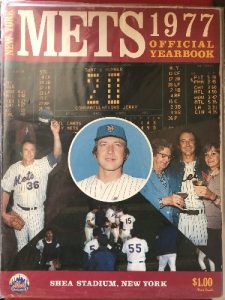
Koosman has always been family. Koosman’s family has always been family. When Howie introduced Jerry’s kids, I realized we’d met them in yearbooks and highlight films from Player Family Days gone by. One of the first things I think of when I think of Jerry was the absolute pride and joy our announcers expressed when he became a 20-game winner for the first time, in 1976. Couldn’t happen to a nicer guy, or words to that effect, Bob Murphy, Lindsey Nelson and Ralph Kiner iterated and reiterated that September. They weren’t talking about some pleasant fellow they knew a little from work. They were talking about our brother who looked out for our best interests; our cousin who always brought over something to make it a fun afternoon; our uncle who could teach us a few things. Whatever the relationship, we could relate to Kooz. He wasn’t just ours. He was, intrinsically, one of us.
Gods do not answer letters, John Updike wrote of the distant Ted Williams. Jerry Koosman will gladly entertain your queries and do so with a twinkle in his eye. So what if you’ve heard most of his stories before? They’re good stories.
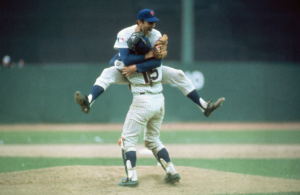
Getting to those 20 wins also shouldn’t have taken so long. Kooz was in his ninth full season then. Maybe an extra win in his freshman campaign of 1968, when he posted a 19-12 record, beyond anything any Met (even Seaver) had ever compiled, would have lifted Kooz over some kid named Johnny Bench for National League Rookie of the Year honors. Maybe perception of a career that awed his teammates and opponents begins to shape differently with just a few more runs scored on his behalf. From 1973 through 1975, Jerry allowed not much more than three earned runs every nine innings and won exactly four more games than he lost. In ’76, he could have captured the Cy Young Award. His start was slower than that of his ultimately successful rival for the hardware, Randy Jones. Jerry finished hot, however: 12-4 in the second half, with an ERA of 1.64. Jerry was always a helluva finisher. Just look at that fifth game of the 1969 World Series. Gave up three runs in the third inning and brushed it and the Birds aside until Game Five ended with Jerry Grote literally catching Jerry Koosman.
Nice catch.
Over 19 seasons with four different teams (the first dozen with us), Koosman built a viable Hall of Fame case. More than 200 wins. More than 2,500 strikeouts. A reputation as the guy batters didn’t care to face when something immense was on the line. Kooz’s case for Cooperstown didn’t so much fall short as get misfiled. The writers never saw it. Or they didn’t look — one ballot, four votes. The Mets installed him in their Hall of Fame in 1989, four years after he threw his final major league pitch. They then retreated to their secret conclave and emerged thirty years later to announce 36 was worthy of hanging alongside 41 and 31, 14 and 37.
In talking to the media before his ceremonies and the fans during it, 78-year-old Jerry Koosman betrayed no impatience with the process. He was grateful and touched and embracing the moment. At the apex of our esteem for all he accomplished, he deflected our reverence by saying he just wished he could still fit in his uniform and start over again. To trot out the hoariest of sports clichés, he was just happy to be here.
I was happy he was there, too. You can’t wait forever on these things.
Mattie Ross says that at the end of Charles Portis’ sublime True Grit, a benediction so flat and matter of fact that it comes all the way around and serves as an elegy in spite of itself. Those words keep creeping into my mind as the Mets continue their freefall out of contention and interest and eventually awareness — a plunge that continued Friday night against the shell of the Nationals. The latest bead on this thoroughly depressing string was a 2-1 loss that I’ll sum up as “once again, they didn’t hit at all,” because that fact makes anything else that happened superfluous.
The Mets were in their black uniforms again, a get-up that was once trendy (or at least enough to make the cash registers ring) and is now somehow nostalgic (or at least enough to do the same). The idea of bringing back the black was to channel the Mike Piazza Mets of ’99 and ’00, but unfortunately the current Mets resemble a less celebrated Piazza squad — the 2002 team.
In fact, they’re eerily similar.
The 2002 Mets entered August having won 55 games and were in second place albeit hopelessly behind the Braves, yet within shouting distance of the wild card. When September came, they were in last place and we all knew our October calendars were clear. That’s what going 6-21 will do to you.
The 2021 Mets entered August having won 55 games and were leading their division. They’ve gone 6-19 since then, with three games to go before September, plus a chance to technically lose another game in April thanks to a suspended game against the Marlins. And once again, we’re all more than available for October.
Time has smeared 2002’s August plummet into a vaguely unpleasant blur, but I do remember how it felt, and that it felt pretty much like this horrible month has felt. First pitch came not with happy anticipation but with a tightening of the gut and a throb at the temple, and even if something good happened you braced for impact rather than celebrating. The 2002 club got blown out of some games and just fell short in others, but the details stopped mattering — losing ceased to be an “if” and became a “how.” It’s the same thing 19 years later, except we also get to enjoy about a billion extra strikeouts and the prospect of getting screwed by replay.
The 2002 Mets are long gone, of course, unless you count Tony Tarasco standing in the first-base coach’s box — he’s the guy shrouded in cobwebs and loneliness. So’s the stadium where those Mets played — it’s a parking lot. In fact, only one person who played for the Mets at Shea still has a spot on a big-league roster. (That would be Joe Smith, though Oliver Perez is still hurling balls in anger for the Toros de Tijuana.)
That seems wrong, but it’s not. It never is. Because that’s what time does — it marches, and then it jogs, and then it sprints. Players morph into coaches and into visiting dignitaries in golf shirts and finally into old men, stadiums get knocked down and hauled away and remembered only on plaques, seasons recede and grow indistinct and are encased in the amber of trivia.
Except sometimes a memory emerges, sharp and startling — and just as quickly revealed as impossibly long ago.
You probably noted the death this week of Charlie Watts, who was the rock upon which Mick Jagger and Keith Richards rolled. When I heard the news, I flashed back to October 1989 and the one time I saw the Stones.
It was at Shea — the only show I ever saw there. (Not yet born when the Beatles got outscreamed; a couple of years too young for the Clash or the Police; missed Bruce Springsteen; Billy Joel’s not my cup of tea.) That October I was in college but elsewhere for reasons now lost, friends of mine got tickets but couldn’t get mine to me ahead of time, and because we were young idiots, the entirety of our plan was to “meet up at Shea.”
It went about as well as you’d guess. Living Colour opened for the Stones, and I was actually more excited to see them than the headliners — they had just become MTV darlings behind the incandescent stomp of “Cult of Personality.” But I didn’t get to see Living Colour play a note, because I was circling Shea Stadium in increasing dismay, hoping forlornly to spot one of my friends among a crowd that numbered in the tens of thousands.
Somehow, after Living Colour finished playing, I was lucky enough to run into my people and so got to actually attend the show, which was fun but also oversized and distant. Still, it was a kick to register that yes, that little figure doing that cocksure strut down there was Mick Jagger, and Keith Richards was clearly and obviously Keith Richards even from 300 feet away, and the guy who wasn’t Keith Richards was Ron Wood, and the one standing still was Bill Wyman, and the head and moving arms behind those drums belonged to the incomparable Charlie Watts.
The rest? Eric Clapton came out to jam on a blues number, which excited other people a lot more than it did me. We were in the mezzanine, and during “Sympathy for the Devil” I realized that the stands were actually swaying and flexing beneath our feet, which seemed bad, and then the upper deck was doing the same thing right above our heads, which seemed worse. Alarming, but when the same thing happened years later during the playoffs, I shrugged and assured my wife that if Shea had survived the Stones it would also survive lunatics jumping up and down about baseball.
I remember two moments from that show more clearly, though.
The first is that Jagger took advantage of some hidden stairwell and emerged atop the scoreboard, doing his bantam-rooster pirouette amid the black metal skyscrapers at its crown — a strange place to see anyone, let alone him.
The second moment was when Jagger sized up his surroundings and snarked, “So the Mets didn’t make the playoffs this year — too bad.”
It’s hard to be anything but anonymous in a crowd watching the Rolling Stones, but I found a way — booing Mick Jagger will get you noticed.
The other night I was waiting for fancy tacos at Citi Field, and saw that same chunk of metal skyline where it now adorns Shake Shack and Blue Smoke, and I thought of the Stones and Charlie Watts and that moment, and then I did the math.
Thirty-two years. Time just gets away from us. Charlie Watts is gone and so is Shea, or at least most of it, but the Stones continue, at least in some form, and so do the Mets. Though they’re not going to make the playoffs this year. Too bad.
My old pal Dan almost apologized upon offering me use of his tickets for Thursday night. If I couldn’t make it, he said not to worry. “There are still other games to endure.” This is how Mets fans talk to one another in Augusts like these. There’ve been a few.
There was one 41 Augusts ago, in 1980. The backside of an uplifting year had shown its ass. We didn’t know just how harsh the mooning would be before the schedule mercifully pulled up its drawers. Nineteen Eighty, my demographic contemporaries will recognize instantly, had been the year the Magic was Back. Was. The “is” had fizzled out of the Magic in the middle of August, as the Phillies came into Shea for an extended weekend series, Thursday to Sunday, and swept five absolutely distant games. None was close. The Mets had been hanging onto the cusp of .500 and the fringes of the NL East race. That ended in a burgundy blur. Now it was the week after and the Giants were in town. To my surprise, I was asked to the Wednesday night game. Usually, even with Magic in the air, it was me soliciting company.
I looked forward to that game even as the Met backpedaled from contention. I wanted to go and join my fellow Mets fans, 13,488 of us in all, in thanking the Mets for elevating our summer. From the middle of May until the middle of August we won 47 of 86 games. We won about 40 of those games in our last at-bat — or so it seemed. Even if the descent to Earth had been swift and definitive, the melody lingered on. You have to believe we are magic. Nothing can stand in our way. Of course we’d shower love on these 1980 Mets. Of course we’d give every Magical Met a hearty ovation.
Of course this didn’t happen. It was just a Wednesday night. The Mets lost to the Giants, 2-1. Mark Bomback threw seven strong if largely unsupported innings. Lee Mazzilli was thrown out at home trying to score from second on a Claudell Washington single. Thrown out by a lot, as I recall. Reaction to the Mets was muted. So would be the Mets’ ability to win more games in 1980. The other day I told you about the best Final Forty finishes in Mets history. The worst belonged to 1980: 9-31, which was just around the corner and down a manhole from that Wednesday night.
Still, I’m glad I went to Shea Stadium that Wednesday night all those Augusts ago, just as I’m glad I endured this last Thursday night at Citi Field in this August. Endured but enjoyed. That’s the best a Mets fan can do. How can a Mets fan stand such times and live? With friends like Dan and friends like Rob, the latter joining me for this final endurance contest against the 2021 Giants.
Unless we see them again in the playoffs.
Dan’s seats are situated under the carbonated soft drink advertising section, which suited Rob and I just fine since we’re old beverage magazine hands. Beverages were a fine idea at Citi Field as August schvitzing encouraged liquid intake. The only people in the ballpark probably not sweating were the Giants, at least figuratively. Do these erstwhile first-place Mets cause division leaders who’ve demonstrated endurance at the tops of their divisions to perspire? In the least?
Maybe a little, once Pete Alonso clanged a ball far over the left field foul pole and off the windows of the aspirational dining club in left field, with Javy Baez trotting home in front of him after another take-no-prisoners double from our very own Howard Cosell. Gabe Kapler challenged Chelsea to examine the Polar landing spot to make sure what Pete sent screaming didn’t veer into loud strike territory. As the replay engineers hauled out their microscopes (still warm from chintzily subtracting a Brandon Nimmo double in the fifth), Rob and I had to go with our original view, as the only drawback of the seats under the carbonated soft drink advertising section is an obstructed sightline to the big video board. We were also blocked from seeing the lineups and line score. We were probably better off that way.
Pete wasn’t instructed to uncircle the bases, meaning his two-run, sixth-inning blast officially resonated, briefly hushing the Giant-cheering hordes and temporarily knotting the game at two while supporting Carlos Carrasco like no 1980 Met supported Mark Bomback. Carrasco was a revelation. He was the Carrasco we’d heard so much about but had barely glimpsed since his return from the IL. Carlos went seven. Everything after the game’s first three batters — who included LaMonte Wade (singling) and Kris Bryant (homering) — was brilliant. The former Clevelander kept the Giants so at bay that Luis Rojas had no choice but to leave him in rather than reflexively remove him when the visitors’ order came around for a third time.
It occurs to me I’ve just detailed the only tangible highlights of Thursday night’s Mets’ 3-2 loss, which completed their tour of the upper echelon of the National League West at 2-11. Seven of those season-killing losses were by one run, making them not one iota more endurable than the four that were lost by more runs. As in the previous ten LA/SF defeats, there were scads of lowlights. I could detail those, too, but let’s just say our view of them was obstructed. More enjoyment than endurance that way.
No matter what the standings have to say, a night at the ballpark feels a little like getting away with something. And Wednesday night was nice at Citi Field — a hot day turned into a breezy evening, enjoyed by a boisterous crowd. Even our neighboring Giants fans — of which there were admittedly too many — were good company.
But then why wouldn’t they be genial neighbors? The Giants are having one of those years where everything goes right, where 26 charmed baseball lives intersect no matter how many times you pinch yourself in disbelief.
The Mets, meanwhile, are having whatever the opposite of that year is.
Wednesday’s game was by turns depressing and bizarre. Both teams played cover-your-eyes abysmal defense at critical junctures and made inexplicable decisions on the basepaths, and Javier Baez was an avatar of chaos all by himself, authoring a couple of dazzling infield plays and also short-circuiting an inning by charging for third on a line drive to the center fielder. But Baez had plenty of help at the whole short-circuiting thing: The Mets hit into an amazing five double plays, a spectacle that was only lacking Joe Torre and Felix Millan to wax philosophical about failure.
The postgame kerfuffle was about whether or not Luis Rojas should have taken out Taijuan Walker in the seventh having thrown only 74 pitches — 73 of which were effective. Walker certainly didn’t think so, spreading his arms in angry disbelief as his manager signaled for the bullpen. Yes, there were runners on first and second and the Mets’ one-run lead was very much imperiled; no, those runners hadn’t gotten there through any fault of Walker’s, unless having stone-gloved teammates counts as a fault.
On the other hand, with two lefties on deck Rojas opted for lefty specialist Aaron Loup, who’s been pretty much spotless even as his fellow Mets have stumbled in the mire. So of course Loup made his first bad pitch in weeks, giving up a double to Brandon Crawford that sealed the Mets’ fate and ensured a tense press conference for Rojas, who looks about 10 years older than he did in mid-June.
Was taking Walker out a mistake? Sure. Maybe. Or maybe if Rojas leaves Walker in, maybe Crawford hits the ball 10 feet higher and farther. Would you really have been surprised at that turn of events, given everything that’s happened this month?
The real killer? It’s that the Mets had 16 baserunners and only two of them scored. (They only left nine on base, because double plays.) That was on display in the ninth, which was exciting and farcical and ultimately futile, coming down to Pete Alonso against Jake McGee with the bases loaded and two out. In a better world, Pete ended the long at-bat by roping a single over the infield for a walk-off win — or, sure, by walloping one over the fence, but why be greedy? But that better world slipped from the Mets’ grasp a while ago. In this world, Alonso hit a soft little flare that landed harmlessly in Tommy La Stella‘s glove, the Mets were done, and another lost night sighed to a close.
A sense of finality hovered over the Mets on Tuesday night. Last series of the proving-ground stretch versus the Dodgers and Giants, a span in which they’ve mostly proven they are almost if not quite completely done contending. Last serious shot, with 38 games to go from a distance of 6½ out of first, to begin making up ground on the Braves before it’s absolutely too late. Last realignment that might make a significant difference, as Francisco Lindor returned to active duty to partner with Javy Baez as the DP combo of dreams. Jeff McNeil moved to left. Dom Smith and Jonathan Villar were on the bench. Tylor Megill, who stymied the Giants for six innings six days earlier in San Francisco, was on the mound.
Last chance, last stance, last dance. And Mets came in last in their last tango in Flushing. By a lot.
The Giants of the best record in baseball clobbered Megill and the spiraling Mets, 8-0. Our surprising rookie hurler was no surprise to the team that figured him out from the previous week. Three Giants smacked four homers off Tylor, who gave up eight runs on eleven hits without making it out of the fourth inning. No Met batter — not Lindor, not Baez, not McNeil nor anybody else — put serious wood to Sammy Long or the mop-up relievers who followed. Poor J.D. Davis took a pitch off his batting helmet, but didn’t leave the game. The game left the Mets, however. So, perhaps, did the illusion that the legitimate competitive aspirations they and we carried into August haven’t fully evaporated.
Except there’s another game Wednesday night, and if the Mets win that (it’s possible), they’ll cut a half-game off the idle Braves’ lead. And if they somehow win Thursday night (it’s not over before it’s started), that’s another half-game, with Atlanta mysteriously on hiatus two days in a row. Now we’re 5½ out and the Braves’ schedule toughens, while ours lightens up, and Francisco didn’t look bad at the plate by any means, and Pete is hitting pretty consistently, and Brandon keeps getting on base, and Jeff was pretty good in the outfield in 2019, and nobody can blame the Heath Hembree-enhanced bullpen very much, and the more Carrasco pitches the more he’s bound to find his form, and isn’t Syndergaard about to begin a rehab assignment?
It will be all over mathematically eventually and over beyond semantics soon enough. Until then, you never know and can’t help yourself from hoping accordingly. Even if you pretty much know it’s hopeless.
***
The year it was never hopeless, with the notable exception of a tenth inning with two out and nobody on, the Mets down by two, is going to be the subject of a forthcoming 30 for 30 feature on ESPN, airing four hours over two nights, Tuesday September 14 and Wednesday September 15, 8 PM EDT both evenings. Knowing that Once Upon a Time in Queens deeply explores the mythology and reality of the 1986 Mets and that it’s directed by Mets fan and ace auteur Nick Davis (who gave us Ted Williams: The Greatest Hitter Who Ever Lived on PBS’s American Masters three summers ago) means I’d recommend you set your DVRs as soon as you can without my knowing anything else about it.
But I do know that I sat for a full day’s interview with Nick in February 2020 for the film and that I saw my talking head among several others in a trailer teasing its premiere, so yes, by all means, watch it for that, too. (I’m the guy in the commercial who mentions “managers came and went, players came and went, but a core was being built.” Keeping track of Met comings and goings then didn’t require nearly as much energy as it does now.)
And as long as I’m in a self-promotional mode, I’ll add that if you’re in the greater Freeport area — Long Island, not the Bahamas — I’ll be at the village’s splendid library, 144 W. Merrick Rd., on Thursday September 16, 7 PM, the night after Once Upon a Time in Queens initially airs and an off night on the local NL schedule, to talk Mets fandom, Mets writing and, should circumstances allow, the Mets’ unforeseen rise through the current standings. For more information, check out the library’s September/October newsletter.
Perhaps you’ve read of the unique public perception of Howard Cosell at the peak of his fame. He was simultaneously the most popular sports broadcaster of his time and the most unpopular. People loved him. People hated him. People listened when he spoke.
I thought of Mets PA announcer Colin Cosell’s grandfather as I watched Javy Baez return from the injured list in Los Angeles and administer a shock to the Mets’ moribund system. He ripped doubles in the first and seventh, one that drove in Brandon Nimmo from first with the game’s first run and prefaced two more in the inning, another that set the stage for a critical two-out, two-run homer. The first double may have represented the keynote address of the day, given that it put the Mets on the board almost ASAP, but the second was the more startling in the moment, as Baez turned a single into a double because he could. After lashing his hit to left, Javy zipped around first and pulled yet another of his marvelous now you see my hand, now you don’t slides, this one confounding Trea Turner (and, boy, haven’t we wanted to confound that guy?).
Baez scored from second in the first when J.D. Davis singled him in and scored from second in the seventh when J.D. Davis homered for the first time since just after the All-Star break. Davis was a microcosm of the Mets, looking lifeless for too long, yet springing to life with Baez suddenly on the scene. That’s the sort of impact we were aware Javy had on the Cubs. That’s the sort of impact we saw in isolation before Javy got hurt shortly after coming to the Mets.
We might not remember how Baez helped the Mets in his first ten games in our colors because when he wasn’t sparking us toward a couple of victories, he was weighing us down badly (.171/.216/.343) as we commenced losing chronically. It thus dawned on me Sunday that Javy Baez is something akin to our Howard Cosell. He’s the best player we have on the field when he’s not playing worse than everybody else. He’s Henry Wadsworth Longfellow’s little girl with the curl to whom Ralph Kiner was so fond of referring. “When she was good, she was very good,” Ralph liked to say. When she wasn’t, she struck out a lot and threw wide of first.
Javy’s here for the duration of 2021, and maybe he and we will bottle his lightning, especially when it’s paired with that hopefully produced by his pal Francisco Lindor, who looms as the co-best player we have on the field when he’s not pressing or slumping. Let’s not kid ourselves: these are talents. Let’s also not kid ourselves: Lindor excelled in all ways except consistent hitting, which made us less impressed with the rest of his game; and all we’ve had from Baez are flashes overshadowed by flailing — salivating blips at most. It’s been a small sample size from Javy either way. Sunday’s sliver of that sample, however, was the brightest light we’ve seen from any Met hitter for a while.
The runs in the first particularly benefited starting pitcher Marcus Stroman, who had some room to breathe for six innings. The Dodgers got two back in the fourth, but they never headed Stroman and made Luis Rojas’s decision to send Marcus to bat for himself in the top of the sixth with two out and the bases loaded a reasonable one. If the Mets are down as they’ve been so often, then it’s a tougher call. But keeping the pitcher who was effectively defending a lead to defend it a little longer seemed like the right move to me. Stroman didn’t drive home an additional run, but he did proceed to put up an additional zero. Davis’s homer and the splendid bullpen work from Familia, May and Diaz that covered the seventh through ninth made it academic, as the Mets posted the 7-2 salvage job they desperately needed, yet regardless of outcome, I really loved seeing Stroman go back to the mound for the bottom of the sixth. I think I loved it almost as much as I would have loved seeing Stroman somehow poke a ball through the infield.
These are the intervals I’m going to miss should the National League take the bat out of pitchers’ and the decision out of managers’ hands. The tactical rubber meets the strategic road here: a pitcher with a one-run lead and relatively low pitch count versus an enhanced opportunity to extend the lead, but with the caveat that you’re removing the guy who’s keeping the opposition down while burdening your bullpen with yet another inning of work and therefore adding another layer of uncertainty to a close game. Of course you don’t know that Stroman’s not going to give up the tying or go-ahead run when he goes back out. You don’t know what a theoretical pinch-hitter (Conforto and Smith were on the bench with a righty on for L.A.) is going to do. You don’t know how the impact of using a pinch-hitter in the sixth shakes out innings later and that bat is no longer available.
A chance to be right. A chance to be wrong. A chance to find out. This is what I hate to think will be absent from half of baseball in the near-immediate future.
The Mets, meanwhile, are almost absent from the division race they once led. From four games ahead on July 31 (Javy’s first night as a Met) to a barely plausible seven games behind three weeks later. The Mets didn’t do it alone, though. The Braves went crazy, winning 16 of their last 18, including a just-completed 9-0 road trip. Can you imagine a team that gave up a longstanding first-place lead and dropped like a rock in the heat of summer recovering both their dignity and their perch?
You don’t have to imagine it. It happened. Why, it happened to the Braves! Granted, it happened 39 years ago, but just because they don’t offer straws at Citi Field anymore, it doesn’t mean we can’t grasp at them. On July 29, 1982, the Cinderella Braves — managed by an on-the-rebound Joe Torre after five seasons muddling along in Flushing — led the NL West by nine games. Then they spent about three weeks blinking. In the span of that veritable blink, on August 18, they trailed the Dodgers by four games. That’s a thirteen-game swing in almost no time at all, roughly equivalent to what’s happened between us and the contemporary Braves.
Those 1982 Braves picked themselves up, dusted themselves off and started all over again, taking back the Western Division lead before August was over…yet falling behind by three games as late as September 22…then picking/dusting/starting once more to rally and clinch the division on the final day of the year.
By the way, the Mets will finish this season in Atlanta. I wouldn’t suggest the scenario described above could repeat itself nearly four decades later. I’m just saying it did happen.
Listen, if the Braves are going to keep up their current pace, well, good night NL East for 2021. But if you subscribe to the theory that what runs hot eventually turns cold, Atlanta is bound to cool off. And maybe we’re bound to warm up. That’s kind of what we’re down to in terms of hope: the law of averages evening out— plus second-place Philadelphia not getting in the way.
Other than we’ve got one occasionally all-world middle infielder back and we’re about to get our other occasionally all-world middle infielder back, there is nothing beyond a one-game winning streak to indicate this is a team on the verge of a hot streak. Simply not being hopeless would be a good first step, and they took that to end their visit to California.
Pulling into our parking lot from running pre-hurricane errands, around 2 o’clock, I remembered the Mets would be playing at four.
“Damn,” I thought.
By 4 o’clock, I was nonetheless excited when the game came on. It’s Pavlovian. Or Pavlickian, perhaps.
Hurricane prep is underway.
By 7 o’clock, with Brandon Nimmo having garnered three hits of three different varieties (a triple shy of the cycle, just like me, except I also lack the single, double and homer) and Pete Alonso having flexed at the plate for a two-run dinger (and flexed in the dugout because, well, Pete), I was convinced we might not lose. Not convinced we’d win, but absolutely certain I couldn’t be sure. It had been one of those games when the opponent should have buried us early, yet failed to. Rich Hill bent but only frayed. He didn’t altogether break. Max Scherzer was less invincible than usual. We made inroads. We seemed more alert than usual. Our bullpen was mostly made of stern stuff. I know it was the Dodgers. I know they have too many Turners. I know Unfrozen Caveman Pujols went deep. I know we were never ahead or even tied. But I had one of those feelings like I had in May, June and July when we trailed and trailed and trailed only to take a late-inning lead and win.
We’re not as spunky in months that begin with an ‘A,’ however. The conviction that we might not lose was a false positive. It can still be said we were never ahead or even tied.
Out in Los Angeles, the Mets rest up to attempt to not get swept. Here on Long Island, it’s back to battening down hatches. I sure hope Hugh Quattlebaum is coaching Hurricane Henri, in which case it won’t hit at all.
Piazza: Catcher, Slugger, Icon, Star by Greg Prince is available from Amazon, Barnes & Noble and other online booksellers.
Amazin' Again: How the 2015 New York Mets Brought the Magic Back to Queens by Greg Prince is available from Amazon, Barnes & Noble and other online booksellers.
Volume I of The Happiest Recap: 50+ Years of the New York Mets As Told in 500+ Amazin' Wins by Greg Prince is available in print and for Kindle on Amazon.
Faith and Fear in Flushing: An Intense Personal History by Greg Prince (foreword by Jason Fry), is available from Amazon, Barnes & Noble and other online booksellers.