

On Thursday evening, the Mets saw fire, or at least the haze from the smoke that wafted down to Philadelphia from Canada, and responded well, all climate conditions considered.
On Saturday afternoon, the Mets saw rain. A start time accelerated by an hour and an eventual 48-minute delay didn’t keep them from appearing all wet.
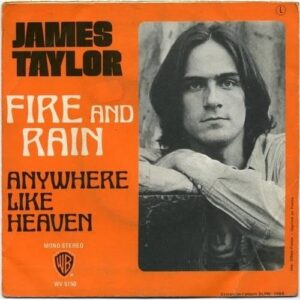
The James Taylor series concludes today with the 100th game of a season that has proceeded as the spiritual opposite of a sunny day that one thinks will never end. But the skies over Citizens Bank Park look pretty good.
Mets have seen it all in Philadelphia.
Such could not be said of the visiting team that lost on Saturday, 6-1. Not good with the catching the ball, nor throwing the ball, nor hitting the ball. Pitching the ball didn’t amount to much, either. Tyrone Taylor, no relation to James Taylor as far as I know, homered in the second inning for the Mets’ sole run. By then, the Mets trailed, courtesy of the unfailingly polite Kyle Schwarber. Schwarber is almost always courteous enough to provide a fan in some seat with a souvenir. The one he launched to the stands in the first off Sean Manaea furnished the Phillies with a 2-0 lead. Tyrone cut it to 2-1. No more trimming would ensue.
Sean Manaea’s outing could go into a Semiquincentennial time capsule for when people of future generations wish to know what a Mets start looked like in 2026. He threw 99 pitches. He didn’t get out of the fifth inning. He gave up four earned runs. He wasn’t really that bad, nor was he all that good. Manaea was succeeded by wild card reliever Kodai Senga, the erstwhile rotation rock who now lacks a role. Senga came in trailing, 4-1, with two on and two out. He walked his first batter on a full count to load the bases. He struck out his second batter. Throw that in your time capsule, too.
Kodai followed Sean’s example of eluding effectiveness without totally imploding. In the sixth, he allowed a leadoff triple that led to the bases being loaded again. Two runs would score with nobody out. Then Senga bore down and got the next three Phils in order. By then it was 6-1, a small Met victory when none was forthcoming. Philadelphia stranded a dozen runners. The home viewer intuited the home team could have scored more had it really mattered to them.
While Manaea and Senga weren’t razor sharp, and nobody besides Taylor (Tyrone) did anything against Jesus Luzardo & Co. to manufacture a run, this game’s time-capsule curiosity factor will stem from its defense. The Mets dropped a ball at second base, costing them an almost certain double play; batted a ball in right field with a glove rather than a bat, turning an opposition single into a double; flung a ball from home plate into right field, clear past its intended landing spot within the first baseman’s mitt; and allowed a runner who had no intention of advancing from first to second to advance from first to second when the shortstop threw a relay to third base in a hopeless attempt to nail the runner who was practically standing on third after advancing from second.
Somehow none of that contributed to any unearned runs, but it was all abysmal to absorb. Marcus Semien was the second baseman that dropped the DP ball, but on the transfer, so he wasn’t charged with an error, getting a forceout at second for his troubles, if permitting the batter to reach first. Semien was back in the lineup for the first time in several weeks, so maybe it was rust. And maybe his lethargy around the bag before that was his achy hip. And maybe there’s some other convenient explanation for why the Gold Glove second baseman brought his credentials rather than his ability to Flushing from Arlington. Carson Benge was the right fielder who couldn’t pick up the single that became a double. His misplays seem to be of the overly anxious — head ahead of his glove, or glove ahead of his head — variety, and hopefully experience aligns his approach. Francisco Alvarez was the catcher who thought he’d work a clever pickoff at first. Either a little too clever or not clever enough, for Eric Wagaman didn’t seem to be in on the plan, and as the ball Alvy zipped into right field, the runner, not stealing anytime soon Schwarber, plodded from first to third.
As disturbing as any of the Met misplays was Francisco Lindor thinking it wise to throw to third as that man again, Schwarber, was tagging from second to third on Alec Bohm’s very deep fly ball to center. Schwarbs may be slothlike, but he was gonna be safe. More critically, Bryce Harper was on first, behind Lindor. As Francisco’s heave to third went wayward, Harper zipped ninety feet to second. Had the shortstop just held the ball A.J. Ewing had delivered him, Harper would have been planted on first. It’s an elementary baseball play.
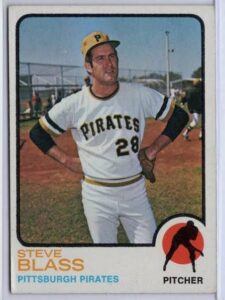
One rarely wishes Steve Blass would spring to mind.
One wishes to extend a little grace to a player who missed months due to injury, but several weeks since his return, Francisco Lindor seems to be rapidly turning into an everyday version of Steve Blass. Blass was the top-notch Pirates pitcher who, all at once, went from being an ace to incapable of registering outs. A 19-game winner in 1972 when he was 30, he was done by 1974, his age only 32, his ERA (majors and minors) nearing 10. It’s an extreme comparison, but Lindor, 32, isn’t hitting a lick, which doesn’t much separate him from his teammates, but, nevertheless, his offense is glaringly lickless, to say nothing of lifeless. Defensively, he might as well be Ellen Burstyn portraying Alice Hyatt, for Lindor doesn’t field here anymore. He could be processed as simply a typical 2026 Met having a lousy 2026 Met season, except, dammit, he’s Francisco Lindor. He was the MVP of the non-Ohtani portion of the National League in 2024. He was the starting shortstop, on merit and reputation, for the National League All-Star team in 2025. He is nowhere currently, with “currently” growing uncomfortably longer daily.
Rain, and not just the metaphorical or Met-aphorical kind, eventually arrived at Citizens Bank to pause the miasma. It didn’t shorten the game, also dammit, but it did seem to sap the motivation from the Phillies. We got to see Xzavion Curry complete two strong innings of mop-up relief and, as of this morning, continue to avoid the SPROINGGG!!! of the bullpen ejector seat that designated his myriad predecessors — Guillo Zuñiga, Matt Seelinger, the undeployed Dan Hammer, to name three — for assignment. Maybe someday Xzavion will be excised and outrighted to Syracuse the way all Met bubble relievers are, but that day is not today.
Maybe someday the Mets will properly handle the ball and consistently hit the ball and do all the things that win a ballgame. Thursday they did. Saturday they decidedly did not. Always a new day awaits with this team, if not a new story. Take this one to your time capsule and bury it.






It was 4-1 when I decided I had better things to do with my time. When I saw that Lindor was leading off instead of Ewing I realized that winning games was no longer an objective. Why else replace someone who’s been relatively productive with someone who specializes in wasted ABs?
Unless maybe Stearns’ talk about run prevention was meant to apply to our offense.
Maybe try to shake things up and give Lindor fewer chances to fail with runners on base? Yeah who knows.
[No. Stop being tedious about this. — Mgmt]