The blog for Mets fans
who like to read
ABOUT US

Faith and Fear in Flushing made its debut on Feb. 16, 2005, the brainchild of two longtime friends and lifelong Met fans.
Greg Prince discovered the Mets when he was 6, during the magical summer of 1969. He is a Long Island-based writer, editor and communications consultant. Contact him here.
Jason Fry is a Brooklyn writer whose first memories include his mom leaping up and down cheering for Rusty Staub. Check out his other writing here.
Got something to say? Leave a comment, or email us at faithandfear@gmail.com. (Sorry, but we have no interest in ads, sponsored content or guest posts.)
Need our RSS feed? It's here.
Visit our Facebook page, or drop by the personal pages for Greg and Jason.
Or follow us on Twitter: Here's Greg, and here's Jason.
|
by Jason Fry on 12 April 2025 7:49 am Mets 3, A’s 1, game called after four and a half innings because your recapper was weary and collapsed into his bed.
Wait, they don’t do things that way? Apologies — I figured maybe they did, what with everything else that was strange about watching the Mets and the A’s play in a ballpark that looks perfectly charming but definitely minor-league and plays perfectly charming provided you like baseballs rattling around like you’re in a Pachinko parlor. Plus hadn’t the Yankees and Giants just decided that an eight-run San Francisco lead got the point across and there was no reason to keep playing in a miserable pelting rain? (A friend in San Francisco asked me why they aren’t picking up where they left off today; I had to confess to not being entirely clear on how that works.)
Before my shocking dereliction of duty, I had a few miscellaneous thoughts:
Sutter Health Park‘s berm (called, inevitably, Home Run Hill) looks like a lovely place from which to take in a baseball game — something about seeing all those oaks out there in shots of the outfield made me sigh with happiness. I’ve never been to Sacramento aside from its airport, but strolling over the gold-painted Tower Bridge looks like it would be an excellent way to arrive at or depart from a game, a la the not dissimilarly colored Roberto Clemente Bridge in Pittsburgh. There’s even a vineyard in the park, and who wouldn’t approve of that?
That said, the park pretty clearly needs some work, as well as facing some issues best solved by having the A’s move on — to Las Vegas, should they continue with their current risible plan, or back to Oakland after John Fisher has a close encounter with three spirits and is moved to transform himself into a tolerable human being. (Or is run out of town by a howling mob hunting billionaire nepo babies — I’m more about the what than the how on this point.)
SNY was struggling with sound, lighting and everything else, and balls were not only traveling far but also pursuing odd geometrical journeys. (Luis Torrens’ second-inning double was particularly baffling.) And keep in mind that it isn’t even hot yet — add a bit more distance to line drives courtesy of heavier summer air and look out. Gary Cohen and Ron Darling had put in the work of surveying current and former players about the park, and found a good contrast in comments from former A’s Paul Blackburn and Dallas Braden. Blackburn said Sutter Health was actually known as a respite for pitchers tired of getting whacked around in the notoriously hitter-friendly Pacific Coast League; Braden pointed out that Blackburn’s experience came facing minor-league hitters.
Speaking of pitchers, has anyone spared a thought for poor Griffin Canning? In three starts he’s faced the Astros, Blue Jays and A’s — all American League teams, two of them from a division whose hitters are familiar with his tenure as an Angels prospect turned suspect turned former Angel. Don’t you bet he would have preferred unveiling Griffin Canning 2.0 against various Marlins, Nationals and other clubs made up of guys with less of a handle on him? Canning’s reinvention has gone pretty well so far, all told, but that little wrinkle strikes me as cruel.
No Port St. Lucie prediction seems more promising than Darling dreaming on how many runs Pete Alonso might drive in hitting behind Francisco Lindor and Juan Soto. Pete’s at 18 already, which is a 224-RBI pace. (Don’t check my math, that’s mean.) I don’t think Hack Wilson‘s heirs are muttering nervously quite yet, but watching that number climb looks like it will be a fun summer pursuit. And — yes, I heard your objections a moment ago — the credit belongs primarily to the Polar Bear himself and not his collaborators in runs delivered. You always doubt early-season narratives that a guy has changed, unlocked something, and so forth — most of these February and March roads to Damascus wind up leading to all too familiar places. But Alonso had another night in which he calmly refused to get himself out, watching bait pitches impassively and waiting for something in the strike zone that he could obliterate. Alonso made one out all night, and that was a sacrifice fly.
(Also: If this keeps up that man is going to get paid. Which will be stressful for us as Mets fans, but stressful in a different way than last offseason. It would be far better to debate spending Steve Cohen’s money for him based on hopes about what Pete Alonso might do rather than worries about what he might not do.)
Poor Mark Vientos. He no longer looks like he’s holding the bat upside down, but he’s also hitting in buzzard’s luck — Lawrence Butler‘s third-inning catch was particularly cruel, ending a quality AB with Butler pickpocketing another ball that wound up at the margins of playable territory, another head-scratching ball-in-play outcome. Maybe Sutter Health is actually a tesseract?
As for whatever Edwin Diaz was doing at the end there, well, I was asleep. Apparently that was the right choice.
by Greg Prince on 9 April 2025 11:26 pm Oh, right. Winning streaks don’t continue into eternity. I’d almost forgotten.
If the Mets had to lose for the first time after doing nothing but winning for six games, the way they went down on a chilly, sunny Wednesday at Citi Field was about as acceptable an aberration applicable to the assignment as could be asked for. Not that you’d ask for it, but sooner or later, the perpetually pesky Pesci are gonna bite ya. Better a definitive defeat than one of those Marlin specials that involves the jaws of victory being snatched from, usually via a wild fling to the backstop at the most critical of junctures or some similar lulu of an inflection point.
Nah, this was just the kind of loss you get because now and then you’re gonna lose. It still sucked, but it could have sucked more. How’s that for spoonful of rationalization?
Through eight innings, the matinee did verge on agonizing, as the only two runs on the board, both scored by Miami, came about courtesy of shaky New York defense in the fifth. Brett Baty, a third baseman learning to play second, overthrew Francisco Lindor, allowing the runner Brett thought he might get, Kyle Stowers, to advance an extra ninety feet. From third, Stowers had no problem scoring on the succeeding Matt Mervis single. And the fellow who hit the ball that moved Stowers along in the first place, Jonah Bride, crossed the plate from second base after Brandon Nimmo neither caught nor corralled a two-out Nick Fortes blooper that appeared catchable and corralable.
The interim result stood as an immensely frustrating 2-0 deficit for the longest time, though, honestly, Tylor Megill wasn’t sharp in his four-plus innings (90 pitches), while Max Meyer went largely untouched through six-and-a-third. Lindor disrupted Meyer’s no-hit bid in the sixth, only to be erased on Juan Soto’s subsequent double play grounder. Pete Alonso led off the seventh with a single, but Anthony Bender entered with one out to finish off that semblance of a threat.
The Yeomen from the Bullpen did their thing following Megill. Max Kranick should have gotten out of the fifth unscathed and was splendid in the sixth. Ryne Stanek and Huascar Brazoban took care of the seventh and eighth. I held out hope for Mets Magic as the game stayed close, but Edwin Diaz came on for the ninth mostly to get some work in, and it showed. Soon it was 5-0, and I remembered that no team — not even one that surged into first place for a day — stays unbeatable.
A 5-1 homestand that withstood the Blue Jays altogether, the Marlins mostly, and the elements with sufficient layering was a representative enough sample of what the 2025 Mets can do. They did it without much from their second base on-the-job trainee, not to mention their actual third baseman who seems to have forgotten he ascended to the cusp of stardom last October. Given that neither of the erstwhile Baby Mets is off to a flying start, maybe it’s crossed your mind to option Baty (.111) or Mark Vientos (.119) to the minors. MLB has a more expansive solution: send the entirety of the club to a Triple-A facility for the weekend. Next stop for the Mets is the home of the Sacramento River Cats and their cohabitants for a couple or more years, the No Longer Oakland Athletics.
I’ve watched a few innings of A’s baseball as it’s played under the lights of Sutter Health Park. My main impression was it sure is minor league. À la Hoosiers, however, the distance from home to first is the same as it is in the majors, so it’ll do for three games. The A’s will be there longer, until Las Vegas either builds them a palace or comes to its senses. What this Mets @ A’s matchup will miss by not evoking the vestigial aura of 1973 it will gain in novelty. It’s just one series. If Rob Manfred doesn’t mind this sort of thing, why should we?
Because we’re baseball fans.
by Jason Fry on 8 April 2025 11:39 pm A day after Monday night’s freeze-fest, the Mets played a game that had been moved to Tuesday daylight hours and yet somehow took place in even less pleasant conditions. (They closed the Promenade, which ought to tell you something.) That verdict was clear pretty much from the jump: Clay Holmes‘ third pitch of the afternoon was a sweeper that Xavier Edwards popped to right field, a harmless fly ball until it took a videogame cheat-code swerve, plummeting to the ground out of reach of a befuddled Juan Soto. Holmes, perhaps understandably out of sorts, lost his command late in the inning and walked off the mound down 2-0. But about a split-second later Francisco Lindor rifled a Connor Gillispie cutter into Soda Land, cutting the Marlins’ early lead in half, and you had the feeling no pitcher was particularly enamoured with the idea of plying one’s trade out there in the wind and the cold.
Holmes’ first weeks in a Mets uniform have been a trifle odd: He looked electric in spring training, then tentative the moment the games counted. (Somewhere, Brett Baty looks around nervously.) Tuesday’s game looked like more of the same in the early going, with Holmes feeling his way, but he figured something out in an electric fourth inning, starting a run that sustained him until he appeared to tire in the sixth.
Meanwhile, the Mets got their own meteorological assist: With Soto on first in the third with two out, Pete Alonso popped up a ball that the wind made its plaything, plopping down just inside the line for a Texas Leaguer double, one that scored Soto on account of it having been in the air for about half an hour. That was a harbinger of the Mets finally looking like the Mets of preseason predictions, outhitting a so-so day for the moundsmen. (Told you!) Brandon Nimmo and Starling Marte keyed a four-run fifth, only to watch Huascar Brazoban give three runs back in his first shaky outing of the year, with Derek Hill‘s home run the key blow. Hill later contributed a circus catch to take three RBIs away from Tyrone Taylor, though that one gets an asterisk because he was positioned absurdly, about which more in a bit.
The Mets extended their lead convincingly in the sixth, a frame that led you to wonder what, exactly, the Marlins were doing out there. Amusingly, it wasn’t Keith Hernandez who blew his stack watching the circus in need of a tent but Gary Cohen, who was indignant and properly so. Why did the Marlins walk Soto in front of Alonso, when they’d seen four and a half games’ worth of evidence that Soto isn’t quite right at the plate while Alonso is locked in? Why, having walked Alonso to set up a double play, did they then play the infield in? Why did Pete bat with the Marlin outfielders positioned like they were trying to prevent an extra-inning walkoff tie? Why doesn’t first-year skipper Clayton McCullough have an experienced bench coach to ask these questions in time? Why is McCullough dressed like a guy who’ll dig your car out of the snow in return for a few bills?
(Oh sorry, that last one was my question. But still.)
Cohen was right about all of the above; they’re not the kind of questions one would expect to hear posited by an enemy announcer in the third week of the season. Though I suppose my rejoinder would be that Marlins have always been and always will be a shabby outfit that a benevolent God wouldn’t allow to exist, which makes any other questions about them irrelevant.
Honestly, between spring training and the start of the year we’ve seen way too much of the Marlins. Win or lose, after Wednesday’s matinee we won’t have to look at them again until late August, when Sandy Alcantara will be employed elsewhere (possibly even by us!) and they’ll be even more low-rent and anonymous than they are now. Suffice it to say I won’t miss them.
* * *
Octavio Dotel was never a Marlin, which is a bet I would have probably lost, since Dotel’s 15-year career saw him ply his trade as an Astro, Athletic, Yankee, Royal, Brave, White Sock, Pirate, Dodger, Rockie, Blue Jay, Cardinal and Tiger — a record for franchise portability that would stand until Edwin Jackson proved slightly more well-traveled. (Dotel got off a good line that Jackson’s longer CV shouldn’t count because he kept getting released.)
And he was a Met, of course, starting his career with us in 1999, a tour that ended with Dotel as the winning pitcher when Robin Ventura hit one back to Georgia. The game I remember most from his brief tenure, though, came in August against the Padres, one of those hold-your-eyelids-open-with-toothpicks West Coast games that you resent even before they start.
There was Dotel out there in only his ninth big-league start, one that saw him arrive with an ERA near six and the burden of having just been roughed up by those same Padres five days earlier at Shea. But Dotel had something that night, and when he struck out the side in the third, not having allowed a hit, I let myself get excited. There he was, a doe-eyed stringbean, but he was throwing gas and you could see his confidence growing with each out recorded.
Dotel got through the fourth without a blemish and then the fifth and then the sixth, and despite 30 years on Earth having taught me better, as he went to work in the seventh I was certain: Octavio Dotel was going to throw the first no-hitter in Mets history, and nobody was going to witness it because who would stay up late to watch a rookie face the same team that had just tattooed him? Should I wake up Emily? Call everyone I know? Go out in the backyard and yell for the neighbors to turn on their TVs?
In the seventh it all became academic: Dotel walked Tony Gwynn, walked John Vander Wal, and then Phil Nevin hit a three-run homer that took away the no-hitter and the lead with one swing. (Don’t worry, it turned out OK: Edgardo Alfonzo hit a 10th-inning homer off Will Cunnane and Armando Benitez didn’t blow the save.)
Dotel was traded to Houston after that first year with the Mets in the deal for Mike Hampton and Derek Bell (whom I’ll always remember chose to live on his boat), and somehow he never came back to the Mets even though he went almost everywhere else. I was always happy to see him on the mound in the late innings for somebody, an unlikely journey that started out with him being ours and ended with him feeling like he was everybody’s.
by Jason Fry on 7 April 2025 11:17 pm If Monday night’s game had happened in late May or June, I think I would have fallen all over myself calling it taut and crisp, maybe with a side of hard-fought and close-run.
And I don’t know, maybe you called it those things while on your couch. Or, God forbid, while peering around you at a frozen Citi Field, perhaps accompanied by a luckless dog who was wondering what he/she did wrong to be kept outside and risk dying of exposure.
(Because I’m thinking of it and I get to write this stuff, in the British Royal Navy the dog watch was one of two back-to-back two-hour watches, half the usual time on duty; there’s a shameless joke in Patrick O’Brian’s Aubrey-Maturin books in which a character posits that dog watches got their name because they’re curtailed.)
You could all but sense the cold leaking through your TV screen. After two games marked by hardy fans and surprisingly robust attendance, the Mets played the Marlins in front of basically nobody, meaning auditory cameos for the fans counting down along the pitch clock as an attempted psych-out (this can stop now, thanks) as well as those miscellaneously exhorting or lamenting the goings-on. Though for long stretches you basically heard nothing at all. (Not even barking, which was for the best.)
The Mets won, 2-0, which was wonderful. But the game felt not so much crisp and taut as sort of wandery and desultory, as if it was less being won or preparing to be lost than it was simply transpiring. It seemed thoroughly appropriate that around the two-thirds point the Mets decided games like this were a bad idea, moving Tuesday’s night game up to 4:10 pm ahead of Wednesday’s matinee, with vouchers for ticket holders regardless of whether their reaction to the change was disgruntlement or delight. (Nice touch, that.)
Not that it promises to be balmy at 6:30 pm tomorrow, but the schedule tweak will give New York’s nights another week and change to warm up, with hopes that April 17’s evening affair against the Cardinals will be a little more pleasant for spectating.
As for the wandery/desultory baseball part, the Mets once again won using a recipe we didn’t expect: Going into the season, we figured the bull case was that they’d get so-so starting pitching and relief and bash their way past these limitations a fair amount of the time. Instead it’s been the opposite: So far the Mets have pitched almost immaculately, particularly in relief, while hitting just enough to make those performances stand up.
So it was tonight: Juan Soto drove in one run and Tyrone Taylor drove in the other, the latter engineered almost entirely by the hell-for-leather speed of Jose Siri from second base. Meanwhile Kodai Senga pitched well and was followed capably by Danny Young (the lone reliever with a spotty record so far, but good this time out), Jose Butto and impressive-looking closer for a day Ryne Stanek.
Baseball being baseball, one would expect this to change, and pretty soon. Wait a week or so and I wouldn’t be surprised to find us bemoaning the struggles of some reliever or another and waiting for good news about Sean Manaea‘s return, while appreciating that the bats are finally awake and keeping us in these games. You could see signs of that Tuesday night, in fact, provided you could open your frozen eyelids: Pete Alonso had another night of jeweller’s-eye ABs and Francisco Lindor saw ball after ball drop in, while Soto seemed more comfortable at the plate and Mark Vientos no longer looked like he was holding his bats the wrong way up.
There’s no markdown on wins that don’t follow the formula, of course. The Mets won; they’ve won five in a row; and they’re welcome to beat the Marlins twice more before heading out to West Sacramento. Should they do so I won’t fret that either score was 1-0 and not 14-2, provided the NYM winds up on the left. And then when we see the Mets again perhaps it can be warm.
by Greg Prince on 7 April 2025 12:21 am Many Americans have pretended to have medical knowledge these past five years, so why shouldn’t a fan watching a baseball game on TV try to discern what’s wrong with a pitcher who doesn’t look physically right? My telehealth patient was David Peterson, who’d been rolling along through four-plus innings of grounding the Blue Jays Sunday afternoon at Citi Field until something appeared wrong with him. The most wrong thing was a pair of baserunners, unless he was hurting. And if he was hurting, what was he doing out there for more than the seconds it took Carlos Mendoza and a coterie of the concerned to gather around Peterson? All these questions. No quick answers.
And I pretend to call myself a doctor.
I wondered if Peterson — or “Petey,” as he is referred to internally, which I’m sure makes for absolutely no clubhouse confusion in Mr. Alonso’s Neighborhood — didn’t want to leave simply because he was one out away from qualifying for a win. A long journey from partial to final remained on the enormous scoreboard, but the Mets were ahead, 2-0, with two out in the fifth. Petey’s pitch count had risen to the point where he probably wasn’t going to throw in the sixth, anyway. Was he really that concerned about his personal stats while his…his something…was awry?
The questions continued as Mendoza left him in to make the inning dicier. First and third became bases loaded on a walk. A hit-by-pitch brought in a run. David’s gamer/trouper instincts were blowing up on him and us, and his…his something…clearly needed attention.
Mendy came out and got Petey. Mendy and Petey later averred it was nothing — NOTHING — physical. Not exactly nothing, depending on how you define physical. Nausea was the culprit. Overwhelmed our patient in a flash, apparently, just in time to disrupt the one thing a starting pitcher is conditioned to do every five days. The sensation was like being “punched in the stomach,” the southpaw said. He also mentioned vision that briefly blurred (don’t like the way that sounds, but I’m still not a doctor). The manager’s used his bullpen a lot in the early going. It would have been superb if his more-or-less ace could have finished the fifth. Any fewer pitches the relief corps throws in the fifth are that many more pitches reserved for use in future innings.
David tried. More stunningly, he was allowed to try. Caution usually carries the day in those situations. Tossing caution to the breeze, the bullpen gate remained closed for what felt like an eternity but was actually six pitches, six pitches that halved the lead but didn’t prove fatal to either the pitcher or the score. All the waiting to take out Peterson (the Mets managed to sneak in an extra mound visit between the injury visit and the visit to remove the starter) did buy Max Kranick some valuable warmup time. True, Max could have entered on the heels of “he might be hurt” and hence be permitted “all the time he needs” to get ready, but that rarely gets a pitcher ready right. Hey, listen, we’re all watching you and waiting for you and only you so we can get back to why we’re here, but you take all the time you need, really, no pressure.” Instead, Max properly prepared before trotting toward the center of the diamond, and Kranick responded by retiring the first batter he faced, the last out of the fifth, popping Alejandro Kirk to his catcher Hayden Senger.
In every season, there’s a moment when stories become players. Kranick the kid who grew up a Mets fan was a story. Senger the minor league lifer who hadn’t totally extricated himself from his offseason job at a Whole Foods was a story. It was fun to learn about their backgrounds during Spring Training. It was cause to smile when they each made the team. It brought about applause when they got their first chances to do their thing as honest-to-goodness Mets. I don’t know how much we expected from either gentleman. What’s that line in “Hey Jealousy” about fellas on the fringes of rosters? If you don’t expect too much from them, you might not be let down.
 I don’t know how much we expect from Kranick and Senger, but they’re now players rather than stories. Pretty good players to date. We don’t wriggle out of Peterson’s exit without Kranick coming through in the fifth like he’s come through every time he’s been presented a challenge. We were OK all weekend because Senger filled in capably behind Luis Torrens, who mostly sat in deference to a contusion, or what normal people identify as a bruise. We didn’t remain on the victory track in the sixth without Kranick continuing to set aside major league hitters. Maybe some other pitcher takes care of the Jays in that situation, but then depth gets tested. Kranick was the depth there. So was Senger, whose walk from the nine-hole commenced the Mets’ lone inning of scoring, the third. Hayden’s base on balls preceded his more famous teammates’ contributions to the cause. Juan Soto walked. Pete Alonso singled to score Senger and send Soto to third. Brandon Nimmo lifted a deep fly to score Soto. I don’t know how much we expect from Kranick and Senger, but they’re now players rather than stories. Pretty good players to date. We don’t wriggle out of Peterson’s exit without Kranick coming through in the fifth like he’s come through every time he’s been presented a challenge. We were OK all weekend because Senger filled in capably behind Luis Torrens, who mostly sat in deference to a contusion, or what normal people identify as a bruise. We didn’t remain on the victory track in the sixth without Kranick continuing to set aside major league hitters. Maybe some other pitcher takes care of the Jays in that situation, but then depth gets tested. Kranick was the depth there. So was Senger, whose walk from the nine-hole commenced the Mets’ lone inning of scoring, the third. Hayden’s base on balls preceded his more famous teammates’ contributions to the cause. Juan Soto walked. Pete Alonso singled to score Senger and send Soto to third. Brandon Nimmo lifted a deep fly to score Soto.
Those were the two runs off Bowden Francis that put Peterson in position to be the winning pitcher, if not for his stomach issue. Those instead became the two runs that allowed Kranick to earn his first Met win, and the club its fourth in a row, including all three from Toronto. This one was a 2-1 decision that held up surprisingly well post-Petey. Kranick’s inning-and-a-third segued to one scoreless frame apiece from Reed Garrett, A.J. Minter, and Edwin Diaz. Diaz’s nickname is Sugar, but I’m petitioning to change it to Sloopy. Edwin hit two batters in the ninth, but dug down to hang on. He has a lot of ninth innings when “Hang On Sloopy” more accurately describes his vibe than “Narco”.
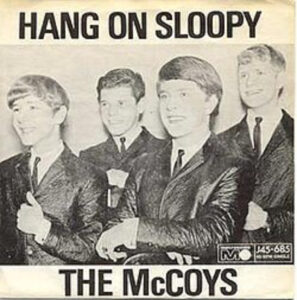 If I may pivot from the McCoys back to Gin Blossoms, unfulfilled expectations can crush a fan. They crushed us (certainly me) in 2023. Conversely, watching a lack of expectations get surpassed in spades can have us floating on air. That was the case for us (me included) in 2024. If we don’t expect “too much” from this team in 2025, we rightly anticipate success. If we don’t get it, we will be let down. But we’re getting what we need while everybody who isn’t yet sorted out figures out what’s what. That’s my expert baseball diagnosis at the moment; it’s almost as detailed as my medical opinion. I’d like to see more runs from the offense and less queasiness from the starter and feel less queasiness from the closer. But we get a Kranick here, a Senger there, the occasional something from somebody like Jose Siri, and when the lineup turns over and we inevitably count on our MegaMets to deliver, at least one or two tend to come through at some inflection point in a given game. All we have is a small sample size that shows we’re 6-3, but it’s big enough for now. If I may pivot from the McCoys back to Gin Blossoms, unfulfilled expectations can crush a fan. They crushed us (certainly me) in 2023. Conversely, watching a lack of expectations get surpassed in spades can have us floating on air. That was the case for us (me included) in 2024. If we don’t expect “too much” from this team in 2025, we rightly anticipate success. If we don’t get it, we will be let down. But we’re getting what we need while everybody who isn’t yet sorted out figures out what’s what. That’s my expert baseball diagnosis at the moment; it’s almost as detailed as my medical opinion. I’d like to see more runs from the offense and less queasiness from the starter and feel less queasiness from the closer. But we get a Kranick here, a Senger there, the occasional something from somebody like Jose Siri, and when the lineup turns over and we inevitably count on our MegaMets to deliver, at least one or two tend to come through at some inflection point in a given game. All we have is a small sample size that shows we’re 6-3, but it’s big enough for now.
If the season ended today, we’d be in the playoffs. The season’s not ending today. That — along with David Peterson lying down to pacify his stomach with cool thoughts — constitutes the most encouraging trend to take into the new week. We get to keep watching the Mets, and we get to have expectations.
by Jason Fry on 6 April 2025 12:16 am The City Connects were the perfect uniform for Saturday night’s Mets game, played in murky gray conditions with an inescapable wet chill, cascades of mist wafting through the air, and any ball that touched outfield grass leaving a spray of droplets to mark its progress.
A surprisingly big crowd showed up despite the obvious attractions of watching from a warm couch (my choice) or a friendly barstool instead. Now, no one who follows baseball makes it to their late teens without realizing that the sport is a lousy vehicle for restorative justice. Baseball doesn’t care that you’re one of the hearties sitting in the misty Promenade, that your commute to the ballpark was taxing and unpleasant, or that you’ve been having a rough go of it and would greatly appreciate a ringside seat for a win.
But sometimes you get a win, even when it looks like you won’t.
Former Met Chris Bassitt escaped harm from leadoff doubles in the first and second and then went to work, eviscerating the Mets with selections from his deep arsenal. I always liked Bassitt, who goes about his business looking vaguely pissed off and determined to blame hitters for it, and mourned his rather obvious lack of interest in further duty with the Mets after his lone season with us.
Griffin Canning wasn’t quite as good as Bassitt in his second Mets start, though he was still perfectly fine; he and Jose Butto were undone by an irritating fourth inning that saw Toronto find infield holes with three ground balls in sequence, good for a 1-0 Blue Jay lead. That lead became 2-0 in the sixth, as Butto surrendered back-to-back two-out doubles before Huascar Brazoban — pitching this year with better control and what looks like more conviction — calmed things down.
The Mets then arguably caught a break in the bottom of the seventh, when Toronto manager John Schneider removed Bassitt, who’d thrown 92 pitches and looked, at least to me, like he had plenty left. Yimi Garcia surrendered a single to Brett Baty and walked Jose Siri, but escaped when Starling Marte had a desultory at-bat as a pinch-hitter.
Brendon Little wasn’t so lucky in the eighth, however; with two on and two out Jesse Winker lashed a knuckle-curve that got too much plate to right-center. Winker thought it was out, and if hadn’t been a cold soggy night in April he would have been correct; as it was the ball just eluded George Springer, who was hurt on the play, and Winker wound up with his second triple of the chilly night and a tie game.
Edwin Diaz navigated a somewhat bumpy top of the ninth and the Mets went to work against Nick Sandlin, whom I remember carving them up as a Guardian last summer. With one out Siri walked for the second time, which is both admirable and a little startling. Luis Torrens, a late scratch called upon after Carlos Mendoza pinch-hit for Hayden Senger, spanked a single over the infield to bring in Jays closer Jeff Hoffman with Francisco Lindor at the plate.
Lindor wasted no time, a kind gesture as not even the Citi Field hearties had much stomach for free baseball on this night. Hoffman’s first pitch turned out to be the only one he’d throw: a slider that sat in the middle of the plate and which Lindor whacked to center field. It was one of those plays where you put your hands up instantly because everything is going to be just fine unless the runner leaving from third pulls a hamstring, there’s an earthquake, or the Rapture occurs.
None of those things came to pass: Siri trotted home unmolested, Lindor got showered in water and bored-ballplayer snacks, and all involved got to go home and warm up. It made for a grinding yet ultimately interesting game and a Mets win. Restorative justice? Nah — as we’ve covered, baseball doesn’t do that. But on a chilly April night it felt close enough.
by Greg Prince on 5 April 2025 2:31 am The fans who wait for their team to come off the road while the year is still young are rewarded for their patience with two Openers. There’s Opening Day, which is festive no matter that it’s taking place in another ballpark, and there’s a discrete Home Opener, which grants us a second helping of holiday spirit. As long as we get to unwrap a win somewhere along the way, the composite festiveness outdoes multiple Christmases.
Winning was indeed involved in the Mets’ 2025 Home Opener, which made the déjà vu quality of looking forward to starting all over again quite worthwhile. We may have gone through those “oh boy, baseball is back!” emotions eight days earlier when our team was breaking the season’s seal in Houston, but home is home, and getting to do essentially the same fun thing twice in such a short span can be a paean to righteous gluttony. Picture your favorite all-you-can-eat buffet. Your eyes were probably bigger than your stomach as you grabbed your first plate. In all honestly, you consumed what you really needed by the time you cleaned it. But, look — they’re bringing out a fresh tray of penne or spare ribs or whatever it was that lured you in this joint. Why, yes, you think you will take another trip up there.
The Mets’ second Opening Day no doubt left us feeling more sated than the first one. This one served up a victory that was convincing from every angle, a 5-0 shutout of the Toronto Blue Jays, a franchise that played the very first Spring Training game of its existence versus the New York Mets on March 11, 1977, but, historically speaking, was a stranger at a strange interval in Flushing on Friday. Interleague play is no longer novel, but Mets versus Jays for our Home Opener? Mets versus any AL interloper? In every Home Opener from 1969 through 1992, when the Mets were a member in good standing of a six-team division, the visitor to Shea was a National League East opponent. That never felt strange. I have a hard enough time accepting that we sometimes start our home slate versus the Diamondbacks or Brewers, but at least they’re situated in the same circuit as us.
Of course, once the pageantry is presented and ball begins to be played, it’s more or less just another baseball game…though not altogether. If it was truly Same Bit/Different Day, would nearly 44,000 make it their business to be at Citi Field? Would however many bazillions beyond that compose a robust viewing, listening, and sneaking-an-update audience while ignoring afternoon business they’ve decided was less pressing? The Mets had already played a handful of just-another-games. This wasn’t going to be one of those.
Differentiating it from just-anotherness were, in something approximating a particular order…
• Francisco Lindor, who led off the game with a hustle double that wouldn’t take single for an answer (score one for replay review);
• Pete Alonso, who went to the opposite field and kept going until he had a two-run homer;
• Tylor Megill, whose second consecutive sublime start here in his fifth season has me thinking he’s on a career trajectory resembling that traced by Bobby Jones circa 1997, the year the secondary pride of Fresno put it all together for a few months;
• Juan Soto, the new kid in (the good part of) town who lashed an RBI double that looked like one of those hits that had suitors lining up for his services that became ours, and threw in a nifty catch and heady stolen base for Steve Cohen’s money as well, no extra charge;
• and those inevitably unsung relievers who backed up Megill’s five-and-a-third nearly spotless frames with a spiffy three-and-two- thirds of their own. Hail Reed Garrett, A.J. Minter — abetted by cameras that corrected an umpire who didn’t understand the function of a foul pole — and Max Kranick, the Mets fan from Scranton who grew up to be the Mets closer on Friday.
Kevin Gausman was pretty beguiling between the Mets’ runs in the first and the sixth, but sometimes two bountiful innings is all it takes. Identities are in larval stages this early in a season, yet I’m coming to believe Mets baseball in 2025 might become synonymous with heating the iron, striking while it’s hot, and not letting it cool all the way off before striking again. Any lineup that circles back to Lindor, Soto, and Alonso isn’t going to go cold for long. A little more length would be welcome, and ought to materialize once Jeff McNeil and Francisco Alvarez return, but as long as we’re getting representative production from Nimmo, Vientos, and Winker/Marte, the offense shouldn’t go into sleep mode too often (never mind that it snoozed several nights on the road). Sean Manaea receiving a rousing ovation during the pregame introductions reminded us there will be more to the starting rotation eventually, yet what we’ve received to this point has been adequate-plus. We shall resist singing too many praises of the bullpen, because we don’t really know how to feel confident in Met relievers, but, you know, so far, so good.
Maybe it’s the holiday atmosphere attendant to a Home Opener talking, but it definitely wasn’t just another game, and maybe this isn’t looming as just another year.
by Greg Prince on 3 April 2025 2:55 pm It might stretch credulity if I declared, yup, I knew Pete Alonso was gonna launch a three-run homer to tie the Mets-Marlins game at four in the eighth inning on Wednesday. The Mets had played ragged ball across the first seven and they weren’t too many outs away from a tails-between-their-legs flight home for a Citi Field opener that would necessarily lose a little luster if its purpose was to hail a 2-4 team. Yeah, everybody would stand and cheer the welcome of what Howie Rose unfailingly refers to perennially as the National League season in New York, but discordant notes would infiltrate the runup to introductions and ceremonial first pitches, and who wants that?
Nobody who cares about the Mets. Not you. Not me. Not Pete Alonso, who cares about the Mets as much as anybody, given that he’s carried them intermittently for six going on seven years. In the good Met years, he’s had help. In his less good personal years, he’s insisted, no, he’s got this. The couch isn’t that heavy and the flights of stairs aren’t that steep.
You sure you got this, Pete?
If I wasn’t sure specifically that a tide-turning dinger wasn’t en route, I certainly maintained confidence in Pete as he stood in against Calvin Faucher. Two singles had been bracketed by two outs. Francisco Lindor was on second. Juan Soto was on first. Lindor achieving anything beyond fatherhood in late March and early April is already a victory. Soto’s contribution was a tapper toward first that became a fielder’s choice that nailed Luis Torrens trying to come home from third. Not the worst intermediate outcome, for if Torrens hadn’t dared to attempt to score, you have him on third and Francisco on second, and an open base to put Pete possibly. I don’t know Clayton McCullough’s managerial tendencies yet, even if the rookie skipper already wears that familiar “I’ve been managing the Marlins too long” look every time an SNY camera spots him.
Pete is up, and Pete is working Faucher, and it’s not unlike two nights earlier when the Miami pitcher is Cal Quantrill. The bases were loaded then, one of them also occupied by Soto. Soto, even when he’s not slugging, is getting on base. What few big innings the Mets have cobbled together seem to feature Juan somewhere. The result Monday was Pete’s grand slam, which loosened up the drumtight Met offense once and for all…or so we thought Soon, most Met bats went back into storage. From the seventh inning in the first game of the Marlin series through the seventh inning of third and final game, nineteen innings in all, the Mets had scored three runs. The Marlins weren’t making them look bad. They were doing it to themselves.
But Pete is still up in the eighth on Wednesday. He’d driven in one of the Mets’ three runs from their dry period, way back in the first inning on a double that brought home Soto. The A&S Boys doing their thing, stocking and unstocking bases. High-end retailing has never been so luxurious. Yet a second Alonso double, of the leadoff variety, went to waste in the fourth. By then, the Fish led, 2-1, Clay Holmes had been little more than adequate, and our fielding was showing itself allergic to smoothness. It was easier to imagine the Mets going 2-4 on their first road trip than deciding another Arctic blast was about to descend on South Florida.
Still, I felt good about Alonso as his at-bat versus Faucher preceded. It was a long one. How long is a long at-bat? It should have multiple balls. It should have multiple fouls. It should have a batter who’s done this before. Pete did this on Monday, turning Quantrill’s seventh pitch into his four-run four-bagger. You might remember Pete doing something similar one evening last October versus Devin Williams, then of the Brewers. The process yielded a three-run homer and effectively clinched a postseason series. He needed five pitches that night. Funny, it seemed like more.
The point is that when Pete Alonso gets a count going deep, the count goes in his favor. Other hitters, too, but this is Pete we’re talking about. Anticipation builds around Alonso. He’s been known to anticipate too much from himself and not let the count (let alone the drama) build. Yet you are so taken by the examples that counter that tendency that sometimes you will yourself to expect exceedingly positive resolution.
Five pitches in Milwaukee. Seven pitches on Monday. Wednesday, the balls and the fouls got Pete to a ninth pitch. That was the one that flew out of whatitsName Park to tie the game, 4-4. The Mets were no longer sleepwalking their way to Flushing. The tie signaled a win was at hand. It took eleven innings. It required seven of the eight relief pitchers Carlos Mendoza employs. It especially required the tagging and throwing wizardry of Torrens, who backed up Alonso’s raucous offense with no-joke defense. It ended with a 6-5 Mets victory and a respectable enough 3-3 start to the season (at .500, tails may be removed from between legs and move freely about the cabin). The last time the Mets won a 6-5 decision, it was the end of last June’s trip to London, highlighted by Luis behind the plate stepping on the dish with the bases loaded and then throwing to Alonso for one of the damnedest double plays anybody had ever seen, especially directly prior to a flight home. Back in the present, I had a feeling Luis (who himself was on in relief of Hayden Senger) would come through, too. One of his tags required replay review. “They’re gonna overturn the safe call,” I thought, and they did, much as “he’s gonna come through here” rang true as Pete took Faucher deep in the count and deeper over the center field wall.
A little Pete, a little Luis, a little confidence. Welcome home, men. No notes needed.
by Jason Fry on 2 April 2025 7:51 am Another sign the new season isn’t quite so new? You find yourself struggling to accentuate the positive when things don’t go well.
Things didn’t go well Tuesday night in Miami: Kodai Senga was shaky early, the Mets’ hitting resurgence turned out to be a one-day affair, and Francisco Lindor made not one but two errors at shortstop. The first was just an annoyance, forcing Senga to throw all of one extra pitch, but the second led to disaster, as someone named Graham Pauley doubled two runs home, providing the margin the Marlins would need to beat the Mets behind Sandy Alcantara and his second audition for a new summer employer.
OK, there were some positives. Senga’s ghost fork was effective, which was reassuring after a spring training in which Senga didn’t quite look like himself and you heard mild but real rumblings of discontent around him. Max Kranick contributed three innings of flawless pitching. Luisangel Acuna looked good whether equipped with bat or glove. And new father Lindor did collect his first hit and RBI.
But that didn’t wind up feeling like much in light of that 4-2 verdict, which grates a little more because it was the Marlins at Soilmaster Stadium. (Though it sounded more like Citi Field South.) Once again the Mets looked set up for a storybook finish that fizzled. Once again the bats slumbered. Once again things felt off-kilter and out of sorts.
So far the Mets are a team that was predicted to mash but has done so for exactly one night, and a team that has had superb starting pitching when that was supposed to be their biggest question mark. Don’t try to make sense of it; that so far ought to be the tipoff that we’re attending Small Sample Size Theater, which is reliably surreal, and of course baseball is nothing if not a serial confounder of expectations.
A relatively recent addition to baseball discussions is the concept of error bars — how actual performance can deviate from baseline expectations, both for better and for worse. The Mets’ error bars are a little arsy versy right now in multiple ways, with the starting pitchers bunched up where we thought we’d find the hitters and the hitters occupying the space where we thought we’d find the starters. That’s part of baseball too; it’ll either work itself out or we’ll tell stories about why it didn’t, and eventually those stories will come to make sense. But right now nothing much does. It’s too early to say what this incarnation of the Mets will turn out to be, but we can all hope it involves a lot fewer games like Tuesday’s.
by Greg Prince on 1 April 2025 11:43 am On Monday, I was excited to receive in the mail an advance copy of a great new book called More Amazing Mets Trivia, put together by my dear friend Ken Samelson and his co-author David Russell. I’m delighted to reveal that I did a little reconnaissance on the manuscript last summer, as Ken knew I know a few things about Mets trivia.
Who am I kidding? I know more Mets trivia than could possibly fit in one volume, which is why I’m sharing some bonus questions and answers that might work well in any revised edition Ken and David are planning. Test your knowledge below and see if you’re as much of a stickler for Met facts as I am.
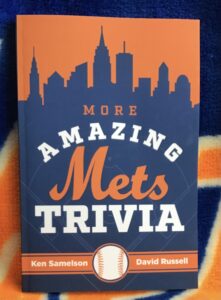 This book is the real deal. Where did Pedro Alfonso get his very familiar nickname?
Pedro, whose fifth-inning grand slam to right-center field at leavemealoneDope Park effectively rescued the Mets’ floundering campaign on Monday night, was already given the benefit of the doubt by Mets fans due to his being the nephew of beloved infielder Edgardo Alfonso, the most chronically misspelled Met Hall of Famer in franchise history. It would have been easy to refer to Pedro as Potsie — the way fans labeled his uncle — but in Spring Training of his rookie year, family-friendly manager Nicky Caraway Seed suggested Alfonso played his original position, third base, like “he’s [bleeping] naked on a [bleeping] horse,” and thus the nickname “Polo Bare” stuck, and all resulting Polo Power emanated from across the diamond. Alfonso now sits 25 strawberries away from the all-time Met record for most individual pieces of fruit consumed in the state of Florida.
With what celebrity did starting pitcher Pete Daverdson “trade” spouses?
Daverdson gave the 2-2 Mets six innings of two-run ball, the club’s first qualitative start of the young, crumbling season. The southpaw was no doubt energized by the presence of his temporary lifemate Scarlett Johannson, obtained in a cash considerations swap with his good friend, SNY sideline reporter Fritz Gelbs. Longtime observers will remember the last time such a controversial transaction rocked baseball was in 1976, when commissioner Bowie Kuhn vetoed Oakland owner Charlie Finley’s sale of Rollie Fingers to Mrs. Mike Kekich (this was before the reserve clause was completely eliminated).
What stands as Louie Torrent’s signature moment as a Met?
The Mets’ backup catcher contributed a two-run home run to the team’s desperately needed 10-4 victory in Miami, ensuring Louie won’t be known merely for that one time he “made it rain,” bringing a torrent of dollar-bill showers on a notable swing through the Midwest’s most high-end gentlemen’s clubs. Interestingly, the Mets were in London that week, but, as Torrent likes to say through a translator, “the Lou wants what the Lou wants, so you better bring a [bleeping] umbrella, fella. Besides, whaddaya think our meal money is for — dinner?” Torrent will continue to fill in as the Mets’ starting catcher until primary backstop Alvy Franklin leaves the unable list and resumes proving that the 2020s are indeed “the Alvy Franklin decade”.
Brendan Nebbish is the senior Met in terms of service time. When was his first game?
The Mets’ first-round draft choice in 1965, Brendan made his debut on April 10, 1968, Gil Hodges’s maiden outing as Mets manager. It was the first rung on a very long ladder Nebbish needed to scale to achieve his current level of renown. Just one year later, as the Mets cruised to an easy win over the Astros at Shea Stadium, Hodges made a point of marching out to left field to remove young Brendan for “growing facial scruff that indicates a lack of character”. The skipper feared kids in what was then called the Midget Mets program would look to Nebbish as a role model and resist shaving. “Next thing you know,” Gil elaborated to reporters, “youngsters will take a pass on personal grooming products and he’ll be messing with my Vitalis checks.” Properly chastened, Nebbish returned to the minors until the following April. His sixth-inning home run Monday night, which came as the Mets nurtured a precarious seven-run lead, was the first of his fifty-eighth major league season.
Marty Sterling batted leadoff Monday night in place of which Met mainstay?
Marty, scion of the silver-tongued Sterling family, found himself in an unfamiliar lineup position, thanks to Francoeur Lindor’s better half Frenchy giving birth to the couple’s third child and first son, Homer. Homer was conceived in the aftermath of last season’s delirious clubhouse celebration when Mr. Lindor went deep in Atlanta. With the Mets’ usual leadoff batter otherwise occupied, Sterling put the heretofore doomed Mets on the board in the third inning with a homer of his own. When he returned to the dugout, he warned the Lindors not to name their next child after what he’d just hit. Francoeur, who has never recorded a base hit in any calendar year prior to Mother’s Day, reportedly looked at his teammate in confusion and asked, “what the [bleep] is going on today?”
Hope you got ’em all right! But don’t fret if you don’t have as much clearly accurate Mets knowledge at your disposal as I’m obviously packing. The important thing is the Mets won, and Ken and David have a real fun book you should definitely check out.
|
|






