The blog for Mets fans
who like to read
ABOUT US

Faith and Fear in Flushing made its debut on Feb. 16, 2005, the brainchild of two longtime friends and lifelong Met fans.
Greg Prince discovered the Mets when he was 6, during the magical summer of 1969. He is a Long Island-based writer, editor and communications consultant. Contact him here.
Jason Fry is a Brooklyn writer whose first memories include his mom leaping up and down cheering for Rusty Staub. Check out his other writing here.
Got something to say? Leave a comment, or email us at faithandfear@gmail.com. (Sorry, but we have no interest in ads, sponsored content or guest posts.)
Need our RSS feed? It's here.
Visit our Facebook page, or drop by the personal pages for Greg and Jason.
Or follow us on Twitter: Here's Greg, and here's Jason.
|
by Greg Prince on 5 January 2010 5:56 am 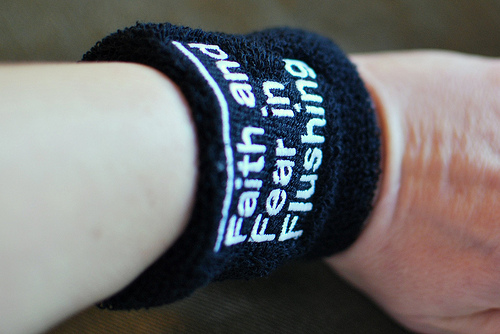 Six years ago today, the world became deprived of Tug McGraw. The prevailing emotion among Mets fans, baseball fans and humanity fans was sadness, which seemed not quite right since I can’t think of a ballplayer who more personified Joy with a capital J, to say nothing of Belief with a capital B. When it came to positive emotional responses, Tug brought out the Upper Case in all of us. Six years ago today, the world became deprived of Tug McGraw. The prevailing emotion among Mets fans, baseball fans and humanity fans was sadness, which seemed not quite right since I can’t think of a ballplayer who more personified Joy with a capital J, to say nothing of Belief with a capital B. When it came to positive emotional responses, Tug brought out the Upper Case in all of us.
“It’s 1973 forever in some essential compartment of our collective soul,” I wrote in the wake of the news. “Tug McGraw is forever a Met, the quintessential Met, the Met whose DNA defines this franchise. Imperfect rather than inept. Hilarious but not comical. Excitable boy who’s The Man on the mound. We’re never out of it. We always have some kind of chance, some screwy opportunity to get back in the game, get back in the race, cast aside all those errors and fat pitches and LOBs that dug us into this impossible hole in April and May and June and July and August and claw our way out.”
Tug was a lovable character but he could pitch some, too. It was his turnaround as much as his spiritual uplift that made the 1973 division title and pennant possible. He was no mascot. He was a fireman, a closer, a true relief ace. All the Mets came together down that most memorable of stretch drives, but when it came to getting back in the race, it figuratively started and literally ended with Tug recording the big out.
Now there’s another race involving Tug. And that wristband above will be a part of it.
We recently told you about our friend Sharon Chapman, a.k.a. Inside Pitcher from the comments section, and how she’ll be running the New York City Marathon as a member of Team McGraw. She and they are devoted to raising funds and awareness for the good work of the Tug McGraw Foundation, an organization established to help those facing the same struggle with brain cancer that Tug fought. “Over 200,000 adults and children annually receive a diagnosis of brain cancer,” according to the Foundation, which has made its mission the support of “research that will improve their quality of life in the physical, social, spiritual, and cognitive areas.”
The wristband? Well, à la Stephen Colbert and the U.S. Olympic speedskating squad, it signifies that when Sharon runs the Marathon, she will be representing the Faith and Fear Nation. Jason and I didn’t even know we had one, but the more we thought about it, the more we liked the idea of being a small component of this big effort for Team McGraw. And even if FAFIF doesn’t quite qualify as a nationality, we do have a very nice community here, its quality proven time and again by citizens like Sharon. She did all the heavy lifting on this, getting the wristband made up amid her other myriad training and organizing efforts. All we’re doing is cheering her on and asking, if you can, to help her and the Tug McGraw Foundation’s cause along. We’ll be checking in on Sharon’s road to the New York City Marathon periodically throughout the year and telling you more about what’s fueling this truly Amazin’ run.
To learn more about the Foundation, visit their site here. To donate (any amount is vastly appreciated), visit Sharon’s page here. Share these links with whomever you think might be interested.
Go Nation Go!
by Jason Fry on 4 January 2010 2:07 pm No, not Citi Field. That’s so last decade.
We seem to be fairly well settled in to our new Web home (many thanks to John Keegan for his help and for answering a million questions), so I thought I’d offer a quick tour of the new stuff and talk a bit about where we’re going. The idea isn’t to brag, but to get your help with identifying what’s not quite working and what could work better.
Here are some things we’ve added:
New Comment Features — You can now have your own picture or avatar, via gravatar.com — if you sign up there with the email address you used here, your picture should show up here after a few minutes. (Same for any other site on which you have a Gravatar.) You can now edit your comments for 30 minutes, request that a comment be deleted, and edit your email address and any linked URLs. You can also use URLs and other markup in comments, though be aware that too many URLs will trip our spam filter and get a comment stuck in moderation until we can rescue it.
Sharing Tools — Next to the Comment icon/counter you’ll see icons for sharing a post via email or on Facebook, Twitter, Digg or Delicious.
Print Tools — Reading Faith and Fear on the go? This will format it nicely to be printed.
Tags — We’re just starting to play with these, and resisting the urge to go back through 3,000 posts and tag every single one of them to within an inch of its life. (You might have noticed we’re a bit obsessive.) As we build out our tags we hope this will become an easy way to trace, say, all the mean things we say about Luis Castillo.
Mobile Support — Faith and Fear should now automatically format itself to look friendly on an iPhone, Blackberry, etc.
Kindle — Got a Kindle? You can read us on it for 99 cents a month.
And here are some things we’re still working on/thinking about:
More Comment Tools — We’re looking at supporting Facebook Connect for easier commenting, and more ways to build out our discussions. If you’ve got ideas, we’re all ears.
Galleries — We’re still looking around for an easy gallery tool like the one we had with Blogharbor. Many thanks to my partner, by the way, for resurrecting as many of the old site’s photos as he could.
Redesign — For now we just wanted to get the blog over onto WordPress more or less intact. Looking ahead, we’re going to make some design/layout changes, without messing with the overall look. (You know what a pain it is to figure out the Pantone colors for Mets blue and orange and then convert them to hex? No way am I revisiting that.) The goals are to get more useful information up higher (we’ve now got a right-hand column we’re not using) and more blog posts visible without a ton of scrolling. Another thing that will never change is our favicon. Mini-Shea forever!
Ads — As we said in our fall survey (thanks again to all of you who answered our questions), we intend to put ads on the site sometime this year. We’re going to go slow in hopes of getting our sea legs and figuring out what we’re doing. Anyway, stay tuned.
That’s where we are right now. If you’ve got ideas for things you’d like to see or suggestions for widgets/plugins/etc. that would make Faith and Fear work better, we’d love to hear from you in the comments or via email. Thanks for your patience with the technological bumps and the construction dust — we very much appreciate your reading and commenting, and look forward to chronicling 2010.
by Greg Prince on 4 January 2010 8:28 am Happy Baseball Equinox! We are now closer to the start of the 2010 Mets season than we are to the end of the 2009 Mets season, and I think we can all agree we’d rather have next season than last season any day. May Jason Bay’s impending physical move us that much closer to Spring.
In the meantime, the Jets saw their own shadow, didn’t trip on it, and are giving us one more week of winter in the best sense possible.
Can they give us one more besides? Well, consider that the New York-Cincinnati sporting dynamic has worked surprisingly well when it’s counted most.
Like last night when the Jets augmented the Bengals’ generously striped uniforms with a set of 37-0 tire tracks.
Like October 4, 1999 when Al Leiter, Edgardo Alfonzo and the rest of the suddenly surging Mets ran over the Reds en route to a similarly unlikely Wild Card.
Like January 9, 1983 when Freeman McNeil piled up 202 yards on his own and the Jets dropped 44 points on a stunned Riverfront Stadium to open the 1982 playoffs.
Like a well-remembered and even better-regarded National League Championship Series from October of 1973.
Like the night in November 1969 when the Knicks trailed the ancient Cincinnati Royals by five points with 16 seconds to go, yet came away with the 106-105 victory to establish an NBA-record 18-game winning streak.
Like October ’76, when the Big Red Machine operated in accordance with our wishes and produced a four-game sweep of a team claiming to represent New York.
History’s a wildly unreliable indicator of contests still to come, but with the Jets earning the right to play Cincy all over again on Saturday, we’ll take all the good omens we can gather.
Only someone who’s paid attention over the past two decades would note on this brilliant green and white morning how many different regimes have come in and definitively/permanently changed the Jets’ culture, attitude and fortunes for the better. In their first or second seasons, Bruce Coslet, Bill Parcells, Herm Edwards, Eric Mangini and now Rex Ryan each led the Jets to the playoffs amid declarations that their triumph marked the end of the Same Old Jets. These — in 1991, 1998, 2001, 2006 and 2009 — were the New Jets, as evidenced by the much-needed facelift the clear-eyed coach and the revamped organization that was fully behind him had given the heretofore hopelessly wrinkled franchise. You could throw in, under this banner, Pete Carroll (1994) and Al Groh (2000), who didn’t make the playoffs in their sole seasons at the helm but were credited as breaths of fresh air during their evanescent strong starts.
The Jets turn over more new leaves than recidivist junkies. But it beats turning over the ball. Just ask the Bengals.
Congratulations, then, to this latest crew of Whole New Jets for soaring into the postseason on the wings of circumstances weird enough to faze even Sully Sullenberger.
• They lost games by 4, 3, 5, 2 and 3 points.
• They lost games with less than 2 minutes to go, less than 10 seconds to go, with no seconds to go and in overtime.
• Their coach, with two weeks remaining, announced they were eliminated from contention even though they technically weren’t. (I can’t believe Jerry Manuel never thought of that.)
• Their multiple rivals for a potential playoff spot all had to lose with one week remaining…and they all lost.
• Their final two opponents were each division champions. Yet the Colts graciously decided to quit playing in the middle of their game and the Bengals politely stepped aside in the first quarter.
And that, plus a punishing rushing game and steadfast defense, is how you somehow go from a hopeless 4-6 to a jubilant 9-7 and wake up the 5-seed in the AFC.
The long-term implications don’t matter right now. It won’t matter whether Ryan’s overhaul truly transforms the Jets for seasons to come or if a few Week 17s from now some other coach in a green sweater vest is celebrating how his special system and awesome outlook have finally pushed the Jets from perennial disappointments to consistent contenders. The Jets are winners now is what matters. The Jets were winners Sunday night. They took one of the odder paths any team in any sport has ever taken to the playoffs, but they’re there. They’re at Cincinnati in five days, six days after Cincinnati only nominally made a trip to the Arctic Meadowlands.
The Bengals have been installed as slight favorites. As Pete Rose himself might say, take the Jets and the points.
by Greg Prince on 2 January 2010 3:49 pm Move over, Joe Carter. The University of South Florida Bulls’ 27-3 romp over the Northern Illinois Huskies in the 2010 International Bowl has supplanted the 1993 Toronto Blue Jays’ walkoff World Series win as the greatest moment in SkyDome/Rogers Centre history.
Why, it’s even better than the time Ken Huckaby took out Derek Jeter at third base. (Not that we ever, ever cheer for injuries, mind you.)
USF is my alma mater. I graduated from there so long ago they didn’t have a football team (and I was robbing various roommates of sleep by clacking the night away on an electric typewriter). Then they invented one with the hopes of someday playing a bowl game in January. They were probably thinking of something a little more traditional than the International Bowl, but newbies can’t be choosers.
In the past five years, USF — handling a pigskin only since 1997 — has participated in the Meineke Car Care Bowl, the PapaJohns.com Bowl, the Brut Sun Bowl (earned after an occasionally spectacular 2007 campaign), the magicJack St. Petersburg Bowl and now the one that mysteriously materializes in Canada on the first Saturday of the new year.
Canada? College football? It doesn’t sound prestigious on the surface, but I’ll take the win and consider it a measure of the Bulls going global. Seven American wins this season and now one North of the Border. You know what that means…
Prestige Worldwide!
by Greg Prince on 1 January 2010 6:08 pm Tomorrow, Saturday, January 2, looms as one of the finest days and happiest New Year’s greetings in sports broadcasting history. After your USF Bulls gore the Northern Illinois Huskies in the much-awaited International Bowl at noon on ESPN2 (it’s on ESPN2 because it’s twice as big a deal as any bowl on ESPN), switch to SNY by five o’clock for the METS YEARBOOK MARATHON.
• 5:00 PM — Mets Yearbook: 1968
• 5:30 PM — Mets Yearbook: 1963
• 6:00 PM — Mets Yearbook: 1975
• 6:30 PM — Mets Yearbook: 1971
• 7:00 PM — Mets Yearbook: 1984
I’m not sure if SNY planned this blessed event as a way of extending the good vibes sure to be wrought by the Bulls’ victory (guarantee of victory not included) or as a way of catapulting us in style toward the Baseball Equinox, that point on the calendar where we are exactly as far from the end of the previous season’s final Mets game as we are from the scheduled first pitch of the forthcoming season’s first Mets game. This winter’s Baseball Equinox arrives Monday morning, January 4, at approximately 2:22 AM, Eastern Standard Time. Chances are you’ll be asleep, dreaming of vintage highlight films, and hopefully not up, cursing out the callowness of Mark Sanchez or the general bizarreness of Rex Ryan.
In any event, you have been warned, so be sure to watch and/or record. And in case you missed it when we were transitioning to WordPress, be sure to check our blog-exclusive interview with Gary Morgenstern, SNY’s vp of programming, to get the scoop on how Mets Yearbook came to air.
by Greg Prince on 31 December 2009 2:10 pm How appropriate for a person who sees almost everything through Mets-tinted lenses that on the final day of this decade I turn 47. When I see 47, of course, I see not so much a chronological measurement but a uniform number. And when I see that uniform number at the end of this decade, I think of the man and the game that wound up defining this decade for me.
Some nice people have wished me a happy Jesse Orosco birthday, and I appreciate the sentiment. Of course Jesse’s the 47 of record in the Mets uniform pantheon, the only 47 caught on film doing something extraordinarily worthwhile. Why, I think I see his glove hovering over Queens right now. Less mentioned but worthy of some kind of smallish celebration was the 47 for whom Orosco II would be traded in 2000, Super Joe McEwing. Perhaps Super was intended ironically, but until he was utilized far too much to be effective, he was the ultimate Mets utility player, and every team needs one of those.
Lingering in my subconscious from the spring of 1978 is Mardie “The Chief” Cornejo, 47 the first year I ever entered with no hopes of the Mets contending for anything beyond fourth place, which proved a plateau well beyond their reach. Nevertheless, early on they didn’t look so bad, and early on two guys I’d never heard of, Mike Bruhert and Mardie “The Chief” Cornejo, helped set the pace. “The Chief” bit struck me as absurd (the chief of what, exactly?), but no more so than the concept of the 1978 Mets competing for fourth place. Even with Orosco’s glove in orbit and McEwing’s Superness in full flight, sometimes somebody says “47” and I think “The Chief”.
There’ve been a handful of other 47s over 48 seasons, as Mets By The Numbers could tell you. There was the original 47, Jay Hook, one of the many geniuses who staffed Casey Stengel’s pitching corps. I’m not kidding about that. As Bill Ryczek notes in The Amazin’ Mets, 1962-69, “In terms of education and intellect, no staff in any league (save perhaps the Ivy League) could match the 1962 New York Hurlers.” At the head of the class was Hook and his Master’s Degree in Mechanical Engineering from Northwestern. Famously, Hook could explain in precise detail why a curve ball curved…he just couldn’t get his own to move proficiently.
Even at my advanced age, I have no memory of the 47s who followed Hook — Tom Sturdivant and Darrell Sutherland — or why, according to MBTN, the number went unworn between 1964 and 1978 when “The Chief” commandeered it. Post-Cornejo, Orosco proceeded to wear the heck out of it, clear through the end of 1987. Then it was picked up by one of those for whom our only successful Game Seven closer was traded, Wally Whitehurst. Whitehurst threw softly and kept quiet, making no big deal of 47 even after taking a temporary grip on the fifth-starter role, an assignment that essentially forced the trade of Ron Darling to Montreal; in case you were wondering why the Mets stopped winning in 1991, that’s a clue. Mike Draper wore 47 with not much distinction in 1993, a year when distinction, let alone dignity, was hard to come by in any Mets uniform. Jason Jacome raised a touch of hope when he donned 47 in ’94 but extinguished it just as quickly by putting it on again in ’95. Reid Cornelius and Derek Wallace were the next two 47s; they cut out the middle man by raising as little hope as possible.
The last Met who wore 47 was Casey Fossum, who couldn’t get out of it fast enough. Fossum slipped into 47 on April 21, 2009 and slipped out of it on April 26, 2009 before slipping out of our lives altogether. 47 did not fit Casey Fossum, but I don’t hold it against him.
47 may never fit any Met again, and for that you can thank T#m Gl@v!ne.
What, you haven’t thanked T#m Gl@v!ne lately? What are you, a Mets fan?
I’ve mostly kept Gl@v!ne out of my mind since June when the Braves bastardly bounced him after he went to the trouble of rehabbing for them. Talk about two parties and nobody to root for. T#m worked hard to come back and pitch for Atlanta at age 43. The team, for whom he excelled (in and out of their uniform, for as we know he was long stationed here undercover as The Manchurian Brave) turned its Tomahawked back on him, avoided paying him a million bucks and elevated Tommy Hanson in his place. Hanson was the right choice, but it was an awfully cold front office maneuver, even for them. In the abstract, I scolded the Braves. In my darker precincts, I chuckled that they ruined Gl@v!ne’s last stand.
Much as he ruined ours in 2007 and, in a way, this decade.
Once in a while (though not very often), some Mets fan will nominally take T#m’s side and huff that it’s not like he was trying to lose on September 30, 2007. I don’t argue that he was. T#m Gl@v!ne might have earned a win for himself had he pitched better, and wins for T#m Gl@v!ne always seemed of paramount importance to T#m Gl@v!ne. If the Mets advanced via his left arm, so be it. But he didn’t have it on September 30 vs. the Marlins (0.1 IP, 7 ER), the same way he didn’t have it on September 25 vs. the Nationals (5 IP, 6 ER), same as he didn’t have it on September 20 vs. the Marlins (5 IP, 4 ER). He came up small, smaller and smallest down the stretch as the Mets diminished, dwindled and disappeared completely.
The consensus future Hall of Fame pitcher may have been trying, but he wasn’t coming close to succeeding. You wouldn’t hold that against Brian Lawrence or Philip Humber, the two improbable starters on whom Willie Randolph found himself sadly dependent during the 17 games when the Mets stopped leading the Phillies by 7 games. You wouldn’t hold that against Mike Pelfrey, clearly not yet ready for prime time, even though it was clearly prime time. You’d take issue with John Maine and Ollie Perez if they were dreadful when it mattered — and each was — but you also remember them each pitching a gem during that period, so you cut them slack for their missteps. The only Met who didn’t give you a bad start over those 17 games was Pedro Martinez, but he could only give you so much after his injury and never on anything but extended rest.
Gl@v!ne I hold it against. I hold the 14.81 ERA over three crucial starts versus the division’s bottom-dwellers against him. I hold September 20 against him. I hold September 25 against him. And I forever hold September 30 against him. I hold that one against him — and every one his teammates — when I think about it. I think about sitting in the Upper Deck of Shea Stadium down 4-0 after five Marlin batters batted; down 4-0, with the bases loaded, after eight Marlin batters batted: down 5-0, with the bases loaded, after all nine Marlin batters batted around. The last of the Swingin’ Fish, Florida pitcher Dontrelle Willis, technically trotted to first after he was hit by the last pitch T#m Gl@v!ne would ever throw as a New York Met.
Then Gl@v!ne leaves, two of his baserunners score and there goes 2007’s last stand, dead on arrival. In the middle of the first inning, it’s Marlins 7, the Mets coming to bat.
From there, the following occurred:
• The Mets lose 8-1 while the Phillies beat Washington and there goes 2007, the year when we were supposed to avenge the quirk ending of 2006. The Phillies are division champs and I’m sitting in the Upper Deck for an eternity trying to figure out how we and I wound up here.
• T#m Gl@v!ne, in the postgame clubhouse, treats his fatal implosion like a bad day on the yacht, as if the shrimp wasn’t chilled quite to perfection. Otherwise, he can go home and count his mansions, completely undevastated by the events of the first inning.
• The aura of The Worst Collapse in Baseball History hangs in the air well into 2008, as the Mets get off to a crummy start, Willie Randolph stays far too long at the fair and I find myself in a continual state of being pissed at my team
• The Mets end 2008 just about exactly as they end 2007, which means 2007 never actually ends, it just keeps going.
• The 2009 Mets codify the decade’s disappointment factor by clearly ending the era we decided, circa 2006, was going to yield an extended mix of joy and championships. We finish with 92 losses and an overwhelming sense of despair that haunts us to this very last day of a decade when we were granted multiple chances and made optimal use of none of them.
• My 47th birthday puts me in mind of T#m Gl@v!ne, of whom, because of my Mets-tinted lenses, I will find myself thinking every time I am asked, “Age?”
On the other hand, it’s just a number. One year from now I can forget all about T#m Gl@v!ne.
And think, instead, of Aaron Heilman.
by Jason Fry on 31 December 2009 12:20 pm As we prepare to ring in 2010, we’re also ringing in Greg Prince’s 47th birthday.
All the best to you, my dear friend, esteemed co-writer and Mets compatriot. Here’s wishing you a seat for a great game without obstructed views, however they may be defined. Here’s wishing you signing bonuses in line with the market and not Bud Selig’s desires. Here’s wishing you a ballpark full of Mets stuff. Here’s wishing you a big Happy New Year’s package from the Reds. Here’s wishing you phenoms who have a little phenom in them, veterans with leadership skills and numbers, and doctors who diagnose correctly. Here’s wishing you more Mets Yearbooks and more of Gary and Keith and Ron (and Kevin) and more of fellow fans who have something to cheer about.
And here’s hoping the same for all of you who are kind enough to read us and add your voices, and to all of us who root for this team we love even fearing it may be the death of us. Here’s to fresh starts and renewed hopes. Happy birthday, Happy New Year, happy new season.
by Greg Prince on 30 December 2009 10:19 pm Matt Lawton hit 3 home runs during his brief 2001 term as a Met, each of them prior to the bottom of the eighth of the game of September 21, an inning he happened to lead off by grounding out to Braves shortstop Rey Sanchez. Edgardo Alfonzo swatted 15 from Opening Day until he was walked by Steve Karsay with one out in that same frame. The 2001 home run totals, up to that bases on balls, of other Mets who batted from the first inning through the seventh inning that Friday night:
• Robin Ventura: 20
• Tsuyoshi Shinjo: 10
• Todd Zeile: 9
• Jay Payton: 7
• Rey Ordoñez: 3
• Bruce Chen: 0
• Joe McEwing: 7
Combined, those nine Mets had hit 74 home runs in the first 147 games of that Mets season. None had hit one out in the 148th, which was near completion when Alfonzo walked and Desi Relaford was sent in to pinch-run for him. While several of those Mets seemed unlikely to hit a homer at any given moment, it wasn’t inconceivable that a few of them might take an Atlanta pitcher deep. Fonzie, Robin and Shinjo were all in double-digits. Zeile, Payton and McEwing had certainly homered enough that year so it wouldn’t be a novelty.
Yet none of them did homer on September 21, 2001. Mike Piazza, however, did. Mike Piazza hit his 34th home run of the season after Alfonzo walked. It put the Mets ahead 3-2. They’d go on to beat the Braves by that score.
By now you no doubt recognize the home run in question as the most famous home run hit by any Met in this decade or, depending on whom you ask, the most famous home run hit by a Met ever. It didn’t end a game. It didn’t ensure a playoff berth or a postseason series victory. It was an eighth-inning home run on a night whose cachet was generated less by competitive context than by the simple fact that more than 40,000 New Yorkers gathered at Shea Stadium to watch a baseball game.
It’s generally remembered as more, of course. It’s remembered for pregame somberness, for lingering unease and for a handful of electrifying performances. Among those belting our their best on September 21, 2001 were Diana Ross with “God Bless America,” Marc Anthony with “The Star Spangled Banner,” Liza Minnelli with “New York, New York” and Mike Piazza with the go-ahead homer off Karsay.
Piazza’s solo was the most memorable star turn of them all, but nothing that Friday night was about standing alone in a spotlight. It wasn’t about any one person. It was about thousands of people, too many of whom could not be at Shea Stadium. It was about the thousands they left behind and the millions who mourned for them. It remains remarkable to understand that the act of going to a Mets game — even a Mets-Braves game — could represent so much to so many.
And in the middle of it, Mike Piazza. There’s no tangible reason it had to be Piazza who hit the home run that recalibrated our municipal emotions. It could have been Ventura or Alfonzo or Shinjo. In theory, it could have been Ordoñez.
But it had to be Piazza. These types of moments always found Piazza. Or maybe Piazza and the moments always met in the middle. Anybody who would go as deep as Piazza did on a night that ran as deep as that one did would deserve to be remembered, but I can’t imagine anybody else would have done it. On some other Friday night in some other circumstance, sure, anybody could swing and connect. Not that night. That was what Mike Piazza did. We accepted it as extraordinary and perfectly normal, which is what the 40,000+ in attendance were seeking on September 21. We went on to hold it fondly and we hold it still. We hold the days and nights of Mike Piazza the same.
Had the boundaries of our imagination been stretched and had the home run come off the bat of another Met, would we have embraced it immediately and continued to grip it like it mattered beyond a 3-2 lead in the eighth?
I don’t know. But somehow I don’t think so.
Mike Piazza hasn’t been a Met since October 2, 2005, but I feel very comfortable considering him The Met of The Decade, for whatever that’s worth. His MVP-worthy season when the Mets earned a pennant, his monster breaking out of its cage that October, the still-stellar numbers for a fulltime catcher the next couple of seasons and the records he set might be enough to rate him this hypothetical honor. But with Mike Piazza, per usual, accomplishment is only part of the story. Electrifying performance is always the subtext.
The 2000s were the Age of Piazza. There was no other Met who commanded our attention for as long as he did or who was as worthy of it. I don’t believe he had a serious challenger in that regard.
Honorable mentions:
Pedro Martinez displayed sensational stage presence over a shorter period but racked up decidedly fewer results; David Wright put up the most impressive numbers yet still seems to be trying to fill a pair of shoes that don’t fit his feet any better than that experimental batting helmet fit his head; Carlos Beltran offered us more talent than anyone but did not truly capture our imagination; no one was more exciting at what he did than Jose Reyes yet Reyes’s stay at the top of his game has been intermittent; Johan Santana produced at the most clutch level, but hasn’t been here all that long; Al Leiter talked the best game in town before eventually talking his way out of town.
Fine Mets in our time, but none of them touches Piazza. Four seasons have passed since he played as a Met and he’s still, in our collective gut, bigger than any who have succeeded him. Mike Piazza was always big. He always made you stop and focus on him. Your eyes were instinctively PiazzaCams. You followed his every move. When he came to bat, your mind swarmed with the possibilities. You tensed up as he coiled. You exploded when he let loose.
And that was just the hitting. He wasn’t a polished catcher (nor a passable first baseman), but he was Piazza every moment he was on the field. He never stopped being Piazza. On what had to be a dozen occasions each year, his being Piazza mesmerized you. It could be because of a home run. It could be because of a glare or a quote or a reaction to your ovation. He came here in 1998 to be the Mets’ main man and, despite diminishing skills and statistics that couldn’t be ignored as the expiration of his contract approached in 2005, he never really ceded the role. His appearances as a Padre in 2006 and as a ceremonial receiver in 2008 confirmed his forever place in our hearts.
What made Piazza’s time in our midst all the more thrilling was that he never emitted the sense it desperately mattered to him. Being Piazza was his job. His baseball card didn’t require a position listed. Being Piazza was plenty. Somebody might throw an impertinent question or a bat shard at him, and he knew how to handle those just as he could handle Terry Mulholland or Carlos Almanzar or Steve Karsay among many, many others at the most momentous of moments. He was physically formidable and he did let his big stick to much of his talking, but he wasn’t exactly the strong, silent type of cliché. Mike Piazza never seemed shy, just as he didn’t too often come up shy. He was at ease with who he was. Now and again, it meant stepping up and playing the hero.
On September 21, 2001, on the heels of ten days that sent a city reeling, we realized that’s exactly what a baseball player who hits a big home run is doing: playing. Piazza, we understood, wasn’t a hero. But at a Mets game — specifically that singular Mets-Braves game — nobody could have possibly played it better.
by Greg Prince on 30 December 2009 6:27 am What did I miss? When did Jason Bay become Dave Gallagher?
We’re getting a three-time All-Star here, and not an All-Star in the sense that Gary Sheffield was stellar in Paleozoic times. We’re not getting some overblown fourth outfielder. We’re getting a guy who has played five full seasons and has driven in more than 100 runs in four of them, which appears pretty impressive considering many of his swings occurred while surrounded by Pittsburgh Pirates.
Jason Bay is a major league outfielder. We’re not converting Keith Miller from the infield or handing Daniel Murphy a treasure map and praying he’ll find a ball while he’s out there. Jason Bay survived a large left field wall in Boston. Didn’t fall down as a matter of course and was known to occasionally hit pitches off or over it.
This is an upgrade over the 2009 situation in left field. This is an upgrade over the 2008 situation in left field. He may not be as lethal with the line drives as Moises Alou when Moises Alou was healthy, but remind me of how many weeks Moises Alou was healthy. Jason Bay is capable of giving us our most consistent production at his position since Cliff Floyd was in one piece, which, sadly, wasn’t all that often. He won’t jump over fences like Endy Chavez, but the fences at Citi Field might thwart even Endy.
I’m happy to have Jason Bay coming to the Mets, assuming he passes what I hope is a rigorous physical conducted a third-party medical staff. Mind you, I’m not overwhelmed by his presence. He’s not a franchise player, but he’s performed at a high level for quite a while now and he’s not in his early forties. Thus, I ask innocently, what’s the problem, exactly? I wouldn’t give him whatever exorbitant amount they’re giving him if I were doing the Mets’ books, but since when do you attract attractive players without attractive compensation? The Mets were going to have pay somebody this offseason. The four years, $66 million and whatever scheme kicks in for a potential fifth year…insane in real life, but about par for a team that will no longer be paying Delgado and Wagner their princely sums.
And how much do you suppose ticket and taco prices were going to dip next season without Jason Bay?
I’m all for tossing suggestions into the Hot Stove. But once a deal is made, unless it is so prohibitive that it makes future upgrading impossible, I’ve got to shift into Hope For The Best territory. Somebody will inevitably produce reliable data proving Jason Bay shares more than initials with the second coming of Jeromy Burnitz, that he is sheer detriment and no asset. Yet until somebody who brandishes proof that Bay is a self-inflicting wound waiting to happen is appointed to the board of Sterling Mets, it won’t matter. I’ll be willing to complain if and when Bay is a total bust, but if he’s here, he’s here with a clean slate. Jason Bay’s my leftfielder. I don’t think he’ll turn the team around by himself, but I don’t think any one player can turn this team around.
One player can help, though. Suddenly, a lineup with Bay joining Francoeur, Wright, Beltran, Reyes — if all are healthy — is better than whatever we watched most of 2009. Suddenly, three professional outfielders who aren’t undercooked or over the hill will patrol our outfield. Suddenly, the Mets might be a wee bit better in a couple of departments.
The starting pitching’s a mess. I can’t blame that on Jason Bay. The Mets need to find some arms. They need a catcher (preferably one who won’t wear 6-4-3 on his back all season). They could use an upgrade at first and second. All that’s obvious enough to blot out illusions that this is supposed to be the free agent who delivers us to the doorstep of the Promised Land. Jason Bay’s presence will be magnified for a while because he’s the new, expensive toy, but we’ll settle in with him and accept him as a part of a hopefully long-term solution, not a singular solution himself. Here’s a multipart plan: Bay and an arm or two this year; suck less as a unit; and don’t go nuts with expectations. Improve from lousy ’09 and keep an eye on next year’s market. We’re not in this for only what lies directly ahead.
I’m conditioned to think of Mets free agents first as Tom Hausman and Elliot Maddox — scrap heap bargains that even the Dollar Tree couldn’t move — and second as Bobby Bonilla ticking time bomb disasters. Occasionally, however, the Mets make a decent signing. Like Robin Ventura. Like Carlos Beltran. Like Jason Bay? Could be.
I’ve long rued learning that the strong Rookie of the Year candidate Pittsburgh was featuring in 2004 had been a Met farmhand two years earlier. I didn’t have any better idea of Jason Bay’s pre-breakthrough existence than Steve Phillips did when he traded him for Steve Reed and Jason Middlebrook. Difference is only one of us was paid to be general manager of a big league ballclub. Yeah, Bay pinged around a bit before blossoming as a Buc. Yeah, Montreal GM Omar Minaya overlooked his talents, too. So now Minaya and the Mets make amends for Phillips dismissing Bay as nothing more than a fifth outfielder, if I recall his after-the-fact appraisal. That always makes me feel good in winter, like our getting Burnitz and Roger Cedeño back once upon a time, even if the homecoming angle won’t matter at all come summer.
In the frosty interim, Bay’s backstory is a bonus. His track record’s not bad either. However he measures up to Matt Holliday is immaterial. There was no indication Holliday wanted to be in New York, and he would have required a far larger and longer commitment. Besides, Coors Field players make me nervous outside their natural habitat. Our consolation prize is a leftfielder who can hit. Is he perfect for the manufactured quirks of Citi Field? I’d maintain all we really know about Citi Field, besides its initial resistance to photos of Mookie Wilson, is that a terrible team played in it for 81 games and looked terrible doing so. Let’s see what happens with a somewhat better and less disabled crew now that it’s less altogether mysterious.
I’ll admit I’m susceptible to the allure of brand-name players whom I don’t watch every day. I thought Francoeur was a fine idea last July based on idealized glimpses of him from his better moments in Atlanta (also, Ryan Church just depressed the living spit out of me). I recall Bay pounding the Mets silly several years ago as a Pirate and noticed the Red Sox didn’t miss too many beats when he took over for Manny Ramirez. I understand there are drawbacks. That’s gonna be the case for any leftfielder who isn’t a young, not yet corrupted Barry Bonds.
We’ve just come through one of the most grismal periods in Mets history. Hell, I’m not sure we’re still not in it. Just about everything since the ninth inning of Game Seven has ranged from grim to dismal. When the Mets take a break from saddening us and embarrassing themselves to sign a player who doesn’t out and out suck — who may actually do the opposite — I think we owe it to ourselves, within reason and the realm of our understandable caution and cynicism, to enjoy it, take a little heart from it and feel a tad better about life because of it.
This decade of Mets baseball killed us over and over again. That wasn’t Jason Bay’s fault either. We desperately need a new decade. Pending a physical, however, we won’t need a new leftfielder because we’ll have one.
Welcome to the Mets, Jason Bay. And welcome, all of us, to 2010.
by Jason Fry on 29 December 2009 5:20 pm The Glass Is Three-Quarters Empty and the Last Quarter Is Crappy Warm Beer Version: The Mets have signed the runner-up left fielder — the one who’s not as good a defender, who will probably not age as well as a hitter, and reportedly didn’t want to play here — to a four-year deal that’s really a five-year deal. Oh, and the news was delivered by the loathsome Mike Francesa, who it seems really did have big news to announce.
As someone suffering from BMFS*, there’s a nasty temptation to leave it there. Jason Bay will reportedly be a Met early next week, pending the results of a physical, which Jon Heyman warns may not be just a formality in this case. According to Joel Sherman, the deal is four years for $66 million, but there’s a fifth year that vests if Bay hits some fairly easy statistical threshold. This is the same Jason Bay whom Peter Gammons said would rather play in Beirut, a soundbite he and you will be heartily sick of by the Ides of March. (I’ve already made use of it twice, so blame me too.) Wrong guy, impatient Mets, too much money, too many years, physical issues, bad karma, Mike Francesa. Sound familiar?
The This Ain’t No Flute of Champagne Place, So STFU and Drink Version: Matt Holliday is a key offensive player around whom you can build, and worth a mega-deal. OK, granted. But the signs were pointing to Omar not having a long enough financial leash to get Holliday and/or Holliday being ticketed for a return to St. Louis, with the most likely outcome of a Holliday courtship being Scott Boras using the Mets to get another few ounces of flesh out of St. Louis — possibly while some other team took Bay off the board, leaving the Mets looking at a full year of Angel Pagan and Jeff Francoeur in the corners or some desperate, misguided trade we’d all wind up moaning about. The 2010 edition of Jason Bay has drawbacks, and the 2014 edition may have decayed into little more than drawbacks, but 36 home runs and 119 RBI isn’t to be sneezed at, even with the fact that those numbers were put up with a major-league lineup around him. As drawbacks go, there’s worrying about how Jason Bay will age and there’s trying to think of a reason to watch a lineup that includes Fernando Tatis and Anderson Hernandez and Wilson Valdez. As for the Beirut stuff, whatever. Winning cures regret as effectively as money cures trepidation. When Keith Hernandez was traded to the Mets, his first move was to call his agent and ask if he had enough money socked away to retire. Fortunately for Keith and for us, he didn’t. It worked out.
The Mets still aren’t a great team, not by any means. They still have thin starting pitching, bad infield defense, not a lot of offense at first base, question marks attached to every single member of their once-vaunted core, can’t figure out how to diagnose and/or deal with injuries and must deal with the small problem that more and more of their fans reflexively distrust anything they say, whether the subject is player moves, ticket prices or commitment to the franchise, its history and its fans. But they have made some sensible moves aimed at shoring up the bullpen (even though I wanted to scream to hear that Matt Capps had been snapped up by the bargain-basement NATIONALS), and now they’ve taken care of their biggest offensive shortcoming. Looking at the remainder of the puzzle, they still have options, and a reasonable basis for thinking that patience may improve those options.
Thing to Bring Up While Hitting on the Bored Waitress: On July 31, 2002, Steve Phillips stopped chasing something around a desk long enough to trade New York Met farmhand Jason Bay to the San Diego Padres for Jason Middlebrook and Steve Reed. While not chasing something around a desk he also threw in Jason Middlebrook and The Other Bobby Jones. We don’t like Steve Phillips, so ha ha that sure was stupid.
Thing to Remember Much Later, While Boozily Depressed to Think That the Waitress Wasn’t Bored Enough Even for the Likes of You: It’s often remembered that Jason Bay was a Met farmhand, but he wasn’t a Met draftee. Bay had only been Met property for about four months when Philanderin’ Phillips sent him to San Diego. He became a Met in late March 2002, arriving in the company of future Royals cup-of-coffee sipper Jimmy Serrano for the utterly forgettable Lou Collier, which means you could argue he was part of two fleecings in one year. In March, the Mets got him from his original organization, the Montreal Expos. So who was the first chump to trade away Jason Bay in 2002? It was Omar Minaya.
We’re stuck with Omar Minaya, so let’s go back to mocking Steve Phillips.
* Battered Met Fan Syndrome. Symptoms include an irrational fear of 162nd items in a sequence, distrust of doctors, an insistence that cream is not the same color as white, and savage reactions if told not being able to see something isn’t an obstructed view, not exactly. Cures for this affliction are thusfar hypothetical. If you find one, let us know.
|
|






