The blog for Mets fans
who like to read
ABOUT US

Faith and Fear in Flushing made its debut on Feb. 16, 2005, the brainchild of two longtime friends and lifelong Met fans.
Greg Prince discovered the Mets when he was 6, during the magical summer of 1969. He is a Long Island-based writer, editor and communications consultant. Contact him here.
Jason Fry is a Brooklyn writer whose first memories include his mom leaping up and down cheering for Rusty Staub. Check out his other writing here.
Got something to say? Leave a comment, or email us at faithandfear@gmail.com. (Sorry, but we have no interest in ads, sponsored content or guest posts.)
Need our RSS feed? It's here.
Visit our Facebook page, or drop by the personal pages for Greg and Jason.
Or follow us on Twitter: Here's Greg, and here's Jason.
|
by Greg Prince on 21 March 2022 9:02 pm Armwise, I’m a righty who hails from a family of natural-born lefties. Sis is sinister by nature. So was Mom. Dad trended to the left side as a youngster, but this horrified his grandmother and he was converted to righthandedness before he was old enough to effectively protest. He lived 87½ years with the illegible penmanship to prove he was a righty trapped in a lefty’s body.
But I’m a righty all the way, save for philosophically. From Seaver to Gooden to deGrom, I’ve always instinctively identified most closely with Mets righties of the starting pitcher genus, yet I have no bias when it comes to the big picture. I recognize a pitching staff is not complete without solid lefty penmanship. Today, even in the wake of righty Mets starter Max Scherzer’s Grapefruit League debut — a juicy 72 pitches thrown over five innings, yielding only a single earned run that doesn’t count — we find reason to salute a few southpaws who gave the Mets as much relief as they could, even if they couldn’t all be Tug McGraw.
You know who could be Tug McGraw? Tug McGraw! (Trick question.) You know why Tug McGraw could be unhittable? Because he had a screwball that confounded the art of hitting. You know who taught him how to throw it?
A righthander named Ralph Terry. See, left and right can work together. So can a pitcher known mostly for having been a Yankee and pitcher who came to prominence as a Met. Neither Tug nor Ralph were enjoying a particularly prominent phase of their lifetimes when their paths crossed as Mets in 1966. Tug’s first big moment, defeating Sandy Koufax after no Met had, was more than a year old. He wasn’t quick to craft a string of encores. Ralph’s big league peak was similarly past-tense, except much longer ago. In 1962, Terry went 23-12 for a world championship ballclub and he was the MVP of their seven-game World Series triumph. It marked a dramatic turnaround from two years earlier when “Game Seven” and “Ralph Terry” added up to “the Bill Mazeroski home run” that needs little elaboration.
By 1966, Terry was hanging on, which was a good description for most Mets who couldn’t be referred to as coming up. The Mets had a lot of hangers-on amidst their up-and-comers. Eleven appearances in ’66 produced a save and a loss for Terry. Two more in ’67 amounted to his big league exit. But in between, during the Florida Instructional League interlude of 1966, Terry and Tug got together. Ralph was around to discern how many competitive pitches might remain in his right arm if only it could figure out how to master a knuckleball — that and golf. Tug simply needed to hone his skills in a circuit designed for “brand new rookies and slightly used rookies like me who are having problems” — that and golf.
Pitchers of all ages and both dominant sides love to golf.
Say, the veteran mentioned to the youngster between juggling knucklers and Titleists, maybe you’d have some luck with the screwball. According to Tug in the helpfully titled memoir named for his signature pitch, Ralph “suggested that I turn the ball over when I pitched it, taking something off my fastball and turning my wrist in toward my body when I released the pitch. He showed me how it would spin, using a golf ball as a prop, and right there my screwball was born — on a golf course in Florida.”
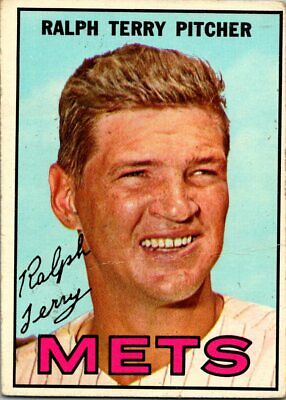 Terry the teacher knew exactly how to screw up his student. It would take a while for Tug to master his new pitch (and for Met coaches to buy in), but once he got a good grip on it, McGraw and the screwball became synonymous. Consequently, the Mets bullpen blossomed once Gil Hodges planted Tug as the lefty late-innings complement to righty Ron Taylor in 1969, a year the Mets closed in the highest style possible. The Mets went to a second World Series four years later only after McGraw rediscovered his scroogie down the stretch (it had somehow scurried out the doggie door at the height of summer). And we can thank a pretty fair righthanded pitcher and golfer named Ralph Terry, who died on March 16 at age 86, for getting Tug and the rest of us to believe as we did. Deney Terrio billed himself as the man who taught John Travolta how to dance and got the syndicated show Dance Fever out of it. Ralph Terry was just helping out a young teammate as he himself was moving on.
We should also thank Tug’s singing son Tim McGraw for taking to Twitter and sharing the following anecdote on St. Patrick’s Day, because receiving an extra opportunity to think about Tug McGraw in the same week is like finding a four-leaf clover in each pocket of your warmup jacket:
His favorite holiday, really, was St. Patrick’s Day. He was very proud of “McGraw” and bein’ Irish. […] My uncle did a little research into our family and told Tug one day, “I don’t think we have quite as much Irish blood as you think.” It sort of pissed Tug off, and he just said, “[Bleep] you, I’m stayin’ Irish. It’s been good to me!”
However much Tug might have enjoyed March 17, 1968, by Opening Day, despite having pitched for the Mets at least some of each of the preceding three seasons, the 23-year-old would be down in the minors for the duration. “No argument from McGraw,” Tug third-personed in Screwball. “It was a good move, because in all honesty I hadn’t had enough time in the minors yet.” While Tug worked on turning the ball over in Triple-A Jacksonville (where during a previous stint he’d met the woman who gave birth to Tim; he did have some time in the minors), the Mets needed to fill whatever void he left in New York with another lefty. They did so, in part, with the veteran reliever Bill Short.
Apropos of his surname, Bill wasn’t a Met for long, although by recent Met reliever revolving-door standards, Short lasted a veritable lifetime: the entirety of the 1968 campaign. Historically, he occupies a couple of odd places for a franchise that’s always been a little bit out in left field. For one thing, Bill Short, who’d been in professional baseball since 1955, is the only player in Mets history you can’t call anything but a 1968 Met. I might not have bothered to look it up had it not been for what being a 1969 Met means.
I’ve always felt a little bad for Short and the eight other 1968 Mets who didn’t last with the club that one extra year. The rest arrived in Flushing somewhere between 1965 and 1967. Three — Jerry Buchek, Phil Linz and Billy Connors — reached the end of the line in ’68. Five — Dick Selma, Larry Stahl, Greg Goossen, Don Bosch and Don Shaw — found work with freshly minted expansion teams facing the endless miles of bad road the maturing Mets were about to be done with (though Selma would have his standing elevated by April when the front-running Cubs traded young Joe Niekro to San Diego to secure the former Met phenom’s services). It’s not like the 1969 Mets didn’t become the 1969 Mets without the nine 1968 Mets they cast off, and it’s impossible to determine whether the 1969 Mets would have gone as far as they did with them.
Still, talk about bad timing.
Bill Short (sometimes referred to as Billy, as players named Bill might be) resided somewhere in the middle of a cohort neither Bulova nor Armitron would have been anxious to sponsor. The Mets picked him up from the Pirates after Bill spent most of 1967 bringing his left arm back to life in the minors. Injuries had plagued him earlier in a career that never quite took off. His major league experience consisted of 35 appearances spread over four seasons that themselves spanned eight years. Yet here he was, of interest to the 1968 Mets for the reason many pitchers who don’t throw with their right arm are of interest to teams in any era.
“I want to see him in the bullpen,” Hodges said early in Spring Training. “I understand he can get lefthanded batters out.”
The siren song of the lefty reliever was enough to allow the 30-year-old southpaw to rise above stiff competition in a camp populated by young, live arms. Seaver was the known quantity. Nolan Ryan always drew attention. Jerry Koosman pitched his way into the rotation, shaking off his shaky ’67 auditions (Kooz, incidentally, was relieved in his first career appearance by Ralph Terry). But in the shadow of all that obvious talent, Short delivered 10 scoreless Florida innings, made the Mets and endured from April to September, accomplishing a niche that accounts for his second odd niche in Mets history.
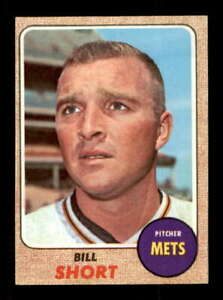 Charter member of the No Homers Club. In sixty seasons of Mets baseball, per Baseball-Reference magnificent Stathead tool, only thirteen pitchers have faced at least 100 batters in a given year and surrendered zero home runs. Zilch. Zippo. The first of these gopherless ballers? Why, Bill Short. One-hundred twenty-eight hitters came to the plate against Billy. None took him deep. Not only was it a franchise first, it would stay a franchise rarity. No Met would be as nimble at not allowing homers again until Paul Siebert in 1977. The roster of other slugger-unfriendly hurlers includes high-profile starters Ron Darling (as a rookie in September 1983), Pedro Martinez and Noah Syndergaard (both in years — 2007 and 2017, respectively — when their appearances were curtailed by injury) and a handful of shooting not-quite-stars (Jaime Cerda, Orber Moreno and Juan Padilla among the early 21st-century contingent). The best Met pitcher at not giving up a single home run, which is to say the Met who faced the most batters in a season without having to stand on the mound and watch his opponent circle the bases?
That it was a Met pitching in 1986 probably wouldn’t surprise you. That it was Doug Sisk might make you rethink the “boo” you just mentally formed at seeing the name Doug Sisk. Say what you will about Sisk, but be sure to add “Doug faced 312 batters, gave up no home runs and the Mets won the World Series.” Context and nuance is your call.
But Bill Short got there first. Interestingly, despite Gil Hodges finding him attractive on the basis of being a lefty reliever who could trouble lefty hitters, Short’s splits in 34 games coming out of the pen indicate a southpaw who came north to get out batters on each side of the plate. Lefties slashed .222/.308/.311 against Bill. Righties posted a line of .219/.307/.266.
Bill, whose February 2 passing at 84 surfaced within the baseball community only in the last few days, proved himself a representative major leaguer in 1968, and maybe he could have contributed to the team that was about to become the 1969 Mets. Alas, the Mets left him unprotected in December’s Rule 5 draft and the Reds snatched him up. Detailed splits of the type cited above were not readily accessible more than a half-century ago. Otherwise, one gets the feeling his new manager, Dave Bristol, wouldn’t have reflexively echoed Hodges from a year earlier. “Short can get out a lefthanded batter,” was Bristol’s limited assessment…because isn’t that what lefthanded relievers do?
Oh, you know who you can ask? The lefthanded reliever whose arm, we can cheerfully report, may very well be deathless. Oliver Perez is back in a big league camp, seeking to resume his MLB tenure as an Arizona Diamondback. Of course he is. We’d last seen Ollie in a Cleveland uniform in April, and then we read over the extended winter that Ollie was going to give it one more go in the Mexican League and then definitively hang it up this year. But why hang it up when you can hang around and get out a lefthanded batter? Ollie’s 40th birthday has come and gone. No reason he needs to.
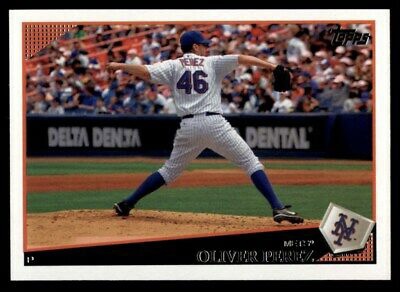 It’s hard to not embrace an active player who called Shea home. Why, you may wonder, would we so embrace the idea of a little more professional success for Oliver Perez, considering that when he finished wearing a Mets uniform in 2010 we were collectively founding Uber for the express purpose of giving him a ride to the airport? Because if Ollie — who revived his fortunes by reinventing himself as a lefty specialist when we were still fuming that he wouldn’t consent to set himself right in Buffalo — makes the D’Backs, he automatically doubles the number of big leaguers in 2022 who can say they played as Mets at Shea. And as long Shea Stadium personnel continue to ply their craft on a major league playing field, then Shea lives. There’s Joe Smith, a lad with us in 2007 and 2008, who just signed with the Twins, and there’s Ollie. Ollie of the 2006-2010 Mets preceded Smith on the Mets, ergo Perez is potentially poised to reclaim his LAMSA mantle, which is to say the Longest Ago Met Still Active. We thought Ollie was all done in the majors. Silly us. Giving up is for kids.
Good luck, Oliver (unless you face us, of course). Good luck, Joe, a righty, but vintage Shea is vintage Shea, regardless of theme. And, while we’re dispensing good fortune, good luck to another veteran reliever, Mike Montgomery, signed by the Mets in February of 2021, only to be released in March of 2021. Mike has been granted his second Metropolitan shot via a minor league deal because guess what arm he throws with.
Hope, like lefties, spring eternal.
by Greg Prince on 17 March 2022 4:38 pm Hi again, Chasen Shreve — and you, too, Matt Reynolds and Johneshwy Fargas. The Mets decided to solve their lefthanded bullpen void by rewinding to 2020 and snatching up the perfectly capable Shreve, who by coming back after a season in Pittsburgh gets the chance to break free of his Silent Generation designation. May the cheers at Citi Field ring out for you loud and often without nary a cardboard figure in sight. While we were deprived from December until March of major baseball doings, the Mets slipped minor league contracts to good old Matt Reynolds, the infielder who showed up to watch the 2015 postseason, then fill in quite a bit in 2016 and 2017; and potentially good new Johneshwy Fargas, the outfielder who blazed to at least one sensational catch in 2021, before being dropped in a personnel pileup. We love us some Recidivist Mets (the thus far 53 who’ve come, gone and come back, from Frank Lary in 1965 to Wilfredo Tovar last year), even if love, almost invariably, is less sweet the second time around.
Hi again, albeit with an tinge of sarcasm in our voice, Robinson Cano. Robinson was gone in 2021, sidelined by his own desire to enhance his performance, or getting caught using something to do that. Cano somehow feels like he’s been a Met forever (it’s only since 2019). It also feels like he’s played hardly at all (a not insignificant 156 games, in fact). The surefire Hall of Famer if you overlook the boosters he’s given himself is a hard guy to dislike, even as his continuing presence on the Met scene is difficult to fathom. He’s made a point of saying “my bad” for missing last year and I don’t doubt he’s already dispensing valuable veteran wisdom of the non-PED variety that his younger teammates will be citing soon enough. They’re all younger than Cano, who will turn 40 this October.
Hi for the first time, Chris Bassitt, Adam Ottavino and Travis Jankowski. New signings! New Mets! That’s the stuff! Bassitt will be in the rotation; Ottavino will be in the bullpen; Jankowski looms as an extra outfielder. My familiarity with each of them ranges from “I know that guy” to “I recognize that guy” to “I think I remember seeing that guy.” What the hell, they’re all Mets now. Welcome, fellas. It’s fun to see the Mets trumpeting new players after a winter of blanking out everybody’s faces on the official online roster.
Hi and never leave us, Jacob deGrom. Jake plans to opt out when his contract allows him that opening after this season is over (faint) yet swears he doesn’t really want to leave (cautiously revive). The best pitcher in baseball presumably just wants to be paid as such, and if Steve Cohen doesn’t satisfy his prime asset, our provisional praise for Metsopotamia’s most benevolent billionaire may have to be rethought.
Hi and glad you’re OK, Pete Alonso. Pete’s vehicle was hit by a maniac driver in Florida, where there’s no shortage of maniacs, drivers or a combination thereof. The vehicle rolled over. Pete somehow walked away physically unharmed. Whew, for Pete’s sake and, yes, our sake. Even if it was the doing of somebody else, be careful on the road. That goes for all of us.
Hi, DH. Boo. But you knew that already.
Hi Jeurys Familia of the Philadelphia Phillies, Robert Gsellman of the Chicago Cubs and Jonathan Villar also of the Chicago Cubs. New uniforms for old friends. Good luck, except when we play you (Familia as a Phillie…perhaps a little less luck). Same to Met-for-a-month Brad Hand, whose signing with Philadelphia positions the also erstwhile Marlin and National to join the likes of Todd Zeile, Joe Orsulak and previous most recent inductee Jeff Francoeur in the NL East’s Four-Timers Club.
Hi next year’s schedule that will have us playing everybody and their uncles. Interleague competition will essentially become interconference, like when the Nets or Islanders play San Antonio or Calgary. Baseball is trying to shake off any differentiation it has from anything else, all but killing the idea that the World Series should have a modicum of mystique. (I wonder when we’ll have penalty kicks.) Strangely, I don’t hate the prospective 29-opponent jamboree as much as I hate the DH. I voluntarily watch the Nets play the Spurs and don’t cringe when the Islanders take on the Flames, so at this point, where the rules have flattened out and some American League team is already on some National League team’s schedule somewhere every frigging day, yeah, sure. Let’s make baseball as unspecial as possible (that’s me not hating this as much as I hate the DH).
“Hi, which sleeve do you want me to roll up?” is a phrase I hope certain Mets will be saying to a medical professional in short order. We’ve come too far not to get to this season in the best shape of our lives.
Hi baseball. You’re not as ideal as you could be, but, even in the best of times, you never were. We’re on board for the duration, however. We always are. The Mets start playing pretend games Saturday. Let’s do this thing.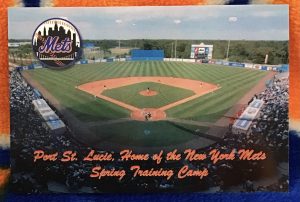
Warm up for the first broadcasts of the preseason by listening to Jeff Hysen and me mull over a few spring things on National League Town.
by Jason Fry on 14 March 2022 6:01 pm Great, there will actually be a season! Which means we have business to attend to — extending a slightly overdue welcome to 2021’s matriculating Mets, who are now in The Holy Books!
(Background: I have three binders, long ago dubbed The Holy Books by Greg, that contain a baseball card for every Met on the all-time roster. They’re in order of arrival in a big-league game: Tom Seaver is Class of ’67, Mike Piazza is Class of ’98, Noah Syndergaard is Class of ’15, etc. There are extra pages for the rosters of the two World Series winners, the managers, ghosts, and one for the 1961 Expansion Draft. That page begins with Hobie Landrith and ends with the infamous Lee Walls, the only THB resident who neither played for the Mets, managed the Mets, nor got stuck with the dubious status of Met ghost.)
(If a player gets a Topps card as a Met, I use it unless it’s a truly horrible — Topps was here a decade before there were Mets, so they get to be the card of record. No Mets card by Topps? Then I look for a minor-league card, a non-Topps Mets card, a Topps non-Mets card, or anything else. That means I spend the season scrutinizing new card sets in hopes of finding a) better cards of established Mets; b) cards to stockpile for prospects who might make the Show; and most importantly c) a card for each new big-league Met. Eventually that yields this column, previous versions of which can be found here, here, here, here, here, here, here, here, here, here, here, here, here, here, here and here.)
The 2021 Mets employed a stunning 42 new players, smashing the club record of 35 set back in 1967 and coming within three of tying the number of new players used in 1962, when every Met was by definition a newcomer. 1967 was a transition year, one marked by a new GM, a change of organizational philosophy and a restlessness with what had come before, but 2021 was just a perfect storm of weird. Basically, everybody got hurt and the team zoomed through interchangeable players at the margins, hoping to catch lightning in a bottle and just winding up with a lot of bottles filled with water.
You might want to make reading this post a multi-day affair, because that’s sure as hell how I’m going to write it. Let’s go!
Kevin Pillar: So I was wrong. Pillar arrived with billing as a useful late-inning defender if no longer the center-field wizard he was a step or two ago, but after watching his first few weeks in Queens I told everybody who’d listen and a few people who wouldn’t that he was a Jonah, a sink of do-nothingness who’d drag the whole season down with him to hell if not excised from the roster posthaste. Then, one night in Atlanta in mid-May, Pillar took a Jacob Webb fastball to the face, a frightening incident I watched from a San Francisco bar that had me instinctively out of my chair and standing up close to the TV, anxious to glean as much info as I could. Pillar was OK, thank goodness, and showed not just grit but also grace in returning, going out of his way to reassure a distraught Webb that these things happen. Did he have a great year? Not really, but he showed me pretty emphatically he’d never deserved the Jonah tag I’d stuck on him in a fit of April pique, and that’s not a bad lesson. 2022 Topps card in which — appropriately — he’s scaling an outfield wall. Can’t tell if he’s going to catch anything, though.
Francisco Lindor: Why does every highly heralded Met arrival have to get hazed by not only the fans but also fate? Lindor arrived pre-anointed as a superstar, delivered from the backwater that is Cleveland to become an MVP candidate and a million-watt matinee idol, and at least for his first year was neither. (By the way, Cleveland is a perfectly fine town and this well-worn Gotham narrative makes us look like assholes.) There was the deeply weird rat-raccoon postgame Pravda after his contretemps with Jeff McNeil, but more than that there was the fact that Lindor looked lost at the plate — he didn’t raise his average above the Mendoza line until friggin’ June 2. If you want to look on the bright side — and given that monster contract, we all better — he turned things around after that, only to have his season derailed by a nagging oblique injury, because 2021. Even while slumping at the plate, Lindor was the busiest, savviest, most go-go infield captain the Mets have had since Keith Hernandez, and that’s something. A bad year isn’t destiny, but why does this stuff always happen to us? Some 2021 Topps insert using the ’92 design; at least his smile looks MVP caliber.
James McCann: Sturdy catcher came over from the White Sox after a pair of solid seasons and looked more like the guy the Tigers had been happy enough to let go of, hitting approximately 485,912 balls into the ground over the course of a nightmare year. That brought the usual grumblings that Tomas Nido should catch, a fantasy that Nido inevitably squelched once given a run of playing time, as has been true with the Mets’ catching corps basically since Mike Piazza got old. McCann has three years left on his contract; should he falter again, the fanbase will be scouting Francisco Alvarez’s trips to the bathroom and water fountain at Binghamton. 2022 Topps card, since the names of the players on Topps’ 2021 cards were impossible to read without a magnifying glass.
Trevor May: Burly, brainy reliever came over and was OKish in the pen, mixing reliable stretches with streaks in which he gave up way too many walks and homers. At least he was forthright about things when they went awry. He’s a smart guy, but identifying what’s wrong and fixing it are very different things — not just for May but for the entire human race, if you’ll forgive an existential aside. 2021 Topps card. You can’t read his fucking name, so just trust me that it’s him.
Aaron Loup: The Mets’ signing of this veteran lefty elicited mostly shrugs, but he was unhittable out of the pen, finishing the year with an 0.95 ERA (no, not a typo) and actually making people feel fondly towards Busch Light despite the fact that it’s not anything a sensible person should put in his or her mouth. Loup then signed with the Angels, perhaps because the Mets were a rudderless fiasco for a crucial stretch of the offseason, perhaps because he didn’t like New York, or perhaps because he’s wise enough to know that bullpen seasons are strands of spaghetti that tend not to stick to the same wall twice. You’ll see that 0.95 ERA pop up on SNY leaderboards for years and say, “Oh yeah, remember that?” It’s an anticlimax, but he gets a Topps Total card in which he’s a Padre.
Jonathan Villar: Wound up playing a lot more than envisioned after J.D. Davis’s season turned to dust, and acquitted himself well, playing a not-bad third and showing both power and speed. That’s the kind of performance that can be part of a championship season when everything else goes right; unfortunately for the Mets nearly everything else went wrong, so Villar’s 2021 will be remembered in a “well, it wasn’t his fault” way by the hardcore and forgotten by everyone else. Here’s wishing him well wherever he lands. 2021 Topps card in a Photoshopped Mets uni.
Albert Almora Jr.: Always a good defender, Almora had teased Cubs fans with his offensive potential but never delivered on it, walking the forlorn road from prospect to suspect to someone else’s project. His time with the Mets was misbegotten from the jump, as there really wasn’t anything he could do that Kevin Pillar couldn’t. Anyway, he made some fine defensive plays early in the season, didn’t hit a lick, got hurt and that was that. Feels like everybody involved would have been happier if we’d just skipped the whole thing. 2020 Cubs card.
Jacob Barnes: The first pitch he threw as a Met was a 95 MPH fastball over the heart of the plate in Philly that J.T. Realmuto hit to the Azores for a three-run homer. Whoops! Old Topps Heritage card where he’s a Brewer.
Joey Lucchesi: After never finding a place in San Diego and feeling pretty chapped about it, Lucchesi escaped to the Mets and looked like a steal in the early going, showing off a promising “churve” but also exhibiting a dispiriting habit of getting pinata’ed the second time through the batting order. But in late May something clicked and Lucchesi put together an excellent month even as everything was tumbling down around him. His teammates rallied around him too, flashing the churve symbol in an effort to get baseball to recognize the pitch on scoreboards. (Yes, that was the churve symbol and not the sign for “white power,” which was a good thing for the obvious reasons and also because 2021 was enough of a drag as it was.) This feel-good story then screeched to a halt in June when it turned out Lucchesi needed Tommy John surgery. Yeah, it was that kind of year. 2021 Topps card. It’s a horizontal, which isn’t as bad as white-power signs in big-league dugouts but should still be decried.
Taijuan Walker: A rising star with the Mariners not so long ago, Walker’s career followed a distressing but all too familiar pattern: injuries and scuffling followed by repeated changes of address, a character arc that might be called “Didn’t you used to be … ?” The Mets were his fourth organization in three years, and Walker was running out of time. But his arc was about to change: Walker’s elbow had finally healed, he’d used his time in the baseball desert to learn the valuable lessons young flamethrowers don’t yet realize they need to know, and he was ready to remind everyone of who he used to be. When Jacob deGrom turned down a chance to pitch in the All-Star Game, Walker (who’d donned Turk Wendell’s old 99) was a very worthy replacement. A nice story, but alas, the season had a second half. Everything that had come together came back apart, and Walker ended the year with as many wins as he’d had at the break. What happened? Maybe the increase in innings was too much, maybe hitters figured out Walker’s new wrinkles, maybe the first half’s good fortune was balanced by its second-half opposite, or maybe it was a little bit of everything. I’d like to know; the Mets and Walker would like to know too. 2022 Topps card.
Trevor Hildenberger: A side-arming righty who’d mulled being a film critic if this whole baseball thing didn’t work out, Hildenberger got exactly two outings as a Met, posted an ERA north of 15, and saw the credits roll while the butter on his popcorn was still hot. An old Topps Twin card; he has another one specific to a team set that I can’t find and will search for in vain until 2042, when it will cost me a fortune. Grrr.
Sean Reid-Foley: A Clark Gable mustache and a bouncer’s tattoos made Reid-Foley a distinctive sight even before taking his stance on the mound, a vaguely sumo crab stance accompanied by a stare in at the catcher. After replacing Jacob Barnes on the roster he was a strikeout machine, meaning he also instantly replaced Jacob Barnes in our hearts. Alas, Reid-Foley’s early success ended, his elbow began barking, and he wasn’t seen again after June. TLDR version: “He was a relief pitcher.” Some old Topps insert, as a Blue Jay.
Stephen Tarpley: The Holy Books indicate he pitched for the Mets, so I guess he did. Topps Total card as a Marlin. I do remember that part: It was a hasty eBay transaction to keep a Yankees card out of THB.
Jose Peraza: A nomadic utility infielder in terms of both position and address, Peraza arrived at the tail end of April and logged more time than either he or the Mets had expected, showing solid instincts afield and proving a clutch bat off the bench. But he was a better suited there than as an everyday player: He put up a WAR of 0.0, which is a statistical synonym for “overexposed utility guy.” Just got a 2022 Topps Heritage card as a Met, which makes zero sense seeing how he’s now a Yankee minor leaguer, but is a boon to The Holy Books.
Patrick Mazeika: Ended 2020 as a Mets ghost, and between his pedestrian minor-league numbers and the fickle fortunes of backup catchers, I feared his chance to escape ectoplasmic purgatory might have come and gone. But in 2021 Mazeika reappeared and became a cult hero, collecting a game-winning fielder’s choice against the D’Backs in his second at-bat and getting his uniform ripped off in celebration. It was the start of an unlikely and thoroughly wonderful stretch in which Mazeika somehow collected three RBIs, two of them walk-offs, before getting a big-league hit. (We’ll come back to this point later.) There weren’t too many of those hits — the highlight was probably a home run against the Rays on an otherwise dismal day — but who needs those (or uniform tops) if you can supply enough well-timed worm-killers? 2022 Topps card. It might be the only one he ever gets, but it’s one more than I figured he would, and that’s a nice story.
Jordan Yamamoto: A fitfully promising Marlins castoff, Yamamoto was acquired for depth, pressed into service as the starting rotation’s body count climbed, pitched OK in a couple of cameos, and then got hurt and tossed on the IL discard pile himself. This capsule biography could be copy-pasted quite a bit. 2020 Topps card as a Marlin.
Tommy Hunter: You know storm clouds are gathering when guys like Hunter appear on the roster. I say that not with malice but with a veteran fan’s sad wisdom, and I doubt Hunter would disagree: A husky hurler in his mid-thirties, Hunter is in the autumn of his career, riding waiver wires as a wise head attached to a potentially useful body, to be called on in a team’s hour of need. That time came for the Mets in May, and Hunter did well before (inevitably) getting hurt: He turned in eight scoreless innings and collected a long-awaited first big-league hit. His delight in that hit will stay with me long after I’ve forgotten the rest. 2021 Topps Heritage card as a Phillie.
Jake Hager: Hager made his big-league debut with the Mets on May 15, got his first hit on May 21, and was designated for assignment on May 22. If that sounds like a lot, consider Hager’s recent transaction history: Signed a minor-league deal with the Mets on Jan. 9, 2020; lost a season to the pandemic and became a free agent on Nov. 2; resigned with the Mets on Nov. 4; turned in the week recounted above; claimed off waivers by the Brewers on May 25; designated for assignment on June 18; claimed off waivers by the Mariners on June 22; designated for assignment on July 27; claimed on waivers by the Diamondbacks on July 30; appeared in nine games for Arizona while being sent down twice; outrighted to Triple-A on Sept. 12; became a free agent on Nov. 7; resigned with Arizona on Dec. 1. So many W-2s! 2019 card as a San Antonio Mission.
Johneshwy Fargas: A good spring training turned this minor-league speedster into a fan cause celebre ahead of the 2020 season, but COVID happened and then Fargas entered 2021 behind both Kevin Pillar and Albert Almora on the defensive-outfielder depth chart. Come May, though, the Mets had become a MASH unit and the roster was just a few transactions away from “first 26 fans get to play,” so enter Johneshwy at long last. His week in orange and blue was a successful one, with hits in five of seven games, but a collision with the Citi Field wall put him on the shelf (2021, oof) and when he returned it was as a Cub. Represented by one-quarter of a minor-league Stolen Base Leaders card, because his cheapest standalone card is somehow $15 on eBay and even my fanaticism has its limits.
Khalil Lee: A Royals prospect turned suspect, Lee came to the Mets in one of those three-way transactions that’s generally more interesting to parse than to see play out. After an early-season stint as a ghost, Lee made his debut during May’s rosterpalooza and the NOT READY signs were flashing red: He struck out in his first eight big-league plate appearances. This cruel stretch ended in dramatic fashion, though, as Lee’s first big-league hit was a double roped into the corner in extra innings in Miami, the decisive blow in one of those trench-warfare Mets-Marlins games that should be prohibited by the Geneva Conventions. Lee then struck out a whole bunch more and was returned to Syracuse, but cut down the Ks and had one of the better second halves in the system. He’s not yet 24, so he still has time. Got a 2021 Topps Update card capturing him celebrating a victory; as a bonus, it shows Johneshway Fargas jogging in next to him. Hey! I can just buy another copy of that one!
Cameron Maybin: Well-traveled veteran arrived during rosterpalooza and collected one hit in 33 plate appearances, perhaps hampered by the giant fork sticking out of his back. 2020 Topps card as a Tiger.
Brandon Drury: Nine of 2021’s new Mets had previously logged time with the Blue Jays, which is a little weird. Drury was one of them, a depth piece called upon during rosterpalooza and one of the year’s success stories. He was deadly as a pinch-hitter, hitting .367 in 30 ABs, rode a few hot streaks and was a lot better in the field than we’d been led to expect. Drury moved on near year’s end to make room for Robert Gsellman, but if every transaction had worked out that well we might have tarted up the blog design with bunting and trophies and other good shit. 2020 Topps card as (you guessed it) a Blue Jay.
Yennsy Diaz: Former Blue Jay arrived without a card available for The Holy Books, so I drew my own — complete with a smile and a word balloon saying Hi! — and posted it on Twitter, a moment of whimsy that Diaz retweeted approvingly. Because of this, no one is ever allowed to say anything bad about him. Walked 12 in 25 innings, which helped contribute to a 5.40 ERA and a -0.2 WAR. Now has a real card as a 2018 Midwest League Top Prospect.
Billy McKinney: It was a tumultuous year for the former Blue Jay, who got off to a hot start with the Brewers before cooling off and winding up with the Mets during rosterpalooza, which worked out pretty well at first and then inevitably less so. The Mets designated McKinney for assignment and he wound up playing in the postseason for the Dodgers. A guy you’ll miss on future roster quizzes. 2021 supplied a lot of those guys! 2020 Card as a Blue Jay.
Mason Williams: Genial-looking once-upon-a-time Yankees prospect helped hold the fort for a stretch in June, which is all you can fairly ask of someone who’s settled into life as a Quad-A player. Does anyone remember Wilfredo Tovar returned to get a paycheck as a 2021 Met? No really, that happened. 2021 Syracuse Mets card.
Travis Blankenhorn: Designated by the Twins for assignment on May 8, by the Dodgers after three Triple-A ABs on May 21, and by the Mariners after a minor-league stint at the end of May, Blankenhorn emerged from this Hageresque odyssey to find himself a Met come June. He only hit .174, but his first career homer was a comeback-accelerating three-run blast against the Pirates in the weirdo game where Taijuan Walker kicked a fair ball out of bounds, and that ought to count for something. Topps then granted Blankenhorn a 2021 Topps Update card, leaving me equal parts grateful and puzzled.
Jerad Eickhoff: With the Mets’ rotation options down to plans requiring Greek letters, the team turned to Eickhoff and kept giving him the ball despite increasingly horrifying results — four starts and an ERA of 8.69. It reminded me of Tommy Milone’s 2017 metronome of suck, except for reasons that are possibly not scientific I loathed Milone and just felt sorry for Eickhoff. None of it was his fault, but it still wasn’t any fun to watch. 2021 Syracuse card.
Tylor Megill: Rose from the “and other names” section of the prospect rankings to a spot in the rotation when everything went to hell, and he looked like a godsend at first. But the regression was painful: Megill’s ERA climbed from 2.04 after seven starts to 4.52 at season’s end. This is pretty much Exhibit A in being asked to do too much; besides being a rookie, Megill had never thrown so many innings before, and was asked to do so after the lost season of 2020, whose effects on minor-leaguers will be debated for a baseball generation. In a universe governed by justice, Megill would start 2022 at Triple-A and proceed on his timetable rather than the Mets’. I don’t need to tell you the universe isn’t usually cooperative in such things, so I’ll remind you that it’s our job as informed fans to mind the gap. 2022 Topps insert card in the ’87 style.
Thomas Szapucki: After a Biblical run of injuries delayed his ascent to the bigs, Szapucki finally made his debut against Atlanta and allowed six runs in 3.2 innings as the Mets lost, 20-2. Oof. Adding injury to insult, he then landed on the IL and needed ulnar-nerve transposition surgery. That means he’s flushed a lifetime’s worth of bad luck out of his system, right? RIGHT? He’s only 25, which is either hopeful or ominous depending on how you see the world. Some ancient Bowman card.
Robert Stock: A ham-and-egger, Stock made a spot start for the Cubs at Citi Field in mid-June and was roughed up by the Mets, taking the loss. Three weeks later he made a spot start for the Mets against the Brewers; it didn’t go quite as badly but he still took the loss. Stock was good-humored about the whole thing, which is a useful skill as a baseball player, given that the alternative is to stare into the howling void until the light is stripped from one’s soul, leaving behind a shadowy vestige fated to wander the cosmos demanding WHY? and never receiving an answer. A long-ago Topps card as a Padre.
Nick Tropeano: The record shows he threw two innings for the Mets on July 9 in a 13-4 win against the Pirates, which I will take on faith, as I have no memory of them or him. An old card as an Angel.
Anthony Banda: This guy I remember! A lefty with glasses and a vaguely worried mien, he made his debut in the 10th inning of a hellacious game in Cincinnati with the Mets ahead 10-9 and both teams’ fanbases hiding under their beds, gave up singles to the first two hitters to leave the game tied and the Mets on the verge of defeat, somehow escaped further damage and then walked away with the win as the beneficiary of a five-spot in the top of the 11th. That was basically a season’s worth of middle-reliever angst packed into a single night. Banda’s Mets career was over before two weeks were out, during which time I bellowed “BANDA MACHO!” at the TV whenever good things happened involving him and/or as an attempt to stop bad things from happening, which a) exactly one of you will recognize as a reference to a classic album by the Figgs; and b) mostly didn’t work. Old Topps Heritage card as a Ray.
Geoff Hartlieb: Posted a 7.71 ERA with the Pirates, somehow parlayed that into a go-round with the Mets, and doubled his ERA, which seems both tough to do and ill-advised. I had to look all that up, as I wouldn’t know Geoff Hartlieb from Adam’s off ox. Given the above numbers, that’s for the best. Indianapolis Indians card snatched up on eBay.
Rich Hill: No, he won’t make Cooperstown, but goddamnit Rich Hill is everything great about baseball. He just turned 42, 2021 was his 17th season and the Mets were his 11th team. (He’ll pitch for the Red Sox again this season.) His stat line looks like it must reflect wars or hostage dramas, as he was basically MIA for 2010-11 and 2014-15, felled by a torn labrum, Tommy John surgery and other woes. When he couldn’t get any other offers in the summer of 2015 he became a Long Island Duck, struck out 21 in 11 scoreless innings and was almost immediately back in the bigs, point more than proven. Nothing he does looks particularly impressive, but he takes the ball when asked and gives his team a chance to win — a cliche, sure, but one that exists because of how hard it is for a big-league club to achieve that baseline with pitchers who are too young, too old or too far from figuring stuff out. Hill made 12 starts for a desperate team and only won one of them, but put up a 3.84 ERA and gave his team space to worry about the other four days. That was more than enough. 2021 Topps Heritage card as a Twin.
Akeem Bostick: If you put him in a lineup (real or police, doesn’t matter) with Stephen Tarpley, Nick Tropeano and Geoff Hartlieb I’d stare at the four of them uncomprehendingly until someone took pity on me. 2021 Syracuse Mets card.
Carlos Carrasco: Sigh. The man they call Cookie — a leukemia survivor, fan favorite, clubhouse leader and a pretty damn good pitcher — was supposed to put the 2021 Mets over the top, with many of us marveling that the team had managed to pry him away from the now-Guardians along with Lindor. But his year was a nightmare that made Lindor’s look like mild insomnia. A sore elbow and a torn hamstring kept him on the shelf until July, when the Mets’ freefall was already under way; then Carrasco’s first pitch as a Met became a Jonathan India home run … and to be honest things didn’t get a whole lot better after that. He ended up with a 6.04 ERA, chronic trouble with the first inning, and a whole lot of questions going into 2022. A 2021 Topps card in which he’s smiling, indicating he has no idea what lies ahead.
Javier Baez: Baez arrived at the deadline and was very Javier Baez, hitting mammoth home runs, fanning spectacularly, playing superlative infield defense, doing inexplicable things for reasons known only to him, and making a couple of his patented CGI-assisted impossible slides around or possibly through catchers. As a sideshow, there was the dopey “thumbs down” controversy, a spot of minor PR bother that Sandy Alderson inflated with some performative harrumphing borrowed from John Lithgow in Footloose. Baez’s time in Queens was thrilling and maddening at the same time, as Cub fans could have told us it would be. It also turned out to be brief: He’s now a Detroit Tiger and his Mets tenure feels like a weird dream, which I suppose it kind of was. 2022 Topps Opening Day card as a Met, which is also weird.
Trevor Williams: Hirsute and amply tattooed, Williams arrived along with Baez and pitched pretty well in three starts, though I confess by then I was pretty deflated about everything and no longer paying much attention. As a minor aside, in 2021 the Mets went from zero Trevors on their all-time roster to three, perhaps making the most of a heretofore unnoticed market inefficiency. 2020 Topps card as a Pirate.
Jake Reed: A sidearmer, right? Send him out to stand alongside Tarpley, Tropeano and Co. if you want to torture me further. An old Rochester Red Wings card.
Chance Sisco: Inventively monikered former Orioles catching prospect arrived in mid-August and doubled in San Francisco for his first Mets’ AB. It gives me no pleasure to report that was his only hit for the team. 2022 Topps Heritage card.
Heath Hembree: His actual first name is Richard, which is an interesting choice. He soaked up innings in garbage time when the rest of the bullpen was on the IL or in the witness protection program, which seems like faint praise but is a lot better than the alternative. By the way, his 2021 game log records him as starting the year with the Mets and seeing action on April 11 against the Marlins before going to the Reds and returning to the Mets in August. This didn’t happen, though it would have been a logical year for such a thing — the April 11th game was suspended, made up late in the season with a largely new Mets cast, and its stats retroactively attached to the earlier date. Centuries from now perhaps members of rival sects will murder each other over which day is claimed for Patrick Mazeika’s first big-league hit. Baseball is so weird. Topps Total card as a Red Sock.
Brad Hand: OK, so this turns out to be kind of funny. With Cleveland opting for a fire sale at the end of 2020, the Mets wanted to pluck Hand off the waiver wire. Which made sense: He’d spent years being about as reliable as a middle reliever can be. But the Mets were being sold and there was no, um, hand on the tiller, so Hand wound up with the Nationals instead, accompanied by wailing and gnashing of teeth in Queens. And then, for whatever reason, he had a horrible year, one bad enough to get him traded to Toronto and then put on waivers by the Blue Jays. The Mets grabbed him at the beginning of September … and he was lousy for them too. Y’know what? Don’t try to make it make sense — it was that kind of year. 2020 Topps card in Cleveland togs, before everything went wrong.
by Greg Prince on 13 March 2022 9:06 pm I’ve been thinking about one of my best friends from college lately. I do every year as February becomes March. I think of him intermittently regardless of month, but especially around now because now is his birthday. Mike Manning was born on March 13.
I became aware of this fact sometime prior to Spring Break 1983. Mike and I were in a couple of classes together the previous fall. I don’t remember what drove us to strike up an initial conversation. Probably some mutual dissatisfaction with a particular professor. We chatted some, palled around before and after class, even went out for end-of-the-semester beers with another classmate when the term was over. Mike and I each liked to emote and we each liked that somebody would absorb what we were going on about. We were a good audience for one another. That makes sense. The class where we began to hit it off was Public Speaking.
Spring Break in ’83 where we went to school, at the University of South Florida in Tampa, ran the second week of March. He let me know that with his birthday coming up on the 13th, it would be great if I could come by his apartment on Saturday night the 12th for a party. He’d be turning 21. I was impressed that he considered it a big enough milestone to celebrate. Basically, everybody turns 21 when you’re in college. But Mike made a thing of it, and I was touched to be invited. I made sure to be back in town in time for it (and it gave me a good excuse to hit the road from my parents’ place down in Hallandale a day sooner than I would have normally).
The occasion of Mike’s 21st birthday made for a perfectly lovely party. I met some perfectly lovely friends and family members of his, even if small talk is a skill that eluded me then as it does now. I wore my Mets jacket. Mike saw it and tried to remember which famous baseball player he was a distant cousin to. One of his siblings reminded him: Gaylord Perry. Mike was a little tipsy, but what the hell, he was home and on the verge of a significant number. The clock eventually struck midnight. Those of us who hung in there toasted him. However close we were before March 13, it seemed we got closer after. Like I said, Mike was one of my best friends.
Mike turned 21 nine-and-a-half months before I did. It was a process that would repeat annually. I always got a kick out of catching up to him agewise and then shrugging that it was only temporary. He was a year ahead of me in school and about a generation wiser. He didn’t need to turn 21 to be an adult. I suspect I wasn’t in that much of a rush to fully grow up. Mike had not had an easy upbringing and compensated for it by getting a head start on being in the real world. Me, my priorities were pretty much what they’d always been.
On April 2, 1984, I dragged Mike ever so briefly into one of them. To Mike, it was a Monday; on Mondays we had one class together late morning and one after lunch. We’d usually spend the interval together. To me it wasn’t just any Monday. It was Opening Day, and the Mets for the first time I could remember were in the Opening Day game, at Cincinnati. What made it particularly resonant was, because the Reds trained in Tampa, an AM station carried their afternoon games locally (the station was daytime-only). Listen, I asked, would you mind if we stopped by my dorm room between classes? I explained this serendipitous confluence of Mets, Reds and radio that never otherwise happens and I can’t believe I actually get to hear the beginning of the season!
Mike was very much, sure. We get to my room, I turn on the radio and…WHBO AM 1050 is playing a song. And then another song. The station had changed formats recently and dropped the Reds games entirely. I was very apologetic for wasting Mike’s lunch hour and felt embarrassed my media-savvy credibility had been undercut by the erstwhile Reds affiliate. Mike was very much, that’s all right. He continued to trust my instincts, even if they once in a while went awry. We got up and headed to class. The Mets lost, 8-1, at Riverfront. Darryl homered in the losing cause, but I wouldn’t find out any of that until the Six O’Clock News.
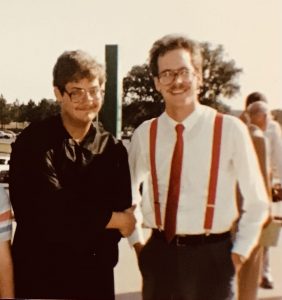 A couple of college friends. Mike’s the one dressed better than that day’s graduate. Mike graduated in ’84, me in ’85. For his graduation, I bought that week’s No. 1 single — “Against All Odds” by Phil Collins — and mounted it in a frame, which he hung up in living room. For my graduation, he and his girlfriend brought me back a couple of baseball tchotchkes from their recent trip to Chicago: an oversized White Sox button, which I got a huge kick out of (Seaver was a Sock then), and a Cubs pennant, which I accepted politely despite absolutely fucking hating the Chicago Cubs following the 1984 pennant race. Yet I still have the pennant because the gesture was far more thoughtful than it was clueless…even though it was more than a little clueless…which is absolutely understandable because my friend and his girlfriend literally didn’t have a clue about who a Mets fan might hate at a given moment, but they knew I loved baseball, and they were very thoughtful people.
I moved back to New York. I would make a couple of March trips back to Tampa as the ’80s rolled on — Spring Break was apparently still in my system — and we’d get together, but usually I’d settle for calling him come March 13. Hey, we’re no longer the same age, one of us would say and the other would laugh and we’d catch up. Mike married his aforementioned girlfriend, a woman different in manner and accent from him — she was a New Yorker with all that implies (I can say that as a New Yorker); he was a courtly Southerner at heart — but they were fully compatible in their warmth and decency. I was a groomsman at their wedding, having flown down in November of ’86, resplendent in that same Mets jacket I wore to his 21st birthday party. Why shouldn’t you be wearing it? he asked when he picked me up at the airport, overlooking the fact that November in Tampa didn’t necessarily require an outer layer. Your team just won the World Series.
Mike and Maria had a beautiful wedding ceremony. Then they shared a beautiful first dance to “Nobody Loves Me Like You Do,” the Anne Murray/Dave Loggins duet. Then, as they and their dozens and dozens of guests rightfully went about reveling in their nuptials, I receded into a sulk from which even the knowledge that my team had just won the World Series could not extricate me. Not the happy couple’s fault, nor the caterer’s. I was attending their wedding stag after a potential date fell through and I was becoming sure I’d never find anybody the way they’d found each other. A wedding was not the place to be in that state of mind. I sought them out, wished them well and left. They managed to work a concerned phone call into their honeymoon to see if I was OK. Warm and decent, indeed. (I met Stephanie six months later and became a more reliable wedding guest thereafter.)
Mike and Maria settled down in Tampa. Hardly anybody was actually from Tampa. Mike grew up there. They eventually had a son who died in infancy, which of course was horrible. Stephanie and I visited them shortly after the tragedy. I approached Maria gingerly. It’s OK to hug, she assured me, I won’t break. The Mannings were indeed made of strong stuff. Blessedly, they were soon able to adopt a boy who it turned out was the same age as the son they lost.
Somewhere along the way, the three of them moved to Atlanta, where Mike established himself in his profession. The birthday calls became birthday cards. The birthday cards became birthday e-mails. Then those faded. Mike was always mentioning how busy he was. He was never curt about it, but I picked up a vibe that time was tight and he couldn’t be the audience he used to be, and maybe he didn’t need me to be the audience I used to be. I didn’t want to be a bother, so I stopped reaching out. Occasionally I’d search online a bit, just out of curiosity, to see if he was on social media. He wasn’t. That didn’t seem like his scene. Mike was too serious for most of that nonsense. He took himself right up to the edge of too seriously, but inevitably knew how to pull back (says the man who bolted from a wedding reception in a self-pitying snit despite carrying the honor of groomsman and the Mets being world champs). I knew him well enough to know how he was doing even if I wasn’t up to date on what he was doing.
We’d lost touch, but somehow I never felt like we hadn’t remained friends in absentia. I figured Mike and I existed on plane that wasn’t defined by time. Our conversations, when they had transpired, didn’t more than dabble in remember when we…? nostalgia. If they had, Mike would have been overmatched. I was driving him around Tampa on some pre-wedding errand when “Maneater” came on the radio. Mike randomly exclaimed, “high school!” as if he’d decided some splendid twelfth-grade or earlier coming-of-age moment was soundtracked by this particular Hall & Oates number. I couldn’t let it stand. Mike, I said, “Maneater” came out in the fall of 1982. We were both in college. It was when we met in that speech class. He stood amiably corrected. These days, I usually let people make their connections as they see fit, unless the Mets are involved.
I hear “Maneater” and I think of Mike and I smile. I hear any number of things and I think of Mike and I smile. The word “woods,” for example. We were driving around once in some section of Tampa that had been built up since his childhood. “This used to be woods,” he said as we passed strip mall after strip mall. I told him I’d never heard of a retail chain called Woods. No, he said, they were actual woods out here. I laughed. He continued to give me the tour of the town he knew better than most. Stuff like that. For years I’d think of some random exchange from forever ago and smile at what Mike said or how he reacted to what I said. So what if we hadn’t had any of those types of talks lately? He’s out there somewhere, was my conclusion. I know I could call him and we’d pick up wherever we left off.
Except I can’t do that because, as his 60th birthday approached here in March of 2022, I got curious and slightly ambitious and searched a little harder and discovered that my good friend Mike Manning died in February of 2011. He was 48, a little more than a month shy of 49. Lung cancer, if I read the death notice correctly, which reminded me that, oh yeah, Mike smoked in college. Was apologetic about it, knew it wasn’t a good idea, but, well, that was something he did. I suggested he quit, but I never had it in me to berate him about it.
So Mike’s 60th birthday arrived today without Mike. Same as had been the case for his 50th. I still thought about him every March 13th, how his age retook the lead on my age. I guess I caught and passed him somewhere back there. I really would have preferred not to.
The last time I heard from Mike was after USF had climbed to No. 2 in the college football rankings in the fall of 2007. It was in an e-mail in response to one I sent him full of amazement that our Bulls were stampeding. USF didn’t have a football team when we were there. Mike wasn’t much of a sports fan, but he lived outside Atlanta. Georgia’s into college football, I figured, so Mike must have stumbled across this data point. We could bond anew, laughing at the absurdity that our heretofore obscure alma mater was listed behind only Ohio State and ahead of everybody else. It would give us an excuse to catch up. Except Mike’s e-mail on the subject was of the “been busy” variety. Not rude, but not looking to talk Bulls football or anything else. “I haven’t had much time for news from home lately” is the line that stays with me. I let it go. I let him go. Not much later, he’d be gone.
Still with me, at least, are all the bits and pieces that added up to one of the best friendships I was ever a part of, even if it did lapse. Also still with me: one final greeting card. It was from Mike to me, April of 2007. The picture on the front is of a few dozen pencils of many colors. The envelope it’s been in for fifteen years is yellow. Not only did I save it, I’ve kept it in a small pile of books and notepads that have sat next to my bed for ages. I’m not quite sure why it, among countless pieces of paper, earned its specific pluckable place. I don’t have any other cards in that particular pile. When I learned of Mike Manning’s passing, I knew exactly where to lay my hands on it and read it again.
Hey Greg —
So, it’s opening week for baseball — GO METS! Thanks so much for the b-day card & sorry for the long response pauses. I feel like I’m always working & traveling — maybe because I am. I was working in EU for a couple of weeks a couple of months ago. How about you — how’s consulting & writing going? How’s Stephanie doing? Maria is great & so is Charlie — who just turned 17! Can you believe my nephew Franco (altar boy @ my wedding) is a month away from being a dad…and his sister Michelle is about to get married? I chose this card as a reminder of all the times I could have written colorful notes to you!
I am six weeks away from completing my four-year theology class. Maybe then I’ll have time. No matter what, I would love to see you guys next time I’m there — maybe summer in DC & Boston until then. Thaw out, enjoy the spring air in Shea Stadium.
Always know we think and talk about you all when we are out and about doing our routines! See you soon…
Your friend,
Mike
He had me at GO METS! He had me long before that.
by Greg Prince on 10 March 2022 6:02 pm “Number Twenty Twenty-Two!”
“I’m Twenty Twenty-Two.”
“Your order is ready.”
“What’s this supposed to be?”
“It’s the baseball you ordered.”
“I asked for it by March 31. You made me wait an extra week. I suppose I should be happy you didn’t make me wait a week or more beyond that!”
“It’s the baseball you ordered.”
“Hell, I suppose I should be grateful you bothered to make it full-size.”
“It’s the baseball you ordered.”
“You apparently screwed around all winter before getting it ready.”
“It’s the baseball you ordered.”
“Do I smell universal DH? Because I have serious trouble digesting that.”
“It’s the baseball you ordered.”
“And it has these extra playoff teams I specifically mentioned I’m allergic to.”
“It’s the baseball you ordered.”
“Does it at least come without the seven-inning doubleheaders and unearned runners in extra innings? I swear I still have a bad taste in my mouth from the last time I waited longer than I should have. No, I don’t see it. Like you taking out what shouldn’t have been included in the first place constitutes some kind of bonus.”
“It’s the baseball you ordered.”
“What the…uniform advertising? Well, that’s just gross someone would even think to put that on there.”
“Look, pal, you want the baseball or not?”
“Of course. Gimme.”
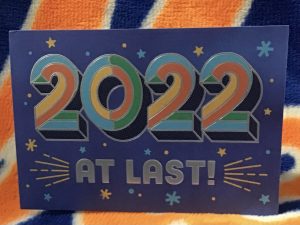 The Lockout apparently couldn’t end until the latest episode of National League Town took MLB to task. You can listen to Jeff Hysen and me kvetch effectively here. The Lockout apparently couldn’t end until the latest episode of National League Town took MLB to task. You can listen to Jeff Hysen and me kvetch effectively here.
by Greg Prince on 8 March 2022 7:32 pm When last I dwelled on the Brooklyn Nets in this space, I was crushed by their seventh-game playoff loss in overtime to the eventual NBA champion Milwaukee Bucks. Had they beaten the Bucks, they surely (I’m sure) would have beaten the Hawks in the Eastern Conference finals, and then they would have sat four wins from the crown that has eluded them since they played with a red, white and blue ball. Given how close the Nets seemed to come to ultimate glory last spring, this season loomed as prelude to reaching the heretofore unreachable star this spring.
And, for a while, it was. The Big Three even played together two or three times, I think. But de facto MVP Kevin Durant missed a chunk of the schedule with a sprained knee; and Kyrie Irving couldn’t be persuaded a vaccination against COVID-19 was something he should take for his (and the team’s) own Barclays Center good; and James Harden suddenly remembered how much he really wanted to play in Philadelphia; and all kinds of other mishegas that can derail a season that once looked so promising oozed onto the hardwood. At this moment, the Nets — who led their conference for a spell and whose composition implied the 82 games on their 2021-22 agenda constituted a mere formality — are hardly a sure thing for a playoff spot.
I’m not crushed. If anything, I’m invigorated. Not by the results, which have been a letdown, but I’m invigorated that several nights a week I have the Brooklyn Nets playing basketball, with multiple storylines overlapping and an evolving cast of characters introducing and reintroducing itself. I have a team I root for. I haven’t given up on their potentially going far. Given all the mishegas, I don’t really believe they will, but I’ll take what there is to be had from my favorite currently active team.
What I’ve rediscovered in this season of general Nets discontent is I’m content to keep company with them. When they win, I’m happy. When they lose, I’m less so, but it mostly passes. As they drop in the standings…well, stop doing that, Nets. But if you can’t, I’ll try to be understanding. Sometimes I slam the remote into the couch cushions. I’m not that understanding.
I’m processing the Nets this way in the shadow of baseball’s ongoing hiccupping negotiations. Nothing to be content or invigorated about there. Nobody talks for weeks on end, then there’s a flurry of noise, then nothing. Hopes rise modestly only to be dashed instantly. Wrapping my head around individual issues — beyond the overriding reality that the owners locked the players out and would like to squeeze their union tighter and tighter — doesn’t strike me as a productive use of my gray matter. Yet I have managed to absorb the desire by the party doing the locking out to host 14 teams in the MLB postseason; and reports that the party being locked out might agree to bloat the postseason if it wins them a more substantial increase in the CBT, an acronym I’m disappointed I’ve bothered to learn.
Fourteen teams in the postseason, with twelve teams in the postseason as the fallback position. Thirty teams continue to operate, or would if operations were underway as they usually are come March, so it’s not like the addition of postseason teams is commensurate with overall expansion plans. No, rather it’s been determined that the postseason is where the real baseball action is, and the owners (and probably the players, if they can make it work for them) want more action, which is to say more postseason revenue, which is to say stacks of money are blocking the entrance to a ballpark near you.
More playoffs! More money! We’ll let you know when you can pay us for the privilege.
Like you, I love when the Mets make the playoffs. I loved it when they were one of four teams in one of two LCSes, one of eight teams in four LDSes, one of ten teams to qualify for October, even when they were merely one of four teams playing in one of two Wild Card Games with no promise there’d be any Mets games beyond it (there weren’t). Nine times the Mets have gone to the playoffs, and nine times I’ve gone to the moon before the first pitch has been thrown. The stakes are elevated, the excitement is amplified, the thrill is present for however long Metropolitan participation lasts. Mentally, I’m wearing a tux when the Mets are in the playoffs.
Yet while my annual goal as a fan is to experience my team winning a World Series, it’s not why I’m a fan. It would be great. It would be greater than great. Having had the tingle of a last out of a World Series captured by the New York Mets race through me twice, I know how it feels. I’d love to feel it again. I’d love all of us to feel it, especially those among us who weren’t around in 1969 and/or 1986.
But winning it all isn’t what it’s all about. It can’t be. It’s impossible. And it misses the point. The point is the season. The point is the company we keep with the season. The storylines. The cast of characters. The joy that comes from the mundane. The days and nights with the Mets. Pulling for positive outcomes on a pitch-by-pitch, batter-by-batter, game-by-game basis. Finding a way to be certain the next pitch, the next batter, the next game will give us what this one didn’t if it didn’t give us the preferred outcome. Never abandoning ship altogether because, win or lose, a baseball season is tantamount to 162 party cruises. Some tours of the harbor wind up a little more sullen than the others, but they were all worth their salt the second we climbed aboard.
Metaphors are running as wild here as the ’85 Cardinals on artificial turf. The point for which I’m groping is I care deeply about the Mets winning a lot and winning as much as there is to be won. But it’s not all I care about when it comes to the Mets. The regular season is the trophy. That’s the hunk of metal we all yearn to lay our hands on and grip for six months. Should our team be marvelous enough to extend our common commitment into a seventh month, huzzah! If our boys can’t do it, we’ll gather our recriminations and hunker down in hopes of moving up next year. I can deal with angling for a division title or one of two Wild Cards. I don’t need to have extra slots dangled before me as if the only credo a fan adheres to is October or Bust. It’s never October or Bust from the perspective of March.
OK, now and then, it feels like October or Bust, but those are rare and special intervals when you know your team is really, really good. Yet there are still no guarantees. Most seasons, it’s take your journey and earn your tourney, and even if you don’t get the payoff you anticipated, at least you can claim the journey. The Nets work on a different calendar, but they’ve reminded me the journey is the primary reward for a fan and the destination is inevitably up for grabs — and that’s in a league where sixteen teams make the playoffs.
The baseball season is not the appetizer for the postseason. The baseball season is the main course. If you’re good, you get dessert. I can live with that arrangement. I’ve lived with it forever. Baseball has lived with it forever. It’s plenty filling.
by Greg Prince on 4 March 2022 2:22 pm The year is 1970. Or it should be. That was the plan as we approached the third installment of our OF-3B/3B-OF series. We spent one segment focused mainly on 1962, because you can’t begin to understand the Mets’ signature position shuttle without delving into the start of something absurd; and we spent the next segment traipsing across the rest of the Sixties, even extending a toe over the decade line to recognize the fallout from miscasting young outfielders as third basemen. Once we saw what became of ex-Met Jim Hickman and ex-Met Amos Otis (All-Star berths as outfielders), it felt safe to move ahead in time.
Yet we can’t leave the 1960s just yet, because the Mets OF-3B/3B-OF paradigm isn’t whole without a detour into a variation on the form, as if the form of continuing playing players out of position required varying. Within the OF-3B/3B-OF universe we’ve explored once, twice, now about to be thrice, there is a hardy strain of versatility it wouldn’t occur to a person exists: the C-3B-OF. The Mets have used a dozen of them.
Mind you, unlike the conversion of third basemen to the outfield or outfielders to third base, most of the alternative deployment of catchers by the Mets has been anecdotal, maybe accidental. Not everybody who has caught for the Mets has been a catcher by trade. For all their attempts to twist outfielders into third basemen and third basemen into outfielders, pretzeling someone who played a lot of both and a little of the other and directing him to crouch behind the plate hasn’t been something the Mets specifically planned on much, save for conceptually foreseeable contingencies.
One night in Los Angeles, however, several seasons before the Sixties were done, the Mets went there — albeit for an unforeseeable contingency. Hence, for a little while longer, the year is not yet 1970.
***You don’t carry one in the trunk of your bullpen cart, even if the term implies you wouldn’t want to be caught by the side of the foul line without one. You carry one on your roster on the off chance you will be caught short. You don’t primarily identify one for what he will be should you need him to be it, because he has other things to be the rest of the time. He may never get to be that thing. You mostly hope he won’t. Maybe you hope a little he will, because curiosity can’t help but get the best of you when the phrase “emergency catcher” is tossed around.
Curiosity, unintended as it was, got the best of the Mets on July 27, 1967, when they had to turn to Tommie Reynolds to catch. Most every opponent got the best of the Mets in those days, so why not curiosity?
Tommie Reynolds, not considered a catcher as late as July 26, 1967, became the epitome of a Mets emergency catcher the very next night because, although the Mets were carrying three catchers on their 25-man roster, none was available to catch from the eighth inning forward at Dodger Stadium. To borrow a phrase from what was then the future, that’s so Mets. By 1967, five years had passed since the 1962 Mets went into the history books as the one, the only, the Original Mets who landed at 40-120 on merit, verve and panache. The Polo Grounds hadn’t stood since April of 1964. It had been just over two years since Casey Stengel presided definitively over the double-edged Amazin’ nature of the Metropolitan Baseball Club of New York. And rookie Tom Seaver, the leading edge of the narrative-altering professionalism that would soon take hold in Flushing, was already a 10-game winner in the major leagues. Yet, even with so much of what defined the Mets as the ditziest franchise ever known receding into their rearview mirror, the Mets were still very much capable on any given evening of being so Mets.
July 27, 1967, was one of those evenings.
“The New York Mets have lost 603 games in their turbulent six-year career,” Joe Durso wrote in the Times after the 7-6 loss of July 27, “but No. 603 may live longest in Met annals and Wes Westrum’s memory.”
***Annals have a funny way of expunging information or at least depositing it in a storage locker, so for the benefit of those who’ve forgotten or never heard, Wes Westrum was managing the Mets’ Friday night contest of 7/27/67 versus the Dodgers aggressively if not outlandishly. In the top of the seventh, with two out, a runner on first and the Mets trailing longtime tormentor Don Drysdale, 3-2, starting catcher John Sullivan singled. To enhance the threat the Mets were building, Westrum pinch-ran for Sullivan at first with Jerry Grote, a catcher for a catcher. Westrum, an old catcher himself, then went to his third catcher, Greg Goossen, to pinch-hit for reliever Danny Frisella, who had just made his major league debut. It was a perfectly reasonable move even if it didn’t work out…which it didn’t once Goossen — who was 21 with a chance to be 30 only nine years later — took called strike three.
Goossen left the game. Sullivan was out of the game. Grote was the new catcher. Grote was the Mets’ catcher most of the time. Like third base, catcher had been a difficult position for the Mets to fill since ’62, but 24-year-old Grote represented a Seaverean harbinger regarding the talent and determination that would eventually transform expectations at Shea. The Mets outright stole him from the Astros in advance of the 1966 season, sending pitcher Tom Parsons to Houston on the heels of a 1-10 campaign (which encompassed one more win than Parsons ever notched as an Astro). Grote didn’t yet hit much, but he began to harness his defensive gifts in New York and provide the Mets with the stability they’d lacked behind the plate from about the minute the Mets drafted Hobie Landrith with their very first expansion pick. Landrith’s Met legacy was twofold: Hobie was the catcher to whom Stengel alluded in his remark about the necessity to have a catcher in place lest the team find itself facilitating passed balls; and Hobie wound up designated as the “player to be named later” once the Mets had to compensate the Orioles for the acquisition of M.E.T. himself, Marvin Eugene Throneberry (whereas Throneberry was almost immediately named Marvelous Marv).
Hobie Landrith, Choo Choo Coleman and Chris Cannizzaro headlined the cast of a dozen-plus receivers Stengel and Westrum employed between 1962 and 1965. Some were better than others at preventing passed balls. None truly excelled at multiple aspects of the game. Well, Yogi Berra did, but that had been in his past life, the one that stretched from 1946 to 1963 in the Bronx, the one he thought he was through with once he removed his mask and chest protector; turned his cap around; and signed on to manage the Yankees in 1964. He won a pennant, yet got fired anyway, finding refuge in Flushing soon after. Berra came to the Mets to aid the former skipper who held him in the highest of esteem. “My assistant manager,” Casey labeled Yogi when Yogi was in the process of winning three MVPs, almost too many World Series rings to count and “a place in Stengel’s affections that no other ballplayer ever quite matched,” per Durso’s 1967 biography Casey: The Life and Legend of Charles Dillon Stengel. “I never play a game without my man in the lineup,” Stengel said of Berra when Berra caught.
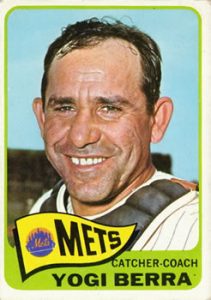 The spiritual godfather of Mets OF-3B-Cs, never mind that he was hired to mostly coach. Now Berra — whose playing career included 262 games in the outfield and one at third base (on Closing Day of the 1954 season, which was also the last time the Philadelphia Athletics ever took the field; you could look it up) — was set to coach. Mostly coach. Maybe catch. As if the public relations benefit of grabbing recently dismissed and eternally lovable Yogi Berra from the coldhearted Yankees wasn’t enough to further boost the Mets’ image — grabbing recently dismissed and eternally lovable Casey Stengel from the coldhearted Yankees is what put the Mets on the PR map in the first place — they brought into their fold another Cooperstown-bound character ahead of the 1965 season, all-time winningest lefty Warren Spahn. The imagination ran wild at the thought of the heretofore helpless Mets trotting out an immortal battery in their fourth season, never mind that Spahn at 43 and Berra at 39 weren’t exactly jibing with the Youth of America movement Stengel liked to herald.
Spahn was going to pitch and coach, in that order. Yogi came to the Mets to coach and maybe…maybe…catch. “Put him out there,” the thinking went in St. Petersburg, per Phil Pepe’s accounting in 1974’s The Wit and Wisdom of Yogi Berra. “He couldn’t hurt the Mets.” And, indeed, “Yogi gave it everything he had. He trimmed down, got in shape, and went through a tortuous spring training.” The season opened with Spahn in the rotation and Berra assisting Stengel as hitting instructor and first base coach. That was April. In May, with none among the Mets’ catching corps in what you’d call a hitting groove, Yogi was coaxed to strap on his gear again. He caught a pair of games shortly before his 40th birthday. One was a 2-1 routegoing victory for Al Jackson in which Berra recorded 12 putouts (11 on Ks, one on a play at the plate). He even singled twice. But it was less a comeback than a hill of beans, and by the time to blow out those forty candles rolled around on May 12, 1965, Yogi was once more a full-time coach. When it came to catching for the Mets, Berra wasn’t built for the long haul.
Grote was developing into a different story. He had talent. He had a temper, too. You might love his skills, but lovability wasn’t about to show up on his scouting report. “Orneriness,” is what Art Shamsky labeled as the catcher’s defining character trait in After the Miracle: The Lasting Brotherhood of the ’69 Mets, the 2019 book he wrote with Erik Sherman. “Grote was a bitch,” Cleon Jones affirmed in the same volume, at least when it came to preparing for and playing the game. But if the players were getting together with their wives and kids? The Grote who took part in those affairs was a totally different Grote in the left fielder’s eyes. “The nicest guy you’d ever want to meet,” according to Cleon. “He was gentle.” Jerry Koosman, who regularly shared rides to work with Grote (not to mention a notable World Series-winning embrace), agreed: “He’d be as nice as could be until the ballpark came into sight. Then he really changed personalities. He’d get the red ass.” Or as one reporter of the era pegged the catcher, per Shamsky and Sherman, “Will Rogers never met Jerry Grote.”
But Bob Hendley, one of his 1967 veteran batterymates, reflected decades after the fact for author Bill Ryczek that despite his youth and less than lengthy fuse, Jerry came across as “an experienced, take-charge guy” and appreciated that “he had some fire about him”. By 1968, Grote would be an All-Star. By 1969, he’d be a world champion. Before he left Shea in 1977, he’d catch 1,176 games for the Mets, 350 more than anybody else ever has. In 1992, Seaver would stand before a sun-drenched throng in Cooperstown and group Grote with Johnny Bench and Carlton Fisk as the trio of catchers integral to the success that led to the occasion of Tom’s Hall of Fame induction. And, somewhere along the way, Jerry Grote — “about whom we could never figure out what or who he liked” as Shamsky described him some 50 years later — would tame the fire about him enough to make it manageable.
July 27, 1967, however, was not that evening.
***In the top of the eighth, with the Mets hoping to make up their one-run deficit, Grote got himself ejected. Jerry wasn’t batting. He wasn’t on base. He wasn’t even on-deck. But he did make his displeasure with home plate umpire Bill Jackowski apparent regarding both Jackowski’s judgment — Grote “was grunting and groaning about balls and strikes,” said Ed Sudol, who was working first base — and the umpire’s enforcement of warmup rules. Dodger reliever Ron Perranoski was granted a few extra pitches to loosen up after an unexpected call to duty, unexpected because Drysdale had to exit due to a baserunning mishap in the bottom of the seventh. To convey disdain for the latter, Grote didn’t let his tongue do the talking. He expressed himself instead with a throw. Grote’s throwing was world-class; Lou Brock swore Jerry was the catcher versus whom he found it toughest to steal. But in this case, sitting in the dugout, all Grote could throw was a towel, onto the field. That caught the attention of third base ump Harry Wendlestadt, who “came scampering in gleefully,” George Vecsey reported in Newsday, “holding up one finger on his right hand and five on his left, signifying that No. 15 had done the throwing.”
When you’ve drawn the ears and eyes of three men in a four-man umpiring crew, you’re stacking the odds against your staying in the game. Sure enough, Jackowski dismissed Jerry summarily. The Mets started the night with three catchers. They were down to none, with the game not quite finished. Those aren’t good odds, either.
Westrum, a scoop of vanilla to Stengel’s bottomless tutti-frutti sundae, at least had colorful instincts. “I thought of me or Yogi” to catch. Wes, a two-time All-Star in his New York Giant playing days, hadn’t caught since 1957, his first base coach Berra not since that 1965 cameo. Yogi, being Yogi, asked Sudol if he could catch the eighth and ninth despite not appearing on the Mets’ active roster.
“No chance,” Sudol answered Berra, according to Durso. “It takes 24 hours for you to get reactivated by the commissioner. If you do that, though, you can catch all nine innings.” Sudol was the umpire behind home plate when the Mets played 23 innings in the second game of a doubleheader in 1964 and would go on to officiate similarly extensive Met affairs in ’68 and ’74, so perhaps Ed had an inkling that more than a couple of frames lay ahead.
Sure enough, the Mets rallied in the eighth, scoring three times to take a 5-3 lead. Whether they were in a righteous mood to wreak revenge because Jackowski left them without a legitimate catcher or they simply took advantage of a lukewarm Perranoski is not certain. What became clear as the top of the eighth unfolded was who would be taking Grote’s place. It would be Reynolds, who batted in Jerry’s spot (he was intentionally walked). Reynolds was neither in the starting lineup nor begin the inning on the Mets’ bench. He was in the bullpen, warming up pitchers.
 A happy Grote, not yet in game mode. But don’t take that as an occupational obligation. Tommie, 25, was an outfielder by trade but, being a good team man, would help out now and then by crouching down as needed and offering his glove as a handy target. “I warm up pitchers sometimes,” he clarified, “but I never caught behind the bat before.” Other eligible Mets had, if not lately. Tommy Davis as a junior in high school. Ed Kranepool as a senior in high school. Ron Swoboda’s experience was limited to limited to catching a round of BP in Puerto Rican winter ball once, but that didn’t stop him from snapping on a shinguard. They all stirred from the bench and volunteered to go behind the plate. Westrum, however, opted to call out for help.
“The phone rang in the bullpen,” Reynolds said. “They said Grote was out of the game. They called me in.”
***Westrum tutored his emergency catcher on the fly. Reynolds: “He told me not to look at the bat. He said to just pretend I was out in the bullpen.” Westrum: “He called all the pitches. He even called for a pitchout. Sure, he knew the signals. He’s been around baseball.” And he’d be around this game for more than the eighth and ninth. The Dodgers took a 6-5 lead in the home eighth (with a stolen base part of their attack), but the Mets tied the score in the visitors’ ninth. The clubs were off to extras, where the game would end for the Mets as it was destined to end: on a passed ball charged to Tommie Reynolds.
Actually, it wasn’t that simple, at least from the Mets’ viewpoint. Bob Bailey was batting in the bottom of the eleventh with runners on first and third and one out. Bailey, by Reynolds’s reckoning, foul-tipped a ball off of Tommie’s mitt and out of play. The umpire saw it differently. So, not surprisingly, did the batter.
Jackowski: “The batter swung right over the ball.”
Bailey: “It never hit my bat.”
Reynolds” “It hit the bat, then it hit the glove.”
Reynolds must have been pretty sure, given that when the ball trickled away, he made no move to chase it down. It’s worth noting Bailey didn’t motion for the runner at third, Nate Oliver, to start running, indicating perhaps that he knew it did hit his bat. Jackowski, though, would only tell the new catcher, “I didn’t say it was a foul tip.” Suddenly Reynolds was in pursuit of the ball and Oliver was on his way home.
Jack Fisher, usually a starting pitcher, took the loss after following five of his fellow Met hurlers to the mound (Reynolds caught three different pitchers in all). Jerry Grote wound up fined a hundred bucks for leaving Westrum high and dry. Plus he was “sternly” lectured via long-distance call by club president Bing Devine. “I have nothing to say,” was Grote’s postgame reaction. “Nothing at all.” Bill Jackowski’s night finished with the Mets screaming at him and reporters questioning him. “Lay off me, fellas,” he pleaded to the press. “It’s been a tough four hours.”
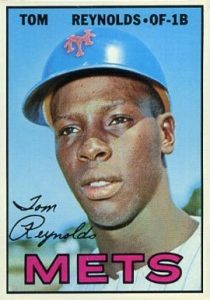 Tom(mie) already had the helmet. All he had to do was flip it around and get behind the bat. And Tommie Reynolds? For four innings of major league catching experience, he received his stripes — “I can’t think of anything tougher to try in baseball”; he received a pain somewhere south of his rear end — “my legs are killing me”; and, for our purposes, he received membership in a secret society within a a slightly less secret society within a society that’s never been much of a secret inside Met circles. When Tommie Reynolds — often spelled Tommy in the papers, portrayed (amid apparently murky circumstances) by Topps as Tom — entered the game of July 27, 1967, to catch, he became only the second Met ever to have played outfield and third base and catcher.
On Opening Day, Reynolds, a Rule 5 selectee from the Kansas City A’s during the preceding offseason, pinch-ran for Tommy Davis and took his spot in left field. Before April was over, Westrum gave him a whirl at third, moving Tommie in from right to give Ken Boyer a few innings off. At that point, Reynolds had become the 31st third baseman in Mets history and the franchise’s eleventh OF-3B/3B-OF. In early May, Westrum started him at third to provide a 1-for-31 Boyer a breather. Tommie caught a pair of popups and “got a hit,” Larry Fox reported in the News, “which could prolong his tour at third another day” (it didn’t). When Grote inadvertently paved the way for his unplanned cameo behind the pate, Reynolds was thrust into becoming the second Met you could call an OF-3B-C.
Yes, there was one who preceded him, and yes there’d be more than a few after him…including one fellow whose occasionally testy company we’ve already shared quite a bit of in this essay. We’ll get back to him down the road a piece. Before we do, though, let’s meet the OF-3B-C/3B-OF-C who started it all.
***John Stephenson, like Landrith and Goossen, can flash a fairly recognizable calling card to the history-conscious Mets fan. You probably thought some paraphrased version of “…you’ll have a lot of passed balls…” as soon as you saw Hobie Landrith’s name and you likely thought “…and in ten years has a chance to be thirty” at the sight of Goossen’s. There’s a decent chance you recognized Tommie Reynolds as the Met emergency catcher among Met emergency catchers. Stephenson, I imagine (or hope), struck a chord with you as well. John Stephenson, sometimes known as Johnny, pinch-hit with two outs and nobody on in the bottom of the ninth on June 21, 1964. It was the first game of a Father’s Day doubleheader versus the Phillies and it was likely as wrong a moment as has ever existed to ask a rookie to get on base. No Met had gotten on base for the first eight-and-two-third innings and Stephenson wasn’t about to change that pattern.
“Casey said, ‘Johnny go up there and get a base hit for us,’” is how Mets reliever Bill Wakefield remembered it for Ryczek. “John kind of looked at me and rolled his eyes, as if to say, ‘I’m not sure what I’m supposed to do in this situation.’” No wonder. Stephenson, in his first major league season, was batting .074 as a bench player. The opposing pitcher was Jim Bunning, the Mets’ daddy that Father’s Day, throwing merely a perfect game at Shea Stadium. Thus, if you know Johnny Stephenson for anything, it’s for making the final out of a most historic Mets defeat. If you’d like to know anything else, it’s that after playing some third base and outfield in 1964, he reverted to his natural position of catcher for the rest of his big league days, mostly putting his other positions behind him. On June 19, 1965, after his recall from Triple-A Buffalo, Stephenson went behind the plate for the first time in the majors, catching the final three innings of the Mets’ 2-1 loss to the Giants.
Stephenson, who played until 1973 and would go on to manage and coach in the Mets’ system from the mid-1990s to the early 2000s, had always been a catcher more than he’d been anything else. Playing multiple positions became baked into his skill set once he broke a finger; not wanting to be sidelined, he inserted outfielding into his repertoire and kept working his way up the Met chain. As the lefty-swinging John aspired to make the big club in the Spring of ’64, Dick Young noted in the Daily News that the kid had the inside track on the third catcher’s slot, behind Jesse Gonder and Hawk Taylor, “because he can play center as well”. (Pre-Tommie Agee, the Mets were forever in the market for center field solutions.)
The third base segment of his Met career was born, as was much with the Mets in the early years, of desperation. In an April loss at Pittsburgh, Stengel burned through a plethora of pinch-hitters to tie the game late, compelling the manger to quickly “remake the infield,” in Young’s words, with “John Stephenson, a catcher-outfielder, given a crack at third.” The remake crumbled, in part, because “Stephenson fluffed [Manny] Mota’s tough bunt,” which set up the losing run. Young, however, cut the youngster a break, noting John had “worked out at third and looked good enough to get a try there. The bunt he tried to barehand was tough to make a play on.”
But Stephenson was first and foremost a catcher. He caught Nolan Ryan in the young fireballer’s major league debut as a Met and he caught Nolan Ryan when Ryan was fanning batters at a ferocious rate for the Angels. (Of Ryan’s major league record 5,714 strikeouts, Stephenson handled 212 of them.) Everybody who can claim time as a Mets third baseman, Mets outfielder and Mets catcher, with the glaring exception of Tommie Reynolds, would have self-identified as a catcher all of, most of, or little of his respective MLB career, even if it was only in a “you might make yourself more useful if you learned to catch” utilityman role or the “stay ready just in case” realm of emergency catcherdom. The 3B-OF/OF-3B detours during their Met stays were just that. The Mets needed somebody to fill in here and/or there. Sometimes it was a catcher. Sometimes it was at third base. Sometimes it was in the outfield.
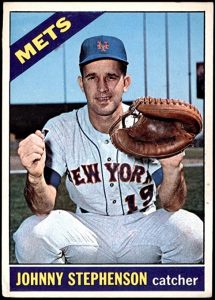 You could call him John. You could call him Johnny. You could call him a C-OF-3B, too. The times when it was most prevalent postdated the Met tenures of Stephenson and Reynolds, both of whom were gone from Shea well before 1969. You might even say there was a golden age for the triad of Met versatility. Let us, then, in the next installment of OF-3B/OF-3B, visit the decade when the Mets attempted, more than at any other time in their first sixty years, to triple down on certain players’ ability or willingness to play wherever asked…when that was only part of the positional paradigm that continued to plague/propel the Mets.
We’ll dive deep into the 1970s, and a little into the 1980s.
METS WHO PLAYED THIRD, PLAYED OUTFIELD AND CAUGHT
JOHNNY STEPHENSON
Mets Debut as 3B: April 26, 1964; 14 G as a Mets 3B
Mets Debut as LF: May 16, 1964; 11 G as a Mets OF
Mets Debut as C: June 19, 1965; 98 G as a Mets C
TOMMIE REYNOLDS
Mets Debut as LF: April 11, 1967; 72 G as a Mets OF
Mets Debut as 3B: April 29, 1967; 6 G as a Mets 3B
Mets Debut as C: July 27, 1967; 1 G as a Mets C
JERRY GROTE
Mets Debut as C: April 15, 1966; 1,176 G as a Mets C
Mets Debut as 3B: August 3, 1966; 18 G as a Mets 3B
Mets Debut as RF: July 12, 1972; 2 G as a Mets OF
JOHN STEARNS
Mets Debut as C: April 16, 1975; 698 G as a Mets C
Mets Debut as 3B: June 28, 1978; 29 G as a Mets 3B
Mets Debut as LF: August 18, 1979; 6 G as a Mets OF
ALEX TREVIÑO
Mets Debut as C: September 11, 1978; 172 G as a Mets C
Mets Debut as 3B: October 1, 1978; 43 G as a Mets 3B
Mets Debut as LF: September 16, 1981 (Game 2); 2 G as a Mets OF
CLINT HURDLE
Mets Debut as 3B: September 12, 1983; 9 G as a Mets 3B
Mets Debut as RF: October 2, 1983 (Game 2); 11 G as a Mets OF
Mets Debut as C: April 24, 1985; 17 G as a Mets C
GARY CARTER
Mets Debut as C: April 9, 1985; 566 G as a Mets C
Mets Debut as RF: June 26, 1985; 6 G as a Mets OF
Mets Debut as 3B: July 22, 1986; 2 G as a Mets 3B
MACKEY SASSER
Mets Debut as C: April 10, 1988; 261 G as a Mets C
Mets Debut as RF: April 19, 1988; 31 G as a Mets OF
Mets Debut as 3B: May 11, 1988; 2 G as a Mets 3B
JEFF McKNIGHT
Mets Debut as 3B: June 10, 1989; 13 G as a Mets 3B
Mets Debut as RF: September 27, 1992; 1 G as a Mets OF
Mets Debut as C: April 21, 1993; 1 G as a Mets C
JIM TATUM
Mets Debut as C: April 6, 1998; 4 G as a Mets C
Mets Debut as LF: April 27, 1998; 4 G as a Mets OF
Mets Debut as 3B: May 16, 1998; 3 G as a Mets 3B
MIKE KINKADE
Mets Debut as 3B: September 8, 1998; 4 G as a Mets 3B
Mets Debut as LF: April 6, 1999; 17 G as a Mets OF
Mets Debut as C: April 15, 1999; 1 G as a Mets C
ELI MARRERO
Mets Debut as CF: June 11, 2006; 7 G as a Mets OF
Mets Debut as 3B: July 2, 2006; 1 G as a Mets 3B
Mets Debut as C: July 8, 2006 (Game 2); 2 G as a Mets C
by Greg Prince on 2 March 2022 2:09 pm Counterfactually, the Mets are in West Palm Beach today playing the Nationals. It’s not much of a counterfactual to the reality we live in to conclude the Mets would be busy training their spring away a little south of St. Lucie given that the Mets sent out a preliminary Spring Training schedule last August marking FITTEAM Ballpark of the Palm Beaches as their planned whereabouts for March 2, 2022. The same preliminary schedule indicated the Mets were to have played every day since this past Saturday, meaning we would’ve seen them on television at least once; we might’ve heard them on radio; and we would’ve had a satisfying visual, aural and/or anecdotal glimpse of them taking on, for practice purposes, each of their Treasure Coast neighbors.
And we’d be growing sick of the whole thing after five games of the Grapefruit League slate because the Mets would have already been officially preparing for the 2022 season for about two weeks. Pitchers & Catchers & Third Basemen-Outfielders & everybody else would have reported; we’d have all praised their arrival to the highest heavens; and the practices prior to the practice games, too, would have lost their novelty after approximately five days.
Which doesn’t mean we wouldn’t have appreciated the whole Sunshine State spectacle despite its apparent pointlessness, for the point is baked in. By the second day of March — today — we would have had the routine of baseball hammered into us and therefore be set for the year ahead. The key to Spring Training is the repetition of Spring Training, in which weeks and weeks of mostly nothing have to happen in order to prepare us for six months that we collectively concur will be something. That’s what we’re in it for every Spring. We put up with Spring so we can be rewarded with summer and, if we’re lucky, fall.
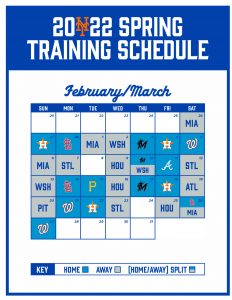 Yeah, right. Right now, we’re putting up with literal nothingness where Major League Baseball is concerned and we will be for the foreseeable future…though only if we feel ourselves putting up with it. Personally, I feel only a little put out by the news that The Lockout has clamped into institutionality. I would, like any baseball fan, prefer Spring Training to have magically appeared this February and March the way it magically appears every February and March, smoothing the path to Opening Day and the 161 games that, by natural law, are supposed to follow. Instead, The Lockout is the new routine. The owners of the thirty MLB clubs have locked out the players and decided to keep them locked out. Simultaneously, they are locking us out of our previously precious pointless routine and they’ve now confirmed they’ll lock us out of at least the first two series of our season.
Or their season. They view it as their ball. They’ve taken it and gone home. They don’t seem particularly upset about it. Rob Manfred couldn’t be bothered to suppress a grin in announcing the indefinite continuation of The Lockout. At least Bud Selig would have managed to look morose on the heels of frenzied negotiations that ultimately went nowhere. We can either stand around outside the proverbial gates of the Citi Fields of the mind and wonder wistfully when somebody will come along to open the ballpark for us, or we can think about something else. The Lockout makes you shrug. It is designed to make you shrug.
By instinct, I miss Spring Training. I will miss Opening Day for the same reason. I will miss the unfurling of the routine. Maybe the void the owners of the thirty MLB clubs and their hired commissioner have created will grow to a size that will envelop my emotions, and the lack of baseball will get to me and get to me bad. But it hasn’t really happened this time around. I guess I have other things to think about. I guess we all do. The so-called stewards of the sport don’t seem to care if we care, so why should we care? Even my instinct is shrugging.
I still love baseball, by instinct. Instinct carries us through March every March. Until this one. In the counterfactual universe of what we’ve come to routinely expect Spring Training to be, I’d be savoring our March maneuvers — Mets at Nationals today; Marlins at Mets tomorrow; then a weekend versus more Nationals and more Marlins — even as I was growing sick of them. That universe, however, presently sits light years from reality. The Lockout is what MLB has become in reality. MLB can keep its reality.
Call me when the gates reopen. I won’t be standing by.
by Greg Prince on 23 February 2022 4:26 pm Standard numerical milestone acknowledgements aside, the proper anniversary to fondly recall Gary Carter would have been the 8th. Gary Carter wore 8 and, presumably because he wore 8, cherished 8. Marty Noble told a story about visiting Gary Carter’s house during Spring Training and encountering a keypad in order to enter the property. Noble either forgot or didn’t have the five-digit code, so he guessed. He used 8-8-8-8-8. It didn’t work. Then he used four 8s and one other digit. That unlocked the gate.
In an ideal world, we wouldn’t need an anniversary to do this, certainly not the anniversary of a death, which seems antithetical to the enduring image we maintain of a vibrant and upbeat Gary Carter. We would just find ourselves thinking about Gary Carter because he was Gary Carter and take it from there. Yet here we are, in February of 2022, suddenly 10 years beyond the passing of the last Met to catch the final out of a World Series and, as has been the case since February 16, 2012, we find ourselves missing him.
Gary Carter’s Greatest Hits you can replay in your mind for yourself. This isn’t intended as an exhaustive cataloguing of the biggest blows our Hall of Fame catcher struck, rather a stream of consciousness that just happened to yield 8 things that have stayed with us about Gary Carter, 8 things — ups and downs notwithstanding — we still love about Gary Carter.
1. THE KVELLING BEGINS
As offseason gets go, I don’t know if any get the Mets ever got captivated us the way getting Gary Carter did, particularly when you consider the context. It’s the December after the Mets had upped their season win total from 68 in 1983 to 90 in 1984. We’re still high from having competed vigorously in our first full-fledged pennant race in a baseball generation. We’re convinced we’re momentum-fueled, ready to catch and pass the Cubs in 1985. All we need is…
All we need is Gary Carter! If we didn’t think quite so specifically, we were willing to identify the missing piece once it was delivered to us. We didn’t give up nothing, mind you. We gave up our longtime starting third baseman (turned recent shortstop) Hubie Brooks; our promising rookie backstop Mike Fitzgerald; an outfielder who’d hit .407 in a September callup, Herm Winningham; and one of our many talented pitching prospects, Floyd Youmans. Every one of those fellows would contribute to the Expos, yet the trade was a win for the Mets. Ninety wins plus Gary Carter and assorted other additions equaled CAN’T WAIT! for the next four months.
The first season of Gary Carter in New York came exceedingly close to meeting our expectations. The Cardinals replaced the Cubs as our archrivals, and they proved implacable foes, but what a race from Game 1 — which Carter secured with his tenth-inning walkoff home run — to Game 161. Mets fans had never been treated to quite this kind of marathon before, especially those every-fifth-days when it was Gooden pitching to Carter, Hernandez at first and Strawberry in right field. We’d never grouped four players of this nature together at the same time. Now we had them on a regular basis. Them and so many others, but especially them. The Mets grabbed first place early and took it back later, and even if they couldn’t hold on to it all the way to the end, what a ride on this quartet’s collective back it was. No wonder that when we got to Game 162, the only game we entered without a shot at first place, we stood and applauded their season and eagerly craned our necks for a glimpse of 1986.
In 1985, Gary taped his knees, swatted 32 homers, knocked in a hundred runs — right in line with his Canadian exchange rate — and constituted the difference between a team on the come and a team that was just about at its destination. A few smaller pieces would have to be added to make the championship puzzle a perfect fit, but it’s not wrong to consider Carter’s campaign as the pièce de résistance of building blocks once we knew we had something here. You needed a bat like Carter’s to keep climbing in the East. You needed a mitt like Carter’s to catch everything in sight. You needed a storehouse of knowledge like Carter’s to benefit a young pitching staff. Even the slightly older hurlers could benefit. One night in May, he guided Ed Lynch, 29, to his first complete game shutout. Gary being Gary, his instinct was to wrap his arms around his pitcher; Eddie opted for a handshake, as if throwing the best start of his middling career was something he did once a week. “I guess he doesn’t like to give hugs,” Carter said after the game with enough ebullience for the entire battery. “He turned me down. Said, ‘Just shake my hand.’ Eddie’s going low-key on us.”
That wasn’t a key Carter struck too often. Mets baseball itself was a pretty convincing advertisement for Shea’s cast of Rising Stars, yet having a face like Carter’s fronting the franchise couldn’t help but raise everybody’s Q rating. Gary’s smile was made for Madison Avenue as much as his game was ideal for Roosevelt Avenue. We loved Keith, but Hernandez could come off as a little dark. We embraced Darryl, but Strawberry was still getting comfortable as a public figure. Dr. K was ready to pitch in the spotlight more than Dwight Gooden was to have it shine on him. Gary Carter was experienced enough and enthusiastic enough to fill the role of Metropolitan Idol. Call that certain something he brought to New York value-added.
We weren’t yet inside the 1985 season when NBC, on its Sportsworld anthology program, attempted to do its part for famine relief by producing its own version of “We Are The World,” except with athletes standing in for singers. One snippet of one chorus was handled by new teammates Gary Carter and Darryl Strawberry, struggling for literal harmony but singing like they meant it on a practice field in St. Petersburg. We weren’t too far into the 1985 season when Channel 9 began offering a poster featuring catcher Gary Carter as a Norman Rockwell-type character, signing a baseball for a little kid and his dog (probably more for the kid than the dog). It was, I think, five bucks, proceeds going to the Leukemia Society of America; Gary had lost his mom to leukemia. In the moment it took me to wonder whether it was odd that somebody who hadn’t been on team for very long was now its literal poster boy, I sent in my check. Like Mets fans everywhere, I couldn’t live without Gary Carter, in whatever form he was available.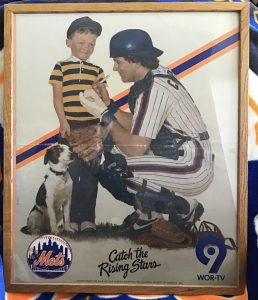
When that almost-made-it of a season was over, I came across the briefest of promos for WOR-TV’s premier property. In the middle of November, when we were all missing the Mets, Channel 9 ran a spot of a man leaning against a pillar in the Times Square station looking like he’s got a case of the Mondays. “Need a lift?” the voiceover asks. “Well, just remember.” The next voice belongs to Ralph Kiner: “Going, going, it is gone, goodbye! A three-run homer…” The image that raises the spirits down in the subway is Gary Carter rounding the bases after going deep off none other than Mike Scott (who, at that moment, was just a random Astro who used to be a Met). Our commuter in the commercial is summarily lifted and so are we. “Thanks for the memories, Mets,” the announcer ends it. We are all in on the gratitude en route to winter 1985-1986 when we close our eyes and think about Gary Carter.
2. HE WANTED TO PUMP US UP
Gary Carter was in favor of cleanliness, as evidenced by his ubiquitous commercials for Ivory Soap. Gary Carter wanted you to be conversant in current events and therefore endorsed the selling of Newsday. And when you had to fill up your tank, for the sake of all that was good and holy, please patronize your local Northville Gasoline retailer, just like Gary Carter does.
Perhaps it’s because Northville was a new name in the market in the latter half of the 1980s that Gary Carter for Northville Gasoline is the Gary Carter endorsement I see in the billboard of my mind. You’d see an off brand of fuel here and there, but you just assumed they were fly-by-night. If you really needed gas, you had Amoco, Mobil, Exxon (previously Esso), Sunoco, Texaco, Gulf…you figured you knew the major players. They were the same players who’d been around more or less forever. Then, out of nowhere, there are Northville stations dotting the Long Island landscape, and if we’re not sure they’re viable, we have Gary Carter confirming that they must be OK or he wouldn’t roll his automobile up to one of their islands.
 The only other thing I remember about Northville is that Howard Stern custom-read ads for them every morning for a while, which made for strange implicit bedfellows. Howard knew nothing about sports, nothing about baseball, nothing about the Mets, but somehow Gary Carter grabbed his attention. He’d caught enough of Carter’s celebratory clubhouse testimony as the champagne flew in the fall of 1986 to produce a convincing Gary Carter impression. The only other thing I remember about Northville is that Howard Stern custom-read ads for them every morning for a while, which made for strange implicit bedfellows. Howard knew nothing about sports, nothing about baseball, nothing about the Mets, but somehow Gary Carter grabbed his attention. He’d caught enough of Carter’s celebratory clubhouse testimony as the champagne flew in the fall of 1986 to produce a convincing Gary Carter impression.
From K-Rock the morning after the World Series had been won, to the best of my recollection:
ROBIN QUIVERS: Is there anybody you want to thank?
STERN AS CARTER: I want to thank Jesus.
ROBIN: Anybody else?
STERN: I want to thank the Easter Bunny.
Howard was always gonna be Howard and Gary was always gonna be Gary, and even if the two never met as far as I know, well, they both swore by Northville Gasoline. They just swore in different manners. It wouldn’t have been New York in 1986 without either of them.
3. WHAT’S THE ‘BIG’ IDEA?
A press invite fell into my hands in August of 1987 for the release of a hot new videocassette: Think Big, a VHS production that would have its coming-out party at Shea Stadium prior to a Mets-Phillies game. Somewhere down the left field line of the Mezzanine concourse, an area was roped off, refreshments were offered and, without fanfare, Gary Carter magically appeared in full uniform. No shin guards, but the pants and the jersey, maybe the cap, if memory serves (it doesn’t always). The PR people didn’t much choreograph his drop-by. He just showed up, dutifully, and a crowd formed around him. I don’t remember if the questions were Think Big-related or standings-related. I was too in awe of the idea that Gary Carter could be bothered to ascend several flights from where he’d soon have business behind the plate and in the six-slot of Davey Johnson’s batting order. Other than filming his street-clothes cameo on a Shea ramp for the Let’s Go Mets music video the previous summer — “go ahead, Doc” — I found it hard to fathom Gary Carter would materialize where regular people gathered. His Think Big co-stars Mookie Wilson and Roger McDowell also made the trip in their game togs, but I spotted Carter before I noticed them, and once you realize you’re standing next to Gary Carter decked out in his Mets uniform, nobody else seems quite so impressive.
 Think Big is best described as a motivational tape for kids. In the plot, Gary, Mookie and Roger urged the youngsters to, well, think big. Gary strummed a baseball bat like it was a guitar, approvingly watched from the warning track as a fly ball flew over the outfield fence (it was supposedly hit by one of the kids a few feet away, so it’s not like it added points to one of his pitchers’ ERAs) and dispensed world championship encouragement. “Think about what you’re not doing that you could be doing. ‘Think big’ is like trying to do better than your best,” Kid explains to actual children who are flummoxed by a computer that appears dead-set on ruining baseball…which perhaps indicates how prescient Think Big was. Think Big is best described as a motivational tape for kids. In the plot, Gary, Mookie and Roger urged the youngsters to, well, think big. Gary strummed a baseball bat like it was a guitar, approvingly watched from the warning track as a fly ball flew over the outfield fence (it was supposedly hit by one of the kids a few feet away, so it’s not like it added points to one of his pitchers’ ERAs) and dispensed world championship encouragement. “Think about what you’re not doing that you could be doing. ‘Think big’ is like trying to do better than your best,” Kid explains to actual children who are flummoxed by a computer that appears dead-set on ruining baseball…which perhaps indicates how prescient Think Big was.
There’s also an unfortunate attempt to mimic Pee-wee Herman. By voice, I mean.
Gary carries his burden of being a good example obligingly here, as he did in most of his off-field appearances. I continually got the sense he took his role-modeling seriously, that if he was going to be a superstar ballplayer, a superstar ballplayer owed it to his fans to be what he thought a superstar ballplayer should be. Superstar ballplayer Gary Carter, therefore, is gonna get those kids thinking big. I can’t help but believe that if Gary Carter had been in Revenge of the Nerds, he would have persuaded his fellow jocks to cool it with the taunting and instead put on a clinic down at the local elementary school.
As an accredited journalist, I received a copy of Think Big upon checking in for the event. I brought it home and watched it with my mother. Or tried to. I gave up about five minutes in. My mother got a huge kick out of it. Also, the Mets won that night, 5-3, with Carter going 1-for-3 with a sac fly and guiding Doc Gooden and McDowell through a combined 10-hitter. So, yeah — think big.
4. YOU DO NOT MESS WITH THIS KID
The Gary Carter we got turned 31 just prior to his Met debut. It probably didn’t occur to us how old that was in catcher years. Gary played like it didn’t occur to him either. With all due respect to Think Big, the greatest video production the Mets ever put together was No Surrender, the 1985 highlight film that ran regularly on SportsChannel during rain delays in 1986. It was so enchanting that I rooted for the tarp to remain on the field for at least half-an-hour just to view it again. No Surrender, which was bowdlerized for music rights reasons once SNY’s Mets Yearbook series got ahold of it, was state-of-the-art for MTV-era sports storytelling. Not only did Tim McCarver narrate and not only did it follow the ’85 Mets chronologically (something grand old team highlight films basically never did), but it packed music-video treatment upon music video treatment, clearance fees be damned.
The falling Cubs are shown “No Mercy” in June by both the surging Mets and Nils Lofgren. Keith Hernandez is “The Warrior,” as in Scandal featuring Patty Smyth. Doc gets Buffalo Springfield’s “For What It’s Worth”: “What a field day for the heat.” Damn. Gary’s winning sequence was scored by “Messin’ With the Kid,” a Blues Brothers track. Not too on the nose, eh? But what made it sing, beyond the title, was the montage. There’s Gary hitting, there’s Gary smiling, there’s Gary politely but firmly giving an earful to an umpire, but mostly there’s Gary catching the hell out of his position.
Two clips stand out:
1) Carter not only blocking the plate and putting a locomotive of a tag on the Pirates’ Doug Frobel, but then pushing him aside with as forceful a go away, kid, you bother me move as W.C. Fields ever managed. Gary doesn’t have time for Frobel. He’s got to look the runner back to first. The play is from the 18-inning game in late April when Gary’s already dealt with one onrushing runner (George Hendrick) and has innings to go before he sleeps. He may have excited because of what he did as a hitter, but we were reminded that day that we had ourselves a catcher.
2) In early June, the Cardinals are running wild, which is a problem for the National League East in general and the Mets most of all. In the third inning of the opener of a Sunday doubleheader at Shea, Vince Coleman steals third and Willie McGee steals second in one fell swoop. This was when it was often said the only gap in young Dwight Gooden’s arsenal was an ability to keep base thieves honest (because he had so few runners to practice holding). Next thing we knew, a ball was getting away from Carter and Coleman decided to bolt for home. Carter, in “Messin With the Kid,” turns into a deli man who comes out from behind the counter to determine who’s causing all this ruckus. With his chest protector as his apron, Mr. Carter grabs that loose ball and chases Coleman all the way back to third. Almost all the way, because veteran Gary in his equipment runs down swift rookie Vince and tags him out.
Warning to baserunners everywhere: you do not mess with this catcher.
5. THEY LIKE EACH OTHER, THEY REALLY LIKE EACH OTHER
Those Mets of Carter and Hernandez if you were going alphabetically, or those Mets of Hernandez and Carter if you were going chronologically, made you care about them beyond their batting or earned run averages. They dripped with personality and they were covered as competitively as they played. The “media” wasn’t a monolith, but all outlets in those days kept extreme tabs on those Mets. Even the junior media.
One Sunday in the summer of 1985, Kidsday, the Newsday section that you’d think was named for Carter but was specifically geared to and more or less produced by children, featured a Q&A with Keith Hernandez. The celebrity Q&As, as interpreted by my friend Fred, usually went something like this:
Q: How are you?
A: I’m really depressed.
Q: What’s your favorite color?
A: Green.
The only specific I remember from the Hernandez interview was the Kidsday staff asking him who were his best friends on the team. Keith named probably at least half-a-dozen Mets, and then, as if he’d realized he’d committed a faux pas, added something to the effect of “I should probably also mention Gary Carter.”
Despite being well out of the Kidsday demographic, I was relieved to have it confirmed that Keith liked Gary, or at least that Keith thought it important to strongly imply he liked Gary. I already assumed Gary liked Keith, because, given all the commercials he did, I figured Gary liked everything. It was important to me that our Veteran Leaders were in sync. I wasn’t naïve enough to believe everybody always liked everybody on my team, but I wanted to believe it. We’d heard that the Expos had had their fill of Carter, but to me that only revealed a deficiency of character on Montreal’s part.
“Camera Carter,” as far as I was concerned, was left north of the border. When, per Noble, George Foster dug up the derogatory nickname while Gary was “doubled over in pain,” his teammates’ reaction was, in essence, “not cool, George.” Noble, writing for Newsday down the stretch in ’85, conceded some of his New York teammates processed Gary’s style as “a little much,” but they “admire his motivation, effort and ability to play despite injury and pain, to say nothing of his talent.”
The vibe remained valid three years later. After he was traded to Minnesota, Wally Backman submitted to an exit interview with Mike Lupica in the Daily News. This was December 1988, the beginning of the end of an era in Flushing. “Gary’s always gonna be a leader in the sense that guys on the team can look up to him,” Backman said, “the way he carries himself on and off the field. Doesn’t matter if you’re a kid or a veteran. I’ve never heard him say a bad word about anybody. He’s just getting older.”
By then, Hernandez and Carter had served a season as co-captains, a year after only Keith wore the C (a letter neither of them wore once they both shared it). It was pretty clear even to a fan reading the papers and listening to pre- and postgame comments that Carter wasn’t crazy about being initially overlooked in 1987. And in his 1993 autobiography The Gamer, he was still a little sore about it. In the moment, to me, Keith was Keith, and Gary came later, so how could Carter argue with Davey’s decision?
“I think Gary may have been a little taken aback by the fact that it was so blatantly obvious who most of the players looked to for leadership,” Mookie Wilson wrote with Erik Sherman in 2014. “Gary may have been the final piece in making us a championship-caliber team, but Mex was our general.”
Yet even in a situation like that, much as when Gary let it be known between the lines he was a little miffed he wasn’t getting more MVP support in 1986; or when he was dropped out of the high-profile cleanup spot; or when he wasn’t a first-, second- or any-ballot Hall of Famer until the sixth time the BBWAA considered his candidacy, I sort of appreciated No. 8 looking out for No. 1. There was an insecurity to Carter that felt palpable from a distance. Maybe it registered as unseemly for such an acknowledged superstar to worry aloud about these ancillary matters, but it was human. Maybe Gary somehow sensed he wouldn’t be around long enough to appreciate the honors that he was sure should have been coming his way. Maybe he had a touch of Billy Joel’s “Big Man on Mulberry Street” in his soul.
“What if nobody finds out who I am?”
6. LONG-TIME IDOL, FIRST-TIME TARGET
Did Gary Carter found WFAN? Not exactly, but he did position himself squarely within the station’s first batch of content. What is sports talk radio if not a forum for debating whether a hometown player is to be venerated or vilified?
Sports talk radio, which had been around in chunks for years, became institutionalized on July 1, 1987, when 1050 AM switched from country music to a format that sounded too good (or bizarre, depending on your perspective) to be true. WHN became WFAN, and WFAN became the home of saying to others what you might have only been saying to yourself all this time. Previously if sports fans wished to be heard by more than a few people at once, they had to buy a ticket to a stadium and express themselves loudly. That’s what had been going on at Shea in 1987. With the Mets having fallen off the pace of 1986, relatively few were in the mood to venerate the defending world champs.
As Jim Lampley, WFAN’s first-ever host, put it shortly after 3 o’clock that afternoon of July 1, “to read the sports sections of this morning’s New York newspapers, you might’ve thought it was October 1,” given the urgency attached to the pennant race the Mets were huffing and puffing to get themselves back into. Patience was less a virtue than missing in action. Gary Carter, he who hit 24 home runs and drove in a team-record 105 runs for the Mets in the regular season the year before — and he who delivered one enormous swing after another in the postseason that certified all of us as champions in our hearts — was getting booed. Not by everybody, but by a vocal percentage of the Shea Stadium throng. On June 29, two nights before the dawn of WFAN, Gary stepped up to the plate in the bottom of the eleventh. The Mets trailed the first-place Cardinals, 8-7, in a Monday Night Baseball showdown that despite transpiring with more than a half-season to go sure as shootin’ felt must-win.
The bases were loaded. There were two out. The Gary Carter of 1985 and 1986 would have conjured a way to at least tie the game and win the crowd. The Gary Carter of 1987 struck out and lost both. Technically, the Mets lost the game as a team, all of them falling 7½ back of the division lead. But the last guy not making contact tends to grab a ballpark’s attention.
In other words, boooooooo.
Two nights later, on the rainy Wednesday night the FAN took flight, the home crowd tried to work out its feelings toward its catcher. In the third inning, after Carter grounded out and left Tim Teufel standing on third, he was booed some more. In the sixth, Carter homered. That rated cheers — and elicited a half-hearted curtain call response from the feistiest fist-pumper who ever took a bow. In the seventh, Carter homered again. Giving the people what they wanted proved popular. More cheers. A heartier curtain call. In the eighth, up for a third consecutive inning, Carter did not homer. He struck out with runners on the corners, but the Mets by then were ahead by four runs. Chastened, perhaps, the fans who remained late through the rain, stood and applauded him.
Carter’s teammates weren’t happy at how he’d been getting treated prior to the home runs. Hernandez: “I could tell he was obviously hurt by it.” Howard Johnson: “You could it tell it bothered him.” The manager believed the fans were spoiled by success, Kid’s and the club’s. “We all know that now that we’ve demonstrated a certain amount of excellence,” Davey Johnson said, “when we don’t give it to them, they’re going to be unhappy.”
Unhappiness wasn’t Gary Carter’s brand, so he put on the best face possible after the 9-6 must-win win (every win was a must in 1987) he personally powered over the Mets’ gleaming new flagship station. “I’d have to say that’s the first time in my career that’s happened,” Carter said. “It’s a case of, ‘What have you done for me lately?’ They have every right to cheer and boo. What it means more than anything else is that they care.” And that memories in New York could be as long as the average length of a phone call to 1 (800) 635-1050.
7. WHEN THE TENT COMES DOWN
The story coming out of the Mets-Braves game in Atlanta on Monday night, May 1, 1989, was Doc Gooden’s left ankle. The mound was muddy, the footing was treacherous and the worry was about a pitcher who slipped. On July 4, 1985, which famously became July 5, 1985, at Fulton County Stadium, Davey Johnson pulled Gooden under dangerous conditions, lest his ace pitcher in the midst of a historic season go into his windup and wind up with an injury.
Not quite four years later, the Mets were cautious but maybe not abundantly so. The ankle (as well as the rest of the pitcher) was brought to the dugout after its muddy mishap in the seventh inning for taping. Satisfied he was good to go, Johnson sent Gooden back to his office to complete a little more business. Doc finished the seventh, started the eighth, gave way to Roger McDowell and picked up his fifth victory versus no defeats in a 3-1 Mets win.
Doc’s ankle would be of tangible concern in the aftermath of Monday night, but Gooden wouldn’t miss his next turn and his pitching looked more than good enough. To the naked eye, the big story of May 1, 1989, would come and go.
The naked eye had no idea what the big story of May 1, 1989, was. The naked eye had to sift through Baseball-Reference after becoming curious decades later regarding a question that crossed the eye’s mind when mulling the magnificence of a Mets team that featured four tentpoles like it never featured before and would never feature again:
When was the last time the Mets started a lineup that was comprised 4/9ths of The Big Four, a.k.a. Gary Carter, Keith Hernandez, Darryl Strawberry and Doc Gooden?
You just read the answer.
I don’t know if anybody else refers to that specific quartet as The Big Four. I’ve never seen it. I never thought it until a couple of years ago. It fits, though. Kid. Mex. Straw. Doc. If the mid-1980s Mets were the marquee, those were the names above it. They were stars. They were superstars. They were megastars. Keep upping the descriptive ante. By reputation, performance and aura, they’d match it.
The Big Four came to be in a box score sense on April 9, 1985, that most magical of Mets Opening Days, Carter’s first game for New York. Gary had been big in Montreal. A big star with a big following (Rue Gary-Carter graces that city’s thoroughfares today). Maybe he wouldn’t be as big in New York in terms of putting up in-his-prime numbers — and maybe New York was too big for a single individual to dominate — but because he was undeniably big in New York, Gary Carter was about to be bigger than ever. Same for Keith Hernandez, a multitime everything in St. Louis, but a celebrity driving in the clutchest of runs in Queens. As for Darryl Strawberry and Dwight Gooden, their limit was the sky when 1985 commenced, and the sky just kept inching higher.
Gary signed with the Mets for five seasons, a time span during which the other components of The Big Four were under contract, so you could say their reign together lasted five seasons. But more granularly, it spanned 79 regular-season games. That’s how many times Davey Johnson submitted a lineup card that was 44.44% covered by…
Hernandez 1B
Strawberry RF (CF a few times)
Carter C
Gooden P
…and, no, wise guy, the rest wasn’t covered by Garry Maddox.
The last time, No. 79, was an occasion that had zero fanfare to it. There was no reason it would. It was barely May. It was a Monday night in Atlanta when a Mets-Braves contest was bereft of inherent hostility. They were in the West. We were in the East. The two clubs hadn’t played a mutually meaningful game since the 1969 playoffs. The schedule called for the Mets to visit Fulton County. The rotation called for Doc to take the ball. The manager didn’t do anything special in writing down Keith’s last name to bat third, Darryl’s to bat fourth and Gary’s to bat seventh. Carter had hit .117 in April, so the seven-spot isn’t as shocking as it might appear if you’re picturing vintage Kid.
Nothing lasting forever probably didn’t need Gary Carter to illustrate its eternal truth, yet the end to something that seemed as if it had just begun was more in sight than we cared to admit heading into 1989. In 1987, he was booed. In 1988, he went three months between home runs, which would have been noteworthy given it was Gary Carter, but turned absolutely painful because the home run that awaited a follow-up was the 299th of Kid’s career and, boy, did he want that 300th. Come the NLCS in ’88, though both Carter and Hernandez each delivered in a couple of key moments, you couldn’t dispute Roger Angell’s assessment, written after the Mets lost the pivotal fifth game en route to losing the series to the Dodgers in seven: “The Mets…looked middle-aged on the field that afternoon and in their clubhouse as well.” At the time, Roger Angell was 68 years old, Carter 34, Hernandez about to turn the same…half of Angell’s longevity to date. The man recognized middle-aged when he saw it. (Roger’s 101 now if that makes you feel any younger.)
When we traded for him, Gary was 30, fluffily curled and coming off one of his best seasons in a career that was stocked with best seasons. For arguably the most significant two-year stretch in franchise history, he was a legitimate differencemaker. You know all those big names the Mets tend to get when the team is at a crossroads and the names proceed to shrink rather than magnify under New York scrutiny? And the crossroads go awry? That wasn’t Carter in 1985 and 1986. He was a new paradigm: the superstar who stayed super helping to lead a good team to monumental greatness. If that’s Gary Carter’s Metropolitan story in toto, that’s fantastic.
It’s not the entire story. The entire story includes a denouement, to put it kindly. The rest of the story, however, despite precipitous statistical declines as he aged past 35, didn’t really dent his Met legacy. Gary Carter in his shrinking-perm stage is no more than ellipsis. Yet if you were there in 1987, 1988 and especially 1989, you couldn’t help but notice Carter’s prime wasn’t what it used to be. But he was still Gary Carter, and now and then there’d be a smattering of success that was straight outta ’85. I can still remember walking into a motel room in Tulsa, Okla., at the end of an August afternoon of business obligations, tossing aside my suit jacket and turning on CNN Headline News to learn that Gary Carter went 4-for-4 in Philadelphia, which tickled me half-a-continent from where I usually got giddy. Any Met going 4-for-4 was good news. Gary entered the day batting .116. That is not a misprint. He ended it batting .152. Also not a misprint. By 1989, you kept wanting to pin numbers like those on erratic typesetting.
Nope, the Mets of Carter and Hernandez and Strawberry and Gooden, even though we hadn’t realized it in May and still didn’t grasp it in August, were over. The next time Gooden pitched after the aforementioned game in Atlanta, Teufel gave Keith a blow at first (a lefty was pitching for Houston). The time after that, Gary’s right knee, unable to bend, was about to nudge him to the DL. Kid had last played May 9. Doc’s next start was May 12. Gooden, throwing to Barry Lyons or Mackey Sasser, went along having a dynamite season until late June, when his right shoulder sent him to the sidelines. Carter was still there. So was Keith, out since the third week in May with a broken right kneecap. Hernandez returned to the lineup on July 13. Carter played again on July 25. Neither was deployed as a regular. Doc’s season, save for a pair of September relief appearances, never regenerated. But he’d be back in 1990. So would Darryl, who skipped the ’89 All-Star Game with a broken toe; honestly, it hadn’t been a very stellar first half for the perennially elected Strawberry.
None of The Big Four was gone altogether from the Mets in 1989, but they no longer composed an elite unit within a juggernaut. It’s not like there hadn’t been a strong bench between 1985 and 1988 should another catcher, first baseman or right fielder have to be called upon; it’s not like the positions that didn’t belong to Carter, Hernandez and Strawberry weren’t manned skillfully; and it’s not like you weren’t getting your innings’ worth out of Darling, Ojeda, Fernandez and so on when Gooden was between starts. But the Big Four was where glamour lived, where excellence thrived, where you most fervently directed your passion.
After May 1, 1989, you never saw it again. Only hair styles can claim to be permanent, and they don’t last either.
Gary’s final turn at bat at Shea as a Met (he somehow willed three more seasons in three more stops from his perpetually barking body) was a thing of beauty, a double struck into the right field corner after he’d taken over behind the plate from Mackey Sasser. He and Keith were permitted last plate appearances in front of what was left of the diehard masses who celebrated their most every move for a few years less than a few years before. Keith’s AB produced a flyout that left his average at .233. Gary’s double raised his to .189. The statistics were hardly the point. The 18,666 in attendance reveled in a proper goodbye.
The Mets, ending their 28th season, had orchestrated few on-field farewells in their history. Maybe when Rusty Staub pinch-hit as 1985’s last batter. Rusty was 41. He probably wasn’t coming back but wouldn’t be definite about it on Closing Day after grounding out on what became the final pitch of his 23-season career. The club held a night for Willie Mays in 1973, and the occasion packed Shea, but (surprise, surprise) M. Donald Grant offered “no support for Willie’s retirement,” according to one of Mays’s advisers, and the planning for what became a star-studded, tear-welling pregame gala was left to Willie’s people. The fans never knew for sure if they were saying goodbye to Seaver or Koosman or Cleon or Buddy as the ’70s unraveled or, for that matter, Mookie or Lenny earlier in 1989. Hell, Joe Torre didn’t find an at-bat for lifetime Met Ed Kranepool in what loomed as Ed Kranepool’s final career home game…on Fan Appreciation Day in 1979.
Carter and Hernandez at least got to tip their caps on the way out and the gesture returned from the stands. They and their deeds had been too big to ignore. Shortly after the schedule played out in Pittsburgh, the co-captains also shared a press conference at Shea. The Mets would be re-signing neither man, but they provided them the space to have their say in the old Jets locker room.
Mex: ”It’s sad because these have been six-and-a-half great years, and I’ll always be a New Yorker and a New York Met. But then come the cold realities. You can’t retire at 65 in baseball.”
Kid: “I can still play this game, and I know there’ll be an opportunity out there. But these have been five great years. I heard the cheers and I heard the boos, and I like the cheers a lot more. Maybe I’ll hear more of them.”
“Privately,” Tom Verducci summed in Newsday, “it was Hernandez who pumped up his teammates and gave the Mets their swagger. but publicly, it was Carter who created the aura of arrogance that the club came to feed on,” an aura that had evaporated as 1989 closed. It was bracing how quickly 1986 had become the past. The Mets had been peeling off their championship players with disturbing alacrity since they let Ray Knight walk and traded Kevin Mitchell to San Diego. With Carter and Hernandez thanked for their service and directed to the exit, the World Series roster of 24 would be almost two-thirds gone by the turn of the decade.
“Somebody will have to lead the Mets into the ’90s,” Keith observed. “And it’s not going to be Gary or me.”
8. FAITH AND KID IN FLUSHING
On December 12, 1984, two days after we discovered who was going to co-lead the Mets for the balance of the ’80s, Gary Carter stood at a podium in the Diamond Club at Shea Stadium and announced, “I’ve saved the ring finger on my right hand for a World Series ring.”
On October 27, 1986, the Mets won the World Series, the last out recorded on a swinging strike three that landed into the mitt of Gary Carter.
On April 7, 1987, Gary Carter was presented with his World Series ring.
On August 12, 2001, the Mets prepared to induct Gary Carter into their Hall of Fame, their first such selection since Keith Hernandez was presented with a sculpted likeness of his own four years earlier. Evocation of 1986 represented a rare bright spot on the premises. Two-Thousand One had been a dreary season to that point. The Mets sat 10½ games out of first place and weren’t a factor in the Wild Card race. They’d recently made three trades subtracting four players — Todd Pratt, Turk Wendell, Dennis Cook and Rick Reed — who had helped them to the postseason in 1999 and 2000. It felt akin to where the Mets had been in 1989, except there was no relatively recent world championship in our rearview mirror. The Mets were still waiting to pick up where they left off when Carter, cradling the sinker Marty Barrett couldn’t touch, embraced Jesse Orosco. It was no wonder that when GM Steve Phillips inserted himself into the Hall festivities, he was vigorously booed. Guest of honor notwithstanding, we were in a bad mood that Sunday afternoon.
 Against this sullen backdrop, who could light our world up with his smile? None other than the Kid who made good on a promise of ultimate success once before. I couldn’t see his right finger from where I sat in Mezzanine, but I had to believe it still sported that ring he was determined to win. Against this sullen backdrop, who could light our world up with his smile? None other than the Kid who made good on a promise of ultimate success once before. I couldn’t see his right finger from where I sat in Mezzanine, but I had to believe it still sported that ring he was determined to win.
“Keep cheering for them,” Carter encouraged us as he pointed to the Mets’ dugout. “They’re gonna win another championship. I guarantee it.”
Since he didn’t specify a date, I’m gonna keep believing in Gary Carter.
by Greg Prince on 16 February 2022 11:05 am This is a nominally festive occasion. Faith and Fear in Flushing turns 17 today. The team we cover recognized this milestone by announcing they will retire No. 17 this season and reinstate Old Timers Day so the authors of this blog will feel right at home.
All that the Mets and their MLB franchise brethren need to do to make our little celebration complete is some confirmation that there will be a season. My in-box keeps receiving invitations to buy tickets, whether in packages or individually, and I’ve been assured if I pick the right date and show up early enough, I’ll be handed a must-have bobblehead or three, but there’s nothing ever mentioned about the players who might be termed New Timers. No Canha. No Escobar. No Marte. No Scherzer. They seemed so happy to tell me about those fellas when they signed them. Now I’m having a hard time remembering what they were signed to do.
 Bad news on the doorstep, indeed. “Bad news on the doorstep,” an American Troubadour once observed of a February that made him shiver. We’ve got a bunch of that in baseball terms and a dollop more in human terms. (When it snows, it pours.) All we can do for Matt Harvey, whose use of cocaine came to light in the trial of Eric Kay regarding the former Angel employee’s culpability in the death of pitcher Tyler Skaggs, is wish him the best where his day-to-day is concerned, particularly after Terry Collins chimed in regarding Harvey’s state of mind back in the day.
All we can do for baseball is wish it gets going.
It’s the middle of February. The wintry afternoons have grown longer. The Super Bowl has completed its brutal business. Those milestones we take as signs of impending Spring with a capital “S” have done their part. Our thumbs, index fingers and middle fingers are clutching our pencils to check the next rite of February off our oh boy! list. Yet the pitchers aren’t throwing to the catchers. The catchers aren’t throwing to the pitchers. The pitchers, the catchers and their colleagues who play the other positions are locked out by the owners and nobody seems to have a clue to the combination of the lock. The jumping-off point for another season of baseball, like the negotiating of a collective bargaining agreement, is stalled. Not a soul has declared he is in the best shape of his life. Thus, the companion occasion that we mark in this space every February 16, the anniversary of the founding of Faith and Fear, is missing a bit of its boisterousness. Maybe more than a bit. Definitely more than a bit. Everything we look forward to as Mets fans…
• the fresh acquisitions loosening up for the first time in orange and blue under the St. Lucie sun;
• the key holdovers making pronouncements about how this year will be better than the last;
• the manager doing things differently than they’ve been done around here and hearing repeatedly why it’s just the tonic this organization has needed for too long;
• every Met’s move being tracked and tweeted as if we can’t survive another second without a handle on how Luis Guillorme’s first ten swings in the cage appeared to the naked eye;
• and we the fans lapping every last bit of it up for at least a quarter-hour until we declare we’re already tired of Spring Training
…isn’t happening.
Boo, obviously.
Nonetheless, it is our anniversary — our seventeenth (the mustache anniversary). Faith and Fear in Flushing commenced to blogging on 2/16/2005 because Jason and I were excited that Pitchers & Catchers & Beltran & all the Mets were arriving in our lives for the next seven or eight months, and we were so excited we simply couldn’t keep our enthusiasm to ourselves. We shared it and just kept sharing it for the next seventeen years. Same for our Met-related dismay, which has tag-teamed with the enthusiasm for seventeen Springs turned seventeen seasons. In the midst of a lockout, we’d probably have to work our way up to dismay from disgust, though disgust has been part of the ongoing discourse as well. Seventeen seasons blogged. Ten losing records. Fourteen MLB postseasons proceeding without Met participation. A little disgust was bound to seep in.
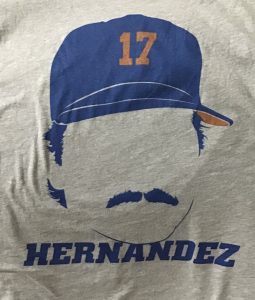 Happy mustache anniversary to us. Yet there is always, at least in theory, one more Spring. One more Spring than seasons, even. Seventeen seasons? Eighteen Springs! We’re back perennially come mid-February regardless of reasons to have been repelled. How many games did the Mets lose last year? Several more than they won. When they were done losing the last of them, we didn’t know precisely who would compose the 2022 Mets, only that eventually we’d bundle up and calculate the number of days until we could informally meet the lot of them. Why am I looking at pictures of Gary Gentry, Doug Sisk and Bobby Parnell in my social media feeds? Because it’s 39 days to Pitchers & Catchers!
The ritual counting down fizzled out weeks ago. The locking out continued. When I turned my officially licensed Mets calendar to February, I was greeted by an image of Taijuan Walker pitching from the stretch. I had to pause and think, a) “Who is that?” and b) “Oh right, Taijuan Walker…man, I have not thought of that guy all winter.” Nothing personal vis-à-vis Taijuan Walker. I’ve barely thought of any active Met since the owners opted to lock out the players. As happy as I am that the Mets have scheduled a number retirement, an alumni reunion and three bobblehead giveaways reflecting the approximate likenesses of their three TV announcers, the current iteration of Mets baseball being out of sight/mind has altogether defierced the urgency of mid-February. And I’ve still not thought much about Taijuan Walker.
***We blogged about 42 players who made up the 2005 Mets in our first season. Last week, that particular team suffered its first brush with mortality with the passing of Gerald Williams from cancer at age 55 (Pedro Feliciano, who died last year, was in Japan in ’05). The Mets had Williams at the end of his career, bringing him onto the club in June of 2004 and recalling him from Norfolk the following summer. Looking at his numbers more or less confirms what I remember about his on-field performance. He batted .233 in each of his partial seasons.
The numbers, however, were only numbers. The person was a different story. It always was with Gerald Williams, even if a fan shaking his head at an outfielder in his late thirties getting 160 plate appearances opted to concentrate on the numbers. “Why is Ice Williams up in this situation? Why is Ice Williams even on this team? What kind of rebuild is this?”
It could be that the people who made personnel decisions — even if there was a case to be made against their judgment based on the period’s broader results — understood a little more what constitutes a team than I did. Gerald Williams, long after his professional peak, was a good guy to have around. When the Mets had better options to start in left, center or right, he filled in around the margins. When the Mets of ’04 and ’05 were strapped for bodies, he was relied on to produce in something resembling the fashion he had from 1992 forward. Sometimes he did. When Carlos Beltran and Mike Cameron slammed into one another in pursuit of a fly ball in San Diego and neither could get back on his proverbial horse before the road trip moved on to Los Angeles, Gerald Williams stepped up for a few days. In one game, he homered, doubled, stole third and brought home an insurance run to support a Jae Seo-Braden Looper combined five-hitter. It was vintage Williams, reminiscent of the seasons when the man whacked as many as 21 homers, drove in as many as 89 runs and was good for as many as 23 steals (Willie Randolph used a pinch-runner ten times in 2005; nine times the runner was Williams).
We might have noticed Gerald when he was one of two Williamses on the youthful Yankees and it wasn’t certain whether he or Bernie was going to be the bigger deal. We surely noticed Gerald when he led off the bottom of the eleventh inning of the sixth game of the 1999 National League Championship Series by doubling off Kenny Rogers…and trotted home minutes later after Rogers threw a dozen balls, intentional and otherwise. If we were tuned into the likes of SportsCenter, we couldn’t miss Gerald and his future Met teammate Pedro Martinez going at it when Williams was a Devil Ray and Martinez was a Red Sock. The pitcher hit the hitter to lead off a game in 2000. The hitter did not take kindly to the free base and a brawl ensued. Gerald Williams experienced a great deal of living and a great deal of baseball by the time he became a Met.
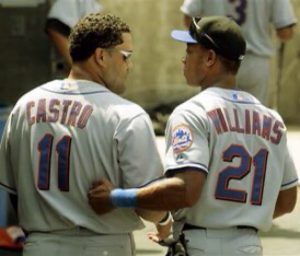 Gerald Williams: more than a .233 hitter. We saw a guy who hit .233 for us and predictably wondered why we couldn’t have somebody with more future in his toolkit. His teammates saw something different. Deep in the FAFIF archives, I rediscovered something I wrote in June of ’05 typical of the modicum of thought I’d given to the value in maintaining a spot for 38-year-old Gerald Williams.
Turns out Gerald Williams is good in the clubhouse. Doug Mientkiewicz said so on Mets Extra, pointing out how Geriatric Gerald was exercising all kinds of great influence on Jose, which obviously paid off in Philadelphia Tuesday night. Well, I thought, maybe that’s worth something, if not an entire roster spot.
Ed Coleman, who likes to agree with whoever’s talking into his microphone, concurred with Minky. “Right,” said Ed. “Last year, Gerald was riding Floyd and Cameron all the time.”
I was glad the Mets, who had been reeling for most of the previous couple of weeks, won. I was glad a connection was discerned between the presence of a veteran and the emergence of a youngster. Jose Reyes recorded two singles and a triple, scored a run and stole a base. The box score indicates all Williams did that night was replace Cliff Floyd on defense in the ninth. Yet I was trying my best to be a realist. Gerald Williams is a guru? That’s great. “So make him a coach,” I concluded.
Maybe they should’ve. Or maybe I didn’t know what I was talking about (wouldn’t have been the last time). The player-to-player dynamic and how it plays out in the short- and long-term is one of those things you likely have to witness to grasp, and even then, you’d only be an observer. The note I made about Ed Coleman remembering Williams’s relationship to his teammates a year earlier came back to me when I read what Mike Cameron, who, like Williams, wouldn’t be a Met after 2005, had to say after Gerald’s death.
“He got me through my first year in New York. He was always so positive. I struggled the first half of that season, but he stayed with me and never let me get frustrated. He was a special guy. He would take care of you as a teammate and give you good advice where to go after a game or where not to go. It’s hard to go out and just perform without a support system and he was one of those guys who provided it. He helped make it easy for you. You really appreciate somebody who does that. […] Especially in places like New York and Boston, you need veteran guys. He made a difference for me, and I know the same is true for a lot of other players.”
I’m seventeen years older than I was in 2005. I’m still working on wiser.
|
|






