The blog for Mets fans
who like to read
ABOUT US

Faith and Fear in Flushing made its debut on Feb. 16, 2005, the brainchild of two longtime friends and lifelong Met fans.
Greg Prince discovered the Mets when he was 6, during the magical summer of 1969. He is a Long Island-based writer, editor and communications consultant. Contact him here.
Jason Fry is a Brooklyn writer whose first memories include his mom leaping up and down cheering for Rusty Staub. Check out his other writing here.
Got something to say? Leave a comment, or email us at faithandfear@gmail.com. (Sorry, but we have no interest in ads, sponsored content or guest posts.)
Need our RSS feed? It's here.
Visit our Facebook page, or drop by the personal pages for Greg and Jason.
Or follow us on Twitter: Here's Greg, and here's Jason.
|
by Jason Fry on 12 September 2022 11:20 pm To review, these days the Mets play two kinds of games, which for simplicity’s sake we’ll tally up in separate columns.
In Column A, we record games like these, to quote some dumbass blogger: “ones in which they lose seemingly winnable affairs in horribly frustrating ways”.
Column B is the home for games like these: “ones in which they beat the absolute tar out of their opponents without breaking too much of a sweat.”
So let’s assess Monday night’s game against the normally downtrodden Chicago Cubs.
- The Mets faced Javier Assad, a rookie pitcher without much of a prospect pedigree, and did next to nothing against him. (Though, to be fair at the expense of a good narrative, from my tactically superior position on my couch this didn’t look like one of the Mets’ infamous Full Nabholzes against an unknown quantity — Assad had good stuff, built around a sharp cutter.
- Chris Bassitt had a rare stinker of a performance, reporting for duty with basically no command of anything. His expressions on the mound charted the Cubs’ lead as it grew from annoying to concerning to thoroughly dispiriting: a look skyward, a grim glower of self-loathing, an irritable snap of the glove, rinse lather repeat.
- The Mets failed to come through in big spots. Mark Canha struck out twice with the bases loaded, the second time making the first out of a bases-loaded-no-out fizzle that yielded zippo. But Canha had plenty of company, as Brandon Nimmo and Tyler Naquin and Eduardo Escobar and poor star-crossed Darin Ruf all failed to come through in big moments.
- Rearrange the game a little here and there and you can see a better one trying to emerge: Nimmo and Naquin and Ruf chip away at the Cubs’ lead and maybe Francisco Lindor‘s lipstick-on-a-pig homer in the ninth is a far grander moment. But that game belongs to some other reality, not this one.
- The last couple of innings were played in the rain, and I have to assume at least a couple of dogs went from Bark in the Park to the 7 train, after which they shook themselves (as dogs do) and spritzed Mets fans whose spirits were already a little damp.
So, quick review: Does this delightful game go in Column A or Column B?
Seems like it’s unanimous: Column A.
by Greg Prince on 12 September 2022 11:11 am Angel Hernandez, a master of ruining endings of baseball games, was ready to roll early Sunday afternoon, out to ruin a baseball game that had barely begun. It took him all of five pitches to pull a Sparky Lyle by dropping trou and planting his bare bottom on the Mets-Marlins finale birthday cake. Brandon Nimmo, batting leadoff, lashed a ball into the left field corner. See Brandon run! Run, Brandon, run! Brandon ran all the way to third for a triple to set the Mets in motion toward a fruitful first inning.
Wait a sec, signaled Angel Hernandez from about as far away as an umpire could stand from the inflection point of a play. That ball Nimmo hit got stuck under the fence, hence that’s a ground rule double, meaning Brandon would have to trot in reverse, lose ninety feet from his journey and stand on second.
That happens sometimes in a game, a ball being inaccessible to an outfielder because of the physical imperfections of barriers and whatnot. Thing is, Brandon’s ball didn’t get stuck under anything. It traveled as far as it could and sat where it landed. No Marlin threw two hands in the air. No Marlin projected helplessness. No ball was stuck.
Angel saw it differently. Angel sees many things differently in the course of a baseball game. This time he opted to set the baseball game off course from its first batter. Replays showed Angel was misguided. Chatter with his fellow umpires couldn’t budge him. Educational efforts from the walking rule book Buck Showalter didn’t persuade him. An official Met challenge didn’t change anything; I believe the ruling from the replay crew in New York was, Oh, that’s just Angel being Angel.
Nimmo on second rather than third. And though the Mets might not have driven in a Nimmo hypothetically taking a lead off third in the first, they surely didn’t drive him in from second. Mets nothing, Marlins coming to bat, the Angel of Aloof Incompetence with one more innocent baseball game in his nefarious clutches.
If the Mets of September 2022 were the Mets of September 2022 we’ve reflexively considered them when things haven’t broken their way, Angel Hernandez’s miscall might have broken them. We would have had only the satisfaction of Max Scherzer earning ejection from the dugout for giving Angel an earful. Scherzer standing up for all that is correct is fun, but it’s small solace if a game is going to turn on a triple being reduced to a double and leading to a zero.
Ah, but the Mets of September 2022 are roughly the same outfit that has presented itself through all of 2022, which is to say a different fit from other Septembers and other years when adversity would have hung a crooked number on the scoreboard against them in the wake of an Angel Hernandez error of judgment and procedure. These Mets, now in their recordbreaking sixth month of thrilling audiences from coast to coast (or East Side to West Side at least), didn’t fume. They caught fire.
We lost a base to Angel Hernandez? We got it back and then some. Brandon Nimmo got a whole bunch of bases as Sunday progressed. In the second, with two on and two out, Brandon blasted a three-run homer. Hernandez didn’t find a fan interfering after or detect a timeout call before Jesus Luzardo delivered the pitch Nimmo whacked. Nope, it was a genuine three-run homer. Brandon was now only a single and an Angel short of the cycle.
Nimmo didn’t get that far on Sunday, but he kept making up for what Hernandez took away. He walked in the fourth, part of building another Met run. He batted on the heels of a two-run Tomás Nido double in the fifth, working out another walk during a plate appearance highlighted by Nido moving up to third on a wild pitch. This meant second base was unoccupied, which hasn’t meant much to Brandon standing on first all year, but this was a day for Nimmo and the Mets to add base upon base to their ledger, a sharp strategy considering they’d been deducted a base they’d earned to start the game.
Brandon Nimmo stole second. It was his first stolen base of 2022. It is September. Brandon Nimmo bats leadoff virtually every day. Brandon Nimmo is not slow. Yet Brandon Nimmo doesn’t attempt to steal. But having witnessed how effective Angel Hernandez was at snatching something that shouldn’t have been his to take away, Nimmo perhaps adjusted his values system.
Total bases aren’t calculated this way, but that so-called ground rule double, the home run, the two walks and the stolen base…that sums to a total of too many bases for even Angel Hernandez to reduce to nothing. The rest of the Mets were inspired, too. You may have noticed that bit about Nido doubling in two runs. Hold on to your facemask, because Nido also homered. Nido homers about as often as Nimmo steals. A more likely candidate to go deep, certainly in recent weeks, Eduardo Escobar, chipped in a homer as well. Escobar spent most of 2022 replicating 1985 third baseman Ray Knight (.218 and a candidate for release the following Spring). Then he went on the IL, came off it and turned into 1986 third baseman Ray Knight (.298, The Sporting News Comeback Player of the Year and MVP in the World Series). Given his switch-hitting abilities, maybe he’ll be slugging like 1987 third baseman Howard Johnson by next year (even if he steals less often than Nimmo).
Offense wasn’t a problem for the Mets on Sunday. All the bases piled up to nine runs. Starting pitching also wasn’t a problem. Taijuan Walker, for whom second halves have been his own Angel Hernandez (which is to say a pox on competitive baseball), righted himself to the tune of seven one-run innings, one of the catchiest tunes you’ve ever heard. Only Brian Anderson was a thorn for both Taijuan and Seth Lugo. Anderson homered off each of them, driving in all three Marlin runs. If you’re pinpricked by only one Marlin in the course of nine innings, you’re having a very good day.
The Mets’ Sunday was grand enough with the 9-3 win in their pocket, but it got a lot better later when our temporary favorite American League team the Seattle Mariners held off the Atlanta Braves, 8-7. It wasn’t really a “held off” situation. The M’s were up, 6-2, heading to the ninth, which was the last time I checked. I wasn’t following closely — I hesitate to watch or listen to games in which I’m more interested in who I want to lose than who I want to win (karma’s my program guide) — so imagine my surprise when I digested that final score. The Braves scored five in the ninth, which meant they went ahead in a game that seemed, to the extent that “seemed” carries any weight, settled.
Settle this, said the Braves. But unsettle this, the Mariners answered. Atlanta’s raucous comeback to 7-6 was obliterated by two homers off Kenley Jansen, one from wunderkind Julio Rodriguez, the next from Cincinnati expatriate Eugenio Suarez. I watched the highlight of the latter. I whooped as if I didn’t know what it contained.
After the angst of the Mets’ brief sag into second place, they are first in the East again, an entire game-and-a-half ahead of the Braves. They’ve won their last two series. Had they captured one of the two games they lost against the Nationals last weekend, we’d be talking about a team that relentlessly keeps winning series. Instead, they made the mistake of briefly faltering and we all more or less decided they were cooked. Maybe they were just on a low simmer. September has a way of turning up the heat on all of us. Nobody’s judgment is flawless this time of year.
Just ask anybody who’s watched Angel Hernandez in action.
by Jason Fry on 10 September 2022 11:17 pm The Mets, of late, play two kinds of games: ones in which they lose seemingly winnable affairs in horribly frustrating ways and ones in which they beat the absolute tar out of their opponents without breaking too much of a sweat. We’re a third of the way through September, and I’m not sure I can take a full slate of grinding torments and giddy laughers — it’s giving me a case of emotional whiplash when I’m a little raw already.
At least Saturday night’s tilt in Miami was one of the laughers. The Mets started off looking a lot like they did Friday night, turned aside by lousy sequencing and a double play en route to falling behind the Marlins. But all was not lost, even if it felt that way to all of us grinding our teeth on our couches. The Mets tied the game in the third on a Jeff McNeil RBI single, then unloaded on Pablo Lopez an inning later, with the knockout blow a Mark Canha grand slam that greeted Lopez’s replacement Andrew Nardi. Canha has been one of the abiding pleasures of a wonderful year, a professional hitter whose at-bats remind me of his antecedents in bat artistry, from Dave Magadan to John Olerud and Edgardo Alfonzo.
Canha’s blast gave the Mets sufficient margin for error to allow the rest of the game to drift along vaguely accompanied by an increasingly Dada broadcast from Gary, Keith and Ron. (That’s said with affection.) Eduardo Escobar and Francisco Lindor each homered on three-hit nights, Carlos Carrasco did his job on the mound and was backed up by JV relievers who didn’t do anything too terrible, and much-requested call-up Mark Vientos sparked his new teammates to an 11-run outburst without even needing to set foot on the field.
The mood swings of such nights are much harder on fans than on players — unable to affect the outcome on the field, we’re left to beg, plead, follow superstitious rituals and remind ourselves when nothing works that the wall would not, in fact, look better with a new hole in it the size and shape of the remote. That’s always true in a pennant race, but this recent stretch, I venture, has been a little harder still. The feast-or-famine games are a trial, as is trying to read the tea leaves of a single W or L each night, not to mention waiting grimly to hear that the Braves won again. It’s all too much, which is why we’re tying ourselves into knots about bullpen management, slumps and streaks, who’s trying too hard and who might not be trying hard enough, whether the trade deadline should be relitigated yet again, and a dozen or so other unhelpful pursuits.
Honestly, the Mets’ only real sin is not playing .700 ball, as the Braves have somehow done since the weather’s gotten warm. But that’s not a story, just math we don’t like. Like fans since time immemorial, we need a story, and so we construct any number of them to fill the gap. It’s what we do — baseball isn’t much fun if you turn off the set every night and are gently philosophical about what’s transpired — but it’s not good for our health. Probably not ever and certainly not now.
My advice is to at least try and pace yourself: The terrors and joys of October still await, in whatever measures they’re parcelled out to us. But our path there isn’t mapped yet, and the only way to find that path is to walk it along with the players whose successes and failures will dictate our happiness for the coming weeks. (Of which we devoutly hope there are eight that matter.) What I just outlined is good advice that I won’t be able to follow myself. More heart attack nights lie ahead.
by Greg Prince on 10 September 2022 11:55 am As long as Rob Manfred is announcing that extreme shifting will be a thing of the past in 2023, let’s retroactively get rid of double plays. In the spirit of the pitch clock that will redefine the imposition of time within the confines of the once-timeless game of baseball, let’s turn the overall clock back 24 hours and declare that any ground ball fielded by an infielder with at least two runners on base and one of them on third can result in no more than one out. Since there’s no time to test it in the Atlantic League, just apply it to the geographically southernmost game played in the majors Friday night. Explain that it’s for competitive reasons or necessary to appeal to an action-oriented youth market that won’t tolerate rally-killing. “The best of interests of baseball” is a dependable chestnut. Whatever flimsy rationale Manfred manufactures will suffice. The bottom line is you can still have double plays, just not from a ground ball inside the parameters of the infield and not with a runner on third.
According to the Manfred Revision, which has just been ratified by unanimous vote in my head, if a team is up in the top of, say, the third inning, with a runner on first and a runner on third and one out, and the batter grounds to the first baseman, once the first baseman throws to second to force the runner coming from first, that’s it. No more throwing. The runner from third scores.
Another example: It’s the top of the seventh with one out. The bases are loaded. A sharp ground ball is hit to third. The third baseman throws to second and records one out. That’s it again. The runner from third scores.
On the other hand, in the hypothetical bottom of the seventh, a team has one runner on, on first with one out. The batter hits a ground ball. Go nuts, defense. Get two outs if you can.
Under this scenario in a not so hypothetical game I might have watched last night, the Mets, who trailed, 4-3, after completing a 1-6-4-3 double play to end the seventh, would be ahead at least 5-4 after seven. Then, in the bottom of the eighth inning, another of Rob Manfred’s new rules — so new it hasn’t even been committed to press release — could be invoked:
Never use Joely Rodriguez late in a one-run game again. That one pretty much explains itself.
So we exchange an out for a run in the top of the third…and exchange another out for another run in the top of the seventh…and we get over this fetish for spreading Joely too thin…and, hey, look, we just won, 5-4, and the Mets are still in first place.
Nice going, Commissioner!
Alas, the rules for which I am lobbying after the fact do not exist, not yet, anyway. Perhaps if a gambling consortium sponsored them and branded them with élan — the Lucky Ball; the Lefty Sit — they’d be MLB law. Instead, we have the ability to ground into double plays with runners on third and we have the unfettered compulsion to deploy shaky southpaws, and we don’t have a Mets 5-4 win over the Marlins. We have, instead, a 6-3 loss in Miami, which, when coupled with a 6-4 Braves win in Seattle, places the erstwhile division-leading Mets second in the National League East.
Which, in turn, doesn’t mean all that much with more than three weeks to go in the regular season and means only so much in light of almost everybody and their uncle going to the playoffs provided they don’t out-and-out suck for 162 games. That’s right: Rob Manfred has essentially legislated crashing and burning from perilous heights out of our Septembers. Seven teams meet the bare minimum standard of winning more than they’ve lost in the National League this year. Four of them are postseason locks, including (and you’re not going to believe this) the Mets, who, appearances to the contrary, aren’t going to blow their date in October. They may have it pushed up, but the Commish ensured their participation by making Wild Card qualification practically blowproof for any team whose sucking has been, at worst, intermittent, episodic and fairly recent.
Thanks, Rob!
Francisco Lindor, who hit into one of the two peskily legal double plays that made Friday night too steep a hurdle to clear versus a supposedly lesser opponent, framed the Mets’ difficulties after the game. He’s too polite to say “we shouldn’t have used Joely Rodriguez to go from being behind by one run to go to being behind by three runs in the eighth inning” and he wasn’t specific about his own seventh-inning double play or Jeff McNeil’s in the third. Instead, he posited, “I think it’s just baseball. I think it’s that time of the year, you know? A lot of us kind of hit the wall. We’ve got to find ways to break through the wall, and do it together. That’s what good teams do, and I’m sure we’re gonna do it.”
That’s a reasonable assessment in September, if an alarming one when set against the experience of a rival that burst through its wall in June and never stopped bursting, but that’s OK. It gives Rob Manfred a chance for more creativity.
Let’s remove walls!
Retroactively by 24 hours, of course. That way the two two-run homers the Marlins blasted over walls — one by Garrett Cooper off David Peterson in the first, the other by Charles Leblanc off the theoretically ineligible Rodriguez in the eighth — might have been caught. As for Pete Alonso’s own two-run dinger in the sixth, nobody can run down a Polar blast!
I’m using a surfeit of exclamation points in this essay to convince myself that any of what I’m suggesting is remotely workable. On the off chance it’s not, here are two final suggestions before tonight’s game and the fresh energy I will devote to suddenly contemplating the Mets’ potential opponent in a 4-vs-5 best-of-three first-round matchup (if we play the Phillies three times at Citi Field, Noah Syndergaard presumably plans to use the occasion as an opportunity to gather extra rest):
1. If you have to put Starling Marte on the IL, which from more than a thousand miles away seems like the healing move, promote Triple-A bopper Mark Vientos already. I don’t usually join minor league savior choruses, generally figuring seasoning is what makes a prospect well done, but every time I turn around, he’s hitting a ball out of Syracuse and into Canada. Besides, give or take other roster machinations, it’s a three-week window, not to see “what he can do” (the song of Septembers far sadder than this), but to maybe, just maybe, catch lightning in a bottle. Three-plus weeks of Tidewater callup Mike Vail helped keep the Mets viable into September of 1975. And you know who has the same initials as “Mets viable” and “Mike Vail”? Mark Vientos, who could prove most valuable. Also, Mo Vaughn, and he injected some pretty distant mood vaccinators into our bloodstream, too. Either way, it’s not like there’s no room in our offensive inventory for bottled lightning.
2. The Doors graciously furnished us with the Mojo Risin’ refrain in 1999. Thanks to Francisco, they’re being called on again. We tried to run (away from the Braves); we tried to hide (from the Braves). Now?
Break on through to the other side, fellas. Use your bats. It’s quicker that way.
by Greg Prince on 8 September 2022 11:48 am You score 15 runs, what do you get? Enough peace of mind to carry you through an off day, I hope.
The New York Mets, who entered Wednesday tied for first place in the National League East, exited Wednesday a half-game ahead of their closest competition. Not bad for a team declared deceased by a vocal plurality of its antsiest supporters.
Great to have fans who’ll stick by you in thick and thicker, eh?
To paraphrase 1988 vice presidential nominee Lloyd Bentsen as he took his younger counterpart Dan Quayle to debate school, September 2022, I lived with September 2007, I knew September 2007, September 2007 was a bane of mine.
September 2022, you’re no September 2007.
I don’t think so, anyway. I’ll cop to thinking after the most recent Mets-Braves series, the one in which three out of four games were lost, that I briefly flashed back to not The Worst Collapse Ever, but its preamble, the four-game sweep suffered at Citizens Bank Park in late August, a.k.a. the Jimmy Rollins Series. That quartet of defeats delivered a tangible bruising to the lingering sense of Met inevitability that had hung over 2007, but then came calming series wins over the (fading) Braves, the Reds and Astros. At Shea, in the minutes before Pedro Martinez manned the mound for the first time all year, on September 9, DiamondVision played a montage of what had gone wrong in Philadelphia, followed by highlights from the good things that ensued elsewhere, all to the musical accompaniment of “pick yourself up/dust yourself off/and start all over again”. Then Pedro went out, threw five shutout innings, doubled, scored a run and the Mets won once more.
And within a week, The Worst Collapse Ever commenced, serving as a reminder, perhaps, that nothing is clinched until it is clinched — or, perhaps, when one takes into account the ten wins in twelve games bracketed by calamity (0-4 at CBP) and disaster (5-12 to finish) — that nothing is blown until is blown. After the Truist Park stumble this August, the Mets won three of four at Philadelphia, culminating in Damn Thing IV, one of about twenty candidates for Game of the Year this year. An immediate stumble at Yankee Stadium was obliterated by three uplifting victories over Colorado, the last of those wrapped in the emotional high of Old Timers Day. Then they don’t score for two days before picking themselves up, dusting themselves off and polishing off the Dodgers all over again, winning that series and then staving off any hint of a letdown by summarily stomping on Washington less than a week ago.
Losing three games in a row, each by six runs, to last-place teams, was certainly concerning in the moment, maybe concerning as part of a greater pattern of scoring only in dribs and drabs. As a leading indicator of where the entire season was headed, it probably didn’t have enough sample size to it (0-3), nor did it have an adequate sense of near-term memory (85-48 prior to 0-3) let alone institutional memory. You wanna harp on 2007? How about that September night the Mets let a portion of their first-place lead slip away to an also-ran Pirates club, when the Mets were blown out and there was a three-game losing streak, and talk about a lack of hitting — the Mets were no-hit!
Or have you forgotten about the 1969 Mets? They were swept in a twi-night doubleheader at Shea on Friday, September 19, 8-2 (a familiar score) and 8-0, then came back to work on Saturday the 20th only to have Bob Moose shut them down on zero hits. None among starters Nolan Ryan, Jim McAndrew and Gary Gentry could tame the Bucco bats. Cleon Jones was out nursing an injury. The veteran-laden, star-spangled Cubs were picking up ground, inching back to four out with ten to play.
Things worked out OK for the 1969 Mets. Things will probably work out some version of OK for the 2022 Mets. You might question the relevance of taking solace in 1969 vis-à-vis 2022, which is fair, but if you do, you probably also need to ask yourself the point of being haunted by 2007 every time a very good Mets team loses three consecutive games late in a very good season.
The picking up, dusting off, starting all over again that occurred Wednesday afternoon and evening wasn’t only about five runs in one win (5-1) and ten runs in the other (10-0). It was about pitching. At night, it was about The Ace, Jacob deGrom, throwing seven shutout innings without prime command of his deadly slider. Good thing Jacob can kill with any number of pitches. By the time he handed matters over to a cobweb-gathering Adam Ottavino and the fresh, violent left arm of Alex Claudio, the old wives’ tale of the Mets never scoring for Jake had gone upstairs to bed, at least for another five or six days. The Mets notched 17 hits, six of them doubles, none of them homers. Toss in seven walks and a non-injurious hit by pitch, and you saw the Mets successfully stringing together rally upon rally as if that’s something they have some experience doing.
DeGrom was building upon the fine work compiled by The Stealth Ace, Chris Bassitt, the persnickety rock upon which the 2022 rotation has been built, even if his name is planted below the title on the Met pitching marquee. Since the middle of June, this guy has been mostly marvelous: 14 outings, a 2.32 ERA, 11 Mets wins and at least six innings consumed 13 times. You could do worse than turning to Chris if you have to turn to one pitcher with something heavy on the line the rest of this season or what lies directly beyond it. Bassitt had only half as many runs lavished on him as deGrom did, but those were plenty. Three came on one swing from Tyler Naquin, whose offensive capabilities, like those of Eduardo Escobar and James McCann, suddenly aren’t as defunct as once thought.
Because no day featuring two wins should lack for something to bring a Mets fan down to Earth (as if the gravitational pull of contemporary Mets fandom would allow for floating even a half-game above the ground), the Braves won again. But they played only once, hence we’re in first alone. Also, the IL claimed another Met, The Co-Ace, Max Scherzer, which seemed more a procedural move in deference to letting an extremely valuable left side rest up than a signal to panic. An abundance of imaging on Starling Marte’s right middle finger has revealed Starling absorbed a non-displaced fracture when he was hit by a Mitch Keller fastball Tuesday night. Meaning? I’ll let you know as soon as I complete my orthopedics degree, but the consensus seems to be it’s not that bad, unless we find out otherwise…which could describe any interval along the Mets’ journey if we want it to.
Superstition, Stevie Wonder once made clear, ain’t the way, but if you’re a baseball fan, you can’t help yourself from thinking one wrong move on your part might lead to a dozen missteps by your team. That’s the crux of this week’s discussion between Jeff Hysen and me on National League Town, the podcast devoted to Mets Fandom, Mets History, Mets Life. You can listen to it here. Just press pause should you find yourself walking underneath a ladder while doing so. Not that I’m superstitious or anything.
by Greg Prince on 7 September 2022 8:16 am 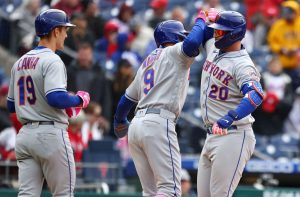 MISSING: Sole proprietorship of first place in the National League East. MISSING: Sole proprietorship of first place in the National League East.
AGE: Approximately 5 months.
ANSWERS TO: Let’s Go Mets, LFGM or “Not Again”.
LAST SEEN: Leaving PNC Park following a third consecutive barely competitive loss to a last-place team.
RECOGNIZABLE MARKINGS: World-class starting pitching, unrelenting middle-of-the-order production, indestructible right fielder, preternatural ability to quash lesser opponents.
***PLEASE LOOK HARD FOR THESE DISTINGUISHING CHARACTERISTICS — THEY MAY BE HARD TO DETECT IN THE HARSH GLARE OF SEPTEMBER.***
ALLERGIES: Driving in runs, keeping games close late, out-of-town scoreboard updates involving ATL.
REWARD: Division championship, Wild Card round bye, collective sense of self-esteem.
PLEASE CONTACT: Bat to ball in useful manner.
by Jason Fry on 4 September 2022 6:50 pm OK, there isn’t a plan — baseball routinely makes a mockery of plans — but there is a blueprint a team tries to follow, and I’m pretty sure the Mets’ blueprint wasn’t labeled LOSE WITH BARELY A WHIMPER TO PATRICK CORBIN AND ERICK FEDDE. I flashed back to 1990, when the Mets’ quest for a division title was derailed by a disastrous three-game sweep at the hands of the Expos, capped by a 6-0 whitewashing with Chris Nabholz on the mound.
That was 32 years ago, and I still sometimes catch myself staring at the ceiling and fuming about it.
Chris Nabholz, really?
The Expos have become the Nats, but Nabholz was a rookie then, an unknown quantity, whereas Fedde was thoroughly known yet somehow kryptonite for Met bats on Sunday.
Just a little frustrating.
/recapper bends laptop while apparently ‘just a little frustrated’
I suppose if you squint a little, or a lot, there were good things to be discerned amidst Sunday’s wreckage. Trevor Williams pitched very well in relief, continuing his year of being quietly useful in a range of roles, and the Mets played some adept defense late. But “late” is best understood there as the second half of “too late” — by then the Nats had brought the hammer down on Carlos Carrasco and extended their lead on a homer after Williams was forced to throw strike four (fuck it, we weren’t winning anyway), and you knew the Mets were toast long before you heard the ding from the kitchen.
(They tried, but had an inning short-circuited by a dropped fly ball in left that turned into a double play thanks to some unfortunate umpiring, but if that play sent you to the barricades, I have to ask if you were watching earlier. It’s right there in the earliest baseball laws inscribed by Abner Doubleday: When you’re going horseshit, they fuck you.)
Anyway, the Mets took two out of three from the Dodgers and then dropped two out of three to the Nats, and any rational fan knows such head-scratchings are part of the ebb and flow of a long season, and the view through a three-day magnifying glass is pretty much the worst way to maintain one’s perspective. All of which is true, except the Mets are in a pennant race and the Braves stubbornly refuse to lose games and have now drawn within one skinny, lousy, aggravating, horrifying game of our heroes (I assume — I can’t bear to check the scoreboard), and anyone who delivers a lecture on perspective at this juncture deserves to be doused in beer for his troubles, because read the room already.
/recapper douses self in beer
Anyway. Tomorrow is a new day, lots of baseball left, many paths to the playoffs, but that wasn’t exactly the plan, and the Mets would be strongly advised to ball up the LOSE TO CORBIN AND FEDDE blueprint, throw it in the trash, and find something new posthaste.
by Greg Prince on 4 September 2022 11:29 am The barrage of Rob Manfred-encouraged ya gotta gamble on baseball! entreaties overwhelming SNY’s airwaves in some incarnation seemingly every half-inning (never mind that Major League Baseball in the minuscule personage of Bowie Kuhn once cast out Willie Mays and Mickey Mantle — in retirement — for accepting jobs that required them to golf with a casino’s clients), whether they feature…
• Steve Gelbs ducking in and updating live odds, presumably because the sponsor wasn’t happy with Gary Cohen’s contempt-dripping minimalist read of its copy;
• Drew Brees pretending to hang out in a sports bar with a trio of randos we’re supposed to believe are his bosom buddies (I’ve seen more of Drew Brees than I have Drew Smith in the second half);
• a fake sports anchor interviewing a fake sports fan about how real happy he is to have hypothetically cashed in on his hypothetical bet;
• or the guy who comes on to shout at those of us whose most pleasant hours of any day are largely informed by watching baseball that, contrary to what everybody is saying, baseball isn’t dying
…are totally lost on me. I don’t wish to gamble on baseball. The more I am advised by the baseball gambling consortia that it’s what smiling, energetic people do, the less I am inclined to entertain their proposals. I’m satisfied with remaining dour and lethargic by comparison to the actors in the commercials. I’m satisfied with caring about the outcome of a baseball game and its myriad components on the merits already inherent in baseball. I’ve stayed with baseball for love of the game, not the winning of money.
Also, I’d be terrible at it. I don’t mean the winning of money. Just the process of choosing how to lose the money. Saturday night’s Mets-Nationals game was a prime example of what I would face.
Bet on the Mets? How could I not bet on the Mets? Max Scherzer is going for the Mets. Max Scherzer is going for his 200th win. Max Scherzer pitched well enough to win his 200th last time out, he just wasn’t supported in his effort. This time Scherzer is facing his old team, his old team that has been full-out dreadful all season without him (and without everybody else who won a championship barely three years ago). Narrative City, baby! And the one Washington National who would be recognizable to anybody from the 2019 World Series, Patrick Corbin, is starting for the Nats, and he’s become synonymous with veteran starter who’s completely lost his way: 5-17, 6.56 ERA and a piñata to Mets batters. The first-place Mets are rolling, they’re at home, the Nationals are the worst team in the sport — the only question is which MLB-sanctioned tout service do I utilize to place my surefire wager?
Except, save for the betting part, I didn’t think all of the above solely. I also thought this:
Bet on the Mets? Against the Nationals? You mean like betting on the Mets in September of 1985 against the Pirates, who were that year’s version of the Nationals? The Mets were in a heated pennant race with the Cardinals and had everything to play for and they were at Shea, where a New York attendance record was being established, and the Pirates barely existed, with their manager on the way out and nobodies dotting their lineup…and the Pirates took two out of three that weekend, behind, among others, rookie starter Bob Kipper (career ERA 14.04 before facing a single Met and commencing to lower his earned run average by six runs); rookie shortstop Sammy Khalifa (who hadn’t driven in a run since September 14, yet totaled four RBIs the weekend that spanned September 20-22); rookie third baseman Danny Gonzalez (two base hits and a run scored in Friday night’s Pittsburgh win; eleven base hits and nine runs scored over the course of the remainder of his entire career); and Jose DeLeon (season’s record 2-18 before the series, yet he proceeded to notch his very first save of ’85 versus us).
I’m gonna bet against the legendary Max Scherzer and my mighty Metropolitans? Hell no!
I’m gonna bet against the slight possibility that a team in the present day might replicate the performance of a crew of washed-ups and no-names from 37 years ago that rattles around in my brain just in case the Mets should find themselves at the top of their division and taking on a supposed hapless opponent? Honestly, no.
I’d bet anything can happen in a baseball game, not that anything will happen. This is why my wallet stays in my pocket every time one of those ads runs. This is why I’m poorer only from an experiential standpoint that Max Scherzer and the Mets lost to Patrick Corbin and the Nationals, 7-1, on Saturday night. All I bet was my time, and that’s baked into a perpetual “let it ride” quinella with gambling my emotions. I was simultaneously surprised that the Mets would show themselves to be utterly unsuccessful and unfortunate in taking care of business as logically anticipated while not terribly taken aback that the Nationals would rise up and appear hapful for a night. It happens, even for the hapless.
Corbin was back to his presumed-dead previous self for seven innings of three-hit mastery. Scherzer left after five with “fatigue” in his left side, which the righty later reassured us we shouldn’t worry about, and why would any of us worry about a Met co-ace who missed time from oblique issues taking himself out of a 1-1 pitchers’ duel in September? The Met bullpen was solid until it turned squishy and then, accompanied by an ill-timed outbreak of loosey-goosey defense, went splat! — Adonis Medina, thank you for your intermittent service, but you can pick up your one-way ticket to Syracuse at the departure gate; Bryce Montes de Oca, we’ll talk later — while no Met hitter besides Eduardo Escobar (second consecutive game homering) did anything against anybody clad in gray and red.
The 1985 New York Mets lost two out of three to the 1985 Pittsburgh Pirates in September. It was a bad sign for a team destined to finish three games out in the days when you either won the division or went home. The 2022 New York Mets lost one to the 2022 Washington Nationals on a September night at the outset of the playoff multiverse era (when the 2022 Atlanta Braves defeated the 2022 Miami Marlins on a bases-loaded ninth-inning walk, as if something like that had never happened before) after winning one from the 2022 Washington Nationals the September night before after a season of stomping on the Washington Nationals and their cellar-dwelling ilk, many of whom we’ll be meeting in the weeks ahead. I’d bet it’s not a sign, just a game. I’d bet that the schedule, imbued with a depth of softness that Downy only wishes it could legally promise your fabric, will prove beneficial in the short and long run.
That is if I bet on baseball. I wouldn’t.
by Jason Fry on 3 September 2022 12:04 pm A hangover game for the Mets would have been annoying but forgivable Friday night, what with the team having just taken a series — immediate and season — from the mighty Dodgers, AKA the Probably Inevitable NLCS Level Boss.
Happily, the Mets didn’t have one — or perhaps they did but the innate lousiness of the stripped-down Nationals was effective in hiding its symptoms.
Either way, they won — and got contributions from a trio of players whom we’d at least begun to worry about.
Eduardo Escobar was first, smacking a two-run homer off a Josiah Gray curveball in the second to get the Mets pointed in the right direction. Escobar’s been vital in the clubhouse and valuable in the field but lacking at the plate; a late-season reversion to his career mean would certainly be a welcome addition to the lineup.
Next came Mychal Givens, who hasn’t exactly been the relief addition we’d clamored for at the deadline. (While it’s not Givens’ fault that he’s right-handed, it pretty much is his fault that the numbers he’s put up have been mostly wrong-footed.) But Givens pitched well against Los Angeles and even better against the Nats, coming in to direct water at a man-on-second, one-out, tie-game blaze after David Peterson ran out of gas in the sixth. Givens did so, was handed a lead, pitched an effective seventh and earned a well-deserved win.
Thirdly, we had Pete Alonso, who’s looked desperately like a man in need of a head-clearing day off of late, doing more damage through bat-snapping shows of self-loathing than to the guys in the other uniforms. But Alonso came to the plate against Gray in the seventh with the Mets having just surrendered the lead and gave immediate notice that such an indignity would not stand, swatting the second pitch into the left-field seats and kicking off an inning that ballooned once the Nats commenced to play stupid.
(For the record, I still think a day off would be a good idea.)
The Braves won, so the Mets were thwarted in stretching their lead, and the gap between the two teams is too entirely too slim to ponder magic numbers and what-not. (I’ve peeked and you probably have too; let’s limit it to peeking for now.)
Whatever happens with the NL East standings, though, the Mets have won 85 games, which is worth a moment’s reflection.
I’d call 85 wins the lower bounds of a good year — definitely something to build on, if you get there from below. But it’s not even Labor Day. Now, I don’t think the Mets will wind up with 114 wins (though it’s not impossible), but those 29 remaining games are mostly against weak competition and the Mets look fundamentally sound with the stretch run upon them.
Numerical achievements don’t translate to flags — just ask the 2001 Mariners — but they’re still worth noting. And what the Mets are on track to do is notable indeed.
by Greg Prince on 1 September 2022 11:39 pm Some things don’t change even as the calendar pages do. Back in April, emphasis placed on winning series was emphasis well-directed We have now entered September. Winning series is still a very good thing. A very good goal, too, though I wouldn’t want to get too far ahead of myself. Take every day, even the days with doubleheaders, one game at a time and each series will take care of itself. Take the series(es), and the rest of the season figures to fall in line.
Early on, it was noted the Mets hadn’t lost a single series to any team. Then they lost one here and there and maybe split a few, but kept on winning most of them. The last time I recall checking in on the series scoreboard, as we entered the All-Star break, the Mets had won 21 of their first 29 series, splitting three others while losing only five. They’ve played a dozen more series since. They’ve lost three. They’ve won nine. Overall, that makes them 30-8-3 when measured by series, or 84-48 when measured by the games by which those series were comprised.
When measured by their thirtieth series win of 2022, the Mets appear ready for September and beyond. Or infinity and beyond. This series win — two games out of three — was over the Dodgers. For a moment, let us allow ourselves to be over the moon about it. But just for a moment. As far as grids full of white and shaded boxes can tell, a series against Los Angeles is just one more subset en route to collecting the complete set of 162 games, however they’re distributed, no different from having played four and won three from Colorado last weekend or whatever will happen versus Washington across three games this weekend.
But, c’mon. This was the Dodgers. This was the team that’s been to the playoffs every single year since the last year that Justin Turner was a Met. This was the team that won all there was to win just two years ago, as a cap on the head of a Dodgers fan reminded me on the 7 Super Express the other night. I stared at the interloper’s 2020 World Series logo and thought it looked a little oversized. Given that the 2020 postseason followed on the heels of a 60-game seasonette, perhaps the World Series logo should have been no bigger than the cap’s squatchee.
Give the Dodgers a full-sized season and you get a legitimate World Series contender as a matter of course. Give the Dodgers this full-sized season, and you get Ron Turcotte atop Secretariat looking over his shoulder curious to see if anybody’s remotely on his mount’s tail at the Belmont. In the National League West, the Dodgers’ lead is 18 games. Not even the team with the best record in the rest of the National League — that would be us — is particularly close to the Dodgers’ current record of 90-40.
Let the record show, however, that L.A. came to NYC 89-38 and are flying home carrying a 1-2 in their most recent three games, all against the Mets, and a 3-4 in their now-completed season series against the very same Gothamites.
Or would that be Kryptonites? Ah, I wouldn’t go that far. The Dodgers are probably plenty confident they could beat the Mets should there be one more series between the teams that hold the two best records in the National League. But, of more local import here, the Mets are probably plenty confident they could beat the Dodgers should there be one more showdown on the order of what we’ve just seen. We, the Mets fans, should share that confidence. I imagine some of you won’t, because you’re Mets fans who revert at slightest provocation to fretting over what has gone wrong (“we lost one out of three!”) and what could go wrong, but, my friends, that’s your problem.
The Mets won’t have a problem if they face the Dodgers again. They will have a challenge, because that’s a darn good team out there, but the Mets have beaten them four times the last five times they’ve played them. The Dodgers concern me. They don’t worry me, just like the Braves concern me but don’t worry me. The Braves are three games behind the Mets, which also means the Mets are three games ahead of the Braves. Funny how that works.
Beautiful how Thursday’s late-afternoon finale against the Dodgers worked. The Dodgers threw Clayton Kershaw at the Mets. Kershaw had either been on the IL or was just coming back from Cooperstown where I assume he was checking on the progress of his plaque. The future Hall of Famer (the “future” descriptor is a formality) had a tough first inning. Gave up a walk, then a single, then a walk, then got an out, then gave up his third walk of the inning. Dinosaurs walking the earth might have been used to Kershaw walking in a run, because he hadn’t done it since they were around, but, whoa, the Mets were up, 1-0, on an immortal in our midst.
Then they were behind, 2-1, in the second inning, but not more. Justin Turner started a rally with a double, just to remind us that he was asked to vacate these very premises in 2013, and Chris Bassitt had his own issue with a hit and a walk before Chris Taylor dumped a single somewhere toward the right field corner. Turner was definitely gonna score from third. Starling Marte got the ball into second, which may have facilitated Gavin Lux scoring from that very base, but it also allowed Francisco Lindor, who handled Marte’s relay, to accurately deliver the ball home so James McCann could tag out Trayce Thompson, who thought he could make it all the way around from first. He couldn’t.
We’re used to moaning about how little the Mets get out of their best threats. Well, the Dodgers had the bases loaded and one out and got only two runs from a seemingly stacked deck. So there. Then again, Clayton Kershaw possessed both the lead and the feel that eluded him in the first. Dude went five and didn’t give up any more runs. Bassitt could say the same about the rest of his day, pitching through six (enduring a funky home plate discussion delay among umpires and managers over whether the lights should be on as daylight commenced to fade in the fourth inning from a 4:10 PM start). We arrived in the bottom of the sixth still down, 2-1. Given that the two previous games had finished 4-3 and 2-1, a person could be forgiven for wondering if the only remaining runs in Flushing this week were going to belong to Serena Williams and Daniil Medvedev.
Wonder no more, the Mets reassured a person. With Chris Martin on in relief, Starling Marte beat out an infield grounder, which is no small feat given Marte’s nagging leg issues. Watching Marte manage his running has been as rewarding as watching Buck Showalter manage an entire season. Starling can’t always run full out, so he doesn’t when common sense negates visually pleasing hustle. But when a ball can be tracked down or a base hit can be sniffed out, the man turns it on. And man, did he to open the sixth…and did he some more when Lindor doubled to center. Starling was off and striding straight to the plate and suddenly Clayton Kershaw’s 193rd career win was gonna hafta wait at least another start (his problem). It was 2-2, with Lindor on second.
Did I say second? More like third once the slick-fielding shortstop stole the next base in front of him. I held my breath a little, because something about making outs at third is worse than making outs anywhere else, but Francisco read his situation perfectly. Darin Ruf was batting, not Daniel Vogelbach, a righty batter instead of a lefty, meaning the throw to third would be that much harder for Will Smith. Buck had decoyed Vogie in the on-deck circle but stuck with Darin against the righty, even if Vogie is on hand to destroy righties and even though the only entities Ruf had destroyed lately were rallies.
But with Lindor on third and only one out, all Darin needed to do was lift a fly ball deep enough to score a fast runner. That, I’m delighted to report, Ruf did. I felt very good for a Met with whom it was easy to lose patience, given that the designated hitter has one job, and when that one job goes undone, a person (the same person from a few paragraphs ago) is left to wonder what exactly is his value.
Darin Ruf was worth one very clutch run batted in and a one-run lead after six. Trevor May was worth his weight in perceived doubts as well, setting aside the Dodgers in the top of the seventh. The bottom of the seventh presented a museum-quality exhibit on opportunity. The Mets and Dodgers collaborated to create one, first on a two-out James McCann double (no, wise guy, the ball was not taken out of play and transferred to an authenticator to verify a once-in-a-lifetime event), then on a Brandon Nimmo pop fly that, thanks to indecision between Lux and Mookie Betts on the order of Danny’s Kaye’s “Miller-Hiller-Haller Hallelujah Twist,” fell in for a Brandon Nimmo double. McCann motored home. Nimmo stormed into second. Next, there was That Man again, Starling Marte — same initials as Stan Musial — lining a single to left to score Brandon.
The Mets were up, 5-2, and Buck was gonna go with Edwin Diaz to impede the heart of the Dodger order in the eighth. To be fair, every segment of L.A.’s lineup might as well be the heart of the Dodger order. Also to be fair, there seemed to be a touch of indecision on Showalter’s part, as Diaz was getting up, standing aside, then warming with renewed purpose while the score changed in the seventh. I believe that’s called dry humping, which is too bad, because baseball is a family game. Anyway, Diaz came on in the eighth, to recorded musical accompaniment only, and sounded a couple of rare sour notes. He walked Freddie Freeman and plunked Smith. Ouch. First and second. There’d be a deep fly to center, but it was caught by Nimmo, who catches everything. Freaking Freeman moved to third. Justin Turner also flied to Nimmo, though the out was Dodger-productive as it brought in freaking Freeman and placed Smith on second.
Then Edwin remembered he was Edwin and struck out Lux, strike three coming on a pitch that registered at nearly 103 MPH at Citi Field and probably showed up on the serve speedometer at Arthur Ashe, too.
The Mets led, 5-3. They tried to add to it in the home eighth by pinch-hitting Vogelbach, who walked, then pinch-running latest Met and professional speedster Terrance Gore, who stole. Vogelbach and Gore could constitute a two-headed monster in this month of expanded rosters, though to size them up, they might be better described as Vogelbach-Plus. Nice to see speed put to such electric use, even if Gore wasn’t driven in (what, he couldn’t steal third and home?). Adam Ottavino switched roles with Sugar and took the ninth. No live musicians for Otto’s entrance, either, but he made his own sweet sounds: two strikeouts and a flyout. The Mets had themselves game, set and match.
If there’s a rematch and another set of games pitting the Mets and Dodgers…wait, we take them one game at a time around here, and ten series encompassing thirty games remain in 2022’s regular season. I wanna get too far ahead of the Braves, not myself.
Beat the Nationals Friday night. That will do for now.
The first Old Timers Day in nearly three decades did very nicely by Mets fans last weekend. Listen to Jeff Hysen and me relive it lovingly on the latest episode of National League Town, available on all podcast platforms or the baseball time machine of your choice.
|
|






