The blog for Mets fans
who like to read
ABOUT US

Faith and Fear in Flushing made its debut on Feb. 16, 2005, the brainchild of two longtime friends and lifelong Met fans.
Greg Prince discovered the Mets when he was 6, during the magical summer of 1969. He is a Long Island-based writer, editor and communications consultant. Contact him here.
Jason Fry is a Brooklyn writer whose first memories include his mom leaping up and down cheering for Rusty Staub. Check out his other writing here.
Got something to say? Leave a comment, or email us at faithandfear@gmail.com. (Sorry, but we have no interest in ads, sponsored content or guest posts.)
Need our RSS feed? It's here.
Visit our Facebook page, or drop by the personal pages for Greg and Jason.
Or follow us on Twitter: Here's Greg, and here's Jason.
|
by Greg Prince on 2 July 2022 12:16 pm The Mets are 3-0 in games streamed by Apple TV+. If the only way we can have wins is by exclusivity that’s wrong, then as Luther Ingram declared in 1972, I don’t want to be right. But it was just one night…on top of two other nights…on top of the Peacock wagging its tail this past Sunday. Novelties have a funny way of becoming norms. I opted for the dependable word pictures delivered via WCBS-AM, so let’s just say that on Friday night versus the Rangers at Citi Field, the Mets sounded real good.
I don’t know if Eduardo Escobar wants to be Wright, but he delivered like the best of Met third basemen, socking the differencemaker in the fourth inning. Mark Canha had already driven in one run to tie Texas. Eduardo gave us immense momentum with his three-run shot. The Mets had four on the board. It was more than they’d accumulated in their previous three games, all losses, not coincidentally. It also represented half of the RBI total Escobar had managed in the 22 games between his cycle on June 6 and his swing off Glenn Otto. Esco’s 2022 has been rather all or nothing. Having experienced a little too much nothing, we prefer the bursts of all.
The Mets in the other seven innings they batted were all nothing, extending a disturbing trend that began in Sunday’s finale in Miami, continued during Houston’s visit to New York and lingered through at least the beginning of the Rangers’ drop-by. In their last four games, the Mets have scored in no more than one inning of each game. In the third game, they scored in no innings, which was most troubling. In the fourth game, it worked out all right, as the four runs in the fourth were enough for David Peterson, Seth Lugo, Adam Ottavino and Edwin Diaz to steer home a 4-3 victory. David was dynamite (6 IP, 10 SO, 0 BB), when not being a tad disturbing (3 ER, featuring 2 HR). If one of the veterans had produced Peterson’s line, I’d probably praise the savvy and write off the gophers. Or if the Mets had provided more of a cushion, I would have relaxed a little more. Fortunately, Lugo, Ottavino and Diaz did not require the GEICO, Progressive or Liberty Mutual insurance runs of the game.
A win, however it’s eye/earwitnessed, is always welcome. Breaking a losing streak is always welcome. Escobar is welcome to make raking more than something he does on special occasions. Fifty years ago, when Luther Ingram was weighing the pros and cons of fidelity, General Foods was introducing Stove Top Stuffing with the message that it was something you could have any night, not just for Thanksgiving. Think of it that way, Eduardo. Hitting isn’t only for eleventh cycles in franchise history or Blackout Fridays. Feel free to bust out that Fogo Power again real soon. Peterson, meanwhile, is beginning to feel essential to the meat and potatoes of the rotation, with his last three starts yielding 25 Ks, only two walks (none in his last pair of outings) and exactly what the Hefner ordered.
So put me down as in favor of Eduardo Escobar and David Peterson as well as winning. Sometimes I’m all about the last thing I heard.
The next thing you hear? Hopefully it’s the latest episode of National League Town, which explores the orange and blue blood pumping through the geographic and spiritual heart of the METropolitan Area.
by Greg Prince on 29 June 2022 9:31 pm It was tight. It was tense. It was pitched the way you would swear under oath you prefer your games to be pitched. It was the kind of game you could really enjoy for the sake of sublime baseball until you remembered you had a rooting interest.
To be fair, if your rooting interest emanated from Astroland, then it remained a good game to the not at all bitter end. But here our interests lean mightily to the Mets, and the mighty Mets, they made outs. They made twenty-seven of them, which happens most games, but they usually make offensive noise between the silences. Not in this game that ultimately grew difficult to really, really enjoy. Two hits. One walk. That was it. The most dramatic moments the Mets engineered while attempting to hit involved Jeff McNeil hanging in for twelve pitches in the first inning and Dom Smith extending an at-bat for nine in the fifth. The attempts went nowhere, mirroring the Mets’ Wednesday afternoon destination.
Justin Verlander’s watch chain was gaudily bedecked following his eight innings of shutout ball, considering all the Met batters he wore on it. There was a touch of a threat in the first — Brandon Nimmo’s leadoff double, Pete Alonso’s two-out walk, McNeil’s flirtation with a run batted in (coupla loud fouls in there) — and then there was no hint at all of a Met attack. Verlander, even at 39, will do that to a first-place team that’s been slumping. We made decent contact. Once in a while, I thought balls would fall in. I was mistaken.
Taijuan Walker’s matinee performance at Citi Field was no less impressive. Tai entered the eighth for the first time all year, barely scathed through seven. He was assigned one final batter, coinciding with the conclusion of his third trip through the Houston order. Walker — with no small hand lent by Luis Guillorme at third (at least one assist or putout in every inning from Los Manos) — held up his end of a scintillating zero-zero duel, passed it over to Edwin Diaz, and Diaz no more than played footsie with trouble. The game stayed scoreless until the ninth.
We knew Walker wasn’t going to finish the eighth and we could figure Sugar wasn’t going to be asked to pitch the ninth. For one, he threw fourteen high-leverage pitches to finish the top of the eighth. For another, the bottom of the eighth encompassed a delay following a collision on a popup in short left between Jeremy Peña and Yordan Alvarez. Alvarez got the worst of it; both had to leave the game (the popup somehow stayed in Peña’s glove). Other than presumably filling him with concern for his teammates, the lingering pause to help both Astros off the field didn’t affect Verlander, but it did mean a little extra time for Diaz to cool down. Yeah, he wasn’t coming back.
Drew Smith was Buck Showalter’s choice to maintain the tie. Drew hadn’t pitched since Saturday, the last time the Mets won (the day before Adam Ottavino set the tone for recent ninth-inning setbacks). Then there was an off day Monday, a blowout Tuesday and, with another blank space in the schedule ahead Thursday, a sense on Showalter’s part that Drew shouldn’t sit too long. Once Walker was done and Diaz was out of consideration, I didn’t have a more clever ninth-inning solution than Smith.
The Astros had all the answers in their pair of two-game series against the Mets. The last one, not counting Ryan Pressly retiring the Mets with ease (plus an umpire’s assist) in the bottom of the ninth, was provided by Jason Castro, who transformed a Smith slider into a two-run homer that put Houston up by essentially twenty. We went down to both Verlander and defeat, 2-0; are saddled with our first three-game losing streak of 2022; and have scored all of three runs in our last three games.
Which is not to say pitching duels are to be sneezed at, as allergic as we consider ourselves to defeat. For the longest time Wednesday afternoon, it felt like a great game. It felt like Seaver vs. Reuschel that day at Wrigley when Tom had a no-hitter going for eight-and-two-thirds but the Mets forgot to score on his behalf (we lost both the no-hitter, in the ninth, and the game, in the eleventh). This was about as close as you’re likely to get to two elite starters going the distance in 2022. Verlander’s credentials come without question. Honestly, he’s the only active pitcher whose mound presence puts me in mind of Seaver — so much so that I’ve mysteriously convinced myself that Verlander, an alumnus of Old Dominion, went to USC. Walker has been a Maxless/Jakeless godsend. This is the pitching we pay and pray to see, even if it’s not the result we request. Even with everybody waiting for the Astros’ injury situation to resolve, the whole affair took 2:43. Earlier in the day, I was reading Don Van Natta’s profile of Rob Manfred on ESPN.com in which a theme the commissioner struck continually, besides a desire to be loved, was the need to get games moving faster. This one moved relatively quickly and was absorbing as all get out, never mind the lack of runs for the bulk of 163 minutes. If it didn’t have wispy-hitting Castro’s ball getting out of the yard, it would have been perfect. Or at least better.
Houston left the National League following the 2012 season. I was sorry to see them go, given their fraternal connection to our birth. Can’t say I’ll mind not seeing them the rest of this regular season. They are, to put it in senior circuit context, Dodger-good. When we played the Dodgers in Los Angeles the first weekend of the month, I thought it was a validating series, boisterously splitting as we did against an opponent with too much talent to lose too often. After we dropped the two games at Minute Maid Park a week ago, I looked forward to some measure of getting even or balancing the books or just a sense that nobody on our slate was out of our figurative league. Despite Taijuan, Edwin and Luis doing their things exquisitely, the Mets didn’t show they were up to the task that faced them in these two games. Mind you, it’s only two games, and, as noted, Manfred’s predecessor was kind enough to nudge the Astros out of our immediate business, so there needs to be a bit of a shrug inherent in the irritation of the moment. Yet this 0-4 ink smudge on our otherwise marvelous 47-29 record — hint of 1969 at the Astrodome notwithstanding — will glare at me until 7:10 Friday night gets us the Rangers on (groan) Apple TV+.
Bring on the other team from Texas. Bring out the bats while we’re at it.
by Jason Fry on 29 June 2022 12:58 am Somehow it took me until June 28 to get out to Citi Field to see a Mets game. What happened? Well, there was a rainout and my usual aversion to freezing my ass off in April, but mostly life got in the way.
With July rapidly approaching, it was Emily who put things right, engineering a Father’s Day outing for her, me, her dad and Joshua. Tasked with obtaining seats, I splurged a little for a view I’d never had — the front row in left field, just to one side of what used to be the M&M’s Party Deck. I say that because I assume it’s something else now, not that I care.
It was fun watching left fielders go about their business and looking straight down at the oddly maroon warning track. Just like it was fun finally being at the park getting an up-close look at the Tom Seaver statue and wandering around Citi Field in the company of other loons in Mets regalia. It was fun, and then the game started.
Carlos Carrasco didn’t have it, which has been true far too often recently. My unique vantage point was mostly good for watching Houston home runs sail into the seats, though occasionally I could make out Mets failing to advance on the infield, or being dispensed with by Astro starter Framber Valdez. In the fifth, Carrasco was excused further duty and left in favor of Chasen Shreve, who gave no indication that he belongs on a big-league roster any longer. After that the vaguely competitive portion of the game was over and the only questions were a) if Buck Showalter would get over his aversion to putting a position player on the mound (no) and b) if Ender Inciarte would make his Mets debut (yes).
Oh, James McCann was up with two outs in the ninth and somehow didn’t ground out. That counts for something, I suppose.
One of baseball’s less celebrated but nonetheless important qualities is that even a team that cakewalks its way to a World Series title will have three or four days a year in which it gets the snot beat out of it, quite possibly by a thoroughly inferior opponent. These beatdowns keep fans humble and philosophical — those games happen, and if you’re in the park when they do, well, there are worse things to do with a beautiful summer evening than sit under a big sky and watch a balletic game played on emerald grass.
There are also better things to do with such an evening, of course — such as watching your baseball team actually win, or at least look like a competitive outfit in failing to do so. But we don’t get to pick. Some nights, all we can do is smile tightly and bear witness and tell ourselves that next time things will be better.
by Jason Fry on 26 June 2022 11:32 pm I began Sunday’s finale against the Marlins annoyed about Peacock, which my wife had already forked over $5 for (complete with a calendar reminder to cancel the subscription 25-odd days from now). But Peacock’s broadcast was fine, other than the absence of our home announcers. Jason Benetti handled play by play ably, Tommy Hutton told amusing stories about never getting hit by pitches and hitting the tar out of Tom Seaver‘s pitches, and Cliff Floyd was entertaining throughout and quarterbacked an excellent interview with Miami’s Jazz Chisholm Jr.
So that part was unexpectedly fine. The part that was unexpectedly not fine was the Mets reverting to their pre-2022 selves and proving inept with runners in scoring position: 1 for 13, if you’d like to relive the sordid details. What looked like a first-inning statement of purpose fizzled, the second inning came to naught, and even a two-run third ended with lost opportunities. Then the Mets had J.D. Davis on second with the game tied and nobody out in the ninth … and couldn’t convert that.
Honestly, it’s a sign of how satisfying this season’s been that we were all dumbfounded by what didn’t happen — over and over again, it felt like the Mets were about to bust out and score a bushel of runs, or at least push one across when it was really needed, and yet somehow they didn’t.
Everything else was fine — David Peterson pitched well, Luis Guillorme flew through the air with the greatest of ease — except for the fact that the big hit got erased from the script. Or rather, it got penciled in on the Marlins’ side: With two out in the bottom of the ninth, Adam Ottavino left a slider hanging in the middle of the plate for Nick Fortes, who blasted it over the left-field fence, one of those drives so obviously gone that the fielders are trotting in even before the ball lands.
Beaten by a rookie backup catcher! It happens, and honestly baseball is wonderful for the fact that it does. Except when it happens to you, on a day when everything is so obviously engineered to turn out differently but inexplicably never does.
by Greg Prince on 25 June 2022 9:50 pm There’s a Met
Out in center field
And some runs
Are what his hits do yield
Other pitchers
They all rue the way
He brings his teammates home
Yeah this Met
Never shows he’s down
As he lights
Up ol’ New York town
Buck says, “Brandon
Get us batting ’round”
And then he starts to fly
The metrics say
“Brandon, you’re a fine Met
What a leadoff
Guy you are
The season that you’re having
Is All-Star”
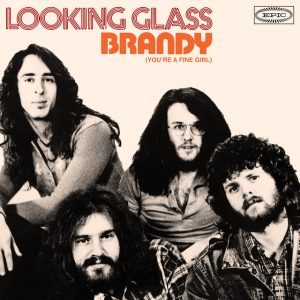 Close enough (like the pitches Brandon takes). Brandon works the deepest counts
Taking such close pitches
While the tension mounts
Ball four
Is his destiny
Unless he gets dinged first
Mets played
Miami, F-L-A
On a typical
Saturday
Brandon made it clear
They would prevail
By goin’ three-for-five
Observers say
“Brandon, you’re a fine Met
And you’ve been one since Sixteen
Now your bat,
Your defense,
Your smile —
They’re supreme!”
Yeah, Bassitt kept the Fish at bay
And Alonso’s homers doubled
Marte made some real nice plays
As the pen avoided trouble
Yet Nimmo’s amidst everything
When the order gets turned over
Brandon makes it happen every day!
In first
Where the Mets reside
Lotsa players fill us with lotsa pride
But we love this man
We will confide
You still can hear us say
You hear us say
“Brandon, you’re a fine Met
What a good Met you remain
Your speed
Your talent
Your hustle —
Win us games!”
Brandon
You’re a fine Met
NL All-Star you should be
Just keep on being Brandon —
They’ll all see!
by Jason Fry on 24 June 2022 11:40 pm I hate that the Miami Marlins exist, I doubly hate when the Mets have to play them, and I quadruply hate when the Mets have to play them in their Pachinko parlor-cum-fish tank-cum-mausoleum in south Florida.
I looked it up on Baseball Reference, and as I suspected, the Mets are 4-12,429 all time at Soilmaster Stadium in its various corporate aliases, with approximately 9,000 of those losses (the records are weirdly spotty here) coming in extra innings on 19-hoppers through the infield by anonymous Marlin utility players never to be thought of again, except of course when it’s 3 a.m. and you’re fuming about why a benevolent God would allow this shambling zombie franchise to exist. At that moment, one thinks about such utility players and their maliciousness at painful length.
Anyway, the Mets arrived in annoying Miami having played an annoying series in Houston, in which they lost both games and Jeff McNeil and Carlos Carrasco got hurt. Therein lies an irony — whenever the Mets are in Miami every injured player shows up in the dugout to mock us with the enigma of their being present but not actually available: Max Scherzer was front and center despite needing another rehab start, and various team notes indicated Jacob deGrom and Joey Lucchesi were present as well.
Oh, and the game started at 6:40 for some other annoying Miami reason, which I discovered when I turned it on at the regulation time and found Taijuan Walker pitching with a 1 on the scoreboard in his favor. I blame Jeffrey Loria, but then I usually do.
Walker seemed perpetually on the edge of disaster but actually pitched pretty well, which was fortunate because the Mets were up against the annoyingly capable Sandy Alcantara. Alcantara, though, was undone by a four-minute stretch of some of the wackiest baseball I’ve seen in some time.
It all transpired in the top of the sixth, after a gimpy Jazz Chisholm Jr. exited the game, leaving the sessile-looking Willians Astudillo at second. Tomas Nido reached on an infield single (weird in itself, but just wait), and Brandon Nimmo bunted for a hit. Starling Marte then hit a double-play ball, with Astudillo tagging Nimmo in the baseline and then throwing to first, where Marte was called out.
The back end of that apparent double play looked incorrect from the jump, and the Mets challenged the call — as well as the call on Nimmo, who’d been tagged by Astudillo’s glove while the ball was in his throwing hand. Nimmo made no attempt to get to second and was tagged out once more after the play, but Buck Showalter objected that the ump had incorrectly called Nimmo out, causing him to abandon the play. (Or something like that — it was a little peculiar.) The Mets won the double challenge — something I don’t believe I’ve seen before — and just like that, they had the bases loaded with nobody out instead of a runner on third with two out, while Don Mattingly stood with the umpires and argued half-heartedly before going back to having a staring contest with the void.
Alcantara, understandably somewhat perturbed, left a 3-1 slider in the middle of the plate for Francisco Lindor, who hammered it up the right-center gap and ushered in more slapstick. In rapid succession, Nimmo nearly collided with the second-base ump, who was inexplicably in his path; Marte nearly caught Nimmo between second and third; Joey Cora tried to wave in Nimmo but stop Marte and was nearly clocked himself as both runners steamed past him; Nimmo slid into home and was nearly stepped on by Marte, who missed home plate and had to scamper back to touch it.
All this wackiness gave the Mets a 5-2 lead, which it briefly seemed like they’d surrender, as Drew Smith walked in a run at the conclusion of an eventful appearance, handing the ball off to Adam Ottavino with the bases loaded. Ottavino wouldn’t be my choice for a situation with no margin for error control-wise, but he was sharp, getting Jesus Aguilar to hit a loud but harmless fly to center to steer the Mets through the seventh, then escaping the eighth on a Lindor/Luis Guillorme double play that ought to be preserved for posterity as the Platonic ideal of the form.
Edwin Diaz didn’t look particularly sharp, but there was Guillorme again, jamming his foot between Jon Berti‘s cleat and second base on a steal attempt with one out in the ninth. (Defensible with the slow-footed Astudillo at the plate, but you better make it.) The Mets won that challenge and a batter later Jorge Soler spanked a sharp grounder to Lindor’s backhand — not another domino in the chain of disaster, as has happened so often in this horrible place, but just the precursor for another nifty play by the Mets’ infield. That one sealed the victory.
No one should ever have to play the Marlins, least of all us, and we should never have to play this tacky parody of an organization in Miami, where everything is reliably terrible. But if one has to, you hope for a game like Friday night’s — one that confounds every instinct by somehow turning out OK.
by Greg Prince on 23 June 2022 8:58 am A Mets fan pulls into a gas station — gas prices, huh? The Mets are playing. They’ve just fallen behind at Minute Maid Park, 5-1, on Yordan Alvarez’s second home run of the game. The Mets fan missed the first one. He also missed Alex Bregman’s, which preceded Alvarez’s first in the first. It hasn’t been a bad afternoon to have been away from the game. It’s not a great moment to choose now to get gas, in the macro sense, but ya gotta do what ya gotta do.
The Mets fan turns off the radio and the engine. He fills up. He pays. And pays. And gets back in the car, turns on the radio and hears starting pitcher Carlos Carrasco, who’s given up those three home runs, is leaving the game — with the trainer.
Man, they’re not kidding about the high cost of filling up.
Later, the Mets fan learns Carrasco’s lower back tightened, which isn’t the worst thing a Mets fan can hear about a starting pitcher who had to exit alongside a trainer. There’s been worse in 2022. Also, the Mets, though down by four runs to a premium opponent, make a game of it. Every reliever who follows Carrasco — Yoan Lopez, Tommy Hunter, Joely Rodriguez and a cobwebbed Edwin Diaz — keeps the dangerous Astro attack on E. The Mets get to Houston starter Luis Garcia in his third loop around the lineup. It’s the sixth. The Mets fan has driven home, parked and is pinging between radio and television on a dreary Wednesday afternoon. Outside, it’s been drizzling and spritzing. Inside, it’s beginning to sound and look hopeful.
Brandon Nimmo walks, because that’s what Brandon Nimmo does. Starling Marte doubles Nimmo home. Francisco Lindor singles to move Marte to third. The Mets fan isn’t watching, but is listening. He wants to hear Marte score on that single. The ball Lindor hit didn’t land in the right spot for that, he is told. Oh well. Here comes Ryne Stanek to relieve Garcia. Here comes Pete Alonso. Pete’s the potential tying run at the plate. A lot of potential brewing.
Pete lifts a fly ball. It’s enough to score Marte. It’s 5-3. We’re cooking. Aren’t we? These Mets find a way to tie games and win games. It’s only the sixth. A Luis Guillorme double sends Lindor as far as third. A Mark Canha walk, on a three-two pitch, loads the bases. The moment is pregnant with possibility. And you can’t be just a little bit pregnant, right?
Perhaps metaphors, like Mets, won’t carry the day to term. Eduardo Escobar, whose slump paused the evening before for a solo home run, pops up. He also slams his bat to the ground. The bat-slam has more force than the popup. Then Dom Smith, no longer of Syracuse and with a double and run scored to his credit earlier, is the best hope to bust Stanek’s piñata (hey, how did another metaphor get in here?). The candy remains undisturbed as Smith strikes out.
Turns out the Astros have pretty good relief pitching, too. Having missed their golden bases-loaded chance in the sixth, the Mets don’t arrange any opportunities nearly as good versus Hector Neris in the seventh, Old Friend Rafael Montero (who’s come down with a case of Paul Sewald Syndrome, growing reliable in his AL West incarnation) in the eighth or Ryan Pressly in the ninth. There are a couple of dubious balls called strikes by Adam Hamari that went against the Mets, but Rodriguez got a borderline call like that versus Alvarez, so the Mets fan’s criticism of Hamari is selective and a bit insincere.
The Mets lose an aggravating game, 5-3. It’s not their only loss in the last month, but it’s the first one in weeks that’s felt like it coulda/shoulda been a win. The Mets have punctuated their Ws with “you’re gonna lose a third of the time” Ls, mostly. The Mets fan is reminded it sucks to lose a close one. The Mets fan reminds himself that even if the Braves win Wednesday night (and they will), they still maintain a significant barrier to entry atop the NL East; enough off days ahead to cushion the blow of whatever extra rest Carrasco might need (if, in fact, lower back tightness is all that’s ailing Cookie); a trip to Miami, where the Marlins don’t appear to be the Astros; and a general manager who probably has a plethora of phone numbers of other GMs to keep checking on available pitching. The Mets fan also has those encouraging reports out of Binghamton on Max Scherzer, but geez, be careful about bringing Max’s oblique back a minute too soon.
Filling up at the pump in 2022? Not much fun. The Mets in 2022? Not always a joyride.
National League Town? There, the current decade means a Met utilityman who’s busy redefining the genre on a daily basis. Groom your beard and listen in.
by Jason Fry on 22 June 2022 12:29 am I’ve heard it said that the second best thing one can do with an evening is watch your favorite baseball team lose a game. And that’s probably true.
But there’s watching your team lose a baseball game and there’s watching your team get its collective behind whooped, and Tuesday night was the latter. Trevor Williams was so-so and Chasen Shreve was bad and the best thing about the night was that it ended.
Well, actually that isn’t true. Before the game I predicted Pete Alonso would hit one into the Crawford boxes, which wasn’t exactly auditioning to be the new Nostradamus in terms of going out on a limb but was still satisfying to see come true. Luis Guillorme showed off some more moves that would make a ballerina turn pale with envy, an exhibition that is always welcome. Jose Siri connected for a home run that the Astros fan in a space helmet might have considering riding to orbit — not a welcome development but certainly a sight to see.
And it was baseball, filled with injury updates (Max Scherzer! In Binghamton!), dreams of the future (Francisco Alvarez has hit approximately 435 home runs in his last 10 games), talk of the past (Tal’s Hill and Carlos Beltran‘s adventures ascending it) and the other threads of which baseball’s warp and weft emerge. Those are things to savor … even when you get beat by six in Texas.
by Greg Prince on 20 June 2022 10:41 pm After defeating the Marlins on Monday afternoon, the Mets are 24-10 at home and 4-1 in games that end homestands. As if to express their affection for Citi Field at the end of this 5-2 homestand, they touched home six times en route to their 6-0 victory, each time crossing the plate like it meant something to them.
• Bases-loaded walk.
• Sacrifice fly.
• Wild pitch.
• Another sacrifice fly.
• Two-run single.
None of those runs was foretold. Each was earned (one was unearned, but you know what I mean). Batters got bruised. Runners took off. Patience and alertness were rewarded. Nobody sat back and waited for the wallop. The Mets are very much at home discerning every which way to score.
Mets pitchers were at home keeping the Marlins off the board, too. David Peterson, en route to joining Seth Lugo (and hamstring-tight Jeff McNeil) on paternity leave, celebrated Father’s Day a day late. Peterson was big daddy to the visitors, figuring out how to blank them despite scattering six hits and walking two in five-and-a-third innings. He was succeeded by Adam Ottavino, who unjammed what Peterson left him by producing a ground ball that became a 5-4-3 double play. Peterson benefited directly from one of those babies an inning earlier. Mets’ pitchers like their best friends.
As if Met defense could use the help — we’ll never turn down assistance — the club signed Ender Inciarte to a minor league contract. Inciarte now has a chance to become the Willie Harris of his day. Willie Harris, you’ll recall, took extra-base hits of all variety away from Met batters in the 2000s. Then he became a Met in 2011, not having the same impact for the Mets that he had against the Mets, but he was a pleasant enough veteran presence for a non-contending team. Inciarte used to rob us blind in the 2010s. Here’s Ender’s chance to make it up to us.
As precursors of opponents who do us in go, John Paciorek appears safe in his splendid isolation. On Sunday, Jerar Encarncacion broke into the majors with as Met-killing a debut as one could imagine: an outfield assist, a stolen base and, mostly, a game-turning grand slam. It occurred to me if he never played again, he’d join Paciorek, brother of much-later Met benchman Tom, from the last day of the 1963 season. The Mets played the Colt .45s to wind down their second season. John made his big league bow that day at Colt Stadium. Starting in right, Paciorek gathered three hits, walked twice, scored four runs and drove in three runs, dooming the sophomore Mets to their 111th loss (13-2) and whetting the appetites of Houston fans for 1964 and beyond. They had young Rusty Staub! They had young Joe Morgan! And they had young John Paciorek!
Except young John Paciorek never played in the majors again. A bad back sidelined the kid, and his one day of Met-killing inadvertently served as his career line. It’s a pretty good one: batting average of 1.000; on-base percentage of 1.000; and OPS of 2.000. Encarnacion of the Marlins deigned to follow up his debut by playing a second game. He neither reached base nor gunned anybody down. As the 45-24 Mets head to Houston on their forthcoming road trip, the legend of the one-and-done Colt .45 legend lives on unmatched.
When the Mets play their erstwhile National League expansionmates in matchup of first-place occupants in Houston, they will have Tommy Hunter ready to go as one-eighth of their formerly nine-man bullpen. Hunter returned to Met duty on Sunday after a detour to Tampa Bay in 2021 when, like Paciorek, he had to deal with back problems, but — no irony intended — he is back. Hunter didn’t pitch for the Rays while he was gone, meaning we can categorize good ol’ Tommy not so much as a Recidivist Met (someone who played for the Mets; played for somebody else; then returned to play for the Mets some more) but as a Met Once Removed (someone who played for the Mets; left for another organization without logging any MLB action while away; then got his Met on again in an active player sense, thus precluding the necessity to include Chris Schwinden and his umpteen waiver claims from 2012). As defense attorney Jackie Chiles told his clients in the Seinfeld finale, “You people have a little pet name for everybody.”
Here are our known Mets Once Removed:
• Terry Leach
An intriguing pitcher in 1981-1982. Capped his initial stay with a ten-inning one-hitter (a Met first and thus far only). Spent a year with the Tides in 1983 before being traded to the Cubs. Bounced to the Braves — the Richmond Braves. Then, after another helping of Tidewater cooking, recalled to the Mets in May of 1985. He’d be up and down until sticking in ’87, where he merely saved the summer (11-1 starting and relieving). Lost the sole sidearming slot to Jeff Innis in 1989. Comes up in FAFIF discourse periodically, inevitably eliciting warm recollections.
• Mike Birkbeck
Never comes up in our discourse, but here he is. The former Brewer righty started one end of a doubleheader as 1992 got worse and worse. He didn’t win. Then he disappeared from our view, signing with the Braves and taking the same tour of Richmond Leach knew so well. Birkbeck rematerialized in Flushing during the first half of 1995 season. Mike gave Dallas Green four solid starts, then got while the getting was good, clearing out his locker in advance of the Generation K beachhead, opting to take his talents to Yokohama for better money and short-term security. “The Mets have some wonderful pitching down below and I was basically a fifth starter,” Birkbeck reflected as he packed his bags. “Whenever a move is made, that is the position that is impacted.” Mike’s roster spot was taken by rookie Bill Pulsipher, a future Recidivist Met, though in June of 1995, we wouldn’t have believed Pulse would be anything but a Met mainstay. Birkbeck pitched in Japan through 1996.
• Pedro Feliciano
Y’all should remember Pedro very well, though you might not remember how often he found himself a Met removed. Claimed off waivers by the Tigers in the offseason following the first leg of his Met tenure in 2002, the Tigers lost interest well before the next Spring dawned. The Mets snapped him up anew in the first week of the 2003 season and he’d be warming up to face a lefty again by late May. Pedro followed the Birkbeck trail to the Far East after 2004, but one year away from the Mets and North America was all Feliciano wanted. He rejoined our ranks with the divisional championship season of 2006 already underway in April and hung around through 2010. Boy did he hang. Pedro pitched in more games than any Met ever did in any season, and he did it over and over and over, peaking with 90 games pitched. He had enough strength left in his wing to sign a free agent deal with the Yankees, but not enough to ever pitch for them, thus winning our admiration as someone who took their money for what amounted to nothing and ran back to us in 2013. Healed enough to get back to work, Pedro gave us 25 more appearances before moving on…but never pitching for another MLB club. Despite affiliations between 1995 and 2015 with the Dodgers, the Reds, the Tigers, the Yankees, the Cardinals and the Cubs (not to mention the Fukuoka Daiei Hawks), every one of Feliciano’s 484 big league outings was as a New York Met. Pedro Feliciano will never be removed from our hearts.
• P.J. Conlon
The Irish-born, California-raised southpaw provided rookie manager Mickey Callaway (remember him?) two spot starts in May of 2018, only to find himself poached off waivers by the Dodgers in June. Conlon, in the Met system since 2015, tweeted a heartfelt farewell to the only organization he had known before setting off for the West Coast. The Dodgers waived P.J. four days after claiming him, so the Mets grabbed him back, leading to a second tweet effusively thanking the Dodgers for all they’d done for him in the course of fewer than a hundred hours. Actually, he retweeted the exact message he’d left the Mets, but with “Mets” crossed out and “Dodgers” filled in. As social media bits go, it was pretty amusing. P.J. had one more relief stint ahead of him as a Met, the main purpose of which was to ensure him Met Once Removed status in this feature.
• Juan Lagares
Juan Lagares, a medium-sized fixture in the Mets’ narrative from 2013 to 2019, slipped quietly into the past tense when he signed with the Padres on February 10, 2020. Then came the pandemic that touched down in America a month later, upending whatever was expected of the baseball season ahead. When MLB’s health/marketing experts that July judged COVID was not enough of a threat to prevent a shorter schedule from taking place in front of literally nobody, the Padres decided they could do without Lagares and cut him loose. The Mets remade acquaintances with Juan and brought him back for two cameos’ worth of pinch-running and defensive-replacing before letting him leave again. It was a pretty Conlonesque departure for a former Gold Glove winner. We just saw Lagares continuing his career in Anaheim. Good for him.
And now, Tommy Hunter, who has followed his four scoreless 2021 outings and 1-for-1 batting performance as a Met with thus far one scoreless outing as a Met in 2022, not letting his gameless-played interlude with Tampa Bay get in the way of feeling at home with us. Also looking happy to be a Met again, per a shot of the dugout on SNY as Monday’s win over the Marlins finished up, was Dom Smith, returned from Syracuse to take the roster spot that by Manfredian fiat can no longer be reserved for a ninth pitcher. (I’m old enough to remember when a seven-man bullpen seemed extravagant.) Dom fizzled mightily in the first part of 2022. The last time the Mets were in Houston, Smith was in his rookie feeling-out process as a potential hotshot rookie. It was the waning weekend of summer 2017, days when Amed Rosario and Dom represented our future.
Dom hit a home run in that series at Minute Maid Park, a bad weekend for Houston in the real-world sense (Hurricane Harvey had just come through), but a sweep for the Astros, who were about to make a whole lot of world championship clatter. That’s another story. Our story, the one we thought was unfolding in future-tense, had Smith up to four homers since his promotion on August 11, though with a batting average straddling .200. Dom wouldn’t really stamp himself a major leaguer to stay until 2019, and, despite some mighty success along the way, we’ve seen how impermanent such a status can be. He was batting .186 with zero power when demoted about three weeks ago. It feels more like three years. Here’s hoping he makes up for lost time on the road.
The Mets are 21-14 away from Citi Field in 2022. They seem pretty comfortable everywhere.
by Greg Prince on 19 June 2022 9:52 pm “Could you describe the assailant, please?”
“I don’t know. He was a Marlin.”
“A Marlin? Like the fish?”
“No, the baseball team.”
“I’m sorry, I’m not following.”
“Marlins. Miami Marlins.”
“I’m not familiar with them.”
“Scroll down the National League East standings.”
“Hmm…oh, there. You’re right. Marlins. Sorry, I never heard of them.”
“Most people haven’t.”
“OK, so the assailant was a Marlin?”
“I already said that.”
“I need you to be more specific. There seem to be 26 Marlins. Was it this Marlin?”
“No, that’s Miguel Rojas.”
“This one?”
“No, that’s Jazz Chisolm.”
“Cool name. Well, what about this one?”
“Sandy Alcantra? He helped, but he’s not the one who did the real damage.”
“Wait, we just got this sketch into the station house. Is this who came after you?”
“That’s him! That’s…I can’t remember his name. I’d never heard it before today.”
“It looks like Jar Jar something.”
“Jerar?”
“Jerar…Encarnacion?”
“Yes! That’s it! You should arrest him before he does any more damage!”
“Sir, we’re just here to collect information. Can you please describe what this Jerar Encarnacion allegedly did on Sunday?”
“First off, he was armed and extremely dangerous.”
“We’ll make that determination.”
“I’m telling you, he had a rifle.”
“In this country, that’s not always a crime.”
“He had a rifle for an arm.”
“Well, you know how strong the NRA is when it comes to lobbying.”
“There was a ball in the right field corner, a sure double, yet the next thing you now, this Jerar Encarnacion threw it to second base. Cut down Nido in his prime.”
“It’s always the backup catchers who take it the shinguards. What a shame.”
“I thought it was just one of those things, you know, kids messing around. This time of year, you hear firecrackers going off. But I’m telling you, it was an absolute cannon he fired.”
“All right, so he threw Tomás Nido out trying to stretch a single into a double. That’s not exactly a crime. No offense, but catchers aren’t known for their speed.”
“I wouldn’t be here if it was just that. It’s what he did a few innings later.”
“The incident in the seventh?”
“Yeah, that’s it.”
“As calmly as you can, tell me what happened.”
“We’re enjoying a beautiful afternoon in the right field stands, Chris Bassitt is going along swimmingly.”
“Bassitt — like a Marlin?”
“I said Bassitt, not Bass.”
“Sorry, I don’t follow baseball all that much.”
“So we’re sitting there, and it’s Bassitt having a great game, as good as Alcantra…”
“The aider and abetter of this Jerar character?”
“Yeah. Chris is rolling. Then he gets into a little trouble. A single. Another single. Then a walk. Ya gotta understand, Bassitt doesn’t normally walk guys.”
“Oh those bases on balls. We try to warn the public walks are a gateway drug to runs, but do they listen?”
“Next thing we know, it’s goodbye Bassitt, hello Lugo.”
“Lugo — name rings a bell.”
“Sure. Seth Lugo. Dependable relief pitcher most games. But here comes this Jerar Encarnacion, and all at once, it’s the end of Seth Lugo.”
“It’s always the reliever who gets it in the late innings.”
“Ya gotta understand. Seth has his bad days, sure, but he’s a good pitcher. This wouldn’t have happened if not for…”
“If not for…?”
“Jerar Encarnacion.”
“That’s a pretty substantial charge.”
“Jerar Encarnacion opened a can of whoopass on Seth Lugo.”
“Did he open it with the arm that’s a rifle?”
“Maybe it was more like a whuppin’ stick. He used it to…”
“To what?”
“He used it to…”
“I can’t help you unless you tell me.”
“Jerar Encarnacion hit a grand slam off Seth Lugo.”
“Oh, dear god.”
“It was brutal.”
“I imagine so.”
“The worst part is none of us saw this coming. We didn’t know who Jerar Encarnacion was when the game began. It just didn’t make any sense. It was like those dark gray and blue caps they made both teams wear.”
“Sir, that’s more a matter for the fashion police.”
“I’m not talking about the caps! I’m talking about a Met-killer! Jerar Encarnacion is out there committing one horrible act after another! It wasn’t enough that he gunned down Tomás Nido or absolutely murdered a Seth Lugo sinker. He even had the audacity after all that to steal a base.”
“So you wish to add robbery to the charges?”
“In broad daylight, no less!”
“Listen, I’ve got the name, I’ve got your description, I understand your concern.”
“Well, is there anything you can do about it? It’s a terrible feeling knowing Jerar Encarnacion is just out there and can do something like this to the Mets with absolutely no notice and he could be out there again tomorrow afternoon.”
“Tomorrow?”
“There’s a matinee. The Marlins and the Mets. The Marlins are bad enough. But now they have another Met-killer to go with De La Cruz and Berti and god knows who.”
“Hold up — there’s another game tomorrow?”
“There’s always another game tomorrow.”
“And you’re concerned the Mets are in mortal danger?”
“Actually, they’re in first place by a bunch of games despite losing on Sunday and they’re way ahead of the Marlins, who are almost never any good.”
“Then what are you worried about?”
“You really don’t follow baseball, do you?”
|
|






