The blog for Mets fans
who like to read
ABOUT US

Faith and Fear in Flushing made its debut on Feb. 16, 2005, the brainchild of two longtime friends and lifelong Met fans.
Greg Prince discovered the Mets when he was 6, during the magical summer of 1969. He is a Long Island-based writer, editor and communications consultant. Contact him here.
Jason Fry is a Brooklyn writer whose first memories include his mom leaping up and down cheering for Rusty Staub. Check out his other writing here.
Got something to say? Leave a comment, or email us at faithandfear@gmail.com. (Sorry, but we have no interest in ads, sponsored content or guest posts.)
Need our RSS feed? It's here.
Visit our Facebook page, or drop by the personal pages for Greg and Jason.
Or follow us on Twitter: Here's Greg, and here's Jason.
|
by Greg Prince on 29 July 2025 11:45 am Every time we come to Southern California, we are absolutely the Clampetts.
—President Jed Bartlet
Albert Hammond offered a rather broad assertion in 1972 when he informed the nation’s pop radio listening audience that it never rains in Southern California. Seems it rarely rains in Southern California. On May 12, 1998, the Mets visited San Diego and were, in fact, rained out. The Padres had gone fifteen years between such postponements, but the Mets had been rained out seven times already that young season. Something had to give. When informed his club was the first since 1983 to have the tarp pulled over its plans at the recently rechristened, suddenly soaked Qualcomm Stadium — always the Murph to us — Mets manager Bobby Valentine dryly replied, “Well, I’m glad we’re here.”
 More figuratively than literally. Back in New York, I’ve learned to dread Met trips to San Diego because I always expect disaster to unfold late. Maybe “always” should be avoided the way Hammond might have rethought “never” in the face of meteorological aberrations (his song’s No. 5 peak on Billboard notwithstanding), but I’ve seen enough.
• Thirty-two walkoff losses since 1970, the year after the inception of Mets @ Padres interactions.
• Seventeen walkoff losses in the past thirty years we’ve visited the southernmost of MLB’s Southern California outposts.
• Seven walkoff losses at Petco Park before the aesthetically pleasing facility turned eleven.
• And, after a decade of slipping out of town without Met reality meeting my perception, in August of 2024…wham-o!
Jackson Merrill took Edwin Diaz deep to break our hearts on a Sunday afternoon and push the Sisyphean Mets straight downhill, boulder tumbling alongside and perhaps over them. Of course the 2024 Mets, propelled in part by the musical stylings of the indefatigable Candelita, were a pick themselves up, dust themselves off, and start all over again enterprise. Jackson Merrill slaying Edwin Diaz didn’t kill the Mets. At the time, however, I didn’t suspect it would make them stronger.
It’s almost a year later. The Mets entered the East Village section of San Diego feeling strong. The Mets had won seven in a row, four at Citi Field, three at Oracle Park. Neither of those venues is Petco Park, so forgive a weary Mets fan who knew he wasn’t going to make it through nine innings Monday night for bracing groggily for the worst. The single walkoff loss the Mets had experienced in the shadow of the Western Metal Supply Co. building since 2014, the one last year, seemed destined to double.
It did. In the moment, it was a debacle. In the long term, it’s not necessarily a disaster, but they’re all disasters as they’re happening. The seven consecutive wins that served as prelude to this disaster of a debacle/debacle of a disaster figure to cushion the aftereffects of Monday night’s fall. We’re still in first place. We’re still a game-and-a-half up on the Phillies. We’re still in as good a shape as possible despite the Padres inflicting as acute a case of the Mondays on the Mets as one could imagine.
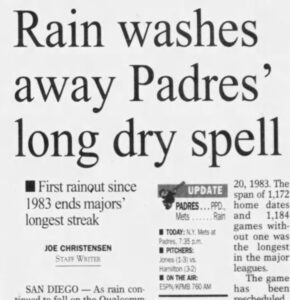 There are dry spells, there are debacles, and there are disasters. Somewhere in there, there are the Padres eventually defeating the Mets in their last at-bat. Mark Vientos hit a grand slam. That’s the good news. He hit a grand slam after an intentional walk was arranged so Vientos could bat with the bases loaded. That was the better news, harking back to the “I took it personal” homer he hit after the Dodgers chose to pitch to him rather than Francisco Lindor in 2024’s NLCS. The bad news is that for the third straight year — and the twentieth time in franchise history — a Met hit a grand slam in a losing cause. One of those hard-luck slammers, in 2009, was Fernando Tatis, Sr., then known as simply Fernando Tatis. The cause was winning when Mark unjuiced those sacks. He’d catapulted the Mets ahead, 5-1. This was after Fernando Tatis, Jr., had robbed Mark of an earlier home run (son of a Met!), and after Juan Soto was robbed of a legitimate ball-strike count by Emil Jimenez. Soto all but dared Jimenez to eject him. Carlos Mendoza stepped between his star right fielder and the judgment-impaired umpire and took the heave-ho bullet instead.
Going to the bottom of the fifth, Vientnos’s granny should have assured us everything was going to be just fine, that we could drift off to sleep without the Padres lurking under the bed coming out to haunt us. Silly me, however, remained awake. I saw the bottom of the fifth. Before the bottom of the fifth concluded, I thought I was seeing the bottom of the sixth from Opening Day 1997 at Qualcomm, just after San Diego forgot how to name its ballpark properly. That was the afternoon Pete Harnisch nursed a 4-0 lead until it died an agonizing death. Harnisch and three relievers combined to give up eleven runs before recording three outs. The season turned out OK and then some, but it didn’t start well.
The fifth inning Monday night disintegrated on contact. Before the game started, SNY’s cameras spotted Frankie Montas in something of a prayer circle with his family, our starter at the railing, his kin in the stands. It was a very touching tableau, and maybe the congregating with loved ones helped Frankie on the mound. He withstood trouble in the second and third pretty well and put down the Pads on seven pitches in the fourth. But in the fifth, “where’s your God now?” felt a reasonable question to wonder.
Tatis doubled off Brett Baty’s glove to lead off. Brett Baty was playing second base at the time. Balls of the second baseman’s glove (Brett dove) don’t usually become doubles, but Tatis had accomplished a bank shot, and the kind of inning the fifth was about to be was more than hinted at.
Luis Arraez, who would have punished Mets pitching before July 28 this year if only he’d batted against it, lofted one of the oddest home runs you’re ever going to see. It was basically a pop fly down the right field line that you never doubted was going to stay fair and go out. Luis Arraez has Luis Arraez power and it comes out in the funkiest ways. It also trims Met leads in half.
In the manager’s absence, Mendoza’s brain trust maintained its faith in Frankie for three more batters. Their faith was not rewarded. Merrill didn’t damage Montas, but Manny Machado (single) and Xander Bogaerts (double) sure did. John Gibbons and Jeremy Hefner said goodbye Frankie, hello Huascar. Mr. Brazoban was an instant faith-rewarder, getting Gavin Sheets to foul out, but the part where a pitcher covers first base flummoxed the reliever on duty. Jake Cronenworth lashed a ball up the first base line. Pete Alonso corralled it (Pete’s in there for his defense), but Huascar chose to watch the play develop before opting to participate in it. Cronenworth beat Brazoban to the bag, allowing Machado to score the run to make it Mets 5 Padres 4. Instead of there being three outs, two hits from the next two batters made it Padres 6 Mets 5. A wild pitch and a walk loaded the bases for Arraez. Yeah, this was going to be April 1, 1997, reincarnated, with Huascar Brazoban as Yorkis Perez, Toby Borland, and Barry Manuel all rolled into one, except Arraez, the Padre contact machine who regularly evokes comparisons to Tony Gwynn, somehow made the third out of the inning.
We were losing by only one run, but the vibe was unmistakably off. And my eyes were soon unmistakably closed, not to open again until I saw a graphic on the screen that announced a final of Padres 7 Mets 6. By then, I was trying to remember if that was the score when I nodded off. It was not. Apparently, Ronny Mauricio homered to tie the game in the top of the ninth, which would have been great to have seen live, then Gregory Soto received his full Met reliever initiation in the bottom of the ninth, which I have to say I didn’t mind missing. In the middle of the rally that permitted the Padres to walk off the Mets for the thirty-second time ever, our newest Soto practically threw a ball away in attempting a forceout at second. The hitter? Candelita himself, Jose Iglesias, last season’s master of the vibe. Jose was with us then. The spirit of OMG was with us then. Now, regardless of the words the Montas family might have shared pregame, forces were conspiring against us. Gregory got two outs, but gave up the game-winning single to Elias Diaz.
It may rarely rain in San Diego, but girl, don’t they warn ya, it pours. Man, it pours.
by Jason Fry on 28 July 2025 8:40 am The Mets fell behind in the fifth inning Sunday night, as Matt Chapman launched a second home run off Kodai Senga. That made the score 3-2 Giants with 12 outs left for making up the deficit.
Funny what a six-game winning streak will do for you. “We’ll get ’em,” I assured my mother, and to my mild surprise I realized that I meant it.
And then the Mets proceeded to go out and get ’em.
It wasn’t as simple as me walking in my mom’s door, uttering this declaration and the Mets making it so (I’m not that good), but it was pretty close.
Ronny Mauricio led off the top of the seventh against San Francisco’s Randy Rodriguez, whose 0.82 ERA didn’t necessarily suggest confidence, to say nothing of hubris. Rodriguez’s second pitch was a slider in on Mauricio’s hands — not a bad pitch by any stretch. Mauricio showed off his uncanny bat speed by getting around on it and his easy power carried it out over the wall and into McCovey Cove, where I was glad to see it was scooped up by a kayaker and not the hedge-fund guy zooming around on some kind of Jetsons mini-hydrofoil. (If said guy is actually a tinkerer who heads a non-profit for removing microplastic from the ocean, well, my apologies.)
Mauricio may be wearing another team’s uniform by the weekend, and that might turn out to be a good deal for the Mets. But it might also be one we rue as bitterly as, say, Javy Baez for Pete Crow-Armstrong. (Ouch!) Mauricio has turned heads this year, mine most definitely included. The bat speed and power are rare gifts, but he’s also shored up his defense and cut down on the chasing that many thought would keep him from being a front-line MLB player. He finished Sunday 4-for-4, with a pair of doubles and a single in addition to the homer, and if you’ll forgive a bit of sabermetrics jargon, that shit will work.
Mauricio’s transformation of a baseball into a submersible tied the game. An understandably piqued Rodriguez then used his deadly slider to erase Brandon Nimmo and Francisco Lindor, but left a fastball in the middle of the plate to Juan Soto, who clubbed it into the left-field stands to give the Mets the lead.
Newcomer Gregory Soto looked good in his Mets debut, showing no nerves as Carlos Mendoza started constructing the new bridge to Edwin Diaz. Reed Garrett and Brooks Raley got the Mets to the ninth, with back-to-back Mauricio-Nimmo doubles offering an insurance run.
Which turned out to be a good idea, as Diaz was shaky for a second straight day, loading the bases with one out on walks sandwiched around an HBP. The tying run was a single away, with a woeful walkoff too close for comfort, and Willy Adames and Chapman due up.
Diaz, as he often does, seemed to awaken to his peril and snap into focus. He retired Adames on three fastballs up in the zone, all looking and also all strikes. He then stayed with the fastball and the upper bounds of the strike zone against Chapman, putting the fourth pitch of the AB up on Chapman’s hands. Chapman committed, couldn’t get around on the pitch, and the Mets had won their seventh straight and completed a three-game sweep.*
Had it all the way, right? At least I’d thought so. It’s nice to be right on occasion.
* Tip of the cap to the woman in Mets garb spotted in the stands who’d brought along a full-size broom as a celebration accessory. Beyond the fear of waving a red flag in the faces of the baseball gods, I don’t think I’d want to be the guy lugging around a large broom after my team failed to sweep. Or even after they succeeded, come to think of it.
by Jason Fry on 27 July 2025 10:58 am On the surface, Pete Alonso and Rafael Devers aren’t that different: Huge dudes who can hit the ball a country mile and whose huge dude-ism means they aren’t particularly mobile. As has been the case since time immemorial, that means they play first base — which is where the similarities start to break down.
Alonso isn’t a great first baseman by any stretch, and it’s damning with faint praise to note that the Polar Bear has worked his furry white behind off to become at best an average one. But the hard work is real, Alonso takes enormous pride in playing the position, and he seems to genuinely enjoy it. Alonso’s range is suspect (though he has at least mostly stopped diving for balls better left to the second baseman) and his throws can go awry, but he’s become genuinely adept at saving his fellow infielders by scooping errand throws out of the dirt, a part of playing first base that’s always struck me as both difficult and potentially perilous. Saturday continued a two-game stretch in which Alonso made play after play when the Mets desperately needed him; on Friday night Clay Holmes was the beneficiary, while on Saturday it was David Peterson.
Devers, on the other hand, is at first base as the culmination of a series of dissatisfactions. He wants to play third, with the only problem being that he pretty much can’t. Which led to the Red Sox moving him to designated hitter in favor of Alex Bregman, then asking him to play first after an injury to Triston Casas.
Devers, understandably annoyed at being asked to play Position No. 3 after not wanting to play Position No. 2, refused and soon found himself getting paychecks from the San Francisco Giants … and now playing first base. As has also been the case since time immemorial, Devers’ attempts to elude fate have only accelerated its arrival.
Saturday night was Devers’ third-ever game at first, and it isn’t going well. To his credit, he did make a nifty scoop in the top of the fourth, which completed a double play and kept the Mets off the scoreboard. But mostly he looked like he was fielding grenades over there — blink your eyes and a ball was on the ground somewhere near Devers’ feet, with a whole bunch of large man in that ball’s general vicinity scrambling for a Plan B.
For a while it looked like the Giants might survive Devers’ misadventures: In the fourth they clawed a lone run out of Peterson, who didn’t look particularly sharp but offered a clinic in bending and not breaking. Unlike his counterpart Robbie Ray, Peterson was helped out by his fielders, with Brett Baty, Francisco Lindor and Alonso all making key defensive plays.
In the sixth inning the bill came due for Devers and the Giants: With one out and runners on first and second, Baty smacked a grounder to first. Devers made the start of a nifty play, turning to throw to second and start a double play. But the finish was less than nifty: The ball popped out of his hand before he could load up for the throw. Devers recovered and stepped on first to retire Baty, but that gave the Mets an extra out, and they capitalized.
They capitalized when Mark Vientos lashed a ball down the left-field line. Vientos had struck out with the bases loaded and nobody out in the fourth, the first fizzle of a fallen inning, and has had a miserable year so far, looking nothing like the breakout star who helped key the Mets’ playoff run last year and played so remarkably in the postseason. But hey, any day can be the first day of the rest of your life, right? Vientos delivered, turning a 1-0 Mets deficit into a 2-1 Mets lead and ending a trying day for Ray.
The teams trundled along scorelessly after that, with Reed Garrett and Ryne Stanek holding the Giants at bay and a bevy of Giants relievers including Old Friend Joey Lucchesi keeping the Mets on the leash. Edwin Diaz was handed the ball to secure the save, and this is the place where our friends in the Giants fanbase should say “well anyway” and go read something else.
Diaz didn’t have it. He threw got two strikes on Casey Schmitt via sliders off the plate, but left a third one in the middle of the strike zone, which Schmitt smashed on a line to left field — right into Baty’s glove.
Stubbornly throwing nothing but sliders, Diaz left another one in the middle of the plate for Jung Hoo Lee, who crushed it to right. It hit that multi-angled nightmare of a brick wall, two or three feet shy of being a game-tying homer, and Lee cruised into second looking faintly disappointed.
Diaz belatedly opted for the fastball, using it to set Mike Yastrzemski up for a bait slider and a strikeout. That left the Giants’ hopes up to Patrick Bailey, who ripped another errant slider over first base, ticketed for the corner. It would score Lee and send Bailey to second, with God only knows what else tacked onto the play given the uncertain geography of that right-field corner.
Except Alonso leapt into the air, various limbs flailing for purchase, and caught the ball. He came down, kissed the possibly still smoking ball, Diaz exhaled about 100 cubic feet of dismay, and the Mets had somehow secured their sixth straight win. Reviewing the key moments this morning I’m still not sure how they did it, but hey … you could look it up.
by Greg Prince on 26 July 2025 11:40 am Friday night’s was the kind of game you were glad to stay awake for and through. The Mets jumped out to an early lead in San Francisco, built a substantial lead as things reached their midpoint, and tacked on late. Late is pervasive where West Coast start times are concerned. The first inning was late. The ninth inning was technically morning. But all of the innings registered collectively as positive, as the Mets won their fifth consecutive game, routing the Giants, 8-1.
So, the big, bad Mets we recall from slices and chunks of April and May and the first half of June are back, right? Right?
Don’t all assent at once, just consider…
• They’re in the midst of a legitimate winning streak.
• They lead their division.
• Their leading man, Francisco Lindor, is acting as if his bat had never fallen into an abyss.
• Their long-running Dean, Brandon Nimmo, is spry as a sophomore.
• Their quintet of kids — Masters Acuña, Alvarez, Baty, Mauricio, and Vientos — are together on the roster for the first time ever, each lately contributing a little here, a little there, none making us wholly regretful of his presence.
• Pete Alonso is playing defense.
• Juan Soto is driving balls up the middle.
• Tyrone Taylor and Jeff McNeil are regularly tracking such orbs down.
• Clay Holmes is gutting out five effective if not efficient innings, which is OK, because we have Rapidly Recidivized Rico Garcia back, following the ten minutes when he’d inexplicably wandered away from the organization, and Rico will have help when lefty Gregory Soto arrives from Baltimore.
This Soto, poised to become the first Met ever to go by Gregory (my mother, who named her only son after Gregory Peck, would have appreciated that), figures to enhance a deepening bullpen, provided he doesn’t implode more than once or twice, as all bullpen acquirees do as a rite of passage…and all Met relievers do on occasion.
The Mets have occasionally looked lost. If you judge “lost” as their default mode, they’ve provided ample samples to support your conviction. But they’ve also, on multiple occasions, looked like they’re not going to be beaten in a given game or string of them. That’s the appearance they put forth in their sweep of the Angels and at the beginning of their series against the Giants. The Giants are a contender. They threw an ace at the Mets in Logan Webb. The Mets threw him right back, and stole his lunch money in the process (I’m assuming Logan Webb keeps his lunch money at second base). Just one game. Just five games. Just sixteen games over .500. Just a half-game ahead of the Phillies. It’s at least as compelling as the part of the season where they slipped and slid and unnerved us plenty.
In addition to an assortment of outfits like the Giants — 2025 strivers scrapping to emerge from a Wild Card fray and play another day or more come October — Major League Baseball features a top tier of teams that have eluded wire-to-wire perfection while intermittently making cases for themselves as genuine championship threats. Toronto. Detroit. Houston. Milwaukee. Chicago in the form of the Cubs. L.A., as in the Dodgers. Philadelphia, phooey. That other New York assemblage, the one implicitly represented by the giraffe that inevitably stumbles in Citi Field’s not choreographed in the slightest Borough Mascot Race. Ours is one of those top teams, too. Dragged by downs that detract from the ups. Elevated by ups that ought to overshadow the downs but don’t always. We’re all almost great. We’ve all got something preventing us from indisputable excellence. Time awaits to tell all our tales. Only one will be repeated warmly and widely for the ages.
Every really good team may be the equivalent of Mike Piazza when we first got him or Juan Soto now that we have him. Piazza and Soto were ALWAYS great in highlight packages, and, according to our clearheaded perspective, ALWAYS killed us. Then they became Mets and we saw double plays grounded into and pop flies that ended rallies and the stuff of mere mortals. Great? If he’s so great, why isn’t he batting a thousand like he did before he became a Met? THIS IS WHY WE CAN’T HAVE NICE THINGS!!! Conversely, we experienced the entirety of David Wright, which is to say the groundouts and strikeouts that didn’t make the montages last weekend, let alone the uninterrupted images of excellence that probably haunted fans of our opponents the way Piazza pre-1998 and Soto pre-2025 haunted us, except who the hell wanted to talk to fans of our opponents to find out what they thought about anything? We lived with David every day of his career, so we might have been skewed from believing he was predominantly phenomenal. No man is a hero to his valet, no idol doesn’t go 0-for-4 while leaving eight men on.
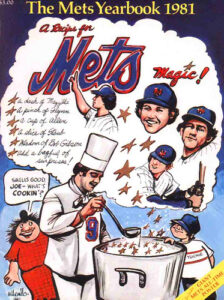 Few reasons to stew right now. There’s good in a season. There’s bad in a season. As many times as we’re repeatedly reminded “you’re never as good/bad as you look when you’re winning/losing,” the blend remains eternally perplexing. Yet when you’ve got as many ingredients for good as these Mets do, and they’re cooking together delectably, maybe try to enjoy a hearty spoonful before deciding in advance that the next taste will be a little off.
by Greg Prince on 23 July 2025 6:29 pm “Wanna watch the Mets play the Angels?”
“What’s gonna be in it?”
“Mike Trout.”
“Didn’t he used to be great?”
“A great is a great. Wanna watch?”
“What else is gonna be in it?”
“Travis d’Arnaud.”
“Doesn’t he always kill us?”
“Not necessarily. Wanna watch?”
“What else is gonna be in it?”
“A bullpen game.”
“One of those things with no starters? Don’t those suck?”
“They can, but sometimes they’re OK if there’s a real starter on the right side. Wanna watch?”
“What else is gonna be in it?”
“Balls being called strikes at a critical juncture.”
“Isn’t that terrible umpiring?”
“Probably, but perspective matters here. Wanna watch?”
“What else is gonna be in it?”
“A leadoff homer.”
“Won’t the Mets be behind if there’s a leadoff homer?”
“There are leadoff homers and then there are homers that lead off the home team’s first inning, hint, hint. Wanna watch?”
“What else is gonna be in it?”
“Francisco Lindor.”
“The guy who hasn’t had a base hit in ages?”
“Slumps end, hint, hint, hint. Wanna watch?”
“What else is gonna be in it?”
“Pete Alonso.”
“The slugger who hasn’t hit a home run in ages?”
“Like I said, slumps END, sometimes resoundingly. Wanna watch?
“Gee, I dunno. Can you promise me I’ll be happy if I do?”
“I can promise you you’ll be sorry if you don’t.”
“OK, let’s watch.”
“Too late. You missed it because you asked too many questions.”
“What happened?”
“Read between the lines.”
“What does that mean?”
“Again, with the questions.”
by Jason Fry on 23 July 2025 2:04 am I decided it was time to reintroduce myself to my baseball team.
The Mets entered the All-Star break by losing an annoying game to the Royals, which isn’t exactly a new occurrence in 2025. I didn’t bother with the ASG beyond shrugging at the swing-off, and was relieved to have a few days’ break from this maddening Mets squad, which is seemingly hell-bent on being less than the sum of its parts.
Then a few days turned into a few more. When the schedule resumed I was in Atlanta at a sci-fi convention; I registered that the Mets were losing to the Reds, not doing anything particularly well in the process, and hearing boos from the fans. I wasn’t sad to miss that either. (I did regret not seeing David Wright going into the team Hall of Fame, of course, but that’s something I can catch up with at my leisure.)
The Mets salvaged the final game against the Reds, to my mild surprise given what had come before; I was on a plane without Wi-Fi when they commenced hostilities against the Angels on Monday night. Once the plane landed, Howie Rose caught me up in a hurry: They’d gone down 4-0, clawed back to 4-2, but seemed determine to dig the hole deeper.
More of the same; I groused about their suckiness on Bluesky as I waited for a Lyft to take me home.
But I kept an earbud in, and by the time I got home the Mets had a genuine threat going — one they cashed in with a little help from the hapless Angels. (OK, maybe a lot of help from the hapless Angels.) Edwin Diaz started off the ninth by missing to his arm side, but quickly corrected the issue and punched out three Angels, ending the game by freezing Taylor Ward on a perfect slider a pitch after nearly decapitating him with a fastball, which was honestly kind of mean.
I was mollified, and maybe even felt a little bad — my team had been annoying me, I’d lashed out at them, and they’d righted the ship. So on Tuesday, when I saw it was a gorgeous summer day blissfully free of the humidity that’s gripped the city of late, I had an idea: Let’s go see the Mets.
I mean, why not? Isn’t that the whole point of living near the team you love? Why waste a picture-perfect night sitting on the couch?
Emily liked my thinking, so I secured two StubHub tickets and met her at the apple.
Tuesday’s game began strangely, with a flurry of odd plays. Juan Soto threw out Nolan Schanuel at the plate, taking an RBI away from Mike Trout. Frankie Montas ended the first by fielding a ball off his body. Yoan Moncada hit a screaming line drive that Pete Alonso leapt and speared; Alonso saw a long drive to center tracked down by Jo Adell. There were bleeders up the line and parachutes over the infield and plenty of frustration for Montas.
Kyle Hendricks, meanwhile, took a 2-0 lead into the fifth, having surrendered nothing except a Mark Vientos single that should have been caught. The Mets were being peaceable at the plate again, with Francisco Lindor‘s struggles particularly glaring, and the big boisterous crowd at Citi Field was getting restless.
And then everything changed. Brett Baty lashed a double to center, bringing up Francisco Alvarez, and I nudged Emily and made the circle in the air sign: Alvarez was going deep.
That didn’t look like the savviest prediction when Alvarez started off the AB by taking a huge swing through a change-up from Hendricks. But he hung in there, fouling away off-speed offerings and refusing to be lured by an inside fastball he wouldn’t have been able to get around on. Hendricks tried that pitch again, left it in the middle of the plate, and Alvarez tattooed it into the left-field stands, careening happily around the bases while I nodded sagely, as if my predictions always come true.
The game was tied; Ronny Mauricio then singled, stole second and came home on a single by Brandon Nimmo to give the Mets the lead. Which they then stubbornly refused to expand, leaning on relief efforts from newest Recidivist Met Rico Garcia and Reed Garrett, with Baty contributing a marvelous grab at third.
No, they just had to do it the hard way, summoning Ryne Stanek to protect a one-run lead. That looked tenuous after Stanek immediately allowed a single to West Islip’s own Logan O’Hoppe, who sounds like a 70s pitchman for Irish Spring. Stanek struck out Luis Rengifo, coaxed a fly ball from Zach Neto, but then gave up a single to Schanuel. That brought Trout up with a chance to tie the game on a single or possibly do far worse, what with being Mike Trout and all.
But of course Trout hasn’t been that Mike Trout in a while, his rocket-ride trajectory redirected earthward by years of injuries. On Monday night Diaz erased Trout on three fastballs that had a lot of plate; with the Angels threatening to expand their lead on Tuesday, Montas overpowered him with fastballs that were frankly middle-middle. Then Garcia got him with a slider that sat in the middle of the plate.
Stanek got Trout to pop up harmlessly to Alonso, ending the game. There’s a matinee left to play, but so far in this series Trout has looked like Just a Guy. And while I’m glad the Mets won, that part has been quietly heartbreaking.
by Greg Prince on 22 July 2025 11:58 am For weeks on end, the Mets have been given lemons and we made sour faces at the way they played, little lemonade in sight. On Monday night, the Mets were given Angels. They and we chowed down on Angel food cake. It wound up being a much sweeter experience.
Not at first. The Mets had to fall behind early. As proven Sunday, it’s not necessarily so bad to let the other team build a lead and a false sense of security. It’s probably bad that the Angels from Anaheim by way of Los Angeles built a large lead of 4-0 by the third inning and that it was constructed against Kodai Senga. Senga is one of the pillars of our rotation. When Kodai crumbles, it would figure we’re all in trouble.
But that’s why we’ve got Kevin Herget. I assume that’s why we’ve got Kevin Herget. FYI, Kevin Herget is back with the Mets. FYI, Kevin Herget was once with the Mets, for one game in late April. Then he was shuffled off the active roster so the Mets could add Brandon Waddell. Waddell would be optioned to add Genesis Cabrera. Cabrera would be DFA’d so Waddell could be recalled again, by which time Herget was pitching for the Braves (once).
Got all that? Don’t worry if you don’t. When it comes to relievers you’ve probably forgotten were ever here, the Mets will always make more…or bring a couple back.
On the same day the Mets re-signed Rico Garcia, who’s not yet on the active roster but might very well bump from it someone like Kevin Herget or perhaps Kevin Herget himself, Kevin Herget pitched for the Mets, therefore making Kevin Herget the 59th Recidivist Met overall. A Recidivist Met is a Met who played for us; left to play for somebody else; and returned to play for us anew. Emotional homecomings are a part of Recidivist Mets lore: Tom Seaver and Rusty Staub spring to mind immediately; Lee Mazzilli and Hubie Brooks trail right behind. A couple of weeks ago, Travis Jankowski was glad to be back. He’s gone again. It sometimes works that way. Amid 2024’s version of the bullpen shuffle, we brought in Michael Tonkin and Yohan Ramirez; got rid of Michael Tonkin and Yohan Ramirez; and brought back Michael Tonkin and Yohan Ramirez. Their respective interim absences weren’t much longer than their combined multiple tenures. We said hello, goodbye, hello again, and goodbye for good to both relievers before the middle of May.
The Kevin Herget Mets story may have very well peaked on Monday night. If so, nice apogee for the latest Mr. Prodigal. Herget righted the ship Senga steered astray, pitching scoreless ball in the fourth and the fifth, leaving with one out and one on in the sixth, no damage done. While Kevin was stabilizing the situation, Brett Baty was improving it, socking a two-run homer in the bottom of the fourth. Chris Devenski, who by dint of being recalled on July 4 and not being sent down since may be the second-longest tenured Met reliever of all time (I’ll have to check) gave up a run in the seventh, but the game was still within reach at 5-2.
The Angels’ conceivably reachable lead bolstered my confidence. The Mets staying within striking range after not falling hopelessly off a game’s competitive map when they very well could have may provide a more promising platform for victory than an early one- or two-run lead that isn’t added to ASAP. Urgency can be enigmatic. The Mets ahead tend to nod off. The Mets not dead are capable of livening up. And, if we allow ourselves a moment to not pin the Mets’ fate solely on the Mets, the Mets were playing the Angels. There was some “there for the taking” ripening in evidence. There is a reason the Los Angeles Angels rarely rise to heaven.
Senses of what might happen are swell, but an actual comeback is what you really want. From down 5-2 and at last eliminating Angel starter Tyler Anderson with two on with nobody out in the seventh, the Mets got to coming back in earnest. Brandon Nimmo stood in the right place, in the path of a Reid Detmers delivery, thus getting dinged and loading the bases. Francisco Lindor, whose last hit coincides with the last hit featuring the Temptations probably (I’ll have to check on that one, too) bounced to short but ran like he had ten fully intact toes to beat out a double play. The Mets had their third run, and they had runners on first and third. Then they had runners on second and third, because Lindor liked running so much, he took second uncontested while the Angels thought ethereal thoughts.
What a setup for Juan Soto, who’s hit harder balls, but few better placed. This one, in the seventh, zipped straight up an unoccupied middle, scoring two, including Lindor, who’d placed himself on second with that no-biggie steal. Nice planning. Nice tie.
At 5-5 heading to the eighth, it was time to consider the bullpen again. Every bullpen, certainly every Met bullpen, has its transients and it has its staples. This one has Brooks Raley, who belongs in the latter cohort, but you wouldn’t know it by his recent lack of game logs. While some of us devoted our ruminations to David Wright, Brooks (same name The Captain gave his son) suddenly appeared as if from out of nowhere on Saturday afternoon,. Yet Raley really hadn’t been nowhere. He’d been recovering from Tommy John surgery in 2024; on the free agent market a little; then — to the surprise of those who take attendance to confirm who’s no longer in the Mets classroom and mark them permanently graduated from the hallowed halls Payson Tech, pending Recidivism — back in the organization. We were told Raley, one of the few bright spots of relentlessly dim 2023, was working his way back from his operation. Whenever he was good to go was great. It seemed folly to count on Brooks Raley to pitch for the Mets this season.
Except we kept getting reports that his track was fast, his progress was apace, and would you look at that? Brooks Raley pitches for the Mets again. He’s not a Recidivist Met, because he never technically went anywhere else, but he sure appears to have returned from somewhere. A lefty arm we can count down is like something that falls out of the sky but not on our head. In the eighth on Monday night at Citi Field, Raley landed on the mound and threw a scoreless inning to keep things tied at five.
So now we’d witnessed the comeback of Kevin Herget and were reminded of the comeback from Brooks Raley. Yet for the Mets to come back not only in this game but to what we wish to believe they are, they needed Francisco Alvarez to come back. On Monday, the catcher we’ve been waiting to achieve his presumed destiny returned from a month in the minors. His presumed destiny was stardom in the majors. Had we not seen it in the distance, maybe we’d have signed JT Realmuto instead of James McCann in the first minutes of Steve Cohen’s ownership. No need for a star catcher, we’re raising one of our own. Alvy approached his projected heights when he homered like crazy to light up the less dark parts of 2023. He regressed offensively in 2024, but he was part of a playoff push, so we didn’t dwell on the youngster’s shortcomings. In 2025, we couldn’t ignore them. Nor could Mets management, thus the Summer in Syracuse program, in which the ballclub sponsors a deserving kid from the city and sends him to experience a taste of farm life whether he wanted it or not.
Francisco seemed to have made the most of it, judging by several facets of his game Monday night, one of which was his ability to work a walk to lead off the home seventh ahead of those vital Lindor and Soto contributions; another of which was a caught stealing he worked with his shortstop in the top of the seventh; and still another of which was the tag he placed on Mike Trout to limit an accumulation of Angel insurance runs. This was in the seventh as well, Baty throwing, Alvarez catching, Trout sliding nowhere near the plate, perhaps to protect his previously injured knee. About as bad a fundamental play as I’ve ever seen a surefire Hall of Famer make, but somebody had to tag him, and young Francisco took care of that detail.
Alvarez had more work to do in the eighth. Following Baty’s one-out walk, Alvy lined a ball to the right field wall. Chris Taylor didn’t defend it as much as attempt to withstand its presence in his midst. It may or may not have been a catchable ball. Taylor opted to not find out. It appeared catchable enough that Baty made it only as far as third. Alvarez, meanwhile, chugged to second, which one can assume he enjoyed a whole lot more than being in Syracuse.
What happened next continued to indicate good things can happen when a) you put the bat on the ball and b) you hit it toward the Angels. Ronny Mauricio produced a fielder’s choice grounder to third. Yoan Moncada choice was to throw it wide of home. Logan O’Hoppe choice was to drop it. Bret slid in safely and untouched to push the Mets in front. Nimmo then made contact of his own, a sac fly to right that paved a glide path for Alvarez to score. It was 7-5, Edwin Diaz was available, and Edwin Diaz was on, striking out the side for his twentieth save and the Mets’ second consecutive comeback victory.
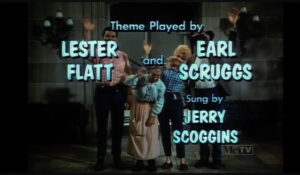 Mets take their inspiration where they can get it. Afterwards, the players gathered around the clubhouse television to watch an episode of The Beverly Hillbillies just to get to the song that plays over the end credits, specifically the line where Jerry Scoggins invites everybody watching, “Y’all come back now, y’ hear?” (That’s one more detail I’ll have to check on, but based on these past two games, it sure seems true.)
by Greg Prince on 21 July 2025 11:24 am The Reds got off to a Metslike start on Sunday, so I took that as a good sign. We’re usually the team that gets off to a Metslike start, Metslike start having developed into a synonym for immediate unease. Chance for a big inning. Leave with a run or two at most when there coulda been/shoulda been more. Load the bases next time up yet score nothing. Reds were ahead, 1-0, in the second inning.
We had them right where we needed them because they had been too much like us. They faced David Peterson, who is the best we can throw at anybody right now. Peterson overcame shaky defense behind him in the first and his own difficulties in the second. He then righted himself as an All-Star starter does. At the moment, at least on whatever we use instead of paper these days, we have something that looks like a starting rotation. Coming out of the break, Peterson is literally in the middle of it. On the mound, he is effectively at the head of it.
Petey held the Reds scoreless after the first inning. The Mets pecked back in the third with a single run and nosed ahead with another single run in the fifth. Luisangel Acuña was instrumental to both rallies. It’s nice to see Acuña get a chance. It’s nice to see any Met be a part of two successful rallies in the same game. With Francisco Alvarez finishing his refresher course at Syracuse and Pete Alonso given the briefest of contusion recovery periods, Luisangel was the only member of last September’s “A” team in Sunday’s lineup. He made his sacrifice bunt matter (for the better, as it pushed Tyrone Taylor to third, en route to coming home on Brandon Nimmo’s game-tying base hit) and his fifth-inning RBI double was the closest thing we had all day to a homer, booming as it did to left to send Brett Baty across the plate from second. Acuña also made a throwing error from second in the first, but a) he was throwing to Mark Vientos, a starting first baseman for the first time all year; and b) he himself rarely plays in the first inning, so maybe he needed time to adjust to the angle of the sun.
Mostly, it was good to see Acuña out there and contributing, and it was great to see Peterson out there and stabilizing the Mets’ situation for six innings. No openers. No bulk guys. No limitations. Just a starting pitcher overcoming early problems and getting us through six, the modern equivalent of eight-and-two-thirds. David gave us 93 pitches. We don’t ask for anything more.
It’s usually splendid to see Edwin Diaz, but his entry in the eighth was surprisingly fraught. Carlos Mendoza brought him in to face the heart of the Reds order with two out and a runner on first. “Everything that can go wrong did go wrong” for Edwin Diaz used to mean Kurt Suzuki hit a grand slam. On Sunday, it boiled down to allowing a stolen base; walking a guy; giving up a single that found a hole to load the bases; and hitting the next batter with the bases loaded. The sky fell in on Edwin Diaz, yet all it did was take us from ahead 2-1 to tied at two. Diaz struck out his next batter to strand all Reds and end the eighth with the score 2-2. He’s gotten pretty good at damage control.
Juan Soto’s services were engaged, in part, so he could hit dramatic home runs in the late innings. He tried that on Saturday. Came achingly close, too. His shot to right would have provided a fabulous boost in a sensational setting, but it went just foul. Even David Wright in a luxury suite thought it was gone. The other thing Juan Soto is collecting on is his ability to walk. That’s sometimes decided by a matter of inches as well, but on Sunday in the ninth, Soto wasn’t umped to death and led off with a walk. Pete, who apparently heals like Polar Bears wear white, struck out, but Jeff McNeil doubled Juan to third. Luis Torrens, enjoying his final day as undisputed starting catcher, grounded to second. Soto did not stay grounded at third. We were told in advance about the power and the patience of Soto, but who knew he was Lou Brock on the basepaths? OK, he’s not Lou Brock, but he’s got that “not lightning fast, but knows what he’s doing” quality to him. Rusty Staub in his first term had that. Kevin McReynolds had that. Juan Soto has it. He takes off from third on Torrens’s grounder and slides home ahead of the throw. The Mets are leading, 3-2. And, when Ryne Stanek holds the fort, the Mets win, 3-2, snapping a three-game losing streak that felt longer, given the many off days in between victories.
We now have a 56-44 team after 100 games, a half-game from first place in the East, and four games clear of the nearest Wild Card contender that’s on the outside looking in. A Mets team doing all that scans as in good shape. This team doing that? I’m not sure what it’s proved after 100 games other than good shape is good, but it could be/should be better. Easy for me to say, not playing baseball in the hot sun. Maybe I’m not taking into account how elusive an actual rotation has been for Mendoza. With Manaea and Kodai Senga back and Frankie Montas seemingly ensconced, we do have one. Clay Holmes’s endurance seems a little iffy, but five solid innings per start, if he can deliver that much, might be (or might have to be) sufficient from a former closer. Peterson is Peterson, which is a reassuring thing to say and mean.
Francisco Lindor’s July 2025 is Francisco Lindor’s April from too many years. Think he won’t return to the land of the living? Think Soto won’t straighten out his deep foul flies and adjust his approach within ever-capricious ump shows? I don’t know what to think of Pete’s bruised hand, but if his version of the injured list was a six-inning stay, we’ll have faith that he’s fine. Among the youthful, somebody’s bound to bust out and become irreplaceable to Mendy. Acuña? Vientos? Baty? Alvarez? Ronny Mauricio? Flashes of brilliance need to transform to sustained light. The pieces are here. The pieces have always been here. The pieces fit when the Mets were 21-9 and 45-24. The whole in the present continues to defy contiguity. There’s something about this team that refuses to click for more than a handful of days. I keep waiting for the multiweek spurt that dismisses all doubt. The wait goes on. The doubt has just ordered in like it’s not planning on leaving.
I thought this would be the year when kvetching about the Mets would an elective rather than a required course. Any Mets fan can kvetch about any Mets angle and often does, but I was going to leave that to the chronically dissatisfied in 2025. We were 21-9 and 45-24. What was there to kvetch about? Turns out Met-kvetching is that comfortable winter coat you forget about during summer, but once you need it, boy does it feel like you never took if off. It feels as if we’re cloaked in reasons to kvetch despite our record and playoff positioning. This team doesn’t allow us to run around in short sleeves.
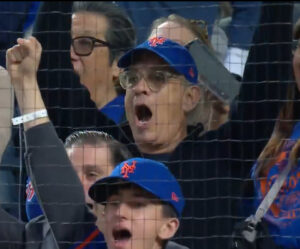 Acting excited by this team sometimes takes great talent. It took me a while to conclude that the 2024 Mets were legitimately good. It’s taken me a while to come around to the idea that the 2025 Mets, while undeniably good, may not be that great. Watching them in this series, I couldn’t decide whether this team is exciting or merely capable. Even in games when good plays are made or temporarily big hits are recorded, there is something uninspiring about the 2025 Mets, which is surprising based on the ability to levitate they displayed when things were going fantastic. On Saturday, prior to whichever rally that was destined to fizzle, the enormous scoreboard showed a sizzle reel intended to get everybody’s hopes up. One clip within was of Tom Hanks — not even a Mets fan — leaping to his feet in approval of a Lindor home run. That happened at Citi Field in April. I was shocked to realize it was from the same season that included the game I was watching in front of me. In the game I was watching in front of me, Soto, Alonso, and Vientos struck out in succession in the seventh to keep the Mets behind by three runs, sucking most of the air not to mention all of the good vibes out of the Wright Day crowd. You’d have to be a better actor than Hanks to feign enthusiasm for a half-inning like that…and Hanks owns a pair of Best Actor Oscars.
The kvetching I initially found atonal stemmed, I believe, from 2025 being the first Mets season following a winning-record season to more or less roar out of the gate since 2007 (a loaded example, I grant you). The intervening Mets seasons that succeeded winning-record Mets seasons — 2008, 2009, 2016, 2017, 2020, 2023 — each significantly stumbled or scuffled during the first half; the 2008 and 2016 Mets recovered and seriously contended, while the others did not. Here in 2025, mostly building on the success of 2024, it was as if we didn’t know how to process the ups and occasional downs in progress, because we hadn’t had much recent experience maintaining momentum across calendar years. Lately, except for Sunday, it’s mostly downs and perfectly tonal kvetching in response. We’re 11-20 since the middle of June. If that’s not kvetchworthy, I don’t know what is.
Yet 100 games in, all of which have counted, the Mets are above enough of the pack by enough of a margin that the kvetching feels like something we should be able to look forward to shedding, provided a sustained string of positive outcomes convinces us we can be satisfied with what we’ve got (trade deadline flurry willing) and where we’re going. No team is more convincing than the 2025 Mets. They convince us they’re great when they win, and they convince us they’re anything but when they don’t.
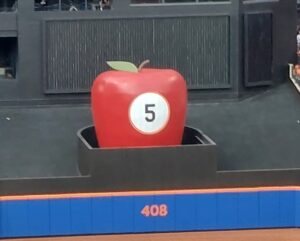
by Greg Prince on 20 July 2025 12:25 pm That it was inevitable didn’t make it any less irresistible. The number 5 could have been retired as soon as David Wright took off his jersey in 2018. Many of us mentally reserved a spot for it at Citi Field before Citi Field was announced as the successor facility to Shea Stadium at the outset of 2006. No more than a season-and-a-half’s worth of exposure to the prospect who lived up to his notices, and we could have guessed a day like Saturday was coming. I don’t know what they’re building over there in the parking lot, but they need to make sure we can see 5 and take heart from it forevermore.
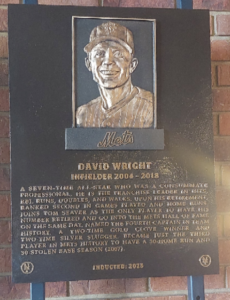
 Done! David Wright’s number was elevated to Citi Field’s highest rung on Saturday afternoon, a delightful formality whose “i” was dotted and “t” was crossed when his New York Mets Hall of Fame plaque was simultaneously unveiled upstairs from the Rotunda. The Mets, who used to do not much to remember let alone honor the players who built the best of their legacy, proceeded on the Wright track with all deliberate speed. Got him to the bigs at age 21. Got him to the rafters at age 42. Waited just long enough so his three kids can maintain tangible memories of their dad’s day in the overcast sun. Didn’t wait so long that his parents weren’t around to soak it in. Done! David Wright’s number was elevated to Citi Field’s highest rung on Saturday afternoon, a delightful formality whose “i” was dotted and “t” was crossed when his New York Mets Hall of Fame plaque was simultaneously unveiled upstairs from the Rotunda. The Mets, who used to do not much to remember let alone honor the players who built the best of their legacy, proceeded on the Wright track with all deliberate speed. Got him to the bigs at age 21. Got him to the rafters at age 42. Waited just long enough so his three kids can maintain tangible memories of their dad’s day in the overcast sun. Didn’t wait so long that his parents weren’t around to soak it in.
The presence of Rhon and Elisa Wright may have made me happiest Saturday — in stark contrast to the 5-2 loss the Reds pinned on the Mets following the conclusion of the day’s far more pleasurable ceremonial aspects. Not only is David in his prime as a person, but those who raised him appear in the finest of fettle. I kind of fell in love with them watching the SNY documentary about their son. They wanted the best for him. They cleared a path for him. They’re proud of not just his accomplishments, but his whole being. It was all I could do to not hug them when I saw them in the press conference room prior to Saturday’s game.
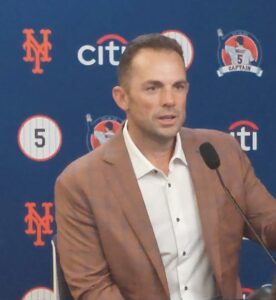 I don’t think David Wright’s parents are wholly unique in getting behind their child and pushing him forward, it’s just that we have evidence of how it worked out for us, and how much it meant and continues to mean to them. I don’t know what it was like inside the Wright household when our boy was a kid, but it certainly seems they understood what he wanted to do and are happy he did it (I’m not sure I fully grasp what it’s like to have been in a parent-child relationship where the emotional transactions were that clear-cut). David didn’t have to wish Rhon and Elisa were here to see this day. The long view of history is a marvelous thing, but some heels don’t have to cool until they’re ice cold. I don’t think David Wright’s parents are wholly unique in getting behind their child and pushing him forward, it’s just that we have evidence of how it worked out for us, and how much it meant and continues to mean to them. I don’t know what it was like inside the Wright household when our boy was a kid, but it certainly seems they understood what he wanted to do and are happy he did it (I’m not sure I fully grasp what it’s like to have been in a parent-child relationship where the emotional transactions were that clear-cut). David didn’t have to wish Rhon and Elisa were here to see this day. The long view of history is a marvelous thing, but some heels don’t have to cool until they’re ice cold.
 I also adored what could have been taken as the random assortment of teammates who traveled to Flushing on David’s behalf. I knew they weren’t random because I’ve been following David’s story for the half of his life that he’s been an all-time Met, yet when I glanced over my shoulder and saw Joe McEwing, Josh Satin, Cliff Floyd, and Michael Cuddyer sitting in a row waiting to hear from their friend before the ballpark as a whole would wrap its arms around him, I wanted to grab each of them and slip them into a binder. David’s story inevitably mentions them as influences and compatriots, not just guys he used to work with. Jose Reyes was there, of course, as was Daniel Murphy. Two managers, Terry Collins and Willie Randolph, plus coach Howard Johnson joined in the assemblage. HoJo’s old pal Keith Miller was David’s agent, and he was on hand, too. In 1988, I went out of my way to purchase a Keith Miller baseball card. When was the last time any Mets fan stopped to think about most of these guys? David is probably more thoughtful than most of us. A passel of columnists, reporters, and broadcasters who don’t necessarily come around that often also made sure to be back for The Captain. It was old home weekend at a home that’s not that old and a returnee who hadn’t been gone too incredibly long. I also adored what could have been taken as the random assortment of teammates who traveled to Flushing on David’s behalf. I knew they weren’t random because I’ve been following David’s story for the half of his life that he’s been an all-time Met, yet when I glanced over my shoulder and saw Joe McEwing, Josh Satin, Cliff Floyd, and Michael Cuddyer sitting in a row waiting to hear from their friend before the ballpark as a whole would wrap its arms around him, I wanted to grab each of them and slip them into a binder. David’s story inevitably mentions them as influences and compatriots, not just guys he used to work with. Jose Reyes was there, of course, as was Daniel Murphy. Two managers, Terry Collins and Willie Randolph, plus coach Howard Johnson joined in the assemblage. HoJo’s old pal Keith Miller was David’s agent, and he was on hand, too. In 1988, I went out of my way to purchase a Keith Miller baseball card. When was the last time any Mets fan stopped to think about most of these guys? David is probably more thoughtful than most of us. A passel of columnists, reporters, and broadcasters who don’t necessarily come around that often also made sure to be back for The Captain. It was old home weekend at a home that’s not that old and a returnee who hadn’t been gone too incredibly long.
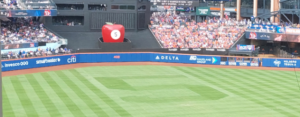 Citi Field isn’t the House that Wright Built. If it was, the dimensions would have been constructed in deference to his opposite-field power. But it was immediately the House of David when it opened in 2009, and Saturday proved it always will be. He was so comfortable being who he was, which is to say always a touch uncomfortable that 42,000 people arrived en masse to see him, and many among them wore his name and number on their backs. But he gets that they did, and nobody could have been more appreciative that others thought he deserved such attention. Reverence he’d avoid if he could, but it was too late. Leave it to David, and he’d simply romanticize being a kid who got his picture taken in Norfolk with Tides like Clint Hurdle and D.J. Dozier…which he did, because what else is a kid who went to Tides games gonna romanticize? Citi Field isn’t the House that Wright Built. If it was, the dimensions would have been constructed in deference to his opposite-field power. But it was immediately the House of David when it opened in 2009, and Saturday proved it always will be. He was so comfortable being who he was, which is to say always a touch uncomfortable that 42,000 people arrived en masse to see him, and many among them wore his name and number on their backs. But he gets that they did, and nobody could have been more appreciative that others thought he deserved such attention. Reverence he’d avoid if he could, but it was too late. Leave it to David, and he’d simply romanticize being a kid who got his picture taken in Norfolk with Tides like Clint Hurdle and D.J. Dozier…which he did, because what else is a kid who went to Tides games gonna romanticize?
 David was always one of us, geographically displaced on the surface, but with a running start. He didn’t have to subscribe to Baseball America to get a handle on Mets Triple-A prospects. He just had to get a ride with his dad, who worked security at Harbor Park in his off hours from the police force. Maybe that appreciation of how baseball comes together, from the inside out and not just on the field, explains why David maintains so many friendships with players who didn’t approach his performance level, and why more than any player I can think of was enmeshed with so much of the Mets personnel who make the Citi Field operation run. It was no accident he could offer up warm and textured memories when asked in his press conference about the late public relations specialist Shannon Forde and the late team photographer Marc Levine. It was no accident that practically the first words out of his mouth when he stepped to the mic during his ceremonies were to acknowledge Tony Carullo, the longtime visiting clubhouse manager who was receiving the Mets’ Hall of Fame Achievement Award. David was always one of us, geographically displaced on the surface, but with a running start. He didn’t have to subscribe to Baseball America to get a handle on Mets Triple-A prospects. He just had to get a ride with his dad, who worked security at Harbor Park in his off hours from the police force. Maybe that appreciation of how baseball comes together, from the inside out and not just on the field, explains why David maintains so many friendships with players who didn’t approach his performance level, and why more than any player I can think of was enmeshed with so much of the Mets personnel who make the Citi Field operation run. It was no accident he could offer up warm and textured memories when asked in his press conference about the late public relations specialist Shannon Forde and the late team photographer Marc Levine. It was no accident that practically the first words out of his mouth when he stepped to the mic during his ceremonies were to acknowledge Tony Carullo, the longtime visiting clubhouse manager who was receiving the Mets’ Hall of Fame Achievement Award.
 It was never an accident that David was everybody’s captain from just about the moment he showed up at Shea. The old saying suggests you should treat people the way you wish to be treated. I suspect David Wright didn’t dwell on how he’d be treated. He put those around him first, including however many tens of thousands paid their way into Shea or Citi on a given night. It came through when he addressed his fellow Mets fans in the crowd on Saturday. David Wright forever came across as our hometown kid. It doesn’t matter that he’s from Norfolk, Va. He grew up in Metsopotamia. Everything about him can seem a little corny, a little hokey, a little less than big-time. That’s because he’s one of us — the corny, the hokey, life-size at our biggest. He’s never put on pretensions that he was any more than that, except he played ball. Sometimes we forget what a bleeping star he was. It was never an accident that David was everybody’s captain from just about the moment he showed up at Shea. The old saying suggests you should treat people the way you wish to be treated. I suspect David Wright didn’t dwell on how he’d be treated. He put those around him first, including however many tens of thousands paid their way into Shea or Citi on a given night. It came through when he addressed his fellow Mets fans in the crowd on Saturday. David Wright forever came across as our hometown kid. It doesn’t matter that he’s from Norfolk, Va. He grew up in Metsopotamia. Everything about him can seem a little corny, a little hokey, a little less than big-time. That’s because he’s one of us — the corny, the hokey, life-size at our biggest. He’s never put on pretensions that he was any more than that, except he played ball. Sometimes we forget what a bleeping star he was.
 Good thing we are able to gaze up at 5 to remind us. Good thing we are able to gaze up at 5 to remind us.
by Greg Prince on 19 July 2025 11:32 am Twenty-one years ago tomorrow, the surprisingly contending Mets did not look ready for what was hitting them at Shea Stadium, giving up six runs in the first inning. They’d do plenty of hitting themselves before the game was over, and Armando Benitez would come on to get the save, but the Mets didn’t do enough hitting, and Benitez by then was the closer for the Florida Marlins. Strange time capsule the box score of July 20, 2004, left us. Steve Trachsel started and kept starting despite a disastrous first inning, staying on through five. Future Mets Luis Castillo, Jeff Conine, and Damion Easley joined forces with former Mets Benitez and Josias Manzanillo in the 9-7 victory for the defending world champions. The Marlins, between fire sales, rose to 47-46, one game better than the Mets, each club part of a four-team scramble for first place in the NL East. The scramble would end within a couple of weeks, the Mets — and the Marlins, for that matter — altogether unscrambled from any October aspirations.
On the Met side, John Franco was sent out to pitch the sixth and gave up what would prove to be the winning runs. By the time Johnny was deployed (earlier than had been his custom in his long reign as hometown closer), the Mets had tied the Marlins at seven. Trachsel had settled down and the bats had come alive. Three runs were driven in by Richard Hidalgo, an acquisition in June who was on an all-time Met heater in July, homering ten times. Richard’s three-run bomb in the bottom of the third inning this Tuesday night is what evened the game at 7-7. Two batters earlier, first baseman Eric Valent had pulled the Mets to within 7-4. Valent wasn’t in the starting lineup. He subbed in the top of the second for Mike Piazza. Piazza had to exit after a collision on defense with Juan Pierre. Mike, an All-Star catcher trying his best to become a passable first baseman, was the victim of the baserunner and a throw from his third baseman arriving all at once in an awkward position. His left wrist took the worst of it. He’d be out for a week.
By the time he came back, there’d be a new third baseman for the New York Mets.
On July 21, as Piazza healed, the future arrived in the person of 21-year-old David Wright, hot stuff from Norfolk and at Norfolk, as big a part of the Mets’ plans as their current second baseman Jose Reyes loomed a year earlier. Reyes, 20, was the shortstop when he came up from Binghamton in 2003, but was moved to second in deference to the allegedly wondrous abilities of Kaz Matsui. The third baseman who threw the ball that resulted in the injury to the Mets’ marquee player was Ty Wigginton. Wiggy, as he was known, was only 25, and had attracted Rookie of the Year support in ’03, but his greatest asset as of July 21, 2004, was not youth or promise but versatility. With Mike out, Ty would be the first baseman.
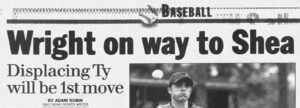 Nobody else would be the third baseman for a very long time now that David Wright was here. The box score of July 20, therefore, tells a story of less a lost world than one poised to change dramatically. Wigginton would be traded before the month was done. Franco and Todd Zeile (who took over for Valent on defense) would wave goodbye to an appreciative crowd on the last day of the season. Reyes would get shortstop back, a move that would compel the less than wondrous Matsui to learn second, a transition that never really took. Hidalgo would leave as a free agent. Piazza, already a legend in these parts, returned to catching and played out his contract before his own emotional goodbye at the end of 2005. Trachsel would keep getting starts through 2006. So would left fielder Cliff Floyd. Veterans Steve and Cliff would be in the lineup on September 18, 2006, about two years and two months hence, the night the Mets clinched their first division title since 1988. In the middle of the celebratory scene that unfolded that night were the young shortstop Reyes and the young third baseman Wright. Other than Trachsel and Floyd, nobody else from either July 20 or July 21 in 2004 was on hand. Nobody else would be the third baseman for a very long time now that David Wright was here. The box score of July 20, therefore, tells a story of less a lost world than one poised to change dramatically. Wigginton would be traded before the month was done. Franco and Todd Zeile (who took over for Valent on defense) would wave goodbye to an appreciative crowd on the last day of the season. Reyes would get shortstop back, a move that would compel the less than wondrous Matsui to learn second, a transition that never really took. Hidalgo would leave as a free agent. Piazza, already a legend in these parts, returned to catching and played out his contract before his own emotional goodbye at the end of 2005. Trachsel would keep getting starts through 2006. So would left fielder Cliff Floyd. Veterans Steve and Cliff would be in the lineup on September 18, 2006, about two years and two months hence, the night the Mets clinched their first division title since 1988. In the middle of the celebratory scene that unfolded that night were the young shortstop Reyes and the young third baseman Wright. Other than Trachsel and Floyd, nobody else from either July 20 or July 21 in 2004 was on hand.
The Mets’ world accelerated its evolution the minute Wright showed up. But there was a Mets world the night before. The tomorrow in that equation was better because it formally introduced us to the player who would, in short order, embody the Mets for the next fourteen years. David Wright started fielding, started swinging, started doing everything that became instantly and indelibly familiar. David Wright started giving us seasons like 2006 and did his best to keep giving us seasons like 2006, even if we wouldn’t see another year substantively like it until 2015. That was a totally if not tonally different Met season, but the one thing it had in common with its predecessor in champagne showers was David Wright played a lead role. Not the same kind of lead role — he wasn’t so young anymore and he wasn’t healthy enough to play that much — but the superstar had become The Captain, and The Captain led the Mets, in his way, to the World Series. That was supposed to happen in 2006. It took a while. Fortunately, David had a while after 2006, if not a whole lot of while remaining after 2015.
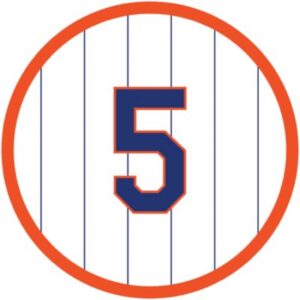 All of David’s career, which was Mets and nothing but Mets, gets honored at Citi Field this afternoon. No. 5 rises to the rafters. The club Hall of Fame, conveniently located on pillars at the top of the Rotunda staircase, adds a plaque with his likeness. Mets from 2004 and Mets from well beyond will be in attendance, as will a ballpark full of fans who watched him debut, watched him blossom, watched him endure. “Every generation throws a hero up the pop charts,” Paul Simon said. A generation of Mets fans came of age with David Wright as its frontman. He is the first Met who came along in this century to be honored as Seaver, Piazza, Koosman, Hernandez, Mays, Gooden, and Strawberry have. He is the first Met to have a single digit retired. He is singular in our history. He rose from our farm system and never sought greener pastures. Our pastures were green enough for him. His considerable talents and endless efforts richly enhanced their periodic lushness. All of David’s career, which was Mets and nothing but Mets, gets honored at Citi Field this afternoon. No. 5 rises to the rafters. The club Hall of Fame, conveniently located on pillars at the top of the Rotunda staircase, adds a plaque with his likeness. Mets from 2004 and Mets from well beyond will be in attendance, as will a ballpark full of fans who watched him debut, watched him blossom, watched him endure. “Every generation throws a hero up the pop charts,” Paul Simon said. A generation of Mets fans came of age with David Wright as its frontman. He is the first Met who came along in this century to be honored as Seaver, Piazza, Koosman, Hernandez, Mays, Gooden, and Strawberry have. He is the first Met to have a single digit retired. He is singular in our history. He rose from our farm system and never sought greener pastures. Our pastures were green enough for him. His considerable talents and endless efforts richly enhanced their periodic lushness.
It was fortuitous that the Mets won the first game of the David Wright Era, on July 21, 2004. The night before, they’re a mess. The next day, they’re winners. One can ride that thread only so far. David played in 1,585 games as a Met. Their record in them was 792-793. All the ups. All the downs. So many of both in terms of what surrounded him. Throw in the postseason games in which he played, however, and his Mets went 805-804. That looks a little more Wright, doesn’t it?
As if to presage David Wright’s arrival in official Met immortality, the Mets of July 18, 2025, used the game before his number-raising and plaque-installing to remind us of what it was like in Flushing on July 20, 2004, which is to say they lost. It’s a very different club here than it was twenty-one years ago. Our contention in the NL East is no surprise. We are in a division race that, unlike 2004’s, figures to last. We have Juan Soto, and he homered in the first. We have Brandon Nimmo and Jeff McNeil, the only two Mets remaining from the back end of Wright’s tenure, and McNeil drove in Nimmo in the second. And we have the gumption to manufacture a Fireworks Night rally in the ninth that evoked memories of the one Piazza capped in the eighth on June 30, 2000, when David was a year away from getting drafted by the Mets. On that night, Mike Hampton started versus the Braves. It didn’t go well, and we trailed, 8-1, before prevailing, 11-8. Hampton straightened himself out from that off outing and pitched the Mets to a pennant. When Mike chose free agency and signed with the Rockies, the Mets received a supplemental first-round pick. They used it to draft David Wright. You might say they won even more.
The ninth-inning rally from this Fireworks Night in the present, however, fizzled. The Mets fell Friday to the Reds, 8-4. Sean Manaea pitched far better than Steve Trachsel did on Wright’s Eve then, but for not as long. In his second post-IL start, Manaea worked four sharp innings before being pulled. The 2-1 lead he bequeathed to Alex Carrillo transformed into a 3-2 deficit in the fifth. It was 6-2 when Carrillo gave way to Brandon Waddell. It became 8-2 as Carlos Mendoza resolutely rested the remainder of his bullpen in this first game after the four-day All-Star break. Had Mendy had John Franco, Dan Wheeler, Ricky Bottalico, and Mike DeJean at his disposal as Art Howe did on July 20, 2004, he probably wouldn’t have used them, either. I never thought I’d say this, but score one for Art Howe.
The Mets’ comeback in the ninth showed promise — two runners in, bases loaded, Francisco Lindor coming to bat as the tying run — but no payoff, as Lindor popped out to clear the field for fireworks. The Reds played like they had something to prove. The Mets for too many innings seemed disengaged. Maybe the All-Star break needed to be five days.
Or maybe they just need to get a look at David Wright today and start turning things around for good.
|
|






