The blog for Mets fans
who like to read
ABOUT US

Faith and Fear in Flushing made its debut on Feb. 16, 2005, the brainchild of two longtime friends and lifelong Met fans.
Greg Prince discovered the Mets when he was 6, during the magical summer of 1969. He is a Long Island-based writer, editor and communications consultant. Contact him here.
Jason Fry is a Brooklyn writer whose first memories include his mom leaping up and down cheering for Rusty Staub. Check out his other writing here.
Got something to say? Leave a comment, or email us at faithandfear@gmail.com. (Sorry, but we have no interest in ads, sponsored content or guest posts.)
Need our RSS feed? It's here.
Visit our Facebook page, or drop by the personal pages for Greg and Jason.
Or follow us on Twitter: Here's Greg, and here's Jason.
|
by Greg Prince on 9 August 2025 10:54 am Starling Marte got a good lead off second, had a good jump as soon as Jeff McNeil singled into center, took a good route around third, sped home at a good rate, and made a good slide toward the plate. He did everything well on the two-out play intended to tie the Mets-Brewers game in the top of the ninth. He was out, anyway.
Such things happen in the course of a baseball season. Such things happen to end baseball games. Such things happen to teams of all stripe. That it’s all happening to the Mets right now is what makes the conclusion to Friday’s 3-2 loss in Milwaukee that much more vexing. The Mets totaled five hits. Two of them were solo home runs, one struck in the first inning by Juan Soto, the other blasted by Marte in the second. Two of them were the double and single strung together by Marte and McNeil in the ninth. In between, there was a McNeil single in the fourth and nothing more. McNeil in the fourth was erased on a double play.
The Mets outhit the Brewers, 5-4. But Brewer pitching, led by Brandon Woodruff for seven innings, struck out more batters while walking fewer of them. The only pitcher on either side to hit anybody was a Met, Brooks Raley. That came with the bases loaded in the fifth, after Brice Turang had socked a two-run homer that was set up by a Kodai Senga error, the only error made in the game. That shot had tied the score at two. After getting one out, Senga walked a batter, had one reach when catcher’s interference was called on Francisco Alvarez, and walked another batter. That was the bases-loaded situation Raley stepped into, the one that led to the HBP.
Throughout the game, there emerged slight edge after slight edge the Brewers had on the Mets. Another “such things happen” situation, perhaps, but haven’t we been seeing this versus the Padres, the Giants, and the Guardians? Look what the opponents brought to bear. Tighter fielding. Clutcher pitching. A home run hit with a runner on base. A bases-loaded opportunity taken advantage of just by letting the Mets hand it to them. Such things keep happening.
Senga was OK for four innings, didn’t last the fifth. Woodruff looked like the ace we thought Senga was. Our bullpen, despite Raley’s one pitch that hit dinged Isaac Collins in the foot at the worst possible juncture, was sufficiently sound. Ryne Stanek, Gregory Soto, and Tyler Rogers were fine (and hopefully don’t become unavailable the rest of the weekend for having been used once). They kept the deficit at one run. So did the Met offense. The composite of three hits in the first eight-and-two-thirds-innings left lots of white space the Mets never filled. Strikeouts. Groundouts. Flyouts. Uninterrupted futility. Hitters who didn’t exactly jog to first, but they sure as hell didn’t sprint. The Met lineup seems to have subscribed to the notion that nothing is going to happen, so why pretend they can make something out of nothing?
Yet there they were in the ninth, Marte delivering his second extra-base hit and McNeil singling for the second time. Starling was ready to run. He can still do that. Maybe Tyrone Taylor — the capable pinch-runner trepidatiously held up at third on Monday — could have gotten a better lead, a better jump, and been a better bet, but I saw nothing that indicated Starling was physically compromised (and do you really want Taylor as your DH should the game find itself in an eleventh inning?). McNeil came through, Marte executed, and Mike Sarbaugh had no reason to put up a stop sign. In the end, the Brewers had one more slight edge on the Mets. Blake Perkins made an excellent throw, William Contreras caught it where he needed to be, and he tagged Marte out. The Mets challenged, perhaps for the first time all night in any sense of the word, and they were rebuffed. The Brewers won one of those one-run games that didn’t feel quite so close.
The Mets have lost five in row, nine out of ten. Everything feels like it’s the reason. Senga’s gotta go longer. Taylor coulda been in there. Acuña oughta be up here (he oughta, actually). Mistakes have to be minimized. Catcher’s interference? Yeesh, absolutely, but there was one Met hit from none out in the top of the second to two out in the top of the ninth. Some nights, like the night of the third game of last year’s Wild Card Series in the very same ballpark, you can wait until the ninth inning to pull out all the stops, but that was a special occasion in a special year. There’s nothing special going on here now.
 Not so fab of late. Try something. My possibly goofy suggestion is take the so-called Fab Four, whose golden slumbers atop the lineup are weighing down the offense as a whole, and break them up for a spell. Shuffle the deck. Bat one of them second, one of them fourth, one of them sixth, and one of them eighth. Or first, third, fifth, and seventh. I don’t care which Met you put where at this point. I know Lindor, Soto, Alonso, and Nimmo are far better than they’ve shown, but I swear they’re infecting each other with their contiguous mediocrity, and the effect on everybody else is that of a superspreader. Let a couple of them bat where the pressure feels lighter. Maybe they’ll rediscover the approach that made them stars. Maybe the opposing pitcher will be flummoxed that he has to face a repuational big bat every other spot. Simultaneously, move Mullins, who isn’t getting anything done wherever he’s batted, to the top of the order. Or Mauricio. Or McNeil. Or whoever. Anything for one or two games. Whatever they’re doing and continue to do clearly isn’t working. It ain’t Panic City if constancy for constancy’s sake is stranding you in Also-Ran Village.
The Mets continue to hold a playoff spot because they played very well for a while in this very same season. Both facts are hard to believe based on what we’ve been watching for the bulk of nearly two months. It’s hard to believe they will play very well again in this season and it’s almost laughable to anticipate them participating in the upcoming postseason. The tenor of laughs can certainly change from early August onward. Can you believe we ever doubted the 2025 Mets? HA on us! But not at this rate. Try something. Try almost anything. To not change up some aspect of the Mets while they wither is most trying of all.
by Greg Prince on 6 August 2025 5:22 pm I greeted Juan Soto’s bottom-of-the-ninth solo home run with more enthusiasm than Juan Soto greets extra-base hits he has to gather and fire back into the infield, which is to say with minimal enthusiasm. Until he ended Gavin Williams’s no-hit bid Wednesday afternoon, I’d allowed myself to almost root for the no-hitter to happen. Almost. Once it wasn’t going to happen, well, good — the Mets just scored a run to cut the Guardians’ lead to 4-1 and maybe they’ll get a couple of runners on, bring the tying run up, and remind us of who they are or at least who they seemed to be not that long ago.
They didn’t do any of that, but at least they didn’t get no-hit. Spiritually, they’ve been no-hit for the last week-plus. Statistically they’ve gotten hits. The hits haven’t much mattered. The Mets are playing like nothing matters, and what if it did? I thought they were a special team when the season started and progressed, even when it ran into rough spots. Now I wait for these players to coalesce into something resembling cohesion. They’ve come together of late mostly to not get base hits in unison.
A tip of the hat need be directed toward the opposing pitcher. Permitted to remain on the mound and chase history, Williams retired a major league lineup over and over without allowing a hit across eight-and-a-third. I know the Mets constitute a major league lineup because I’ve seen the Major League Baseball logo stitched onto the backs of their caps and jerseys. That’s the only clue I have.
Watching a no-hitter would have been novel. A dreary loss was more same old squared. The Mets have lost eight of nine. They’ve tried astoundingly frustrating. They’re tried deadly dull. Might as well mix it up with a game that pops, even if it pops for the wrong team. Then again, the Mets simply winning would be novel. Maybe they’ll try that in Milwaukee.
by Jason Fry on 5 August 2025 10:35 pm The Mets have sunk from amazing to confounding to unwatchable.
Tuesday night’s one-run loss to the Guardians showcased everything about this team right now that no one sensible would put in a showcase: one bad inning from a starting pitcher who (once again) didn’t give his team much length, a bit of ill-timed bad luck, and an absolutely inert offense. The Mets scored their first run of the game without a hit, which feels like the punchline to a joke, their second run on a single, and that was the sum total of the scoring. In fact, Jeff McNeil‘s leadoff single in the fourth was their final hit of the night, with the last 14 Mets making outs without so much as a whimper.
The Guardians, for their part, took the lead in the seventh on a mildly absurd trio of two-out hits against Tyler Rogers: a grounder that bounced through the 5.5 hole into left, a little poke job over the infield on a pitch 18 inches outside, and finally a disgustingly Sojo-esque seeing-eye single up the middle.
After all that, Jeremy Hefner strolled out to the pitcher’s mound to talk to Rogers; we were in the car and wondered what a pitching coach possibly says in that situation.
“Hang with ’em?”
“Keep doing what you’re doing?”
But then Emily nailed it: “Sorry that you’re now on the Mets.”
by Greg Prince on 5 August 2025 11:53 am Third base coaches’ names rarely come up in spaces like these unless one finds fault with a third base coach’s decision or execution on a pivotal play.
The Mets’ third base coach’s name is Mike Sarbaugh.
I don’t think I’ve ever brought it up here before despite Mike having been the Mets third base coach these past two seasons, one of which extended into the playoffs, another of which is — despite recent trends — poised to do so again.
Ignoring Mike Sarbaugh until something goes wrong is probably not fair.
Here’s why I and no doubt you noticed Mike Sarbaugh Monday night.
Mike Sarbaugh should have sent Tyrone Taylor.
You know what I’m talking about.
Carlos Santana dropped the relay throw.
You know which relay throw I’m talking about.
Taylor was around third when it was dropped.
Sarbaugh has to make a snap decision based on the best available evidence.
The best available evidence to Sarbaugh was a relay throw had been made cleanly by Nolan Jones.
But Taylor was in there Monday night in the bottom of the ninth in a tie game as a pinch-runner, somebody who can score from first on a double to deep right.
Francisco Lindor doubled to deep right.
Taylor took off with every apparent intention of getting as far as he could.
He could have gotten home.
He could have won the game right then and there.
The game was 5-5.
The Mets had been behind, 5-0.
Sean Manaea had pitched beautifully through five before imploding in the sixth.
The Mets came back.
Pete Alonso hit his 251st career home run, putting him one behind Darryl Strawberry, a three-run job that got us on the board in the sixth.
Alonso was part of another rally, driving in one of two Met runs in the eighth.
Our bullpen didn’t do anything appreciably wrong for four-and-two-thirds.
Our defense was unforgivably sloppy.
But theirs was no great shakes, either.
It may or may not be fair to say Monday night’s 7-6 loss in ten innings to Cleveland at Citi Field came down to Sarbaugh holding up Taylor.
I understand what the third base coach saw.
I understand Juan Soto was up next with one out, and runners would be on second and third for him.
I understand that once Soto was intentionally passed (a predictable decision by the Guardians), the bases would be loaded for Alonso, he of the 4-for-4, 4 RBI night.
I understand that if Pete hits a bases-loaded fly ball with one out, Taylor trots home with the winning run.
I also understand that this team needs to grab chances when they appear.
Taylor rounding third was a chance.
Santana dropping the relay throw from Jones was a bigger chance.
The Mets took no chance.
Alonso struck out.
Jeff McNeil lined out.
We went to the ghost-running tenth, where Ryan Helsley pitched fine, but plays were not made on his behalf, and there, essentially, went the rest of the ballgame.
Sarbaugh should have sent Taylor.
Some night when the Mets win because Sarbaugh stopped a runner, I hope I remember to acknowledge the third base coach’s contribution.
It’s only fair.
Just as it’s fair enough to say his stop sign Monday night helped doom the Mets to their sixth loss in seven games.
Goodness knows they didn’t need any more help like that.
by Jason Fry on 4 August 2025 8:12 am I suppose I could take care of Sunday’s game by writing Saturday’s post backwards: The Mets zoomed from amazing back to confounding, the offense was crummy, they wound up way behind before the merciful conclusion, and a few hours later the Phillies kicked them out of first place. And all this against the Giants, who fooled people with some early-season eyewash before reverting to being a fundamentally unsound team that can’t play defense and sometimes appears less than interested in the other aspects of baseball.
The highlights? Francisco Lindor hit a home run in the brief pre-debacle part of the game. Austin Warren pitched effectively in bulk relief, for which he’ll undoubtedly be rewarded with a bunch of HR paperwork. Luis Torrens didn’t give up a run, which Ryne Stanek sure can’t say. With the Mets down to a last out in a foregone conclusion, Mark Vientos and Francisco Alvarez didn’t give away ABs and put two runs’ worth of lipstick on the pig.
It’s not a lot to celebrate.
David Stearns has had a pretty good eye for reclamation projects, but it’s getting late for Frankie Montas to add his name to that list. Listening to Montas miss locations and turn his head to watch balls head up gaps and over walls, I kept thinking to myself that it might be time for the Mets to choose an alternate strategy, the exact details of which are to be filled in but which can be broadly summed up as Not Frankie Montas.
The Mets have talked up Nolan McLean and Brandon Sproat, both of whom stayed at the trade deadline and are increasingly looking like the lessons they need to learn can only be learned against big-league hitters. Surely a C- with some encouraging teacher comments for McLean or Sproat would be better than another F or D- hitting the desk for Montas. (Speaking of teacher comments, let’s just say Carlos Mendoza‘s postgame review of Montas didn’t drip encouragement: “He has to be better.”)
One other thing did stand out as praiseworthy from Sunday’s game: We were listening to the radio feed, and Howie Rose noted it was the 21st anniversary of Bob Murphy’s death. Howie spent the better part of an inning reminiscing about the father of Mets radio, and he was warm and wise, offering an affectionate look at the past that never strayed into grousing about the present. He also talked movingly about Murph’s last years, not sugarcoating the sadness of watching a great broadcaster in decline. Howie praised Murph’s ability to stay optimistic even during a game that was a lost cause, giving Mets fans something to think about and enjoy; he gave his mentor the best possible honor by doing the same.
by Jason Fry on 3 August 2025 10:17 am Emily and I spent Saturday getting to the summer house in Maine and starting to return it to a vague state of habitability, so the Mets and their adventures were less the centerpiece of Saturday’s doings and more of an accent, followed in spurts and snatches as other things transpired.
Those brief looks, however, revealed the Mets to be as confounding as they’ve been all season. They were ahead, they were not ahead but also not behind, they were behind, they were ahead, they were way ahead. It was relaxing near the end, when their way aheadness reached a level where only, say, a recent vintage Pirates fan needed to worry. Before that, though? Brows were furrowed, as threatens to be their default brow position.
Kodai Senga was not great, and hasn’t been great since returning from the IL. Senga, for all his talent, is something of a Ferrari: sublime when running in tip-top shape, but all too often in the shop or in need of a mechanic’s attention.
As for the Mets’ Big Four, those occasionally roaring but also occasionally sputtering engines of offense, they did their jobs for the afternoon: Brandon Nimmo, Francisco Lindor, Pete Alonso and Juan Soto went 9 for 17 on the day, racking up 10 of the Mets’ 11 RBIs. Alonso was front and center, connecting for his 250th homer in the first off the Giants’ Kai-Wei Teng, who was making his first big league start.
Alonso is now three homers from passing Darryl Strawberry and claiming the franchise mark for his own; he also has 86 RBIs with two months of baseball to play. For all that, it’s been a strange year: The Polar Bear started off looking like a strike-zone light switch had gone on, with bait sliders and pitches best addressed with an oar no longer swung at, but that mental strike zone had ballooned of late, with a corresponding lack of success.
And he’s far from alone: Lindor keeps having a day or two where you think he’s out of the woods and returning to MVP form, only to plunge back into dark hitless forests; Nimmo has blown hot and cold as an offensive force; and Soto has been bizarrely ineffective in clutch situations and currently ineffective in any situation, which is little short of stunning for a player who’s been billed, not sardonically, as the “modern Ted Williams.”
For a day the offensive blueprint worked — aided, it should be said, by some slapstick Giants defense that culminated with poor Tristan Beck left out there to take a beating while his teammates averted their eyes from his plight. Tyler Rogers, the last of the Mets’ deadline acquisitions to suit up, made his debut against his old team; Rogers combined with Reed Garrett, Gregory Soto, Brooks Raley and Rico Garcia to build on the not much that Senga had given the Mets, with only Garcia scored upon and that coming in a situation when he was just trying to get the game over with.
David Stearns’ deadline strategy has been an interesting one, and to my eyes a logical one: The Mets simply aren’t going to get the consistent length from their starters that they’d hoped for, and weren’t willing to pay the prospect cost for fixing this problem on the trade market, so they opted to rent top-flight relief arms for the sixth and seventh innings. The river’s not getting narrower, so let’s build a big honking bridge, more or less.
It’s not a crazy strategy — we saw the Dodgers employ it against us, after all — and the prospect cost was mostly back of the pantry stuff. I’ll be curious, in a dispassionate baseball sense, to see if it works; I’ll be highly invested, in an insane Mets fan sense, to see if it works.
For a day it did; the Mets ended the day back in first place, having leapfrogged the Phillies yet again. Those two teams have seven left to play, and if you listen closely you can hear the war drums getting closer. Will the outcome, for us, be confounding? Amazing? Here’s betting on guaranteed portions of both.
by Greg Prince on 2 August 2025 2:16 pm They changed personnel. They changed locale. Their results didn’t much differ. The post-trade deadline New York Mets lost, 4-3, at Citi Field on Friday night to a San Francisco Giants team that looked familiar, and not just because they were who the Mets took on last weekend, the last time the Mets won a game. Wilmer Flores, who was a Met in the company of Dom Smith, who was a Met in the company of Joey Lucchesi, who was a Met in the company of Jose Butto, who was a Met until the other day, all represented the opposition. Perhaps it confused the players who were wearing Mets uniforms. The whole thing required ten innings to sort itself out. Smith drove in what proved the winning run. There was a time that would have been swell. There was a time the 2025 Mets were swell.
That time can return, you’d think. It’s still mostly the same guys who were in the midst of a seven-game winning streak a week ago. It’s still mostly the same guys who’ve occupied first place more than they haven’t. Not that they occupy first place at the moment, not after the Phillies won while the Mets were losing their fourth in a row. This is the Mets’ second four-game losing streak since they lost seven consecutive in the middle of June. There was also a three-game losing streak in there somewhere. These are not the trends one associates with a first-place team.
To regain the momentum that elevated them to/near the top of their division, the Mets got busy as the deadline approached. We’ve now seen two of the three relievers recently obtained in action, Gregory Soto twice on the West Coast (once for better, once not so much), Ryan Helsley Friday night at home. Helsley is accompanied by a hellacious entrance music and light show, though once you’ve enjoyed your incumbent closer’s entrance music and light show, all you really want to see are outs recorded without fanfare. Helsley rang those bells successfully, striking out three batters in the ninth to keep tied a game that the Mets had just evened, the same one Edwin Diaz would lose, despite all those trumpets. The new late-innings specialist gave up no runs, so that was a small victory within the larger defeat. Tyler Rogers has yet to pitch, so we’ll wait on appraising his first tiny sample size and whatever flourishes soundtrack his appearances.
We also traded for a center fielder at the deadline, Cedric Mulllns, late of the Baltimore Orioles. I want to call him Moon Mullins, because I’m pretty old, but his sanctioned nickname, per Baseball-Reference, is The Entertainer, which makes more modern sense. Cedric didn’t get much of an opportunity to entertain his new audience Friday. He pinch-hit with two out in the bottom of the ninth to no great effect, and was not moved along meaningfully by his new teammates when he returned to the basepaths as the Mets’ unearned runner in the bottom of the tenth. In between, he played an inning in center field, notable because, man, do the Mets need a center fielder, specifically one who can hit.
They didn’t need to find a new center fielder to play center field. They’ve had themselves a fine one all along. Center field has been well covered this year primarily by Tyrone Taylor. The 70% of the earth being covered by water equation disseminated by Ralph Kiner on behalf of Garry Maddox pretty much applies to how Tyrone gets around out there. If David Peterson is an ironman in this age when our mouths hang agape for solid six-inning starts, Taylor is a veritable Gold Glover for tracking almost everything down when he plays. Of course he doesn’t play as often as a regular might because somebody’s gotta hit. Taylor in 2025 has been a center fielder who has barely done a lick of that.
Listen, somebody’s gotta hit from every position within the Mets’ lineup. Friday night, we got a little hitting from Pete Alonso, including his twenty-third home run, which put the Mets on the board when they’d trailed, 3-0, and the deep fly ball that caught the Mets all the way up to 3-3; a little hitting from Juan Soto, when a ball he grounded up the middle caromed off the mound and became an essential eighth-inning RBI; and a little hitting from Francisco Lindor, who preceded Soto’s somewhat lucky shot (Juan’s hit into enough hard outs) with the single that helped build the Mets’ second run. A little hitting from the Mets’ Biggest Three is more than they’d been receiving in San Diego. A little hitting isn’t going to do it.
A little hitting would look fantastic from Taylor. A lineup featuring three slugging stars and a strong second line of support, should be able to carry a glove-first, bat-last fella. Tyrone, who might hit ninth if the pitchers still swung, has taken the defense dispensation to extremes. On June 21, Taylor contributed two hits to the Mets’ 11-4 romp in Philadelphia. Since then, across 28 games, he’s collected six hits in 67 at-bats. In the parlance of trying to get off the Interstate, Tyrone’s been stuck on a state road since summer kicked in.
That, along with the Mets’ effort to fit all their slight irregular square pegs into reconfigured round holes, helps explain why he’s shared much of the available center field playing time with Jeff McNeil, who’s not a center fielder but does get hits. Jeff’s played center well enough. Jeff’s played it like he plays it like he plays every position, by scowling it into submission. You’d rather have McNeil at second base, even if that means you won’t have Brett Baty at second, which you may or not want, anyway, but you would like to get Baty in there somewhere without having to sit Ronny Mauricio, who’s more or less the third baseman now, if it’s not Baty or Mark Vientos, who’s probably the DH, except when it’s Starling Marte.
In the literal middle of all this, welcome Mullins, the new lefty-swinging center fielder, complementing righty Taylor, if we’re being kind. Cedric had one truly excellent season as an Oriole, then one somewhat less excellent, then a couple that got progressively more unimpressive. I don’t want to say “worse,” because I’m trying to stay positive. He’d been hitting well before getting traded, and he can make the plays in center. Maybe that’s enough to make a significant difference for the Mets. Or maybe we’re gonna get lifted by the players we expect to do the heavy lifting, and anything we get out of Cedric will constitute a small but vital boost.
Acquiring Mullins got me to contemplating Met center fielders through time as a species and it occurred to me that almost never is a Met center fielder the player who is front and, well, center for this franchise. We’ve had some splendid ones, a couple who could do it all, more than a few who could some things wonderfully, but in a sport not to mention a city where center fielders have been eternally romanticized, have the Mets ever been “led” by theirs?
A little, maybe. Join me on a selectively crafted and not necessarily thorough 410-foot trip to center, from our beginnings to right now. If the apple of your eye or bane of your existence isn’t explicitly shouted out, you can trust that their names at least flitted through my consciousness amidst this exercise.
Richie Ashburn, a Hall of Fame center fielder, was our first All-Star and perhaps spiritual leader, but he played a lot of right in 1962 before retiring.
Jim Hickman has a claim on most accomplished player in the portion of Mets history that ended prior to 1969, however faint that praise lands, but he also got moved around quite a bit (and, in real time, wasn’t considered someone making the most of his potential).
Cleon Jones became a regular in the majors as the Mets’ primary center fielder in 1966. His marvelous Met future awaited in left.
Don Bosch was, in 1967, going to give the Mets the true center fielder they’d lacked from their inception. He didn’t.
Tommie Agee broke out for two seasons of sensational production from every angle of the game in 1969 and 1970, and that alone is worthy of his place in the Mets Hall of Fame. Honestly, Game Three of the 1969 World Series should have certified his induction. But the Tom who led the Mets in Agee’s day didn’t play center.
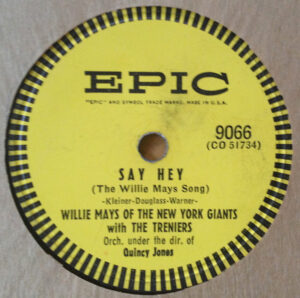
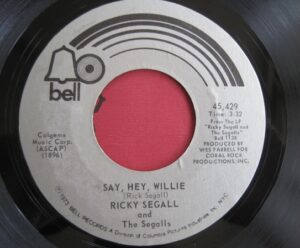
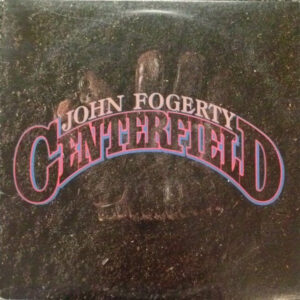 Willie Mays, perhaps the most romanticized of any center fielder anywhere ever — I can think of five songs of the top of my head that mention him prominently — is Willie Mays, and for 95 games, he was center fielder for the New York Mets. I never tire of peering up at No. 24 in the Citi Field rafters and warming all over. But he wasn’t brought back to town after fifteen years to play center field. He was brought back to be Willie Mays. Willie Mays, perhaps the most romanticized of any center fielder anywhere ever — I can think of five songs of the top of my head that mention him prominently — is Willie Mays, and for 95 games, he was center fielder for the New York Mets. I never tire of peering up at No. 24 in the Citi Field rafters and warming all over. But he wasn’t brought back to town after fifteen years to play center field. He was brought back to be Willie Mays.
 Don Hahn: Nice defense. Pennant-winner. Didn’t hit. Got traded for Del Unser. Don Hahn: Nice defense. Pennant-winner. Didn’t hit. Got traded for Del Unser.
 Del Unser, who benefits from his one full Met season coinciding with the year I was twelve, was an outstanding player for us in 1975. But even I who adored Del Unser as I stood wobbly on the precipice of adolescence didn’t look at a team that featured Seaver, Matlack, Koosman, Kingman, Staub, and Millan, and think, “here come Del Unser and the Mets!” (And there went Del Unser from the Mets in 1976.) Del Unser, who benefits from his one full Met season coinciding with the year I was twelve, was an outstanding player for us in 1975. But even I who adored Del Unser as I stood wobbly on the precipice of adolescence didn’t look at a team that featured Seaver, Matlack, Koosman, Kingman, Staub, and Millan, and think, “here come Del Unser and the Mets!” (And there went Del Unser from the Mets in 1976.)
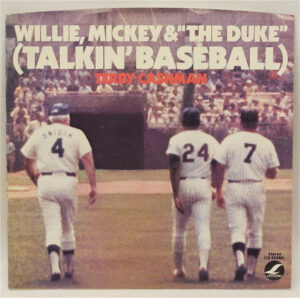
 Lee Mazzilli…now we’re talking about a center fielder who led the Mets. In 1979 and 1980, he was the heir to Willie, Mickey & The Duke, not to mention Joe D. He was talented, he was glamorous, and he could do everything very well if you didn’t count throwing. He also got moved to first base before being moved out of Queens altogether. Still, there was a genuine period when if you we’re going to see the Mets, you were going to see Lee Mazzilli and the Mets. You were also probably going to see the Mets lose, but let’s not pin that on Lee. Lee Mazzilli…now we’re talking about a center fielder who led the Mets. In 1979 and 1980, he was the heir to Willie, Mickey & The Duke, not to mention Joe D. He was talented, he was glamorous, and he could do everything very well if you didn’t count throwing. He also got moved to first base before being moved out of Queens altogether. Still, there was a genuine period when if you we’re going to see the Mets, you were going to see Lee Mazzilli and the Mets. You were also probably going to see the Mets lose, but let’s not pin that on Lee.
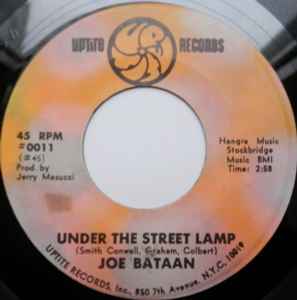 Mookie Wilson wasn’t a natural leadoff hitter, but he did lead off the rebuilding of the Mets when he arrived in 1980. You could legitimately say the Mets built a championship club around him, promoting and adding piece after piece until it was 1986. Mookie may have been the heart of those teams. We know he was their feet when it mattered most. He wasn’t their face, regardless of how much you were ready to kiss it in the early hours of October 26, 1986. Mookie Wilson wasn’t a natural leadoff hitter, but he did lead off the rebuilding of the Mets when he arrived in 1980. You could legitimately say the Mets built a championship club around him, promoting and adding piece after piece until it was 1986. Mookie may have been the heart of those teams. We know he was their feet when it mattered most. He wasn’t their face, regardless of how much you were ready to kiss it in the early hours of October 26, 1986.
Lenny Dykstra gnawed into Mookie’s playing time, turning Wilson into a part-time left fielder. From 1985, though the platoon he forged with Mookie to win a World Series, to the Sunday afternoon in 1989 he was sent from the visitors’ to the home clubhouse at Veterans Stadium, Nails could be really nails. Never quite made the case to be a regular in New York, though. Philly was a different story, as have been as his post-playing let’s call them adventures.
Lance Johnson (doing some skipping over some short-term solutions and lesser ideas) was a dynamo in 1996. Led our league in hits (227) and triples (21). Still owns both single-season Met records. Probably always will. Stole fifty bases. With Todd Hundley and Bernard Gilkey, stood as the reason to keep watching a furshlugginer ballclub. Traded in 1997.
Brian McRae was who we got for Lance Johnson, and who we’d trade for Darryl Hamilton.
Darryl Hamilton delivered one huge base hit in the 2000 postseason. Sometimes one huge base hit is all you need.
Jay Payton had already usurped center field from Hamilton and the others who’d had their turn-of-the-millennium moments as 2000 grew successful. Big prospect. Long career. Didn’t really and truly click as a Met except in spots. Certainly didn’t last as a Met.
Mike Cameron put together a quietly gaudy season in 2004. Thirty home runs. Twenty-one steals. Exciting defense, which is to say he liked to play shallow but usually caught up to balls. With Cliff Floyd, installed “The Way You Move” by Outkast as that season’s “L.A. Woman,” not that that’s much remembered, because 2004 wasn’t 1999. And Cameron wasn’t long for center field.
Carlos Beltran…he’s Carlos Beltran. He meant a lot of things to the Mets as soon as he signed for seven years in 2005, beginning with ending Mike Cameron’s tenure in center field, and ending with beginning Zack Wheeler’s affiliation in Flushing. As good an everyday player as we’ve ever had. Our all-time center fielder by consensus. Faith and Fear’s Most Valuable Met for 2006, when he had a lot of competition. Gold Glove. Silver Slugger. Many-time All-Star. Got what we paid for. And yet, can’t be called THE Met of his time, not when David Wright and Jose Reyes were the marquee attractions at Shea Stadium and Citi Field. Not that Wright and Reyes would have starred on contending clubs without Beltran doing his share alongside them. The marquee between 2005 and 2011 no doubt implied “and featuring…” for Beltran. Definitely played a huge role in his his era, never quite the defining character of his era. That’s not a knock. It’s relevant only to the notion of the Mets rarely being unquestionably led by their center fielder, whoever their center fielder has been. If it didn’t happen when Carlos Beltran was their center fielder, maybe it’s not fair to expect it to have happened ever.
But it did happen on other teams in the prime of Mays and Mantle and DiMaggio and Trout and Griffey and Dale Murphy, to name a handful of immortals; we’ll omit Pete Crow-Armstrong for the sake of our sanity. It’s not like those center fielders are garden-variety, so perhaps the bar is raised too high. If the Mets could be getting Carlos Beltran-level production in center field today, boy would we take it. We’d take the best of Angel Pagan, which we had for approximately a year (he was here longer); or the best of Juan Lagares, which we had for approximately a year (he was here longer, too); or the best of Brandon Nimmo (who delivered it in center in more years than one, but age shifted him to left). In 2024, we got by with Tyrone Taylor and Harrison Bader, two guys who surely had their ups and downs hitting but caught what needed to be caught, and you almost didn’t notice that they didn’t necessarily hit what needed to be hit. This year, with a powerful enough cast to theoretically excuse a hole in the bottom of the lineup, the top of the lineup has become too hollow to excuse anything.
Center fielder Tyrone Taylor, meet center fielder Cedric Mullins. Neither of you has to be Willie Mays from when he was really the Say Hey Kid. Two or three months making like vintage Mookstra would suffice.
by Greg Prince on 31 July 2025 1:08 am In this emotionally transactional season, when we seem to exchange our adoration for victories and withhold our affection when dealt defeats, the Mets have gotten to transacting in earnest. With the Thursday 6 PM trade deadline approaching, they acquired two high-profile relievers before the sun set on Wednesday. Admittedly, at no time amid San Diego’s 5-0 whitewashing of the Mets late Wednesday afternoon did I think, “We’d really be in this game right now if we had a better bullpen.” But, boy, have I thought that a lot this year.
So now we have a better bullpen. Who knew that thinking about it would bring it forth? More likely, it has something to do with David Stearns and everybody whose input he values thinking we needed a better bullpen. Nobody watching the Mets hasn’t been thinking that. Plan A — try to get by with random relievers attempting to record crucial outs — didn’t work so well. Maybe acquiring guys with good arms and great reps will help.
It won’t help the offense. The offense was helpless against Yu Darvish & Co. at Petco Park, same as it was futile the night before against whoever threw confounding pitches past virtually every Mets batter. The defense hasn’t been so hot, either, and the starting pitchers are still grappling with issues of endurance or performance or both. The Mets were swept three in San Diego. Two of the games were not going to be reversed had the Mets already obtained the services of our newest setup saviors, Tyler Rogers and Ryan Helsley. Maybe one of the games would have had a better outcome with such accomplished relievers bridging starter to closer. Those very relievers will now be asked to accomplish wonders on behalf of the Mets. On this team, three stress-free outs can be a wonder. In this season, when the Phillies shadow us and we shadow the Phillies, one win can make a ton of difference.
Gone, to get Rogers from the Giants, are one guy we previously relied on, Jose Butto; one guy we got a glimpse of, Blade Tidwell; and one guy whose name caused modest stirrings in our prospect-anticipant souls, Drew Gilbert. Gilbert was part of the Steve Cohen Supplemental Draft haul of two trade deadlines ago. The Mets were in a different place with different priorities that July. Getting Gilbert seemed a coup then. The Mets are in another place this July, tenuously in first place, a position requiring the kind of securing Rogers has been brought in to provide.
Helsley from St. Louis cost one minor leaguer I had heard of, Jesus Baez, and two I hadn’t, Nate Dohm and Frank Elissant, which doesn’t mean they don’t have futures. The future is very much the present for these Mets. Recent appearances to the contrary notwithstanding, these Mets were built to win. Yet the present has been leaky of late. It had been solid as recently as the series in San Francisco that preceded the series in San Diego. Our bullpen was fortified by the arrival of Gregory Soto when we were in Northern California. The same Soto took the first loss in San Diego. Rogers and Helsley are probably going to have a bad inning or two, too, which will possibly translate to Met loss or two. The trick here is to trust that established relievers who’ve been having fine years will have many more good innings than bad, which will, in turn, lead to more Mets wins than losses. It all looks so logical before Jeremy Hefner picks up the phone and somebody starts getting loose.
The Mets could definitely use more wins. They’ve suddenly stopped accumulating them. They need more than a better bullpen, but it appears they have a better bullpen, at least. We’ve seen enough innings to tell us that ain’t nothin’.
by Jason Fry on 30 July 2025 12:41 am Back in March, I picked up a “flex book” for the Brooklyn Cyclones — vouchers for 10 discounted tickets, to be used for whatever games I wanted, tickets distributed among them as I saw fit. It was a good idea and thinking about baseball made me happy, so why not?
Then life got in the way: travel, heat waves, miscellaneous domesticity. Earlier this month I got an email reminding me that the season was ebbing away and I hadn’t used any of my vouchers. Which was kind of the Cyclones — after all, they already had my money and didn’t particularly need me.
Then, while I was in Atlanta at Comic-Con, my phone rang. I answered it reflexively and it was … King Henry. Yes, the indefatigably cheerful on-field ringleader of Cyclones between-inning skits. His Highness’s mission was the same as the sender of the earlier email’s: a cheerful reminder that there were fewer and fewer dates left.
(Now, I’m well aware that everyone who works for a team in the low minors does every job — years ago our kid was mystified that the Cyclones employee who wrangled their birthday party somehow vanished before Sandy the Seagull paid a visit and then returned afterwards — but still, there I was at a sci-fi convention chatting with King Henry. Hadn’t had that on my bingo card!)
Tuesday’s heat was miserable bordering on crushing, but I was determined: I was headed for Coney Island. I collected my pristine book of vouchers at the box office, traded one of them for a Cyclones cap in Miami Vice teal and pink, and secured a Brooklyn summer ale and a Nathan’s hot dog.
And you know what? I immediately felt happier. For one thing, it was a good 15 degrees cooler next to the Atlantic Ocean. There were Sandy and Peewee, King Henry and the surf squad, and the Cyclones themselves, wearing blue and pink for some reason. I settled into my (very good) seat, noted the scoreboard had been revamped, and got down to the business of watching Single-A baseball.
Which is so wonderfully different. Watching the Cyclones, I don’t live or die on every pitch. I clap for solid hits or nice plays, try not to groan at misplays (Emily and I used to remind each other that “anything can happen in the New York-Penn League,” and the same is the case in the South Atlantic League), and I smile at seeing only two umps and managers coaching third. I lose track of who’s at the plate, forget the score, and it’s fine. I’m free to simply enjoy the sounds and rhythms of baseball.
By the middle innings the sun had gone down, taking even more edge off the heat, and the neon rings that adorn the light poles at Maimonides Park had started to glow. Beyond the right field corner, the Parachute Jump coruscated merrily, its own vertical light show. I got a cup of ice cream (with sprinkles, of course), secured a 2025 Cyclones baseball card set, and watched the Cyclones and the Jersey Shore Blueclaws do battle.
Said battle didn’t go particularly well for the Cyclones, who fell behind, tied it but then fell behind again. (Unfortunately Brendan Girton, who’s had a nice year as a starter, came out of the game in the second with an apparent injury.) I didn’t see them lose, because by the eighth I’d had my fill and I knew the Mets and Padres were soon to commence hostilities.
So in the eighth inning I left the Cyclones to it — something I’ve almost never done at Citi Field, but which isn’t a sin in A-ball. Life got in the way earlier this summer, but the Cyclones were waiting once I was able to rearrange things, and I was happy to discover how much I’d missed them.
As for the actual Mets and whatever happened in San Diego … oh, let’s not ruin a nice night.
by Greg Prince on 29 July 2025 11:45 am Every time we come to Southern California, we are absolutely the Clampetts.
—President Jed Bartlet
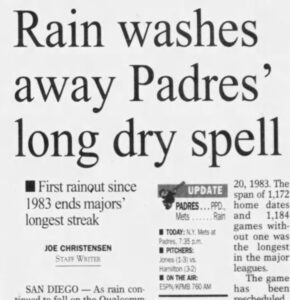
Albert Hammond offered a rather broad assertion in 1972 when he informed the nation’s pop radio listening audience that it never rains in Southern California. Seems it rarely rains in Southern California. On May 12, 1998, the Mets visited San Diego and were, in fact, rained out. The Padres had gone fifteen years between such postponements, but the Mets had been rained out seven times already that young season. Something had to give. When informed his club was the first since 1983 to have the tarp pulled over its plans at the recently rechristened, suddenly soaked Qualcomm Stadium — always the Murph to us — Mets manager Bobby Valentine dryly replied, “Well, I’m glad we’re here.”
 More figuratively than literally. Back in New York, I’ve learned to dread Met trips to San Diego because I always expect disaster to unfold late. Maybe “always” should be avoided the way Hammond might have rethought “never” in the face of meteorological aberrations (his song’s No. 5 peak on Billboard notwithstanding), but I’ve seen enough.
• Thirty-two walkoff losses since 1970, the year after the inception of Mets @ Padres interactions.
• Seventeen walkoff losses in the past thirty years we’ve visited the southernmost of MLB’s Southern California outposts.
• Seven walkoff losses at Petco Park before the aesthetically pleasing facility turned eleven.
• And, after a decade of slipping out of town without Met reality meeting my perception, in August of 2024…wham-o!
Jackson Merrill took Edwin Diaz deep to break our hearts on a Sunday afternoon and push the Sisyphean Mets straight downhill, boulder tumbling alongside and perhaps over them. Of course the 2024 Mets, propelled in part by the musical stylings of the indefatigable Candelita, were a pick themselves up, dust themselves off, and start all over again enterprise. Jackson Merrill slaying Edwin Diaz didn’t kill the Mets. At the time, however, I didn’t suspect it would make them stronger.
It’s almost a year later. The Mets entered the East Village section of San Diego feeling strong. The Mets had won seven in a row, four at Citi Field, three at Oracle Park. Neither of those venues is Petco Park, so forgive a weary Mets fan who knew he wasn’t going to make it through nine innings Monday night for bracing groggily for the worst. The single walkoff loss the Mets had experienced in the shadow of the Western Metal Supply Co. building since 2014, the one last year, seemed destined to double.
It did. In the moment, it was a debacle. In the long term, it’s not necessarily a disaster, but they’re all disasters as they’re happening. The seven consecutive wins that served as prelude to this disaster of a debacle/debacle of a disaster figure to cushion the aftereffects of Monday night’s fall. We’re still in first place. We’re still a game-and-a-half up on the Phillies. We’re still in as good a shape as possible despite the Padres inflicting as acute a case of the Mondays on the Mets as one could imagine.
 There are dry spells, there are debacles, and there are disasters. Somewhere in there, there are the Padres eventually defeating the Mets in their last at-bat. Mark Vientos hit a grand slam. That’s the good news. He hit a grand slam after an intentional walk was arranged so Vientos could bat with the bases loaded. That was the better news, harking back to the “I took it personal” homer he hit after the Dodgers chose to pitch to him rather than Francisco Lindor in 2024’s NLCS. The bad news is that for the third straight year — and the twentieth time in franchise history — a Met hit a grand slam in a losing cause. One of those hard-luck slammers, in 2009, was Fernando Tatis, Sr., then known as simply Fernando Tatis. The cause was winning when Mark unjuiced those sacks. He’d catapulted the Mets ahead, 5-1. This was after Fernando Tatis, Jr., had robbed Mark of an earlier home run (son of a Met!), and after Juan Soto was robbed of a legitimate ball-strike count by Emil Jimenez. Soto all but dared Jimenez to eject him. Carlos Mendoza stepped between his star right fielder and the judgment-impaired umpire and took the heave-ho bullet instead.
Going to the bottom of the fifth, Vientnos’s granny should have assured us everything was going to be just fine, that we could drift off to sleep without the Padres lurking under the bed coming out to haunt us. Silly me, however, remained awake. I saw the bottom of the fifth. Before the bottom of the fifth concluded, I thought I was seeing the bottom of the sixth from Opening Day 1997 at Qualcomm, just after San Diego forgot how to name its ballpark properly. That was the afternoon Pete Harnisch nursed a 4-0 lead until it died an agonizing death. Harnisch and three relievers combined to give up eleven runs before recording three outs. The season turned out OK and then some, but it didn’t start well.
The fifth inning Monday night disintegrated on contact. Before the game started, SNY’s cameras spotted Frankie Montas in something of a prayer circle with his family, our starter at the railing, his kin in the stands. It was a very touching tableau, and maybe the congregating with loved ones helped Frankie on the mound. He withstood trouble in the second and third pretty well and put down the Pads on seven pitches in the fourth. But in the fifth, “where’s your God now?” felt a reasonable question to wonder.
Tatis doubled off Brett Baty’s glove to lead off. Brett Baty was playing second base at the time. Balls of the second baseman’s glove (Brett dove) don’t usually become doubles, but Tatis had accomplished a bank shot, and the kind of inning the fifth was about to be was more than hinted at.
Luis Arraez, who would have punished Mets pitching before July 28 this year if only he’d batted against it, lofted one of the oddest home runs you’re ever going to see. It was basically a pop fly down the right field line that you never doubted was going to stay fair and go out. Luis Arraez has Luis Arraez power and it comes out in the funkiest ways. It also trims Met leads in half.
In the manager’s absence, Mendoza’s brain trust maintained its faith in Frankie for three more batters. Their faith was not rewarded. Merrill didn’t damage Montas, but Manny Machado (single) and Xander Bogaerts (double) sure did. John Gibbons and Jeremy Hefner said goodbye Frankie, hello Huascar. Mr. Brazoban was an instant faith-rewarder, getting Gavin Sheets to foul out, but the part where a pitcher covers first base flummoxed the reliever on duty. Jake Cronenworth lashed a ball up the first base line. Pete Alonso corralled it (Pete’s in there for his defense), but Huascar chose to watch the play develop before opting to participate in it. Cronenworth beat Brazoban to the bag, allowing Machado to score the run to make it Mets 5 Padres 4. Instead of there being three outs, two hits from the next two batters made it Padres 6 Mets 5. A wild pitch and a walk loaded the bases for Arraez. Yeah, this was going to be April 1, 1997, reincarnated, with Huascar Brazoban as Yorkis Perez, Toby Borland, and Barry Manuel all rolled into one, except Arraez, the Padre contact machine who regularly evokes comparisons to Tony Gwynn, somehow made the third out of the inning.
We were losing by only one run, but the vibe was unmistakably off. And my eyes were soon unmistakably closed, not to open again until I saw a graphic on the screen that announced a final of Padres 7 Mets 6. By then, I was trying to remember if that was the score when I nodded off. It was not. Apparently, Ronny Mauricio homered to tie the game in the top of the ninth, which would have been great to have seen live, then Gregory Soto received his full Met reliever initiation in the bottom of the ninth, which I have to say I didn’t mind missing. In the middle of the rally that permitted the Padres to walk off the Mets for the thirty-second time ever, our newest Soto practically threw a ball away in attempting a forceout at second. The hitter? Candelita himself, Jose Iglesias, last season’s master of the vibe. Jose was with us then. The spirit of OMG was with us then. Now, regardless of the words the Montas family might have shared pregame, forces were conspiring against us. Gregory got two outs, but gave up the game-winning single to Elias Diaz.
It may rarely rain in San Diego, but girl, don’t they warn ya, it pours. Man, it pours.
|
|






