The blog for Mets fans
who like to read
ABOUT US

Faith and Fear in Flushing made its debut on Feb. 16, 2005, the brainchild of two longtime friends and lifelong Met fans.
Greg Prince discovered the Mets when he was 6, during the magical summer of 1969. He is a Long Island-based writer, editor and communications consultant. Contact him here.
Jason Fry is a Brooklyn writer whose first memories include his mom leaping up and down cheering for Rusty Staub. Check out his other writing here.
Got something to say? Leave a comment, or email us at faithandfear@gmail.com. (Sorry, but we have no interest in ads, sponsored content or guest posts.)
Need our RSS feed? It's here.
Visit our Facebook page, or drop by the personal pages for Greg and Jason.
Or follow us on Twitter: Here's Greg, and here's Jason.
|
by Jason Fry on 13 August 2022 12:49 am Let’s get this part out of the way: I was in the front of the Promenade a fair distance down the first-base line. So I can’t tell you jack about Max Scherzer‘s stuff or location or exactly what happened to various Met defenders or anything else that relies on the nuance of an up-close view. Being in the park isn’t about any of those things unless you’re in the really fancy seats; rather, it’s about what you can’t recreate in your living room, namely becoming a small part of a shared experience.
And hey, that part was fun, even as everything else proved frustrating. The high-water mark, of course and alas, came when Francisco Lindor drove a Seranthony Dominguez sinker to deep center with no one out in the ninth and Starling Marte on second. The ball was going to be gone for a walkoff homer, or off the wall for a walkoff single, or at least it was going to be a long fly that would move Marte to third and allow the Mets to win the game on a walkoff a batter later, and Citi Field was one gigantic jet-engine roar which you knew was only prelude to the bigger roar to come.
Well, except it never did.
Lindor’s drive was a long fly. Marte did indeed move to third. And so the ninth inning came down to Dominguez against Daniel Vogelbach, who hit the requisite fly ball to left, where someone named Matt Vierling was waiting. It wasn’t as deep as you’d like, but it would take a perfect throw to get Marte, whom Joey Cora properly sent homeward. Vierling’s throw came in hard and slightly up the first-base line, where J.T. Realmuto snapped it out of the air before flinging himself at Marte, catching him across the chest a moment before his hand slapped the plate. The Mets wouldn’t win in a walkoff, Vogelbach’s rocket ride as Citi Field cult hero wouldn’t reach new heights, and the Mets and Phillies would play on into extra innings.
Honestly, it was kind of a miracle that things got that far. Scherzer looked out of sorts in the early going, battling himself and a run of buzzard’s luck that saw plays not quite made, ducksnorts and parachutes drop onto the outfield grass, and two Met infielders exit — Eduardo Escobar with what’s billed as a side injury and Jeff McNeil with a lacerated finger suffered in an odd collision with Rhys Hoskins. But then other Mets looked out of sorts too — besides the defense being ever so slightly miscalibrated, the hitters did next to nothing against Ranger Suarez, who hung around far later than most enemy starters these days. The Phillies, meanwhile, were playing crisp defense, perhaps mindful of all the bulletin-board material Keith Hernandez recently gave them.
One team played crisp and clean and the other one looked a bit ragged, but that still meant a 1-1 tie going to the 10th.
And then, ah, the bedrock unfairness of baseball. Mychal Givens made a nifty play on a little tapper, then got a flyout and a strikeout — a blameless performance for which he was rewarded with a loss. That flyout unfolded almost as a mirror image of the play on Marte: Alec Bohm hit a fly to Marte, a bit deeper than Vogelbach’s, which Marte fired in to Tomas Nido on one hop, in plenty of time to get Bryson Stott at the plate — except that hop was a short hop, and the ball ticked off the tip of Nido’s mitt and bounded away. Could Nido have fielded it? Yes. Was it a tricky hop requiring a do-or-die snag? Also yes. Did the Mets make those kind of plays on Friday night? Not often enough.
The ball bounded away, allowing Stott to score and the Phillies to turn the ball over to David Robertson, so recently coveted as one of our bullpen additions. (That was perhaps a little extra cruel.) Robertson got Tyler Naquin looking at a cutter on the edge of the strike zone, elicting a big collective oof! from the crowd, and then coaxed a grounder from Luis Guillorme, and so the Phillies had won — a win they thoroughly earned, but one that will leave a mark anyway.
by Greg Prince on 10 August 2022 11:45 pm Some days this year as a Mets fan, if you’re lucky (which you are if you’re a Mets fan this year), you feel a little like Tommy Flanagan — pronounced fluh-NAIG-un — Jon Lovitz’s truth-stretching character whose Saturday Night Live catchphrase “that’s the ticket” had the country in stitches for about a year in the mid-’80s. As with many of the decades-old popular culture references I’m compelled to invoke in this space, maybe you had to be there.
Flanagan was referred to as The Pathological Liar in deference to everything coming out of his mouth stretching credulity. That sort of behavior used to be considered universally antithetical to trustworthiness, thus it was considered hilarious rather than admirable that somebody would do nothing but lie to a mass audience. Another case, perhaps, of having had to have been there. Here and now, it could be that the hardest part of being a Mets fan is when you offer a factual account of their daily exploits, it’s almost impossible to have it sound believable.
Honestly, it’s the only hard part of being a Mets fan here and now.
“Yeah, I went to the Mets game today. They scored six, no eight, no TEN runs! Francisco Lindor — he’s our shortstop — scored one, no two, no THREE runs himself. He’s scored at least one run in five, no nine, no THIRTEEN games in a row. That’s a team record! Almost everybody, no EVERYBODY in the starting lineup was on base. Two, no four, no SIX of them scored runs. One of them leads the ENTIRE LEAGUE in runs batted in. The Mets won their third, no fourth, no SIXTH game in a row and have nearly as good a record as they did at this point in 2006, no 1988, no 1986! And this weekend we’re gonna have Max Scherzer starting for us on Friday night and Jacob deGrom on Saturday night because Max Scherzer is on our team and Jacob deGrom is healthy. And if we’re ahead by only a little in the ninth inning, we’re not gonna be the least bit nervous. No, we’re gonna clap along while somebody plays trumpets. Oh, and at today’s game, I sat in plush seats practically behind home plate next to a real Broadway singing star. Yeah, that’s the ticket!”
Good bit. Except everything in the above paragraph is the emmis truth. It only sounds like a wild exaggeration if you’re not in the middle of it. It is our good fortune to be in the middle of all of it. The six in a row is our current roll, the last three of which came at the expense of the Reds, following three taken from the Braves, encompassing a 15-of-17 megaspurt that has taken down opponents of all competitive stripe. The Reds would be charitably described as middling. They weren’t too bad before playing us. A few innings versus the Mets seemed to have them checking to see if the jet whisking them to Iowa for the Field of Dreams game was fully fueled and ready to fly. They were in the midst of an afternoon nightmare Wednesday.
Lindor indeed continued to do Lindor things, which is the most convenient way to describe the tear he’s been on for more than a month. A couple hits, a couple ribbies, a walk, another three runs when just one was needed to tie David Wright’s consecutive games scoring mark. Francisco was hardly alone. National League RBI leader Pete Alonso — four shy of a hundred already — went three-for-five. Tyler Naquin, who’s probably happy to no longer be a Red and even happier to be a Met, homered and scored twice himself. Daniel Vogelbach brought his milkshake to the yard. And so on and so forth and what have you. Truly it was hard to keep up with the deluge of offense. Just ask Cincy, once you scrape them up from their 10-2 flattening.
The Mets’ pitching side, while not as spectacular (how could it be?) was sound, which itself was spectacular after last Friday when Taijuan Walker kinda blew up in the sole loss to date on this homestand. Plus there was something mumbled about a sore hip. Tai appeared ship shape and Bristol fashion over six innings, allowing only two runs to the Reds, and our modest anxiety to dissipate. Walker is a highly dependable No. 3 starter on this staff. So is Chris Bassitt. So is Carlos Carrasco. The Mets have five starters, all of whom I’d be OK with as Game One starters in a playoff series, all of whom I’d be comfortable with should they find themselves with the ball to start a decisive Game Five or Game Seven.
Yeah, I know we have deGrom and Scherzer. Yeah, I know we have two months to go. But I also know that at 73-39, the 2022 Mets are inhabiting rare air. How rare? Wrap your mind around this: should the Mets win three of their next five games, albeit against Philadelphia and Atlanta (who, conversely, have to play us), they will be 76-41 after 117 games.
The only Mets team that’s ever been 76-41 after 117 games is the 1986 edition, and they had to go into a slump to dip to 76-41. No Mets team that isn’t the 1986 Mets ever shows up in the “best record after ‘x’ games” conversation once the season passes the one-third mark. Yet the 2022 Mets are on the cusp of matching the 1986 Mets, even if it’s for one fleeting juncture.
Dude, that’s Amazin’.
 Liz Callaway, surrounded by admirers. Also Amazin’: that kicker slipped in earlier about me taking in Wednesday’s game in the company of a real Broadway singing star. That’s no prevarication. Through the machinations of online Mets fandom, social media bonhomie and another kindred spirit with access to really fine (that’s the) tickets, I absolutely found myself sitting practically behind home plate next to Liz Callaway, star of stage and song and, especially, Sondheim. Stephen Sondheim is the nexus where we bonded virtually a few years ago. Sondheim and the Mets, of course. Liz is a serious fan with a voice serious enough to have tamed the national anthem on multiple occasions at Shea Stadium and Citi Field. She recently played a series of shows in Manhattan dedicated to her friend and inspiration Mr. Sondheim, or “Steve” as she honestly comes by calling him. She was acclaimed as sensational. I sure thought so. So did my pals Brian and Mitch, whose feel for vocal artistry is clearly as impeccable as their taste in baseball teams. Brian’s the one who had the bright idea to bring us all together for a game and made it happen.
The Mets, meanwhile, continue to make it happen every day. No lie.
The 1986/2022 comparison, with a touch of 1973, gets a longer look on this week’s National League Town. You oughta listen here.
by Jason Fry on 10 August 2022 1:03 am The Mets won a quiet, even slightly dull game against the Reds … with the lack of excitement counting as a good thing.
Carlos Carrasco was terrific until he found his tank on E. Francisco Lindor and Jeff McNeil homered. Darin Ruf collected two hits, one against a pitcher from the side he’s not supposed to see. A trio of bullpenners we don’t entirely trust — Mychal Givens, Trevor May and Seth Lugo — put up zeroes, though I’ll grant May’s wasn’t particularly elegant.
So what’s ho-hum about that? Nothing! It’s amazing to think that Carrasco is now tied for the N.L. lead in wins, given the horrific season he had last year. Just as it’s been remarkable to watch Lindor wash away the crud and dirt of a star-crossed first season and close in on various Met single-season shortstop marks. And how fun has it been watching McNeil get back to being McNeil, serial abuser of baseballs?
But this was one of those games that felt snoozy once it got started and came with warnings of danger in the middle innings. The Mets drove up Mike Minor‘s pitch count and cuffed him around, but Minor refused to break, stoically giving his team innings and keeping them within shouting distance if not quite striking distance. Carrasco tired in the seventh and before you could blink Jake Fraley had smashed a ball off the Citi Pavilion and the Reds had cut a steep four-run deficit into an all too scalable two.
Suddenly Tuesday’s game looked like one of those where the hare ends up blinking and amazed at the sight of the tortoise ambling across the finish line just out of reach — a forgivable letdown, but one to get the grumbling muscles exercised.
Instead, a couple of good things happened in rapid succession.
First, Buck Showalter called on Givens, the new recruit who’s shown bad body language and worse numbers so far. His assignment was to bail out Carrasco with two men on and Nick Senzel at the plate. Givens passed the test, fanning Senzel, and then Showalter wisely turned to another reliever despite Givens having thrown only four pitches — it was more important to send the former Oriole into the clubhouse on a psyche-restorative high note than it was to spread out the workload the way Showalter would probably have preferred.
Second, the Mets immediately pushed the Reds back down the hill they’d just climbed, with Ruf’s two-run single restoring the four-run lead. Good teams running at full hum do that, beating opponents without working up too much of a sweat. It’s a habit that’s comforting when you’re on the right side of the rooting equation and infuriating when you’re not.
Happily, we can take comfort in it, at least for however long this pinch-me stretch of baseball continues — which I say not out of superstition but out of the sad wisdom that even great teams hit ruts where they seem to have somehow forgotten how to play baseball. Should that happen, though, you get the feeling that Showalter will say the right things, one of the clubhouse’s wise old heads will offer helpful counsel, and then a determined starting pitcher — this year you can take your pick — will decide that it’s on him to change the narrative.
Or maybe there will be a lot more ho-hum wins until the calendar dictates that all spotlights are on full. That would be fine too.
by Greg Prince on 9 August 2022 12:32 pm “All right, Harold. Let’s do it.
“OK, everybody, Buck is available to answer questions. First, Steve.”
“Buck, great 5-1 win tonight over the Reds. In light of the passing of Olivia Newton-John earlier today, do we have to believe this Mets team is magic and that nothing can stand in their way?”
“Aw, is that right? Olivia Newton-John? She couldn’t have been that old. How old was she? Seventy-three? You’re kidding. My wife and I saw her perform one year at some winter meetings or postseason banquet. When I worked for the Diamondbacks, Jerry Colangelo introduced me. What a nice lady. She could really sing. I’m sorry, what was the question? Are the Mets magic? Well, we work hard to do what we do. So does the other team. It would be presumptuous to think nothing could stand in our way. I tell you, though, we got a really solid inning out of Otto tonight. I don’t know if it was magic, but we were happy to get it.”
“Tony, a question for Buck?”
“Yeah, Buck, the great pitching you got from Chris Bassitt tonight, after the kind of outings we saw from Scherzer on Saturday and deGrom on Sunday, do you think opponents look at your rotation, throw up their hands and beg, ‘please, mister, please’?”
“They beg? Nobody in this league begs. I hope they’d have a healthy respect for our pitching and all aspects of our game like we do for theirs. Chris certainly went a long way tonight. What did he go? Eight innings? That’s a big help to our bullpen, which has been so good lately. Did you see Joely on Sunday? Those two-and-a-third were a lifesaver. But, you know, I’ve always wondered about the line ‘please don’t play B-17.’ What do you suppose the song was on that jukebox the button-pushing cowboy had to hear? We try to play everybody who can help us win, but of course we can’t play 17 anymore. That’s hanging up there way above left field. I think Keith would express his displeasure if we were playing 17. He might wanna get a few swings in the cage first.”
“Tim, you’re up.”
“Buck, your team got off to a strong start tonight when Starling Marte muscled a home run for an immediate two-run lead over the Reds. Would you call that a matter of telling your players, ‘let’s get physical’?”
“If we’re doing anything physically outstanding out there, that’s a credit to the training staff. They come in early, they’re keeping the players ready and loose, drinking lots of liquids. This hot weather makes hydration essential. We have a whole lot of guys who can hit the ball far if they find their pitch. Where Starling really excels is the mental game. Francisco, too. What’s the saying about baseball being 90% half-mental? I once asked Yogi at a Yankee old-timers game if he really said that. He didn’t. But if you’re asking about good shape, Tyler Naquin is a specimen. Did you see him go to third on that triple? Of course the first winter Angela and I had cable, that video was all over MTV. There was nothing else on, so we had this crazy new channel on more than we should have, probably. Those guys, the ‘Physical’ guys? They were in great shape. No wonder that was such a big hit.”
“The other Tim.”
“Buck, speaking of great shape, you’re 32 games above .500 for the first time in sixteen years, you’re seven games ahead of the Braves after tonight. But you still have four in Atlanta next week plus a couple of series against a very hot Phillies team. Does that give you enough to tell your fans, ‘don’t stop believin’?”
“I saw that. That many over .500 for the first time since 2006. That was Willie’s team, right? Willie Randolph is a great guy. I’m surprised he never got another shot at managing. He won a division title his second year. I don’t know what happened after that. But let me tell you something. Everybody thinks those lyrics about not stopping believing belong to Journey. Their song got used at the end of that gangster show. What was it called, the one in New Jersey? I should know that, being a manager in New York again. Right, The Sopranos. Great song. You still hear it all the time. Olivia had a different song, a little more country, ‘Don’t Stop Believin,” when I was comin’ up in the Cape Cod League. That’s when I got the nickname Buck supposedly for how little I’d wear in the clubhouse. I’m not gonna tell you to not stop believin’ that story. It’s makes for a good story, whether it’s true or not. As far as the fans, we really appreciate their support. Did you hear how loud it got tonight when Vogie drove in Francisco? I know we didn’t have as many people here as we did over the weekend, but it sounded the same. We have a sponsor, but you could call the ballpark Xanadu if you want. It’s been that good for us. The key to that inning was Pete making their pitcher work. Pete didn’t get a hit tonight, but he saw a lot of pitches. But ‘Don’t Stop Believin’” is a great song. She had so many of them.”
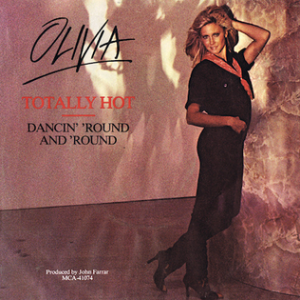 When your team has won of 13 of 15 in July and August, it can be said they are Totally Hot. “Deesha.”
“Buck, your lineup, one to nine, when everybody is going well, could be said to be running deeper than the night. How do you prevent slumps from changing that dynamic?”
“Players don’t have slumps. I know it looks like they have slumps when they go a while without many hits, but there are ebbs and flows in this game and everybody is subject to them. I know I am. I take the same route to the ballpark every day, yet I missed my turn off the Grand Central this afternoon. Can you believe that? They were doing construction and I got distracted, and next thing I knew I think I was practically in Brooklyn. Glenn was gonna be promoted to manager if I hadn’t gotten turned around and I’d be scouting the Cyclones. Wouldn’t be a bad change of pace maybe. But our team prides itself on our consistency. The thing about ‘Deeper Than The Night,’ the song I think you’re referencing, is it was on that album that came out after the Grease soundtrack. My god, that album and that movie were huge. I think I saw it three times the summer it came out. It was the only one playing. You don’t have much of a choice in those minor league towns. Of course they didn’t have streaming then. You just hope too many teenagers didn’t start smoking because of Olivia as Sandy at the end in the leather jacket and all. The album after was called, oh…Totally Hot. That was a real image-changer for her, but she knew she could shift that way after those last scenes in Grease. But to that question earlier, the Phillies are totally hot right now, but we’re not looking past Cincinnati. We think we’re doing OK, too. Anybody else, Harold?”
“We’ll finish up with Mike.”
“Buck, the fan energy around the Mets has always been one that’s kind of a hopeless devotion. Yet you’re suddenly incredibly formidable. Is it some kind of twist of fate that you’re this good? Or are you still worried that the Braves will make a move on you? Can you yourself be mellow?”
“All right, y’all are just playing with me now. Listen, we’re gonna miss Olivia Newton-John. I’m just glad she left us so many great songs. We oughta do something for her here, shouldn’t we, Harold? I mean we had that slogan, the Magic is Back. I wasn’t here then, but I remember that. I thought it was clever, and she had that song at the same time. I’d love to hear her music during BP or between innings. The players might be too young to want to use it for their walkups or whatever. Maybe I’ll just listen on my drive home tonight. Maybe I won’t get lost. But I think our fans can all be hopeful. I don’t think our success to this point is sudden. The coaching staff and myself had a short spring, but we had a lot of willing players putting in a lot of effort and I think you’re seeing it pay off every night. I don’t believe in fate. Too much can go wrong. Atlanta is still capable of going wrong on us if we don’t keep doing what we have to do. Mellow is for after the season and, if we’re lucky, the postseason. We’ll have to keep grinding and make our own moves. Y’all should make a move on the clubhouse. Talk to the players who win these games. They’re the ones that you want.”
by Greg Prince on 8 August 2022 11:25 am The first step toward a decisive Mets victory over the Braves on Sunday came whenever a 1:40 PM start was rescheduled for 4:10. Billy Eppler and Buck Showalter looked ahead at Saturday’s day-night doubleheader and understood their team would be better off with an additional two-and-a-half hours after what loomed as a grueling day. Saturday had the Mets playing nearly seven hours of baseball over approximately nine hours of clock. The Met brain trust saw an opportunity for a little extra rest in the heat of August, in the heat of a pennant race, in the heat of the most crucial head-to-head series of the season. They saw an edge to be had and they grabbed at it. If it was going to provide a little extra rest to the Braves, too, so be it.
Had Sunday’s game started as originally slated, it would have been interrupted by a deluge. By 3 o’clock, Citi Field was withstanding a reported “monsoon”. Hyperbole or not, at best there would have been a holding pattern and uncertainty around first pitch. At worst, the Mets’ first pitcher might have been limited in his utility and a heartily worked bullpen would have been forced into action, throwing sooner than anticipated and maybe more than desired.
The Mets’ first pitcher, oh by the way, was Jacob deGrom. Do you really want one of his starts, let alone his first home start in thirteen months — against the Braves, of all teams — dampened, drenched or possibly set aside out an abundance of caution? Would you prefer a modified all hands on deck situation, the modification being only a few hands were available?
No. You want a 4:10 start that could be easily nudged to 4:30 once the rain passed and the tarp was rolled. You want Jacob deGrom to stride to the mound as if it had never rained, as if the previous thirteen months measured merely five days. You want to feel the complex ecstasy of witnessing the righthander who warms up to “Simple Man”. And then you want what you almost invariably get from a healthy, active Jacob deGrom.
Did Eppler and Showalter know weeks in advance that it was going to rain mid-afternoon in Flushing on August 7 and that deGrom, rehabbing so long, was going to be on track to start that Sunday? Probably not. But I swear I wouldn’t put it past them.
I didn’t know about the rain hours or even minutes in advance. I didn’t know about the rain at all until I glanced at Twitter. There was no rain whatsoever in my neck of the woods, which Google Maps claims is a mere 14 miles south and east of 41 Seaver Way. Seems longer, just as Jake’s absence suddenly seemed much, much shorter. Was he ever gone at all? If he was, why did I feel chills at the first strains of Skynyrd? Why was I so attuned to the ace’s reputation as a matinee idol, pitching even better in afternoons than he does at night, and he pitches wonderfully at night? Before and after the rain, I found a new deGrom anxiety that had nothing to do with injury. We know he’s Sunshine Superman when he starts games in the 1 o’clock hour. Would 4:10 or 4:30 have an impact on him?
Yes. It would make him completely unhittable, as if they invented a new daypart designed for Jacob’s benefit…and the discomfort of Braves batters.
Damn, Eppler and Showalter are clever.
Shadows, sunshine, Superman, Simple Man. Together they struck out practically every Atlantan in sight. Whatever else was going to go right (much) or wrong (vexing in the regulatory realm if not ultimately deleterious), Jacob deGrom held the whole world, certainly our portion of it, in his right hand. He palmed the Braves for five-and-two-thirds perfect innings and slam-dunked them. I normally shy away from non-baseball expressions to describe baseball events, but Jacob is too good to be contained by any one sport.
They didn’t hit him. They didn’t touch him. Until there were two out in the sixth, his predetermined final inning — he’s still building up stamina after his alleged layoff — they may as well not have been in the same ballpark as him. Eighteen straight sliders swung at slid by as strikes instead. Seventeen consecutive Braves made outs. Twelve of them went up on the K counter. If Braves management wanted to get its guys a little extra rest, nine bystanders could have been hired off the street to hold or wave bats while deGrom performed. Same effect.
By the time 4:30 Jake finally revealed a flaw (walking nine-hole hitter Ehire Adrianza) and committed a substantive imperfection (allowing a two-run homer to Dansby Swanson), hastening by one-third of an inning his planned exit, he had been staked to five runs of support. It’s easier to say the Mets never score for deGrom. It isn’t always true. It wasn’t Sunday. Most of the damage inflicted on Braves starter Spencer Strider and his psyche happened in the third inning, during which Met batters and baserunners did the sorts of things they’ve been doing all year long for every one of their pitchers. This bunch seems to like doing favors for Jake as much as they do his staffmates.
Four runs scored in the bottom of the third on two two-run doubles. One of the doubles was struck by Pete Alonso, which isn’t very newsworthy, given that Pete has spent two-thirds of the season driving in more runs than any National Leaguer. Still, watching Francisco Lindor tear around third to bring home the second run was a sight to behold. Not that Lindor being on base is news, either. The second double got a person’s attention, as it was produced by Mark Canha, formerly more or less the regular left fielder, lately a de facto platoon partner to Tyler Naquin. Canha is a righty. Naquin is a lefty. They’d been starting according to matchups. It wasn’t working for Canha, who for much of the first half was reverse-split on-base machine. Buck absorbed that reality and readjusted his plans. Canha the righty batted against Strider the righty and took him to the wall.
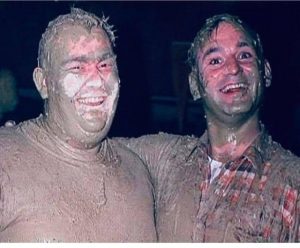 Daniel Vogelbach and Pete Alonso celebrate Mark Canha’s doubling in of Vogelbach from first base in the third inning Sunday. That brought Alonso home from second and then, perhaps not a matter of seconds later, Daniel Vogelbach home from first. Daniel Vogelbach is a player I can’t take my eyes off, and not just because he fills so much of my field of vision. You’ve probably seen silent movies in which the walking appears a little sped up, due to the technical limitations of the era. When Vogie takes a pitch (he takes a lot of them) and ambles away from the plate to collect himself, he may as well be Buster Keaton or Charlie Chaplin in motion. It’s not for comedic effect. He moves quickly if not exactly speedily. He knows everything he is doing out there. If he’s come to grips with his limitations, he’s just as determined to take advantage of his capabilities.
One of them is running the bases. From what we’ve seen, he can turn it on when he has to. To score from first on Canha’s double to left-center, he had to. A little flub in the outfield aided his cause, but Joey Cora had no compunction against sending him. Vogelbach was so certain he’d score, he didn’t slide. Daniel doesn’t strike me as the kind of fellow who’d slide just for kicks.
Those were the first four runs accumulated on Jake’s behalf. The fifth came in the fifth, primarily on Jeff McNeil’s moxie, turning a single to right into a double when he determined Robbie Grossman’s arm wasn’t the equal of Ronald Acuña, Jr.’s (Acuña didn’t start in deference to an amalgam of lower-body soreness, moist grass and Jacob deGrom). Jeff continued to factor throwing into his calculus on Canha’s ensuing fly to right. He tagged up and took off on Grossman, alighting on third. A wild pitch cued Squirrel to scurry home. The Mets had five runs with deGrom on the mound. They might as well have had fifty.
It should be noted they very well could have had something on the board prior to the third. In the first, Brandon Nimmo led off with a single. Starling Marte’s right-side grounder got Nimmo thinking. His conclusion was to duck Adrianza’s tag on second. Adrianza laid his glove on Nimmo. Except the ball was in the second baseman’s throwing hand. Second base umpire Jeff Nelson called Brandon out anyway, ahead of Marte beating the relay throw to first.
This would not stand, not within the walls of Buck Showalter’s Baseball Rules Academy, an institution ideally attended for two weeks every winter by every ump everywhere. Buck correctly challenged the out call, as Nimmo was never legally tagged. Matt Olson fired a dart to second after Marte made it to first because the first baseman seemed to grasp Nimmo had altogether avoided the ball. This was a budding reverse Utley situation minus the violence. Chase Utley never touched second in the 2015 NLDS but was somehow awarded it after breaking Ruben Tejada’s leg. Here, replay confirmed Nimmo wasn’t tagged and therefore shouldn’t have been called out. But, in whatever disregard for logic was invoked, Brandon wasn’t awarded second, as it was decided it didn’t matter that he was told he was out, implying Olson’s throw absolutely would have nailed him at second had he kept running to second, which he didn’t because Nelson told him he was out.
The twisted misinterpretation (the Mets work at not being tagged, and they were rewarded for their heady physical agility in Miami earlier this season) cost the Mets a baserunner and maybe short-circuited a rally. Telling the Mets their protest was righteous — they weren’t deducted their challenge — and then penalizing them with an out regardless did not bode well when you were relying on a pitcher for whom you traditionally don’t score enough.
But some traditions wither and die. Like the Mets not supporting deGrom. Like the first-place Mets not fending off the Braves. In late July 2021, after Jake was done for the season, the Mets lost three of five to Atlanta at Citi Field, leaving the door ajar enough so that the Braves figured they could make a bunch of moves and aim for the lead in the East. We know what happened then. We strongly suspect it’s not happening now. At Mets 5 Braves 0, after New York had already taken three of four, and with our ace dealing dejection to opposing hitters, we could feel absolutely sure everything was gonna work out for the best.
Then Swanson hit that homer and deGrom was done after 76 pitches, and the game was turned over to Joely Rodriguez.
Joely Rodriguez. The lone lefty in the bullpen. To the greater conventional wisdom, it was as if there were no lefties in the bullpen. Before the trade deadline, the major deficit the Mets were urged to address was the lack of a reliable lefty. After the trade deadline, the inability to acquire one instigated the rending of garments accompanied by wailing that we had no lefty in the bullpen.
Except for Joely Rodriguez, who was treated as a burden or a liability. If we were lucky, he’d be mostly invisible until David Peterson got the hang of relieving at Triple-A. We’d been luckiest for five-and-two-thirds, riding deGrom and five runs of offense. Now we’d see if what Eppler (he swore he tried to secure a southpaw) and Showalter (he knew he wouldn’t be deploying most every middle/setup reliever normally at his disposal after using them plenty in getting the Mets this far in this series) had designed could withstand the necessity of Joely Rodriguez.
It could. Joely had his moment, his biggest as a Met, even bigger than his contribution to the combined no-hitter, which was fun as hell, but not essential. Sustaining the Mets’ 5-2 lead between deGrom’s departure and the sounding of Edwin Diaz’s trumpets was critical. Not as critical as most everybody is toward Rodriguez’s continued endurance as a 2022 Met, but almost as critical.
What happened? Only good. Rodriguez ended the sixth with a groundout of Olson, a lefty taking care of a lefty. If that was it for Joely’s day, even Ice Cube would say Sunday was a good day. But Buck kept leaning on Rodriguez. Austin Riley’s leadoff single to start the seventh could have been a bad sign, but data from the next six batters indicate it represented a false positive. Joely got pinch-hitter Acuña to fly out. Then he struck out William Contreras and Robbie Grossman. In the eighth, the lefty remained on. Ozuna swung to no avail at Rodriguez’s changeups. Same for personification of a kick in the shins Michael Harris. Adrianza made contact, but only to ground to Luis Guillorme at third.
That’s two-and-a-third innings of scoreless relief from Joely Rodriguez, or the bullpen equivalent of Jacob deGrom going nine or Rob Gardner going fifteen. It was the middle relief stint of the year. It probably buys Rodriguez at least 24 hours of goodwill before the sight of him warming in the pen reflexively gives everybody hives. As with a number of developments this Amazin’ year, you’d have to filed Rodriguez’s heavy lift as one you didn’t see coming.
Conversely, you could feel pretty sure you’d see Edwin Diaz enter in the ninth to protect the three-run lead and once the gate flung open and “Narco” pulsated, you could relax. If you were on edge, you haven’t allowed yourself to experience the full Edwin over the past few months. Or you just enjoy worrying. Concern is always advisable. Worrying is for chumps when you have Edwin Diaz and a three-run lead these days. If Sugar wasn’t fully and completely rested, he’d thrown only seven pitches on Saturday afternoon after giving two innings of himself on Thursday night after not being used at all for nearly a week. Plus there was that start time being pushed back from 1:40 to 4:10 and the rain pushing it back twenty minutes more. That’s sufficient rest for your state-of-the-art closer. Showalter resolutely stayed away from Ottavino, Lugo, Givens, May and Williams. He didn’t need any convincing to go with Diaz for three outs.
Three strikeouts, to be precise. Down went Swanson. Down went Olson. Down went Riley. Down went the Braves swinging on or staring at strikes nineteen times in all, matching the futility of the 1970 Padres versus Seaver and the 1991 Phillies versus Cone. Down went the Braves four times in five games over four days. Up, with this 5-2 triumph, went the Mets’ divisional lead to 6½ lengths, a distance that looks larger and larger the more you stare at it. The Braves rampaged through June and July to reduce their deficit from 10½ a little over two months ago to a piddling half-game barely two weeks ago. Where did all that momentum go?
To meet the Mets and move in with them for the foreseeable future. The Braves will have other chances to pick up ground, but there’s so much more ground for them to traverse after this series than there was before it. Fortunately, Atlanta’s losing pitcher was ready to alibi it all away. Strider, according to Journal-Constitution beat writer Justin Toscano, blamed his subpar outing on the Mets getting good calls — did he see what happened at second base in the first inning? — and “a lot of weird hits”. Strider’s a rookie, but he’s already making excuses like a veteran.
The Mets don’t make excuses. They make plans. Under Showalter, they lead the league in planning. They planned to make the most of something as simple as a Sunday afternoon start time and they finished Sunday evening in characteristic winning style.
As if they’d let the rain, the umps or the Braves get in their way.
by Jason Fry on 6 August 2022 11:41 pm So far — which, I’ll admit right off the bat, is a necessary qualifier — this is one of the stranger successful Met seasons I can remember.
After sweeping a split doubleheader from the Braves — no burying the lead in this recap — the Mets are 30 games over .500 for the first time since 2006.
I remember 2006 as a cakewalk romp, with an impossibly young David Wright and Jose Reyes front and center. Maybe one day I’ll remember 2022 the same way. Maybe it’s simply that 16 years have sanded away all the agita and grumbling so that I just remember the good parts of ’06. Maybe in 2038 I’ll analyze some bit of Metsiana and reflexively reach back for 2022 as the year Pete Alonso and Francisco Lindor blitzed through the NL East and Edwin Diaz struck out everyone in the Mets’ way, and it won’t occur to me to mention the little black cloud that seemed to follow us everywhere.
Because it does, doesn’t it? I swear we’re the unhappiest 30-games-over-.500 first-place fanbase imaginable. And I won’t claim I’m immune. Saturday’s double-header was played with the usual sense of foreboding and klaxons of imminent doom, despite headlines that were very much to our liking, and looking back at it I find myself thinking that it was more than a little ridiculous.
First spot starter David Peterson filled in beautifully in Game 1, giving the Mets 5 1/3 innings of shutout ball while the hitters tormented Jake Odorizzi and a succession of Atlanta relievers with a parade of RBI singles. When Atlanta climbed back into the game with a two-run sixth, the Mets shrugged and added three more runs in the very next half-inning, making their margin even larger than it had been.
OK, sure, they’d need that margin, as Yoan Lopez was handed a six-run lead for the ninth and gave up a flurry of hits and three runs, with no end in sight. And yes, that forced Buck Showalter to call on Diaz. (Your recapper was at yet another Maine brewery — WHAT? — and decided this called for MLB.tv and not Gameday.)
But happily, Diaz quelled the uprising on just seven pitches, and the Mets won. If that’s what counts as bad news, please give me more of it.
The nightcap belonged to Max Scherzer, who knew the bullpen was on fumes and so made up his mind to be his own bullpen. He didn’t throw a complete game — that would have been malpractice on a sweltering night — but he did give the Mets 108 pitches over seven exquisite innings, the last one a downright savage evisceration of the Braves on unhittable sliders. Four hits, no walks and 11 Ks? That will do nicely, thanks Max.
The Braves looked frankly flat in that second game, though in fairness Scherzer will make a lot of good teams look like less than themselves. They were sloppy in the field, with Dansby Swanson having a particularly miserable game, they were out of kilter at the plate and they generally looked like a tired squad that wanted to be somewhere else. Meanwhile the Mets were on point, whether it was Luis Guillorme firing a ball home to nail Travis d’Arnaud or Tomas Nido executing a textbook suicide squeeze for an insurance run.
Sure, the bullpen wasn’t exactly water-tight once again, with Mychal Givens and Trevor May both giving up runs in their innings of work. Givens is the only newcomer not welcomed with open arms so far, as his command has been iffy at best in two games, but perhaps 41 pitches is too small a sample to consign a guy to oblivion, however much we resent his not being the southpaw we felt we were promised. The Mets won anyway, in a fashion anyone but a professional worrywart would call convincing.
(Oh by the way, my prediction is Peterson ends the year as the lefty we needed.)
The Mets won anyway, despite all the bumps in the night we’re convinced are the ghosts of Chipper Jones and Bobby Cox and Ryan Klesko and Eddie Perez waiting to shred our psyches. They’ve already taken the series, with Jacob deGrom looking to make it four of five on Sunday. They’ve thoroughly outplaying the Braves in their three victories and fought back doggedly in the one loss.
Saturday was a baseball day well spent, so for Pete Alonso’s sake don’t grouse about a glass that’s one-quarter empty. Good things have happened. Rank superstition is the only thing stopping us from thinking more good things will happen. You’re allowed to enjoy things! No, really, I give you permission!
I give you permission because baseball can be cruel and dark, as a fan of any duration can tell you. But it isn’t always like that. And there’s no reason to jump at shadows when it’s sunny.
by Greg Prince on 6 August 2022 2:16 am Every year my friend Kevin treats me to a game against the Braves at Citi Field. Not much of a treat, you might think, the Braves being the Braves, but we waited through the 2010s for the spirit of our mutual favorite Met year 1999 to come back around, and sure enough, it’s Mets-Braves all over again for a large sum of marbles like it was when one millennium morphed into another. Never mind that the Braves tended to take their marbles and go further than us most Octobers when Bobbys Valentine and Cox stared daggers into opposing dugouts. We cherished the rivalry. We’re glad it’s back in earnest in the era of Showalter and Snitker. We like the Mets’ chances to marble up before this season is over.
Theoretically, we might have liked it better had our annual Braves game been Thursday night, which I walked around for months thinking it was gonna be, rather than Friday night, which is what we actually decided on well in advance. Why I believed it was going to be Thursday, I’m not sure. Perhaps I was prescient that Friday would not offer sparkling scoreboard fortune.
Kevin has spent the past 24+ hours earnestly rationalizing that Friday was the better choice. Thursday’s victory turned so stressful toward the end, he said, he’d have had a hard time handling it. Friday worked better against the backdrop of some non-Mets plans of his. Plus we got to take part in the Friday Night Blackout, complete with a complimentary black Max Scherzer uniform number t-shirt (if you must refer to it as a “shirsey,” please have the decency to spell it Scherzey) for all in attendance, not merely the first 15,000 or 20,000 or 25,000. I don’t know that the one-size-fits-some garment would fit Max Scherzer. I know it wouldn’t fit newest Flushing folk hero Daniel Vogelbach — “Vogie!” we hath dubbed him volubly and repeatedly. I’m somewhere between those two fellas on the sizing chart. The shirt will make a lovely tea cozy for me.
I wore black at the Mets’ request. More prescience. I was dressed to mourn the end of a two-game winning streak. Cause of death was the top of the first inning, followed by the top of the second inning. Taijuan Walker started the first. He wasn’t around to finish the second. Bad sign that.
Yes, the Thursday result would have been tastier, but despite an 8-0 hole from which the Mets never fully climbed, Friday with Kevin was more fun than an eventual 9-6 loss (time of game: still going, I’m pretty sure) had a right to be. We never gave up. Not the two of us, not the 40,000 of us, many clad in black, others not caring to be nudged how to dress, even by their first-place team. Walker didn’t stride right, but the bullpen behind him stood tall. Every back bencher who pitched in relief performed well enough to keep the comeback we craved conceivable, and everybody who watched never ceased urging on a team down by eight, then seven, then six, then — as Buck Showalter pushed buttons and pulled levers — four and three. The transitory thrills were provided in the fifth by pinch-hitter Darin Ruf in his first Met plate appearance (two-run double to right) and pinch-hitter Eduardo Escobar (single to bring home Ruf). So much pinch-hitting produced so many pinch-ribbies that we were pinching ourselves, then convincing ourselves the tying run was coming to bat every inning. Maybe it was. Maybe we hallucinated. Wearing too much black in such hot weather can cause mirages.
No, our wishing and hoping and beseeching didn’t do a damn thing to alter the course of events, but fun was had. Can’t say it was the wrong night for that.
by Jason Fry on 5 August 2022 8:15 am For me, the Mets are rarely if ever on the periphery. Most nights they’re front and center. But now and then even they have to share space with other pursuits.
We’re finishing up three weeks in my folks’ summer cottage in Maine, an annual visit extended this year as an experiment in remote work and escaping the city. That’s meant the addition of Internet, a big-screen TV and other trappings of city life, so our fandom has carried on largely as before.
Last night, though, we had friends up from New York and plans to investigate a craft brewery that looked fun. (It was!) So the Mets’ third of five 2022 showdowns with the Braves unfolded at first on Gameday, enclosed in the glass rectangle of my phone while propped against an empty pint glass.
And that little enclosure brought glad tidings, starting with three straight outs from Carlos Carrasco. Then the Mets led 1-0, revealed to be the result of a Pete Alonso single. An inning later it was 2-0, courtesy of a Tyler Naquin homer. An inning after that I did a double-take, as many good things must have happened: It was 5-0! (Said good things turned out to be two in rapid succession: back-to-back homers from Alonso and Daniel Vogelbach, who might deserve a revival of Ramon Castro‘s old affectionate Round Mound of Pound nickname.)
A bit later I noticed the score had become 5-1, which was annoying but didn’t seem to be grounds for active worry. (Michael Harris II RBI single, it turned out.) But I missed the immediate aftermath of that first run because I was … and, honestly, could I be making this up? … befriending a brewery chicken.
 I mean, you’d want to make friends too. It wasn’t until I got behind the wheel of our car that I realized the Mets’ margin of safety had shrunk alarmingly, a realization that was immediate: Years of listening have let me accurately calibrate ballgames’ status by the tone and rhythm of Howie Rose’s play by play, and what I heard was not carefree Howie leisurely relating an anecdote or speculating on something interesting in the crowd. No, his words were being sent out quickly and arriving terse and bitten off, little packets of warning.
It was 5-3 (Ronald Acuna Jr. homer, it turned out) and the Mets’ comfortable lead was gone. As we drove up Route 27, Carrasco sought to navigate the sixth against Matt Olson, newly minted Brave for Life Austin Riley and Eddie Rosario — a dangerous inning Buck Showalter would later pinpoint as key to the game. Carrasco went through them 1-2-3 on a groundout, K and lineout, securing three critical outs that could be subtracted from the Mets’ relief blueprint.
As the bottom of the sixth began we were back at the house and in front of the TV, in time to see new cult hero Naquin launch his second home run of the game — the first time, somehow, that a Met had hit two round-trippers in his first home game. (I found the how more notable than the what — Naquin reached down for a ball at his shoetops and carved it out of the ballpark with what looked like a golf swing.)
That run would prove critical, as Adam Ottavino ran afoul of Orlando Arcia and Harris, whittling the lead down to 6-4, before fanning Acuna as the conclusion of a mini-mathematical proof of how to wreck a hitter’s timing and change his eye level (velocity up up and up + slider low and away = no chance).
For the eighth, as I’d suspected he might, Showalter handed the ball not to a recent bullpen returnee or one of the middle-relief stalwarts turned suspects but to Edwin Diaz himself. And why not? That was the most dangerous inning, with Olson and Riley following Dansby Swanson.
Let us pause for a moment to consider the journey Diaz has been on since arriving at Citi Field: Reviled mistake, reluctantly accepted fixture, and now revered savior. Every one of us would have driven Diaz to the airport in November 2019 in return for, say, one of Jarred Kelenic‘s discarded batting gloves; now he’s Sugar once again and we all exhale when he arrives to do what he does, celebrating that arrival with imaginary trumpets. Diaz coaxed a first-pitch (important!) groundout from Swanson, caught Olson looking on an unhittable slider, and got Riley to swing over another slider to complete the inning.
He was most likely coming back out for the ninth anyway, but having thrown only 11 pitches made it a certainty. Trouble beckoned immediately, as Rosario slapped a single in front of Starling Marte, meaning the tying run would come to the plate thrice and causing old bogeymen to at least poke their heads up somewhere in our psyches.
Diaz got Travis d’Arnaud to fly out, fed Marcell Ozuna a steady diet of sliders to set up 100 MPH upstairs for the second out, and then went to work against Arcia — only to miss with his first three pitches. His fourth pitch was 99 MPH at the top of the zone, boring in on Arcia’s hands. Arcia turned away from it in equal parts rejection and self-defense, only to realize to his horror that the ball had glanced off his bat and was gamboling up the first-base line with Diaz — thankfully not spectating — in hot pursuit.
“A check-swing tapper — it’s a fair ball and it’s gonna end the game!” exclaimed Gary Cohen, as Keith Hernandez groaned in accompaniment — a veteran hitter’s instinctive moment of empathy. Diaz stepped on first as Arcia finished a disconsolate jog behind him and the Mets had won.
Won the first one, though four more (!!!) await us before this weekend is done. What they’ll bring remains to be seen, but the first one is ours, secured by Mets old and new. A night of chicken, (R)oses and sugar wasn’t what I saw coming, but it made for a delightful combination.
by Greg Prince on 4 August 2022 1:28 am The Mets win most of the games they play, so it shouldn’t be a surprise that they just won two of three in Washington and five of six on their road trip and eight of nine overall. That’s what teams that win most of the games they play do by definition. It’s a pretty good deal to root for a team like that.
On Wednesday afternoon, the Mets, on the strength of power from Pete Alonso and Daniel Vogelbach (the latter slamming grand) and poise from Chris Bassitt (seven shutout innings), built a 9-0 lead heading to the bottom of the ninth and won, 9-5. The five runs allowed in the ninth inning would be disconcerting in many a Met context. Not this one. Each of the runs was charged to a new fellow on the team, Mychal Givens. Perhaps his inability to close out a nine-run lead was a metacommentary in opposition to all the fuss made over not adding even more new fellows to the habitually winning team, specifically one filling whatever role Givens will have in the bullpen, except throwing with a left hand. Or maybe Mychal had a bad first outing and tomorrow’s gonna be another day.
It will be. From the perspective of Wednesday, the next day would be Thursday (real breaking news there), the first of four consecutive days during which the Mets will play the Braves once daily — and twice Saturday. It’s a five-game series, what you’d have to call a big series. The Braves will represent a greater challenge at Citi Field than the Nationals did at Nationals Park and the Marlins did at Unfortunate Corporate Moniker Facility, and at least as comparable a challenge as the Yankees and Padres did when the Mets were beating them recently. At 3½ out, the Braves are the team closest to the Mets’ tail lights. If they’re not on our tails, they’re still within a ghastly weekend’s distance of catching us.
So let’s not have a ghastly weekend. Let’s have one of our characteristic pretty good to very good series, the kind we play most days of the week. The Mets have contested 33 series thus far in 2022. They’ve won 24, lost 6 and split 3. Let’s continue to reflect that consistency. Let’s continue to play some of the best sustained ball in 36 years like we’ve been playing it all year long.
Thirty-six years, you say? Best sustained ball you say? I feel a data point or two coming on…
The Mets bolted to a 20-4 start in 1986.
The Mets soared to a 44-16 start in 1986.
I had to look neither of those records up. They have been with me since they were achieved. My jaw dropped at 20-4 in real time and again at 44-16. I couldn’t believe how good my team was. Indeed, no Met team since 1986 has touched 20-4 through the first 24 games of a season nor 44-16 in the first 60.
You probably know the Mets’ final record in 1986 was 108-54, which indicates an extraordinary campaign, if not one that maintained over 162 games the blistering pace set after the initial 24 or 60 games. They were still an awesome team — essentially winning two of three games in 54 series — even after settling down a bit. For example, the 80 games after their first 24, the 1986 Mets went 50-30. And in the 44 games after their first 60, the 1986 Mets went 26-18.
And wouldn’t you know it — in the 80 games after their first 24, the 2022 Mets have gone 50-30. And in the 44 games after their first 60, the 2022 Mets have gone 27-17.
Over substantial swaths of their schedule, the 2022 Mets have matched the 1986 Mets, architects of the most robust regular season in franchise history. Also, for the record, the records of the 2022 Mets in their first 24 and 60 games, were splendid (16-8 and 39-21, respectively), so this isn’t some roar-from-the-rear, boulder-up-the-hill, momentum-come-lately story. For a while, these current Mets were very, very good, if not precisely as great as the greatest of all Met squads. Yet for a longer and later while, they’ve been exactly as great. Overall, using the most up-to-date milepost available, the 2022 Mets are roughly as close to the 1986 Mets as the 2022 Braves are to the 2022 Mets, and no Mets fan wouldn’t gauge the 2022 Braves as close enough.
The 1986 Mets were 70-34 after 104 games.
The 2022 Mets are 66-38 after 104 games.
The 2022 Mets are not going to catch the 1986 Mets. That’s no knock on the 2022 Mets. We already know what happened 36 years ago. After going 70-34, the 1986 Mets had some serious spurts ahead of them en route to 108-54. They would win 16 of 19 to close in on clinching and another 15 of 19 to prepare for the playoffs. There’s a reason we invoke the 1986 Mets so often in general.
There’s also a reason we invoke the 1986 Mets in 2022. It’s because we are nearly at the two-thirds mark of the 2022 season and we’re watching the best Mets team since 1986. Not necessarily better than; maybe not quite as good as; and definitely with an immediate future to be determined. August has only begun. September is a blank slate. October promises nothing. All we’ve got is what we’ve got to now.
What we’ve got to now is likely better than the fretful Mets fan (there are a few) comprehends. No Mets team between 1987 and 2021 managed to edge closer than seven games behind the 1986 Mets’ pace after 104 games. This one playing this year is within four.
The 2022 Mets aren’t chasing the 1986 Mets. Yet as they fend off the 2022 Braves and steel themselves for the 2022 Dodgers or Padres or whoever else might appear on the long-range Doppler radar, they are proving themselves worthy heirs to the likes of the 1986 Mets…no, make that the actual 1986 Mets, which should instill confidence in the flagging nether regions of your enthusiasm generator. Perhaps the Mets losing one out of nine (while regaining the services of our second-best starting pitcher ever) seems troubling more than the Mets winning eight out of nine seems reassuring. Perhaps the lack of an additional southpaw reliever overshadows the prevalence of professionalism and talent accumulated elsewhere on the roster. If that’s how the big Met picture looks to you, I’d advise an appointment with your friendly, local ophthalmologist.
Doctor, doctor, when I go to watch the Mets, all I see is potential doom. What should I do?
Don’t go like that.
I’d have liked another lefty arm out of the pen, too. We didn’t get one. Y’know what? Shrug. Maybe one will come off the waiver wire. Maybe a Syracuse starter will be honed to pick up the slack. Maybe Joely Rodriguez and his righty brethren will be sufficient to whatever task presents itself. I’ll go with who we’ve got, not just for the nettlesome inning of imagination but across the board. I’ll go with the starters, the relievers, the offense, the defense, this special team. I’ll go with the 2022 Mets, the best Mets team I’ve seen in three dozen freaking years. They’ve gotten us this far. I believe they’re capable of taking us farther. I look forward to them taking it to the Braves.
The newest episode of National League Town reflects on the enormous impact of Vin Scully and delves into what the Mets did and didn’t do at the trade deadline. Pull up a chair and listen here.
by Greg Prince on 3 August 2022 10:58 am Juan Soto, now of the San Diego Padres, has been hailed as a generational talent, the type who comes along alone approximately once per metaphorical blue moon. His numbers, expressed by slashes and birthdays, support that assertion. Juan Soto is a .291/.427/.538 slasher through nearly 2,500 plate appearances and he’s not even 24 years old. No wonder the Washington Nationals offered him a yachtload of money to stick around for the balance of his career. No wonder Soto turned it down, considering he could look forward to attracting an armada of dollars when he hits free agency like he hits major league pitching. No wonder he’s suddenly in San Diego. His past is already pretty good. His future looks bright. I’m glad the Mets don’t have to face him as often as they used to. I wouldn’t mind his future eventually finding its way to Flushing.
Generational, though? It’s hard to be certain unless you’ve had generations to prove it. You know who was a generational talent, who remains a generational talent and who will always stand as the generational talent of his craft?
The voice that spanned baseball generations.
Longevity is a heckuva badge to pin on somebody who lasted seemingly forever, but it’s not enough of an award for the memory of Vin Scully, who died Tuesday at 94. It’s not so much that Vin Scully was the Dodgers announcer in 1950, a year during which he was 22, and was the Dodgers announcer in 2016, signing off for good when he was 88. The length of his career, in and of itself, transcends impressive. Hardly any ballparks still standing have lasted as long on the job as Vin Scully did, and the ones that have each underwent significant renovations. Vin Scully was Vin Scully in 1950 and remained Vin Scully in 2016. He didn’t much change. He just kept being the best.
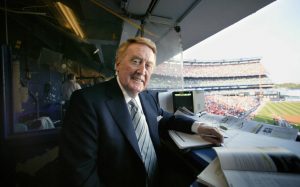
That’s more than longevity. It has to be. Implicit in manning a microphone from coast to coast, from Truman to Obama, is that nobody maintains the same high-profile role of a lifetime for 67 baseball seasons without vaulting to the top of his game and gripping that peak without pause. Loyalty and endurance can buy you some extra years in the right circumstance. The only circumstance that mattered where Vin Scully was concerned was he broadcast baseball games like Vin Scully. It was a singular skill set. If you couldn’t find another Vin Scully — and by definition you couldn’t — you couldn’t, shouldn’t, wouldn’t seek an alternative.
Ken Burns explained the thinking behind his choice of announcer talking heads for his Baseball project thusly: he wanted the grandfather, the father and the son. For him, that meant Red Barber, under whom Scully apprenticed in Brooklyn; Scully, who’d grown into an institution locally in Los Angeles and nationally whenever he moonlighted; and Bob Costas, who did the backup Game of the Week on NBC every Saturday while Scully took care of the main attraction. Barber called his first big league game in 1934. Costas is still calling them in 2022. Like Scully, they are ensconced in the mythical broadcasters’ wing of the Baseball Hall of Fame. Burns’s intuition was right on, and his landmark documentary series benefited from encompassing the observations of both Red Barber and Bob Costas. Yet, honestly, the filmmaker could have gone with just Vin Scully and it would have served essentially the same purpose.
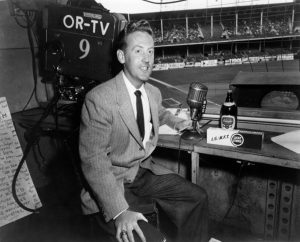 Vin was every generation. His status as the elder statesman who broadly bridged the millennia notwithstanding, whenever he was asked about what drew him to broadcasting, he was a kid again, inevitably describing (and always managing to relay it as if nobody had ever before inquired) parking himself under the radio speaker in his family’s living room, wishing to be bathed in the roar of the crowd. He followed the crowd to the source of that sound, out to the park and up to the booth, intent on telling the crowd what he and, soon enough with television, they were seeing. There were differences to calling a ballgame on radio and accompanying one on television. Nobody better understood that sometimes you’re the eyes for your audience and sometimes you’re chaperoning pictures, and that the pictures themselves can be left to tell key portions of the story best. Vin was every generation. His status as the elder statesman who broadly bridged the millennia notwithstanding, whenever he was asked about what drew him to broadcasting, he was a kid again, inevitably describing (and always managing to relay it as if nobody had ever before inquired) parking himself under the radio speaker in his family’s living room, wishing to be bathed in the roar of the crowd. He followed the crowd to the source of that sound, out to the park and up to the booth, intent on telling the crowd what he and, soon enough with television, they were seeing. There were differences to calling a ballgame on radio and accompanying one on television. Nobody better understood that sometimes you’re the eyes for your audience and sometimes you’re chaperoning pictures, and that the pictures themselves can be left to tell key portions of the story best.
More than anything, the warmth in Vin Scully’s voice will stay with me. Every announcer invites you to stay tuned. Vin really welcomed you. Vin wanted you at the game, understanding that he was your conduit and it was up to him to provide you the most comfortable seat, the most accurate view, the most thorough and thoughtful experience possible. Vin also knew, even as he was the most accomplished, most experienced, most revered and most famous broadcaster in baseball history, that he himself wasn’t the game. He — along with Schaefer, Lucky Strike, Farmer John or whoever was footing the bill — was simply bringing it to you. And wasn’t he fortunate for the privilege?
Weren’t we?
|
|